




Believe it or not, the real secret to a perfectly clear, streak-free window isn't some fancy, expensive tool. It’s the soap for window cleaning you put in your bucket. For most jobs, a simple mix of water and a few drops of good dish soap is all you need. It delivers just the right amount of cleaning muscle and lubrication for your squeegee to glide like a hot knife through butter.
This simple approach helps you avoid the harsh chemicals found in many all-purpose cleaners, which are often the culprits behind that frustrating, streaky residue.
Why the Right Soap Is Your Secret to Streak-Free Windows
It’s a common mistake to think any old household cleaner will do the trick on glass. This myth is the number one reason people end up with frustrating streaks and a hazy film that just won’t go away.
Think of your window soap as more than just a cleaner—it’s a performance-enhancing tool for your squeegee. The right solution does three critical jobs all at once. First, it gets to work breaking down and lifting off all the dirt, grime, and fingerprints. Second, it creates a super-slippery layer, what pros call 'slip', that lets your squeegee glide smoothly without skipping or chattering across the glass. Finally, it needs to rinse away completely, leaving absolutely nothing behind but sparkling, clear glass.
This diagram really breaks down why a proper window cleaning solution is so essential.
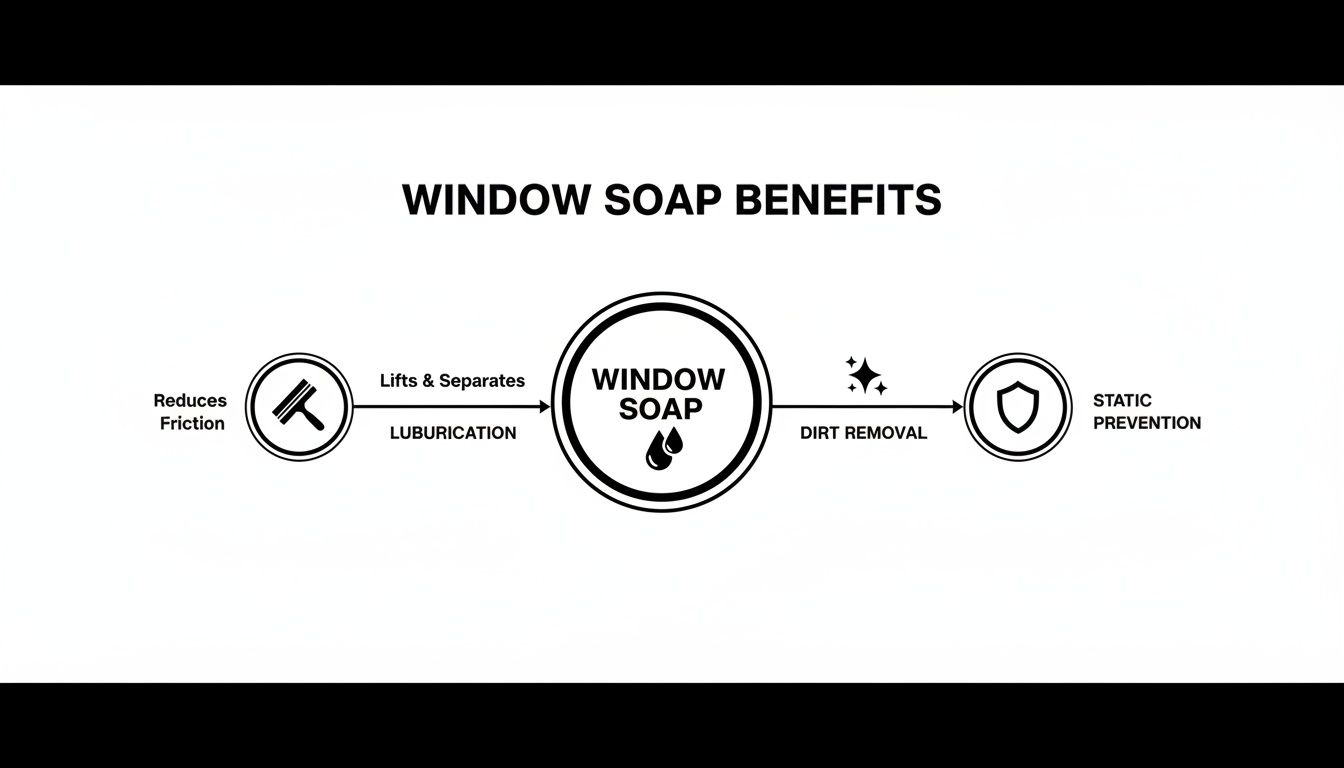
As you can see, getting that smooth glide and complete dirt removal is the foundation for a professional-level finish.
Choosing the Best Soap for the Job
So, should you grab a bottle of dish soap or spring for a professional-grade detergent? It really just depends on the job in front of you. Traditional dish soaps have been a go-to for homeowners and pros for decades, and for good reason—they're fantastic at cutting through grease and grime. Modern, ammonia-free soaps are especially good, with studies showing they can cut down on residue by up to 40% compared to cleaners packed with harsher chemicals.
The global window cleaning market is on track to hit an incredible USD 257.27 billion by 2032. A big driver of that growth? Innovations in cleaning solutions that give us better, safer results without damaging surfaces.
Here's a quick rundown to help you choose the right soap for your windows.
Quick Guide to Window Cleaning Soaps
| Soap Type | Best For | Key Feature | Potential Downside |
|---|---|---|---|
| Dish Soap | Everyday home use, light to moderate grime. | Excellent grease-cutting and 'slip'. | Can leave a film if not properly diluted or rinsed. |
| Baby Shampoo | DIY solutions, gentle cleaning needs. | Very mild, biodegradable, and rinses clean. | Lacks the heavy-duty cleaning power for tough jobs. |
| Professional Concentrate | Large-scale projects, very dirty windows. | Highly concentrated, superior 'slip', and fast drying. | Can be expensive and requires precise mixing. |
| Vinegar & Water | Removing hard water spots, natural cleaning. | Natural acid cuts through mineral deposits. | Strong smell and provides zero lubrication for a squeegee. |
Ultimately, the best choice is the one that fits your specific needs.
Here at Sparkle Tech, we know that the unique combination of Arizona's dust and intense sun demands a solution that works every single time. Whether you're tackling a small weekend project or need a professional team to handle it, starting with the right soap is the first step toward a perfect view. You can discover more insights about the window cleaning market to see just how much the industry is evolving.
Dish Soap vs. Professional Solutions Explained
When you’re trying to pick the best soap for window cleaning, it usually boils down to two options: the trusty bottle of dish soap under your sink or a specialized professional detergent. At a glance, they both seem to do the same thing. But the way they're made can mean the difference between a good-enough job and a perfect finish. It's kind of like comparing a family car to a Formula 1 racer—sure, both have four wheels and an engine, but they are built for entirely different levels of performance.
There's a good reason household dish soap is the go-to for most DIY window cleaning projects. It's cheap, you always have it on hand, and it's fantastic at cutting through the daily buildup of grease and grime. The surfactants in it are designed to break down oily fingerprints and dirt, leaving you with a clean slate to work with.
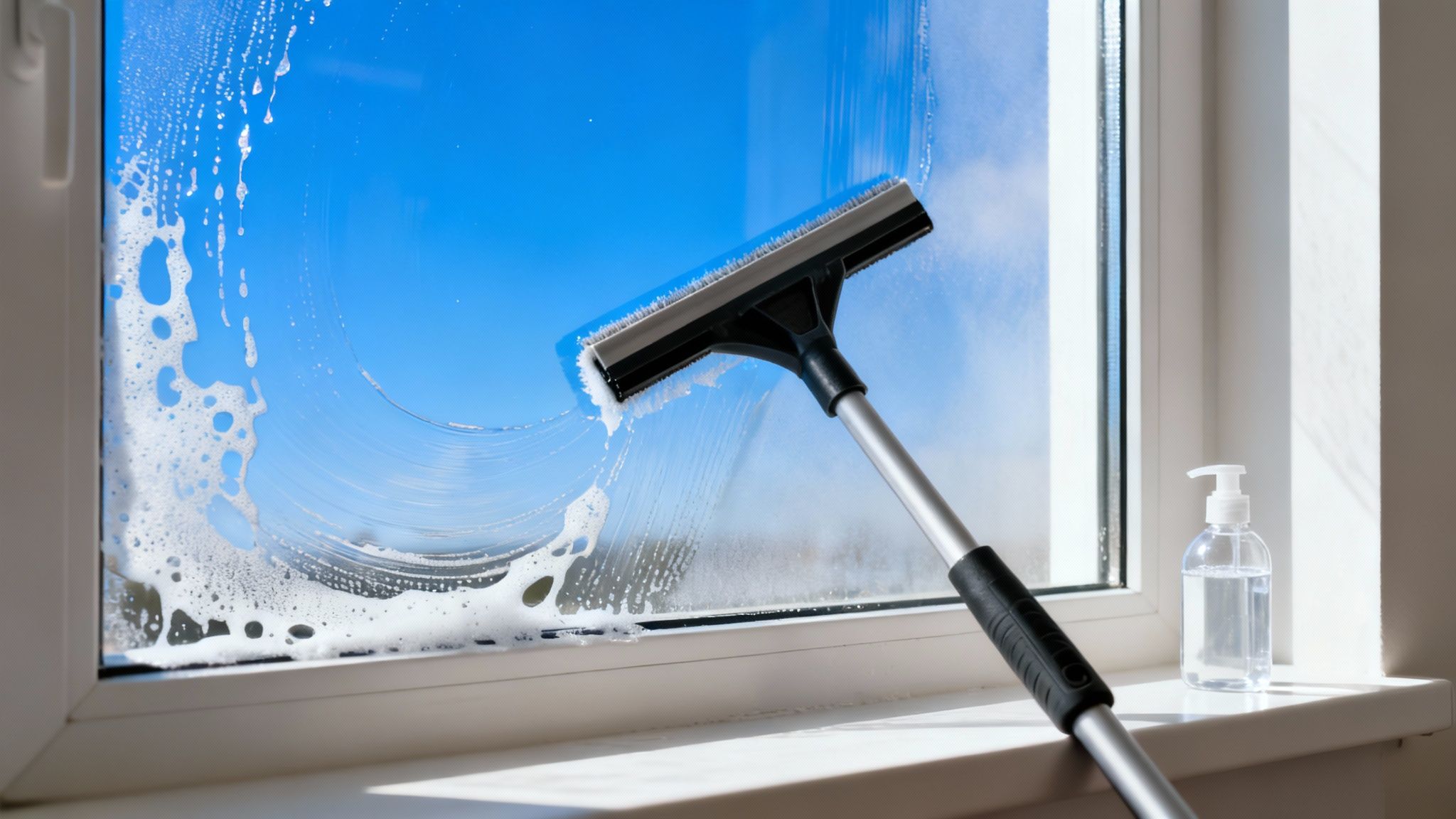
The biggest downside? Dish soap is made to produce a mountain of suds that last. While that's great for a sink full of dishes, it’s a real headache on a pane of glass. Too much foam is tough to control and squeegee off, and if you don't rinse it away completely, it leaves behind a hazy film that causes streaks.
The Professional-Grade Advantage
This is exactly where professional-grade cleaning solutions shine. These detergents are formulated specifically for glass, and they focus on a few key areas that dish soap simply wasn't designed for.
- Controlled Sudsing: Pro formulas are intentionally low-sudsing. This makes them way easier to squeegee off cleanly without any residue.
- Enhanced Slip: They’re loaded with special wetting agents that add a ton of lubrication. This lets your squeegee glide across the glass like it’s on ice, preventing the blade from chattering or skipping—a huge cause of streaks.
- Specialized Additives: Many pro solutions also contain anti-static ingredients that actively repel dust and dirt, which means your windows stay cleaner, longer.
"Think of it this way: dish soap cleans, but a professional solution prepares the glass for a flawless finish. It’s not just about removing dirt; it’s about creating the perfect conditions for a streak-free result."
This targeted approach isn't new. Soap became a window cleaning staple back in the early 20th century. By 1987, products like Procter & Gamble's Joy dish soap had already made home cleaning much more effective. Fast forward to today, and pros like us at Sparkle Tech in the Phoenix Valley rely on advanced, ammonia-free soaps. These modern solutions are crucial for safely cleaning solar panels and screens and can prevent up to 95% of etching on delicate glass railings. You can read the full report on the evolution of window cleaning solutions to see how far we've come.
So, while a few drops of dish soap can absolutely get the job done for a quick touch-up, a professional-grade detergent is purpose-built for perfection. If you're curious to learn more, check out our guide on the tools and solutions used by professional window cleaners. Knowing the difference will help you get that crystal-clear, professional shine every single time.
Nailing the Perfect Soap-to-Water Mix
The real secret to a streak-free, professional-looking shine often isn't the soap you choose, but how you mix it. Getting the dilution of your soap for window cleaning just right is probably the single most important step in avoiding those frustrating streaks. Think of it like a bartender mixing a classic cocktail—a little too much of one ingredient, and the whole thing is off.
One of the most common DIY mistakes is using way too much soap. This creates a thick, sudsy film on the glass that's a nightmare to squeegee off cleanly. It’s that sticky residue that leaves behind those milky, stubborn streaks once the window dries. On the flip side, if you're too stingy with the soap, you won't have enough cleaning power or, just as importantly, the lubrication—what we in the business call "slip"—for your squeegee to glide smoothly across the pane.
Adjusting Your Mix for the Mess
Your perfect soap-to-water ratio is never a one-size-fits-all number. It all depends on how dirty the windows are. A window in Arizona after a monsoon dust storm needs a much stronger solution than a window that just needs a light spring touch-up.
Here's a quick cheat sheet to get you started:
- Routine Upkeep (Light Dust): For windows that just need a quick refresh from a bit of dust, less is more. A tiny amount, just one or two drops of dish soap per gallon of water, is usually all you need for good slip without leaving any residue.
- Seasonal Grime (Moderate Dirt): When it's time for that big spring or fall clean, you'll need a bit more muscle. A standard mix of about one teaspoon of dish soap per gallon of water works perfectly for cutting through fingerprints, pollen, and everyday dirt.
- Heavy Buildup (Post-Storm Grime): After a big storm kicks up a lot of mud and grime, you'll need to step up your game. I'd recommend a stronger mix of about one tablespoon of soap per two gallons of water to really break down that caked-on mess.
Here's a pro tip: your solution is just right when it feels slightly slippery between your fingers but doesn't create a mountain of suds. That tells you there's enough lubrication for the squeegee without making a foamy mess that's tough to rinse clean.
Figuring out the right dilution can take a little practice, but it's key to getting that crystal-clear finish. To make it even easier, we've put together a handy table with our go-to ratios for different cleaning scenarios.
Window Cleaning Soap Dilution Guide
| Cleaning Level | Dish Soap to Water Ratio (per gallon) | Professional Concentrate to Water Ratio | Best Application Method |
|---|---|---|---|
| Light Dust & Maintenance | 1-2 drops | 1/4 tsp per gallon | Mop/Applicator, Squeegee |
| Moderate Seasonal Grime | 1 tsp | 1/2 tsp per gallon | Mop/Applicator, Squeegee |
| Heavy Dirt & Grime | 1/2 tbsp | 1 tsp per gallon | Gentle Brush, Mop, Squeegee |
| Tough Post-Construction | 1 tbsp | 2 tsp per gallon | Scrubber, Heavy-duty Mop, Squeegee |
This table should give you a great starting point. Don't be afraid to tweak the amounts slightly to find what works best for your specific situation.
Why Your Water Quality Is a Game-Changer
Believe it or not, the kind of water coming out of your tap can affect your results just as much as the soap you're using. If you live somewhere with hard water, that water is loaded with dissolved minerals like calcium and magnesium. When that water evaporates from your windows, it leaves all those minerals behind as ugly white spots.
This is exactly why professionals, including our crew at Sparkle Tech, swear by purified or deionized (DI) water systems. This is water that has had all those minerals stripped out. It dries completely clear, leaving absolutely nothing behind. It also acts like a magnet, pulling dirt right off the glass and rinsing away perfectly for a guaranteed spotless shine, no matter how hard the local tap water is.
Cleaning Screens, Solar Panels, and Glass Railings
A truly clean window is more than just sparkling glass. The surrounding elements—like screens and railings—are just as important for that picture-perfect finish. This is where choosing the right soap for window cleaning becomes critical, especially when you're dealing with delicate or high-value surfaces.
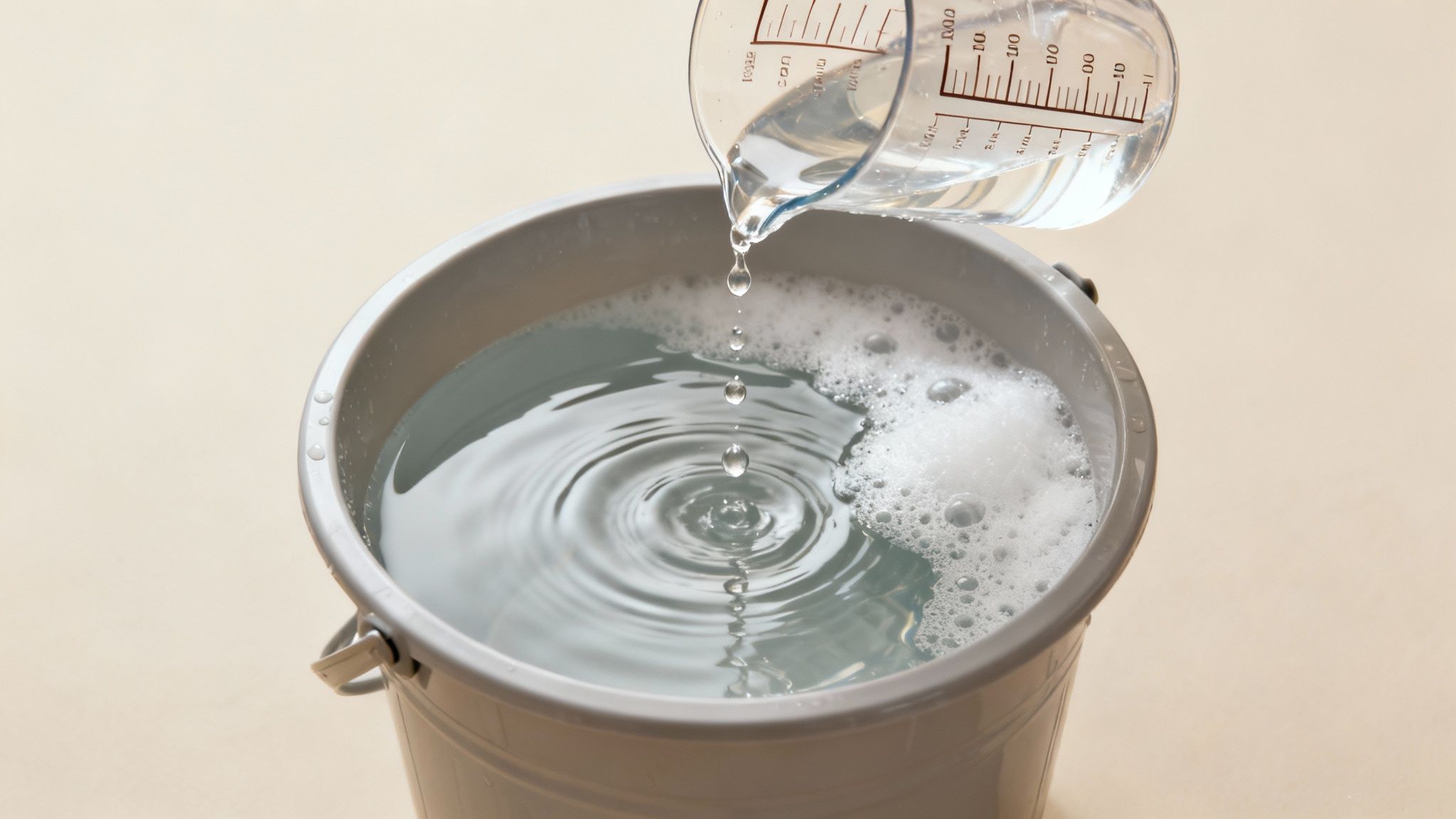
Window screens, for instance, are surprisingly delicate. Think of them like a fine fabric. If you hit them with harsh, ammonia-based chemicals, you’ll weaken the mesh over time, making it brittle and easy to tear. A gentle, pH-neutral soap is all you need to lift off the grime without damaging the screen itself.
Protecting Your High-Value Surfaces
When you move on to things like solar panels and modern glass railings, the stakes get a lot higher. These are serious investments, and the wrong soap can cause more than just streaks—it can lead to costly damage and poor performance.
- Solar Panels: A standard soap might seem fine, but it can leave behind an invisible film. That tiny bit of residue is a magnet for dust, creating a barrier that blocks sunlight and slashes your energy output. This is why pros always reach for specialized, anti-static soaps designed to rinse away completely and help repel future dust.
- Glass Railings: Those beautiful glass pool fences and balcony railings are all about the view. Their biggest enemy? Hard water spots. The wrong soap can actually make this problem worse by leaving behind minerals that cling to the glass as it dries. A quality, professional-grade solution is key to keeping them crystal clear.
These same principles apply elsewhere, too. Learning the right techniques for windows and railings can even help with other glass surfaces, as you’ll see in these shower door maintenance tips.
The Professional Approach to Total Property Care
For these specialized surfaces, the right soap isn't just a recommendation—it's essential for protecting your investment. Here in Arizona, the explosion of solar installations really drives this point home. At Sparkle Tech, we use specific anti-static soaps that can boost a panel's efficiency by up to 25% and prevent 85% of new dust from sticking around.
It's this attention to detail that results in 40% higher client retention for our streak-free services. We’re not just cleaning; we're protecting and enhancing the value of your property.
A knowledgeable cleaning strategy protects your entire property, not just the window panes. Choosing the right soap for each specific surface—from a delicate screen to a high-performance solar panel—is the hallmark of a true professional.
This is exactly why so many homeowners leave these tasks to the experts. If you want to learn more about how we protect these sensitive surfaces, check out our in-depth guide on how to clean solar panels.
Simple DIY Window Cleaning Soap Recipes
Ready to roll up your sleeves and get those windows sparkling? Making your own soap for window cleaning is easier than you might think. Forget the aisle of specialized products—a couple of simple items from your kitchen can give you a professional, streak-free shine.
The secret isn't a complex chemical formula. It's about using a simple mix that cuts through grime without leaving a sticky residue. When it comes to DIY solutions, less is definitely more. The goal is to get just enough cleaning power and lubrication for your squeegee to glide smoothly.
The Classic Dish Soap Formula
This is the go-to recipe for pros and homeowners alike, and for good reason. It has fantastic cleaning power and provides the perfect amount of "slip" so your squeegee can do its job without skipping or chattering across the glass.
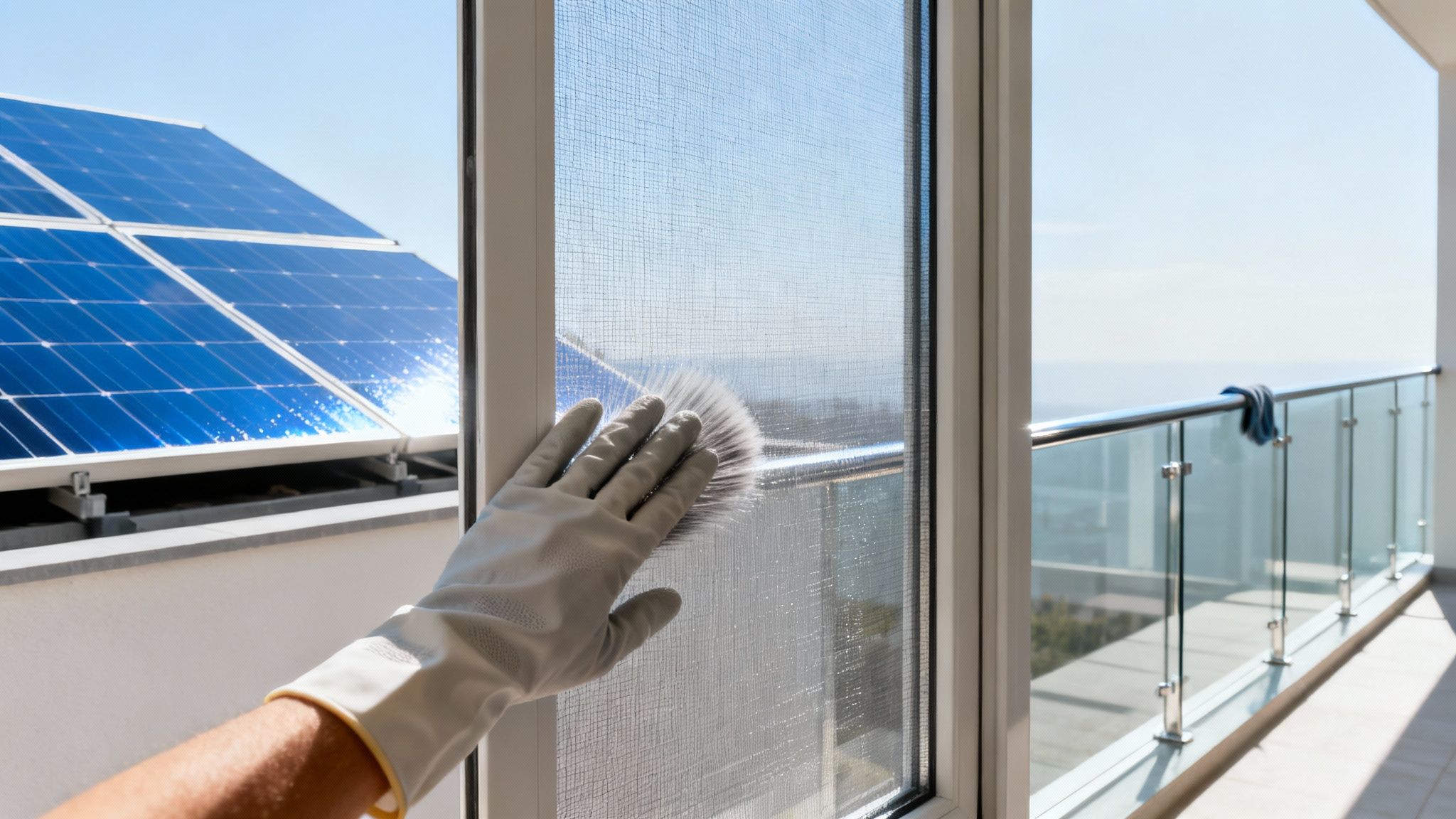
- Grab a clean bucket and fill it with one gallon of cool, clean water.
- Add just a touch of soap. Mix in one or two teaspoons—that's it!—of a good quality, grease-cutting dish soap. This is the most important step; using too much soap is what causes those frustrating streaks.
- Stir gently. You want the soap to dissolve completely, but try not to whip it into a foamy frenzy.
This simple mix is all you need for everyday dust, smudges, and fingerprints. If you're looking for a few more variations, we've put together a complete list of the best homemade window cleaning solutions to tackle any situation.
The Vinegar Mix for Hard Water Spots
Are your windows covered in those chalky white spots from sprinklers or hard water? Adding a little distilled white vinegar to your mix works wonders. Its mild acidity is perfect for breaking down and dissolving those stubborn mineral deposits.
- To the classic dish soap mix above, simply add one cup of white vinegar. The soap handles the general cleaning and provides the slip, while the vinegar goes to work on the mineral stains.
A Quick Word of Caution: Vinegar is an acid. While it’s great on glass, it can potentially harm sensitive surfaces like certain painted or natural wood window frames. Always test this solution on a small, hidden spot first, and be careful not to let it drip and pool on the frames.
What to Avoid in Your DIY Mix
Knowing what not to use is just as important as knowing what to include. Some common household cleaners can cause permanent damage to your windows and should be kept far away.
- Ammonia-Based Cleaners: Stay away from these. They are far too harsh and can ruin expensive window tints, protective films, and even some low-e coatings.
- Abrasive Powders or Cleansers: Anything gritty, like a scouring powder, will create fine scratches on the glass. This permanent damage will leave your windows looking dull and cloudy forever.
- Anything Not pH-Neutral: Cleaners that are highly acidic or alkaline can eat away at the rubber seals around your glass and damage the window frames.
By sticking to these simple, time-tested recipes, you’ll get brilliant results without putting your windows at risk.
When to Hire a Professional Window Cleaner
Those DIY recipes are fantastic for a quick touch-up or tackling a few ground-floor windows. But let's be honest, sometimes having the right soap for window cleaning is only half the battle. There are moments when the best move is to call in the pros.
Knowing when to hand over the squeegee to an expert isn't just about getting a better shine—it's about protecting yourself and your home. For most people, that decision boils down to three things: safety, equipment, and time.
The Value of Professional Expertise
If you're looking at windows on a second or third story, or those tricky ones over a sloped roof, the risk factor skyrockets. Professionals are trained to navigate heights safely, which is a big deal when you consider that ladder-related falls are shockingly common. The American Academy of Orthopaedic Surgeons reports that over 500,000 people are treated for ladder injuries every single year.
Beyond just staying safe, the pros show up with gear that most of us don't have sitting in the garage.
- Water-Fed Poles: These amazing tools let technicians scrub and rinse windows several stories high, all while their feet are safely on the ground.
- Purified Water Systems: Ever notice how Arizona tap water leaves spots? Professionals use deionized water, which is so pure it dries without leaving a single mineral deposit behind. It’s the secret to that perfectly spot-free finish.
The peace of mind is huge. When you hire a fully insured, bonded, and registered company like Sparkle Tech Window Washing, all that risk is on us. You just get to enjoy the view without a worry in the world.
Saving Time and Ensuring Quality
Let's face it, your time is precious. A proper, thorough window cleaning job can easily eat up your entire weekend. A professional crew can do the same work in just a few hours, and frankly, they'll deliver a better, longer-lasting result.
That efficiency means you get your weekend back.
At Sparkle Tech, we bring the right tools and the proven techniques to make sure every window, screen, and railing is absolutely spotless. If you’re tired of the hassle and ready for a guaranteed shine, it might be time to let the experts take over.
Contact Sparkle Tech Window Washing today for a free, no-obligation quote and let us bring that sparkle back to your home.
Common Questions About Window Cleaning Soap
Even when you've got the right tools and a solid plan, a few questions always seem to pop up during a window cleaning project. Getting the right answers can be the difference between a frustrating chore and a crystal-clear finish. Let's tackle some of the most common questions we get from homeowners.
Can I Use Car Wash Soap on My Home Windows?
It’s a tempting shortcut, but you’ll want to keep the car wash soap in the garage. These formulas are packed with waxes and polymers that are great for making water bead up on your car’s paint job.
On your home’s windows, however, those same ingredients leave behind a hazy film. This residue is a magnet for dust and can look cloudy, especially when the sun hits it just right. For the best results, stick with a soap designed specifically for glass that rinses away completely, leaving nothing but a shine.
Why Should I Avoid Cleaning Windows in Direct Sunlight?
Cleaning windows under the hot sun is a classic recipe for streaks. The heat makes your cleaning solution evaporate in a flash, often before you even have a chance to squeegee it off.
This lightning-fast drying is what causes those frustrating streaks and water spots. To avoid this, try to clean on an overcast day. If it's a sunny one, just follow the shade around your house. This gives you the time you need to work the solution and get a perfect, streak-free finish.
Streaks from a DIY mix usually come down to 3 things: using too much soap, hard water with a high mineral content, or a dirty or worn-out squeegee blade.
If you’re seeing streaks, first try cutting back on the amount of soap in your water. You can also add a little white vinegar to your mix to help soften the water. And always, always start with a clean, sharp squeegee blade—it makes all the difference.
Of course, truly pristine windows are about more than just the glass. Keeping your blinds clean is a huge part of the overall look. For some great pointers on that, check out these easy tips for sparkling windows by cleaning your blinds.
Ready to skip the questions and get a guaranteed professional shine? The team at Sparkle Tech Window Washing has the tools, expertise, and purified water systems to make every window in your home immaculate. Contact us today for a free, no-obligation quote!