




Achieving crystal-clear, streak-free windows can transform the look and feel of your entire home, letting in more natural light and enhancing your views. While commercial cleaners promise sparkling results, they often come with harsh chemicals and a hefty price tag. The secret to an impeccable shine, however, frequently lies in your own pantry. This guide unveils the 7 best homemade window cleaning solutions, proving that simple, eco-friendly ingredients can outperform their chemical-laden counterparts.
We'll break down the science behind why these specific recipes work so effectively, offering step-by-step instructions, professional tips for application, and troubleshooting advice for common issues like streaks and stubborn grime. Mastering these solutions is a crucial first step, and for those looking to perfect their overall technique, a comprehensive guide on how to get windows like new can provide additional valuable insights into tools and methods.
From the classic vinegar and water mix to a powerful baking soda paste for tough spots, you will find the perfect DIY recipe to make your windows virtually disappear. Get ready to ditch the expensive store-bought sprays and embrace a more natural, cost-effective, and surprisingly powerful approach to window washing for your home, glass railings, and even solar panels.
1. Classic Vinegar and Water Solution
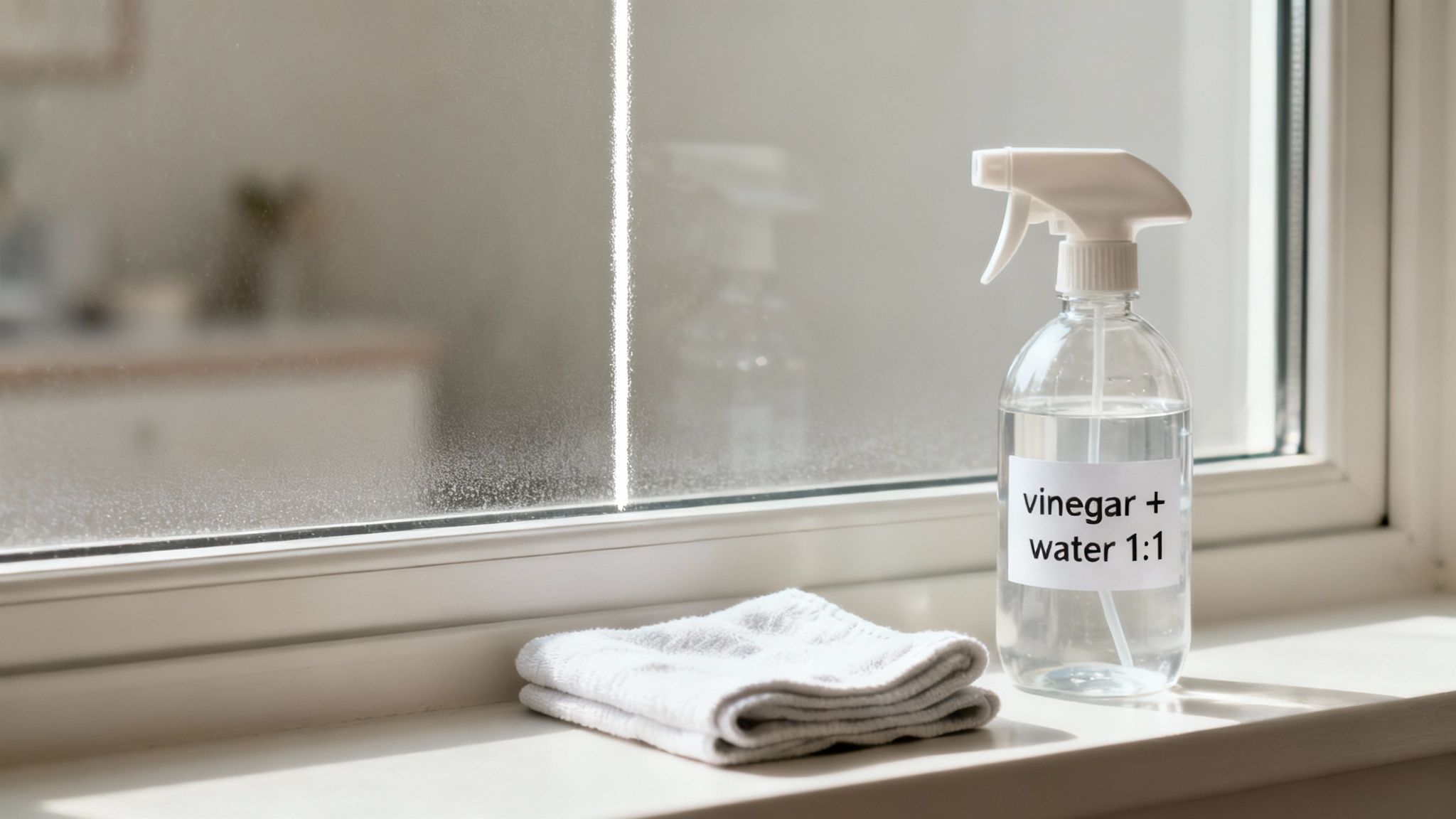
The classic vinegar and water mixture stands as the undisputed champion of homemade window cleaning solutions, and for good reason. This simple yet powerful concoction has been a household staple for generations, combining affordability, accessibility, and impressive effectiveness. The magic lies in the acetic acid found in white vinegar, a natural solvent that effortlessly cuts through grease, grime, and the stubborn mineral deposits often left behind by hard water.
This method's simplicity is its greatest strength. It’s a go-to solution for eco-conscious homeowners who want to avoid harsh chemicals, and it is frequently recommended by green cleaning advocates and even organizations like the Environmental Protection Agency (EPA) for its non-toxic properties. Because it contains only two basic ingredients, it’s one of the most cost-effective ways to achieve sparkling, clear glass.
How to Make and Use It
Creating this solution is incredibly straightforward, making it a perfect starting point for anyone new to DIY cleaners.
- Ingredients:
- 1 part distilled white vinegar
- 1 part distilled water
- Directions:
- Combine the vinegar and water in a clean, empty spray bottle.
- Shake the bottle gently to mix the two liquids thoroughly.
- Spray the solution directly onto the window surface, ensuring even coverage.
- Wipe clean with a microfiber cloth, squeegee, or even a crumpled newspaper for a traditional streak-free shine.
When to Use This Solution
This cleaner is ideal for routine maintenance on most residential windows, glass doors, and even mirrors. Its acidic nature makes it particularly effective at dissolving water spots on exterior windows and cutting through the greasy film that can accumulate on kitchen windows.
Pro Tip: For heavily soiled windows, especially those with caked-on dirt or bird droppings, spray the solution generously and let it sit for a few minutes. This allows the acetic acid time to break down the grime, making it much easier to wipe away without excessive scrubbing.
Tips for a Perfect Finish
To elevate your results from good to flawless, keep these simple tips in mind:
- Use Distilled Water: Tap water often contains minerals that can leave behind a faint, streaky residue. Using distilled water guarantees a truly spot-free finish.
- Avoid Direct Sunlight: Cleaning windows on a hot, sunny day will cause the solution to evaporate too quickly, leading to streaks before you can wipe it clean. Opt for an overcast day or work when the windows are in the shade.
- Test on Tinted Windows: While generally safe, it's wise to test the solution on a small, inconspicuous corner of tinted windows first, as some older or lower-quality films may be sensitive to acid.
For more expert techniques on achieving a professional-grade finish, you can find a comprehensive guide on how to clean windows streak-free.
2. Vinegar, Water, and Rubbing Alcohol Solution
For those seeking an upgrade to the classic recipe, the addition of rubbing alcohol creates one of the best homemade window cleaning solutions available. This enhanced formula leverages the degreasing power of vinegar and adds the fast-evaporating properties of isopropyl alcohol. The alcohol helps the solution dry almost instantly, dramatically reducing the potential for streaks and water spots.
This mixture is a favorite among professional house cleaners and homeowners with large window installations because of its efficiency and flawless results. The rapid drying time is especially beneficial in humid climates or when cleaning large panes of glass where slower-drying solutions might leave marks. It’s the go-to choice for achieving a professional-grade, crystal-clear shine with minimal effort.

How to Make and Use It
This powerful three-ingredient cleaner is simple to mix and provides superior performance for a streak-free finish.
- Ingredients:
- 1 cup distilled water
- 1 cup white vinegar
- 1/4 cup 70% isopropyl (rubbing) alcohol
- Directions:
- Pour all three ingredients into a clean, empty spray bottle.
- Secure the nozzle and shake gently to combine the liquids.
- Spray the solution onto one section of the window at a time.
- Immediately wipe clean with a high-quality squeegee or a fresh microfiber cloth, working from top to bottom.
When to Use This Solution
This formula excels in situations where speed and a perfect finish are critical. It's ideal for tackling large sliding glass doors, picture windows, or for anyone cleaning windows in a humid environment. The alcohol’s quick evaporation makes it perfect for achieving that coveted streak-free look without having to re-wipe surfaces multiple times.
Pro Tip: Because this solution dries very quickly, it's best to work in smaller, manageable sections. Spray and wipe one area completely before moving on to the next to prevent the solution from drying on the glass before you can properly clean it.
Tips for a Perfect Finish
To get the most out of this powerful cleaner, follow these recommendations:
- Use 70% Isopropyl Alcohol: While higher concentrations exist, the standard 70% solution is perfectly effective and readily available.
- Ensure Good Ventilation: Rubbing alcohol has a strong scent, so work in a well-ventilated area, especially when cleaning interior windows.
- Label Your Bottle: Clearly label your spray bottle to avoid confusion with other homemade cleaners. Store it safely and away from heat sources.
While this DIY solution is highly effective, professionals often rely on a specific set of tools and chemicals for different jobs. You can learn more about the essential chemicals for window cleaners to understand what the experts use.
3. Vinegar, Water, and Cornstarch Solution
Elevating the classic vinegar and water recipe, this enhanced formula introduces cornstarch as a secret weapon for an impeccable, polished finish. This solution leverages the cleaning power of vinegar while adding a mild abrasive quality that gently scrubs away stubborn grime and hard water stains. The cornstarch acts as a natural, fine polishing agent, helping to absorb excess moisture and buff the glass to a brilliant shine, making it one of the best homemade window cleaning solutions for tougher jobs.
This method is particularly popular in communities dealing with hard water, as the cornstarch helps lift the mineral deposits that vinegar alone might struggle with. It’s a slightly more hands-on approach that delivers a professional-grade clarity, preventing the formation of streaks by ensuring the surface dries evenly and without residue. The result is a smooth, flawlessly clean surface that looks and feels professionally treated.
How to Make and Use It
While it involves an extra ingredient, this solution is still simple to prepare and offers superior cleaning power for difficult spots.
- Ingredients:
- 1/4 cup distilled white vinegar
- 1/4 cup rubbing alcohol (optional, for faster drying)
- 1 tablespoon cornstarch
- 2 cups warm distilled water
- Directions:
- In a clean spray bottle, combine the white vinegar, optional rubbing alcohol, and cornstarch.
- Add the warm water to the bottle.
- Seal the bottle and shake vigorously until the cornstarch is completely dissolved and the solution appears milky. You will need to shake it before each use to keep the cornstarch suspended.
- Spray generously onto the window.
- Wipe clean using a circular motion with a microfiber cloth or crumpled newspaper to polish the glass.
When to Use This Solution
This cleaner is the perfect choice for windows that have not been cleaned in a while or are exposed to hard water sprinklers. It is exceptionally effective on older windows with accumulated deposits and for tackling the hazy film that can build up on exterior glass over time. Its polishing properties also make it great for bringing a high-gloss shine to glass tabletops and shower doors.
Pro Tip: To prevent the cornstarch from clumping, create a slurry by mixing it with a small amount of the vinegar or water in a separate bowl before adding it to the spray bottle. This ensures a smooth, consistent mixture that won't clog your nozzle.
Tips for a Perfect Finish
Achieve a showroom-quality shine by paying attention to these small details:
- Shake Well and Often: Cornstarch will settle at the bottom of the bottle, so be sure to shake it vigorously before each spray to ensure an even application.
- Use a Circular Buff: Unlike a standard up-and-down motion, wiping in small, circular patterns helps the cornstarch buff the glass surface effectively.
- Final Dry Wipe: After cleaning, go over the window one last time with a completely clean, dry microfiber cloth to remove any faint cornstarch haze and reveal a perfect gleam.
4. Vinegar, Water, and Essential Oil Solution
For those who love the effectiveness of vinegar but dislike its pungent aroma, the vinegar, water, and essential oil solution offers a perfect compromise. This aromatic variation elevates the classic recipe by infusing it with the pleasant scents and added benefits of essential oils. It maintains the core cleaning power of acetic acid while transforming a routine chore into a more enjoyable, spa-like experience.
This method has gained significant popularity among wellness-focused homeowners and natural living enthusiasts who seek both functionality and sensory pleasure in their cleaning products. Essential oils like lemon, tea tree, and peppermint not only mask the vinegar smell but can also introduce subtle antimicrobial and degreasing properties, making this one of the most versatile and best homemade window cleaning solutions available.
How to Make and Use It
Adding aromatherapy to your cleaning routine is simple and requires just one extra ingredient.
- Ingredients:
- 1 part distilled white vinegar
- 1 part distilled water
- 10-15 drops of essential oil (e.g., lemon, tea tree, lavender, or peppermint)
- Directions:
- Pour the vinegar and water into a clean spray bottle.
- Add the drops of your chosen essential oil directly into the mixture.
- Secure the nozzle and shake the bottle vigorously to combine the ingredients.
- Spray onto the glass and wipe away with a clean microfiber cloth for a sparkling, fragrant finish.
When to Use This Solution
This solution is perfect for anyone who wants an effective, non-toxic cleaner without the harsh smell of vinegar. It’s an excellent choice for interior windows, mirrors, and glass shower doors where a fresh scent can enhance the atmosphere of the room. The added degreasing power of lemon oil makes it particularly useful for kitchen windows that accumulate airborne grease.
Pro Tip: Because oil and water naturally separate, it's crucial to shake the spray bottle before each use. This redistributes the essential oil throughout the solution, ensuring you get a consistent scent and its added cleaning benefits with every spritz.
Tips for a Perfect Finish
A few small adjustments can help you get the most out of this aromatic cleaner:
- Choose the Right Oil: Use lemon essential oil to cut through grease and leave a scent similar to commercial cleaners. Tea tree oil offers powerful antimicrobial properties, while peppermint can help deter spiders and other pests near windows.
- Use Pure Oils: Opt for high-quality, 100% pure essential oils. Synthetic fragrance oils may not mix well and can leave an oily residue on your windows.
- Start with Fewer Drops: Begin with 10 drops of oil and add more if you desire a stronger scent. Overdoing it can potentially lead to smudging.
This aromatic blend is a key part of modern, natural cleaning methods. For more information on this topic, explore the details behind the revolution of eco-friendly window cleaning.
5. Castile Soap, Water, and Vinegar Solution
For those seeking a gentle yet effective formula, the Castile soap, water, and vinegar solution offers a fantastic balance of cleaning power and safety. This mixture leverages the natural, plant-based degreasing properties of Castile soap to lift dirt and grime, while vinegar provides its signature streak-cutting acidity. The result is a powerful cleaner that is completely biodegradable, skin-safe, and free from harsh synthetic chemicals.
This solution is a favorite within eco-conscious and zero-waste communities, as well as households with young children, pets, or individuals with respiratory sensitivities. Its reputation is bolstered by parenting advocates and organic living blogs that praise its non-toxic profile. By combining the lifting action of soap with the dissolving power of vinegar, you get one of the most versatile and safe homemade window cleaning solutions available.
How to Make and Use It
Creating this gentle cleaner requires careful measurement to avoid excessive suds, but the process is simple and quick.
- Ingredients:
- 2 cups distilled water
- 1 tablespoon distilled white vinegar
- 1/2 teaspoon liquid Castile soap (like Dr. Bronner's)
- Directions:
- Add the water and vinegar to a clean spray bottle first.
- Carefully add the Castile soap last. This prevents the mixture from foaming up excessively inside the bottle.
- Gently tilt or swirl the bottle to combine the ingredients without creating too many bubbles.
- Spray the solution lightly onto the window and wipe with a microfiber cloth or squeegee for a clear, clean finish.
When to Use This Solution
This cleaner is the perfect choice for homes where toxicity is a primary concern, such as nurseries or playrooms. It excels at cleaning windows with greasy fingerprints, smudges, and general household dust. Because of its gentle nature, it's also excellent for cleaning window frames and sills without risking damage to paint or finishes.
Pro Tip: If you notice a slight film or sudsy residue after wiping, it means you’ve used a bit too much soap. You can easily fix this by going over the window a second time with a clean, damp microfiber cloth, followed by a dry one to buff it to a perfect shine.
Tips for a Perfect Finish
To ensure this solution works flawlessly every time, pay close attention to the soap-to-water ratio.
- Less is More: The most common mistake is adding too much Castile soap, which leads to suds and streaks. Start with a half teaspoon or even less, and only add more if necessary for very grimy windows.
- Use Distilled Water: As with other solutions, using distilled water is crucial to prevent mineral deposits from tap water from leaving spots on your clean glass.
- Gentle Mixing: Avoid shaking the bottle vigorously. A gentle swirl is all that’s needed to mix the ingredients and will keep foaming to a minimum, ensuring a clean spray.
6. Baking Soda Paste and Vinegar Solution
For windows that have been seriously neglected, a standard spray-on solution may not be enough. This is where the powerful two-stage system of baking soda and vinegar comes in, acting as a deep-cleaning treatment for extremely dirty glass. The baking soda paste serves as a gentle, non-abrasive scrubber, lifting stubborn grime, while the vinegar spray dissolves the remaining residue in a satisfying fizzing action.
This method is highly regarded in restoration and heavy-duty cleaning circles for its ability to tackle years of buildup without scratching the glass. It is often recommended by rental property managers for move-out cleans and is a go-to for post-construction cleanup, easily handling paint splatters, dried adhesive, and caked-on environmental pollutants. This combination is one of the best homemade window cleaning solutions for tackling jobs that seem impossible.
How to Make and Use It
This two-part process requires a bit more effort than a simple spray but delivers exceptional results on tough jobs.
- Ingredients:
- Baking soda
- Water
- Distilled white vinegar
- Directions:
- In a small bowl, mix baking soda with just enough water to form a thick, spreadable paste.
- Using a soft cloth or non-abrasive sponge, apply the paste directly onto stubborn spots like bird droppings, paint specks, or hard water stains. Let it sit for 10-15 minutes.
- Gently scrub the areas with the paste to loosen the debris.
- Fill a spray bottle with white vinegar and spray it directly over the baking soda paste. The resulting chemical reaction will fizz, helping to lift the remaining grime.
- Wipe the entire window clean with a microfiber cloth and finish with a squeegee for a clear, streak-free surface.
When to Use This Solution
Reserve this heavy-duty cleaner for challenging situations. It is the perfect choice for annual spring cleaning, preparing a home for sale, or deep cleaning windows in a newly purchased property that has been vacant. It is especially effective for removing stubborn mineral deposits on shower doors and exterior glass exposed to sprinklers.
Pro Tip: The fizzing reaction between the alkaline baking soda and acidic vinegar is key. Make sure to spray the vinegar generously over the paste to maximize the chemical lifting action. This makes removing the loosened grime significantly easier and reduces the need for aggressive scrubbing.
Tips for a Perfect Finish
To ensure you get the most out of this powerful method without any mishaps, follow these guidelines:
- Be Gentle: While baking soda is a mild abrasive, always use a soft cloth or sponge to avoid any potential for micro-scratches on the glass.
- Rinse Thoroughly: A chalky residue can be left behind if the baking soda and vinegar mixture isn't completely removed. A final rinse with a cloth dampened with distilled water can help ensure a perfect finish.
- Protect Your Frames: Be careful when applying the paste to avoid getting it on painted or wooden window frames, as the abrasive nature of the paste could potentially dull the finish.
7. Lemon Juice, Water, and Vodka Solution
For a truly premium, professional-grade finish, the lemon juice, water, and vodka solution is an exceptional choice. This potent blend elevates DIY cleaning by combining the natural degreasing power of citric acid from lemons with the rapid, streak-free evaporation of high-proof alcohol. The result is a cleaner that not only tackles tough grime and smudges but also leaves behind a fresh, pleasant citrus scent, making it a favorite among high-end home cleaning services and staging professionals.
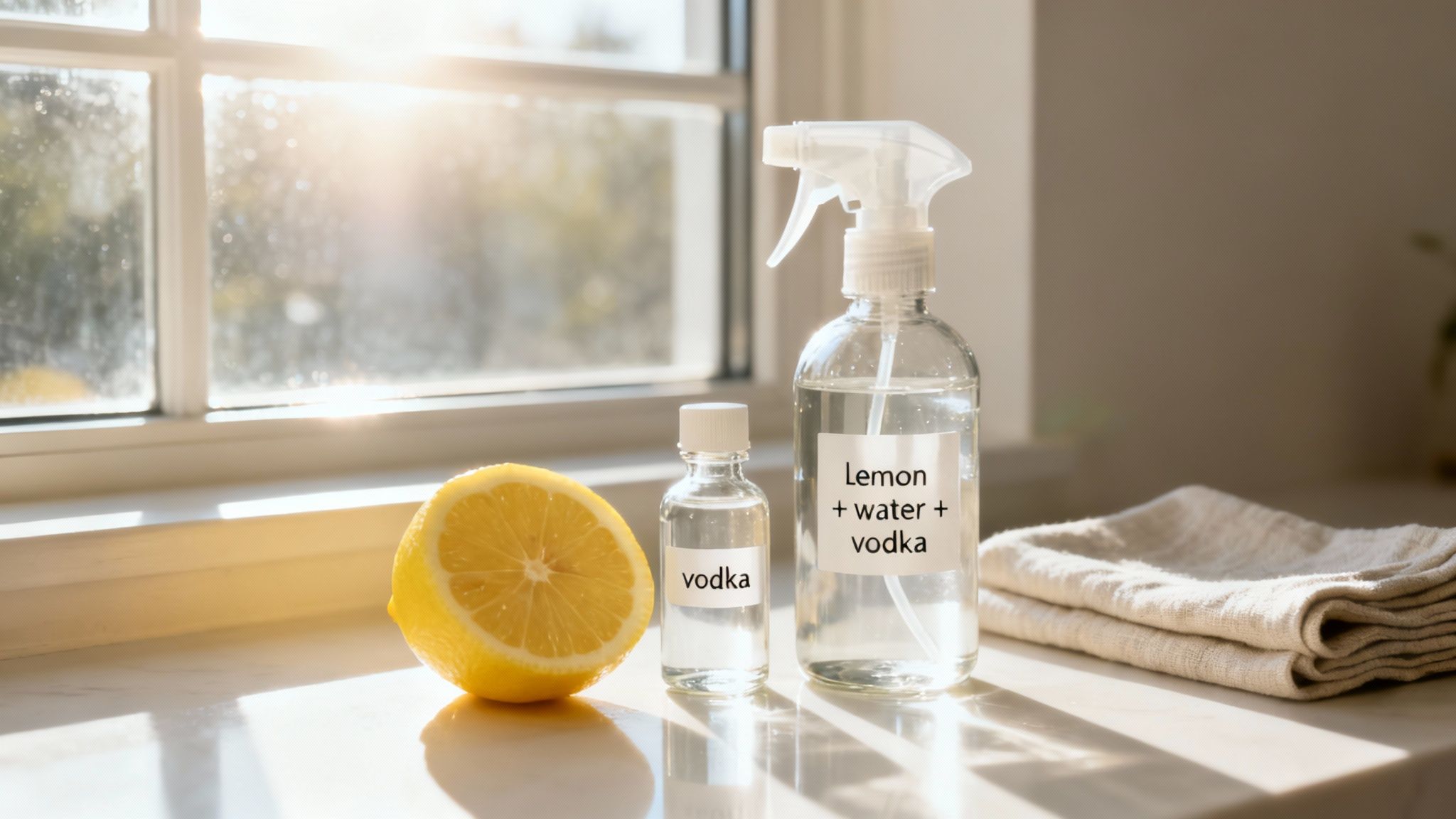
This mixture is often considered one of the best homemade window cleaning solutions for those who dislike the strong smell of vinegar but still want a powerful, natural cleaner. The alcohol acts as a solvent and ensures the liquid evaporates quickly, drastically reducing the chances of streaks. For instance, our lemon-based solution harnesses the power of natural acids, and you can learn more about understanding the benefits of citric acid in cleaning.
How to Make and Use It
Creating this boutique-style cleaner is simple, requiring just a few key ingredients for a superior shine.
- Ingredients:
- 1 cup distilled water
- 1 cup high-proof vodka (cheaper brands are fine)
- 2 tablespoons fresh-squeezed lemon juice
- Directions:
- Strain the fresh lemon juice through a fine-mesh sieve or cheesecloth to remove all pulp and seeds.
- Combine the strained lemon juice, vodka, and distilled water in a clean spray bottle.
- Shake gently to mix the ingredients thoroughly.
- Spray onto the glass surface and wipe immediately with a clean microfiber cloth or a coffee filter for a pristine finish.
When to Use This Solution
This solution is perfect for achieving a flawless look on highly visible windows, glass railings, and mirrors, especially before special events or for real estate showings. Its fast-drying, no-residue formula makes it ideal for interior glass where a lingering vinegar smell would be undesirable. It is particularly effective on greasy fingerprints and smudges.
Pro Tip: Because alcohol evaporates very quickly, it's best to work in small, manageable sections. Spray and wipe one area completely before moving on to the next to prevent the solution from drying on the glass and causing spots.
Tips for a Perfect Finish
To get the most out of this premium cleaner, follow these expert recommendations:
- Fresh Juice is Best: Always use freshly squeezed lemon juice. Bottled juice often contains sugars and preservatives that can leave a sticky residue on your windows.
- Strain Meticulously: Any tiny pulp particles left in the solution can stick to the glass and ruin your streak-free shine. Straining is a non-negotiable step for this recipe.
- Choose High-Proof Alcohol: The higher the proof (and therefore the alcohol content) of the vodka, the faster it will evaporate, which is key to preventing streaks.
Comparison of 7 Homemade Window Cleaning Solutions
| Method | Complexity 🔄 | Resources & Cost ⚡ | Effectiveness ⭐ | Ideal Use Cases 📊 | Key Advantages & Tips 💡 |
|---|---|---|---|---|---|
| Classic Vinegar and Water Solution | Very simple — mix 1:1; minimal skill | White vinegar + water; Very Low ($0.50–$1/batch) | ⭐⭐⭐⭐ High (regular); Medium (heavy buildup) | Routine maintenance, eco-conscious homes | Non-toxic and cheap; use distilled water, ventilate, wipe with newspaper |
| Vinegar, Water, and Rubbing Alcohol Solution | Simple mix (1:1:1); handle alcohol safely | Vinegar, water, isopropyl alcohol; Low ($1.50–$2.50) | ⭐⭐⭐⭐⭐ Very High — fast drying, streak-free | Large windows, humid climates, professional cleaning | Dries quickly and reduces streaks; use 70% alcohol, keep away from flames |
| Vinegar, Water, and Cornstarch Solution | Moderate — cornstarch must be dissolved; thicker apply | Vinegar, water, cornstarch; Very Low ($0.75–$1.25) | ⭐⭐⭐⭐⭐ Very High for hard-water stains and polishing | Hard-water regions, mineral deposits, older windows | Polishes and buffs glass; pre-dissolve cornstarch, avoid spray-bottle clogging |
| Vinegar, Water, and Essential Oil Solution | Simple — add oils and shake; allergy caution | Vinegar, water, essential oils; Low–Medium ($1.50–$3.00) | ⭐⭐⭐⭐ High for light-to-moderate soiling; masks odor | Indoor use, wellness-focused households, pleasant-smelling cleaning | Adds fragrance and antimicrobial boost; use pure oils, add after mixing, shake before use |
| Castile Soap, Water, and Vinegar Solution | Moderate — measure soap to prevent excess suds | Castile soap, water, vinegar; Medium ($2.00–$3.50) | ⭐⭐⭐⭐ High for greasy windows and general cleaning | Homes with children/pets, greasy surfaces, eco-conscious users | Gentle and biodegradable; use minimal soap, dilute well to avoid residue |
| Baking Soda Paste and Vinegar Solution | Higher — two-stage paste + spray; more manual effort | Baking soda, water, vinegar; Very Low ($0.50–$1.00) | ⭐⭐⭐⭐⭐ Very High for heavy buildup, paint, adhesive | Deep cleaning, move‑out, renovation or construction residue | Powerful on baked-on grime; let paste sit, scrub gently, follow with vinegar spray |
| Lemon Juice, Water, and Vodka Solution | Moderate — measure and strain lemon; pricier ingredients | Lemon juice, vodka, water; Medium–High ($3.00–$5.00) | ⭐⭐⭐⭐⭐ Very High — professional-grade, fresh scent | Staging, photo shoots, luxury homes, visible showcase windows | Pleasant citrus aroma and fast evaporation; use fresh-squeezed lemon, strain pulp, best for occasional use |
When to Call in the Professionals for a Perfect Shine
Navigating the world of window cleaning reveals a powerful truth: the best solution is often the one tailored to the specific job at hand. Throughout this guide, we've explored a variety of the best homemade window cleaning solutions, from the tried-and-true Classic Vinegar and Water mix to the grease-cutting power of Castile Soap and the surprising effectiveness of a Lemon Juice and Vodka concoction. Each recipe offers a unique set of benefits, empowering you with the tools to tackle everything from dusty panes and light smudges to minor hard water spots, all using simple, affordable, and non-toxic ingredients you likely already have in your pantry.
Mastering these DIY approaches is more than just a cost-saving measure; it’s about taking control of your home's maintenance and achieving a brilliant, streak-free shine on your own terms. By understanding the science behind why acidic vinegar dissolves mineral deposits or how cornstarch acts as a gentle abrasive, you gain the confidence to adapt and troubleshoot. This knowledge allows you to maintain the clarity and beauty of your windows, glass railings, and even solar panels with regular, effective upkeep. The immediate reward is a brighter home and a clearer view, but the long-term benefit is preserving the integrity and value of your property.
Knowing When a DIY Approach Is Not Enough
While homemade solutions are fantastic for routine cleaning, it is equally important to recognize their limitations. Certain scenarios demand the specialized equipment, advanced techniques, and safety protocols that only a professional service can provide. Acknowledging these situations ensures the job is done right without risking personal injury or damage to your property.
Consider calling in an expert for the following situations:
- Height and Accessibility: Cleaning second or third-story windows, skylights, or windows over complex landscaping presents significant safety risks. Professionals use ladders, extension poles, and sometimes even water-fed pole systems to work safely and efficiently at heights that are dangerous for the average homeowner.
- Severe Hard Water Staining: The mineral deposits that cause stubborn, chalky stains can etch into the glass over time. While our Baking Soda Paste recipe can handle minor spots, severe, long-term buildup often requires professional-grade acidic cleaners and specialized buffing equipment to restore clarity without scratching the surface.
- Post-Construction or Renovation Cleanup: Removing construction debris like paint overspray, silicone, sticker residue, or mortar requires specific solvents and techniques. Using the wrong tool or method can easily lead to permanently scratched or damaged glass.
- Time and Efficiency: For homeowners with a large number of windows or those with limited time, a professional team can accomplish in a few hours what might take an entire weekend to do yourself. This service is invaluable for preparing a home for sale, hosting an event, or simply reclaiming your free time.
Ultimately, the goal is a pristine, unobstructed view that enhances your living space. Whether you choose one of the best homemade window cleaning solutions for your weekly touch-ups or wisely delegate a challenging job to the experts, you are making an informed decision that protects and beautifies your home.
For those tough jobs in the Phoenix Valley that go beyond a simple DIY fix, trust the insured and bonded experts at Sparkle Tech Window Washing. We handle the hazardous heights, stubborn stains, and large-scale projects, so you can enjoy a perfect, professional finish without the hassle. Visit us online to get your free estimate and see the difference a professional shine can make. Sparkle Tech Window Washing