




Ever wondered how professional window cleaners get that flawless, streak-free shine that seems impossible to replicate? It’s not magic. It’s a combination of skill and a highly specialized set of tools built for one purpose: perfection.
This professional-grade equipment, from high-quality squeegees to pure water systems with water-fed poles, is what truly separates a pro's work from the average weekend DIY attempt. When you see a professional at work, you're seeing a system in action.
The Pro Window Cleaner's Essential Toolkit
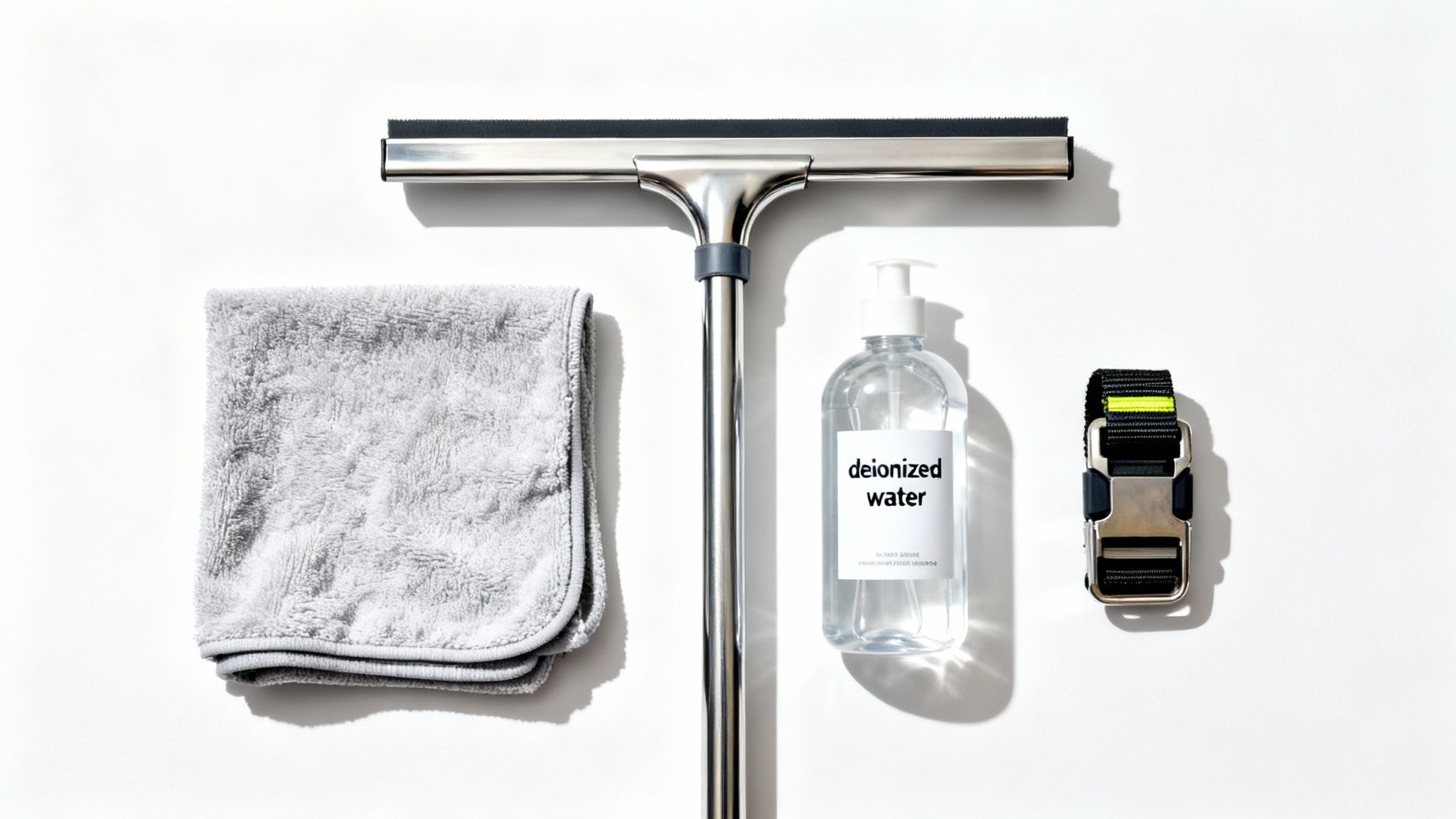
If you've ever tried cleaning your own windows with a spray bottle and some paper towels, you know the frustration of streaks and lint left behind. A professional's toolkit is designed to eliminate those problems entirely, delivering crystal-clear results that last.
Think of it like the difference between a home mechanic's toolbox and what you'd find in a professional auto shop. Both have wrenches and screwdrivers, but the pro has precision-calibrated tools, diagnostic machines, and specialized lifts that allow for a level of work the home setup just can't match. The same idea applies here.
The Four Pillars of Professional Gear
A professional’s toolkit is built on four core pillars. Each category of equipment serves a critical function, working together to achieve that signature spotless finish on any type of window, at any height.
The main components are:
- Precision Squeegees and Applicators: These are the heart of the traditional "wet and squeegee" method. A pro's squeegee isn't a cheap plastic tool; it’s a high-performance instrument with interchangeable rubber blades for a perfect, clean edge every time.
- Specialized Cleaning Solutions: You might be surprised to learn that professional solutions are often incredibly simple. Their main job isn't to blast away dirt with harsh chemicals but to create a smooth "slip" on the glass, allowing the squeegee to glide effortlessly.
- Pure Water Systems: This is where modern technology really shines. These systems use multi-stage filters to produce 100% pure, deionized water. Pumped through long, lightweight poles, this water actively attracts and rinses away dirt, then dries completely spot-free—no squeegee required.
- Essential Safety Equipment: Working at height is serious business. A pro's kit is incomplete without sturdy ladders, leg levelers for uneven ground, and sometimes even harnesses and fall-arrest systems for high-rise jobs. Safety is never an afterthought.
The real secret isn't just owning the tools, but knowing how to use them as an integrated system. A true professional understands which tool is right for the job and how each piece contributes to a flawless outcome.
This guide will break down each of these categories, giving you a behind-the-scenes look at why pros choose specific equipment and how it all comes together to deliver truly professional results.
Professional Window Cleaning Gear at a Glance
To give you a quick overview, this table summarizes the core equipment a professional uses and why it's a world apart from standard household cleaning supplies.
| Tool Category | Primary Purpose | Why It's Different from DIY |
|---|---|---|
| Squeegees & Applicators | To apply solution and then remove all water and dirt from the glass in a single, smooth motion. | Professional squeegees use high-grade, replaceable rubber blades and come in various sizes for precision. They're designed for technique, not just wiping. |
| Cleaning Solutions | To lubricate the glass (create "slip") and lift dirt, allowing the squeegee to glide without skipping or leaving streaks. | Pro solutions are concentrated, biodegradable, and focus on lubrication rather than harsh chemicals. They're mixed with water to a precise ratio. |
| Pure Water Systems | To clean high or hard-to-reach windows from the ground safely, leaving a spot-free finish without the need for manual drying. | DIY methods can't replicate pure water. Tap water contains minerals that leave spots; these systems strip 100% of those minerals away. |
| Safety Gear | To ensure the cleaner can work safely at any height, on any terrain, preventing falls and accidents. | Pros use specialized ladders with stabilizers, leg levelers, harnesses, and other OSHA-compliant gear that goes far beyond a typical step stool. |
As you can see, every piece of equipment is chosen for its ability to deliver superior performance, efficiency, and above all, safety. It's this commitment to professional-grade gear that makes all the difference.
Why the Squeegee Is a Pro's Best Friend
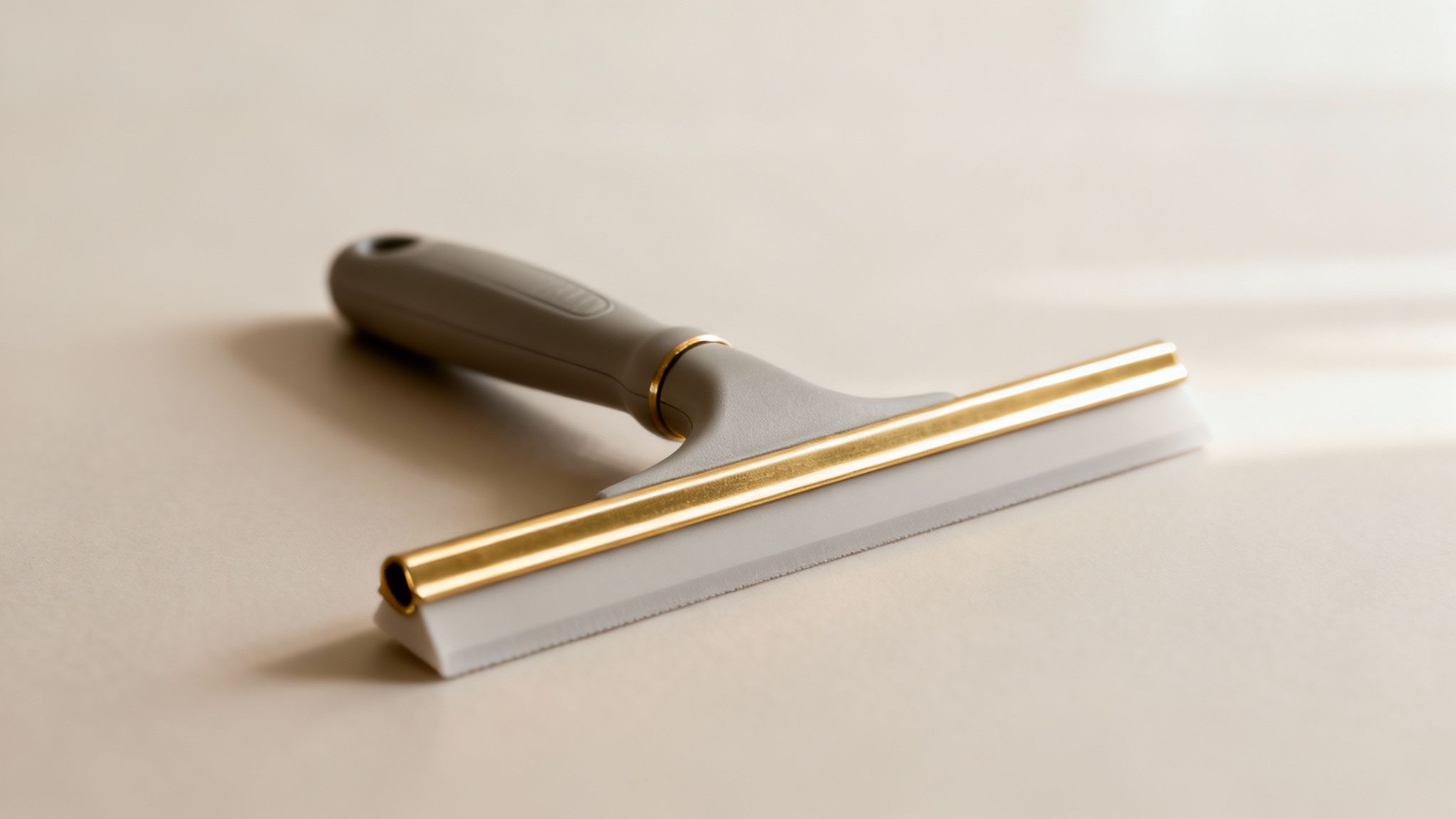
Sure, water-fed poles and other modern gadgets have their place, but the humble squeegee is still the undisputed icon of professional window cleaning. There's a good reason for that. In the hands of a seasoned pro, a quality squeegee is more than just a tool—it's an extension of their arm. It delivers a flawless, streak-free shine that automated systems often can't replicate, especially on interior glass.
Think of it this way: a master chef might have a food processor, but their favorite knife is what gives them real precision and control. The professional squeegee offers that same level of artistry, allowing a technician to feel the glass and adjust on the fly for a perfect result every single time.
Anatomy of a Professional Squeegee
Forget those flimsy plastic squeegees you find at the hardware store. A professional-grade squeegee is a precision instrument, built from the ground up for performance and longevity. Every piece is designed to work together seamlessly, wiping away every last drop of water and grime.
Here’s what makes up a pro’s tool:
- The Handle: Professionals look for handles made of stainless steel or high-impact polymers, usually with an ergonomic grip. This isn't just for comfort; it reduces fatigue over a long day and gives them the fine-tuned control needed to apply just the right amount of pressure.
- The Channel: This is the metal track, typically made of brass or stainless steel, that holds the rubber blade in place. Channels are interchangeable, which is a huge advantage. A cleaner can swap from a tiny 6-inch channel for a French door pane to a massive 22-inch one for a commercial storefront in seconds.
- The Rubber Blade: This is where the magic happens. Professional rubber is a world away from the hard plastic on consumer models. It's soft and pliable, allowing it to glide smoothly over the glass and adapt to any minor imperfections on the surface.
The secret to a perfect, streak-free finish is all in the blade's edge. Even a microscopic nick or a bit of grit can leave a glaring line behind. That's why pros are constantly inspecting their rubber and will swap it out at the first sign of damage.
It's All About Technique and Maintenance
Simply owning a great squeegee doesn't guarantee great results. The real difference between an amateur and an expert comes down to technique. Mastering the art of applying consistent, even pressure while pulling the squeegee in overlapping strokes is key. This method, often called "fanning," takes a lot of practice but is absolutely essential for a beautiful finish. You can dive deeper into this in our guide on the best way to clean windows streak-free.
The squeegee is so fundamental to the trade that it's used by over 90% of window cleaning professionals across the globe. To keep that perfect edge, most pros replace their rubber blades every 3 to 6 months, sometimes more frequently, ensuring every job is done to the highest possible standard. This dedication to both the tool and the technique is exactly why the squeegee will always be a professional's best friend.
The Surprising Simplicity of Pro Cleaning Solutions
If you’re picturing some secret, high-tech chemical formula locked away in a vault, I've got some news for you. The truth is, the solutions pros use are often remarkably simple. The real goal isn't to blast dirt away with harsh chemicals but to leave behind a perfectly clean, residue-free surface.
Most of the time, we’re just using a basic mix: pure water with a tiny bit of professional-grade concentrate. You can even use a simple, biodegradable dish soap. The magic isn't actually in the soap itself, but in a quality we call "slip."
Think of slip as the solution's most important job. It creates a slick, lubricated film on the glass that lets a squeegee glide across the pane without any skipping, chattering, or dragging. That perfectly smooth glide is what pulls every last drop of dirty water off the glass, and that is the secret to a streak-free finish.
Why Simple Solutions Outperform Store Sprays
So what about those bright blue sprays under your sink? Most of them are packed with alcohols, ammonia, and other chemicals designed to evaporate in a flash. They might look clean for a minute, but they almost always leave behind a microscopic film.
This invisible residue is a magnet for dust, pollen, and everyday grime. The result? Your windows get dirty again, faster.
Professional solutions, however, are built to be clean-rinsing. They do their job—lifting the dirt—and then get completely wiped away by the squeegee. Nothing is left behind but pristine, clear glass.
The ultimate goal of a professional cleaning solution isn't just to clean the window for today, but to ensure it stays cleaner for longer. By avoiding sticky residues, pros extend the time between cleanings.
The Shift Toward Eco-Friendly Cleaning
The entire industry is making a major shift toward greener, more sustainable cleaning. This isn't just a fleeting trend; it’s a direct response to what clients want and a growing sense of responsibility for our environmental impact.
These eco-friendly solutions are typically:
- Biodegradable: They break down naturally and don’t harm the environment.
- Non-Toxic: Much safer for your family, pets, and the landscaping around your home.
- Phosphate-Free: They don't contribute to water pollution.
This commitment is a pretty big deal. In recent years, over 30% of professional window cleaners globally have switched to green cleaning products. In major markets, a whopping 75% of commercial companies now prioritize eco-friendly solutions, a number expected to climb to 90% by 2028. You can find more window cleaning industry statistics on ntpropertycare.com.
These green alternatives give us fantastic slip and cleaning power without compromising safety or our planet. Diving into the specific formulas is a topic all its own, which is why we break down the essential chemicals for window cleaners in another guide. At the end of the day, the best solution is one that works great and that you can feel good about using.
How Pure Water Systems Changed the Game
If you want to know what truly sets the pros apart from a DIY job, look no further than the water-fed pole (WFP) system. This is easily the biggest leap forward in window cleaning technology, completely changing how we handle exterior glass, especially on taller buildings. It’s the go-to solution when ladders become a risky or inefficient option.
At the heart of the system is its ability to create 100% pure, deionized water. Think about what happens when you wash your car with a garden hose on a hot day and let it air dry. You get left with those annoying white spots, right? Those are mineral deposits like calcium and magnesium from your tap water. A WFP system is basically a super-filter that removes every last one of those impurities before the water ever touches the glass.
This infographic breaks down the simple, yet powerful, idea behind pure water cleaning.
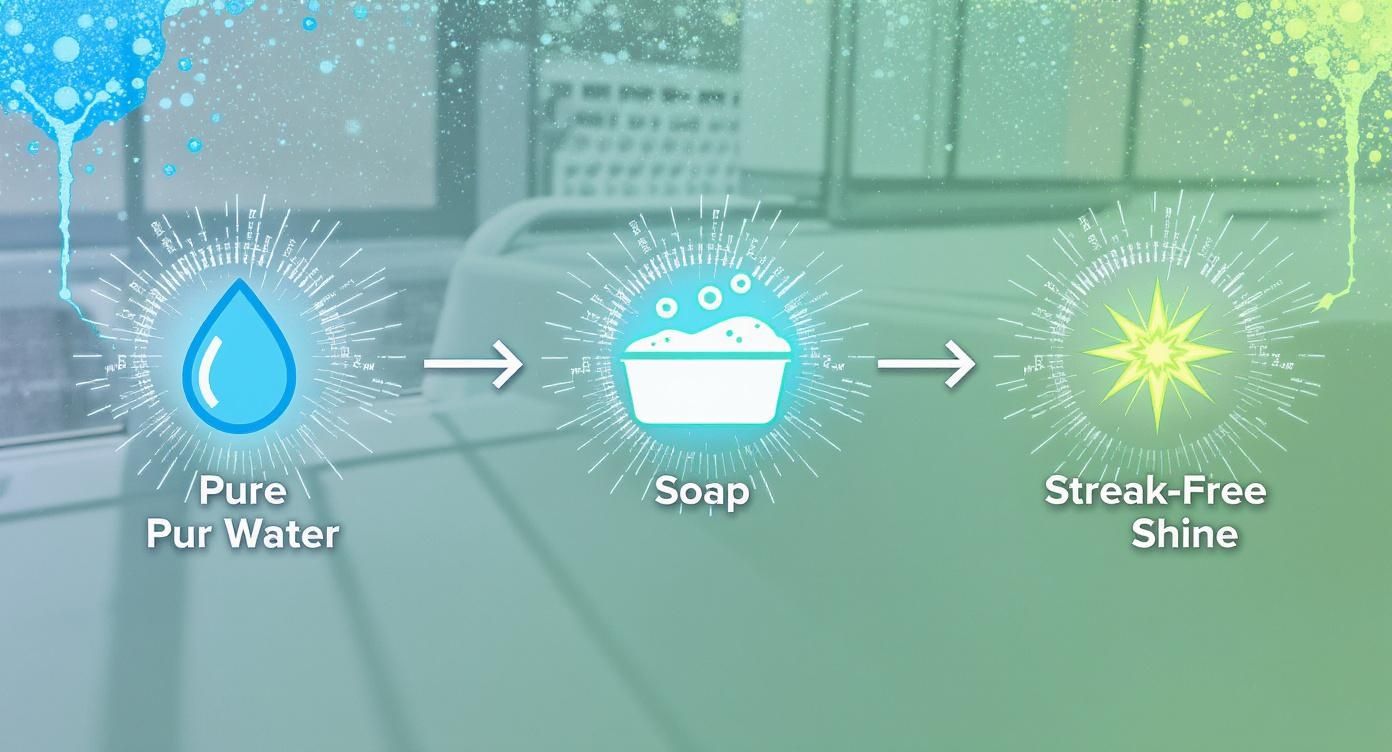
As you can see, when you combine pure, mineral-free water with a quality soap, you get the perfect recipe for a flawless shine that dries perfectly on its own.
The Science of a Spot-Free Finish
So, how does plain old water clean so well? Once all the minerals are stripped out, the water is in an unstable state. It becomes "hungry" to grab onto things, almost like a magnet for dirt. It actively pulls dust, grime, and pollen off the glass, dissolving and lifting them away. A soft-bristled brush attached to the pole helps agitate and loosen any really stubborn buildup.
After a thorough scrub, the window gets a final rinse with more of that pure water. This is where the magic happens. Because there are literally zero dissolved solids in the water, it evaporates completely clean. Nothing is left behind. No streaks, no spots—no need to even touch a squeegee to the glass.
A water-fed pole system isn't just about getting a better clean; it's a massive leap forward in safety. Our technicians can clean windows up to five or six stories high with both feet planted firmly on the ground.
This approach removes nearly all the risks that come with working on ladders or other high-reach equipment. To really dig into the details, you can learn more about how the water-fed pole window cleaning system works and see why it’s become the industry standard for commercial jobs and large homes. It's the perfect mix of efficiency, safety, and amazing results.
Essential Tools for Preparation and Detailing
A truly professional, streak-free window cleaning job is about so much more than just the squeegee work. The real magic, the kind that separates a pro from an amateur, happens in the details—the frames, the sills, and the tracks.
Think of it like a painter prepping a wall. You wouldn't just slap on a coat of paint without cleaning and sanding first, right? The same principle applies here. Without a perfectly prepped "canvas," the final result will never look quite right. This is where a pro's supporting cast of tools comes into play.
The Unsung Heroes of a Perfect Finish
While the squeegee might be the star of the show, these other tools are the indispensable crew working behind the scenes. Each one is designed to tackle a specific type of grime that soap and a squeegee can't touch, ensuring a comprehensive clean from corner to corner.
Here are the detailing tools you'll find in every pro's kit:
- High-Quality Microfiber Cloths: Forget flimsy paper towels. A professional relies on a stack of lint-free microfiber cloths. Some are for wiping down frames and sills, but a dedicated dry one is crucial for "detailing"—the final wipe along the edges of the glass to catch any lingering water and stop drips in their tracks.
- Precision Scrapers: For those stubborn spots like paint flecks, dried-on bug residue, or mystery gunk, a scraper is non-negotiable. A pro knows how to use it with a delicate touch and at the perfect angle to lift debris clean off without leaving a single scratch on the glass.
- Purpose-Built Buckets: Even the simple bucket gets a professional upgrade. You'll almost always see pros using wide, rectangular buckets. This isn't just for looks; the shape is a perfect fit for wide washers and squeegees, making it easy to load up your tools without sloshing water everywhere. It's a small detail that makes the whole process smoother.
The real mark of a professional isn't just cleaning the glass; it's leaving the entire window area—frame, sill, and all—spotless. These detailing tools are what make that comprehensive clean possible.
Ultimately, these preparation and detailing tools are the secret weapon behind a flawless finish. They ensure every job is completed to the highest standard, delivering that truly polished look that keeps customers calling back.
The Non-Negotiable World of Safety Equipment
https://www.youtube.com/embed/KuMRqSrR6mA
When a professional window cleaner shows up, the most important tools they bring aren't always the squeegees or poles. For any job that takes them off the ground floor, their safety gear is the real bedrock of their operation. It's what separates a true pro from a dangerous amateur.
Investing in top-notch safety equipment isn't just about protecting themselves; it’s a commitment to protecting you and your property, too. This gear is never an optional extra. It’s a non-negotiable part of the trade that demands skill, training, and constant inspection to use correctly.
Foundational Safety for Every Job
On most residential and low-rise commercial jobs, the ladder is king. But don't mistake a professional's ladder for the rickety one you might have in your garage—they're worlds apart.
- Professional-Grade Ladders: Pros rely on heavy-duty ladders, usually made of fiberglass for its durability and non-conductive properties. They're outfitted with critical attachments like stabilizers (often called "stand-offs") that give the top a much wider, more secure footprint against the building. Leg levelers are another must-have, allowing them to create a solid, even base on sloping or uneven ground.
- Non-Slip Footwear: You can't do this job in sneakers. Proper boots with high-traction, non-slip soles are absolutely essential for staying planted on wet surfaces, ladder rungs, or slick rooftops.
- Protective Gloves: Good gloves do more than just keep hands clean. They provide a reliable grip on wet tools and offer a layer of protection from sharp edges or scrapes.
Safety isn’t just a checklist; it’s a mindset. A real professional starts every job by thinking about the risks first, then they choose the right gear before a single drop of water hits the glass.
Advanced Gear for High-Rise Work
Once the work gets too high for ladders, the game changes completely. That's when a pro's kit expands to include specialized fall protection systems. This isn't stuff you can just buy and use; it's highly regulated equipment that requires serious training.
For these complex jobs, you’ll see technicians using a system of safety harnesses, ropes, and certified anchoring systems that meet strict industry standards. This level of preparation is what allows them to work safely at height, ensuring every job gets done without incident. It’s a powerful signal of the expertise and responsibility that defines a trustworthy service provider.
Common Questions About Professional Window Cleaning Gear
Even after laying out all the gear, you probably still have some questions. It's totally normal. The world of pro window cleaning is surprisingly detailed, and knowing the little things helps explain why the results a pro gets are so hard to replicate on your own. Let's tackle some of the most common questions people have.
Can I Get Pro Results with a Store-Bought Kit?
For a quick touch-up, a DIY kit from the hardware store can work just fine. But if you're chasing that truly flawless, long-lasting shine, you'll find it's a whole different ball game. The real gap isn't just the tools themselves, but the quality of those tools and the skill behind them.
A professional's squeegee, for instance, uses an incredibly soft and precise rubber blade that they swap out constantly. This is a bigger deal than it sounds. Those hardened or slightly nicked blades on consumer kits are the number one cause of streaks. On top of that, pros have mastered advanced squeegee techniques and often use purified water systems that completely eliminate the mineral deposits responsible for those frustrating spots left behind when the water dries.
Is Pure Water Really Better Than Cleaning Solutions?
When it comes to exterior windows, especially when using a water-fed pole, the answer is a resounding yes. Pure water is far superior. Because the water has been deionized, it basically becomes a dirt magnet, actively pulling grime off the glass.
The biggest win, though, is what happens when it dries: absolutely nothing. It evaporates without leaving any residue, spots, or chemical film. This means your windows don't just get sparkling clean—they actually stay cleaner for longer because there's no sticky soap residue left to attract fresh dust and pollen. For greasy fingerprints on interior windows, however, a good, mild biodegradable soap is still the best tool for the job.
What Is the Single Most Important Pro Tool?
Everything in a window cleaner's toolkit has a purpose, but if you ask most pros, they'll point to the high-quality squeegee as the cornerstone of traditional window cleaning. It's the one tool that requires the most skill to master and has the biggest impact on that signature streak-free finish.
It really comes down to the art of it. A pro’s ability to glide that flawless blade across the glass with perfectly even pressure is what truly separates their work from the average DIY attempt.
A critical component of safety is understanding and adhering to all relevant Australian personal protective equipment requirements to safeguard professionals on the job. This ensures that no matter what tool is being used, the technician is protected.
Why Do Professionals Use So Many Different Cloths?
It all comes down to preventing cross-contamination and guaranteeing a perfect result. A pro never uses the same cloth for every step. They'll start with a scrubber or a coarse applicator cloth to soap up the window and break down any heavy-duty grime.
Then, after the squeegee does its work, they switch to a completely different, highly absorbent microfiber cloth just for "detailing." This is the final touch-up—wiping the edges of the pane and the frame to catch any last drips. Using a totally clean, dry cloth for this final step is crucial. It prevents dirty water from being smeared right back onto the glass, a common mistake that can undo all your hard work in a single swipe.
Ready for a truly professional, streak-free shine without the hassle? The team at Sparkle Tech Window Washing uses the best tools and techniques to make your windows spotless. Get your free estimate today!