




Before you can tackle foggy windows, you have to play detective. The fix depends entirely on where the fog is located. Is it a simple surface issue you can wipe away, or is it trapped between the panes of glass? Figuring this out first will save you a ton of frustration.
Why Are My Windows Foggy Anyway?
That haze on your windows isn't just a random annoyance. It's a clear signal, and the fog's location tells you everything you need to know about the problem. Getting the diagnosis right from the get-go means you can apply the right solution instead of wasting time on something that won't work.
There are really only two culprits you need to worry about:
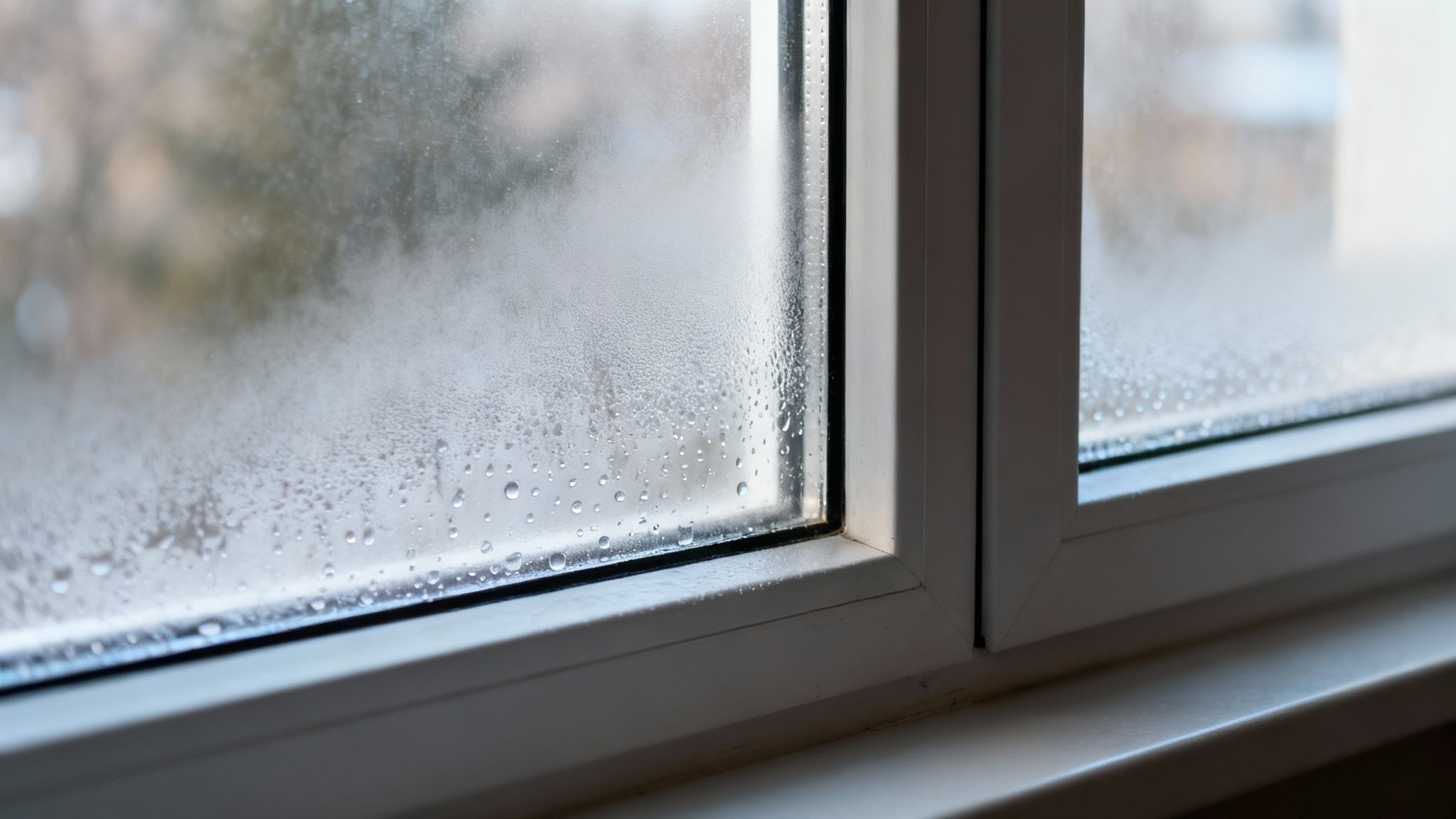
- Surface Condensation: This is the most common and, thankfully, the easiest to deal with. It happens when warm, humid air inside your home comes into contact with the cooler surface of the window glass. Everyday activities like cooking a big pot of pasta, taking a steamy shower, or even just having a few people in a room can raise the humidity, causing moisture to collect on the glass. This kind of fog is temporary and can be wiped right off.
- A Failed Window Seal: Now, this is the more serious issue. Double-pane windows are designed with a sealed space between the two sheets of glass, often filled with an inert gas for insulation. Over time, that seal can degrade and fail. When it breaks, humid air gets sucked into that once-sealed gap. The result? A persistent fog, streaky mineral deposits, or a milky haze that’s trapped between the panes—completely out of your reach.
How to Tell What's Causing the Fog
Luckily, figuring out which problem you have is dead simple.
Just take a clean, dry cloth and try to wipe the fog from the inside of the window. If the condensation clears away, you're just dealing with surface condensation. Problem solved.
But if you wipe and the fog doesn't budge, the moisture is trapped between the glass panes. This means the window's seal has failed, and no amount of surface cleaning is going to fix it.
This simple decision tree breaks it down visually:

As the graphic shows, fog on the surface is a maintenance task, while fog inside the glass points to a hardware problem that needs a more involved solution. This distinction is a big reason why professional cleaning and repair services are in such high demand.
The global cleaning market was valued at an impressive $55.7 billion in 2020 and is projected to double, hitting $111.5 billion by 2030. Homeowners are increasingly looking for effective, professional solutions for nagging issues just like foggy windows. If you're interested in the market trends, you can dive deeper into the latest window cleaning industry statistics.
Simple DIY Fixes for Surface-Level Window Fog
If you’ve wiped a window and the fog is on the outside or inside surface, breathe a sigh of relief. This is the easiest kind of window fog to tackle, and you probably already have everything you need right under your sink. You can skip the expensive commercial cleaners; a couple of simple household staples will cut right through that hazy film and leave you with a streak-free shine.
These DIY solutions are my go-to because they're cheap, effective, and don't involve harsh chemicals.
The Classic Vinegar Solution
There's a reason the old-school vinegar and water mix has stood the test of time—it just works. The acetic acid in white vinegar is fantastic for dissolving the mineral deposits and grime that often build up from condensation, leaving your glass perfectly clear.
Here’s how I do it for the best results:
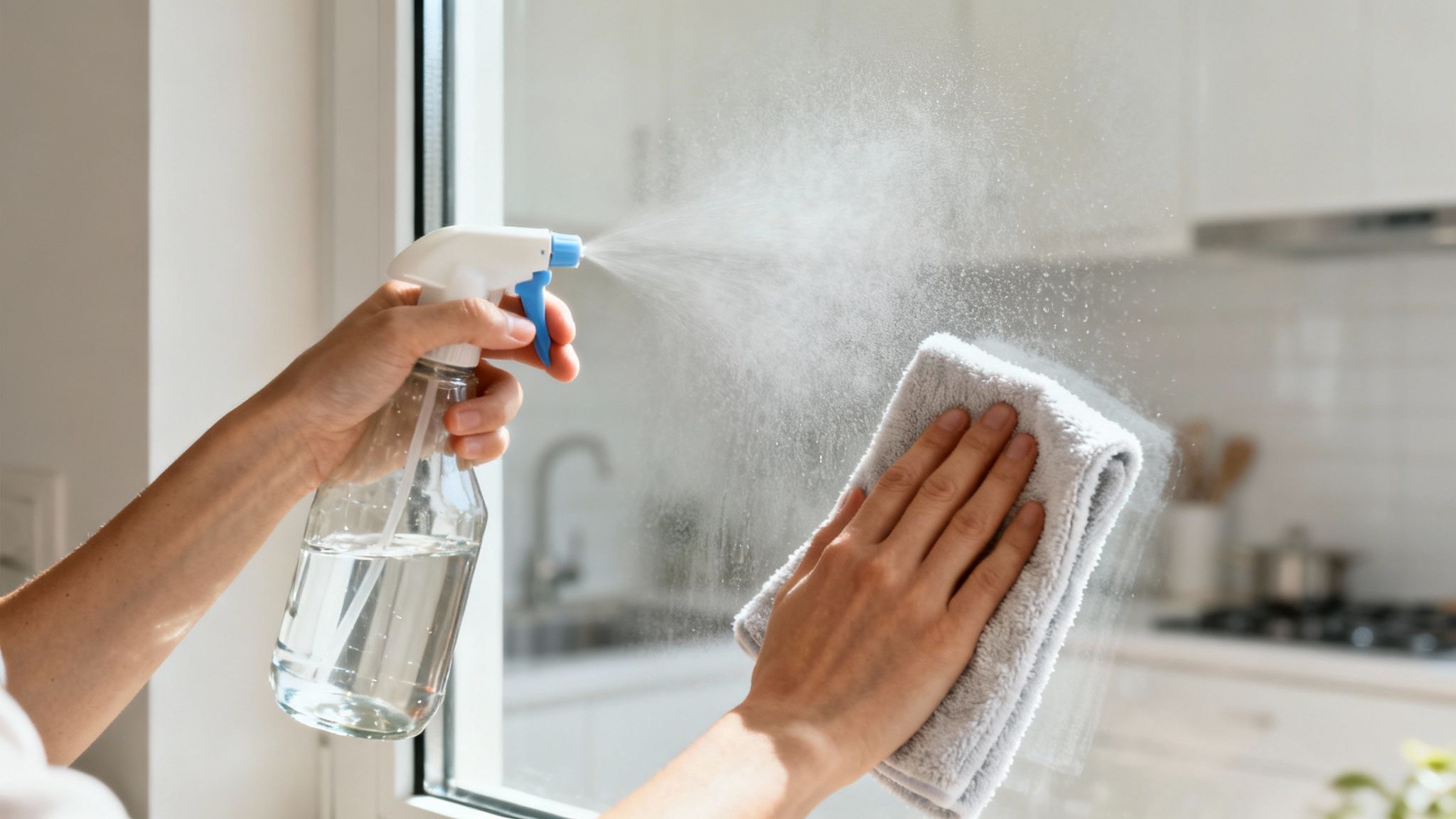
- Grab a clean spray bottle and mix one part distilled white vinegar with one part warm water. I find that using warm water really helps loosen up any stubborn smudges.
- Spray the solution generously all over the foggy glass. Don't be shy with it; you want to cover the surface from top to bottom.
- Using a clean microfiber cloth, wipe the glass in a "Z" pattern, starting at the top corner and working your way down. This little trick keeps dirty drips from running over the spots you've just cleaned.
For that final, professional-looking polish, go over the entire window with a second, completely dry microfiber cloth. This two-cloth method is the secret weapon for getting rid of any lingering streaks and ensuring a perfect finish.
My biggest tip: Never, ever clean windows in direct sunlight. The heat makes your cleaning solution evaporate almost instantly, which is the number one cause of those frustrating streaks and spots. Pick an overcast day or tackle the job in the morning or evening when it's cooler.
DIY Window Fog Cleaning Solutions
To help you choose the right approach, here's a quick look at a few simple DIY cleaning solutions. Each has its own strengths depending on what you're dealing with.
| Solution | Ingredients | Best For | Key Benefit |
|---|---|---|---|
| Vinegar & Water | 1 part white vinegar, 1 part warm water | General surface fog, hard water spots | Incredibly effective and cheap. |
| Rubbing Alcohol Mix | 1 part rubbing alcohol, 1 part water, 1 drop dish soap | Greasy film, stubborn smudges (e.g., kitchen windows) | Cuts through grease and evaporates quickly. |
| Cornstarch Polish | 2 tbsp cornstarch, 1/2 cup vinegar, 1/2 cup water | Polishing for a streak-free finish | The cornstarch acts as a mild abrasive to buff glass. |
| Lemon Juice Spray | 2 tbsp lemon juice, 1 cup warm water | Light fog and adding a fresh scent | Natural de-greaser with a pleasant aroma. |
While vinegar is the all-around champion, don't hesitate to try the rubbing alcohol mix if you're dealing with greasy fingerprints or kitchen grime.
A Surprising Anti-Fog Treatment
Now for a slightly weird but highly effective trick, especially for those spots that fog up constantly, like bathroom mirrors or the window over the kitchen sink. The secret weapon? Shaving cream.
The surfactants and soap in a standard foam shaving cream leave behind an invisible film that stops water vapor from condensing into those tiny droplets that cloud up your view.
Here's how to do it:
- Apply a small dollop: Squeeze a bit of foam shaving cream (the gel kind doesn't work as well) onto a microfiber cloth.
- Wipe it on: Spread a thin, even layer across the entire clean, dry glass. It's going to look like a complete mess for a minute—just trust the process.
- Buff it off: Grab a second, clean microfiber cloth and buff the glass until every last bit of the shaving cream residue is gone and the window is crystal clear.
This creates a temporary hydrophobic barrier that can keep your windows fog-free for a few weeks, all depending on how humid it is inside. It's a simple, low-cost way to shift from constantly cleaning foggy windows to actively preventing the problem in the first place.
Mastering the Tools for a Professional Finish
DIY solutions are great for a quick touch-up, but if you're chasing that truly invisible, streak-free shine, you'll need to use the tools the pros rely on. The right equipment does more than just make the job easier—it completely transforms the quality of the result. It's the difference between a frustrating chore and a genuinely satisfying task.
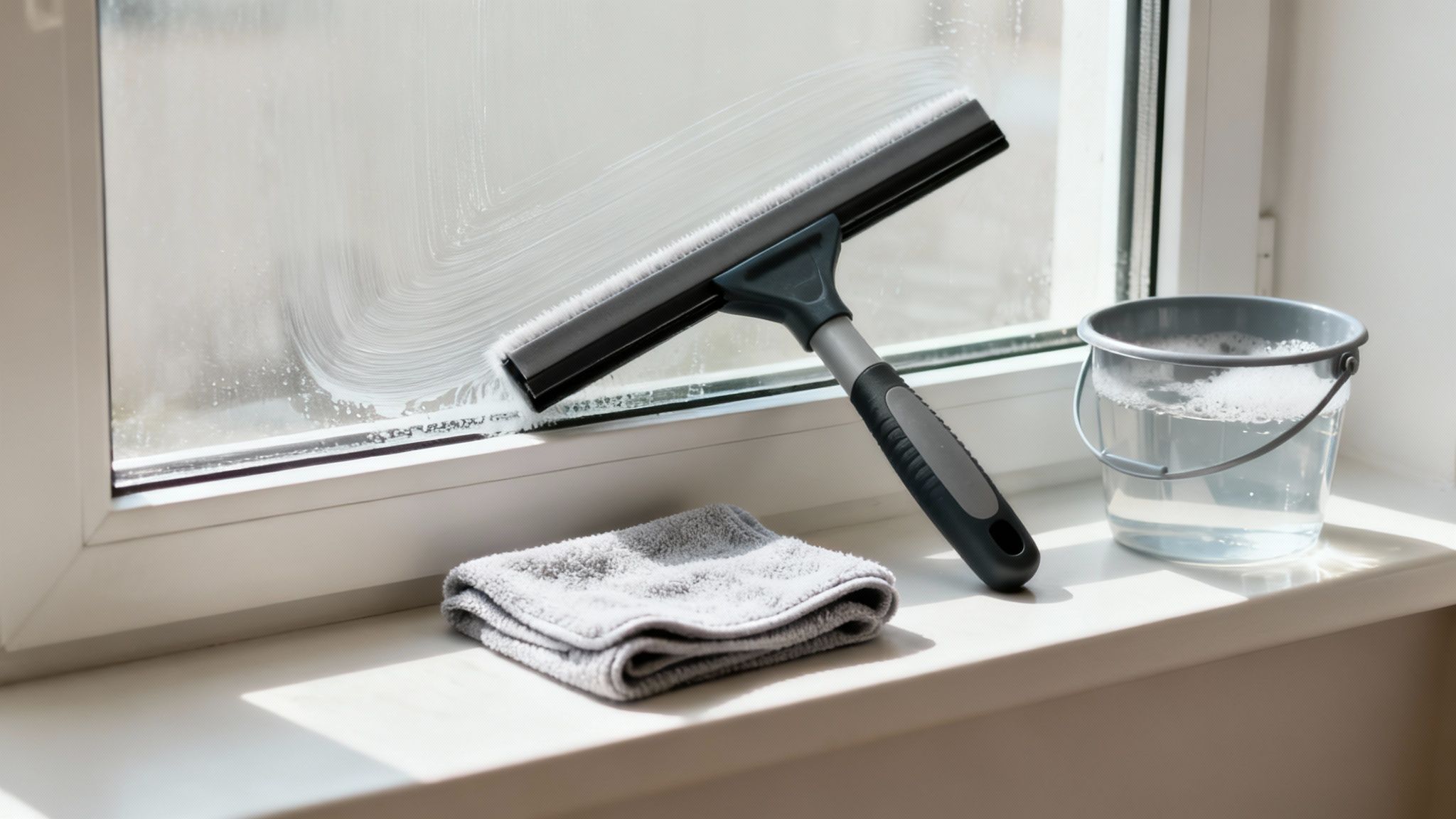
The absolute cornerstone of any pro's kit is a high-quality squeegee. I'm not talking about the cheap, flimsy ones from the dollar store. A solid squeegee with a sharp, pliable rubber blade is your number one weapon in the war against streaks and haze. This tool is so critical that the global market for it is expected to be worth around $250 million by 2025, which really speaks to its effectiveness. You can check out more on the growth of the squeegee market if you're curious.
The Squeegee and Microfiber Combination
A great squeegee needs a great partner. That's where a microfiber T-bar applicator comes in. It looks a bit like a squeegee frame but is covered with a soft, super-absorbent sleeve. This lets you apply your cleaning solution evenly across the glass without messy drips and gives you just enough power to scrub away grime.
Here's the basic workflow we use in the field:
- Scrub the Glass: Dunk your microfiber applicator in your cleaning solution, wring it out slightly, and scrub the entire window. Really work it into the corners to loosen all the dirt.
- Pull the Squeegee: Place your squeegee at the top of the glass, angle it at about 30 degrees, and pull it down in one smooth, confident stroke.
- Overlap Your Strokes: For the next pass, overlap the previous one by about an inch. This simple technique is the secret to avoiding those ugly vertical streaks.
Here's a pro tip that makes all the difference: wipe your squeegee blade with a clean, dry microfiber cloth after every single pull. This tiny step prevents you from dragging dirty water back onto the clean glass, which is the most common cause of streaks.
Advanced Tools for Tough Jobs
Sometimes, the basics aren't enough, especially for hard-to-reach windows. For second-story exterior glass, we never get on a ladder without an extension pole. These can be fitted with both applicators and squeegees, allowing you to use the proper technique safely from the ground.
For truly perfect results, technology has come a long way. Many professional services now use advanced systems. Take a look at our guide on the water-fed pole window cleaning system to see how purified water can leave windows spotless without any wiping at all. It's amazing how far the industry has evolved.
What to Do About Fog Trapped Between Window Panes
Have you ever cleaned the inside and outside of a window, only to find that frustrating foggy patch just won't go away? If so, you're not dealing with dirt. That’s the classic sign of a failed seal on a double-pane window.
Moisture has worked its way into the sealed space between the glass panes. At this point, no amount of surface cleaning is going to reach it. This trapped condensation means the window's insulating power is gone—the inert gas that once filled the gap has escaped and been replaced by regular, moist air.
How to Be Sure It's a Failed Seal
The stubborn fog is the biggest giveaway, but there are other clues. Look closely for streaks, tiny water spots, or mineral deposits on the inner surfaces of the glass. Sometimes, you might even notice a slight distortion when you look through that part of the window.
A broken seal isn't just a cosmetic problem that ruins your view. It's a direct hit to your home's energy efficiency. That window is no longer acting as a proper thermal barrier, which can lead to surprisingly higher heating and cooling bills. Most double-pane windows last a good 10 to 20 years, but factors like intense sun exposure can cause seals to break down sooner.
Key Takeaway: The moment you confirm fog is trapped between the panes, your focus needs to shift from cleaning to repair. This is a hardware failure, not a simple cleaning job, and it demands a real fix.
Your Options for a Permanent Solution
When a window seal fails, you're looking at a couple of choices. Some companies offer "defogging" services, which involve drilling tiny holes to let the moisture out. While it might sound good, this is often just a temporary band-aid for the problem.
The most effective, long-term fix is to replace the Insulated Glass Unit (IGU). The IGU is simply the sealed, double-pane glass assembly that sits inside your window frame.
By replacing only the IGU, you get a brand-new, perfectly sealed unit without the much higher cost and hassle of tearing out the entire window frame. This restores your window’s insulating performance and gives you back that crystal-clear view. For more on this, check out our guide on cleaning double-pane windows and the common issues that come up.
How to Prevent Your Windows from Fogging Again
Wiping away window fog can feel like a never-ending chore. While a good cleaning gives you a clear view for a moment, the real win is stopping the condensation before it even starts. The secret isn't some magic spray; it's all about managing the one thing that causes foggy windows: too much moisture in your home’s air.
Think about all the things we do every day—cooking, showering, running the dishwasher, even just breathing—that release water vapor into the air. When that humid air has nowhere to go, it finds the coldest surface around to settle on. Nine times out of ten, that's your window glass. Your mission is to give that moisture an escape route.
Improve Your Home's Air Circulation
Hands down, the best way to prevent foggy windows is to get the air moving in your home. Stale, damp air is the perfect recipe for condensation. Luckily, improving your home’s ventilation doesn’t have to be a huge project.
Start by building these simple habits into your daily routine:
- Run Your Exhaust Fans: This is a big one. Flip on the bathroom fan every time you shower and leave it running for about 20 minutes afterward. Do the same with your kitchen’s range hood whenever you’re boiling pasta or simmering a sauce.
- Create a Cross-Breeze: Even on a chilly day, cracking open windows on opposite ends of a room or your house for just 10-15 minutes can work wonders. It pushes out the old, humid air and brings in fresh, dry air.
- Flip on Ceiling Fans: Most people only think of fans in the summer, but running them on a low, clockwise setting in winter is a pro move. This gently pushes warmer air down from the ceiling and keeps the air from becoming stagnant, which helps stop moisture from settling on windows.
If your home feels perpetually damp, a good dehumidifier is an excellent investment. You’re aiming to keep the indoor humidity level between 30% and 40%. That’s the sweet spot for keeping your windows clear without making the air uncomfortably dry.
Tackling moisture at its source is the most reliable way to maintain clear windows. By adopting these ventilation habits, you’re not just cleaning less; you’re creating a healthier indoor environment.
The demand for crystal-clear windows is huge—the global window cleaning market is projected to be worth around $2.68 billion by 2025. This shows just how much people value effective solutions, from new tools to professional services. You can find more information about the future of the glass cleaner market and the innovations driving it. To see how the pros get that perfect, streak-free shine, check out our guide to purified water window cleaning.
Tackling Your Foggy Window Questions
When you're dealing with foggy windows, a few questions always seem to come up. It's one thing to know the steps, but another to understand the why behind them. Let's clear up some of the most common uncertainties I hear from homeowners.
https://www.youtube.com/embed/MUd2te6vXJ8
Can I Just Use Windex to Clean Foggy Windows?
Yes, but only if the fog is on the surface. For that normal, everyday condensation you see on the inside of your windows on a chilly morning, a good glass cleaner like Windex is exactly what you need. It'll wipe that right off.
The problem comes when the fog is between the panes of a double-glazed window. If that's the case, no amount of spraying or scrubbing on the outside will help. The moisture is trapped inside the sealed unit where you simply can't get to it.
How Can I Tell if My Window Seal Is Broken?
The biggest giveaway of a broken seal is fogginess you can't clean off. You might see persistent condensation, mineral deposit streaks, or a milky, hazy look that's stuck between the layers of glass.
If you've tried cleaning both the inside and outside of the window and that haze is still there, you're looking at a failed seal.
A broken window seal is more than just a cleaning headache—it’s a repair issue. That trapped fog means your window has lost its insulating power, which can start to hit your home's energy bills.
When this happens, you don't always have to replace the entire window, frame and all. Often, you can just have the insulated glass unit (the "IGU") replaced, which is a much more affordable fix. While you might see ads for "defogging" services, replacing the IGU is the only true long-term solution. I always recommend getting quotes for both to see what makes the most sense.
If you're facing stubborn foggy windows from a broken seal, it's time to call in the professionals. The experts at Sparkle Tech Window Washing can help. Find out more about our services at https://sparkletechwindowwashing.com.