




It's tempting to grab any old glass cleaner and a roll of paper towels for your windows, but when you're dealing with double pane glass, that approach can backfire. The secret isn't just about getting a streak-free shine; it's about using a gentle touch to protect the window's most vital component.
Why You Can't Clean Double Pane Windows Like Regular Glass
A double pane window might just look like a thick piece of glass, but its real magic lies in its construction. You're actually looking through two separate panes of glass with a sealed space sandwiched between them. This gap is usually filled with an inert gas like argon, which acts as an incredible insulator against heat and cold.
This design is a game-changer for your home's energy bills, keeping you warmer in winter and cooler in summer. But the whole system depends on one crucial, and surprisingly delicate, part: the perimeter seal. This is what keeps that insulating gas in and, more importantly, moisture out.
The real challenge in cleaning double pane windows isn't the dirt on the surface. It's protecting the integrity of that seal. Going at it with a pressure washer or using harsh, ammonia-based cleaners can cause the seal to crack, weaken, and ultimately fail.
Once that seal is broken, it's game over. Humid air seeps into the space between the panes, condensing and creating that frustrating, permanent fog that you can't wipe away. Your once crystal-clear, energy-saving window is now just a hazy, inefficient pane.
Double-glazed windows are now the standard in most modern homes precisely because they're so good at insulation. You can discover more insights about their widespread use in all kinds of buildings. Learning how to clean them the right way is more than just good housekeeping—it’s an essential part of protecting your home's value and keeping your energy costs down for years to come.
Your Double Pane Window Cleaning Toolkit
Getting a professional-level clean without damaging your windows means using the right tools for the job. While some household items seem like a good idea, they can leave behind lint, streaks, or even cause microscopic scratches. Here's a quick guide to what you should have in your bucket.
| Recommended Item | Why It Works | What to Avoid |
|---|---|---|
| Microfiber Cloths | They trap dirt and absorb water without leaving lint behind. You'll want at least two—one for washing, one for drying. | Paper Towels |
| Squeegee (High-Quality) | The single best tool for a streak-free finish. A good rubber blade makes all the difference. | Low-Quality Squeegees |
| Bucket of Soapy Water | A simple solution of warm water and a few drops of dish soap is all you need to cut through grime. | Ammonia or Alcohol-Based Cleaners |
| Soft-Bristle Brush | Perfect for gently scrubbing away stubborn dirt from frames and sills without scratching the surface. | Abrasive Sponges or Pads |
Investing in these few key items not only makes the job easier but also ensures you're protecting your windows for the long run.
Preparing Your Workspace for a Flawless Clean
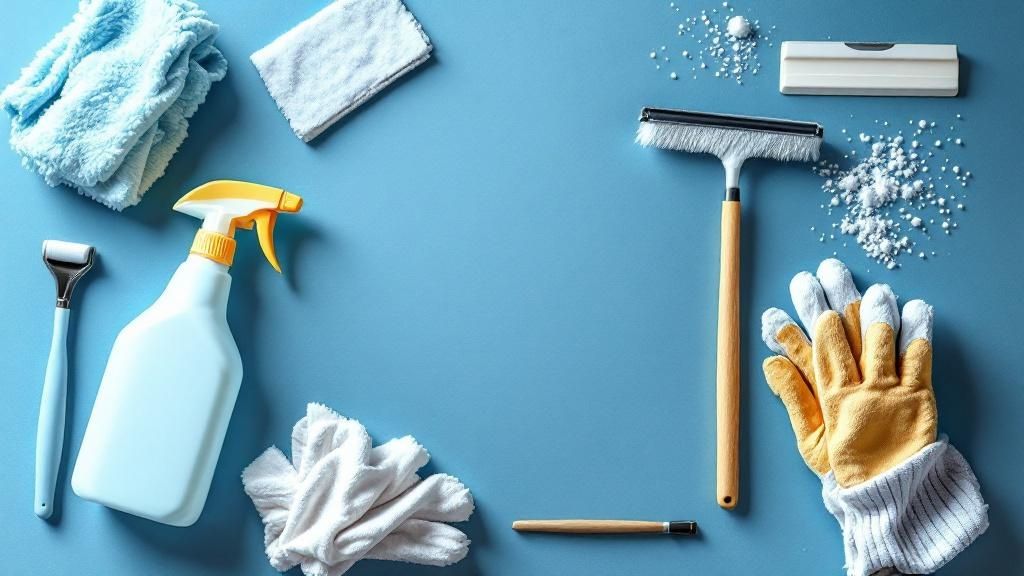
A truly professional-looking clean doesn't start when your squeegee hits the glass. It actually begins with a little bit of prep work. Trust me, jumping straight into washing is a classic rookie mistake that leads to drips, muddy messes, and frustration. Taking a few minutes to set the stage makes the entire process of cleaning double pane windows go so much smoother.
First things first, clear your workspace. Move any furniture, potted plants, or knick-knacks away from the window to give yourself ample elbow room. I always lay down a few old towels or a drop cloth on the windowsill and the floor directly underneath. It’s a simple step, but it catches any drips and saves you from having to clean your floors afterward.
With the area prepped, it's time to deal with the window itself. You need to get rid of all the dry, loose gunk before you even think about grabbing your spray bottle.
The Initial Dry-Cleaning Phase
Why is this so important? Because the moment you spray water on a dusty, cobweb-covered window, you create a gritty, muddy paste. Wiping that around not only causes streaks but can actually scratch the glass.
A common mistake is to spray a dirty, dusty window immediately. This turns dry grit into a wet abrasive, which you then grind into the glass with your cloth or squeegee. Always start with a dry removal process.
Your goal here is to get rid of all the loose stuff. Here’s how I do it:
- A soft-bristle brush is perfect for gently sweeping away cobwebs and built-up dust from the corners, the frame, and even the screen.
- A vacuum cleaner with a brush attachment is your best friend for quickly sucking up all the dirt and dead bugs that love to collect in window tracks and sills.
This quick dry clean is the secret weapon for a streak-free shine. It means your cleaning solution can get to work on the actual grime, not just a layer of surface dust. Now you have a clean canvas, and you're ready to get washing.
Mastering the Streak-Free Squeegee Technique
This is where the real magic happens. If you want a truly professional, streak-free shine on your double pane windows, it's time to ditch the paper towels and embrace the squeegee. Honestly, learning to use one correctly is the single biggest difference between an okay job and a flawless one. The whole idea is to get the cleaning solution on, and then pull it all off in one clean sweep, leaving nothing behind but sparkling glass.
First things first, you need to get the window properly wet. Dip your T-bar mop or a good microfiber cloth into your cleaning solution, give it a light squeeze so it’s wet but not dripping everywhere, and then apply it generously to the entire pane. You're looking for a nice, wet surface that lets the squeegee glide without skipping.
The Art of the Pull
For most windows in a typical home, a series of simple vertical pulls works perfectly. Before you start, create what we call a "dry edge." Just take a microfiber cloth and wipe a thin, one-inch strip from top to bottom on one side of the glass. This little trick stops the squeegee from pulling dirty water back over the area you just cleaned.
Now, take your squeegee. Press the blade firmly against the top of the glass, overlapping that dry strip you just made by about an inch.
The key here is consistent, light pressure. Pull the squeegee straight down in one smooth, continuous motion—no stopping and starting halfway down. After every single pull, wipe the rubber blade clean with a dry microfiber cloth. This step is non-negotiable. If you skip it, you're just dragging a dirty line across the next section.
On bigger panes of glass, you might see pros use the "S-stroke" or "fanning" method. This involves a fluid, swiveling motion to clear the glass in a continuous S-shaped pattern. It's incredibly efficient once you get the hang of it, though it definitely takes some practice. For a closer look at that technique, you can find more of our professional tips for achieving streak-free windows.
The image below gives you a quick breakdown of how different cleaning solutions stack up in terms of cost and results.
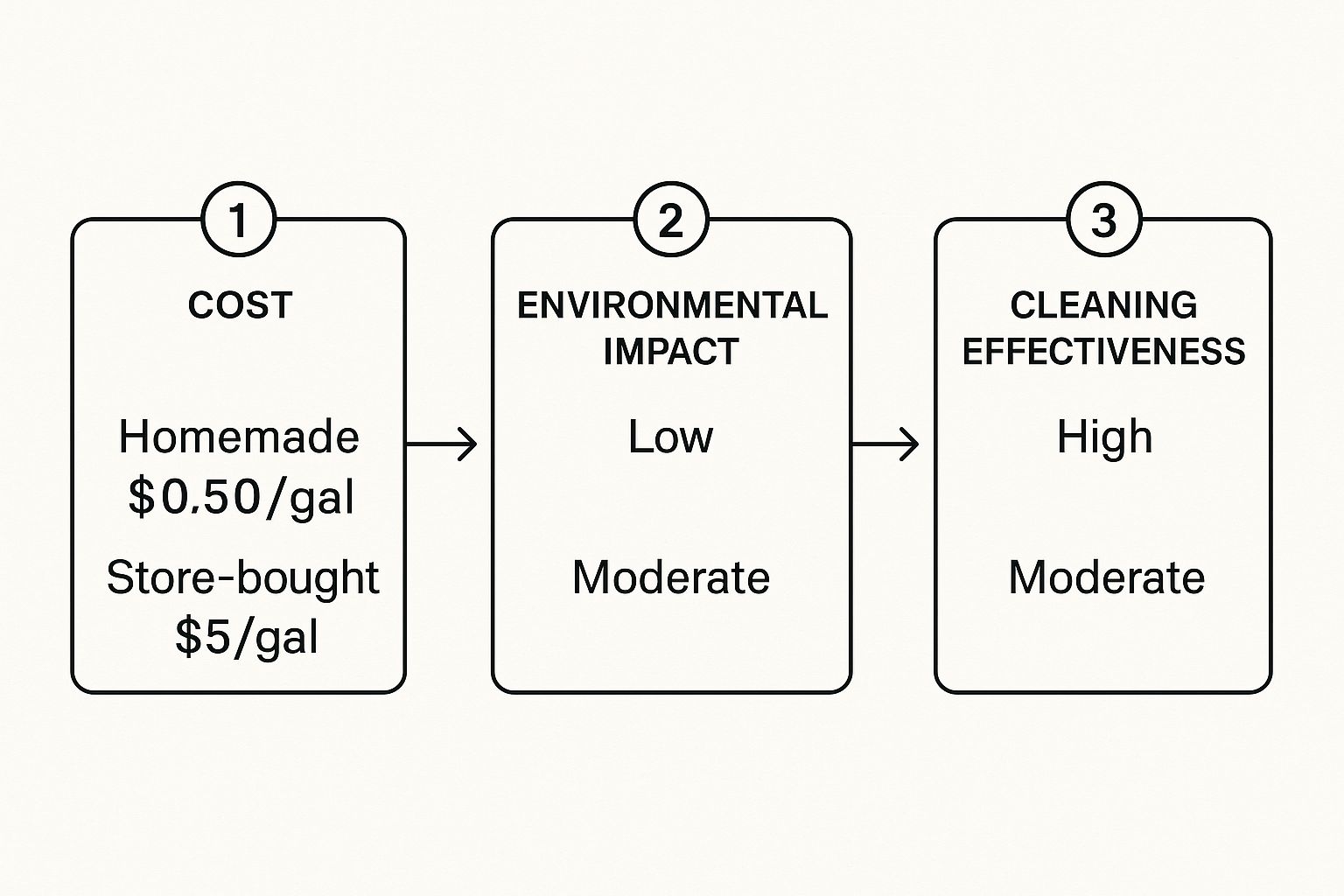
As you can see, a simple homemade mix is often just as good as the store-bought stuff, but it's much cheaper and better for the environment.
Finishing the Job
Once the main pane is done, grab a fresh, dry microfiber cloth. Carefully wipe up any leftover drips along the bottom edge of the glass and on the window sill. This final detail wipe is what really gives you that polished, professional-looking result.
Here are the key takeaways to remember:
- Start with a wet window. A squeegee on dry glass will just skip and leave ugly streaks.
- Wipe your blade after every pass. This is the secret weapon against those annoying dirty lines.
- Overlap each stroke by about an inch. This ensures you don’t leave any missed strips behind.
- Don't forget the detail wipe. A clean sill and frame make all the difference.
With a bit of practice, this whole process will become second nature, and you'll be getting impeccably clean windows every time.
Choosing The Right Cleaning Solution
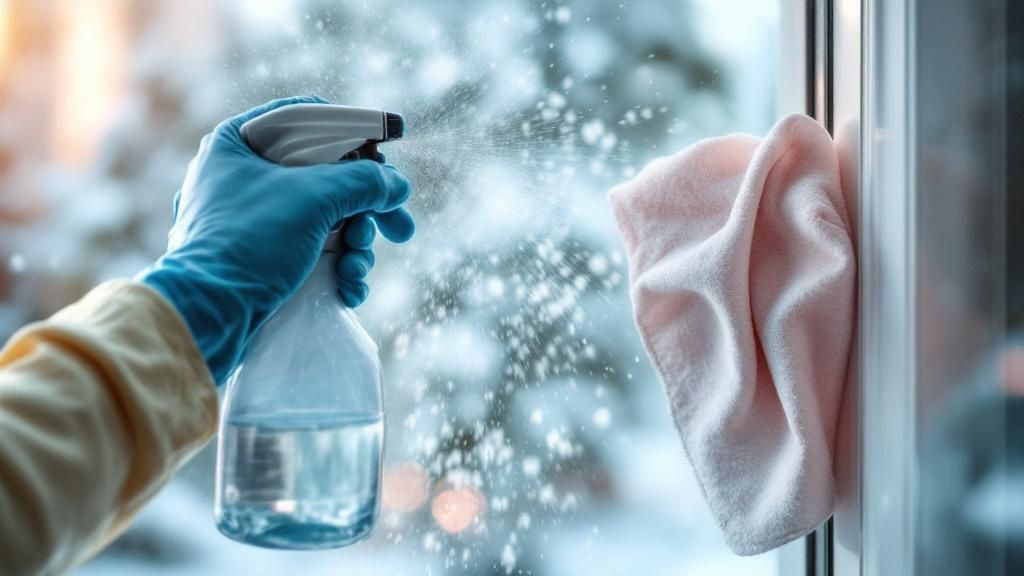
The cleaning solution you choose is just as important as your technique, maybe even more so. It’s easy to get overwhelmed by the sheer number of products on the shelf—after all, the glass cleaner market is a massive industry, valued at around USD 4.6 billion in 2024. You can see just how big the industry is by checking out this glass cleaner market report.
But here’s a little secret from someone who's cleaned a lot of windows: simpler is almost always better. In fact, a homemade solution often outperforms commercial products and is much gentler on your windows. For most jobs, all you need is a simple mix of equal parts distilled water and white vinegar. This combination cuts right through everyday dirt and grime without leaving a trace.
What to Avoid in a Cleaner
When it comes to double pane windows, the most critical thing to remember is to stay away from harsh chemicals. A lot of popular, off-the-shelf cleaners contain ingredients that can do some serious, long-term damage to your window's integrity.
The biggest culprits are ammonia and harsh alcohols. Sure, they make glass sparkle, but they also eat away at the rubber and silicone seals that hold your double pane windows together. Over time, this degradation causes the seal to fail, which is what leads to that frustrating, permanent fogging between the panes and a total loss of energy efficiency.
So, before you grab a bottle from the store, flip it over and read the label. If you see ammonia listed, put it back. You can find more details in our guide on which window cleaning chemicals to avoid. Trust me, sticking with a gentle, non-damaging cleaner is the single best thing you can do to keep your windows crystal clear and doing their job for years to come.
Solving Tough Window Cleaning Problems
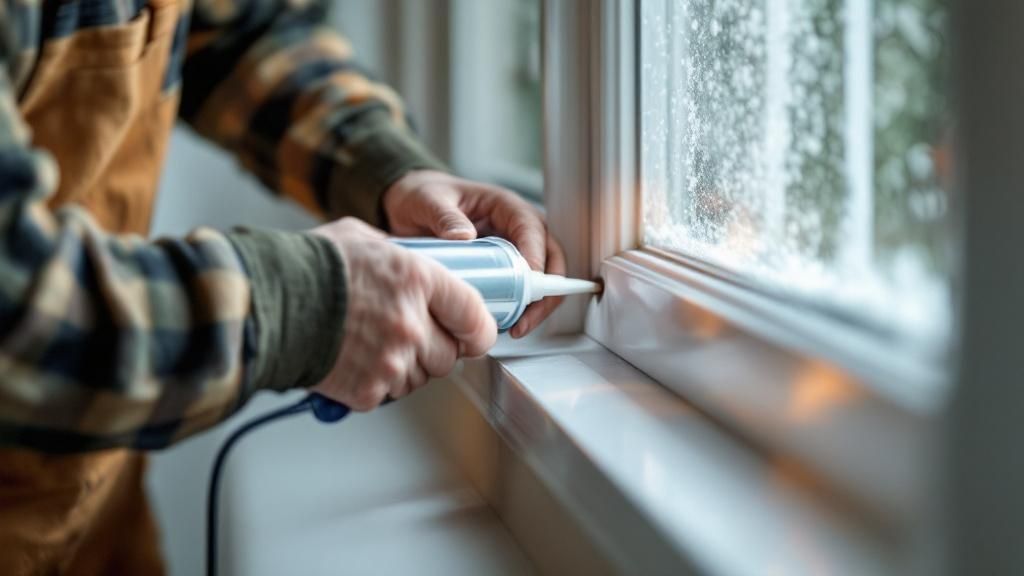
Even after you've perfected your technique, some window cleaning jobs will throw you a curveball. We're talking about more than just a little dust or a few fingerprints. These stubborn messes need a specific game plan to get your windows truly clean without causing any damage.
A perfect example is those stubborn, chalky white spots from your sprinklers. Those are hard water stains, and regular soap and water won't make a dent. The trick is to use a targeted solution. Mix equal parts white vinegar and distilled water, apply it directly to the spots, and let it sit for a minute to dissolve the mineral deposits. This way, you break down the stain without risking damage to the window's seals.
What about sticky stuff, like old tape residue or a few rogue paint splatters from your last DIY project? This is where a little patience—and the right tool—comes in. Grab a plastic razor blade. After wetting the window with your cleaning solution, gently scrape away the gunk. Keeping the glass lubricated is key to preventing scratches.
This kind of detailed care is becoming more and more common. In fact, the professional window cleaning market was valued at USD 2.68 billion in 2023 and is projected to grow significantly by 2031. You can read the full research about this trend to see how much homeowners are investing in proper maintenance.
Is It Dirt or a Failed Seal?
Here's a scenario I see all the time: you've scrubbed the inside and the outside of a window, but it still looks foggy or streaky. This is a critical moment where you need to figure out if you're dealing with a tough stain or a much bigger problem—a failed window seal.
If the haziness, condensation, or streaks are still there after a thorough cleaning of both sides, the problem is almost certainly between the panes. That’s the classic sign of a broken seal, which has allowed moisture to seep into the space that's supposed to be airtight.
No amount of cleaning will fix a broken seal. That fog you're seeing is trapped between the glass panes for good. Knowing this will save you a ton of time and frustration trying to scrub it away. It's simply time to call a professional for a window replacement.
Recognizing when to put down the squeegee and pick up the phone is just as important as knowing how to clean. It’s a key part of protecting the value and energy efficiency of your home.
Got Questions? We’ve Got Answers.
Even after you've mastered the technique, some specific questions always seem to pop up when tackling double pane windows. Getting the right answers is key—it can save you from making a costly mistake and help you get that perfectly clear, long-lasting shine.
Can I Just Use a Pressure Washer on My Windows?
I get this question all the time, and the answer is a firm no. It's tempting to think you can blast the dirt away, but this is one of the most damaging things you can do to modern windows.
The high-pressure stream is powerful enough to easily break the airtight seal that holds the two panes of glass together. Once that seal is gone, moisture and air will seep in, creating a permanent, foggy mess between the panes that you can't clean. Always stick to gentle, manual methods.
A cloudy, overcast day is your best friend when cleaning windows. Direct sunlight heats the glass, causing your cleaning solution to evaporate almost instantly. This rapid drying is what leaves behind soap residue and mineral deposits, creating the very streaks you’re trying to eliminate.
How Do I Know If My Window Seal Has Failed?
It's easy to confuse a broken seal with a stubborn smudge. Here’s how you can tell for sure: First, clean both the inside and outside of the window thoroughly. If you’ve scrubbed both sides and still see fogginess, condensation, or streaky mineral deposits, the problem isn't on the surface—it's between the glass.
That trapped moisture is the classic sign of a failed seal. Unfortunately, at that point, no amount of cleaning will fix it, and you'll likely need to look into replacing the insulated glass unit itself.
If you're curious about other common issues, we've put together a handy list of other common questions about window cleaning that you might find helpful. Knowing the answers can save you a lot of time and frustration.
For a professional, streak-free shine without the hassle, trust the experts at Sparkle Tech Window Washing. We provide top-tier residential window cleaning services across Arizona. Contact us today for a free estimate!