

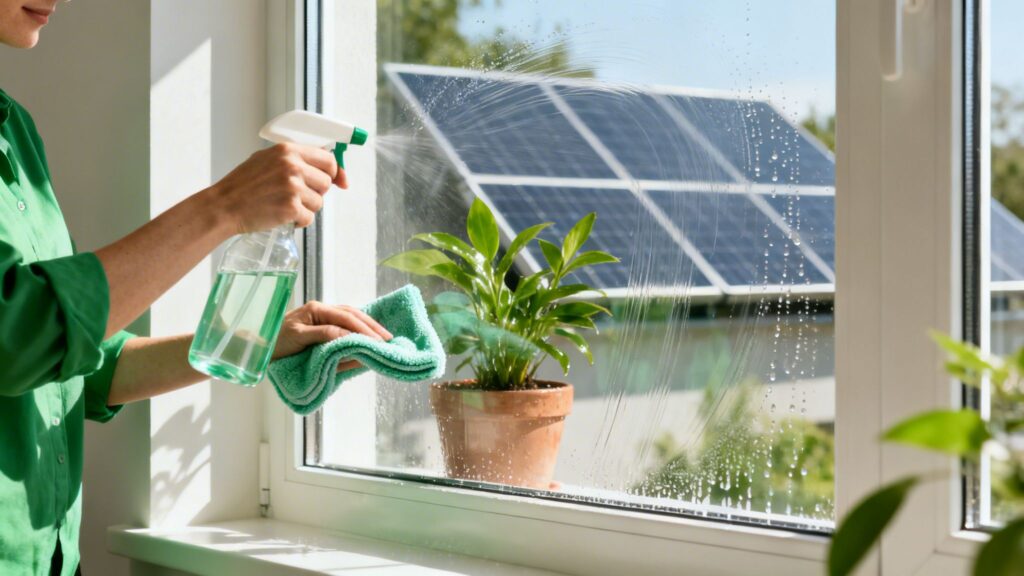
Eco-friendly window cleaning is all about getting those sparkling, streak-free results without the harsh chemicals. It means swapping out things like ammonia for safer, biodegradable solutions that are just as effective. You're not just cleaning your windows; you're protecting your family and the planet. It’s simply a smarter, healthier way to get the job done.
Why Going Green with Your Windows Matters

Making the switch to green window cleaning isn't just a feel-good move—it delivers real, tangible benefits for your health, home, and even your wallet. There’s a good reason why so many people are moving away from traditional, chemical-heavy cleaners.
Many conventional window cleaners are loaded with volatile organic compounds (VOCs). When you spray them, these chemicals can linger in the air inside your home, tanking your indoor air quality and triggering everything from respiratory irritation to headaches. This is a real concern in sunny climates like Phoenix, where the heat can actually speed up the release of these fumes.
Protecting Your Health and Home
Choosing green cleaning solutions immediately cuts out those indoor air pollutants. Instead of relying on ammonia and potent solvents, eco-friendly methods use simple, powerful ingredients like vinegar, plant-based soaps, and essential oils. The positive changes are immediate.
- Breathe Easier: You're creating a healthier environment for your family, kids, and pets by eliminating toxic fumes from the air they breathe.
- Gentler on Skin: Natural ingredients are far less likely to cause skin irritation or allergic reactions while you clean.
- A Truly Clean Surface: Your windows will be left sparkling and clear, without that invisible film of chemical residue that traditional cleaners can leave behind.
A Smarter Choice for the Environment and Your Budget
The impact of your cleaning routine goes far beyond your own home. Runoff from chemical-laden cleaners often finds its way into storm drains, polluting local waterways and harming aquatic ecosystems. In contrast, eco-friendly solutions are biodegradable and break down harmlessly.
This sustainable approach is also surprisingly easy on the budget. You can whip up incredibly effective green cleaners with affordable, everyday ingredients you probably already have in your pantry. It's a shift that's not just happening in homes but is reshaping the entire professional cleaning industry.
The professional window cleaning world is taking notice. Global use of eco-friendly solutions in the industry has jumped by 40% since 2020. A recent survey even revealed that 87% of cleaning professionals now make sustainability a priority, driven by demand for safer, greener chemicals. You can dive deeper into these industry-wide window cleaning trends and statistics to see the full picture.
When you adopt eco-friendly window cleaning, you're doing more than just polishing glass. You’re actively creating a healthier living space, helping protect local ecosystems, and making a smart financial choice. It’s a clear win all around.
To help you see the difference side-by-side, here’s a quick breakdown of how these two approaches stack up.
Eco Friendly vs. Traditional Window Cleaning At a Glance
| Aspect | Eco-Friendly Method | Traditional Method |
|---|---|---|
| Ingredients | Vinegar, plant-based soaps, essential oils. Non-toxic and biodegradable. | Ammonia, isopropyl alcohol, and other harsh chemicals. Contains VOCs. |
| Health Impact | Improves indoor air quality. Safe for children, pets, and those with allergies. | Can cause respiratory irritation and other health issues due to fumes. |
| Environmental Impact | Biodegradable ingredients that don't harm waterways or wildlife. | Chemical runoff pollutes rivers and lakes, harming aquatic life. |
| Cost | Highly affordable, often using common household items. | Can be expensive over time, requiring repeat purchases of specialized products. |
| Residue | Leaves a natural, streak-free shine with no chemical film. | May leave behind a chemical residue that attracts more dust and dirt. |
As you can see, choosing an eco-friendly path offers significant advantages in nearly every category, from health and safety to environmental responsibility.
Making Your Own Top-Notch Window Cleaning Solutions
There’s something incredibly satisfying about mixing your own cleaners. You know exactly what’s in them, you save money, and you’re not bringing harsh chemicals into your home. It's less about being a "home alchemist" and more about smart, simple chemistry using ingredients you probably already have.
And let's be clear: "green" doesn't mean weak. I've found that the right homemade solution can easily outperform many of the blue sprays you find at the store. The trick is knowing which ingredients to combine to cut through the specific kind of grime you're dealing with.
My Go-To Recipe for Streak-Free Glass
For everyday cleaning, this is the formula I rely on. It’s a powerhouse that combines a classic cleaner with a surprising ingredient for a truly flawless finish.
Here’s what you’ll need:
- Distilled White Vinegar: This is your heavy lifter. The acidity is fantastic for cutting through mineral deposits from sprinklers and hard water spots.
- Cornstarch: This is the secret weapon. It acts as a super-fine abrasive to gently scrub the glass and, more importantly, it helps prevent streaks as the window dries.
- Warm Distilled Water: Always use distilled water. Tap water, especially here in Phoenix, is loaded with minerals that will just leave new spots behind.
- Lemon Essential Oil (Optional): A few drops are great for cutting that sharp vinegar smell. Lemon oil also has some natural degreasing ability, which helps with fingerprints.
In a clean spray bottle, mix two cups of warm distilled water and a quarter-cup of distilled white vinegar. Add one tablespoon of cornstarch and, if you're using it, about ten drops of lemon oil. You'll need to shake it really well to get that cornstarch fully dissolved. Give it another good shake before each use, too, because the cornstarch will settle at the bottom.
A Stronger Mix for Greasy Grime
Sometimes vinegar alone isn't enough, especially on kitchen windows with a greasy film or windows caked with stubborn hard water buildup from our Arizona weather. When you need a bit more muscle, a simple castile soap solution is the answer.
"Castile soap is a fantastic, plant-based degreaser that is gentle on surfaces but tough on grime. It’s the perfect alternative when vinegar alone isn't cutting it, and it aligns with the growing demand for effective, green cleaning formulas."
The entire cleaning industry is shifting. By 2026, sustainability is expected to be a top concern for over 87% of cleaning professionals. We're already seeing this on the ground, with 61% of pros asking for green chemicals that actually work. While only 33% of customers say they'll pay more for green services, a whopping 53% demand high effectiveness no matter what. This is driving a ton of innovation, as you can see in these cleaning industry trends for 2026.
For a soap-based cleaner that won't leave a film, just mix two cups of warm distilled water with one teaspoon of liquid castile soap. That’s it. The biggest mistake people make is adding too much soap, which is what causes streaks. This simple mixture is perfect for breaking down oily films without resorting to harsh solvents. For even more recipes and tips, we've put together a full guide on the best homemade window cleaning solutions.
Mastering Pro Techniques for a Perfect, Streak-Free Finish
Your eco-friendly window cleaning solution is only half the battle. The real secret to getting that professional, crystal-clear finish comes down to technique. It’s the right moves and the right tools that eliminate those frustrating streaks and smudges, making sure your efforts actually pay off.
Honestly, it all starts with your equipment. It's so tempting to just grab a cheap squeegee and some old rags, but I can tell you from experience, that's almost always the root cause of a streaky mess. Investing in a couple of quality tools isn't just a suggestion; it’s essential for a flawless shine.
Your Essential Eco-Friendly Window Cleaning Toolkit
To get started, here's a quick rundown of the gear that will make the biggest difference in your results.
| Tool | Primary Use | Eco-Friendly Tip |
|---|---|---|
| Professional Squeegee | Removing water and grime from the glass | Look for one with a replaceable rubber blade to reduce waste over time. |
| Microfiber Applicator Cloth | Applying solution and scrubbing away dirt | Wash and reuse hundreds of times, eliminating the need for paper towels. |
| Microfiber Polishing Cloth | Detailing edges and catching drips | Dedicate one cloth only for drying to prevent spreading dirt and ensure a perfect polish. |
| Spray Bottle | Applying your homemade cleaner | Reusing a spray bottle you already own is the most sustainable option. |
Having these specific items on hand sets you up for success before you even spray the first window. A pro-grade squeegee and a couple of dedicated microfiber cloths truly are the game-changers.
Why Quality Tools Matter
So, what makes a "good" squeegee? It comes down to the blade. A professional-grade squeegee has a firm, sharp rubber edge that applies even pressure, cleanly shearing water and dirt off the glass in one pass. Cheaper blades are often too soft or have tiny imperfections, which is what leaves those tell-tale lines behind.
Microfiber cloths are just as important. Their unique weave is specifically designed to trap dirt and absorb way more water than cotton rags or paper towels ever could. For a perfect job, you absolutely need at least two:
- The "Wet" Applicator Cloth: Use this one to apply your DIY solution and give the window a good scrub to lift dirt, dust, and grime.
- The "Dry" Polishing Cloth: Keep this cloth completely dry. Its only job is to polish the edges and wipe up any final drips for a pristine finish.
This two-cloth system prevents you from just smearing dirty water around—a classic rookie mistake. If you're looking to build out your full pro kit, you can explore our complete guide to the best window cleaning tools.
The most common mistake isn't the cleaning solution; it's the tools and technique. A high-quality squeegee and a dry microfiber for polishing are the two things that will instantly elevate your results from streaky to stunning.
Executing the Professional Squeegee Method
For any window larger than a small pane, just dragging your squeegee straight down is a recipe for streaks and water pooling on the sill. Instead, pros use a technique often called the "S-Method" or "fanning." The goal is to maintain a continuous "wet edge," which is the key to a perfectly clear surface.
This process visualizes the simple, three-stage approach to applying and removing your DIY cleaner.

The real magic happens in that final wiping stage, where professional technique makes all the difference.
Start by wetting the window with your solution. Now, create a "dry zone" by taking your squeegee and pulling it straight down about one inch from the side or top edge of the pane. This gives you a dry place to start your first pass.
Place your squeegee in that dry zone at a slight angle. Pull it horizontally across the pane, overlapping your initial dry strip by about an inch. When you reach the other side, pivot the squeegee and pull it back in the opposite direction, making sure to overlap your last pass. Continue this "S" motion all the way down the glass.
There are two critical things to remember here:
- Maintain a consistent angle of about 30 degrees between the squeegee blade and the glass.
- Wipe the blade clean with a cloth after every single pass. This is non-negotiable—it stops you from dragging dirty water back onto the clean glass.
Finish up by using your dry polishing cloth to quickly wipe the edges of the pane and the windowsill. This tiny final step frames your work and leaves the entire window looking immaculate. Not only does this method give you better results, but it also saves a lot of water compared to using a bucket and mop.
Cleaning Window Screens and Solar Panels Safely

A truly eco-friendly window cleaning job isn’t finished until you’ve dealt with the screens and solar panels. Especially in a place like Phoenix, these surfaces take a beating from the sun and dust, and if they’re dirty, they can block light and seriously hamper efficiency.
Cleaning them isn’t quite the same as cleaning glass, though. You need to adjust your technique to protect your investment.
Handling Window Screens with Care
Window screens are surprisingly delicate. It’s tempting to blast them with a pressure washer, but that’s a quick way to stretch, warp, or tear the mesh. A gentle hand is all it takes.
Start by carefully popping the screens out of their frames. Find a clean, soft spot to lay them flat—a tarp on the lawn works great. Just avoid laying them on rough concrete or a dirty driveway, as that can easily damage the mesh or frame.
Before you even think about water, grab a soft-bristle brush and give both sides a good sweep. An old paintbrush is perfect for this. You'll be surprised how much loose dust, pollen, and cobwebs come off with just a dry brushing.
If they need a deeper wash, mix a little biodegradable soap (like castile soap) into a bucket of water. Using your soft brush, gently scrub the screen in small circles, then give it a thorough rinse with a light spray from your garden hose. Let them air dry completely before putting them back in.
I’ve seen it countless times: people use way too much force and end up with stretched-out, saggy screens. The trick is to lift the dirt off the mesh, not scrub it into it.
Protecting Your Solar Panel Investment
Your solar panels are a high-performance asset, and keeping them clean is key to getting the energy production you’re paying for. But this is one area where you absolutely cannot cut corners.
The wrong approach can do more harm than good. Harsh chemicals can eat away at the anti-reflective coating, and even your tap water is loaded with minerals that will leave behind chalky deposits, creating shadows that reduce output.
Professionals stick to a proven, safe method for a reason. It boils down to two essential things:
- Deionized (DI) Water: This is ultra-purified water, completely free of the minerals found in tap water. It cleans effectively and, most importantly, evaporates without leaving a single spot or residue behind.
- A Soft-Bristle Brush: You need a specialized, water-fed pole with a brush designed specifically for solar panels. It’s engineered to scrub away grime without scratching the delicate surface.
Never, ever use a pressure washer or household cleaners on your panels. The only truly safe method is a gentle scrub with a purpose-built brush and a rinse with pure DI water. We go into much more detail on the process in our dedicated guide on how to clean solar panels.
Once your panels are spotless, it's a great time to check their performance. A quick review of how to tell if your solar panels are working properly will confirm that your hard work is paying off with maximum energy output.
When to Call a Professional Eco Friendly Window Cleaner
While tackling your windows with a homemade, eco-friendly solution is a fantastic routine, some jobs just aren't worth the risk or the headache. Knowing when to hand the squeegee to a professional not only saves you time but can also prevent costly damage and deliver a level of clean that’s tough to get on your own.
For starters, think about accessibility. If you’re dealing with second-story windows, vaulted-ceiling glass, or skylights, the safety risks are no joke. Balancing on a ladder with a bucket and tools is a recipe for disaster. Our team at Sparkle Tech comes equipped with professional-grade safety gear and water-fed poles that let us clean high-up spots perfectly, all while our feet are safely on the ground.
Then there's the problem of stubborn buildup. Here in Arizona, our hard water is notorious for leaving behind chalky, white mineral deposits. Your vinegar spray won't make a dent in those. Removing these stains without scratching the glass requires special, professional-grade (yet still eco-safe) compounds and the right technique.
Knowing When Your Time Is Better Spent Elsewhere
Honestly, sometimes it just comes down to a simple lack of time. A thorough, top-to-bottom window cleaning on a whole house can easily eat up your entire weekend. If your schedule is already packed, bringing in a pro is one of the smartest things you can do for yourself.
Hiring a service really pays off in a few key ways:
- Speed: A trained crew can accomplish in just a few hours what might take you an entire day.
- Expertise: We’ve seen it all—from paint overspray after a renovation to stubborn sticker goo—and we know how to remove it quickly and safely.
- Guaranteed Finish: A reputable company stands behind its work, ensuring you get that flawless, streak-free result every single time.
When you're looking for a company, pay attention to how organized they are. A professional operation that uses modern tools like cleaning service scheduling software to manage its jobs and communicate with clients is usually a sign of a well-run, reliable business.
The real value in hiring a professional isn't just about clean glass. It's about buying back your weekend, guaranteeing your safety, and protecting your home's windows with true expert care.
Ultimately, calling a professional for eco-friendly window cleaning is a strategic move. At Sparkle Tech, we've built our business on combining the efficiency and safety of a professional service with an unwavering commitment to green, biodegradable products. For homeowners across the Phoenix valley who want a pristine home without compromising on environmental responsibility, we deliver that perfect balance.
Your Eco-Friendly Window Cleaning Questions, Answered
Switching to a greener cleaning routine is a great move, but it’s only natural to have a few questions. I get it. You want to make sure these homemade solutions can actually stand up to the dirt and grime of the real world. Let's clear up some of the most common concerns so you can clean with total confidence.
Here are the straightforward answers I give my clients when they're making the switch.
Is Vinegar Really Safe for All My Windows?
Vinegar is a powerhouse cleaner, no doubt about it. For most standard residential glass, a diluted vinegar solution is my go-to. It's incredibly effective at cutting through film and mineral spots left by sprinklers.
But it's not a silver bullet for every single surface. You need to be careful with specialty windows. If you have windows with a factory-applied tint or an anti-glare coating, the acid in vinegar could potentially wear down that finish over time. The same logic applies to the rubber seals and gaskets around some frames—letting straight vinegar sit on them can make them brittle.
My advice is pretty simple:
- Standard Glass: Go for it. A vinegar solution is perfectly safe.
- Tinted or Coated Windows: Play it safe here. Skip the vinegar and opt for a pH-neutral cleaner, like a simple mix of castile soap and water.
- Window Seals: No matter what you're using, always wipe the solution off the seals promptly. Don't let it pool or drip.
How Often Should I Clean My Windows in a Dusty Climate?
Living in a dusty place like Phoenix means windows get dirty—fast. That layer of dust doesn't just block your view; it can cut down on the amount of natural light that fills your home.
As a general rule of thumb, a deep clean at least twice a year is a good target for maintaining clarity and brightness. I usually recommend a spring cleaning to wash away winter dust and another in the fall to handle the grime from summer monsoons.
However, if your home is near a new construction site or a busy road, you'll probably find that cleaning them once a quarter is what it takes to keep them looking their best.
"I often tell clients in the Valley to think of window cleaning as seasonal maintenance, not just a chore. In a place with over 300 days of sunshine a year, clean windows make a huge difference in your home's atmosphere."
Are Eco Solutions Strong Enough for Bird Droppings or Tree Sap?
This is a big one. There's a common myth that "eco-friendly" means "weak," but that couldn't be further from the truth. Green cleaners are more than strong enough for tough jobs like bird droppings and sap; you just have to adjust your technique.
The secret to removing hardened gunk isn't a harsh chemical—it’s dwell time.
Instead of scrubbing furiously, try this. First, really saturate the spot with your vinegar or soap solution. Just let it soak. The key is to walk away for 3-5 minutes and let the cleaner do the work, rehydrating and breaking down the mess.
Once you come back, the grime will have softened and should come right off with a microfiber cloth. A little gentle pressure might be needed for a stubborn remnant, but the hard work is already done. It’s all about using science—rehydration and gentle acidity—instead of the brute force of toxic solvents.
When the job feels too big or you want a guaranteed professional finish without the harsh chemicals, Sparkle Tech Window Washing is ready to help. For a crystal-clear view delivered with eco-friendly expertise, book your service with us today.