




So, what are the best tools for cleaning windows? The honest answer is: it depends entirely on the job. But if you peek into any pro's van, you'll always find a top-notch squeegee, a trusty microfiber scrubber, and their preferred cleaning solution. For anything high up, the game-changer is a water-fed pole system—it's the modern way to work safely from the ground.
Your Essential Window Cleaning Toolkit
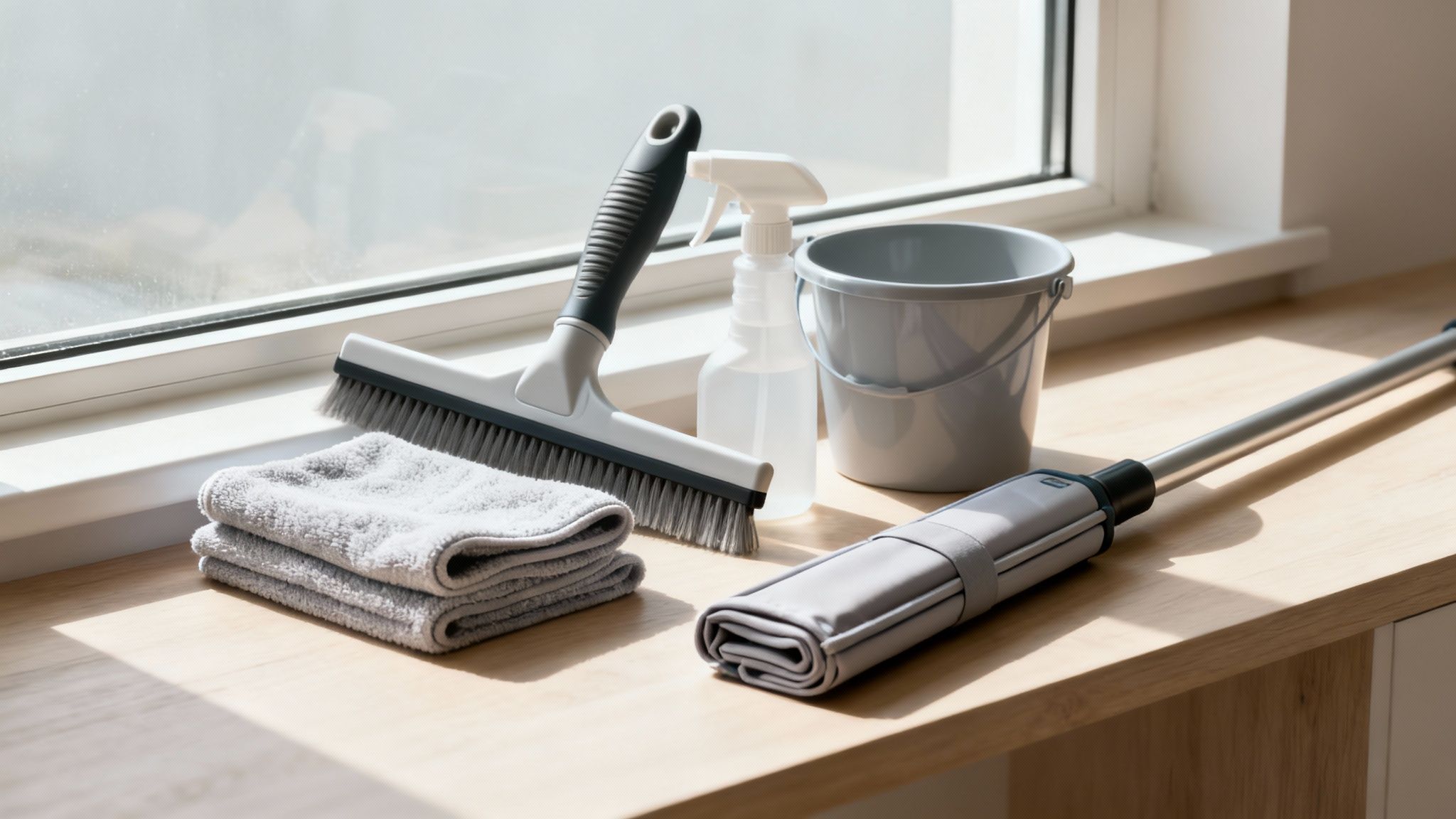
Getting that perfect, streak-free finish isn't about finding one single magic tool. It's about building a smart, versatile toolkit. After all, the "best" gear for a ground-floor sliding door is completely different from what you'd need to tackle second-story windows safely and efficiently.
Think of it like a mechanic's workshop. You've got your standard wrenches for everyday jobs, but you also need specialized tools for trickier repairs. This guide will walk you through the essential categories, helping you assemble the right gear for any pane of glass you come across.
To give you a quick overview, here's a breakdown of the main tool types and what they're used for.
Quick Guide to Window Cleaning Tool Categories
| Tool Category | Primary Use Case | Best For |
|---|---|---|
| Manual Tools | Traditional "hands-on" scrubbing and squeegeeing. | Most residential jobs, detailed work, and interior windows. |
| Water-Fed Poles | Cleaning high windows from the ground using purified water. | Second-story windows, commercial buildings, and solar panels. |
| Ladders & Safety Gear | Providing safe access to elevated windows when poles aren't an option. | Jobs requiring close-up work at height, like screen repair. |
| Screen & Track Tools | Specialized brushes and rollers for cleaning or repairing window screens. | Comprehensive window maintenance beyond just the glass. |
| Scrapers & Blades | Removing stubborn debris like paint, stickers, or bird droppings. | Post-construction cleanups and heavily soiled windows. |
| Robotic Cleaners | Automated cleaning for large, hard-to-reach glass surfaces. | Maintenance cleans on high-rise windows or large glass walls. |
This table should help you quickly identify the right equipment for your specific needs. Now, let's explore these categories in more detail.
Core Tool Categories
Your journey to crystal-clear glass starts with knowing the fundamental gear. Each category solves a different problem, from getting the perfect manual finish to staying safe while working high up.
-
Manual Tools: This is your classic, bread-and-butter setup. It includes a squeegee for that flawless, dry finish, a scrubber to agitate and lift dirt, and scrapers for tough, caked-on gunk. These tools give you the most control and are perfect for the vast majority of residential jobs.
-
Water-Fed Pole Systems: When it comes to working at height, nothing beats a water-fed pole for safety and speed. These high-tech systems pump purified water up a pole to a brush head, letting you scrub and rinse windows from the safety of the ground. It often means you can leave the ladder in the truck.
-
Robotic Cleaners: These gadgets are all about convenience. An automated robot uses powerful suction to latch onto the glass and methodically clean the surface for you. They’re best for routine maintenance cleans on huge, hard-to-reach panes where manual cleaning is impractical.
The foundation of a great window cleaning job isn’t just elbow grease—it’s picking the right tool for the specific type of glass and grime you're up against. Using the wrong tool is a recipe for frustration and streaks.
Building Your Kit From The Ground Up
For most homeowners or anyone just starting, a quality manual kit is the most logical first step. This core trio—a good squeegee, a scrubber, and a bucket—will handle probably 90% of your window cleaning needs. As you run into new challenges, you can add more specialized gear.
When you need to tackle those out-of-reach spots, investing in one of the best extendable ladders is crucial for working safely.
Of course, great tools are only half the story. The cleaning solution you use is just as important. While simple soap and water can work, understanding what the pros use can elevate your results. For a deeper dive, check out our guide on the essential chemicals for window cleaners to get your mix just right.
Now, let's get into the nitty-gritty of each category to help you build the ultimate window cleaning toolkit.
Mastering the Professional Squeegee
If there's one undisputed star in a window cleaner's toolkit, it’s the squeegee. This is the tool that makes the difference between a frustrating, streaky mess and a perfectly invisible pane of glass.
Don't think of a professional squeegee as a simple wiper. It's a precision instrument, just like a chef's most trusted knife. That cheap, all-in-one plastic squeegee from the hardware store might seem like a good deal, but it just can't compete with the control, longevity, and flawless results of a professional-grade tool.
A real pro squeegee isn't just one piece; it's a modular system built for performance. Getting to know its components is the first step to mastering it and picking the best window cleaning tools for your own kit.
The Anatomy of a High-Quality Squeegee
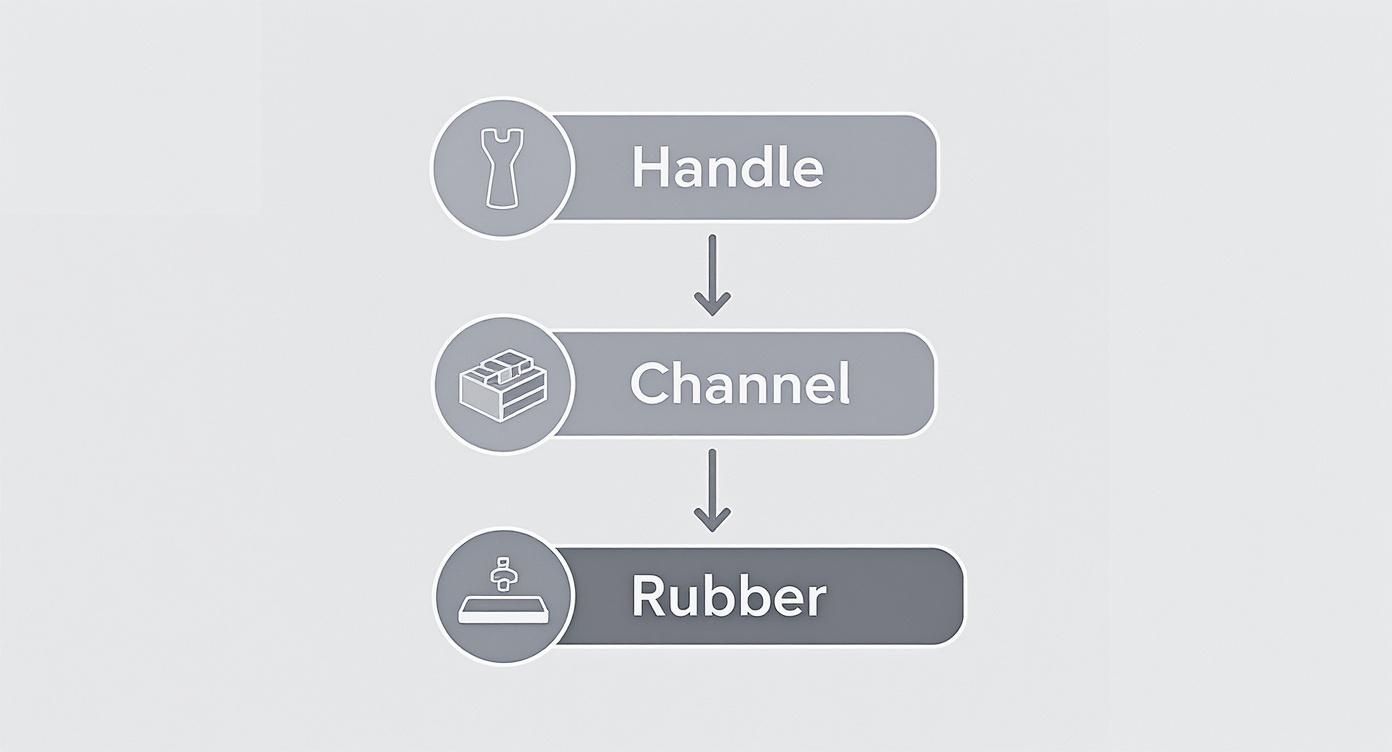
A professional squeegee is actually three separate parts working in harmony. Each piece is replaceable and can be mixed and matched, letting you build the perfect tool for any window you encounter.
-
The Handle: This is where you connect with the tool. Pro handles are designed to be comfortable, even after hours of work, often featuring ergonomic grips. Most have a quick-release clip, so you can swap out channels in a snap. You'll want one made from sturdy materials like stainless steel or tough plastic.
-
The Channel: This is the metal track that holds the rubber blade in place. Channels come in a huge range of sizes, from a tiny 6 inches up to 36 inches or even more. This variety is a game-changer. Using a channel just a bit smaller than the window pane you're cleaning means you can clear the glass in fewer passes, saving a ton of time and effort.
-
The Rubber Blade: The blade is the heart and soul of the squeegee—it’s where the magic really happens. A high-quality rubber blade has a perfectly sharp, machine-cut edge that glides across the glass, pulling every drop of water and grime with it.
Choosing the Right Rubber Blade
It turns out, not all rubber is the same. The hardness of the blade, measured by its durometer, makes a huge difference depending on the weather. This is one of those little details that pros obsess over.
- Soft Rubber (Lower Durometer): This blade is more flexible and forgiving, which makes it perfect for cooler weather. It molds itself better to uneven glass, preventing those annoying little streaks. The downside? It can wear out much faster on hot, sun-baked windows.
- Hard Rubber (Higher Durometer): This is the workhorse for hot climates or big commercial jobs with lots of direct sun. The firmer edge doesn't get soft or flimsy in the heat, giving you a clean wipe and lasting way longer under tough conditions.
Think of it this way: a soft rubber blade is like a winter tire—it stays flexible to grip cold, slick surfaces. A hard rubber blade is like a summer performance tire—built for durability and precision when things heat up.
Maintaining Your Squeegee for Flawless Results
Your squeegee is only ever as good as its blade. Even a tiny nick or a slightly worn edge will leave streaks behind, guaranteed. Proper maintenance isn't optional if you want perfect results.
First, get in the habit of wiping your blade clean with a dry towel after every single pass on the glass. This simple step stops you from dragging dirt from one section to the next. Second, never let your squeegee rest on its blade, as this can create flat spots and ruin the edge.
Most importantly, replace your rubber blade often. A pro cleaning windows all day might swap it out daily. For a homeowner, putting in a fresh blade at the start of each season is a great rule to follow. When you invest in a quality, modular squeegee and take care of it, you're not just buying a tool—you're adopting a system for a perfect, streak-free shine, every time.
How Water-Fed Pole Systems Work
Picture this: you're trying to clean a second-story window. You're probably picturing a wobbly ladder, a bucket sloshing with soapy water, and that slightly unnerving feeling of being high off the ground. For years, that was just part of the job. Water-fed pole systems completely changed the game. They represent one of the biggest leaps forward in window cleaning I've ever seen.
At its most basic, a water-fed pole is a long, extendable pole—usually made of super-light carbon fiber or aluminum—with a special brush at the tip. But instead of dipping that brush in a bucket, the system pumps highly purified water straight up the pole and out through the brush. This means you can stand safely on the ground while scrubbing and rinsing windows several stories up.
But the real secret isn't the pole. It's the water. That's what makes this tool a true game-changer for high-reach work.
The Science of Pure Water Cleaning
Ever wash your car on a sunny day with a regular garden hose, only to see it dry covered in white spots? Those spots are left by minerals like calcium and magnesium that are found in all tap water. If you tried to clean a window with that same water, you'd get the exact same frustrating, spotty mess.
Water-fed pole systems fix this by running tap water through an intense filtration process. It's a two-step punch that leaves the water incredibly pure.
- Reverse Osmosis (RO): First, the water is pushed through a membrane that acts like a microscopic bouncer, stopping about 95-99% of all minerals and other junk from getting through.
- Deionization (DI): For the finishing touch, the water flows through a DI resin. This process is like a magnetic cleanup crew, grabbing any tiny dissolved solids the RO filter might have missed. The result is water that's virtually 100% pure.
This ultra-purified water is so clean it acts like a magnet for dirt. It naturally grabs and dissolves grime, dust, and pollen right off the glass. And because there are no minerals left to leave behind, you can just let the window air-dry to a perfectly clear, streak-free shine. No squeegee needed.
The concept is beautifully simple: if you rinse with perfectly pure water, you get a perfectly clean, spot-free window. This completely eliminates the need for manual drying, which is just about impossible to do from the ground on a third-floor window.
Components of a Complete System
A full water-fed pole setup is more than just the pole itself; it's a finely tuned system where every piece has a critical job. Knowing the parts helps you understand why it works so well. We break down every component in our complete guide to the water-fed pole window cleaning system, but here are the basics.
A typical system includes:
- The Purification System: This is the heart of the whole operation. It's usually a cart with the RO and DI filters that does the heavy lifting of cleaning the water.
- The Pole: These can range from a manageable 20 feet to over 70 feet. The best ones are made from carbon fiber to keep them light and stiff, which saves your arms and back during a long day.
- The Brush Head: The brush has soft bristles designed to scrub grime without scratching the glass, along with jets that spray the pure water for a final rinse.
- Hoses and Reels: You need a long, tough hose to get the pure water from the filter cart all the way up the pole to the brush.
The infographic below details the different parts of a traditional squeegee, but the principle is the same—every component must work together seamlessly to get that professional finish. It’s a lesson that applies to any high-quality tool.
The Pros and Cons
Water-fed poles are fantastic, but they aren't the right tool for every single situation. Their number one advantage is safety. Keeping your feet on the ground dramatically cuts the risk of ladder falls. They also make you incredibly efficient, letting one person clean huge sections of glass way faster than the old-school way.
This push for safer, faster methods is a big reason why the North American window cleaning industry is expected to grow by 13% between 2020 and 2028. It’s a massive shift in how the work gets done.
But there are downsides. The biggest one is the upfront cost—a professional-grade system can easily run several thousand dollars. They are also really only for exterior windows; trying to control all that water indoors would be a disaster. Plus, you need access to a water source, and the filters require regular maintenance to keep performing at their best.
The Rise of Robotic Window Cleaners

Welcome to the future of keeping your windows spotless. Robotic window cleaners have officially moved from science fiction to a practical tool in any modern cleaning kit. These little gadgets offer a hands-free way to tackle one of the most dreaded household chores.
Think of them as a Roomba for your windows. At their heart is a powerful vacuum motor that creates serious suction, allowing them to cling tightly to the glass, even on a vertical surface. Once they’re latched on, smart navigation algorithms guide them methodically across the pane, cleaning every inch as they go.
This isn’t just a niche gadget; it’s one of the fastest-growing areas in the entire window cleaning industry. The global market is set to explode, growing by an estimated $4.34 billion between 2025 and 2029. This growth, clocking in at a compound annual rate of nearly 30%, shows a massive shift toward automated cleaning solutions. You can dive into the full analysis of robotic window cleaner market trends on technavio.com.
How to Evaluate a Robotic Cleaner
Not all window cleaning robots are built the same. When you're shopping for one, it's easy to get wowed by the novelty. Instead, you need to look closer at the features that actually determine how well—and how safely—it works.
Here are a few critical things to look for:
- Cleaning Patterns: The most basic models might just wander around randomly, leaving streaks and missed spots. The best ones use intelligent pathfinding to map the window and follow a systematic pattern, like a Z or N shape, ensuring they cover the whole surface.
- Power Source: Most of these robots are corded. While a cord might seem like a hassle, it guarantees consistent power and suction throughout the entire job. Battery-powered models offer more freedom, but they carry the risk of dying mid-clean, which makes their safety features absolutely essential.
- Safety Tethers: This is a non-negotiable, must-have feature. Any reputable robotic cleaner will come with a strong safety cord and a carabiner. You anchor this inside before you start. If the robot ever loses power or suction, this tether is the only thing stopping it from a catastrophic fall.
It's best to think of a robotic window cleaner as a maintenance tool, not a deep-cleaning solution. It’s perfect for keeping your windows looking great between more intensive cleanings, much like how a robotic vacuum keeps your floors tidy day-to-day.
Real-World Pros and Cons
The dream of a "set it and forget it" window cleaner is powerful, but it's important to keep your expectations grounded. These devices have some clear advantages but also some real limitations that make them a perfect fit for some jobs and a poor choice for others.
Key Advantages:
- Enhanced Safety: This is their biggest selling point. They can clean high-rise apartment windows, second-story glass, or any dangerously high pane without a human ever setting foot on a ladder.
- Convenience: The hands-free operation is a game-changer. You can stick the robot on the window, hit the start button, and go do something else with your time.
- Consistency: A robot follows the same methodical path every single time. This can deliver a more uniform, streak-free look compared to manual cleaning, which can be inconsistent.
Potential Disadvantages:
- Corners and Edges: Because they are usually round or square, most robots just can't get deep into the corners or right up against the window frame.
- Heavy Grime: These are built for maintenance—dust, fingerprints, and light dirt. They simply don't have the scrubbing power to tackle caked-on grime, bird droppings, or stubborn hard water stains.
- Supervision Required: While they work on their own, you can't truly leave them unattended. You need to be nearby to move the robot from one window to the next and to make sure the safety tether is always securely in place.
Ultimately, a robotic cleaner can be a fantastic addition to your set of window cleaning tools, especially if safety and convenience are your main goals.
Choosing Between DIY and Professional Grade Tools
Walking into the tool aisle for window cleaning gear can feel a lot like comparing a handsaw to a cabinet maker's table saw. Both cut wood, sure, but they’re built for completely different jobs, users, and levels of precision. The same is true here. The right tools for you depend entirely on what you’re trying to accomplish.
The consumer-grade kits you grab off the shelf at a big-box store are made for the occasional weekend warrior. They’re affordable and get the basic job done if you're cleaning windows maybe once or twice a year. Think of them as the starter set—they work, but you'll quickly run into their limits on durability and performance.
On the flip side, professional-grade equipment is built to withstand the grind of daily use. We’re talking about squeegee handles made of solid brass or stainless steel and rubber blades engineered for a perfect, chatter-free glide. This isn't just about looking the part; that higher initial investment pays off in faster work, flawless results, and tools that last for years, not just a season.
The Value Equation: Cost vs. Performance
It’s easy to just look at the price tag, but that’s only half the story. A cheap DIY kit might save you money upfront, but if it leaves your windows a streaky mess or the handle snaps after cleaning three panes, was it really a good value? Your decision should really come down to a few practical questions.
Ask yourself this:
- How often are you actually cleaning your windows? If it’s just an annual spring-cleaning ritual, a basic kit will probably get you by. But if you’re doing it quarterly or more, investing in pro tools will save you a ton of time and headaches.
- What’s the scale of the job? Wiping down a few ground-floor windows is one thing. Tackling a two-story home with giant picture windows is a whole different ballgame. Professional gear is designed to make those bigger, tougher jobs manageable.
- What kind of results are you after? If you’re chasing that "invisible glass" look the pros get, you simply won't achieve it with flimsy, consumer-grade tools. You need the precision they use.
This push for better equipment isn't just a hunch; the industry data backs it up. The global market for window cleaning machines is expected to jump from $2.5 billion in 2025 to $4.2 billion by 2033. According to industry analysis, this growth is fueled by people wanting more effective and efficient ways to get the job done right. You can read more about this market growth on archivemarketresearch.com. It’s a clear signal that both homeowners and pros are tired of mediocre results and are willing to invest in better gear.
To help you decide where to invest your money, let's break down the real-world differences between what you can buy off the shelf and what the professionals rely on every day.
DIY vs. Professional Window Cleaning Tools: A Comparison
| Feature | DIY/Consumer-Grade Tools | Professional-Grade Tools |
|---|---|---|
| Materials | Typically made of plastic and low-quality aluminum. | Constructed from stainless steel, brass, and high-impact polymers. |
| Durability | Designed for light, infrequent use. Prone to breaking or wearing out quickly. | Built for daily, heavy-duty work. Can last for years with proper care. |
| Performance | Often leaves streaks. Rubber blades are less precise and wear out fast. | Delivers a flawless, streak-free finish. Blades are sharp, replaceable, and consistent. |
| Ergonomics | Handles can be uncomfortable for extended use, leading to fatigue. | Ergonomically designed for comfort and efficiency during long jobs. |
| Cost | Low initial investment ($15 – $40 for a basic kit). | Higher upfront cost ($50 – $200+ for individual components). |
| Best For | Homeowners doing a quick, annual cleaning of a small number of windows. | Serious DIYers, small business owners, or anyone demanding a perfect result. |
Ultimately, choosing professional tools isn't about paying more; it's about investing in a better outcome and a more pleasant experience.
When to Upgrade to Pro-Grade
You don't need to be a professional to use professional tools—you just have to want professional results. If you’re constantly battling streaks, fighting with a wobbly squeegee handle, or replacing your rubber blade after every other window, that's a sure sign your equipment is the problem, not you.
Making the switch to professional-grade equipment is the single most impactful step you can take toward achieving a flawless, commercial-quality finish on your own.
Investing in a high-quality squeegee, a well-made scrubber, and a stack of good microfiber cloths can completely change the game. It’s the difference between fighting your tools every step of the way and having them work with you. The right gear empowers you to do the job right the first time.
Got Questions About Window Cleaning Tools? We've Got Answers.
When you're diving into the world of window cleaning tools, a few questions always pop up. It doesn't matter if you're a homeowner chasing that perfect, invisible-glass look or a business owner trying to get the job done right and fast—getting good answers is everything. Let's tackle some of the most common questions I hear.
What’s the best cleaning solution to use? It's a great question, and the answer is surprisingly simple. For most jobs, all you need is a bucket of clean water with a few drops of quality dish soap. The soap isn't just for cleaning; it acts as a lubricant, helping your squeegee glide across the glass and lifting the grime right off. Stay away from cleaners with ammonia or alcohol—they flash off the glass too quickly, and that's what causes those dreaded streaks.
Now, if you're using a water-fed pole system, forget everything I just said about soap. With those setups, you should only ever use 100% purified water. The whole point of the system is to rinse the glass clean with pure water that dries spot-free. Adding soap completely defeats the purpose and will leave you with a mess.
How Do I Get That Perfect, Streak-Free Finish?
This is the big one. "How do I stop my squeegee from leaving streaks?" It’s the holy grail of window cleaning, but it usually comes down to just a few simple things. If you're seeing streaks, it's almost always one of these three culprits.
- A Bad Blade: Your rubber squeegee blade is your most critical tool. The slightest nick, a bit of grit, or a dull, worn edge will leave a line of dirty water behind. Always inspect your blade and start with a sharp, clean one.
- Not Enough Lube: The glass has to be good and wet. If your squeegee hits a dry patch, it will skip and chatter across the surface, leaving a trail of streaks in its wake. Don't be shy with the soapy water.
- Your Technique Needs Tweaking: This is where practice comes in. You need to overlap each squeegee pass by about an inch and—this is key—wipe the blade clean with a rag after every single stroke. Keeping a consistent angle and pressure is just as important.
It's easy to blame the tool, but more often than not, the problem is a worn-out part or the way you're using it. A sharp blade, a wet window, and overlapping strokes are the secret recipe for a perfect shine.
When Is It Time to Call a Professional?
Knowing which tools to buy is one thing, but knowing when to leave it to a professional is just as important. If your home has second or third-story windows, awkwardly placed glass, or you just don't have a free weekend to tackle the job, hiring a pro is the smart move. It’s safer, faster, and the results are guaranteed.
Professionals show up with the right safety harnesses, specialized ladders, and high-reach equipment to get to those tricky spots without anyone getting hurt or anything getting broken. They're also equipped to handle specialty surfaces, like cleaning delicate windows with graphics without causing damage.
For a guaranteed perfect result without the hassle, trust the experts at Sparkle Tech Window Washing. We have the professional tools and experience to make every window in your home or business shine. Get your free estimate today!