



By late spring in Phoenix, a lot of homeowners are staring at the same problem. The screens that looked fine a year or two ago now look faded, loose, or brittle. A couple have small tears near the corners. One bowed a bit after a dust storm. Another keeps letting in bugs even though the window is shut tight.
That's usually when the question comes up. What's the best window screen material for a house in this climate?
The answer depends on where the screen is going, how much sun that side of the house gets, whether you have pets, and whether your main goal is airflow, durability, view, or heat control. Phoenix punishes weak materials fast. South- and west-facing windows take a beating. Fine desert dust finds every opening. And if you like opening windows in the evening, the screen becomes part comfort product and part pest barrier.
Screens also aren't the whole heat-control story. If you're comparing ways to reduce glare and sun load indoors, this window treatment guide for homeowners is worth reading alongside screen options because shades and screens solve different parts of the same problem.
Choosing Screens That Can Handle the Arizona Sun
A screen that works well in a mild climate can fail early in Phoenix. That's the first thing to keep in mind.
I've seen plenty of homes where the original builder-grade screens still fit the frame, but the mesh itself has reached the end of the road. It starts with fading. Then the material loses tension. Then you touch a corner during cleaning or removal, and it tears easier than it should. In Arizona, that decline often shows up first on the harshest exposures.
What Phoenix homeowners are usually dealing with
Those replacing screens here are typically trying to solve one or more of these issues:
- Sun damage: Constant UV exposure can age screen material faster than many homeowners expect.
- Dust and wind: Haboobs and monsoon gusts test both the mesh and the frame.
- Bug control: If the mesh is loose, torn, or poorly fitted, insects find the gap quickly.
- Heat frustration: Many homeowners hope the next screen will also help rooms feel less harsh in afternoon sun.
- Repeat repairs: Cheap re-screen jobs can become a cycle if the material doesn't match the location.
A screen that looks acceptable from the driveway can still be failing where it matters most. At the spline, in the corners, and in the sunniest windows.
The best window screen material for one Phoenix house may not be the right pick for the house next door. A retired couple with shaded north-facing windows can get away with a very different setup than a family with dogs, west-facing bedrooms, and a patio slider that gets used all day.
That's why material choice matters more here. If you match the screen to the exposure and use, you get fewer callbacks, fewer tears, and less aggravation when summer rolls around again.
The Core Factors for Choosing Your Screen Material
Before you compare fiberglass, aluminum, or specialty products, judge every screen by the same set of criteria. That keeps you from buying based on one selling point and regretting the trade-off later.

Durability and pet resistance
In Phoenix, durability isn't just about whether a screen tears when someone presses on it. It's about how the mesh handles sun, wind, dust, repeated removal for cleaning, and the occasional hit from a ladder, hose, or pet paw.
If you have cats that climb screens or dogs that jump at windows, standard mesh may not last long, even if it looks good on day one. Pet resistance deserves its own category because a material can be weather-resistant and still fail under claws.
Visibility and airflow
These two get lumped together, but they're not the same.
A screen can offer a cleaner outward view and still reduce airflow compared with another option. Or it can move air well but be more visible from inside the room. In Phoenix, that trade-off matters because a lot of homeowners want to open windows early in the morning or after sunset and still keep the house feeling open, not screened-in.
From a practical point of view:
- Visibility matters most on view windows, living rooms, and large patio openings.
- Airflow matters most in bedrooms, bathrooms, laundry rooms, and homes that rely on natural ventilation during shoulder seasons.
UV, heat, and maintenance
Standard insect screens aren't the same thing as solar control products. Some materials hold up better under intense sun, but that doesn't mean they're the best choice for lowering indoor heat gain. That's where many homeowners get tripped up.
Maintenance matters too. Desert dust coats everything. Some screens are easier to clean and less likely to crease, dent, or loosen during routine care.
Here's the shortlist I use when helping someone choose:
- Start with exposure: Which windows get punished by afternoon sun?
- Check use patterns: Which screens come in and out often for cleaning or access?
- Look at the household: Pets, kids, and high-traffic openings change the recommendation.
- Decide your priority: Lower upfront cost, longer life, cleaner views, or more heat control.
Practical rule: Don't buy a screen based on material alone. Buy based on where it's going and what that opening has to survive.
Standard Screen Materials Fiberglass vs Aluminum
By the time a Phoenix screen fails, the pattern is usually obvious. The west-facing bedroom screen has gone loose after years of afternoon sun. The laundry room screen has a small tear from repeated cleaning. The patio-side window still looks fine because nobody touches it. That is why fiberglass versus aluminum is not just a price question here. It is a wear-pattern question.
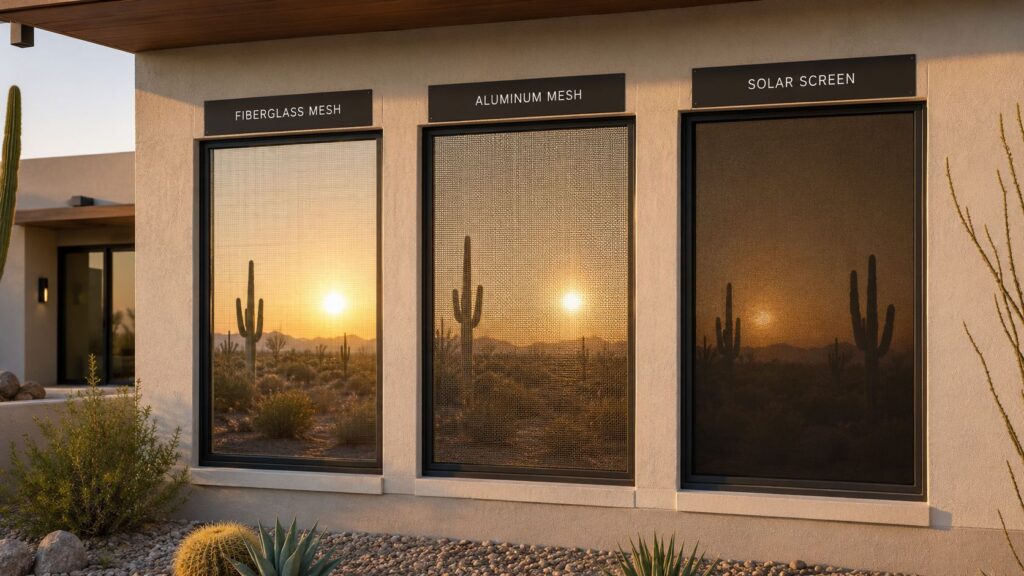
For most homes, these are still the two standard materials worth comparing. Fiberglass is the common baseline because it is affordable, easy to install, and visually softer. Aluminum costs more, but it usually holds its shape better and takes more abuse from handling, pressure, and day-to-day use.
| Material | Durability | Cost | Visibility | Best For |
|---|---|---|---|---|
| Fiberglass | More flexible, easier to damage from pets or repeated stress | Lowest-cost standard option | Usually less noticeable from inside | Budget re-screening, lower-use windows, openings that stay in place |
| Aluminum | Stronger mesh, better resistance to wear and deformation | Moderate cost | Slightly more visible than fiberglass | Frequently used windows, higher-stress openings, homeowners who want longer service life |
Fiberglass as the practical baseline
Fiberglass is the standard choice on a lot of residential windows for one simple reason. It does the basic job at a lower cost.
It also gives a cleaner look than many homeowners expect. From inside the room, fiberglass usually reads softer than aluminum, which matters on view windows or anywhere you do not want the screen to call attention to itself. It is flexible in the frame, easy to re-screen, and it will not rust.
In Phoenix, that flexibility is both a strength and a weakness. It helps during installation and routine handling, but it also means the mesh is easier to stretch, fray, or damage over time, especially on windows that get removed often for cleaning. Add hard sun, monsoon dust, and a cat pushing into the lower corner, and standard fiberglass starts aging faster.
For low-stress windows, fiberglass still makes sense. If the screen stays put, the opening is not a pet hotspot, and the goal is a cost-conscious replacement, it is a reasonable pick.
Aluminum for longer service life
Aluminum is the better fit when the screen needs to stay tight, hold its shape, and survive more punishment. In real homes, that usually means bathroom windows that open regularly, side yards that collect windblown dust, or any screen that gets taken in and out more than once in a while.
It feels firmer because it is firmer. That shows up in daily use. Aluminum is less likely to sag, less likely to get chewed up by repeated handling, and generally better at staying serviceable on openings that see more wear. In Phoenix, that extra rigidity can pay off because dust storms and frequent washing expose weak screens pretty quickly.
The trade-off is visibility and denting. Aluminum mesh is often a little more noticeable from indoors, and once it gets bent, the crease tends to stay. Fiberglass will flex. Aluminum will remember the hit.
Where the trade-off really lands
For Phoenix homeowners, I usually frame it this way. Use fiberglass where low cost and a cleaner view matter more than long-term toughness. Use aluminum where the screen has to put up with sun, dust, handling, or pressure.
If you want a more detailed material-by-material comparison, this fiberglass vs aluminum window screen guide breaks down the practical differences in a straightforward way.
There is also a sizing issue homeowners miss. A standard bedroom window that stays closed most of the year can do fine with fiberglass. A larger opening, a frequently used casement, or a patio-adjacent window often benefits from aluminum because the screen has more opportunities to get pushed, flexed, and cleaned. For very large openings, many homeowners skip standard insect screen logic altogether and look at motorized patio screens because the use case is different from a basic window screen.
The short version is simple. Fiberglass is fine for calmer openings. Aluminum is the safer choice where failure would be recurring, inconvenient, or expensive.
Beyond the Basics Specialty Screen Solutions
A lot of Phoenix screen problems are not really insect-screen problems. They are heat problems, pet damage problems, or security concerns that standard mesh was never built to solve.

Pet screens for homes with claws and pressure points
Pet screen earns its keep fast in the right spots. In Phoenix, I see the same failure points over and over: slider corners, low windows facing a yard, and any opening where a cat camps out to watch birds or a dog braces against the frame.
The mesh is thicker and harder to tear than standard insect screen, which makes it a practical fix for repeated scratching and pushing. The trade-off is visibility and airflow. Pet mesh is usually a little darker and heavier, so I would not install it across every window unless the whole house needs that extra abuse resistance.
Targeted use makes more sense for most homes. Put it where the damage keeps happening and keep a lighter mesh on calmer windows.
Solar screens for rooms that bake in the afternoon
Solar screens belong in a different conversation than basic bug screens. They are built to cut glare and reduce solar heat gain, which matters a lot more in Phoenix than it does in milder climates.
They work especially well on west-facing and southwest-facing windows, tall entry glass, stairwells, and rooms that turn uncomfortable by late afternoon. In those locations, window solar screens designed for heat and glare control often solve the actual complaint better than swapping one standard insect mesh for another.
There is a trade-off here too. You give up some outward clarity and some natural light. Most homeowners are fine with that on punishing exposures because the room feels more usable.
For larger outdoor openings, some homeowners also compare fixed window screening with retractable exterior systems like motorized patio screens, especially when they want shade, airflow, and a cleaner patio edge without committing to a fully enclosed feel.
Here's a quick visual look at how screen choices affect real-world comfort and use:
Security screens for tougher openings
Security screens are a different product category altogether. They are for homeowners who want ventilation at a door or ground-level window without leaving that opening protected by a light frame and standard mesh.
That usually comes up on side doors, back entries, and lower windows with easy exterior access. In Phoenix, those locations also take more dust, more sun, and more day-to-day use, so the stronger frame matters as much as the screen insert.
They cost more than a typical re-screen job, and they are not the automatic answer for every house. But if the question is, "How do I keep airflow and add a stronger barrier here," security screens deserve a serious look.
One practical local option for consultation, measurement, and replacement is Sparkle Tech Window Washing & window screens, along with other Phoenix screen specialists depending on the screen type and frame system involved.
The Phoenix Factor Climate Smart Screen Choices
Phoenix changes the equation. The same mesh that performs acceptably in a milder region may age faster here because the environment is harsher on everything mounted outside.

Sun exposure changes what value means
In Phoenix, low upfront cost can become expensive if the material fails early on the hottest side of the house. A screen that needs repeat repair on west-facing windows isn't saving money. It's just spreading the cost out while adding frustration.
That's why the best window screen material here is often not the cheapest standard mesh. It's the one that fits the exposure. For windows taking heavy afternoon sun, homeowners should at least consider whether a more durable screen or a purpose-built solar screen matches the problem better.
If heat is part of the complaint, I usually tell people to think beyond screens alone. Good insulation, better shade management, and HVAC efficiency all work together. These pro HVAC tips for Arizona homeowners pair well with a screen upgrade because they address the bigger comfort picture.
Dust storms and pests reward a better fit
A lot of screen failures in Arizona aren't about the mesh alone. They're about fit, tension, and frame condition after repeated wind and dust exposure.
Haboobs push fine dust into every weak spot. If the spline is loose, the frame is bent, or the corners have opened up, the homeowner notices it right away. The same goes for bugs. Even a good material won't protect much if the screen no longer seals the opening correctly.
The best material can still underperform in a bad frame. In Phoenix, installation quality and fit matter just as much as mesh choice.
For homeowners focused on solar control for specific windows, this guide to window solar screens for Arizona homes is useful because it addresses the kind of heat-facing openings standard insect screens don't solve well.
What usually works best in local conditions
A practical local rule set looks like this:
- Use standard fiberglass where budget matters and the window isn't under heavy stress.
- Use aluminum where you want longer life and stronger resistance to daily wear.
- Use pet screen only where pets are causing damage.
- Use solar screens where the complaint is room temperature, glare, or punishing afternoon sun.
That kind of targeted approach usually serves Phoenix homes better than installing one material everywhere and hoping it solves every issue.
Your Final Decision Checklist and Recommendation
If you're still narrowing it down, use this checklist the same way a screen pro would.
Ask these questions before you order
- Which windows get the worst sun? South- and west-facing openings often justify a stronger or more specialized screen.
- Do you have pets touching the mesh? If yes, standard screen may be the wrong answer in those locations.
- Is your main goal lower upfront cost or fewer replacements later? That answer usually points toward fiberglass or aluminum pretty quickly.
- Are you trying to cool a room, or just keep bugs out? Those are different jobs.
- Are the frames still in good shape? If the frame is bent, loose, or corroded, re-screening alone may not be enough.
My practical recommendation for most Phoenix homes
For a basic insect screen replacement, aluminum is often the best all-around choice when you want durability and better long-term value. If the project is budget-driven and the windows are low stress, fiberglass remains a sensible option.
If the room itself is too hot, skip the wishful thinking around standard mesh and look at solar-specific products instead. And if pets are the reason you're replacing the same screen again, install pet-resistant mesh only where the damage keeps happening.
Before spending money, it helps to compare real replacement scenarios and frame condition. This guide on window screen replacement cost is a good starting point for figuring out whether you need a simple re-screen or a more complete replacement.
Bottom line: Most Phoenix homeowners do best with aluminum for standard durability, and solar screens for windows where heat is the real problem.
Frequently Asked Questions About Window Screens
Does screen color affect cooling or visibility
In Phoenix, homeowners usually notice screen color in two places first. How easy it is to see through the mesh, and how the screen looks from the curb.
Darker mesh, especially black, usually gives the clearest outward view because it creates less glare to your eye. Lighter mesh can look brighter and more noticeable, which some homeowners prefer from the outside, but it often does not look as clean when you are standing inside the room. For heat control, color alone is usually a minor factor with standard insect screen. If a room is baking on the west side every afternoon, changing from one standard mesh color to another is rarely the fix. A true solar screen makes a much bigger difference.
Is it better to repair a screen or replace it
Repair is the right call when the frame is still square, the corners are tight, and the problem is just worn or torn mesh.
Replace the full screen if the frame is bent, the corners are pulling apart, or the screen no longer sits tight in the window. I see this a lot after years of sun exposure and dust storms. A fresh mesh installed in a weak frame often fails again sooner than homeowners expect.
What's the best window screen material for homes with pets
For standard mesh, aluminum holds up better than fiberglass if a dog or cat brushes against it now and then. It stays straighter and resists stretching better.
If a pet regularly paws, jumps, or pushes on the screen, skip standard mesh on those windows and use pet-resistant screen instead. It is thicker, more visible, and it cuts some airflow, but those trade-offs are usually better than replacing the same torn screen every few months.
Should every window in the house use the same screen material
Usually, no.
Phoenix homes often work better with a mix. A low-traffic bedroom window may do fine with fiberglass. A kitchen or patio-adjacent window may hold up better with aluminum. West-facing rooms that take hard afternoon sun may need solar screens if heat is the primary complaint, not insects. Matching every opening sounds simple, but matching the screen to the job usually gives better results.
If your screens are torn, loose, heat-exposed, or no longer doing their job, Sparkle Tech Window Washing & window screens can help you figure out whether a basic re-screen, an aluminum upgrade, or a solar screen setup makes the most sense for your Phoenix home.