




When you start looking into replacing your window screens, you'll find that the cost can vary quite a bit. On average, you can expect to pay anywhere from $147 to $515 per screen, with the national average landing right around $316.
But what makes one job cost nearly four times as much as another? It all comes down to the details of your specific project.
Understanding Your Total Replacement Cost
Trying to pin down a single, flat fee for window screen replacement is a bit like trying to guess the price of a car without knowing the make or model. The final number on your invoice is actually a combination of several different factors, and each one plays a role in the total.
It's more than just slapping a new piece of mesh into the old frame. The job involves specific materials, the hands-on labor to get it right, and the unique size and shape of your windows. Getting a handle on these components is the first real step to creating a realistic budget and ensuring you get a quality job for a fair price.
To give you a better idea of what to expect, here's a quick look at some common price points.
Typical Window Screen Replacement Cost At A Glance
This table provides a quick summary of cost ranges for window screen replacement, helping you understand potential expenses for your project.
| Cost Tier | Average Price Per Screen | Common Scenario |
|---|---|---|
| Low-End | $35 – $150 | A DIY re-screening project using standard fiberglass mesh for a regular-sized window. |
| Mid-Range | $150 – $400 | Professional replacement of a standard-sized screen using a higher-quality material like aluminum or pet-resistant mesh. |
| High-End | $400+ | Professional installation for a large or custom-shaped window, often using a specialty material like solar or copper screens. |
These figures are a good starting point, but remember that local labor rates and the specifics of your home will always influence the final cost.
The Core Components of Your Quote
When a professional hands you an estimate, they're not just pulling a number out of thin air. They’re calculating the cost based on a few key ingredients. Think of these as the building blocks of your final bill.
The three main pillars of your window screen replacement cost are:
- Screen Material: This is a big one. Standard fiberglass mesh is your most affordable option. But if you want something more durable like aluminum, a screen that can stand up to your pets, or a solar screen to help with energy bills, you can expect the price to climb.
- Labor Rates: You're paying for a professional's time, skill, and experience. A simple, straightforward swap on a ground-floor window will cost less in labor than a tricky job on a second-story, custom-arched window.
- Window Size and Type: It's simple math—bigger windows need more material and take more time, which drives up the cost. Unusually shaped windows, like circles or octagons, require custom cutting and fitting, which also adds to the labor charge.
A recent analysis found that the average cost to replace a window screen in major markets ranges broadly, with an average hovering around $316 to $317. This wide spectrum highlights just how much screen size, material, and local labor rates can impact the bottom line.
In the end, a good screen does more than just keep the bugs out. It lets fresh air in, helps protect your furniture and floors from sun damage, and even adds to your home's curb appeal. For a closer look at this, you can learn more about why screens matter and how they contribute to your home's overall health and comfort. Seeing all the benefits really helps put the replacement cost into perspective as a smart investment in your home.
What Goes Into the Final Price?
Ever get a quote for a window screen replacement and wonder why it's $75 for one window but closer to $400 for another? It’s not just a number pulled out of thin air. The final cost is a sum of its parts, and understanding those parts is key to getting a fair price.
Think of it like building a custom car. The basic frame is your starting point, but the engine you choose, the size of the wheels, and the complexity of the paint job all add to the final sticker price. For window screens, the cost comes down to three main things: the screen material, the window itself, and the labor involved. Let's break it down.
Screen Material: The Biggest Cost Driver
By far, the most significant factor influencing the price is the screen mesh you pick. This choice doesn't just affect your wallet; it also determines how durable your screen is, how clear your view will be, and what special jobs it can do.
Here’s a quick rundown of the most common choices:
- Fiberglass: This is the go-to standard for a reason. It's affordable, flexible, and what you’ll find on most new homes. It won’t dent or crease, but it's also the most likely to tear.
- Aluminum: A solid step up from fiberglass, aluminum mesh is tougher and lasts longer. It's a great middle-of-the-road option that holds its shape well, though a hard impact can leave a permanent dent.
- Specialty Mesh: This is where you get into the high-performance stuff, and the price reflects it. Think solar screens that can block up to 90% of the sun's heat or super-durable, pet-resistant screens made from heavy-duty polyester that can handle sharp claws.
Going with basic fiberglass will keep your initial cost down, no question. But sometimes, spending more upfront on a specialty screen pays for itself over time through energy savings or avoiding the need for constant replacements.
Window Size and Frame Complexity
Next up is the window itself. This one's pretty simple: bigger windows mean more material and more time, which equals a higher cost. A tiny bathroom window screen might be a quick $50 job, while a full-sized sliding patio screen door could easily run you over $300.
But it’s not just about size. The shape and type of the window frame are just as important. A standard, rectangular pop-in screen is the easiest and cheapest to handle. Anything outside of that standard box is going to add to the bill.
Got an arched, circular, or hexagonal window? That requires custom cutting and careful fitting, which drives up the labor time. The same goes for screens on casement or awning windows, which often have trickier hardware and installation steps. And if your existing aluminum frame is bent or broken, that repair work will be an added cost before the new screen can even go in.
Choosing The Right Screen Material
Picking the mesh for your new window screen is a lot like choosing the right tires for your car. From a distance, they might all look the same, but the material you go with will completely change the performance, lifespan, and, of course, your total window screen replacement cost. Nailing this decision means you're not just buying a screen; you're investing in the right solution for your home.
It really comes down to balancing your immediate budget with your long-term goals. Sure, standard materials are easy on the wallet and do the job, but sometimes, spending a bit more upfront on a specialty screen can save you a ton of hassle and even money down the road.
The infographic below breaks down how your choice of material, along with labor and window size, is one of the biggest pieces of the cost puzzle.
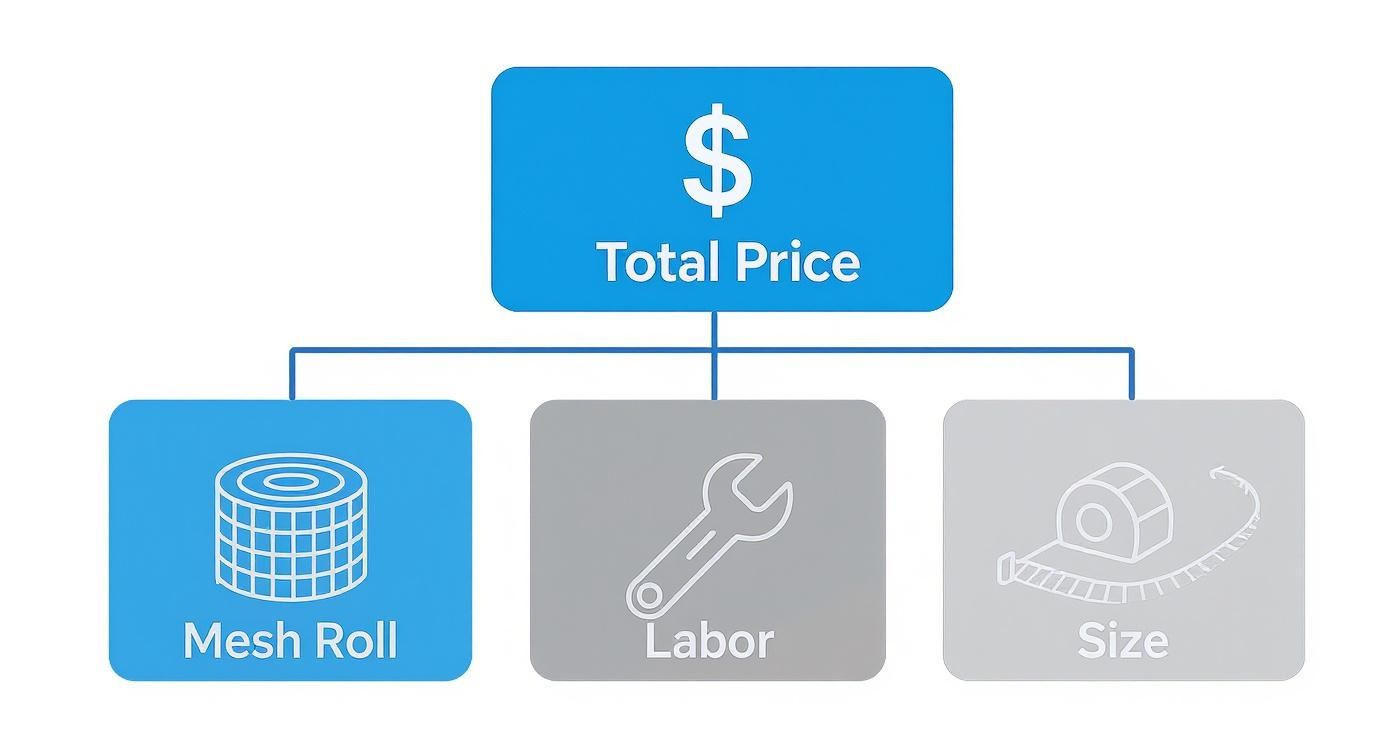
As you can see, the mesh is a core expense that sets the foundation for your final bill. So, let’s dig into the most common options you'll encounter.
The Everyday Workhorses: Fiberglass and Aluminum
For most homes, the choice boils down to two classic, tried-and-true materials: fiberglass and aluminum. Each has its own personality and is built for different situations and price points.
Fiberglass is pretty much the default choice, and for good reason. It’s the most affordable screen material out there, it's flexible (which makes it forgiving to install), and it won’t crease or dent like metal can. The trade-off? Durability. It’s more prone to tearing, and years of sun exposure can make it brittle.
Aluminum is a solid step up in the strength department. It's more rigid and tends to last longer, making it a fantastic middle-of-the-road option. While it holds up well against tearing, it can be dented or creased if something bumps into it, so keep that in mind for ground-floor windows or high-traffic areas.
A Look at Specialty Screen Options
Once you move past the basics, you'll find a whole world of specialty screens designed to solve very specific problems. They cost more, no doubt, but they deliver performance that standard screens just can't touch.
-
Pet-Resistant Screens: Made from a tough, vinyl-coated polyester, this stuff is about seven times stronger than standard fiberglass. It's built to stand up to the claws, paws, and curious noses of your furry family members, saving you from the headache of constant patch-ups.
-
"Invisible" Screens: If your home has a killer view you don't want to compromise, this is your screen. It’s woven with super-fine threads that maximize visibility and let in more light, making it feel like there’s almost nothing there.
-
Solar Screens: A game-changer in sunny climates. These screens are engineered to block a huge chunk of the sun's heat and damaging UV rays before they even hit your window. This can lead to real savings on your cooling bills and helps protect your furniture and floors from fading.
When you're deciding, think about the unique challenges your home faces. A family with two big dogs has very different needs than someone living in a condo with a stunning city view. The "right" material isn't just about the price tag; it's about finding the best tool for the job.
Comparing Common Window Screen Materials
To make things a little clearer, let's put these materials side-by-side. This table breaks down what you can expect from each option in terms of cost, benefits, and potential downsides.
| Material Type | Average Cost Per Screen | Key Benefits | Potential Drawbacks |
|---|---|---|---|
| Fiberglass | $35 – $60 | Most affordable; flexible and won't crease; easy to install. | Least durable; can tear easily; becomes brittle with UV exposure. |
| Aluminum | $50 – $100 | Durable and long-lasting; good visibility; won't sag. | Can dent or crease upon impact; can be harder to install. |
| Pet-Resistant | $70 – $150 | Extremely durable (7x stronger than fiberglass); resists tears from pets. | Higher cost; thicker mesh can slightly reduce visibility. |
| Solar Screen | $80 – $200 | Blocks up to 90% of solar heat; lowers energy bills; reduces glare. | Highest initial cost; significantly darkens rooms and reduces visibility. |
| "Invisible" | $60 – $120 | Maximum visibility and airflow; preserves views. | Finer mesh is more delicate and can be damaged more easily. |
Ultimately, paying a little more for a specialty screen often makes sense. A solar screen, for example, might have a higher window screen replacement cost upfront, but it can easily pay for itself over a few hot summers through lower energy bills. It's an investment in your home's comfort and efficiency.
Deciding Between DIY and Professional Installation
When you’re staring at a torn window screen, you’re at a fork in the road. Do you roll up your sleeves and tackle it yourself, or do you call in a pro? The right answer really comes down to balancing your budget, your available time, and how comfortable you are with hands-on projects.
Both paths can get you a perfectly good new screen, but knowing what you’re getting into is the key to making sure your final window screen replacement cost feels right and you avoid any major headaches.
Going the DIY route is the classic money-saver, and it definitely can be. But let’s be real—it’s not a five-minute job. A successful DIY screen replacement takes the right tools, a healthy dose of patience, and a steady hand. On the flip side, hiring a professional is all about convenience and a quality guarantee, taking all the guesswork and potential frustration off your plate.
Let's break down what each option really looks like.
The DIY Approach: What to Expect
Doing the replacement yourself can be a really satisfying project, and you’ll save on labor, which usually runs $20 to $50 per screen. Before you dive in, though, you need to be honest about whether you have the right gear and are ready for some common stumbling blocks.
To get that tight, clean finish, you'll need more than just the new screen mesh. A few specific tools are essential.
- Spline Roller: This is the one tool you absolutely can't skip. It has a special grooved wheel made specifically for pressing the rubber spline deep into the frame's channel.
- Utility Knife: You need a sharp, fresh blade to get a clean cut when you trim the extra mesh. A dull one will just snag and ruin your work.
- Flat-Head Screwdriver or Pliers: Something small and sturdy is necessary for prying and pulling out the old, brittle spline.
The biggest mistake people make doing this themselves is getting the tension wrong. If the screen is too loose, it will sag and look awful. But if you pull it too tight, you can actually bend the aluminum frame, which is a much more expensive problem to fix. Hitting that sweet spot takes a bit of feel.
Another project-killer is a simple measurement error. Being off by even a tiny fraction of an inch means your screen won't fit, and you’ve just wasted time and materials. If your frames are already bent or broken, the job gets way more complicated. In that case, a good guide on proper window screen frame replacement can be a lifesaver.
The Professional Advantage: Peace of Mind
While DIY is tempting for the savings, hiring a professional is an investment in certainty. You're paying for their experience, speed, and the guarantee that the job will be done right the first time. A pro has done this hundreds of times, so they know exactly how to measure and get the screen tension perfect every single time.
When you decide to hire out, finding reliable home service providers is the most important step. A professional also has access to better materials and specialized tools you won’t find at the local hardware store. This often means you get a more durable, longer-lasting screen that will hold up better against weather and wear.
In the end, it’s your call. If you’re a confident DIYer with time to spare, replacing a screen can be a great way to cut costs. But if your schedule is tight or you just want a flawless result without any of the risk, calling a professional is a smart, stress-free move.
Actionable Tips For Saving Money
Putting in new window screens doesn't have to be a major expense. With a bit of know-how and smart planning, you can get the job done without breaking the bank. It really comes down to a few practical strategies for managing your window screen replacement cost wisely.
Many homeowners I've talked to are surprised to learn how much timing and the scope of the project can influence the final bill. By thinking ahead, you can get a professional-quality result that fits comfortably within your budget.
Bundle Your Projects For Volume Discounts
One of the easiest ways to get a better deal is to replace several screens at the same time. It’s a lot like buying in bulk at the grocery store—the more you buy, the better the per-unit price. Contractors are often willing to offer a volume discount because their travel and setup costs are the same whether they’re working on one screen or ten.
So, before you pick up the phone, do a full walk-around of your home. Carefully inspect every screen for tiny rips, sagging mesh, or other signs of wear and tear. Handling all your replacements in one go is far more economical than paying for separate service calls over the next few years.
Stick With Standard Materials
While fancy options like solar or pet-resistant screens sound great, opting for standard materials is a sure-fire way to keep costs down. For the vast majority of homes, a good-quality fiberglass or aluminum mesh provides the perfect mix of performance and affordability.
Unless you're trying to solve a specific problem—like a cat that loves to climb screens or a west-facing room that bakes in the sun—standard materials will do an excellent job. They'll keep the bugs out and let the breeze in for a fraction of the cost.
Master The Measurement And Maintenance
If you decide to go the DIY route, remember the old carpenter’s rule: measure twice, cut once. Precision is everything. Being off by even a quarter of an inch can mean you’ve wasted your materials and have to start over from scratch.
A little bit of upkeep also goes a long way in extending the life of your new screens, meaning you won't have to replace them again anytime soon. Regular cleaning prevents grime buildup that can weaken the mesh over time. You can learn the right way to do it in this guide on how to clean window screens.
Finally, a couple of other things can make a real difference:
- Schedule During The Off-Season: Most contractors are swamped in the spring and summer. If you can wait to book your project in the fall or winter, you might find more flexible scheduling and potentially lower labor rates.
- Re-screen Instead of Replacing: Take a look at your screen frames. If they’re still straight and sturdy, you can save a ton of money by just having the mesh replaced. This is called "re-screening," and it's much cheaper than buying brand-new frames and all.
Common Questions About Window Screen Costs
As you get closer to starting your project, you're bound to have a few questions pop up. Getting straight answers to these common concerns can make all the difference in budgeting accurately and feeling confident about your decisions.
Let's clear up some of the most frequent questions homeowners have about the cost of replacing their window screens.
Is It Cheaper to Rescreen or Buy a New Screen?
For a window frame that’s still in great shape, rescreening is almost always the cheaper route. Think of it like retreading a tire instead of buying a whole new one. You're just replacing the worn-out part—the mesh—which keeps material and labor costs down.
But if the frame itself is bent, cracked, or warped, a brand-new screen is the only real solution. A damaged frame just won't hold the new mesh tightly, leaving you with gaps and sagging. In that case, a full replacement is the smarter, more effective investment.
How Often Should I Replace My Window Screens?
How long your screens last really comes down to the material they're made of and the climate you live in. Some materials are just built tougher than others.
Here's a quick breakdown of what you can generally expect:
- Standard Fiberglass Screens: These typically hold up for about 10-15 years. Over time, sun exposure makes them brittle and prone to tearing.
- Durable Aluminum Screens: These are the long-haulers. With a little care, aluminum screens can easily last 20-30 years, sometimes even longer.
It’s time for a replacement when you see the classic signs of aging: rips, holes, major sagging, or the mesh feeling stiff and crunchy to the touch.
The bottom line? Spending a bit more upfront for a higher-quality material like aluminum often saves you money in the long run because you won't have to replace it nearly as often.
Does Window Type Affect the Replacement Cost?
It absolutely does. A simple, rectangular screen for a standard double-hung window is the most straightforward and least expensive to replace. There's no custom work involved, making it a quick and easy job.
The price starts to go up when you're dealing with anything outside the box. Custom shapes—like arches, circles, or triangles—require much more time and skill to get the fit just right. The same goes for size. Large screens for patio doors or oversized picture windows naturally use more material and can be trickier to install, which bumps up the final cost.
Ready for a flawless, professional result without the headache? The experts at Sparkle Tech Window Washing can handle all your window screen replacement needs, guaranteeing a perfect fit and a crystal-clear view. Contact us today for a free, no-obligation quote!