



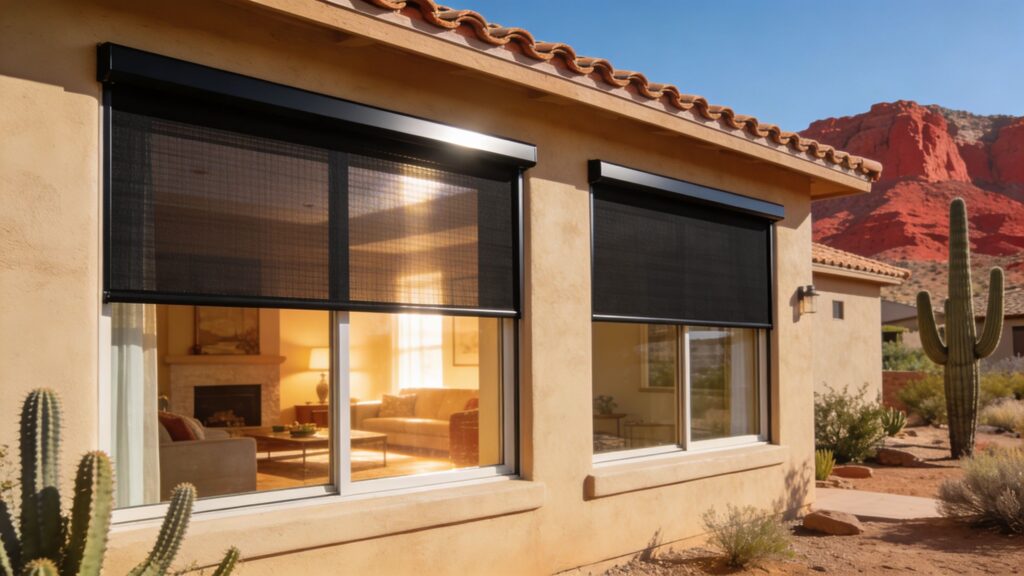
By late spring in Arizona, a lot of homeowners are dealing with the same pattern. The west-facing rooms heat up first, the glare gets harsh by afternoon, and the air conditioner starts running longer than anyone likes. You close blinds to cool the room down, then lose the daylight and the view you wanted in the first place.
That's where window solar screens make sense. They're not a decorative add-on. In a hot, high-sun climate, they're one of the most practical ways to cut down the sun's impact before it turns your glass into a heat source. If you've also been trying to figure out why your summer bills jump even when your thermostat habits haven't changed, this guide on Airtight Spray Foam Insulation gives a useful whole-house view of where cooling losses usually come from.
Arizona homes get hit from multiple directions at once. Heat, glare, dust, UV exposure, and long cooling seasons all stack together. A good solar screen setup helps with comfort right away, but the long-term value depends on choosing the right mesh, installing it correctly, and keeping it clean enough to keep doing its job.
Your Shield Against the Arizona Sun
A typical call starts with one complaint, but it's rarely just one problem. Someone says the living room feels hotter than the rest of the house. Then they mention the TV glare in the afternoon, the faded flooring near the slider, and the fact that the blinds stay shut most of the day.
That's the Arizona use case for window solar screens.
The U.S. Department of Energy identifies exterior solar screens as a key building-efficiency measure in climates with long cooling seasons because they block solar heat gain before it reaches the glass, while also reducing glare and ultraviolet exposure, as noted by the Department of Energy's window covering guidance.
What makes them practical is that they solve several problems with one exterior layer. You're not only trying to make a room darker. You're trying to keep the sun from loading that room with heat in the first place.
What homeowners usually notice first
Some benefits show up immediately, others show up over time.
- Afternoon rooms become more usable because the light is softer and the heat coming off the glass drops.
- Furniture and flooring get better protection from direct sun exposure.
- You can keep more visibility than heavy interior coverings if the screen is chosen well.
- The house feels more balanced from room to room, especially on west and south exposures.
A solar screen works best when it's treated like part of the home's exterior heat-control system, not just a shade product.
The other piece that homeowners often overlook is lifecycle cost. Buying screens is only step one. Arizona dust, monsoon grime, and UV wear all affect how they look and how they perform. A screen that's clogged, sagging, torn, or loosely mounted won't give you the same result as one that's fitted and maintained properly.
How Solar Screens Beat the Heat and Glare
Think of solar screens as sunglasses for your house. They don't eliminate sunlight. They filter it before it becomes a bigger problem indoors.

That timing matters. Once the sun passes through the glass and heats interior surfaces, you're already behind. Exterior solar screens stop part of that solar energy outside the building envelope, which is why they're so effective in Arizona conditions.
They block heat before the glass heats up
This is the main reason homeowners install them. The Department of Energy specifically points to exterior solar screens and similar coverings as useful in long cooling seasons because they block solar heat gain while also cutting glare and UV exposure.
That's the difference between a room that feels manageable and a room that feels baked by mid-afternoon.
They cut glare without forcing you into a cave
A lot of people start with blinds or curtains, then realize they've traded one problem for another. The room is dim, but the heat is still there and the house feels closed up.
Solar screens handle glare differently. The mesh filters the incoming light, softens the harshness, and still allows outward visibility. The result depends on the openness of the fabric and the color you choose, but the goal is simple. Less squinting, less TV washout, less direct blast of sun across desks, counters, and floors.
They help protect interiors from UV exposure
The sun in Arizona doesn't just make rooms uncomfortable. It wears on what's inside them. Upholstery, flooring, finishes, and artwork all take the hit over time.
Some solar screen products are rated to block a large share of UV exposure, but the practical homeowner takeaway is simpler. If you reduce direct sun intensity at the window, you reduce fading pressure on the room.
Practical rule: If the same room always has the blinds closed by noon, that window is a strong candidate for a solar screen.
What they don't do
Solar screens aren't blackout shades. They also aren't a replacement for every other window treatment. In bedrooms, media rooms, or spaces where full privacy matters at night, they often work best as part of a layered setup.
Here's the quick version:
| Need | What solar screens do well | Where they fall short |
|---|---|---|
| Heat control | Reduce solar load from exposed windows | Don't fix air leaks or poor insulation elsewhere |
| Glare reduction | Soften harsh daytime light | Won't create full darkness |
| View preservation | Keep an outdoor view better than heavy drapes | Very tight mesh can reduce clarity |
| UV protection | Reduce sun exposure hitting interiors | Not every product performs the same |
Choosing Your Solar Screen Material and Mesh
Once you've decided to add window solar screens, the next question is which screen fits your house. Making good decisions here saves money, while bad ones annoy you every day.
Material, openness factor, block rating, and color all affect the final result. If one of those is off, the screen might technically work but still feel wrong in daily use.

Material matters more than people think
Solar screen fabrics aren't generic mesh. They're engineered composites, and the construction changes durability and performance.
The two materials you'll hear about most often are:
- Vinyl-coated fiberglass, which is common in established solar screen products
- PVC-coated polyester, which is used in many commercial-style meshes
Phifer's SunScreen is a woven vinyl-coated fiberglass product designed to reduce solar heat gain in summer and heat loss in winter, and the manufacturer states it can absorb and dissipate up to 70% of the sun's heat and glare before it reaches the window on its SunScreen product page.
That doesn't mean every fiberglass screen performs the same. It means you should ask what the fabric is, not just what color it comes in.
Openness factor controls the trade-off
This is the detail most homeowners should understand before they buy. Openness factor describes how tight the weave is.
Industry guidance describes common solar screen openness levels ranging from 1% to 14%, with lower percentages creating a tighter weave that gives more glare reduction and privacy but less view, while higher percentages let in more daylight and preserve more visibility, as explained in this solar screen openness factor guide.
A 5% solar shade is often treated as a solid all-around choice. A 10% shade is looser and keeps more of the view.
If you love your mountain view, don't choose the tightest weave just because it sounds stronger on paper.
Block rating and openness are related, but shop carefully
Some products are marketed by openness factor. Others are marketed by how much sun or UV they block. That can confuse buyers fast.
One 90% solar screen product listed in the verified information claims it can block 80% to 90% of the sun's hot rays and 90% of UV light. Those numbers tell you the fabric is built for aggressive solar control, but they also hint at the trade-off. More blocking usually means less daylight and a more muted view.
Here's a practical way to look at the situation:
| Screen choice | Best fit | Main trade-off |
|---|---|---|
| Tighter mesh | West-facing rooms, privacy-sensitive windows, harsh glare areas | Dimmer interior and less view-through |
| Mid-range mesh | Most living areas | Balanced result, but not maximum in any one category |
| Looser mesh | Scenic views, rooms where daylight matters | Less aggressive heat and glare control |
Color changes the experience
Homeowners often focus on beige, brown, or black based on curb appeal. That's fair, but color also affects what you see from inside.
Darker fabrics generally preserve better outward visibility. Lighter colors can suit the exterior better on some homes, but they don't always give the same look from the room. In practice, black and bronze are common because they tend to be easier on the eyes when you're looking out.
Match the screen to the exposure, not just the house
The right answer often changes by window.
- West-facing glass usually benefits from more aggressive sun control.
- South-facing windows often need a strong balance between heat control and daylight.
- Front elevation windows may require a closer look at appearance and HOA rules.
- Patio sliders and large openings need mesh and framing that can handle more visible wear and more use.
One uniform product on every window sounds simple. On many Arizona homes, it's not the smartest choice.
DIY vs Professional Solar Screen Installation
A lot of homeowners can install screens themselves. The project isn't mysterious. Measure the opening, build or order the frame, fit the mesh, and mount it outdoors.
The problem is that solar screens are a performance product. Small mistakes affect the result.

Where DIY works
If you're dealing with a few accessible ground-floor windows, standard rectangular openings, and you're comfortable measuring carefully, DIY can be a reasonable route.
It's also a good fit for homeowners who already handle their own basic screen repairs and don't mind spending time dialing in the fit. If you're comparing different privacy and sun-control products first, this Quote My Wall vinyl guide is useful for understanding how film installation differs from exterior screen work.
Where DIY usually goes wrong
Most installation issues come from fit and placement.
A screen that sits unevenly, leaves side gaps, bows in the frame, or mounts too loosely won't perform the way the fabric was designed to perform. It may also rattle, rub, or fail faster in wind.
Research cited in the verified data shows exterior-mounted screens have a much better shading coefficient of roughly 0.14 to 0.33, compared with 0.50 to 0.70 for interior installations, because exterior screens intercept solar energy before it passes through the glazing, according to this exterior solar screen performance overview.
That's why placement isn't a minor detail. It's the whole point.
What professionals usually get right
A professional install tends to pay off in four places:
- Accurate measurement for each opening, especially older homes where window sizes vary slightly
- Cleaner frame fit so the screen looks intentional instead of pieced together
- Better mounting security for wind exposure and repeated handling
- Fewer performance leaks around edges and corners
If you want to see what that process looks like in a service context, this overview of window screen installation options shows the kinds of fit and replacement issues homeowners usually run into.
A quick demonstration helps if you're still deciding how hands-on you want to be.
The Arizona factor
Arizona adds two complications. Dust gets into everything, and monsoon weather punishes anything mounted carelessly.
A solar screen that survives one summer but loosens up by the next season wasn't installed well enough.
For second-story windows, large patio openings, custom shapes, or homes with uneven stucco and trim lines, professional installation usually gives the cleaner and longer-lasting result.
Understanding Solar Screen Costs in Arizona
Cost matters, but this is one of those projects where the cheapest option can get expensive fast if it has to be redone. A screen that doesn't fit right, warps early, or uses the wrong mesh for the exposure doesn't save much.
Because the verified data for this article doesn't include Arizona price ranges, it's better to look at cost the way contractors do. By what drives the job up or down.
What changes the final price
A few variables matter on almost every home:
- Window size and shape affect both material use and labor time
- Screen fabric choice changes product cost and performance
- Mesh openness or blocking level can shift what product line you need
- Frame color and build quality matter if you're matching an existing exterior
- Access difficulty goes up on upper-story windows and hard-to-reach elevations
- Condition of existing frames determines whether you're repairing, rescreening, or replacing
If you've budgeted for major exterior work before, the logic is similar to comparing projects like how much does a new roof cost. The material is only part of the bill. Access, labor, customization, and job complexity drive the rest.
Repair, rescreen, or full replacement
Not every solar screen issue calls for a brand-new unit.
| Condition | Usually the better path |
|---|---|
| Mesh is worn but frame is solid | Rescreening often makes sense |
| Corners are loose or frame is bent | Replacement is often cleaner |
| Only one or two windows are failing | Targeted repair may be enough |
| Existing screens never performed well | Full replacement with a better spec is worth considering |
For homeowners comparing those options, this breakdown of window screen replacement cost factors helps frame the decision between patching an old setup and starting over.
The real value question
The right question isn't just “What do solar screens cost?” It's “What am I buying?”
You're buying exterior heat control, glare reduction, UV filtering, and a more usable room. If the product and installation match the window exposure, you usually feel the difference long before you need to think about eventual replacement.
Cleaning and Maintaining Your Investment
This is the part most homeowners don't hear much about when they buy window solar screens. They get sold on heat reduction and glare control, then nobody talks about the upkeep.
In Arizona, maintenance isn't optional. Dust, pollen, roof grit, and monsoon residue build up on the mesh. When that happens, visibility drops, airflow changes, and the screen stops looking like a clean finished product.

The verified guidance for this article notes a major consumer-information gap around cleaning and maintaining solar screens in high-UV, dusty regions. It also notes that while many sources talk about screens blocking up to 90% of UV rays, they often skip the fact that performance drops when screens are clogged with dust and debris, as described on this solar screen overview from Screenmobile.
What safe cleaning looks like
Routine care should be gentle. These fabrics and frames are durable, but they're not meant to be blasted.
Use this approach:
- Remove loose dust first with a soft brush or gentle rinse
- Wash with mild soap and water rather than harsh chemical cleaners
- Use a soft sponge or brush instead of anything abrasive
- Rinse thoroughly so soap residue doesn't dry into the mesh
- Let screens dry fully before reinstalling if you've removed them
What not to do
The fastest way to ruin a decent screen is over-cleaning it with the wrong tool.
- Don't pressure wash the mesh. High pressure can stretch, tear, or distort it.
- Don't scrub aggressively at one spot. That can damage the weave.
- Don't ignore frame corners and spline areas. That's where looseness often starts showing up.
- Don't wait until visibility is terrible. Heavy buildup is harder to remove cleanly.
Dirty solar screens don't just look neglected. They stop delivering the clear view and consistent performance you paid for.
When to call for service
Some homeowners can handle routine rinsing and light cleaning themselves. But if screens are high, heavily soiled, warped, or need inspection at the same time, professional service is easier and safer.
One option is screen cleaning guidance from Sparkle Tech Window Washing, which covers handling and cleaning concerns for window screens in Arizona conditions. The bigger point is to have a maintenance plan, whether you do it yourself or bring in help.
What to inspect during cleaning
Cleaning day is also inspection day.
Check for:
- Tears or punctures in the mesh
- Loose spline or edges pulling free
- Bent or twisted frames
- Mounting hardware wear
- Sun-brittle corners or faded frame parts
If you catch those issues early, you can often repair them before the whole screen needs replacement.
Frequently Asked Questions About Solar Screens
Can people see in through solar screens at night
During the day, solar screens can improve privacy because the bright exterior light and darker interior make it harder to see in. At night, that effect changes. If your interior lights are on, people outside can usually see more than they could during daylight hours.
For nighttime privacy, pair solar screens with blinds, curtains, or another interior treatment.
Will solar screens make my house too dark
That depends on the mesh openness and the window location. A tighter weave gives more heat and glare control, but it also cuts more light and reduces view clarity. A looser weave keeps more daylight and a more open feel.
This is why one screen type across the entire house isn't always ideal. West-facing rooms often need a different setup than shaded front windows.
Are solar screens still useful in winter
Yes, especially because Arizona winters are mild and solar screens aren't only about peak summer heat. They also help with glare control and interior protection year-round. Some products are also described as helping with seasonal heat loss, but in most Arizona homes the main value is still warm-season comfort and solar control.
Can solar screens damage my windows
A properly selected and correctly installed exterior solar screen is meant to work with the window, not harm it. Problems usually come from poor fit, bad hardware choice, or a screen sitting wrong on the opening.
That's one reason exact measurement and proper mounting matter more than people think.
Do solar screens help every window equally
No. The biggest payoff usually comes from windows that get the strongest direct sun, especially west and south exposures. A shaded north-facing bathroom window often won't justify the same screen spec as a large west-facing living room window.
How long do solar screens last
Service life depends on fabric quality, UV exposure, dust load, frame condition, and how often the screens are handled. In Arizona, maintenance makes a real difference. Clean, well-secured screens usually hold up better than neglected ones.
Are window solar screens worth it
For many Arizona homeowners, yes. They address a very specific problem that interior coverings alone don't solve well. If a room runs hot, glares badly, or forces you to keep blinds closed through the hottest part of the day, window solar screens are often a practical fix.
If your screens need cleaning, repair, replacement, or a closer look at whether solar screens fit your home, Sparkle Tech Window Washing handles window screen service in Arizona, including sun and solar screen work, with the kind of maintenance support homeowners usually end up needing after installation.