



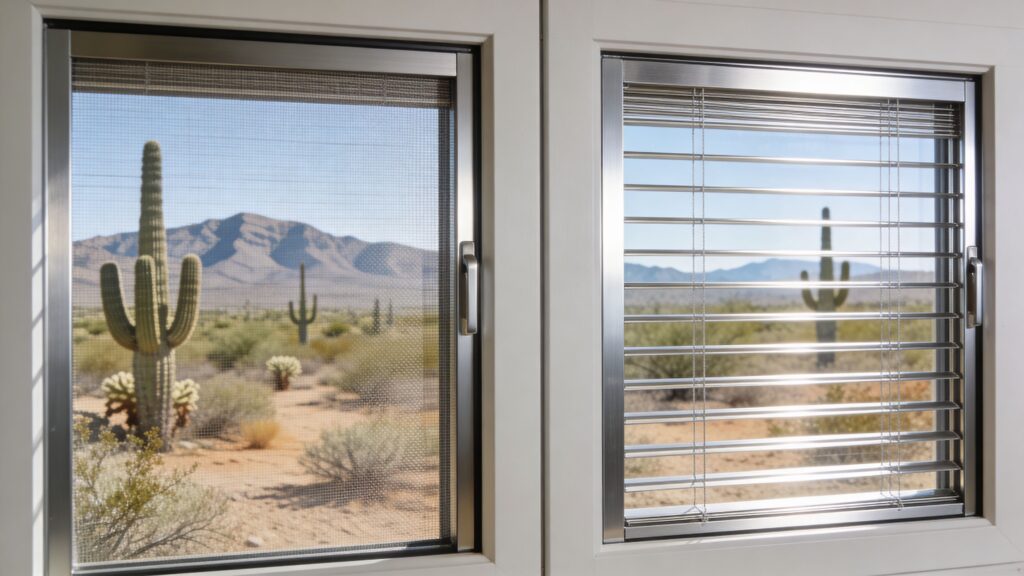
A lot of Arizona homeowners start this search the same way. A screen finally gives out after months of sun, dust, and wind, and now every open window feels like an invitation for grit, bugs, and glare.
That’s when the fiberglass vs aluminum window screen question stops being a small repair detail and starts feeling like a home decision. The right pick changes how your windows look, how much air moves through the house, and how often you’ll deal with repairs again.
Choosing the Right Window Screen for Arizona Homes
A torn or faded screen in Phoenix usually doesn’t fail all at once. It starts with a loose corner, a spot of sun damage, or a section that looks dusty no matter how often you rinse it. Then monsoon season hits, and the weak point gets worse.

In Arizona, a screen has to do more than keep insects out. It has to handle intense sun, blowing dust, and strong seasonal wind without making your windows look dull or blocked off. That’s why the material matters.
The two standard choices are fiberglass and aluminum. Both can work well. They just solve different problems.
| Factor | Fiberglass screen | Aluminum screen |
|---|---|---|
| Feel | Flexible | Rigid |
| Upfront cost | Lower | Higher |
| View | Softer, lower glare | More reflective |
| Impact response | Flexes | Dents |
| Wind performance | Better for lighter-duty use | Better for stronger wind exposure |
| Best fit | Standard residential windows | Higher-stress locations |
What most homeowners are actually deciding
Homeowners aren’t comparing materials in the abstract. They’re asking practical questions:
- Budget first: Do you want the more affordable option now?
- View first: Do you care most about clean outward visibility?
- Durability first: Do you have pets, kids, golf ball risk, or heavy wind exposure?
- Maintenance first: Do you want something forgiving and easy to live with?
Those answers usually point clearly in one direction.
Practical rule: If your main concern is everyday comfort and cost, fiberglass usually makes sense. If your main concern is resisting sagging, tearing, and wind stress, aluminum usually earns its higher price.
Arizona changes the usual advice
Generic window screen advice often treats all climates the same. That doesn’t work here.
Arizona exposes weaknesses fast. UV can age materials. Dust gets into everything. Monsoon gusts test how well the mesh stays tight in the frame. A screen that performs fine in a mild climate may not age the same way in the Phoenix Valley.
That’s why the best choice isn’t just “stronger” versus “cheaper.” It’s which material matches your house, your location, and how you use your windows.
Understanding Fiberglass and Aluminum Screen Construction
A screen failure in Arizona usually starts with construction, not color or price. By the time a homeowner notices sagging mesh, shiny glare, or a crease that will not flatten out, the material has already shown what it is built to do.
How fiberglass mesh is made
Fiberglass screen uses glass fibers woven into a mesh, then coated in vinyl. That coating gives the material some flex and helps protect the strands during normal use.
In the field, that flexibility matters. Fiberglass has some give when it is tensioned into a frame, so it is easier to fit on standard residential windows and easier to rescreen without fighting the material. If a child pushes on it or a branch brushes across it, the mesh often deflects instead of holding a hard crease.
That same soft construction is also the reason fiberglass can relax over time, especially on larger openings or older frames that no longer hold tension as well as they should.
How aluminum mesh is made
Aluminum screen is woven from thin metal wire. It starts out stiffer, holds a flatter plane in the frame, and usually looks more precise right after installation.
That rigidity is useful on windows that see more stress. In Arizona, I pay close attention to aluminum on larger window sections, exposed elevations, and spots that take repeated wind pressure during monsoon season. The trade-off is straightforward. Aluminum does not forgive impact well. Once the wire dents or creases, the damage usually stays visible.
Why the weave still matters
Many residential screens use a standard insect-screen weave such as 18×16 mesh. That refers to how tightly the strands are arranged, and it affects everyday performance in a few practical ways:
- Bug protection: A consistent weave helps block common insects without closing the screen too much.
- Air passage: The open space between strands influences how freely air moves through the opening.
- View quality: Strand thickness, color, and surface reflectivity affect how noticeable the screen looks from inside.
Material changes how that weave behaves after installation. Fiberglass tends to read softer in bright light. Aluminum usually looks sharper, but the metallic surface can stand out more in direct sun, which matters in Arizona more than it does in milder climates.
If you want a broader comparison beyond these two materials, this guide to window screen material types gives useful background.
Construction determines the kind of failure you get
Homeowners often hear the simplified version. Fiberglass is cheaper. Aluminum is stronger. That leaves out the part that shows up after a few seasons.
Fiberglass usually fails by loosening, fraying, or wearing out. Aluminum usually fails by denting, creasing, or developing visible damage from impact. For Arizona homes, that distinction matters because our screens deal with intense sun, fine dust, and sudden wind loads. A material that works well on a sheltered window in another state may age very differently here.
I compare it to other exterior material choices homeowners make in harsh weather. The same way roof selection changes under hail exposure, as discussed in hail resistant roofing materials, screen material selection changes once wind, sun, and debris become regular stressors.
For most homes, the question is not which mesh sounds tougher on paper. It is which construction matches the window location, frame condition, and the kind of abuse that screen will see year after year in Arizona.
Comparing Visibility Airflow and Durability
A homeowner in Phoenix usually notices screen material in two moments. First, when afternoon sun hits the window and the mesh suddenly becomes visible. Second, after a few seasons, when the screen starts to sag, crease, or look tired. Those are the practical differences that matter in Arizona.

Visibility
Fiberglass usually looks better from inside the house.
The mesh has a softer appearance and less reflectivity, so it tends to fade into the background instead of catching the eye. On bright Arizona exposures, especially west-facing windows, that lower glare makes a real difference. Homeowners who want to keep a clear view of the yard, pool, or desert preserve usually prefer fiberglass for that reason.
Aluminum has a cleaner, sharper look in the frame, which some people like from the outside. From inside, it often reads as a little more present because the metallic surface reflects more light. On a shaded elevation, that may not matter much. On a sun-heavy wall, it often does.
For homes where view quality matters as much as bug protection, fiberglass usually wins the day-to-day comfort test.
Airflow
Airflow between standard fiberglass and standard aluminum screen is closer than many homeowners expect. In most residential windows, frame condition, mesh cleanliness, and screen openness affect ventilation as much as the material itself.
What changes the experience is how the screen feels while air is moving through it. Fiberglass tends to disappear visually, so an open window feels more open. Aluminum stays tighter and more defined, which some homeowners read as a sturdier setup even if the breeze itself feels similar.
This matters during Arizona’s cooler months, when people open windows and want cross-ventilation without making the room feel closed in. Homeowners looking at how updating your screens can help beat the Phoenix heat usually care about both airflow and solar comfort, not airflow alone.
| Performance area | Fiberglass | Aluminum |
|---|---|---|
| Glare | Lower | Higher |
| Everyday view comfort | Strong | Moderate |
| Breeze feel | Strong | Strong |
| Screen presence from inside | Less noticeable | More noticeable |
Durability
Durability is where the choice gets more location-specific.
Aluminum handles physical stress better. It stays taut longer, resists sagging, and is usually the stronger pick for larger openings or windows that see more abuse from pets, debris, or frequent handling. The trade-off is that once aluminum gets bent or creased, the damage stays visible.
Fiberglass fails in a different way. It flexes instead of denting, which helps with minor bumps and ordinary use. But over time, especially on windows that get regular pressure, it is more likely to loosen, stretch, or tear. In our Sparkle Tech service work, that pattern shows up often on older screens that looked fine at install but lost their shape after years of sun and dust.
What I recommend on real Arizona homes
The best material depends on what that specific window has to handle.
- Choose fiberglass for standard residential windows where the top priorities are a better view, lower glare, and lower replacement cost.
- Choose aluminum for exposed openings, larger spans, homes near open desert, or any window that takes regular wind pressure and debris contact.
- Choose based on placement, not the whole house by default. Many Arizona homes do better with a mix, fiberglass on protected view windows and aluminum on harder-working elevations.
That same planning mindset applies to other exterior materials. Homeowners comparing storm exposure across the property often find it useful to review broader guides like hail resistant roofing materials, because the core question is similar. How should this material respond after repeated impact, heat, and weather stress?
The plain answer
Fiberglass is usually the better living-with-it screen. It gives a softer view, less glare, and a more comfortable feel from inside.
Aluminum is usually the better punishment-tolerant screen. It keeps its shape better under stress and makes more sense where durability matters more than visual softness.
For Arizona homeowners, that trade-off is rarely abstract. It shows up in sunlight, in open-window season, and after the first few years of hard weather.
How Screens Perform in Arizona's Climate
A screen that works fine in a mild climate can age fast in Arizona. We see that every summer at Sparkle Tech. One side of the house still looks serviceable, while the west elevation has loose mesh, baked-in dust, and corners starting to fail.

Monsoon wind and impact stress
Monsoon weather is where the material choice stops being theoretical. Strong gusts, airborne grit, and branch strikes put screens under repeated stress, especially on larger windows and openings that face open desert or wide side yards.
Aluminum usually holds its shape better in those conditions. It stays taut under pressure and is less likely to sag after a season of wind. Fiberglass has more give, which can help it recover from a light bump, but that same flexibility becomes a drawback when the mesh takes regular wind load or repeated debris contact.
The usual Arizona failure is gradual. A screen does not have to rip in one storm to be a poor fit. Tension softens, corners loosen, and the next round of wind exposes the weak point.
Intense sun and heat
UV exposure is constant here, and it changes how screens live year after year. In direct sun, fiberglass often feels easier to live with on view windows because it produces less harsh reflection from inside. Aluminum handles heat differently. It can become hotter to the touch and can throw more glare on bright west-facing and south-facing windows.
That matters in rooms where homeowners already fight afternoon heat gain and visual discomfort. For anyone comparing screen updates as part of a larger summer comfort plan, our guide on how updating your screens can help beat the Phoenix heat covers where screen choices make a noticeable difference.
Dust, pool exposure, and daily wear
Dust is not occasional in Arizona. It is part of screen maintenance, especially near construction, desert lots, and roads with steady traffic. Fine dust works into the mesh, dulls the view, and adds weight that makes weaker screens look tired sooner.
Aluminum is usually easier to rinse clean because the mesh stays firmer while you wash it. Fiberglass also cleans up well, but heavy scrubbing or hard pressure can distort the weave over time. Around pool areas, patio misters, or homes with more chemical exposure in the air, finish condition matters too. Fiberglass does not rust, while aluminum may show surface wear sooner if the coating is compromised.
A damaged screen also stops doing its most basic job. It leaves an opening for insects when the weather is nice enough to open the house up. Homeowners dealing with that issue should also understand mosquito-borne risks, because even a small tear can turn a usable window into a problem.
What usually holds up best here
For exposed elevations, larger openings, and windows that regularly take monsoon pressure, aluminum is usually the safer choice. For shaded windows, standard bedroom windows, and places where homeowners care more about a softer view than maximum rigidity, fiberglass is often the better fit.
In Arizona, the right answer is often room by room and side of house by side of house. That is the part generic screen guides usually miss. The climate is hard enough here that placement matters as much as material.
Analyzing Long-Term Value Cost and Maintenance
A screen that looks cheaper on install day can cost more over the next few Arizona summers. In our service area, that usually shows up after repeated sun exposure, dust buildup, and a storm season or two.

Upfront cost
Fiberglass is still the lower-cost entry point. For homeowners replacing several standard window screens at once, that matters. It keeps the project affordable and usually makes sense when the openings are shaded, the frames are still in good shape, and the goal is to restore basic function.
Aluminum costs more at the start. That higher price is easier to justify on windows that keep failing for the same reason, especially west-facing openings, larger spans, or areas that take regular wind pressure.
The practical question is simple. Are you buying the least expensive screen today, or are you trying to reduce repeat work on the same window?
What long-term value really looks like in Arizona
Arizona changes the math.
Strong UV exposure tends to age fiberglass faster, especially on sun-heavy sides of the home. Aluminum usually holds its shape longer in those same locations, so replacement cycles are often less frequent. That does not make aluminum the automatic winner for every house. It means long-term value depends on where the screen is installed and how hard that opening gets hit by sun, dust, and handling.
That is the part many national guides miss. A north-facing bedroom window in a protected spot and a second-story west-facing window in Phoenix do not live the same life.
| Value question | Fiberglass | Aluminum |
|---|---|---|
| Initial material cost | Lower | Higher |
| Likely replacement cycle on exposed windows | Shorter | Longer |
| Best fit for the budget | Standard, lower-stress openings | Openings that regularly take wear |
| Long-term value | Strong on protected windows | Strong on high-exposure windows |
Maintenance reality
Maintenance is straightforward, but the wrong cleaning habits shorten screen life.
Fiberglass needs a lighter touch. A rinse and soft wash usually do the job. Hard scrubbing can stretch or distort the mesh, and once that weave loses shape, the screen starts looking loose even if it is still in the frame.
Aluminum is easier to clean aggressively because the mesh stays firmer during washing. It handles routine rinsing well, which is helpful in Arizona where dust settles fast. The trade-off is appearance. A dented aluminum screen may still work fine, but it will keep the crease.
Both materials also depend on frame condition. Good mesh in a weak or twisted frame still leads to callbacks.
When repair makes sense and when replacement is smarter
If the frame is square and the issue is only torn or tired mesh, rescreening is often the better use of money. If the frame is bent, corner joints are loose, or the current material has already proven wrong for that location, full replacement usually makes more sense.
For homeowners pricing out that decision, this guide to window screen replacement cost breaks down what affects the total and when a basic rescreen is enough.
For Arizona homes, the best value usually looks mixed, not uniform. Fiberglass often makes sense on protected everyday windows. Aluminum usually earns its higher cost on openings that face hard sun, monsoon exposure, or repeated wear.
The Sparkle Tech Verdict Which Screen Is Best for You
There isn’t one universal winner in the fiberglass vs aluminum window screen decision. There is a better choice for your house, your windows, and your priorities.
Choose fiberglass if your priority is everyday comfort
For most standard residential windows, fiberglass is the material that makes daily life easier. It’s easier on the budget, easy on the eyes, and well suited to typical insect protection on windows that don’t take a beating from wind or impact.
It usually fits homeowners who care most about:
- Lower upfront cost
- A softer, less reflective view
- Good airflow for normal residential use
- A forgiving screen for low-impact areas
If your home has shaded windows, protected elevations, or openings that mostly need clean function without extra punishment resistance, fiberglass is often the practical answer.
Choose aluminum if your windows live a harder life
Aluminum earns its place on houses that ask more from a screen.
That includes homes with stronger wind exposure, larger openings, frequent handling, pets pushing against screens, or locations where the mesh needs to stay taut and resist wear. The higher upfront cost can be justified when a lighter-duty material keeps failing in the same spot.
Aluminum usually makes more sense for:
- Monsoon-exposed windows
- Homes with pets or rougher screen use
- Openings where sagging is a recurring problem
- Homeowners who prefer a longer service interval
A mixed approach often works best
One of the most sensible solutions is using different materials in different places.
A house doesn’t have uniform exposure. The back patio may need more durability. Bedroom windows on a calmer side of the home may do perfectly well with fiberglass. Matching the screen to the opening is often smarter than forcing one material across the entire property.
If you want a service option rather than handling the fitting yourself, Sparkle Tech Window Washing provides window screen repair and replacement for Arizona homes, including help choosing the material that fits each window’s exposure and use.
The best screen isn’t the strongest one on paper. It’s the one that solves the actual problem on that specific window.
If you’re still unsure, use this rule. Choose fiberglass for comfort and cost. Choose aluminum for stress and longevity. If your home has both kinds of openings, split the choice and get the benefit of each where it matters.
Frequently Asked Questions About Window Screens
Are solar screens the same as fiberglass or aluminum screens
No. Solar screens are a different category with a different job.
Standard fiberglass and aluminum screens are primarily about insect control, airflow, and visibility. Solar screens are designed more around sun control and heat reduction. A homeowner might use standard insect screens on some windows and solar screens on others depending on exposure and goals.
Can I mix fiberglass and aluminum screens on the same house
Yes, and in many Arizona homes that’s the smartest approach.
You might use aluminum on a windy side of the house or in areas with more impact risk, then use fiberglass on calmer windows where visibility and budget matter more. Matching material to location usually works better than forcing one option everywhere.
Which screen looks better from inside the house
Most homeowners prefer the softer appearance of fiberglass from inside because it usually creates less visual distraction. Aluminum can look cleaner structurally, but bright sun can make it more noticeable.
The “better” look depends on whether you care more about a lower-glare view or a tighter, more rigid appearance.
Which one is easier to clean
Both are manageable, but they benefit from different handling.
Fiberglass should be cleaned gently so the mesh doesn’t get pushed out of shape. Aluminum tolerates simple rinsing well because the mesh is more rigid. If your screens collect a lot of desert dust, regular light cleaning is better than letting buildup sit for long stretches.
Does screen color matter
Yes, but mostly for appearance and how noticeable the mesh feels when you look through it.
Darker screen colors often make outward viewing feel more natural because your eye focuses past the mesh more easily. Lighter or shinier finishes can draw more attention to the screen itself. In Arizona, where sun is intense, that visual difference can be more noticeable than people expect.
Should I repair or replace a damaged screen
If the frame is in good shape and the issue is only torn mesh, repair or rescreening is usually enough. If the frame is bent, corners are loose, or the current material keeps failing because it’s wrong for the location, replacement is the better move.
That decision isn’t only about what’s damaged now. It’s also about whether the screen was the right material in the first place.
If your screens are faded, torn, loose, or just not holding up to Arizona weather, contact Sparkle Tech Window Washing for a professional assessment. We handle screen cleaning, repair, and replacement across the Phoenix valley and throughout Arizona, and we can help you decide whether fiberglass or aluminum makes more sense for your specific windows.