



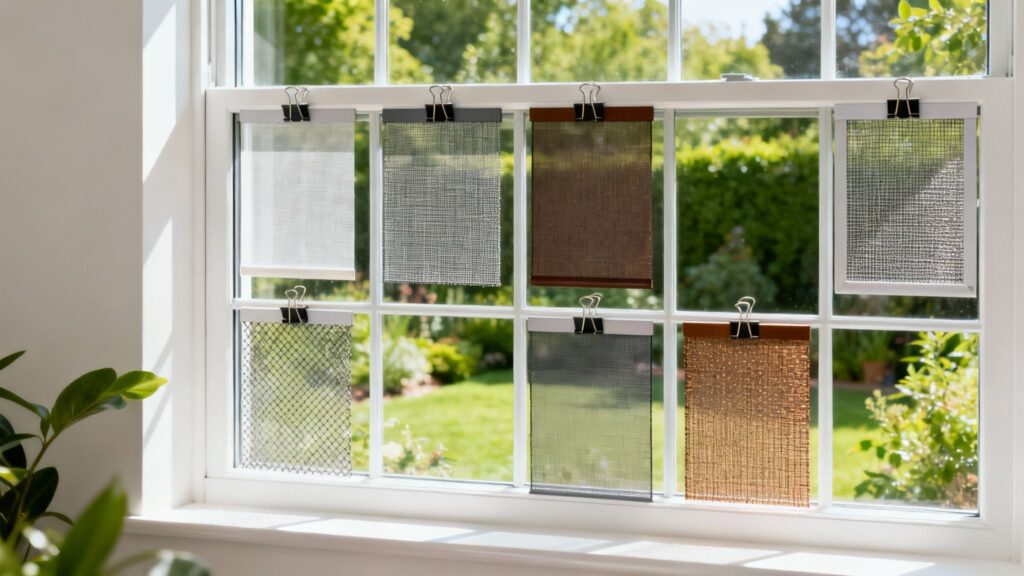
Window screens are the unsung heroes of our homes, offering a crucial barrier that lets the breeze in while keeping pests out. But did you know that not all screens are created equal? The material your screen is made from dramatically impacts its durability, visibility, energy efficiency, and even your home's curb appeal. Choosing the right one means the difference between a clear view with a cool breeze and a torn, ineffective screen that needs constant repair.
Understanding the various window screen material types is the first step toward making a smart, long-lasting investment for your property. This guide breaks down the essential options, from standard fiberglass to high-tech solar fabrics and ultra-durable pet-resistant weaves. We'll explore the pros, cons, ideal applications, and maintenance needs for each, giving you the clarity to select the perfect fit for your home's specific challenges, whether it's intense sun, curious pets, or coastal air.
While a high-quality screen is your best defense against insects, a truly pest-free home often benefits from a layered approach. A holistic strategy might also include exploring other fly repellent strategies for windows to ensure comprehensive protection. This guide will provide the detailed insights you need to upgrade your home’s functionality and comfort, one screen at a time.
1. Fiberglass Screen Material
Fiberglass is the most common and affordable choice among window screen material types, making it the industry standard for most residential applications. Composed of woven fiberglass strands coated with a protective vinyl layer, it provides an excellent balance of visibility, durability, and cost-effectiveness. This material is inherently flexible, resistant to rust and corrosion, and does not dent, which makes it a practical option for homeowners everywhere.
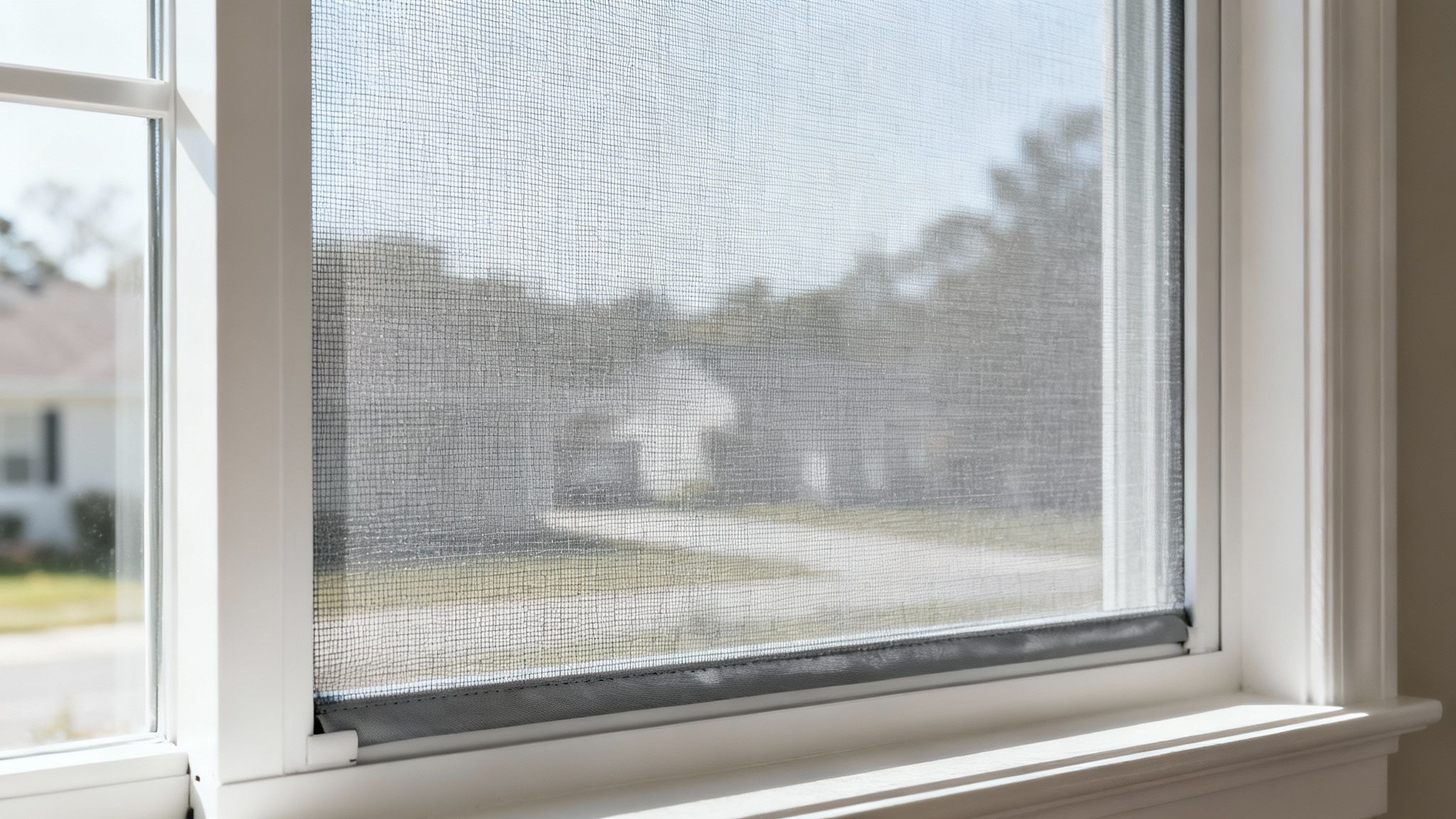
Its widespread use means you'll find it on everything from standard windows in suburban homes and apartment complexes to the windows of mobile homes and RVs. The vinyl coating also helps reduce glare and protects the strands from sun degradation, although prolonged UV exposure will eventually cause it to become brittle.
### When to Choose Fiberglass
Fiberglass is the go-to material for general-purpose screening where budget and good all-around performance are key priorities. It's an ideal choice for standard windows and patio doors in moderate climates without specific challenges like destructive pets or extreme weather.
- Best For: General use, budget-conscious projects, and DIY installations.
- Visibility: Good
- Durability: Moderate; can tear or stretch over time.
- Cost: Low
Expert Insight: For most homeowners, fiberglass offers the best value. It effectively keeps out common insects without obstructing your view or breaking the bank. At Sparkle Tech, it's the material we most frequently install and repair due to its versatility and affordability. Keeping it clean is also straightforward; you can find detailed instructions in our guide on how to properly clean window screens. We recommend replacing fiberglass screens every 10-15 years to maintain their integrity and appearance.
2. Aluminum Screen Material
For those seeking a step up in strength and longevity from fiberglass, aluminum is an excellent choice among window screen material types. This classic material consists of a fine wire mesh woven from aluminum, which provides superior rigidity and durability. Unlike fiberglass, aluminum will not sag over time and offers a crisp, clear view due to its thin wire diameter and protective finish.
While it is resistant to rust, it can corrode in salty coastal environments and is susceptible to denting or creasing if hit with significant force. Its strength makes it a popular choice for high-traffic areas like commercial buildings, schools, and homes where durability is a primary concern. The material comes in several finishes, including bright aluminum, black, and charcoal, to match different aesthetics.
### When to Choose Aluminum
Aluminum is the ideal material when durability and a crisp, unobstructed view are more important than cost. It's perfectly suited for windows in busy households, commercial properties, and regions with high sun exposure, as it does not break down from UV rays like fiberglass can.
- Best For: High-traffic areas, longevity, and preserving clear views.
- Visibility: Very Good
- Durability: High; resistant to sagging and tearing but can dent.
- Cost: Moderate
Expert Insight: Aluminum screens offer a notable upgrade in durability and visual clarity. While they cost more than fiberglass, their longer lifespan often makes them a worthwhile investment. At Sparkle Tech, we often recommend aluminum for clients in urban settings or for windows that face direct, intense sunlight. Remember that while strong, aluminum can be creased during installation, so professional handling is often best to ensure a perfect, tight fit. We suggest inspecting the finish annually, especially in coastal areas, to check for any signs of corrosion.
3. Pet-Resistant (PetScreen) Material
For households with furry companions, pet-resistant screen material is a game-changing solution designed to withstand the rigors of claws, paws, and playful nudges. Often known by the brand name PetScreen, this heavy-duty material is crafted from vinyl-coated polyester, making it about seven times stronger than standard fiberglass. It is specifically engineered to resist tears and punctures from dogs and cats, preventing costly and frequent screen replacements.
This durable mesh is a common sight in suburban homes with active pets, pet-friendly apartment complexes, and even rural properties where wildlife might occasionally scratch at screens. While its thicker weave slightly reduces visibility and airflow compared to fiberglass, the trade-off is well worth the enhanced durability and peace of mind it provides. If your furry friends are prone to destructive chewing, understanding how to prevent such behavior can complement the strength of your screens; find great tips by learning about managing your dog's chewing habits.
### When to Choose Pet-Resistant Screen
Pet-resistant screen is the clear choice for any window or door accessible to pets, especially on ground-floor levels, patios, and screen doors. It's a smart investment for pet owners who want to avoid the cycle of constant repairs while ensuring their home remains secure and insect-free.
- Best For: Homes with cats or dogs, high-traffic screen doors, and areas prone to wildlife.
- Visibility: Fair; the thicker strands are more noticeable than standard mesh.
- Durability: Excellent; resists tears and damage from claws and paws.
- Cost: Mid-range
Expert Insight: We see countless screens destroyed by pets, and PetScreen is always our top recommendation in those situations. Its strength significantly prolongs the life of the screen. While it's tough, it's not indestructible. If a tear does eventually occur, it can be patched or replaced. For guidance on addressing this type of damage, refer to our expert advice on how to properly handle window screen repairs. We suggest pairing it with a sturdy aluminum frame to create a truly robust barrier.
4. Stainless Steel Screen Material
Stainless steel is a premium choice among window screen material types, prized for its exceptional strength, longevity, and resistance to corrosion. This woven metal mesh provides robust protection against insects and physical damage while offering excellent visibility. Its inherent durability makes it an ideal solution for harsh environments, such as coastal regions where salt air can quickly degrade other materials.
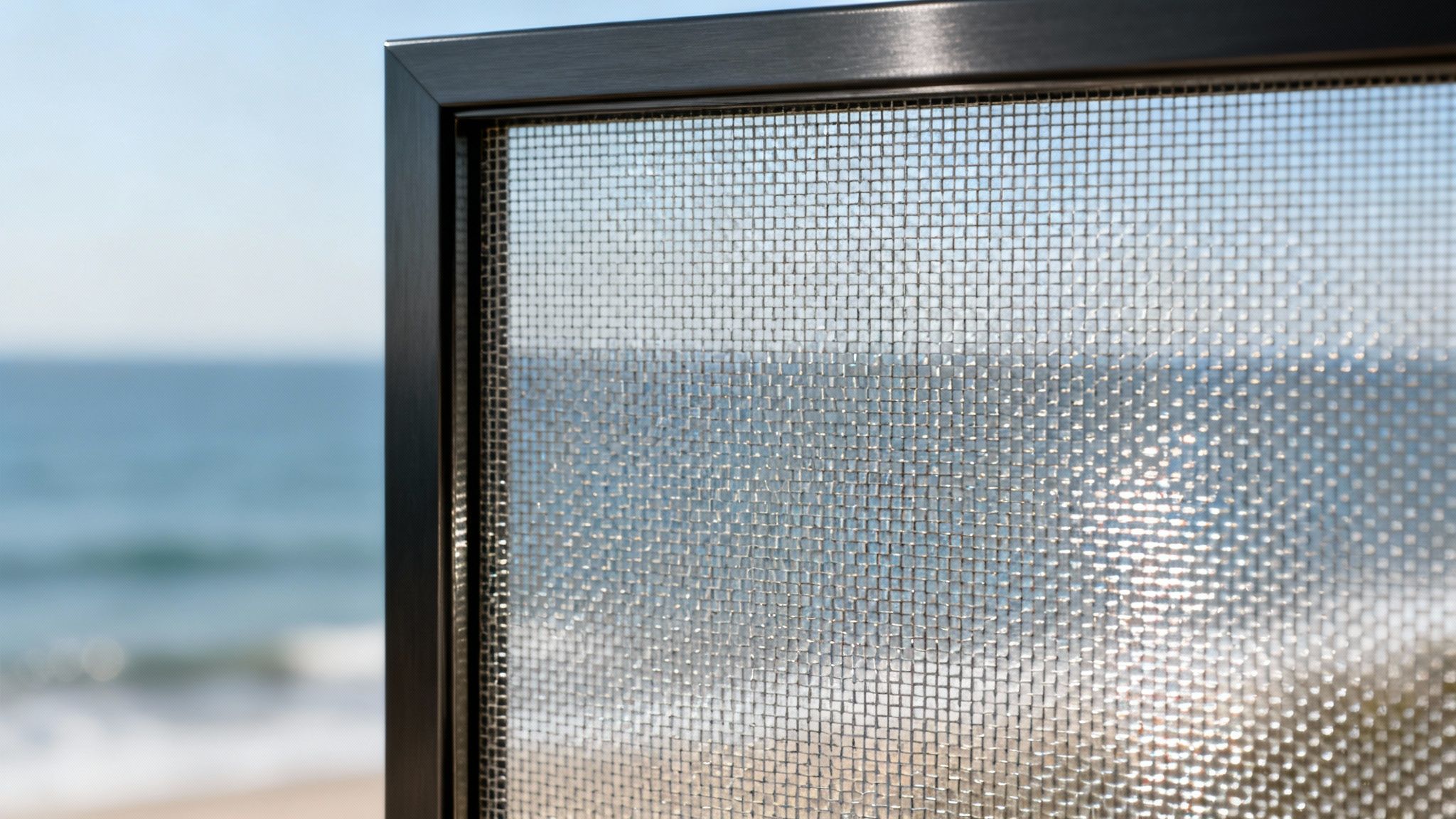
Unlike softer materials, stainless steel does not sag or stretch over time, maintaining a taut and clean appearance for decades. It's commonly found in high-end residential and commercial properties, including beachfront homes, industrial food production facilities, and medical research labs where durability and hygiene are paramount. The material also offers a degree of fire resistance, adding a layer of safety not found in fiberglass or aluminum.
### When to Choose Stainless Steel
Opt for stainless steel when maximum durability and corrosion resistance are non-negotiable. It is the best investment for properties in coastal areas, industrial settings, or for homeowners with a long-term ownership plan who want a "set it and forget it" solution.
- Best For: Coastal and marine environments, high-end homes, and commercial applications.
- Visibility: Excellent
- Durability: Very high; resistant to rust, corrosion, and tearing.
- Cost: High
Expert Insight: For properties exposed to salt spray or those needing the highest level of durability, stainless steel is unmatched. We strongly recommend specifying 316-grade stainless steel for marine environments to guarantee maximum corrosion protection. While the upfront cost is higher, its lifespan of 20+ years makes it a cost-effective choice in the long run, eliminating the need for frequent replacements. Professional installation is key to prevent galvanic corrosion by using compatible stainless steel fasteners.
5. Copper Screen Material
For a truly premium and timeless look, copper is one of the most elegant window screen material types available. Made from 90% copper and 10% zinc, this bright, golden-hued material offers exceptional durability and a unique aesthetic that evolves over time. When exposed to the elements, copper develops a beautiful, rich patina, transitioning from its initial shiny state to a deep bronze and eventually a classic blue-green.
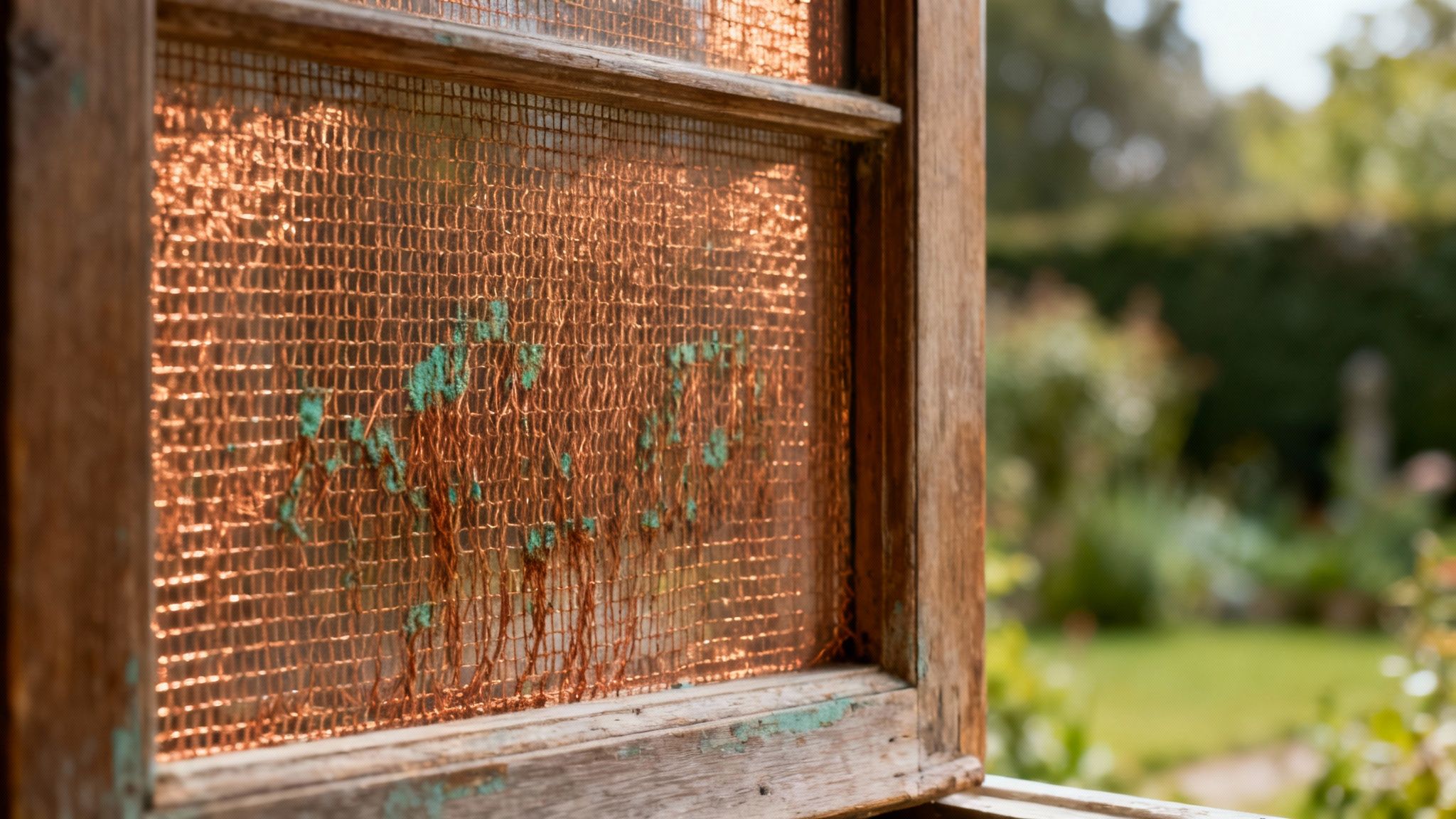
This material is often chosen for historic property restorations where authenticity is paramount or for luxury homes seeking a distinctive architectural detail. Beyond its appearance, copper is incredibly strong, provides excellent visibility, and even has natural antimicrobial properties that can help keep the screen cleaner. Its longevity makes it a sustainable choice, though it comes at a significant initial cost.
### When to Choose Copper
Copper screening is the ideal choice for high-end residential projects, historic restorations, and coastal properties where both aesthetic beauty and long-term durability are non-negotiable. It is best for homeowners who view their screens as a long-term architectural investment rather than a simple utility.
- Best For: Historic homes, luxury custom builds, and coastal environments.
- Visibility: Excellent
- Durability: Very High; extremely resistant to corrosion and damage.
- Cost: Very High
Expert Insight: Copper screens make a stunning statement and can last for decades with minimal care. It is crucial to use compatible framing materials like wood or copper alloys to prevent galvanic corrosion. While we don't handle copper installations at Sparkle Tech, we advise clients to let the natural patina develop rather than polishing it, as this protective layer is part of its charm and longevity. Avoid using harsh chemical cleaners which can strip this patina.
6. Bronze Screen Material
Bronze screen material offers a classic, high-end appearance that combines timeless beauty with enhanced durability. Made from an alloy of 90% copper and 10% zinc, this material is significantly stronger than fiberglass and aluminum. It starts with a bright, gold-like finish that gracefully patinas over time to a rich, dark bronze, complementing historic, traditional, and upscale architectural styles like Craftsman and Mediterranean homes.
This material is particularly favored in coastal regions due to its excellent resistance to salt air corrosion, a weakness of standard aluminum. While its strength prevents the sagging and denting common with aluminum screens, it's important to note that the runoff from bronze screens can stain surrounding materials like vinyl siding or light-colored window sills over time.
### When to Choose Bronze
Bronze is the ideal choice for homeowners seeking a premium aesthetic for historic renovations or custom-built homes where architectural integrity is paramount. Its strength and corrosion resistance also make it a superior, long-lasting option for coastal properties or any home where durability and classic style are equally important.
- Best For: Historic homes, coastal properties, and high-end custom builds.
- Visibility: Good; the fine wire provides clear views.
- Durability: High; very strong and resistant to corrosion.
- Cost: High
Expert Insight: Bronze screens are a beautiful investment that can truly elevate a home's curb appeal. At Sparkle Tech, we often recommend bronze for historic preservation projects where maintaining an authentic look is crucial. While the material is robust, its patina process means you should pair it with durable frame materials that won't be easily stained. We advise our clients with bronze screens to plan for a replacement every 15-20 years, depending on the local climate and exposure.
7. Solar/Sun-Control Screen Material
Solar screen material is one of the most functional window screen material types, specifically engineered to reduce solar heat gain, block UV rays, and minimize glare. Composed of a tightly woven, PVC-coated polyester or fiberglass mesh, these screens can block anywhere from 65% to 90% of the sun's heat and glare before it even reaches your window glass. This proactive shading keeps interiors cooler, reduces energy costs, and protects furniture and flooring from fading.
Despite its dense weave, solar screening still allows for good airflow and reasonable outward visibility, though it does create a more shaded view compared to standard fiberglass. It is commonly installed in homes and commercial buildings in hot, sunny climates like Arizona and Florida, where reducing air conditioning costs is a major priority.
### When to Choose Solar/Sun-Control
Solar screen material is the ideal choice for windows that receive direct, intense sunlight, particularly those facing south or west. It's a must-have for homeowners focused on energy efficiency, UV protection, and creating a more comfortable indoor environment during warmer months.
- Best For: Sunny climates, south/west-facing windows, and reducing energy bills.
- Visibility: Fair to Good; provides daytime privacy.
- Durability: High; resistant to fading, tearing, and sun degradation.
- Cost: High
Expert Insight: In sunny regions, solar screens offer a fantastic return on investment, often paying for themselves in energy savings within a few years. At Sparkle Tech, we recommend installing them on the most exposed windows to maximize their cooling effect. Because the tighter weave can trap more dust and pollen, regular cleaning is crucial to maintain airflow and appearance. If your current screens are damaged, upgrading to solar mesh is a smart long-term decision; you can explore the process in our guide on how to replace window screen mesh.
8. Nylon Screen Material
Nylon screening is a less common but highly flexible and lightweight option among window screen material types, serving specialized needs where other materials may fall short. Made from woven nylon threads, this fabric-like mesh is known for its exceptional elasticity and resistance to tearing under stress. It offers a soft, pliable alternative to the more rigid fiberglass and metal screens.
Its unique properties make it ideal for non-standard applications such as marine and boat enclosures, portable gazebos, and temporary event screening where flexibility and ease of handling are paramount. While nylon is durable in many respects, it is more susceptible to degradation from prolonged UV exposure compared to vinyl-coated fiberglass, which can cause it to become brittle over time.
### When to Choose Nylon
Nylon is the perfect choice for custom, temporary, or specialty installations that require a flexible, lightweight, and tear-resistant material. It excels in applications where screens need to be frequently installed and removed or fitted to unconventional shapes, like in boats or custom outdoor enclosures.
- Best For: Marine applications, temporary enclosures, and custom-shaped screens.
- Visibility: Good
- Durability: Moderate; resistant to tearing but can be damaged by UV exposure.
- Cost: Low to Moderate
Expert Insight: We at Sparkle Tech see nylon most often in marine settings and for custom temporary setups. Its flexibility is its greatest asset, allowing for a snug fit on curved or irregular frames that would be difficult for metal or even fiberglass. If you have a specialty project, nylon might be the solution. We recommend treating it with a UV-protective spray if it will be in direct sunlight and storing it indoors when not in use to maximize its lifespan, which is typically 5-10 years.
8-Point Window Screen Material Comparison
| Material | 🔄 Implementation complexity | ⚡ Resources & cost | ⭐📊 Performance & impact | Ideal use cases | 💡 Key advantages |
|---|---|---|---|---|---|
| Fiberglass Screen Material | Low — easy DIY install and repair; flexible spline fit | Low cost; widely available; standard frames/tools | ⭐⭐⭐ — ~85–90% light, good airflow, shorter lifespan (10–15 yr) | Residential homes, rentals, budget installs | Affordable, easy to replace, corrosion-resistant vinyl coating |
| Aluminum Screen Material | Medium — heavier frames; needs sturdier hardware/professional fit | Moderate–high cost; aluminum frame + mesh; low upkeep | ⭐⭐⭐⭐ — ~75–80% light, very durable, 20–30+ yr life | Commercial, high-traffic homes, pet households, large openings | Strong, impact/pet-resistant, low maintenance |
| Pet-Resistant (PetScreen) Material | Medium — requires proper tension and compatible framing | Higher cost (≈2–3× fiberglass); reinforced mesh | ⭐⭐⭐⭐ — ~75–80% light, ~7× stronger than fiberglass, extends lifespan | Homes with pets, pet-friendly rentals, high wildlife areas | Highly tear-resistant, preserves screen integrity, pet-proof |
| Stainless Steel Screen Material | High — specialized tools/installation; harder repairs | Premium cost (≈3–4×); 316-grade recommended; stainless fasteners | ⭐⭐⭐⭐⭐ — ~90% light, exceptional corrosion/puncture resistance, 25–40+ yr | Coastal, industrial, healthcare, high-end residential | Superior durability/corrosion resistance; hypoallergenic |
| Copper Screen Material | High — specialized handling; patina management | Very premium cost (≈4–5×); pure copper mesh | ⭐⭐⭐⭐⭐ — ~85% light, antimicrobial, develops patina, 30–50+ yr | Luxury homes, historic restorations, sustainable projects | Antimicrobial, long-lasting, premium aesthetic with patina |
| Bronze Screen Material | Low–Medium — similar to fiberglass installs; UV care advised | Moderate cost (≈20–30% above fiberglass) | ⭐⭐⭐⭐ — ~80–85% light, better durability & appearance than fiberglass | Traditional/craftsman homes, mid-range residential | Warm aesthetic, improved durability, good visibility |
| Solar / Sun-Control Screen Material | Medium — tight-weave handling; orientation matters | Higher cost (≈2–3×); specialized coatings/denser weave | ⭐⭐⭐⭐ — 30–50% light, blocks 50–90% solar heat, lowers cooling loads | Hot climates, south/west windows, energy-efficient buildings | Reduces heat/glare, energy savings, protects interiors |
| Nylon Screen Material | Low–Medium — very flexible for custom shapes; UV protection advised | Moderate cost; custom fabrication; limited suppliers | ⭐⭐⭐ — ~80–85% light, lightweight, shorter outdoor lifespan (5–10 yr) | Temporary screening, marine/boat, portable or custom installations | Highly flexible, lightweight, smooth surface for custom sizes |
Making the Right Choice for Your Arizona Home
Navigating the world of window screen material types can feel complex, but as we've explored, each option presents a unique solution tailored to specific needs. Your choice is more than just a barrier against insects; it's a strategic decision that impacts your home's comfort, energy efficiency, aesthetic appeal, and long-term maintenance costs. From the budget-friendly versatility of fiberglass to the elegant durability of bronze and copper, the right material is waiting to enhance your living space.
The key takeaway is that there is no single "best" material for everyone. The ideal choice is a personal one, influenced by your specific environment and lifestyle. For Arizona homeowners, this often means prioritizing sun protection and durability against the harsh desert climate.
Your Action Plan for Perfect Screens
To move from information to implementation, consider these final steps:
- Assess Your Priorities: Review your primary goals. Is it reducing your cooling bills with Solar Screens? Protecting your investment from playful pets with Pet-Resistant mesh? Or perhaps achieving a timeless look for a historic property with Copper? Rank your needs from most to least important.
- Evaluate Your Environment: Take a walk around your property. Note which windows receive the most direct, intense sunlight. Consider areas prone to high traffic or potential damage. This audit will help you decide if a single material works for your whole house or if a hybrid approach, using different materials for different windows, is more practical.
- Set a Realistic Budget: With a clear understanding of your needs, you can now align them with your budget. Remember that a higher upfront cost for a more durable or energy-efficient material like stainless steel or solar mesh can often lead to significant long-term savings on repairs and utility bills.
Mastering the differences between these window screen material types empowers you to make a confident, informed decision that pays dividends for years to come. It's about transforming your windows from simple openings into high-performing components of your home's overall system, boosting comfort, security, and curb appeal all at once. The perfect screen is not just functional; it seamlessly integrates with your life, letting in the views and breezes you love while keeping out what you don’t.
Are your current screens torn, faded, or simply not meeting the demands of the Arizona sun? The team at Sparkle Tech Window Washing specializes in professional screen repair, replacement, and installation services. We can help you select and install the perfect material to enhance your home's comfort and protection, ensuring a flawless fit and a crystal-clear view. Contact Sparkle Tech Window Washing today to get a quote and upgrade your home's first line of defense.