




The easiest, no-fuss way to clean your window screens is to pop them out, give both sides a gentle scrub with a soft brush and some mild soapy water, and then rinse them clean with a garden hose. Just be sure to let them air dry completely before putting them back in to avoid any mold or mildew issues. For most homes, this simple routine is all you need to tackle typical dust and grime.
Why Cleaning Your Window Screens Actually Matters
Let's be real—cleaning window screens probably isn't at the top of your weekend chore list. But what if I told you that this often-overlooked task can genuinely improve your home's air quality and even help your windows last longer? It's about more than just getting a clearer view.
Think of your screens as the unsung heroes of your home's ventilation system. That fine mesh is constantly filtering out a surprising amount of gunk from the air. Over a season, it can trap a nasty layer of:
- Pollen and Allergens: Especially in the spring and fall, screens are catching all sorts of airborne irritants that would otherwise float right into your living room.
- Dust and Dirt: From nearby traffic, lawn mowing, or just a windy day, fine particles of dust and soil get caught in the mesh, clogging it up.
- Pollutants: If you live near a busy road, you'd be surprised by the amount of soot and grime that builds up, restricting fresh air.
When those screens are dirty, every gust of wind can pull those trapped particles right into your home. Worse yet, that accumulated grime can permanently stain the screen material and even cause corrosion on aluminum frames over time—a much more expensive fix than a quick wash. A little upkeep is just smart preventative care. If you want to get ahead of bigger issues, take a look at these tips for maintaining screens and windows.
Neglecting screens doesn't just block your view—it can also impact your indoor air quality by allowing a buildup of allergens and pollutants to enter your home.
Beyond just air quality, clean and intact screens are your primary defense against pests. A tiny rip or a warped frame is an open invitation for insects. Keeping them clean allows you to spot damage early and ensures they form a solid barrier. This is a key part of pest control, as explained in this comprehensive guide on how to keep flies away from food.
Assembling Your Screen Cleaning Toolkit
Getting your gear in order before you start is the secret to making this job painless. Trust me, running around looking for a brush while you have a wet, soapy screen on your hands is no fun. The good news is, you probably have most of what you need already tucked away in your home.
Let's break down what you'll need to get those screens looking brand new.
Your Go-To Cleaning Supplies
The basics are pretty simple. You'll absolutely need a soft-bristle brush. This is your main weapon against caked-on dust and grime, and using a soft one ensures you won't accidentally snag or rip the delicate mesh.
You'll also want a couple of clean microfiber cloths. They're fantastic for the final wipe-down because they grab every last bit of dust and won't leave annoying lint behind on the screen or frame.
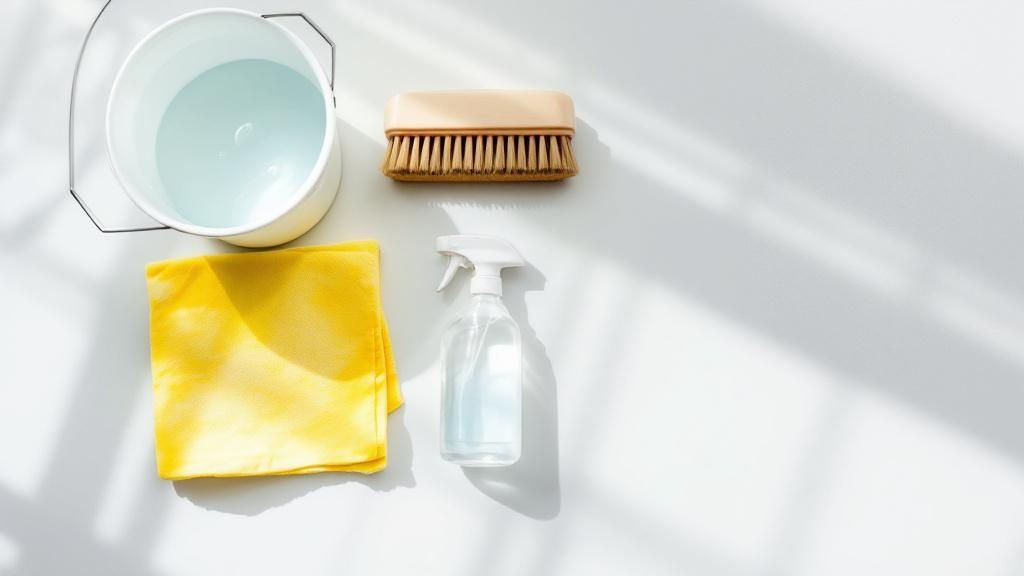
Picking the Right Cleaning Solution
When it comes to the actual cleaner, you don't need anything fancy. A simple, homemade solution often works best.
- Mild Dish Soap: Just a few drops in a bucket of warm water is my go-to. It’s gentle but powerful enough to cut through the everyday buildup of dirt and even a little grease.
- White Vinegar: If you're dealing with stubborn spots or mineral deposits from sprinklers, a 50/50 mix of white vinegar and water will give you that extra cleaning muscle.
This preference for simple, non-toxic cleaners isn't just a personal tip; it's a huge trend. The global market for screen cleaners hit USD 3.5 billion in 2023, and a lot of that growth is because people want products that are effective but also eco-friendly and safe for delicate materials. You can dig into the numbers in the full screen cleaner market report.
Before we get into the tools, here's a quick look at what's truly essential versus what's nice to have for a deeper clean.
Essential vs. Optional Cleaning Supplies
| Tool/Supply | Essential For | Why It's Recommended |
|---|---|---|
| Soft-Bristle Brush | Basic & Deep Clean | Gently dislodges dirt and debris without damaging the screen mesh. |
| Microfiber Cloths | Basic & Deep Clean | Perfect for wiping down frames and drying without leaving lint. |
| Bucket | Basic & Deep Clean | Holds your cleaning solution for easy access. |
| Garden Hose | Basic & Deep Clean | Makes rinsing quick, efficient, and thorough. |
| Mild Dish Soap | Basic & Deep Clean | A safe, effective, all-purpose cleaner for general grime. |
| Old Towels/Tarp | Optional | Protects your work area (lawn, deck) from soapy runoff and mud. |
| White Vinegar | Optional | Good for a deeper clean, especially for removing hard water spots. |
Having these items ready will make the whole process smoother from start to finish.
Pro Tip: Do yourself a huge favor and lay an old towel or a tarp down on the ground before you start. It catches all the dirty runoff and makes cleanup a breeze, preventing a muddy mess on your patio or grass.
Of course, once you have sparkling clean screens, you'll want the window glass to match. For a perfect, crystal-clear view, take a look at our expert advice on how to clean windows streak-free.
Two Proven Methods for Cleaning Window Screens
Alright, let's get down to the actual cleaning. Not every window screen is caked in the same amount of grime. A light dusting of pollen is a completely different beast than a year's worth of accumulated dirt. So, your cleaning strategy needs to match the mess.
I'm going to walk you through two methods I use all the time. First, a quick, in-place clean for screens that just need a refresh. Then, we'll get into the more serious deep wash for when they're truly filthy. This focus on proper screen maintenance is becoming more common, with the market for specialized cleaning products in North America growing by 22% between 2021 and 2025. You can see the full data in this screen cleaner market report.
The Quick Clean for Light Dust
This is my go-to for routine touch-ups or for those hard-to-reach screens on the second story where taking them out is a huge pain. The best part? You don't even have to pop the screen out of the window frame.
- First, grab your vacuum. Use the soft brush attachment and gently go over the entire screen. If you can, hit both the inside and outside to suck up all that loose dust, pollen, and any lingering cobwebs.
- Next, a simple wipe-down. All you need are two microfiber cloths. Get one damp with just plain water and wipe the screen from top to bottom. Follow immediately with the dry cloth to soak up any leftover moisture and nab any dust you missed.
- Don't forget the frame! That damp cloth is perfect for cleaning out the gunk that loves to hide in the window tracks and corners of the screen frame.
Honestly, this quick method is surprisingly effective and only takes a couple of minutes for each window.
The Deep Wash for Heavy Grime
Sometimes, a simple wipe-down just isn’t going to cut it. When your screens look like they're coated in a thick layer of grime—think heavy pollen season, nearby construction dust, or just years of neglect—it's time for a deep wash. For this, you’ll need to remove the screens and head outside.
The deep wash is the annual reset button for your screens. It brings them back to looking brand new and dramatically improves your view and the fresh air flowing through your home.
Start by carefully taking each screen out of its window. Most newer screens have little tabs or springs you can use to release them. I always recommend working on a soft surface, like your grass or a big tarp, to keep the frames from getting scratched up.
This visual guide shows just how simple and effective the deep wash process is.
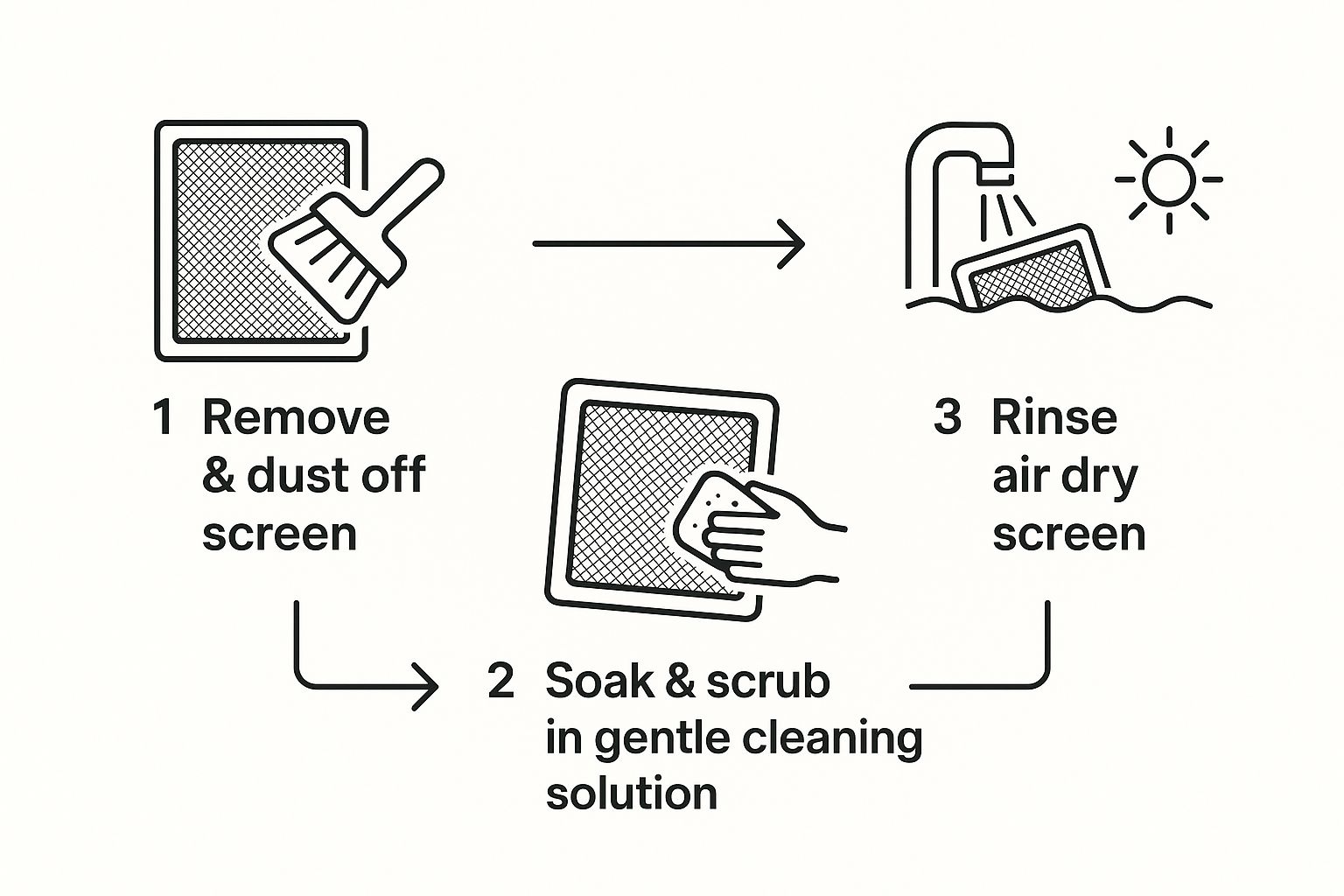
The key is to knock off the loose stuff first, wash with a gentle, soapy solution, and then rinse everything off completely before letting them air dry. And I mean completely dry. Putting a damp screen back into the window frame is just asking for mold to start growing.
Once your screens look fantastic, it's the perfect time to tackle the window glass to get that perfectly clear, streak-free view. If you're wondering about the best way to clean exterior windows, there are some great pro tips out there to get the job done right.
Fine-Tuning Your Technique for Different Screen Types
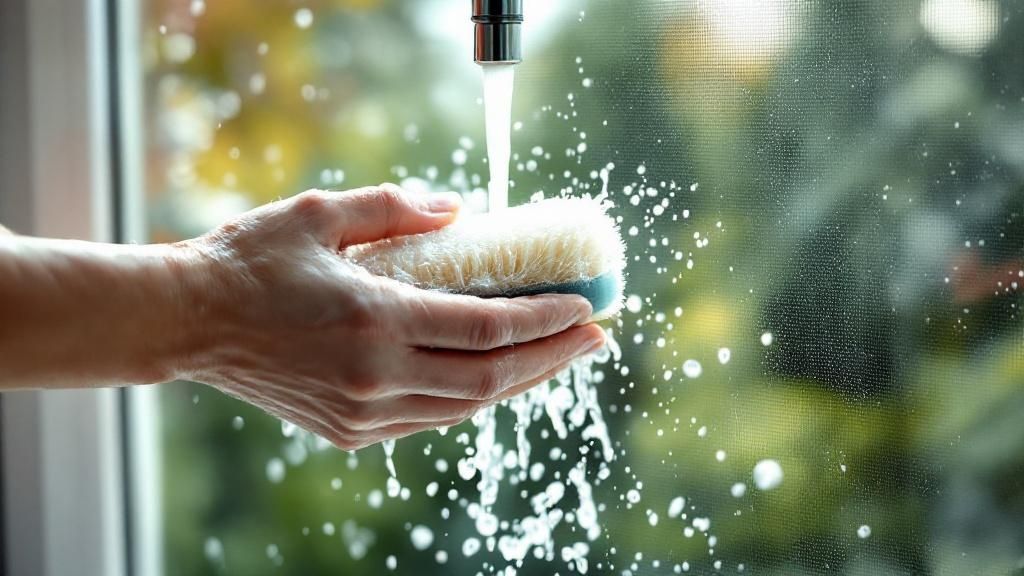
Grabbing any old brush and some soap is a surefire way to damage your window screens. Not all screens are made the same, and the method that works wonders on a sturdy metal screen might destroy a delicate fiberglass one.
So, how do you know what you're working with? Most modern homes have fiberglass screens. They're flexible and coated in vinyl, but they can stretch or tear if you get too aggressive. Older homes might have aluminum screens, which are tougher and more rigid but can get dented or creased if you manhandle them.
Taking a moment to identify what you have is the most important step. If you're unsure, it's worth it to explore various types of window screen materials to get a better handle on their properties before you start scrubbing.
Matching Your Method to the Material
Once you know what kind of screens you have, you can choose the right tools and techniques. This simple adjustment is the secret to getting them perfectly clean without causing any harm.
Not every material can handle the same cleaning pressure or products. The table below breaks down the best approach for the most common screen types you'll encounter.
Cleaning Methods by Screen Material
| Screen Material | Best Cleaning Method | Products to Avoid |
|---|---|---|
| Fiberglass | Soft-bristle brush, mild dish soap, and a gentle rinse with a garden hose. | Pressure washers, stiff brushes, abrasive cleaners. |
| Aluminum | A slightly stiffer brush is okay, but start soft. Can handle a bit more elbow grease. | Harsh chemicals, highly acidic or alkaline cleaners. |
| Solar Screens | Soft cloth or sponge only. Use minimal pressure to protect the UV-blocking coating. | Any type of brush, power tools, aggressive scrubbing. |
| Copper | Very soft cloth with a mix of water and lemon juice or vinegar to remove tarnish. | Abrasive sponges, chemical cleaners, soap residue. |
As you can see, the "one-size-fits-all" approach just doesn't work. Treating a solar screen like an aluminum one could strip its protective coating, defeating its entire purpose.
Pro Tip: No matter the screen type, always start with the gentlest method first. You can slowly increase pressure if the dirt is stubborn, but you can never undo a tear or a dent from coming in too hot.
Paying attention to the material your screens are made of doesn't just get them cleaner—it protects your investment and keeps them looking great for years.
Common Screen Cleaning Mistakes and How to Avoid Them
Learning how to clean window screens can feel like a process of trial and error, but trust me, you can sidestep a lot of the common frustrations. Over the years, I've seen homeowners make the same mistakes, often leading to damaged screens and a lot of wasted time. Knowing what not to do is just as important as knowing the right way to get the job done.
One of the biggest culprits? Reaching for the wrong cleaning solution. It's so tempting to grab a powerful household cleaner like bleach or an ammonia-based product, thinking it'll blast through the grime in no time. The reality is, these harsh chemicals can be a disaster for your screens.
They can eat away at fiberglass mesh, cause ugly discoloration on vinyl frames, and even corrode aluminum. Instead of a sparkling clean screen, you could be left with a brittle, stained, or weakened one. If you're unsure about what's safe, it's worth reading up on the dos and don'ts of window cleaning chemicals to avoid.
Applying Too Much Pressure
Another all-too-common error is just being too rough. Getting aggressive with a stiff-bristled brush or scrubbing with a lot of force is a surefire way to stretch, snag, or even tear the delicate mesh. This is especially true for older screens that have become brittle after years of sun exposure.
Along the same lines, put the pressure washer away. Even on its lowest setting, the force from that water jet can easily shred the screen, pop it right out of the frame, or cause permanent warping.
Your goal is to gently lift the dirt off the screen, not blast it through. A soft brush and a standard garden hose nozzle will always be your safest—and most effective—bet.
The value of doing things right is clear in the professional world, too. The global window cleaning services market was valued at a whopping USD 4.12 billion in 2024 and continues to grow. This just shows how much people appreciate a truly pristine, professional finish. For more on this trend, you can check out the full window cleaning services market report.
Got Questions? We've Got Answers.
When it comes to cleaning window screens, a few common questions always seem to come up. Let's tackle some of those head-on so you can get the job done right.
How Often Should I Really Be Cleaning My Screens?
For most of us, a good, deep clean once or twice a year is perfect. Think spring cleaning and then again in the fall before you batten down the hatches for winter.
That said, if you're in an area with a ton of pollen, live near a dusty road or construction site, you might want to bump that up to every 3-4 months. It makes a huge difference for your air quality and keeps your views crystal clear.
Is It Okay to Use a Pressure Washer?
I'm going to give that a hard no. It's tempting to blast the dirt away, but a pressure washer is just too powerful for screen mesh.
The force can easily stretch or tear the delicate material, or even pop the screen right out of its frame. You're much better off using a regular garden hose with a spray nozzle. It has plenty of power to rinse away grime without causing any damage.
What's the Best Way to Clean Screens Without Taking Them Down?
Sometimes you just don't have the time or energy to pull every screen out. For a quick touch-up while they're still in place, here's what I do:
- First, grab your vacuum and use the soft brush attachment to get rid of all the loose dust and cobwebs.
- Next, take a damp microfiber cloth and gently wipe down both sides.
- If you've got some stubborn gunk, mix a little mild soap with water, dampen your cloth with that, and give the spots a gentle scrub.
- Finish up by wiping everything one last time with a clean, water-dampened cloth to get rid of any soap.
If you'd rather leave it to the pros for a flawless finish, the team at Sparkle Tech Window Washing is here to help. We take care of everything from screen deep cleaning and repairs to a complete, streak-free window washing. Get in touch today for a free estimate!