



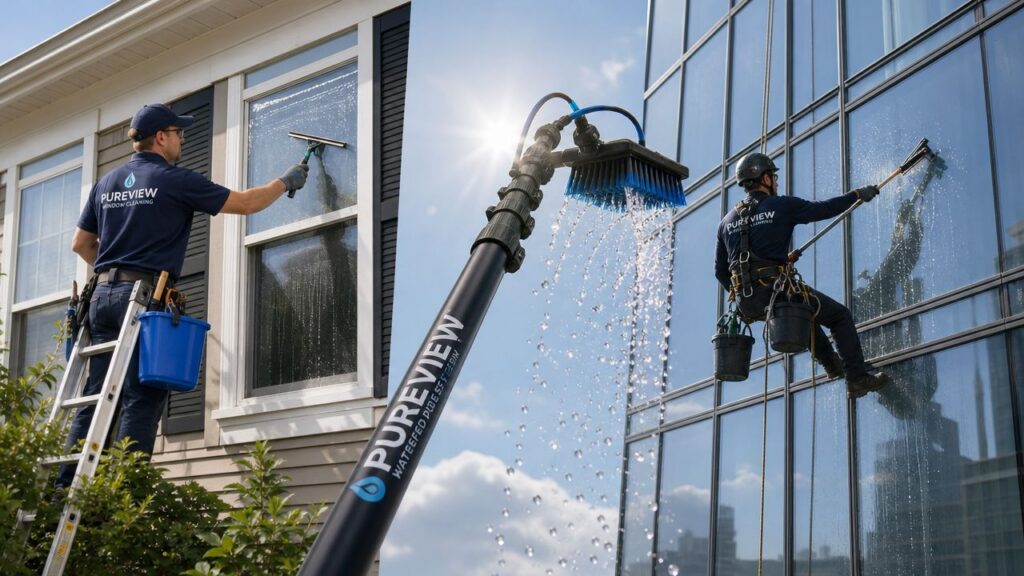
Dirty windows usually start as a small annoyance. Morning light hits the glass, and suddenly every dust trail, sprinkler spot, and handprint stands out. The same thing happens at larger scale on storefronts, offices, and apartment buildings. What looks like “a dirty window problem” is usually a system problem. The right tools, the right method, the right water, and the right safety setup all have to work together.
That's why a window washing system isn't just one gadget. For one person cleaning a patio door, it might mean a bucket, an applicator, a squeegee, and a microfiber cloth. For a crew cleaning exterior glass on a larger property, it might mean purified water, a water-fed pole, filtration tanks, hoses, and a careful plan for screens, frames, and access points. On tall commercial buildings, the system gets even more serious, with engineered anchors, descent gear, suspended platforms, or robotic equipment.
That wider view matters because the field is growing. The global window cleaning system market reached USD 5.13 billion in 2024 and is projected to grow at a CAGR of 7.8% through 2033, which tells you demand for better cleaning systems keeps rising across homes and commercial buildings alike, according to Dataintelo's window cleaning system market report.
From Grimy Glass to Gleaming Views
A homeowner might stand in the yard looking at second-story windows that are cloudy from dust and hard-water spotting. Across town, a property manager might stare up at a glass-heavy office facade and see the same issue on a bigger scale. Different buildings, same question. What's the right way to clean it without making a mess, leaving streaks, or taking a dangerous risk?

The answer starts with thinking in layers. Glass isn't the only surface that matters. Frames collect grime. Tracks trap debris. Screens hold dust, pollen, and minerals. If you clean only the glass and ignore the rest, the job often looks good for a day and tired again by the weekend.
What makes a system
A solid window washing system has a few parts working together:
- Cleaning tools: Squeegees, applicators, cloths, scrapers, poles, brushes.
- Water or solution choice: Traditional soap-and-water or purified-water cleaning.
- Access method: Hand reach, extension pole, ladder, lift, rope access, or automation.
- Safety plan: Ground conditions, fall protection, weather awareness, and backup help.
- Surface judgment: Glass type, screen condition, frame material, and soil level.
A new cleaner often gets confused because people talk about “window washing” as if there's one standard method. There isn't. The best setup for a ground-floor French pane window isn't the best setup for a solar-facing second-story picture window, and neither resembles what a high-rise team uses.
Practical rule: Choose the safest method that can still do the job well. If reaching the glass changes your risk level more than your cleaning result, stop and rethink the setup.
Where beginners usually go wrong
Most mistakes happen in three places. First, too much soap. Second, poor rubber technique on the squeegee. Third, dirty or mineral-heavy water that leaves residue behind. A fourth mistake gets ignored more than it should. People scrub screens too aggressively and shorten their life.
That's why learning the field from the ground up matters. Start with hand tools. Understand water. Respect access limits. Then move into more advanced equipment only when the job calls for it.
The Fundamental Window Washing Toolkit
Every cleaner should know the basic hand tools before touching advanced gear. If you can't clean one window well with simple equipment, more machinery won't save you. It will just let you make bigger mistakes faster.

The traditional hand tools
The classic kit is still useful because it teaches control.
- Squeegee: This is the finishing tool. It removes the water and cleaning solution from the glass. Good rubber matters. So does angle. If the rubber edge is nicked, you'll leave lines.
- Applicator or washer: This is the sleeve that spreads your cleaning solution across the glass. It loosens dirt so the squeegee can remove it cleanly.
- Bucket: It holds your solution and gives you a place to rinse tools. A stable bucket beats a flimsy one every time.
- Microfiber cloths: Use them for edges, corners, frames, and detail work. Keep separate cloths for wet work and dry touch-up.
- Scraper: Only for approved situations and only with care. A scraper can remove stuck debris, paint specks, or bug marks, but the wrong blade or poor technique can scratch glass.
- Extension pole: Helpful for awkward windows, but it multiplies every small technique mistake. Beginners should practice on reachable glass first.
If you want a practical list of hand tools and how cleaners use them, this roundup of best window cleaning tools gives useful examples.
How the traditional method works
The process is simple, but the details matter.
- Dry-remove loose grit from frames, sill edges, and screens when needed.
- Wet the glass evenly with the applicator.
- Agitate the dirt instead of rushing to the squeegee.
- Pull or fan with the squeegee in controlled passes.
- Detail edges lightly with a microfiber cloth.
The reason new cleaners leave streaks is usually not “bad soap.” It's uneven wetting, too much solution left on the glass, or wiping with a cloth that's already damp and dirty.
A squeegee should glide, not chatter. If it skips, check the rubber, the angle, and how much solution is on the pane.
The water-fed pole approach
The second foundation is the water-fed pole system. This method uses purified water and a brush at the end of a pole. Instead of scrubbing with soap and then squeegeeing dry, the cleaner agitates the dirt with the brush and rinses with pure water. The water dries without leaving residue when the purification is doing its job correctly.
This confuses beginners because it looks too easy. They see water left on the glass and assume it will spot. Ordinary tap water often would. Purified water behaves differently because the dissolved minerals have been removed.
A key technical point matters here. Water-fed pole systems rely on pure water with a TDS reading of 0 to 20 PPM. If the reading goes above that range, the resin should be replaced because higher mineral content can leave spotting on the glass, as explained in Prime Time Window Cleaning's guide to professional tools.
Why water purity changes everything
The best part of a water-fed pole system is not just reach. It's cleaner drying. It also reduces the need for chemical cleaners on many exterior jobs.
That same water-quality discipline matters for screens too. If you rinse screens with mineral-rich water and let them dry repeatedly, residue builds up on the mesh and frame. People tend to blame “dust” or “bad weather” when poor rinse quality is the problem.
Exploring Different Window Washing Systems
Once you know the hand tools and the two core cleaning methods, the next step is matching the system to the building. A one-story home, a storefront, a mid-rise property, and a skyscraper don't belong in the same workflow.
Manual systems for close-range work
Manual systems are the most familiar. They include hand cleaning with a bucket, washer, squeegee, detail cloths, and sometimes a short extension pole. This setup works best when the glass is safely reachable and the cleaner can control the angle of the tools.
Manual cleaning shines on interiors, French panes, divided-light windows, and detail-heavy residential jobs. It also works well when screens need careful removal and separate washing.
The drawback is speed and reach. Once the windows get higher or wider, the work slows down and the risk can rise if someone tries to stretch from a ladder instead of changing the method.
Water-fed pole systems for exterior reach
A water-fed pole system is often the sweet spot for exterior residential and low-rise commercial work. It lets a cleaner stay on the ground while scrubbing and rinsing upper windows. That removes a lot of ladder use from the job.
This system is especially useful on:
- Second-story residential glass
- Solar-adjacent windows with dust buildup
- Storefronts with repetitive exterior panes
- Buildings where landscaping makes ladder placement awkward
It's not automatic magic. The operator still has to rinse thoroughly, manage hose routing, protect landscaping and entryways, and monitor water quality.
For a closer look at how this setup works in practice, this guide to the water-fed pole window cleaning system breaks down the parts and the use cases.
High-rise access systems
Once a building climbs well beyond standard pole work, access becomes a discipline of its own. Teams may use rope descent systems, suspended platforms, lifts, or scaffolding depending on the structure and engineering.
Here's the hard line many people don't know. OSHA limits Rope Descent Systems to a maximum height of 300 feet above ground, and anchor points must be certified to support at least 5,000 pounds per worker, according to Shine On Anchors' explanation of OSHA window cleaning regulations. That tells you high-rise window washing isn't “guy with a rope” work. It's regulated access work with redundant protection and strict planning.
If a job involves engineered anchors, descent gear, or suspended access, it has already moved out of DIY territory.
Automated and robotic systems
The most advanced category includes automated and robotic window cleaning systems. These are more common in large commercial settings with repeating facade patterns, specialized maintenance programs, or buildings designed for modern access technology.
Robotic cleaning appeals to owners because it can reduce some exposure to height-related work and help maintain consistent schedules on large glass surfaces. But robotics still depend on the rest of the system. Someone has to inspect equipment, manage setup, monitor performance, and deal with edges, corners, and unusual surfaces.
Window Washing System Comparison
| System Type | Best For | Skill Level | Typical Cost | Safety Risk |
|---|---|---|---|---|
| Manual hand tools | Interior glass, ground-floor windows, detail work | Beginner to advanced | Lower equipment cost, higher labor time | Low when used from safe ground |
| Water-fed pole system | Exterior residential and low-rise commercial glass | Intermediate | Moderate equipment investment | Lower than ladder-heavy methods when used correctly |
| High-rise access systems | Tall buildings and hard-to-reach facades | Professional only | High equipment and training demands | High if improperly planned or operated |
| Automated and robotic systems | Large commercial glass programs | Professional and site-specific | High upfront cost | Controlled but still requires trained oversight |
The table doesn't pick a winner because there isn't one. The right window washing system depends on access, glass type, building height, and how much risk the operator takes on.
Mastering Safety and System Maintenance
Clean glass is never worth a bad fall, a damaged screen, or a failed piece of gear. The best cleaners I've known weren't the flashiest. They were the ones who inspected tools, slowed down when conditions changed, and knew when to stop.

Safety starts before water hits the glass
Most accidents don't begin during the final pass of the squeegee. They begin earlier, when someone sets a ladder on uneven ground, leans too far, works in wind, steps around power lines, or uses equipment that should've been retired.
A safer routine looks like this:
- Check the ground first: Soil, gravel, decorative rock, wet concrete, and sloped patios all change ladder stability.
- Inspect every contact point: Ladder feet, pole clamps, hose fittings, brush heads, and squeegee channels should all be checked before work starts.
- Watch the weather: Wind turns a simple reach job into a control problem fast.
- Protect your body position: Your belt buckle should stay between the ladder rails. If it doesn't, climb down and reset.
- Use backup when needed: Another person can stabilize, spot hazards, and stop a bad decision before it happens.
For jobs that go beyond basic residential access, specialized gear becomes part of the safety plan. This overview of high-rise window cleaning equipment shows the kind of equipment categories professionals work with when access gets complex.
Maintenance is part of the cleaning result
Poorly maintained tools leave clues. Torn applicator sleeves drip too much. Worn rubber chatters. Dirty microfiber cloths smear instead of detail. A clogged brush jets unevenly and leaves dirt behind on the edges.
Keep a simple maintenance rhythm:
- Rinse tools after use.
- Store rubber blades straight and dry.
- Wash microfiber separately from lint-heavy fabrics.
- Inspect poles and clamps for wear.
- Replace worn parts before they fail on the job.
Field reminder: If your tools are fighting you, the job will fight you too.
The overlooked maintenance item
Water-fed systems need one extra habit that beginners often skip. Test the water.
If you're using purified water, check the output with a TDS meter before and after work. When the reading drifts out of the proper range, the glass can spot and your rinse quality drops. Lowering inlet pressure can also help preserve resin life and keep the rinse stream steady, as noted earlier in the guide to purified-water tools.
That same discipline helps with screens. Dirty screens don't respond well to harsh scrubbing, and they don't benefit from mineral-heavy rinse water. Gentle handling plus clean water is a better long-term habit than aggressive scrubbing with questionable water.
DIY System Versus Hiring a Professional
Property owners don't need every tool in the trade. They need the right answer for their property. Sometimes that answer is a small DIY kit and a free afternoon. Sometimes it's calling a trained crew because the access, the screens, or the risk profile has outgrown the homeowner setup.

When DIY makes sense
DIY works best when the job is simple and controlled.
- Low, reachable windows: If you can clean them from the ground or safely from indoors, a basic setup is often enough.
- Small glass area: A few patio doors or first-floor panes don't justify specialized equipment.
- You want hands-on control: Some homeowners enjoy doing their own detailing and routine upkeep.
- The screens are in good shape: If they remove easily and don't need repair, careful cleaning can be manageable.
The trick is staying honest about the limits. Plenty of people can clean glass. Far fewer can judge access risk accurately while balancing on a ladder with wet tools.
When a professional is the smarter move
A professional should take over when the problem shifts from “how do I wash this” to “how do I access this safely and clean every part correctly.” That often happens sooner than people expect.
Call for backup when you're dealing with:
- Second-story or awkward exterior windows
- Delicate or aging screens
- Hard-water residue that keeps coming back
- Large homes with many panes
- Glass near landscaping, rooflines, or narrow side yards
- Any setup where ladder placement feels questionable
One often-missed issue is water quality. Mineral-rich tap water can leave residue that degrades delicate screen mesh over time, while pure water filtration helps protect both glass and screens, as discussed in Consumer Reports' window cleaning tips. That's one reason a polished result isn't just about the glass surface. It's also about what you rinsed everything with.
The screen question most guides skip
Screens are where a lot of DIY jobs go sideways. People remove them roughly, lean them against rough walls, scrub them with abrasive pads, or rinse them with poor-quality water and wonder why they still look dull.
A gentler approach is better:
- Label or track where each screen belongs.
- Brush off loose debris before adding moisture.
- Use a mild cleaning approach and soft contact.
- Rinse thoroughly.
- Let the screen dry in a stable position, not bent against a corner.
That broader cleaning judgment shows up in other areas too. If you've ever compared DIY cleaning with a professional move-out clean, the same pattern applies. You're not only paying for labor. You're paying for process, equipment choice, and less risk. A good parallel is Atticus Cleaning Services' guide, which lays out how people should think about the tradeoff between doing the work themselves and bringing in specialists.
Here's a useful visual example of professional window cleaning in action:
A simple decision test
Ask yourself four questions:
| Question | If your answer is yes |
|---|---|
| Can I reach every window safely without overreaching? | DIY may be reasonable |
| Do my screens need careful handling or repair awareness? | A professional is often safer |
| Am I equipped to manage water quality and avoid residue? | If not, results may disappoint |
| Will this job take more time and risk than it's worth? | Hiring out may be the better choice |
If you hesitate on safety, access, or screen condition, that hesitation is useful. Listen to it.
Achieving Your Streak-Free Outlook
A good window washing system is not the most expensive setup or the most advanced-looking tool. It's the method that matches the job, protects the surfaces, and keeps the person doing the work safe. Sometimes that means a bucket, washer, squeegee, and careful hand technique. Sometimes it means purified water and a pole. Sometimes it means the work belongs only to trained professionals with specialized access equipment.
The biggest lesson for new cleaners is that glass doesn't live alone. Frames, tracks, and especially screens all affect the final result. Water purity matters more than many people realize, because the wrong rinse can leave residue on both glass and mesh. Safety matters just as much. If your access plan feels shaky, the system is wrong no matter how good the brush or squeegee is.
Learn the basics first. Keep your tools maintained. Use the safest practical method. And when the building, height, or screen condition pushes the job past straightforward home maintenance, call for backup instead of forcing it.
If you want help from a family-owned Arizona company that handles both glass and screen care with a safety-first approach, contact Sparkle Tech Window Washing & window screens. They serve the Phoenix valley and travel anywhere in Arizona, with Workers Compensation, General Liability Insurance, bonding, and registered window cleaning and window screen service credentials for your protection.