



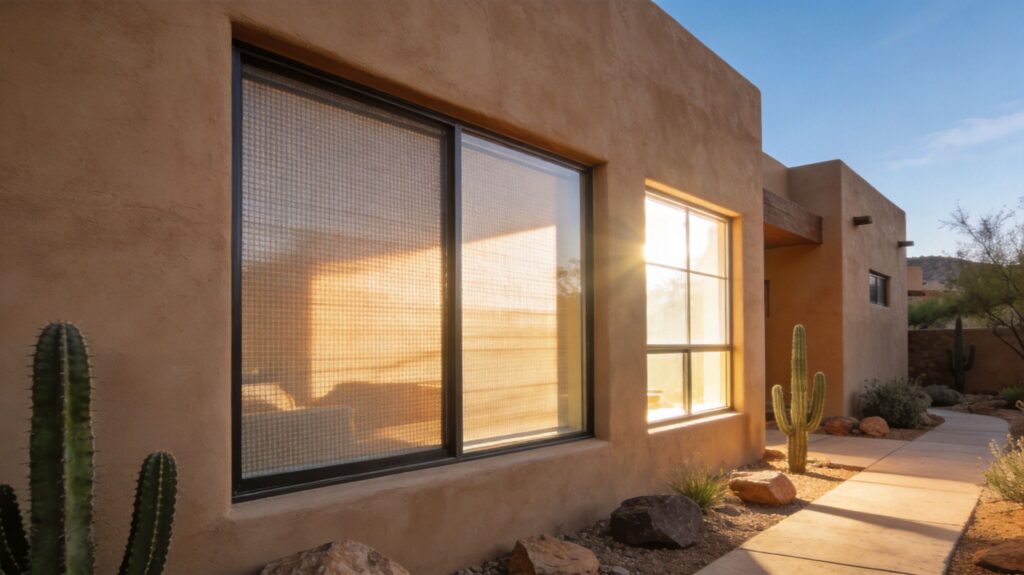
If you're dealing with rooms that turn harsh and bright by late morning, hot glass you can feel from a few inches away, and an air conditioner that seems to run all afternoon, you're in the same spot as a lot of Arizona homeowners. The problem usually isn't just the outdoor temperature. It's the amount of sun your windows let in.
That's why sun screens windows have become such a practical upgrade in desert homes. They help with heat, glare, privacy, and fading inside the house. But the part many people miss is that they also change how your windows need to be maintained. In Arizona, the wrong screen choice or the wrong cleaning method can create a new problem while solving the first one.
How Sun Screens Defend Your Home from Arizona Heat
Think of a sun screen like sunglasses for your house. The big difference is that the screen works outside the glass, not after the sunlight has already pushed heat into the room.

Why exterior placement matters
A standard blind or shade helps with glare, but it doesn't stop the glass from heating up first. That's the key difference. The U.S. Department of Energy says approximately 76% of the sunlight that falls on standard double-pane windows enters to become heat, and quality solar screens can block 70% to 90% of this solar heat before it ever reaches the window according to the Department of Energy window efficiency guidance.
That outside-first approach is why sun screens windows make more sense in Arizona than relying on interior coverings alone.
What the screen is actually doing
A good exterior screen handles solar energy in three ways:
- It absorbs heat before that heat reaches the glass.
- It dissipates heat back into the outdoor air.
- It reflects part of the sun's energy away from the window surface.
That combination keeps the glass cooler, reduces glare, and lowers the load on the room behind it. West-facing rooms usually show the biggest difference because the afternoon sun is more punishing and harder to manage with indoor shades alone.
Practical rule: If the room gets uncomfortable before the thermostat says it should, the window is usually part of the problem.
What works in real homes
Sun screens work best when people treat them as part of a full window system. Orientation matters. Glass type matters. The screen fabric matters. So does the distance between the screen and the glass. A screen that's right for a shaded north side window may be the wrong pick for a west-facing family room.
If you want a good general overview before comparing products, this guide to residential solar screens is a useful starting point for understanding how exterior screens fit into broader home shading options.
Choosing Your Ideal Sun Screen Fabric and Openness
The right screen isn't just “dark mesh.” Material, weave, color, and openness all affect how the screen performs on your house.

Start with material
In Arizona, I'd focus on fabrics made for outdoor exposure, not whatever happens to be cheapest. Quality solar screen materials commonly include PVC-coated polyester and vinyl-coated fiberglass. Those materials are built for sun, heat, and weather instead of acting like a basic insect screen trying to do a harder job.
Here's the practical difference:
| Material | Best use | Trade-off |
|---|---|---|
| PVC-coated polyester | Strong outdoor shading, solid durability | Can feel heavier visually depending on weave |
| Vinyl-coated fiberglass | Good balance of visibility and performance | Needs proper frame support to stay looking clean over time |
For a deeper look at frame and mesh options, Sparkle Tech's overview of window screen material types is useful when you're comparing sun screens to standard screen products.
Openness decides how the room feels
Most homeowners make the final decision here. The openness factor ranges from 1% to 15%, and that choice affects privacy, glare control, visibility, and heat rejection. A 90% screen blocks 90% of UV rays and heat, while an 80% screen blocks 80%, as explained in this openness factor guide from Texstyle.
That sounds simple, but living with the result is where the trade-off shows up.
- Lower openness means tighter weave, stronger glare control, more daytime privacy, and a darker view outward.
- Higher openness gives you more natural light and a more open look outside, but you give up some protection.
A screen can be technically “good” and still be wrong for the room if the homeowner hates how dark it makes the space feel.
Color matters more than most people expect
Darker fabrics often give a clearer outward view than lighter fabrics. That surprises people. They assume a lighter screen will feel less intrusive, but darker screen colors usually reduce glare in a way that makes the view easier on the eyes.
Lighter colors can reflect more heat, but some homeowners end up disappointed because the outward view feels more washed out. If the room already gets strong sun and you care about seeing out, dark fabric is often the better fit.
A simple way to choose:
- Prioritize cooling and glare control for west and south exposures.
- Protect the view in living spaces where brightness matters.
- Match privacy needs to daytime use, not nighttime expectations.
- Use stronger screening where furniture fading is a concern.
Permanent vs Retractable A Key Decision for Your Home
Some homeowners want a system they install once and barely think about again. Others want control over light, view, and airflow depending on the season or time of day. That's the key divide between permanent and retractable options.

Permanent screens fit the Arizona routine
Fixed sun screens are the straightforward choice. They stay in place, work every day, and don't ask much from the homeowner other than proper cleaning and occasional inspection. For houses with punishing afternoon exposure, that consistency is often exactly what people want.
They also tend to look more integrated once installed correctly. On homes where sun is a constant issue for much of the year, fixed screens usually match the way people live.
Retractable screens offer flexibility
Retractable systems appeal to homeowners who want options. You can reduce sun when you need it and open the window area back up when you don't. That can be useful for patios, large openings, or elevations where preserving a full view matters.
The trade-off is complexity. There are more moving parts, more hardware, and more chances for alignment or wear issues over time. In dusty conditions, that matters.
Here's a quick comparison:
| Type | Works well for | Main downside |
|---|---|---|
| Permanent | Daily heat control, low-fuss use, consistent appearance | You don't get on-demand flexibility |
| Retractable | Adjustable light and view, seasonal use | More mechanical complexity and maintenance attention |
A visual walkthrough helps if you're weighing how operable shading systems function on a house:
Which one is usually the better fit
For most Arizona homes, fixed screens make more sense on problem windows that get hammered by sun every day. Retractable products make more sense when a homeowner cares as much about preserving a completely open view as they do about sun control.
If you know the screen will stay down almost all the time, a permanent setup is usually the cleaner decision.
The Real Cost and ROI of Installing Sun Screens
Most homeowners ask the cost question first, but the better question is whether the installation solves a real problem long enough to justify the spend.
Cost depends on fit, frame, and installation quality
Sun screen pricing isn't one flat number because every house changes the math. Window size, shape, story height, frame condition, and whether you need new frames or rescreening all affect the final total. Retractable systems also land in a different category than fixed exterior screens because the hardware is more involved.
That's why rough online estimates can be misleading. A low number usually leaves out something important, such as custom sizing, frame upgrades, or labor on difficult access windows.
If you're trying to understand the pieces that typically drive the bill, this page on window screen replacement cost gives a practical breakdown of what homeowners usually end up paying attention to.
The return is tied to cooling performance
The strongest financial case for sun screens windows is reduced cooling demand. Exterior solar screens can cut air-conditioning use by over 10% compared to interior blinds and over 20% compared to no window coverings, based on the findings summarized in this solar shade openness comparison guide.
That doesn't mean every home gets identical savings. Window orientation, thermostat habits, insulation, and how much unshaded glass you have all matter. But in Arizona, where west-facing rooms can drive comfort complaints all summer, reducing the heat load is a practical form of ROI.
What owners often overlook
The screens also reduce strain on the spaces people use the most. Rooms stay more usable during the hottest part of the day. Glare gets easier to manage. Furnishings take less direct sun. Those benefits aren't always measured in a simple line item, but they matter when deciding whether the upgrade is worth it.
A useful way to consider it:
- Bad investment: cheap screen, poor fit, little cooling benefit, early replacement.
- Better investment: correct openness, strong frame, professional fit, ongoing maintenance.
- Best long-term outcome: installation paired with regular cleaning so performance doesn't fade under desert dust.
DIY Installation vs Professional Service: Making the Right Choice
A homeowner usually finds out the difference in July. The screen looks fine on install day, then the first stretch of hard sun, dust, and wind exposes every bad measurement and weak corner. A panel that is slightly off at the start rarely gets better over time.

What DIY really asks you to get right
Installing a sun screen is not complicated in theory. The problem is tolerance. Small errors in measuring, frame cutting, spline fit, or mounting show up fast on an exterior screen, especially on west-facing windows that take the worst Arizona exposure.
Common DIY problems include:
- Tight but inaccurate measurements that make the frame bind or sit out of square
- Loose measurements that leave gaps, rattling, or movement in wind
- Uneven fabric tension that causes ripples and early wear
- Light-duty hardware or frame stock that does not hold up well on larger openings
- Poor access planning on second-story windows, where removal and future cleaning become a hassle
That last point gets missed all the time. A sun screen is not a one-time product in Arizona. It is part of an exterior system that needs to come off safely, go back on cleanly, and hold its shape after repeated service.
Where professional service usually earns its cost
Professional installation matters most on homes with oversized windows, inconsistent openings, stucco details, second-story access, or heavy afternoon sun. The job is not only building a frame and rolling fabric. It is choosing a setup that fits the window correctly, holds up in desert conditions, and can still be serviced later without bending frames or damaging clips.
As noted in this solar screen material reference, professional-grade solar screens often use heavier 5/16" x 1" screen frames than the lighter frames common in many DIY kits. In practice, that gives you better resistance to flexing and twist on larger spans.
A good installer should evaluate more than appearance:
- Orientation so the screen material matches the heat load on that side of the house
- Frame size and strength based on window dimensions and wind exposure
- Attachment method so the panel stays secure but remains removable
- Service access so cleaning and future repairs do not turn into a struggle
I would add one more test. Ask how the screen will be cleaned a year from now after dust storms and pollen season. If nobody has a good answer, the installation plan is incomplete. Homeowners who want to understand that maintenance side can review this step-by-step guide to cleaning window screens before deciding how hands-on they want to be.
DIY can work on simple, ground-level openings if the measurements are exact and the materials are decent. Professional service usually makes more sense when the goal is long-term performance, cleaner fit, easier maintenance, and fewer problems once Arizona weather starts working on the system.
Proper Cleaning to Maximize Your Sun Screen Lifespan
Arizona dust changes the maintenance picture. A sun screen can help your home feel cooler and still create a cleaning problem if nobody plans for what happens behind the mesh.
Why these screens need different care
In arid climates, exterior solar screens can trap dust against the window, and if that buildup isn't cleaned regularly, it can contribute to mineral buildup and etching on the glass, according to this explanation of exterior solar screen maintenance issues.
That catches people off guard. They assume the screen is protecting the glass, and in one sense it is. But it can also create a pocket where grime sits longer, especially after dust storms, sprinkler overspray, or light moisture.
How to clean them safely
The goal is to remove buildup without damaging the mesh, coating, or frame.
A practical cleaning routine looks like this:
- Brush first: Remove loose dust and pollen with a soft brush or soft vacuum attachment.
- Wash gently: Use mild soap and water, not harsh cleaners.
- Rinse lightly: Keep water pressure controlled.
- Dry fully: Let the screen dry before reinstalling if it has been removed.
If you want a detailed homeowner-friendly process, this guide on how to clean window screens covers the basic workflow well.
What not to do
The fastest way to shorten screen life is to clean it like masonry or patio furniture.
Avoid these methods:
| Don't do this | Why it causes problems |
|---|---|
| Pressure washing | It can damage fabric, loosen spline, and stress the frame |
| Aggressive scrubbing | It can wear the screen surface and distort the weave |
| Harsh chemicals | They can affect coatings and leave residue |
| Ignoring the glass behind the screen | Trapped grime keeps baking onto the window |
Clean the screen and the glass as a pair. If you only wash the visible side, the hidden buildup stays where the damage starts.
When professional cleaning makes sense
If the screens are high, large, or heavily packed with dust, professional cleaning is usually the safer route. The job isn't just rinsing mesh. It's removing the screen carefully, cleaning both surfaces correctly, checking the frame, and treating any window spots before they turn into long-term haze.
That's the maintenance side of sun screens windows many homeowners don't hear about until the glass already looks dull.
Partner with Sparkle Tech for Expert Sun Screen Services
The right sun screen setup does more than dim a room. It helps control Arizona heat, cuts glare, protects interior finishes, and makes rooms easier to live in during the hottest months. But the screen has to be chosen correctly, installed correctly, and maintained correctly.
What homeowners usually need
Most houses don't need a one-size-fits-all answer. They need someone to look at the problem windows, the exposure, the frame condition, and the maintenance reality. A west-facing bedroom may need one approach. A front room where appearance matters may need another. Older frames may need repair before new screen fabric ever goes in.
That's why complete service matters more than product alone.
Why local service matters in Arizona
A company working in the Phoenix Valley sees the same issues over and over. Dust loading on mesh. Hard water spots behind screens. Warped old frames. Sun damage on neglected openings. Those aren't edge cases here. They're routine conditions.
Sparkle Tech Window Washing LLC is a family owned Arizona window washing and cleaning service based in the Phoenix Valley. The company states that it serves anywhere in Arizona and carries Workers Compensation, General Liability Insurance, and Bonding for customer protection.
A better long-term approach
For homeowners, the useful path is simple:
- Install the right screen for the exposure
- Use durable framing
- Plan for periodic cleaning
- Repair problems early instead of replacing everything later
That approach protects both the screen investment and the windows behind it. If your home is fighting sun on one side all summer, or your existing screens are dirty, loose, or no longer doing the job, getting a site-specific estimate is the practical next step.
Frequently Asked Questions About Sun Screens
Do sun screens block the view completely
No. They filter the view based on fabric openness, color, and where the sun is hitting the window. A tighter weave cuts more heat and glare, but it also reduces visibility more than an open weave.
From inside the house, darker fabrics usually give a cleaner outward view than lighter ones because they reduce glare. From the curb, that same darker screen can look heavier. That trade-off matters if appearance is a priority on the front of the home.
Are sun screens the same as regular insect screens
They serve different jobs. Insect screens are built to keep pests out while allowing airflow. Sun screens are built to reduce solar heat, glare, and UV exposure before that heat reaches the glass.
In Arizona, that difference matters. A basic bug screen will not solve a hot west-facing room the way a true sun screen can.
Do they help with privacy
Yes, during the day. Sun screens make it harder to see in when the outside is brighter than the room behind the glass.
At night, indoor lighting changes that balance. If privacy after dark matters, use blinds, shades, drapes, or another interior layer along with the screen.
Can you install them on every window
Many windows can take sun screens, but every opening should not get the same treatment. A west-facing slider, a south-facing living room window, and a shaded north wall do not need the same fabric or the same level of sun control.
Some homeowners want a uniform exterior look and screen the whole house. Others focus on the hardest-hit elevations first. Both approaches are valid if the choice matches the heat load, appearance goals, and how much maintenance the home can keep up with.
Will they change how often I need window cleaning
Yes, and this is one of the most overlooked parts of ownership. Sun screens help with heat, but in a dusty desert climate they also collect dirt, pollen, and airborne grit. That buildup does not stay on the screen alone. It affects the glass, the frame, and the area behind the screen.
A quick hose-off is rarely enough for long-term care. Screens need periodic cleaning, and the windows behind them need proper access and cleaning too. If that part gets ignored, the system stops performing the way homeowners expect.
Are retractable screens better than fixed screens
The better option depends on how the room is used. Fixed screens make sense when the goal is steady daily heat control with fewer moving parts. Retractable screens make sense when you want the option to open up the view or limit screen exposure part of the year.
Retractable units also add mechanical parts that need adjustment and maintenance over time. Fixed screens are simpler. Simpler usually holds up better in harsh sun and dust.
Do sun screens protect interior furnishings
Yes. They reduce the intensity of direct sunlight hitting floors, upholstery, wood finishes, and other interior surfaces. That helps slow fading and heat buildup inside the room.
They are one layer of protection, not the whole answer. Rooms with strong afternoon sun still benefit from interior shading and good window care.
Can damaged sun screens be repaired
Often, yes. Torn fabric, loose spline, bent frames, damaged corners, and worn mounting hardware can often be repaired without replacing every screen on the house.
The right choice depends on age, frame condition, and whether the original screen setup made sense to begin with. Sometimes a repair buys more years. Sometimes a full rescreen is the smarter use of money.
If your windows are making parts of your home hotter, brighter, and harder to keep clean, Sparkle Tech Window Washing can help with screen installation, repair, rescreening, and screen-aware window cleaning across Arizona. Reach out for a free, no-obligation estimate and get a setup that fits your home, your exposure, and the cleaning reality that comes with desert dust.