



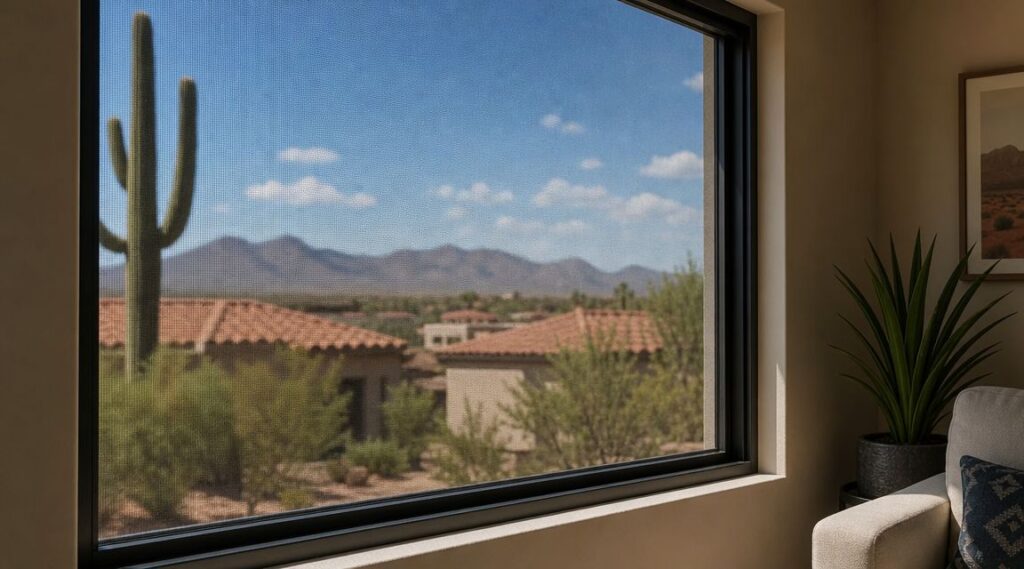
By mid-afternoon in Phoenix, some rooms stop feeling usable. The west side of the house turns bright and hot, the floor near the glass warms up, and the AC seems like it never gets a break. A lot of homeowners start looking at solar windows screens right at that point, not because they want a fancy upgrade, but because they're tired of fighting the same heat every day.
That frustration is real in Arizona. The sun is intense, dust builds up fast, and anything mounted outside your home has to deal with both. That's why generic advice about solar screens usually falls short. It talks about comfort and energy savings, but not enough about what it's like to own them here, clean them here, and choose the right screen for a desert-facing window instead of a mild-climate home.
Solar screens can absolutely help. They can cut glare, improve daytime privacy, and make the hottest rooms feel more manageable. They can also become dirty, loose, faded-looking, or less effective if they're poorly fitted or never maintained. The difference between a screen that works well and one that becomes a nuisance usually comes down to the fabric choice, the openness level, the fit, and whether someone keeps up with cleaning and repairs.
Your Guide to Beating the Arizona Heat
A common Arizona pattern goes like this. The house feels fine in the morning. Then the afternoon sun swings around, one side of the home starts glowing, and suddenly the family room, office, or upstairs bedroom becomes the place nobody wants to sit.
That usually happens first on the windows taking direct late-day sun. You close blinds, maybe add curtains, maybe try to avoid that room until evening. The problem is that once the glass itself gets hammered by the sun, interior coverings can only do so much for comfort.
That's where solar screens start making sense as a practical home upgrade instead of just another add-on.
Why Arizona homeowners look at them in the first place
The decision to shop for solar screens isn't usually motivated by a love for window accessories. Instead, it's an effort to resolve a short list of annoying problems:
- Afternoon hot spots that make one room feel warmer than the rest of the house
- Harsh glare on TVs, laptops, and phones
- Faded interiors near sunny windows
- Outside-facing rooms that feel exposed during the day
- An AC system that seems to run hard when the sun is at its worst
In Phoenix, those aren't small quality-of-life issues. They affect how you use the house.
Practical rule: If one side of your home feels fine in the morning but rough in the afternoon, the issue usually isn't the whole house. It's specific windows taking the brunt of the sun.
What makes them different from standard screens
A regular insect screen keeps bugs out. A solar screen is built to manage sunlight and heat before that heat loads up the glass. That's the key reason people install them in hot climates.
That doesn't mean every solar screen setup is worth buying. Some are chosen too dark for the homeowner's preference, some are too open to solve the heat problem they were bought for, and some are installed loosely enough that gaps and poor tension reduce the benefit. In Arizona, details matter more because the conditions are tougher.
How Solar Screens Work to Keep Your Home Cool
By mid-afternoon in Phoenix, the problem window is usually obvious. You feel it before you measure it. The glass is warm, the room gets bright and uncomfortable, and the AC has to work against heat that already made it inside.
Solar screens help because they stop part of that solar load before it hits the glass. The U.S. Department of Energy notes that about 76% of sunlight falling on standard double-pane windows enters as heat in cooling seasons, which is why an exterior screen can make a noticeable difference on hard-hit windows, especially west- and south-facing ones, as explained in JC Licht's solar shade openness guide.

The outside-first advantage
Placement does the heavy lifting.
Once sun hits bare glass, the window starts absorbing and radiating heat inward. A solar screen mounted on the exterior interrupts that process earlier, so less heat reaches the pane in the first place. That is the practical difference between a screen that helps in Arizona and a product that only softens light after the room has already heated up.
In the field, this is why the same house can have one room that feels manageable and another that stays stubbornly hot. The windows facing the harshest exposure need a stronger first line of defense.
Why openness matters so much
The main performance setting is openness, which refers to how tight or loose the weave is. Industry guidance commonly places solar shade openness between 1% and 14%, and lower percentages mean a tighter weave with more UV blocking, according to that guide.
For most homeowners, the trade-off comes down to three things. Heat control, glare reduction, and how much view you want to keep.
- 5% openness is a common middle ground. It usually gives solid glare control and a usable view out.
- 7% openness keeps the room brighter and feels less closed in.
- 10% openness allows more light and visibility, but it gives up some sun-blocking performance.
That sounds simple on paper, but window orientation changes the answer. A 10% screen may be fine on a shaded or mild exposure. On a west-facing Phoenix window with long afternoon sun, many homeowners end up wishing they had gone tighter.
What homeowners notice day to day
People rarely describe solar screens by openness percentage. They describe what the room feels like after installation.
A tighter weave usually means less glare on TVs and phones, better daytime privacy, and a dimmer indoor look. A looser weave preserves more of the view and more natural light, but it also lets more solar energy through. Neither option is universally right.
Arizona adds another layer. Dust buildup can make a screen look darker and reduce clarity over time, which is one reason I tell homeowners to choose with maintenance in mind, not just showroom appearance. If you want a better feel for how weave and screen construction affect airflow and visibility, Sparkle Tech has a helpful breakdown of window screen material types, and homeowners comparing tighter insect-style weaves sometimes also ask what is a 100 mesh screen.
A good solar screen should make the room easier to live in without making the house feel shut off from the outside. In Arizona, the best results usually come from matching the screen to the sun exposure, then keeping it clean enough to keep performing.
Choosing the Right Solar Screen Type and Material
Once you understand the basic function, the next question is what type of screen holds up and performs well in Arizona. Many homeowners encounter difficulties here. They focus on shade percentage alone and ignore the frame, fabric, mounting style, and color.
Start with exterior placement and fabric
For hot climates, exterior mounting is the whole point. Exterior solar screens work by acting as a shield between the sun and the glass, and some materials such as Phifer's vinyl-coated fiberglass are designed to absorb and dissipate up to 70% of the sun's heat and glare before it reaches the window pane, as explained in Blindsgalore's overview of exterior solar screens.
That helps explain why material choice matters. A durable solar fabric has to do more than look good from the curb. It has to stay tensioned, handle UV exposure, and keep performing after long stretches of heat and dust.
Fixed panels versus retractable systems
Most homeowners end up choosing between a simple fixed screen and a more premium retractable setup.
| Type | Best fit | Trade-offs |
|---|---|---|
| Fixed solar screens | Everyday heat control on standard windows | Less flexible once installed |
| Retractable systems | Homeowners who want adjustable coverage | Higher upfront cost and more moving parts |
If your goal is straightforward heat control on problem windows, fixed screens are often the practical answer. If design flexibility and on-demand operation matter more, retractable systems can make sense, but they aren't the starting point for most homes.
Color changes the experience
Color affects both appearance and how the screen feels from inside the room.
Darker screens often preserve the outward view better during the day. Many homeowners are surprised by that. They expect a lighter fabric to feel less noticeable, but darker mesh can look clearer from indoors while still giving the exterior a clean, uniform look.
Lighter tones can work, especially when someone wants a softer exterior appearance. The trade-off is that the view out may not feel as crisp.
Don't confuse insect mesh with solar fabric
Some homeowners compare mesh products and assume they're interchangeable. They aren't. If you're trying to understand mesh differences in general, this breakdown of what is a 100 mesh screen is a useful reference because it shows how screen weave affects airflow, visibility, and function. Solar screens are a separate category with heat-control goals, but that kind of comparison helps people understand why not all screens solve the same problem.
For homeowners sorting through frame and fabric choices, a quick primer on window screen material types can also help clarify what works for bug control, solar performance, and long-term repairability.
Real-World Benefits Beyond a Lower AC Bill
The first benefit people expect is lower cooling demand. The benefits they usually remember most are comfort and livability.
A good solar screen setup changes how a room feels in the hours when the sun is hardest on that side of the house. The room isn't fighting glare the same way. Seating near the window becomes more usable. Screens, TVs, and monitors are easier on the eyes. The house feels less uneven from one side to the other.

The best payoff usually comes from the right windows, not every window
A lot of people assume the answer is to screen the whole house. Sometimes that makes sense. Often it doesn't.
For the biggest impact, installers commonly recommend prioritizing west-facing windows, because they take intense, low-angle afternoon sun. One installer notes that an exterior solar screen on a west-facing window can block up to 90% of UV rays before they hit the glass, which is why those windows are often the best starting point for heat control in a home, as explained in this guide to exterior solar screens for west-facing windows.
The benefits people notice day to day
- Glare relief. This is often the first thing homeowners notice on televisions, tablets, and work screens.
- Daytime privacy. You can usually see out better than people can see in during the day.
- Interior protection. Furnishings, rugs, flooring, and wall art get less direct sun exposure.
- More consistent comfort. Rooms near major sun exposures become easier to use during the hottest part of the day.
West-facing windows are usually the first place to spend money if the budget doesn't cover the whole house.
Where solar screens don't solve everything
They don't replace blackout shades in a bedroom. They don't create nighttime privacy when the lights are on inside. They also don't fix failed seals, poor insulation, or damaged windows.
That's important because some homeowners expect one product to solve every comfort issue around a window. Solar screens are strong at exterior sun control. They're not a cure-all for every building-envelope problem.
Understanding Cost, ROI, and Professional Installation
A lot of Phoenix homeowners ask about price after they've spent one more summer avoiding the hottest room in the house. That's the right question, but the better question is what you are purchasing.
According to HomeAdvisor's solar shade cost guide, installed solar screens average about $160 per window, with many projects falling between $80 and $280 per window. That same source lists material-only pricing at roughly $5 to $8 per square foot. HomeAdvisor also notes that average-sized windows can land around $50 to over $100 per screen, while retractable systems are in a much higher price range and can start around $1,000.
Those numbers are a starting point. Arizona homes can swing higher or lower depending on the window layout, the frame condition, and how much custom fitting the job needs.
What actually changes the price
In the field, the biggest cost drivers are usually practical ones:
- Window size and count. Bigger openings use more mesh and larger frames.
- Frame condition. Bent frames, worn corners, or old spline can turn a simple install into a repair job.
- Access. Second-story windows and tight side yards take more time and care.
- Screen style. Standard fixed solar screens cost far less than retractable options.
- Sun exposure priorities. Some homeowners start with west and south exposures instead of doing the whole house at once.
That last point matters. In Arizona, a phased approach often makes more sense than trying to cover every window on day one. If the budget is tight, install screens where the sun is causing the biggest comfort problem first.
Why professional installation matters
Solar screens have to fit tight, sit square, and seal the opening well enough to block harsh sun without rattling in monsoon winds. A sloppy fit leaves gaps at the edges, and gaps reduce the benefit you're paying for.
I see this a lot with DIY replacements. The mesh may be fine, but the frame is slightly off, the tension is uneven, or the screen bows in the middle after a season of heat. That can mean reduced shade, faster wear, and a screen that never quite looks right from the street.
If you're weighing repair against replacement, this guide on window screen replacement cost gives useful context before you order new units.
How to judge ROI in Arizona
Return on investment is not only an energy calculation.
In Phoenix, solar screens often earn their keep by making specific rooms usable during the hours people want to be in them. A west-facing office that stays more comfortable in late afternoon has real value. So does a living room with less glare on the TV, or furniture that takes less direct sun day after day.
The trade-off is that desert conditions are hard on exterior products. Screens in high-sun, dusty areas need cleaning and occasional repair, and that maintenance should be part of the buying decision from the start. Good installation helps on that front too. A properly fitted screen is easier to remove, clean, reinstall, and service over time, which is part of why many homeowners here use Sparkle Tech for screen cleaning and repair after the initial install.
Maintenance Tips for Arizona's Sun and Dust
By late summer in Phoenix, a solar screen can look fine from the curb and still be carrying a layer of dust that dulls the view from inside. That buildup is part of owning exterior screens here. Dry air, wind, pollen, and monsoon grime settle into the mesh fast, especially on west-facing windows.
Solar screens keep working in dirty conditions, but they do not stay looking or performing their best without care. Dust collects in the weave, packs into frame corners, and can bake on after weeks of sun. Once that happens, cleaning takes longer and the screen is easier to damage if someone gets too aggressive with a brush or hose.

What desert dust does to solar screens
The first problem is visibility. Fine dust makes the mesh look hazy from indoors, and that effect is stronger when afternoon sun hits at an angle. Homeowners often assume the glass is dirty when the screen is the problem itself.
The second problem is wear. Dirt settles along the spline, corners, and frame channels. If that buildup sits through a long hot stretch, it gets harder to remove cleanly. On older screens, repeated heavy scrubbing can speed up fraying or loosen the mesh.
A neglected screen usually shows up in a few predictable ways:
- Cloudier outward visibility from the room
- Dusty edges and corners that stand out on light-colored frames
- More effort during cleanup after grime has baked on
- Higher chance of minor damage during overdue cleanings
A cleaning routine that fits Arizona homes
Most homeowners do better with a simple schedule than a once-a-year deep scrub. During dusty months, a light cleaning every so often is easier on the screen than letting debris build up for a full season.
- Remove loose dust first. A soft brush or dry microfiber cloth keeps you from grinding grit into the mesh.
- Use mild soap and low-pressure water. Strong cleaners and high pressure can stretch mesh or wear the finish on the frame.
- Wash the frame and corners. Arizona dust loves to collect where the mesh meets the frame.
- Let screens dry fully before reinstalling. That helps prevent streaks and keeps dirt from sticking right back onto damp material.
If you want a homeowner-friendly process, this guide on how to clean window screens lays it out clearly.
When cleaning stops being the fix
Some screens need more than soap and water. In Arizona, the common trouble spots are torn mesh, bent frames, loose corners, sun-brittle spline, and fabric that has lost tension after years of heat.
Those issues matter because a damaged solar screen does not sit tight to the opening. Small gaps at the edges let in more sun, and a loose panel tends to collect dirt faster because it moves and rattles more in wind. That is why maintenance is not only about appearance. It is also about keeping the screen fitted and serviceable.
Sparkle Tech Window Washing handles screen cleaning, repair, restoration, and installation work for solar and bug screens in Arizona. For homeowners who do not want to remove, inspect, wash, and reinstall multiple screens in the heat, that service solves a very real part of desert ownership.
For a quick visual on the process, this walkthrough is useful:
Solar Screens Compared to Film and Other Options
Solar screens aren't the only way to manage sun. Homeowners also look at window film, blinds, shutters, and curtains. Each option solves a slightly different problem, which is why the best choice depends on whether your main issue is heat, glare, privacy, appearance, or maintenance.

Where solar screens stand out
Solar screens have one big practical advantage in hot climates. They work on the outside of the window, so they address sun exposure before the glass becomes the problem. That's why they often make more sense for Arizona homeowners dealing with aggressive afternoon sun on specific elevations.
Window film can help with glare and light control, and some homeowners like that it's less visible from the exterior. The drawback is that it's still on the glass. Blinds and shutters help with light and privacy, but when they're closed, they usually shut down the view as well.
Window treatment comparison
| Feature | Solar Screens | Window Film | Interior Blinds/Shutters |
|---|---|---|---|
| Heat control approach | Exterior barrier that blocks sun before it hits the glass | Applied to glass itself | Interior light management after sunlight reaches the window area |
| View outward | Usually maintained during the day, depending on screen choice | Usually maintained, with some tint effect | Reduced or blocked when closed |
| Daytime privacy | Often improved | Varies by film type | Good when closed |
| Maintenance | Exterior cleaning and occasional repair | Film care and eventual replacement concerns | Dusting and routine interior cleaning |
| Best use case | Harsh sun on specific windows, especially hot exposures | Homes wanting a lower-profile glass treatment | Rooms where privacy and decor matter more than exterior heat blocking |
| Main trade-off | Outdoor dust and weather exposure | Doesn't create an exterior shade layer | Less effective at stopping heat before it builds up |
Which option fits which homeowner
Choose solar screens if your main complaint is that one side of the house gets blasted by sun and feels uncomfortable for hours.
Choose film if you want a lower-profile look and your priorities are more about glare and appearance than creating an exterior barrier.
Choose blinds or shutters if interior style, room darkening, and privacy are ahead of heat control on your list.
No option is perfect. For many Arizona homes, solar screens land in the sweet spot because they preserve the view, improve daytime comfort, and target the windows causing the biggest problems.
If you're dealing with hot west-facing rooms, dusty screens, or older frames that need repair, Sparkle Tech Window Washing is one Arizona-based option for screen cleaning, solar screen repair, restoration, and installation support.