



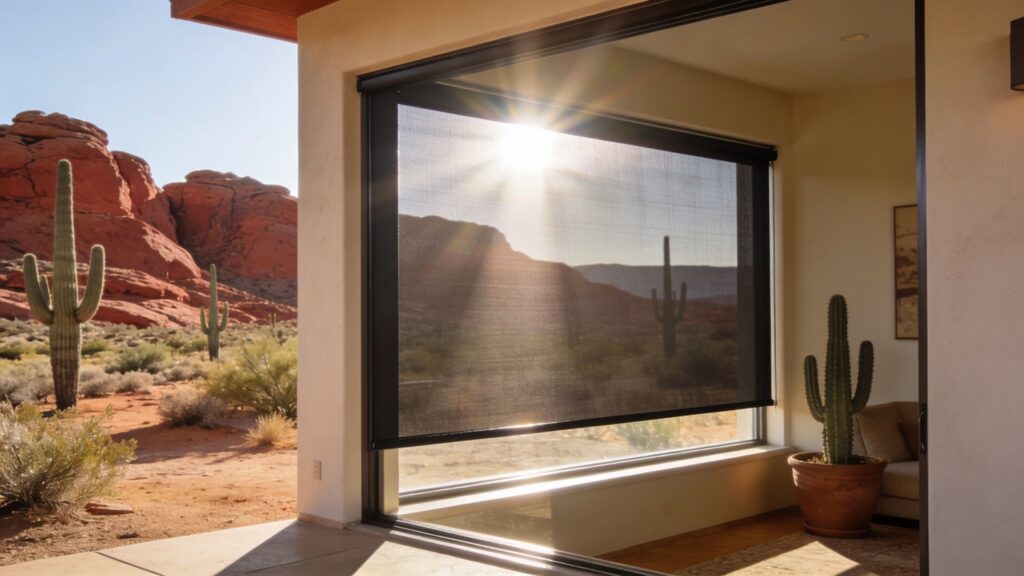
By midafternoon in Phoenix, a lot of homes tell you exactly where the problem is. The west-facing living room gets harsh glare across the floor, the sofa fabric starts taking sun damage, and the AC keeps running while that part of the house still feels warmer than the rest.
That's usually when homeowners start looking at blinds, curtains, tint, or replacement windows and realize they need something that works better against direct Arizona sun. Solar screens for windows are one of the most practical fixes because they deal with heat before it pushes through the glass.
Your Guide to a Cooler Arizona Home
In Arizona, window problems aren't subtle. You feel them most on west- and south-facing glass, where afternoon sun turns a normal room into the one everyone avoids. Solar screens help because they're built for that exact issue. They cut glare, reduce solar heat gain, and add daytime privacy without completely closing a room off.
The part that matters is choosing the right screen for the right side of the house. A screen that works well on a front bedroom may feel too dark on a kitchen window with a mountain view. A fabric that looks good on paper may not be the right choice once you factor in west sun, desert dust, and how much daylight you want to keep.
What Arizona homeowners usually want
Many homeowners aren't shopping for screens because they like screen fabric. They're trying to solve one or more of these problems:
- Hot afternoon rooms: One side of the house heats up faster and stays uncomfortable longer.
- TV and monitor glare: You can't enjoy the room without closing everything up.
- Sun fading: Flooring, furniture, and rugs near windows start showing wear.
- Privacy during the day: You want some protection without losing every bit of your view.
If you're also comparing options for outdoor living areas, this guide to best porch screen options is useful because porch screening and solar screening overlap in material choices, but they don't solve the same heat problem the same way.
Solar screens are worth considering when the issue is direct sun on glass, not just a desire for more shade indoors.
Arizona homes need practical choices, not generic advice. Orientation matters. Fabric openness matters. Installation matters. Maintenance matters more here than people expect because fine dust builds up fast and affects both appearance and airflow.
How Solar Screens Protect Your Home From Heat
Solar screens work like sunglasses for your house. That's the simplest way to think about them. They sit on the exterior side of the window opening and intercept sunlight before it loads the glass with heat.
That's the key difference from interior blinds or shades. Interior coverings can help with glare and privacy, but they're dealing with sunlight after it has already passed through the glass. In Arizona, that's often too late to make the biggest dent in heat buildup.
Why exterior placement matters
The glass itself becomes part of the problem when direct sun hits it for hours. Once the window heats up, the room behind it starts feeling the effect. Exterior solar screens reduce that load before the glass gets blasted.
According to the U.S. Department of Energy, about 76% of the sunlight that falls on standard double-pane windows enters to become heat, and high-quality solar screens can block up to 90% of these heat-producing rays, potentially lowering indoor temperatures by as much as 15 degrees Fahrenheit depending on conditions and product choice, as noted in this overview of how much solar screens reduce heat.

The window term that matters
You may see the term Solar Heat Gain Coefficient, or SHGC, when comparing window performance. It refers to how much solar radiation a window allows through. Lower SHGC means the window system resists unwanted summer heat better.
For Arizona homes, lower solar heat gain is usually the goal on sun-exposed glass. Solar screens support that goal by adding another protective layer outside the window, especially where your existing windows already struggle in the afternoon.
What this looks like in real life
A good solar screen installation helps with several things at once:
- Cooling pressure: Your AC doesn't have to fight as much direct solar load at the glass.
- Glare control: Rooms become easier to use during peak daylight hours.
- UV protection: Interior finishes get more protection from constant sun exposure.
Practical rule: If the room feels hottest when the sun is directly on the window, the most effective fix usually starts outside the glass, not inside the room.
That doesn't mean every window needs the same treatment. In Phoenix, the windows taking the hardest hit usually deserve the densest strategy first.
Understanding Solar Screen Materials and Weave Types
Not all solar screens for windows perform the same, even when they look similar from the curb. The two things that most affect performance are material and openness factor. If you miss either one, you can end up with a screen that blocks less heat than you expected, or one that makes the room darker than you wanted.
The common materials
Most residential solar screen products are made from vinyl-coated polyester or PVC-coated fiberglass mesh. Both show up regularly in the market, and both can work well when matched to the right opening and exposure.
Material choice affects feel, handling, and replacement compatibility. It also matters during repair work. If a damaged panel gets re-screened with a different fabric type or openness than the rest of the house, the windows may no longer perform or look consistent. If you want a better baseline on fabric categories before buying or replacing, this overview of window screen material types is a good reference.
Why openness factor matters more than most homeowners realize
Openness factor tells you how tightly the screen fabric is woven. Across the market, solar screens are generally described as ranging from 1% to 14% openness. Lower openness means the weave is tighter, which usually gives you more privacy, less daylight, and stronger heat and UV control.
A 5% openness screen is widely considered a practical middle ground because it blocks about 95% of radiant heat and UV rays while preserving outward view, and denser fabrics such as Suntex 90 are marketed at up to 90% heat blockage, which is why they're commonly used on intense direct-sun exposures according to this guide to solar screen materials.
The mistake I see most often is treating every window the same. In Arizona, that usually leads to over-screening view windows or under-screening west-facing problem windows.
Solar Screen Openness Factor Comparison
| Openness Factor | Heat/UV Blockage | Visibility | Natural Light | Best For |
|---|---|---|---|---|
| 1% | Very high, with one industry source describing about 99% blockage of radiant heat and UV at this extreme protective end | Low | Low | Harsh direct sun, privacy-first spaces, windows where view matters less |
| 5% | About 95% radiant heat and UV blockage | Moderate to good | Moderate | Arizona living rooms, bedrooms, media rooms, balanced performance |
| 10% | Lighter solar control than denser options | Better outward view | Higher | Kitchens, casual living areas, windows where view matters more |
| 14% | More open, lighter control | High | High | Mild exposures, windows where daylight and view are the priority |
Color and visibility trade-offs
Color changes the experience, too. Darker fabrics often give a better outward view-through. Lighter fabrics can reflect more heat. Neither is automatically “better.” On a west-facing family room, many homeowners prefer stronger glare control and privacy. On a breakfast nook, they may prefer a more open feel.
That's why product names and percentages alone don't solve the job. Orientation, room use, and what you can tolerate visually matter just as much as the spec sheet.
The Pros and Cons for Arizona Windows
Solar screens solve real problems in Arizona, but they aren't magic and they aren't perfect. The benefits are strongest where windows take hard, direct sun for long stretches. The trade-offs show up when homeowners expect maximum cooling without any change in daylight or view.
Where solar screens help most
The biggest win is comfort. Rooms with punishing afternoon exposure often become more usable because glare drops and the glass takes less solar load. They also help protect furnishings and flooring from steady UV exposure.
Daytime privacy is another benefit people appreciate once the screens are installed. From inside, you can usually maintain usable outward visibility. From outside, the house feels less exposed during daylight hours.

The trade-offs homeowners should expect
The downside is simple. More protection usually means less light and a tighter view. If you put a dense screen on every elevation without thinking it through, some rooms can feel flatter and darker than you wanted.
Here's the honest version of the pros and cons:
- Better comfort on exposed windows: Especially useful where Arizona sun is constant and direct.
- Reduced glare: Helpful for living rooms, home offices, and TV areas.
- More daytime privacy: A real benefit on street-facing windows.
- Less natural brightness indoors: Some people notice this immediately, especially with denser weaves.
- View can feel more filtered: This matters on scenic lots or windows that frame a yard you enjoy looking at.
- There's an upfront project cost: Fabric, frames, fit, and labor all affect the final number, and the cheapest option often isn't the one that holds up best.
If you love a bright room more than you hate the heat, don't choose the densest fabric by default.
For Arizona windows, the best results usually come from selective use. Problem windows get stronger protection. Lower-impact windows stay lighter and more open.
Installation Options and Key Considerations
When homeowners ask whether exterior mounting is really worth it, the short answer is yes. In Arizona, if heat control is the goal, exterior installation is usually the right call.
Why exterior beats interior
Exterior solar screens are significantly more effective, with a shading coefficient in the 0.14–0.33 range, compared to 0.50–0.70 for interior installations, because they intercept solar radiation before it passes through the glazing, as explained in this guide to exterior solar screen performance.
That technical difference shows up as practical comfort. Exterior screens stop the sun outside the window assembly. Interior shades still help, but they're controlling brightness and some residual heat after the window has already been hit.
Common mounting approaches
You'll usually see a few installation styles in the field:
- Fixed frame screens: A common choice for standard windows. They're straightforward, durable, and work well where the goal is constant protection.
- Removable panels: Useful when homeowners want seasonal flexibility or easier access for maintenance.
- Retractable systems: Better for people who want control over view and shade at different times of day, though they involve more hardware and moving parts.
Before ordering anything, accurate sizing matters. Bad measurements create gaps, loose fit, and disappointing results. If you're checking dimensions before replacing or retrofitting, this guide on how to measure window screen size is worth using.
A quick walkthrough helps if you want to see how these systems are discussed visually:
Arizona-specific details that matter
Arizona homes bring a few extra considerations that generic advice misses:
- West exposures need tighter decisions: A weak screen on a west-facing wall won't solve the problem.
- Dust and wind matter: Frames and fabric need to fit securely and stay serviceable.
- Frame color affects curb appeal: The wrong frame stands out fast against stucco, trim, or dark window packages.
If you're comparing solar screens with broader efficiency upgrades, Arizona Roofers has a useful collection under their energy efficient windows tag that helps place screens in the larger picture of heat-control improvements.
The main installation mistake is overthinking flexibility and underthinking performance. In this climate, stopping heat outside the glass is the priority.
Choosing and Maintaining Your Solar Screens in Arizona
There isn't one universal “best” solar screen. Arizona homes need window-by-window decisions. A screen that's perfect on a west-facing bonus room may be the wrong choice for a shaded north-facing dining area.
The better approach is simple. Match the screen to the direction the window faces, how you use the room, and how much daylight you're willing to give up.
A practical way to choose by window orientation
According to industry guidance, the best solar screen depends on window orientation, desired view, and whether your goal is glare control or cooling. A screen that maximizes cooling can reduce daylight more than you want, while a more open screen may not solve west-facing afternoon heat, as discussed in this article on solar screen trade-offs.
Use that principle like this:
- West-facing windows: Start with denser protection. These are usually the toughest windows in Phoenix homes because late-day sun is intense and uncomfortable.
- South-facing windows: Often benefit from strong solar control too, especially on large glass areas.
- East-facing windows: Morning sun can still be disruptive, but the choice depends more on room use.
- North-facing windows: These often don't need the same level of suppression, so a more open weave may make more sense.

What desert dust changes
Fine Arizona dust settles into screen mesh faster than many people expect. Even a well-chosen screen looks tired when dust cakes into the weave. It can also make view-through worse and leave the outside of the home looking neglected.
Good maintenance is basic but important:
- Remove loose dust first. A soft brush or gentle rinse works better than grinding dirt deeper into the mesh.
- Wash with mild soap and water. Keep it simple. Harsh chemicals can create new problems.
- Rinse thoroughly. Soap residue catches dust faster.
- Let the screens dry fully before reinstalling.
For homeowners who want a solid cleaning method without damaging the mesh, this step-by-step guide on how to clean window screens is a practical place to start.
When to call for service
Some jobs go beyond routine cleaning. If the mesh is torn, loose, sagging, sun-damaged, or pulling away from the spline, repair or re-screening makes more sense than repeated washing. If the fabric no longer matches the rest of the house, replacing it with the correct openness and material matters.
Sparkle Tech Window Washing handles sun and bug screen cleaning, repair, and rescreening in Arizona, which is useful when a homeowner wants to preserve the existing frames but restore proper screen performance.
Clean screens look better. Correctly matched screens perform better. Those are two different jobs, and both matter.
Frequently Asked Questions About Solar Screens
A few questions come up on nearly every estimate. Most of them come down to expectations, not technology.
Common Questions
| Question | Answer |
|---|---|
| Do solar screens make a room dark? | They can, especially when you choose a denser weave. That's why room use and window orientation should guide the decision. |
| Are solar screens better than blinds for heat? | For direct solar control, exterior screens usually have the advantage because they stop sun before it loads the glass. Blinds still help with glare and privacy. |
| Will I still be able to see outside? | Usually yes, but visibility depends on openness factor, fabric color, and the amount of light outside versus inside. |
| Do all windows need the same screen fabric? | No. Arizona homes almost always benefit from different choices on different elevations. |
| Are solar screens hard to maintain? | Not usually, but desert dust means they need regular cleaning to keep looking good and performing the way you expect. |
| Can damaged screens be repaired instead of replaced? | Often yes. If the frame is still in good shape, rescreening can be the practical solution. |
If you're trying to decide whether solar screens for windows are worth it, start with the windows that make your home least comfortable. In Phoenix, those are often the windows that prove the value fastest.
If your Arizona home has hot, glare-heavy windows or screen panels that need cleaning, repair, or rescreening, Sparkle Tech Window Washing offers window screen service in the Phoenix valley and throughout Arizona. They handle sun, solar, and bug screen work, which makes them a practical option when you want to restore existing screens or fit new ones correctly.