




Regular solar pv panel cleaning is more than just a chore; it's a vital part of protecting your investment and making sure your system performs at its peak. While it’s easy to assume rain will do the job for you, it often just moves dirt around, leaving a film that stubbornly sticks and cuts down on your energy production. Think of it like your car's windshield—rain alone won't get rid of the tough grime.
Why Solar Panel Cleaning Actually Matters
It's a common belief that a good downpour is nature's solar panel cleaner. In reality, rainwater often contains its own dissolved minerals that can leave behind a streaky residue once evaporated. It's the gradual, almost invisible buildup of soiling—that mix of dust, sticky pollen, bird droppings, and airborne pollutants—that really does the damage.
This thin layer of grime might not look like much, but it forms a barrier that blocks precious sunlight from ever reaching the photovoltaic cells. Day by day, this obstruction silently chips away at your system's efficiency, causing a slow but steady drop in the energy you generate.
The Financial Impact of Neglected Panels
Think of a dirty solar panel as having a dimmer switch permanently turned down. Every bit of residue, every bird dropping, and every layer of pollen directly reduces the amount of sunlight being converted into electricity. That translates straight into less money saved on your energy bills and a lower return on your investment.
The impact isn't the same everywhere, of course. A system in a dusty, rural area will face different challenges than one in a suburb near a busy highway, which accumulates an oily film that rain can't touch.
So, how much of a difference does it really make? The numbers might surprise you. Some studies have shown that in heavily polluted areas, commercial solar arrays can see their power output drop by as much as 60% without regular cleaning. For most residential systems, the efficiency loss is closer to 21%, but that's still a significant chunk of lost power and savings. You can dig into the research on solar panel efficiency loss on zionmarketresearch.com.
Not all dirt is created equal. The type of debris clinging to your panels has a direct and measurable effect on their output.
How Common Debris Impacts Your Solar Output
This table shows the real-world effect of different types of soiling on your panels' energy production, helping you understand the hidden costs of neglect.
| Type of Soiling | Common Environment | Estimated Annual Efficiency Loss |
|---|---|---|
| Light Dust & Pollen | Suburban, Rural, Low-Traffic Areas | 3-7% |
| Bird Droppings | Coastal, Urban, and Agricultural Areas | 5-15% (Localized but severe) |
| Industrial Soot/Pollution | Near Factories, Highways, or Airports | 10-25% |
| Agricultural Dust & Spray | Farming Communities | 15-30% |
As you can see, what might seem like a minor inconvenience can quickly add up to a substantial loss over the course of a year, directly impacting your return on investment.
Viewing solar panel cleaning as a crucial part of your system’s upkeep—rather than an optional chore—is the best way to safeguard your financial investment and ensure you get the maximum possible return for years to come.
Beyond Efficiency Gains
Proactive solar pv panel cleaning does more than just boost your energy production. It gives you a perfect opportunity to get eyes on your system and perform a quick visual inspection. Whether it's you or a professional doing the cleaning, you can spot potential issues that might otherwise go completely unnoticed.
Look out for things like:
- Cracks or chips in the panel glass from debris or hail.
- Loose wiring or disconnected mounting hardware.
- Nests or debris buildup under the array that could become a fire hazard.
Catching these problems early can save you from a much bigger, more expensive repair down the road. A clean, well-maintained system doesn't just perform better—it lasts longer, making sure you get every bit of value out of it for its entire lifespan.
Assembling Your Panel Cleaning Toolkit
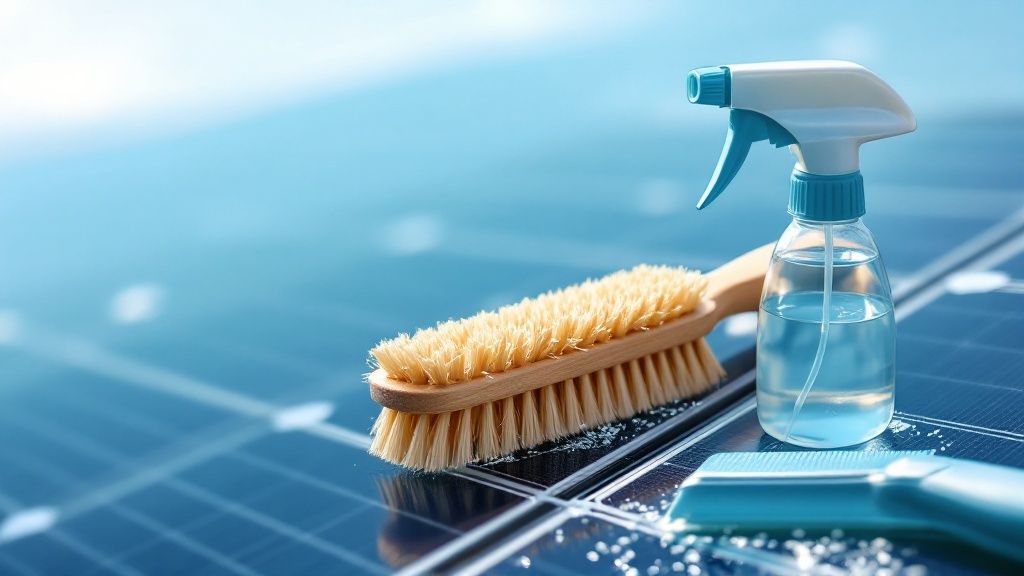
Before you even think about getting on a ladder, a successful and safe solar PV panel cleaning session starts with having the right gear. This isn't just about being effective—using the wrong tools can cause real, irreversible damage. You could easily scratch the glass surface or, worse, do something that voids your manufacturer's warranty. This is definitely not the time to just grab whatever is under the kitchen sink.
The whole point is to gently lift away grime without damaging the panel's anti-reflective coating. That coating is essential for squeezing every last drop of sunlight into energy, and harsh chemicals or abrasive scrubbers are its worst enemies.
The Essentials for a Safe and Effective Clean
Your toolkit doesn't have to break the bank, but it does need to be specific to the job. The absolute centerpiece of any good setup is a brush made for delicate surfaces. I've found that a soft, flagged-bristle car-washing brush is often a great choice because it’s literally designed to clean a high-gloss finish without scratching.
Here’s a quick rundown of what you should have on hand:
- A Soft-Bristle Brush with an Extension Pole: This is non-negotiable. The pole lets you work safely from the ground or a secure ladder, which is far better than spending too much time on a slippery roof.
- A High-Quality Squeegee: Just like washing windows, a good squeegee is key to a streak-free finish. It pulls the water off cleanly, preventing hard water from leaving behind mineral spots that block sunlight.
- A Standard Garden Hose with a Spray Nozzle: You don't need a fire hose here. A simple, gentle spray is all it takes to pre-rinse loose dirt and give the panels a final wash-down.
- A Bucket: A plain old bucket works perfectly for your clean water. If you do use a cleaning solution, you’ll want it for that, too.
For a closer look at specific tools and brands we trust, check out our guide on the best solar panel cleaning equipment: https://sparkletechwindowwashing.com/best-solar-panel-cleaning-equipment/
A Word of Warning: Never, ever use a pressure washer on your solar panels. That intense, high-pressure stream can force water right past the panel's seals. This can lead to moisture getting inside and causing serious electrical damage—a costly mistake that your warranty definitely won't cover.
Tools and Chemicals to Absolutely Avoid
What you don't use is just as critical as what you do. So many common household cleaners can either leave behind a residue that actually attracts more dirt or contain chemicals that will slowly eat away at the panel's protective coatings.
Make sure you steer clear of these items:
- Abrasive Cleaners: Anything with grit, like a powdered cleanser, will create micro-scratches on the glass. Those tiny scratches add up and permanently reduce your system's efficiency.
- Harsh Chemicals: Stay away from ammonia, acetone, and other aggressive solvents. They are far too strong for the delicate surfaces of a solar panel.
- Standard Dish Soap: I see this mistake a lot. Many dish detergents leave behind a thin, sticky film that becomes a magnet for every speck of dust and pollen in the air.
Your Personal Safety Gear
Let's be real—cleaning solar panels often means working at height, and that comes with risks. Your safety gear isn't just a suggestion; it’s an essential part of the job that prevents accidents.
Make sure you've got this safety checklist covered every single time:
- Sturdy, Non-Slip Footwear: Roofs can be surprisingly slick, especially once they get wet. Shoes with an excellent grip are a must.
- A Secure Ladder: Before you step on it, make sure your ladder is in good shape and on solid, level ground. If you can, have a friend or family member act as a spotter at the base.
- Gloves: A decent pair of work gloves will give you a much better grip on your tools and protect your hands.
By gathering the right tools from the start and making safety your top priority, you’re setting yourself up for a cleaning process that not only boosts your panels' performance but also protects your long-term investment.
Your Guide to Safely Cleaning Solar Panels
So, you’ve got all your gear ready to go. Before you jump in and start hosing down your array, it's smart to have a solid game plan. The right approach not only gets your panels sparkling clean for maximum efficiency but also protects you and your investment from accidental damage.
First things first: safety. This is the one step you can never, ever skip. Before a single drop of water hits your panels, you absolutely must shut down your entire solar PV system. This usually means flipping both the AC and DC disconnect switches to the "off" position. If you're even slightly unsure how to do this, dig out your system’s manual or give your installer a call. Water and live electricity are a deadly mix.
Timing and Technique for a Perfect Clean
Believe it or not, when you clean your panels makes a massive difference. Trying to wash them in the blazing midday sun is a recipe for frustration. The panels get incredibly hot, causing water to flash-evaporate and leave behind streaky, mineral-caked residue—which is often just as bad as the dirt you were trying to remove.
The sweet spot is an overcast day or during the cooler hours of the early morning or late evening. This keeps the panel surface cool, giving you time to do a thorough job without the sun working against you. It also prevents a rare but serious issue called thermal shock, where hitting a scorching hot panel with cold water can cause microscopic cracks in the glass.
Once you're ready to start washing, think gentle and methodical. Here's the basic flow I've perfected over the years:
- Start with a Rinse: Give the panels a light spray with a regular garden hose first. This knocks off all the loose dirt and grit so you aren't grinding it into the glass with your brush.
- Work from the Top Down: It sounds obvious, but always start at the top and work your way down. Gravity will be your best friend, pulling the dirty water off the panels instead of streaking it across areas you’ve just cleaned.
- Let the Brush Do the Work: You don't need to put a lot of muscle into it. A soft-bristled brush is designed to lift grime without a lot of force. Pushing too hard is a good way to scratch the anti-reflective coating on the glass.
Common Mistakes That Can Cost You
Knowing what not to do is just as important as the cleaning itself. I've seen well-meaning homeowners make simple mistakes that end up damaging their panels or even voiding the warranty. The biggest one? Never walk or kneel on your panels. They're tough, but they aren't designed to support a person's concentrated weight. This can create tiny, invisible micro-cracks that silently kill your system's output over time.
This infographic breaks down a safe and effective workflow.
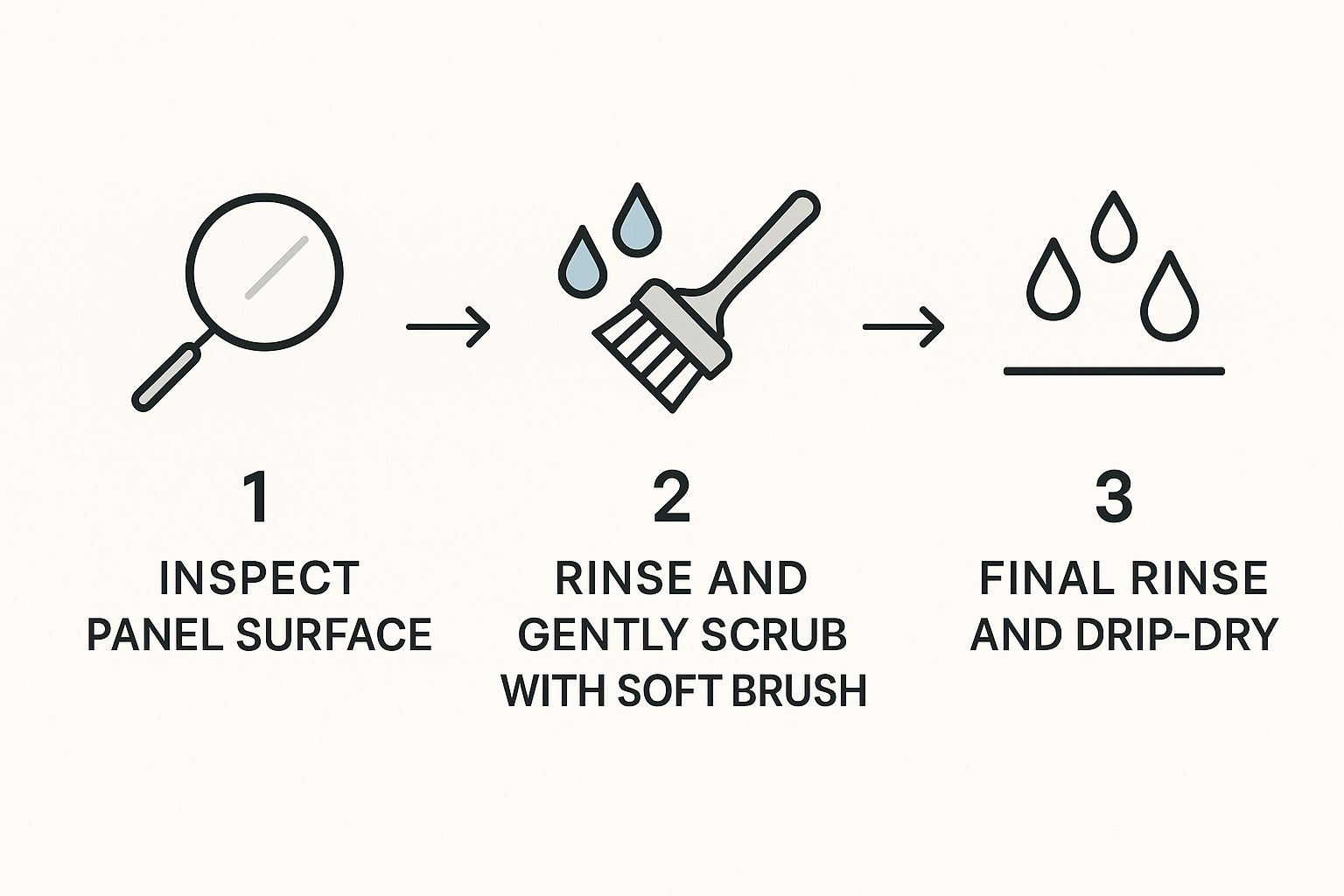
As you can see, it’s a simple three-part process that focuses on preventing damage while getting the best results.
Another all-too-common error is using the wrong cleaning solutions. Household soaps, window cleaners, and definitely any abrasive detergents are a huge no-no. They can leave a sticky film that actually attracts more dirt, or worse, contain chemicals that degrade the panel’s seals and coatings. Stick with plain, deionized water if you can, or a tiny amount of a special, pH-neutral soap made for solar panels if you’re dealing with stubborn grime.
The goal is to remove grime without introducing new problems. A gentle rinse, a soft brush, and a methodical approach are your best tools for preserving both panel efficiency and your warranty.
After you've scrubbed everything down, give the panels a final, thorough rinse to wash away all the loosened dirt and any soap residue. Then, just let them air dry. If you live in an area with hard water, you might want to use a high-quality, soft rubber squeegee to get the excess water off and prevent mineral spots from forming.
Once you’re sure the panels are completely dry, you can safely power your system back on. For a deeper dive into the process, you can learn more about how to clean solar panels in our complete guide. Following these steps will get your system back to peak performance, ready to soak up every ray of sun.
Creating a Smart Maintenance Schedule
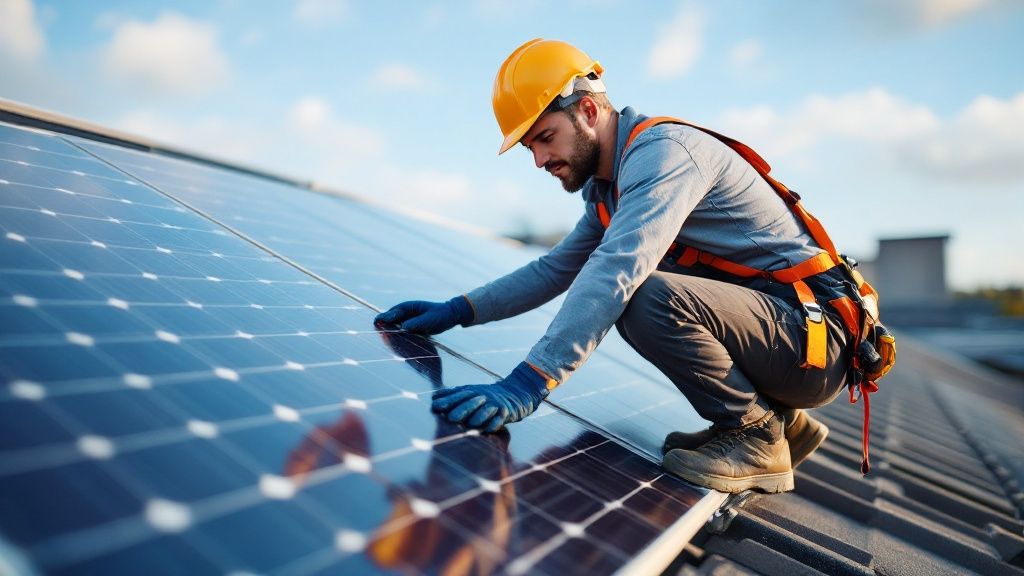
When it comes to taking care of your solar panels, consistency is everything. A single, intense cleaning once in a blue moon just won't cut it. The truth is, there's no one-size-fits-all schedule because every home's environment is so different. Building a smart maintenance routine is all about tailoring it to your specific local conditions.
The big question everyone asks is, "How often should I really be doing a solar pv panel cleaning?" The answer always comes down to where you live. A house in a dusty, dry climate like Phoenix is going to need a lot more attention than one in a place that gets regular rain to wash away the daily grime.
Assess Your Local Environment
To nail down the right frequency, you've got to play detective and look at your surroundings. Are you near a busy highway that kicks up a constant film of road grime? Do you have big, beautiful trees that shower your roof with pollen in the spring and sticky sap in the summer? These little details will tell you if you need to clean your panels annually, twice a year, or even quarterly.
Here’s a simple framework I use to help homeowners decide:
- Annual Cleaning (1x per year): This is usually enough for most suburban homes in areas with moderate rainfall and not a lot of dust or pollution. In these cases, mother nature often does most of the light work for you.
- Biannual Cleaning (2x per year): You'll want to step it up to twice a year if you deal with heavy pollen seasons, live near new construction, or are in a drier climate with more airborne dust.
- Quarterly Cleaning (4x per year): This is for the tough spots. If you're near agricultural fields, industrial zones, or right on the coast with salty air, you'll need to be much more diligent to keep your panels at peak performance.
This growing awareness of regular upkeep is a big reason the global solar panel cleaning market is booming. It was valued at USD 0.6 billion in 2021 and is expected to climb to USD 1.1 billion by 2031 as more people realize maintenance isn't optional. You can dig into more of the data on this market growth on alliedmarketresearch.com.
Beyond Cleaning: Proactive Visual Inspections
A smart maintenance plan is about more than just washing. Every time you're up there cleaning, it's the perfect opportunity to give your system a quick visual health check. This simple habit can help you spot small issues before they snowball into expensive headaches.
You don't need to be a solar technician to do this. Just take a walk around and keep an eye out for anything that doesn't look right.
Your goal is to catch potential problems early. A five-minute visual inspection can save you from major repair bills and system downtime later on.
During your walk-around, look for these specific red flags:
- Visible Damage: Scan the glass for any cracks, chips, or "hot spots," which look like discolored or burnt areas on the panel.
- Debris Buildup: Peek under the array for any piled-up leaves, twigs, or even animal nests. This stuff can be a fire hazard and block crucial airflow.
- Loose Components: Make sure all the wiring looks secure and isn't dangling. Give a quick check to see that the mounting hardware still seems tight and isn't rattling loose.
By folding these quick checks into your cleaning routine, you’re not just a homeowner—you’re the active caretaker of your solar investment, ensuring it stays healthy for years to come.
Knowing When to Hire a Professional
While tackling your own solar pv panel cleaning can save you a few bucks and feel pretty satisfying, it’s definitely not a job for every homeowner. Sometimes, the smartest and safest move is to pick up the phone and call in a pro. Knowing when to hand over the reins is key—it's the difference between a simple weekend chore and a high-stakes, dangerous gamble.
The biggest reason to hire an expert? Safety. It's that simple. If your panels are perched on a steep roof, a second story, or a slick surface like tile or metal, the risk of a serious fall skyrockets. I've seen enough close calls to know that without proper safety harnesses, ropes, and the experience to use them, a DIY cleaning can end with a trip to the ER. It's just not worth it.
Assessing the Job's Complexity
It’s not just about getting up on the roof, either. The state of your panels makes a huge difference. If they haven't been touched in years, you're not just dealing with a bit of dust. You're likely facing caked-on grime, stubborn lichen, or a Jackson Pollock of bird droppings. Trying to scrub that off yourself without the right tools can easily lead to scratches on the panel's anti-reflective coating, which hurts their performance.
Think about calling in the experts if you find yourself in these situations:
- Tough Access: The panels are on a second-story roof or a pitch steeper than 30 degrees.
- Heavy-Duty Grime: You're looking at thick, hardened gunk that a simple hose-down won't touch.
- No Safety Gear: You don't have a solid extension ladder, proper non-slip shoes, or any fall protection equipment.
- Physical Concerns: The work demands a level of strength, balance, or mobility you're not comfortable with.
Professional cleaners don't just show up with a bucket and a squeegee. They bring specialized gear, like deionized water systems that leave a perfectly spot-free finish, which is crucial for maximizing your panels' output. More importantly, any reputable company will carry liability insurance. That means if anything goes wrong and a panel gets damaged, you're covered. That peace of mind alone is often worth the price, and you can get a better idea of what to expect by checking out our guide on solar panel cleaning service cost.
A pro tip when you're vetting a service: always ask if they are licensed, bonded, and insured. It's also smart to ask what cleaning methods they use to make sure they're in line with your panel manufacturer's warranty.
The entire solar maintenance field is getting more sophisticated, too. We're seeing more automated and robotic cleaning systems pop up, which just shows how much the industry is growing. The global market was valued at USD 0.98 billion in 2024 and is expected to nearly double by 2034. This trend highlights just how important professional upkeep has become. You can dive deeper into this growing market on marketdataforecast.com.
Your Top Solar Panel Cleaning Questions Answered
Even after you've got a game plan, a few specific questions always seem to come up when it's time to clean your solar panels. Getting these details right is key to protecting your investment and making sure your system is cranking out every possible watt. Let's dig into the common things homeowners ask.
Is It Okay to Just Use Tap Water?
You can, but I usually advise against it, especially if you live in an area with hard water. The problem with tap water is that it’s often loaded with minerals like calcium and magnesium.
When that water evaporates, it leaves behind a chalky, white residue. You've essentially just traded a layer of dirt for a layer of mineral spots, which will block sunlight and hurt your production.
For a perfect, streak-free shine that gets you back to peak efficiency, deionized or filtered water is what the pros use. If you absolutely have to use tap water, the trick is to immediately squeegee the panels completely dry. Don't let them air dry, or you’ll see those mineral spots form.
The whole point of cleaning solar panels is to leave behind a perfectly clear surface. Using hard water without thoroughly drying the panel just swaps one problem for another.
Won't Rain Just Clean Them for Me?
This is probably the biggest myth in solar maintenance. While a good rainstorm will definitely rinse off some of the loose dust, it’s no replacement for a real cleaning.
Think about your car's windshield. Rain might wash away some dust, but it does absolutely nothing for stuck-on grime, bird droppings, or that oily film you get from road traffic. Your solar panels are no different.
In fact, rain can sometimes make things worse. Raindrops pick up dust particles as they fall, and when they evaporate, they can leave a streaky, muddy film behind. The only way to get rid of the gunk that’s really bonded to the glass is with a proper scrub.
What's a Safe Soap to Use on Solar Panels?
When plain water isn’t getting the job done, it's really tempting to grab the dish soap from under the sink. Don't do it. This is a huge mistake. Never use abrasive cleaners, standard dish soap, or any other harsh household detergent on your panels.
Why? Two big reasons:
- They leave a film. Most soaps leave behind a sticky residue that becomes a magnet for more dust and pollen, meaning your panels get dirty again faster.
- They can cause damage. The harsh chemicals can actually eat away at the panel’s anti-reflective coating over time. That damage is permanent and will reduce the panel's efficiency for good.
If you really need some extra cleaning power, look for a pH-neutral, biodegradable soap made specifically for cleaning solar panels. Use only a tiny amount and, most importantly, rinse the panel thoroughly to make sure you get every last bit of soap off the surface.
At Sparkle Tech Window Washing, we bring the right gear and purified water to the job, ensuring your panels are cleaned safely for maximum power output. Learn more about our expert services and get a free quote today.