


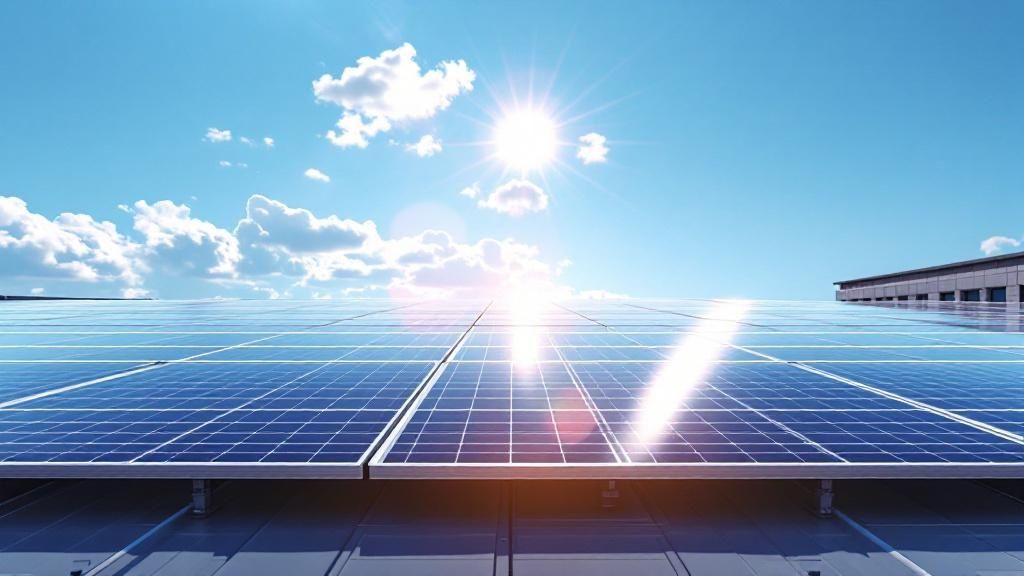
The right tools for cleaning your solar panels can range from a simple manual brush for a few panels on your roof to a fully automated robotic system for a massive solar farm. The best choice really boils down to the size of your setup, how easy it is to reach, and your budget. But no matter the equipment, the goal is always the same: keep those panels sparkling clean to maximize your energy output.
Why Your Solar Panels Need the Right Cleaning Tools
Think of your solar panels like the engine in your car. To run at its best, an engine needs a clean air filter. In the same way, your panels need a clear, unobstructed view of the sun. Even a thin layer of dust, pollen, or everyday grime can act like a shade cloth, cutting down their power output and chipping away at your return on investment.
This isn't just a small annoyance; it's a real financial hit. A dirty solar panel is like trying to look through a foggy window. You can still see, but everything is dim and less clear. Over time, that adds up to a significant loss of efficiency, meaning you generate less power, save less on your utility bills, and ultimately don't get the full value you paid for.
The Financial Stakes of Clean Panels
Most people are surprised by just how much a little dirt can impact performance. Things like dust, bird droppings, and pollen don't just look bad; they can create "hot spots" where a small section of a panel overheats, which can lead to permanent damage over time.
More importantly, studies have shown this common debris can seriously reduce a panel's efficiency. In areas with a lot of dust, that build-up can slash power generation by as much as 50%. This makes regular cleaning an absolute must for keeping your system running at peak performance.
That's why picking the best solar panel cleaning equipment is such a critical decision. It’s not about keeping up appearances—it’s about protecting a major asset and making sure it works as hard as it should for its entire lifespan.
"A clean solar panel is a productive solar panel. Neglecting this simple maintenance is like leaving money on the table every single sunny day."
An Overview of Cleaning Equipment Categories
The good news is there's a cleaning solution for every kind of solar array, from a handful of panels on a house to a sprawling solar farm. The equipment breaks down into a few main categories, each designed to get the job done right. Figuring out which one fits your needs is the first step.
For a detailed walkthrough of the entire cleaning process, you can check out our comprehensive guide on how to clean solar panels.
Here's a quick look at the main types of equipment we'll cover in this guide:
-
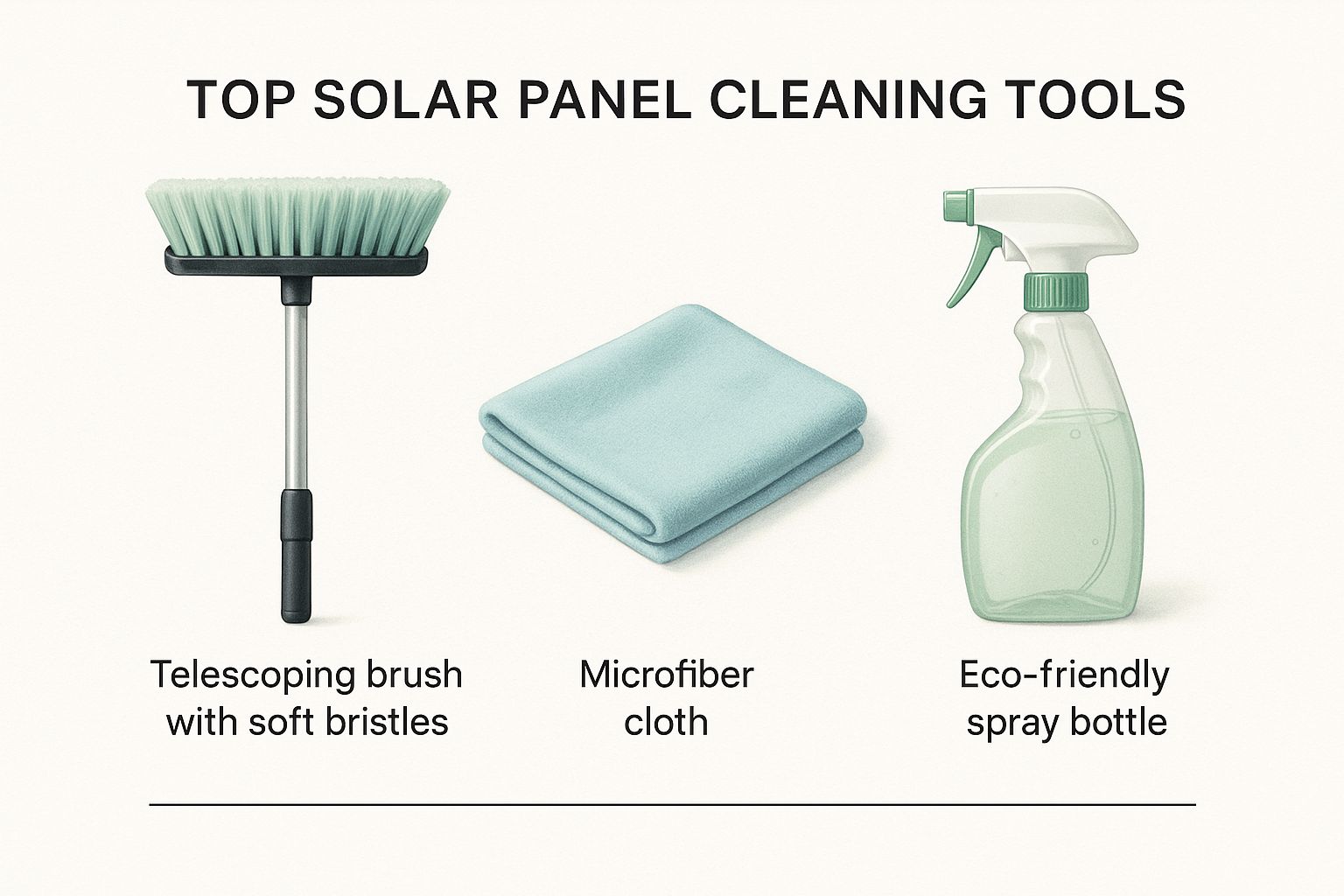
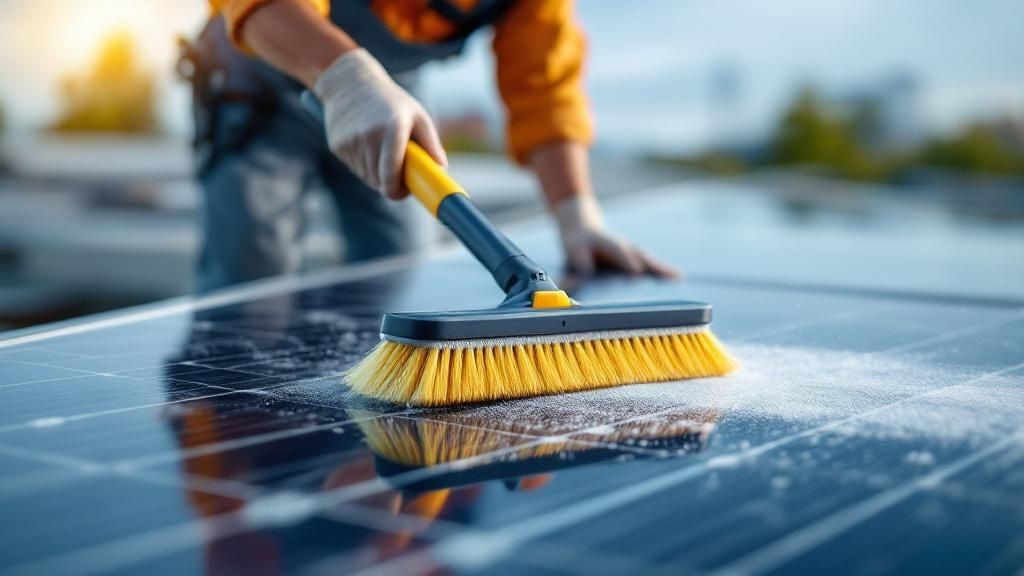
Manual Cleaning Tools: These are the basics, like soft-bristle brushes, squeegees, and long telescopic poles. For most homeowners, this is the most affordable and practical option for smaller, easy-to-reach setups.
-
Water-Fed Pole Systems: This is a step up from the basic manual tools. These systems use a pole and brush but add a continuous flow of purified water. This is a game-changer because it cleans thoroughly without leaving behind the mineral spots and streaks that regular tap water can.
-
Automated and Robotic Systems: At the top end, you have the high-tech, 'set it and forget it' solutions. These robots are perfect for large commercial installations where manual cleaning would be impractical. They clean automatically and consistently, cutting down on labor costs and ensuring the job always gets done.
Quick Guide to Solar Panel Cleaning Equipment
To make things even simpler, this table gives you a quick snapshot of the primary equipment types. Use it to instantly see which category is the best fit for your system size, budget, and cleaning needs.
| Equipment Category | Best For | Typical Cost Range | Key Advantage |
|---|---|---|---|
| Manual Cleaning Tools | Small residential systems, DIY homeowners | $50 – $300 | Highly affordable and easy for anyone to use. |
| Water-Fed Pole Systems | Large homes, small commercial, professional cleaners | $300 – $2,000+ | Delivers a spot-free finish by using purified water. |
| Automated & Robotic | Large commercial and utility-scale solar farms | $3,000 – $50,000+ | Maximum efficiency with minimal labor. |
As you can see, there’s a solution for every scale and budget. The key is matching the tool to the task to protect your investment and keep the power flowing.
Mastering the Basics with Manual Cleaning Tools
Sometimes, the simplest approach is the best. For most homeowners and anyone with a smaller solar array, getting your panels back to peak performance doesn't require high-tech robots or expensive systems. The most practical and effective solar panel cleaning equipment often boils down to a few fundamental manual tools.
Going the manual route gives you complete control, letting you see and feel the results firsthand. It's a hands-on method that’s not only incredibly effective when done right but also easy on the wallet, which is why it remains the top choice for residential solar setups.
The Essential Soft-Bristle Brush
If you're building a manual cleaning kit, the first thing you need is a good soft-bristle brush. Think about your solar panels like a high-end camera lens or the screen on a new laptop—you wouldn't dare take steel wool to it. The same logic applies here.
Stiff, abrasive bristles can leave behind microscopic scratches on the panel's delicate anti-reflective coating. You won't see them, but thousands of these tiny scratches can accumulate over time, scattering sunlight instead of letting it pass through to the photovoltaic cells. That's a permanent hit to your panel's efficiency. A soft brush, typically made from nylon, is the perfect tool for the job: tough on grime but gentle on your glass.
Reaching New Heights with Telescopic Poles
Unless your panels are on the ground, a telescopic pole isn't just a good idea; it's a critical piece of safety gear. These poles extend to let you clean every corner of your array from the safety of the ground or a securely placed ladder. This completely eliminates the need for the dangerous practice of walking on your roof or the panels themselves.
When you’re shopping for one, look for a pole that is:
- Lightweight: You’ll be holding it for a while, and a heavy pole gets tough to manage at full extension. Look for materials like aluminum or carbon fiber.
- Rigid: A flimsy pole will bend and flex, making it hard to apply even pressure. You want something sturdy that gives you precise control over the brush.
- Securely Locking: The locking joints between sections need to be rock-solid. The last thing you want is the pole collapsing while you're working.
A quality pole makes all the difference, turning what could be a risky chore into a safe and straightforward task.
"Never underestimate the importance of reach. The right telescopic pole is the difference between a safe, thorough cleaning and a dangerous, incomplete one."
Achieving a Perfect Finish with Squeegees
Once you've scrubbed the dirt loose, the job isn't done. The final step is getting the water off, and for that, a professional-grade squeegee is your best friend. If you just let water air-dry, especially hard tap water, it will leave behind mineral spots and ugly streaks.
Those little spots are more than just an eyesore; they act like tiny shades, blocking sunlight and lowering your energy output. A good squeegee with a soft, pliable rubber blade wipes the surface completely clean, ensuring every drop is gone. This leaves you with a perfectly clear surface ready for maximum sunlight absorption.
The Power of Water-Fed Pole Systems
If you want to upgrade your manual game, a water-fed pole system is the way to go. This clever tool combines the telescopic pole, the soft-bristle brush, and a constant flow of purified water into one efficient package.
The secret sauce here is the purified water. These systems typically run your tap water through a deionization (DI) or reverse osmosis (RO) filter, stripping out all the minerals that cause spotting.
This means you can scrub and rinse in a single motion, and because the water is pure, it dries without leaving a single streak or deposit. No squeegee required. For anyone with a larger residential system, a water-fed pole often hits that sweet spot, balancing professional-grade results with affordability.
The Future of Solar Maintenance: Robotic Cleaners
Welcome to the next evolution in solar panel care. As solar installations get bigger and more critical to our energy supply, the way we maintain them has to keep up. For massive commercial rooftops and sprawling solar farms, manual cleaning isn't just inefficient anymore—it's often impractical and unsafe.
This is where automated and robotic cleaners come into the picture, turning solar maintenance from a tough, labor-intensive job into a streamlined, high-tech operation. Think of these systems as a "Roomba for your solar array," working autonomously to make sure every single panel is performing at its best, day in and day out.
The Rise of Automation in Solar Care
Robotic cleaners are machines built specifically to scrub and rinse solar panels with very little human help. They're a huge leap forward, tackling the biggest headaches of large-scale maintenance: cost, consistency, and safety. By automating the work, site managers can get a level of cleaning precision that's nearly impossible to achieve by hand across thousands of panels.
The market for this tech is growing fast. The global solar panel cleaning equipment market is on track to hit around $142.9 million in 2025. Robotic systems are a huge part of that growth, thanks to the long-term labor savings and better cleaning results they deliver.
Differentiating Robotic Systems
Not all robotic cleaners are built the same. The best equipment in this category is designed for specific types of solar installations. Knowing the two main types helps clarify where they fit best.
-
Track-Mounted Robots: These are the heavy-duty workhorses you’ll find in massive, ground-mounted solar farms. They’re installed on a permanent or semi-permanent track system that runs along the panel rows, allowing them to clean entire sections on a pre-programmed schedule.
-
Portable Robotic Units: More agile and versatile, these robots are perfect for large, flat, or low-slope commercial rooftops. They're light enough for one or two people to move them between rows, but once they're in place, they clean on their own. They strike a great balance between automation and flexibility.
Game-Changing Benefits of Robotic Cleaners
The move toward automation is all about real-world advantages that directly affect a solar facility's bottom line and daily operations. Sure, the upfront investment is higher than buying a few brushes and poles, but the return on that investment shows up in several key ways.
Key Advantages:
- Flawless Consistency: A robot delivers the exact same high-quality clean every time. This gets rid of human error and ensures every panel across the field is producing energy uniformly.
- Major Labor Savings: Over the long run, cutting down on—or even eliminating—the need for a large manual cleaning crew leads to huge savings in operational costs. This can often pay for the robot itself within a few years.
- Enhanced Safety: Robots can work in extreme heat or other conditions that are just too dangerous for people. This keeps your team off of potentially hazardous rooftops and reduces liability.
- Water Efficiency: Many advanced robotic cleaners use very little water or are designed to be completely water-free, relying on special brushes and air blowers instead. This is a game-changer in dry regions where every drop of water counts.
By taking people out of the most repetitive and dangerous parts of solar maintenance, robotic cleaners don't just boost efficiency—they create a much safer work environment for the technicians on site.
Calculating the Return on Investment
For any facility manager, the decision to invest in robotic cleaning ultimately comes down to the numbers. The ROI is figured out by weighing the upfront cost against the long-term savings and revenue gains. As you explore advanced methods, it's worth noting that specialized drones are also becoming a real option for large sites; you can explore the benefits and costs of drone spraying for maintenance to see how that compares.
The main factors in your ROI calculation will be:
- Reduced labor costs over the robot's lifespan.
- Increased energy output from more frequent and consistent cleaning.
- Lower insurance premiums because of reduced worker risk.
- Water savings, especially in areas with high water costs.
For a multi-megawatt solar farm, even a 1-2% bump in annual energy production from consistent robotic cleaning can mean tens of thousands of dollars in extra revenue. That can make the investment a clear financial win.
How to Choose the Right Solar Cleaning Equipment
Walking into the world of solar panel cleaning equipment can feel a bit overwhelming. You've got everything from simple manual brushes to sophisticated water-fed systems and even fully automated robots. So, where do you start?
The secret isn't finding the one "best" tool. It's about building the right cleaning system for your specific setup. You need to match the gear to your solar array's size, where it’s located, what you're willing to spend, and how much time you want to put into the job.
Making the right choice from the get-go means you can keep your panels humming at peak efficiency without accidentally scratching them or taking unnecessary risks. It’s a practical decision that has a direct impact on your energy production and the lifespan of your investment.
Core Features for Manual Cleaning Tools
For most homeowners, manual tools hit the sweet spot between cost and results. But don't just grab any old brush and pole. A few key features are non-negotiable if you want to protect your panels and make the job easier on yourself.
The absolute most important thing to look at is the brush material. You must choose a brush with soft, non-abrasive bristles, which are usually made from nylon or a similar synthetic fiber. Reaching for a stiff-bristled brush is the fastest way to put tiny scratches all over the panel's anti-reflective coating, and that damage is permanent.
Next up is the telescopic pole. A good one needs to be both lightweight and sturdy—aluminum and carbon fiber are the go-to materials. This combination cuts down on arm fatigue and gives you much better control of the brush head, especially when you’re reaching up to a second-story roof.
A lightweight, rigid pole with secure locking mechanisms isn't a luxury—it's an essential component for safe and effective cleaning from the ground, minimizing the need to climb on your roof.
Evaluating Water-Fed Pole Systems
If you have a larger solar array or you’re just after that professional, perfectly streak-free finish, stepping up to a water-fed pole system is a fantastic move. These systems hook up to a water source and run purified water right through the brush, rinsing as you scrub.
The real magic here is the water quality. Your standard tap water is loaded with minerals. When it dries, it leaves behind ugly white spots that can block sunlight just as much as dirt can. A good system uses a deionization (DI) or reverse osmosis (RO) filter to strip out those minerals completely.
When you're shopping for a water-fed system, keep an eye on a few things:
- Water Efficiency: How much water does it use? A more efficient system is better for the environment and your water bill.
- Filter Longevity: Find out how long the DI resin or RO membrane is expected to last. Filters are a recurring cost, so this is key to understanding the system's true long-term expense.
- Hose Length and Quality: Make sure the hose is long enough to reach every panel comfortably. There's nothing more frustrating than a hose that kinks or comes up just a few feet short.
Key Considerations for Robotic Cleaners
For big commercial jobs, robotic cleaners are a total game-changer. Here, the focus shifts from the feel of a tool in your hand to the tech under the hood. The goal is finding a robot that can handle your specific array without babysitting.
First, check the power source. Many modern robots are solar-powered themselves, with a built-in panel and battery. This is a massive advantage because it means no cords to wrangle and the robot can operate completely on its own.
Next, dig into the robot’s navigation intelligence. How does it know where to go? Some use basic sensors to find the edges of the panels, but more advanced models use GPS or pre-programmed maps to clean methodically. You want a system that's smart enough to cover every square inch without getting lost.
Finally, look at the control software. A simple, intuitive interface for setting cleaning schedules, checking on progress, and getting alerts is what turns a cool machine into a truly automated maintenance solution. While robots are a major investment, understanding the solar panel cleaning service cost for manual labor on a huge site can make the ROI of a robot look very attractive, very quickly.
Critical Safety Rules for Cleaning Solar Panels
https://www.youtube.com/embed/Bx-YgqqHs2U
Picking out the right cleaning gear is a great start, but how you use it is what really matters. When it comes to cleaning solar panels, safety isn't just a suggestion—it's the single most important part of the job. You’re working around live electricity, often at height, with equipment that's both delicate and expensive.
A casual attitude can lead to disaster, whether it's a serious personal injury, a fried solar panel, or a voided warranty. Before you even think about getting started, you need to understand the risks and have a solid plan to manage them.
Prioritize Electrical Safety First
Let's be clear: your solar array is a power plant. It's generating electricity as long as there's light, and mixing water with live current is a recipe for a very bad day. This is the biggest risk, and you have to take it seriously.
The absolute first step, before a single drop of water touches a panel, is to completely shut down your system. This usually means flipping both the AC and DC disconnect switches. If you're unsure how to do this, check your system's manual or call your installer. Never just assume it's off—always double-check.
While you're at it, give everything a quick once-over. Do you see any cracked glass, frayed wires, or loose connections? If so, stop what you're doing immediately. Spraying water onto a damaged system is asking for a short circuit or a dangerous electrical shock.
Always treat your solar array as a live electrical system until you have personally confirmed it is fully powered down. This mindset is the foundation of safe solar panel maintenance.
Master Physical and Positional Safety
Working on a roof or a tall ladder brings gravity into the equation, and gravity always wins. A fall is one of the most common and serious injuries in this line of work, but it’s also one of the most preventable.
Make sure your ladder is on solid, level ground. It should extend at least three feet above the roofline to give you something stable to hold onto. When you're climbing up or down, always keep three points of contact—that means two feet and one hand, or two hands and one foot, on the ladder at all times. If you have to get on the roof, fall protection gear like a harness isn't just a good idea, it's essential.
The weather plays a huge role here, too. Never clean panels in windy, rainy, or icy conditions. A strong gust of wind can turn your long cleaning pole into a sail, pulling you right off balance. Learning to spot these kinds of hazards before they become a problem is a professional skill. Understanding proven risk assessment methods can help you plan your work safely and effectively.
Protect the Panels from Damage
While you’re keeping yourself safe, don't forget about protecting your investment. The wrong cleaning methods can cause subtle, permanent damage that slowly chips away at your system's efficiency.
Here are the key things to avoid to keep your panels in top shape:
- Avoid High Pressure: Never, ever use a high-pressure washer on your panels. The force can break the seals around the glass, letting moisture seep in and ruin the panel from the inside out. It's also a surefire way to create tiny scratches on the surface.
- Use Soft Tools Only: Your brush should have soft, non-abrasive bristles made for cleaning glass or solar panels. Anything harsher, like a stiff-bristled scrub brush or an abrasive sponge, will scratch the anti-reflective coating and permanently lower the panel's output. While the tools are different, our guide on removing scratches from windows explains the importance of gentle surface care.
- Shun Harsh Chemicals: Stay away from strong detergents, abrasive cleaners, or chemical solvents. They can eat away at the panel's coating and corrode the aluminum frame. Honestly, all you need is purified water or, for tough spots, a tiny bit of mild, pH-neutral soap.
Your Solar Panel Cleaning Questions, Answered
Even after you've got the right solar panel cleaning equipment, you're bound to have some questions. This is where the rubber meets the roof, so to speak. I've put together answers to the most common things people ask when they start maintaining their own solar array.
Think of this as your go-to guide for those practical, on-the-job questions. Getting these details right isn't just about a clean panel; it's about protecting your investment and making sure you're getting every bit of energy you paid for.
How Often Should I Really Be Cleaning My Panels?
This is the big one, and the honest-to-goodness answer is: it really depends on where you live. There's no one-size-fits-all schedule. Your local environment is the single biggest factor.
For the average suburban home, a good cleaning once or twice a year is plenty to keep your system performing beautifully. But if you live in a more challenging environment, you’ll need to be more proactive.
- Dusty or Agricultural Areas: Living near a desert, a farm, or even a major construction zone means dust, pollen, and dirt are constantly in the air. In these spots, you'll probably want to clean your panels every 3-4 months to stop that grime from choking your power output.
- Areas with Little Rain: A good rainstorm can be a decent rinse for light dust. If you're in a drier climate that doesn't get regular rainfall, you're missing out on that natural cleaning assist, which means you'll have to do it yourself more often.
Can I Just Use My Garden Hose and Tap Water?
It's tempting, I know. But using regular tap water is one of the most common mistakes I see. The problem is that tap water is "hard"—it's full of minerals like calcium and magnesium.
When that water evaporates on the warm glass of your panel, it leaves all those minerals behind. You'll see them as a hazy film or stubborn white spots. This mineral buildup can block sunlight just as effectively as a layer of dirt, and once it's baked on by the sun, it can be a real pain to remove.
There's a reason the pros swear by it: using purified or deionized (DI) water is the only way to guarantee a spotless, streak-free finish. This is exactly why so many of the best solar panel cleaning equipment kits include a water-fed pole with its own filtration system.
What’s the Best Time of Day to Clean Panels?
Timing is everything. You absolutely want to clean your panels when they're cool, which means early in the morning or late in the evening.
If you try to clean them in the middle of a hot, sunny afternoon, you're setting yourself up for failure. The intense heat from the sun will cause your cleaning water to flash-evaporate, leaving behind streaks and mineral deposits before you can even think about rinsing.
Even worse, spraying cold water onto a scorching hot panel can cause something called "thermal shock." This sudden, extreme temperature change can create tiny micro-cracks in the glass, which can damage the panel's integrity and shorten its lifespan over time. It's just not worth the risk.
Won't the Rain Just Clean Them for Me?
Rain helps, but it’s no substitute for a real cleaning. A passing shower might wash away some of the loose surface dust, but it’s not going to do a thing against the tough stuff—like bird droppings, sticky tree sap, or greasy pollution buildup.
It's just like your car. A rainstorm might make it look a bit cleaner from a distance, but it won't touch the road grime that's really stuck on there. To get maximum sunlight hitting those solar cells, you need the gentle agitation of a soft brush and the purity of DI water. Relying on rain alone almost guarantees you're leaving energy on the table.
When Should I Skip the DIY and Call a Pro?
Doing it yourself can be a great way to save a little money, but there are definitely times when it’s smarter—and safer—to call in a professional. Your safety and the health of your solar system should always be the top priority.
You should seriously consider hiring a professional service if:
- Your Roof is Steep or High: If you've got a sharply pitched roof or a second-story array, the risk of a serious fall goes way up. The pros have the safety harnesses, ladders, and training to work in those conditions safely.
- You Spot Any Damage: During your inspection, if you see any cracked glass, frayed wires, or loose-looking connections, stop right there. Don't touch anything. A professional can assess the damage and clean the system without making the problem worse.
- The Grime is Seriously Baked On: If your panels are caked with dirt that a gentle scrub won't touch, a professional crew will have stronger, specialized equipment to get the job done right without scratching the glass.
The demand for these skills is on the rise, mirroring the growth of solar energy itself. The solar panel cleaning market, which covers both services and equipment, was valued at roughly USD 2.155 billion in 2024 and is expected to climb to USD 5.44 billion by 2034. You can discover more insights about this market growth on expertmarketresearch.com.
Ready to ensure your solar panels are operating at peak performance? Leave the ladders and brushes to the experts. Sparkle Tech Window Washing offers professional, safe, and effective solar panel cleaning services across Arizona. We have the right equipment and expertise to protect your investment and maximize your energy savings. Get your free estimate today!