


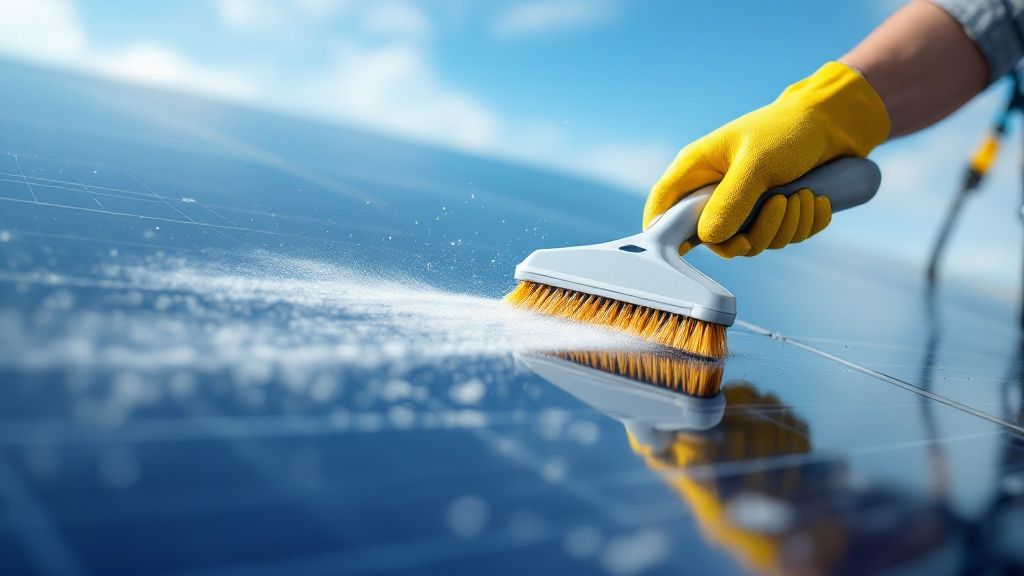
That fine layer of dust coating your solar panels? It might not look like much, but it's quietly siphoning money from your pocket every single day. Getting your solar panel cleaning done regularly isn't just about keeping up appearances. It’s a vital maintenance step that can boost your system's efficiency by anywhere from 5% to over 30%, depending on where you live.
This simple act protects your investment and makes sure you're capturing every last kilowatt-hour of clean energy you paid for.
Why Solar Panel Cleaning Is a Smart Investment
Imagine trying to see through a pair of dusty sunglasses. Everything looks dimmer, right? That's exactly what happens to your solar panels. Less light gets through, and performance tanks.
This buildup of dust, pollen, bird droppings, and city grime has a name in the industry: "soiling." It creeps up slowly, but its financial impact is immediate, silently chipping away at your energy savings. Ignoring it is literally leaving money on the table. Your solar array was a significant investment, meant to slash or even wipe out your electricity bills. When panels are dirty, they can't absorb a full dose of sunlight, which means they produce less power.
What happens next? You end up drawing more electricity from the grid, and your utility bill starts climbing right back up.
Maximizing Energy Output and Savings
The number one reason to clean your panels is to get the maximum power out of them. A clean panel is a happy panel, operating at peak efficiency and soaking up as much solar energy as it possibly can. This has a direct effect on your return on investment (ROI).
Here’s how:
- More Kilowatt-Hours: Even a small bump in efficiency from a good cleaning adds up to a surprising amount of extra energy over the course of a year.
- Lower Energy Bills: The more power you generate yourself, the less you need from the utility company. It's that simple.
- Faster Payback: The quicker your system pays for itself in savings, the sooner you start seeing pure profit from your solar investment.
One of the most common complaints I hear from homeowners is that they aren't seeing the savings they were promised. More often than not, dirty panels are the culprit. Regular cleaning is the single best thing you can do to make sure your system delivers on its financial potential.
Protecting Your Long-Term Investment
Beyond the immediate boost in production, routine cleaning is a form of preventative care. It’s a chance to give your system a quick visual inspection and spot small issues before they snowball into costly repairs.
For example, getting rid of corrosive bird droppings can prevent permanent etching on the panel's anti-reflective coating. In areas with unique weather challenges, proper seasonal building maintenance, including panel cleaning, is essential to protect your assets.
By keeping your panels in top shape, you’re not just getting more power today—you’re safeguarding their longevity so they can keep working for you for their full 25-year lifespan, and often even longer.
How Grime Quietly Robs Your Solar Panels of Power
Your solar panels are built to soak up the sun, but even a thin, almost invisible layer of grime can throw a surprising amount of shade on their performance. We call this soiling loss in the industry, but it’s a pretty simple concept: when dirt, dust, pollen, and city pollution build up, less sunlight can actually get to the energy-producing cells.
Think of it like trying to get a tan through a dirty window. On a bright day, a clean pane of glass lets all that great sunlight pour in. But once it gets hazy with dirt, the light becomes weak and diffused. Your solar panels feel the exact same way. Any obstruction, no matter how small it seems, gets in the way of them doing their job at full capacity.
The Little Things Add Up
Every single speck of dust on your panel’s surface casts a microscopic shadow. One speck is nothing, of course. But millions of them? They team up to form a translucent blanket that scatters sunlight and reflects it away from the photovoltaic cells that are hungry for it.
This isn't just a theory; it leads to a real, measurable drop in how much power your system generates. We're not just talking about obvious culprits like bird droppings or a thick layer of leaves. It’s the slow, sneaky buildup of fine dust and grime that chips away at your system's efficiency day after day.
This picture really brings it home. It shows a panel mid-clean, and the contrast between the grimy side and the clean side is night and day.
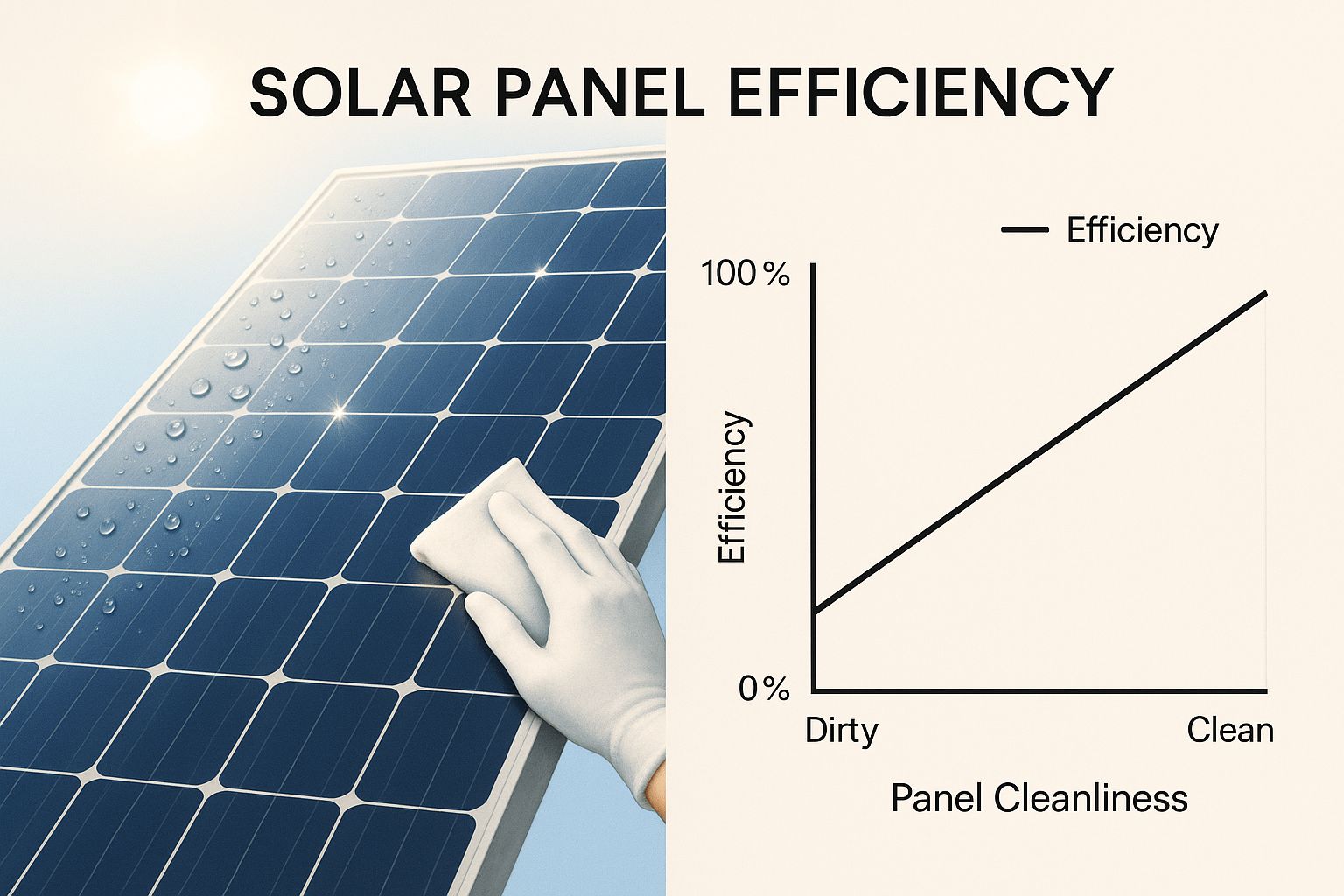
You can see how just removing that thin film of dirt instantly lets more light through, which is the whole key to getting the most out of your investment.
What Dirty Panels Actually Cost You
This drop in efficiency isn't just some number on a spreadsheet—it hits you directly in the wallet. Every kilowatt-hour your panels don't produce is another one you'll likely have to buy from your utility company. It slowly eats away at the very savings your solar system was designed to give you.
To put this into perspective, let's look at how different levels of soiling can affect a typical home solar system's output and your annual savings.
Estimated Annual Energy Loss from Soiling
This table illustrates the potential percentage of energy production loss and its estimated financial impact based on different levels of soiling on a typical residential solar system.
| Soiling Level | Potential Efficiency Loss | Estimated Annual Financial Impact (5kW System) |
|---|---|---|
| Light | 2-5% | $30 – $75 |
| Moderate | 6-15% | $90 – $225 |
| Heavy | 16-25% | $240 – $375 |
| Severe | 25%+ | $375+ |
As you can see, what starts as a minor issue can quickly escalate into hundreds of dollars lost each year. This is why paying attention to panel cleanliness is so crucial for your return on investment.
It's All About Your Environment
Where you live plays a huge role in how dirty your panels get and how often they'll need a good cleaning. A "one-size-fits-all" cleaning schedule just doesn't cut it.
Studies have confirmed that uncleaned solar panels can lose anywhere from 5% to over 30% of their efficiency, all depending on local conditions. From desert dust to coastal salt, the environment is constantly working against your system's peak performance. This is why proactive maintenance is becoming less of a suggestion and more of a necessity for solar owners who want to protect their investment. You can learn more about the growing importance of solar panel maintenance services.
Here’s a quick breakdown of what your panels might be up against:
- Desert and Dry Climates: Fine dust and sand are the big offenders here. They quickly coat panels and can be abrasive, causing significant power loss, especially if you don't get much rain.
- Farming and Rural Areas: Pollen in the spring and dust kicked up from fields can create a thick, sticky film that a simple rain shower won't wash away.
- Cities and Industrial Zones: Soot and pollution from traffic and factories form a greasy grime that’s notoriously tough to clean. It often needs more than just water to be removed effectively.
- Coastal Regions: Salt spray is the enemy. It dries and crystallizes on your panels, creating an opaque, corrosive layer that severely blocks sunlight.
Understanding these local factors is the first step in creating a smart cleaning strategy that keeps your solar array working as hard as you do.
A Practical Guide to DIY Solar Panel Cleaning
Rolling up your sleeves and cleaning your own solar panels can feel pretty rewarding, especially when you see that energy production tick back up. For many homeowners, it's a totally manageable job. But let's be clear: safety is everything.
This guide will walk you through the process, but if your roof is steep, you live in a multi-story home, or you're just not comfortable with heights, making the call to a professional is always the right move.
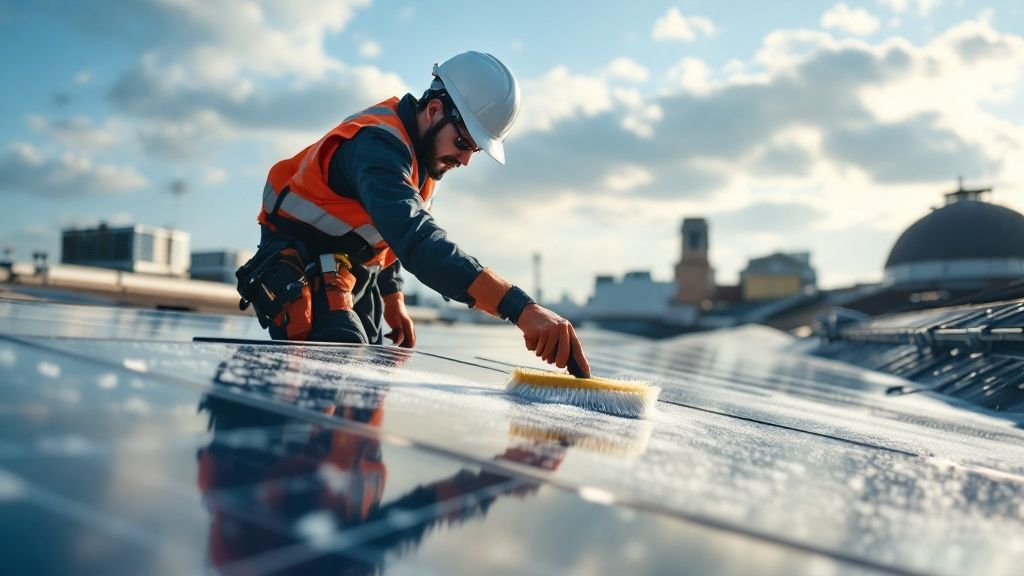
Before a single drop of water hits your panels, there’s one step you absolutely cannot skip. You must shut down your entire solar system. Follow the manufacturer's shutdown procedure to the letter—water and live electricity are a dangerously bad mix.
It's also smart to pick your moment. Plan to clean on a cool, overcast day or first thing in the morning. Hitting a blazing hot panel with cold water can cause thermal shock, which in rare cases can create tiny micro-cracks in the glass.
Assembling the Right Tools for the Job
Having the right gear makes all the difference. It not only makes the job easier and safer but also protects your investment. Using the wrong tool can cause permanent damage and might even void your warranty.
Here's what you'll want to have on hand:
- Soft-Bristle Brush: Think of this as the essential tool. A brush with soft, non-abrasive bristles is perfect for lifting grime without leaving a single scratch. Most good ones are designed to screw onto an extension pole.
- High-Quality Squeegee: A good squeegee is your best friend for a streak-free finish. It pulls the water off cleanly, preventing those annoying mineral spots from hard water.
- A Standard Garden Hose: Forget anything fancy. Your regular garden hose is all you need for rinsing. Never use a pressure washer; the intense spray can damage the seals around the panels and force water where it doesn't belong.
- A Bucket: Just a simple bucket with clean water will do. If you have soft water, even better. A tiny bit of mild, biodegradable soap can help with stubborn spots, but honestly, plain water is usually enough.
A common mistake is to treat solar panels like greasy kitchen windows. Harsh chemicals, abrasive pads, and even some dish soaps can leave a film that actually attracts more dirt or, worse, damages the anti-reflective coating on the glass. Keep it simple: water, a soft brush, and a squeegee.
What to Strictly Avoid
Knowing what not to use is just as important as knowing what to use. Steer clear of these items, as they can cause serious harm to your solar array:
- Pressure Washers: The force is just too much for the panels to handle.
- Abrasive Cleaners or Sponges: These will absolutely create micro-scratches that scatter sunlight and lower your system's efficiency over time.
- Harsh Chemicals: Stay away from solvents, detergents, and any chemical cleaner not specifically approved for solar panels. They can eat away at coatings and seals.
- Hard Water: If you know your home has hard water, be careful. The limescale deposits left behind can be just as bad as the dirt you're washing off. A simple water-softening hose attachment is a great investment if this is a concern.
If you want to get a more detailed look at the tools of the trade, this is a great breakdown of the best solar panel cleaning equipment to make sure you're fully prepared.
The Step-by-Step Cleaning Process
Okay, safety checks are done and your tools are ready. It's time to get those panels sparkling. Just follow these steps for a safe wash that will get your system back to peak performance.
- System Shutdown: First things first, double-check that your solar system is completely powered down according to the manufacturer's guide.
- Initial Rinse: Grab your garden hose and give the panels a gentle rinse from top to bottom. This knocks off the loose dust and debris, which makes scrubbing easier and prevents you from grinding grit into the glass.
- Gentle Scrub: Dip your soft brush into the bucket of clean water. Start at the top and work your way down, lightly scrubbing the surface. You're just trying to loosen stubborn stuff like bird droppings or caked-on pollen—no need for elbow grease.
- Final Rinse: Once everything is scrubbed, give the panels another thorough rinse with the hose. You want to make sure every bit of loosened dirt and any soap residue is washed completely away.
- Squeegee Dry: This is the key to a perfect, spot-free finish. Right after rinsing, pull the squeegee from top to bottom, slightly overlapping each pass to prevent streaks.
- Final Inspection: Take a step back and look things over from the ground once the panels are dry. It's an easy way to spot any missed patches.
- Power Up: Only when you're certain the panels and connections are completely dry should you power the system back on.
That’s it! This straightforward, methodical approach will keep your solar investment working hard for you for years to come.
When to Hire a Professional Cleaning Service
While tackling solar panel cleaning yourself can be a tempting way to save a few bucks, it’s not always the best call. Knowing when to put down the hose and pick up the phone is a key part of smart solar panel ownership. Sometimes, calling in a pro is about more than just convenience—it’s about safety, efficiency, and getting a truly deep clean.
The decision can be pretty straightforward, often boiling down to the layout of your home. If you’re not a fan of heights or your roof is anything but a flat, simple surface, hiring a professional is a no-brainer for safety alone.
Key Indicators to Call a Professional
Think of your roof's design as the biggest deciding factor. A gentle, single-story slope is one thing. But many homes have roofs that pose serious risks, and that's where trained professionals with the right gear are essential.
Here are some clear signs that it’s time to let the experts handle it:
- Steep Roof Pitch: Any roof that feels tricky or unsafe to walk on is a job for pros. They come equipped with professional-grade safety equipment like harnesses and ropes.
- Multi-Story Homes: Working on a second or third-story roof multiplies the risk of a fall. Professionals have the specialized ladders and fall protection needed to work at that height safely.
- Difficult Panel Accessibility: Are your panels tucked away on a tricky part of the roof, like over a carport or near a steep edge? It’s best to leave that to someone with experience.
- Lack of Safety Gear: If you don't own a proper safety harness, non-slip footwear, and a sturdy, well-maintained ladder, the risk of a serious accident is just too high.
A professional service isn't just about paying for a cleaning; you're investing in peace of mind. They arrive with established safety protocols, full insurance coverage, and the expertise to get the job done right without risking injury or property damage.
The Professional Advantage: Equipment and Expertise
Beyond just staying safe, professional cleaners bring a level of quality and efficiency that’s tough to replicate with a garden hose and a squeegee. They use specialized tools built for one purpose: delivering a perfect, streak-free clean that gets your panels back to peak performance.
A key tool in their arsenal is the water-fed pole. This clever piece of equipment lets them clean panels on high or steep roofs safely from a ladder or even the ground. These poles pump purified water through a soft-bristle brush, giving the panels a thorough but gentle scrub without anyone needing to step on them.
Even more important is the type of water they use. Professionals almost always use deionized or reverse osmosis (RO) water. Your tap water is full of minerals that leave behind a chalky, light-blocking film when they dry. Purified water, on the other hand, evaporates completely clean. That means no spots, no streaks, and absolutely nothing to get in the way of the sunlight. A pro cleaning ensures you aren't just swapping dirt for mineral residue.
Insurance and Liability: A Crucial Consideration
One of the biggest, and often overlooked, benefits of hiring a reputable company is protection. A professional service carries comprehensive liability insurance and workers' compensation. This means if an accident happens on your property—whether it’s an injury to a technician or damage to your roof or panels—you are not held financially responsible.
When you're weighing the DIY route versus hiring out, it's important to see the full picture. Looking into the details of a professional solar panel cleaning service cost often reveals that the price reflects the safety, specialized equipment, and insurance that protects you and your home. For many homeowners, that assurance alone makes hiring a professional the smarter long-term choice.
Exploring the Future of Solar Panel Cleaning
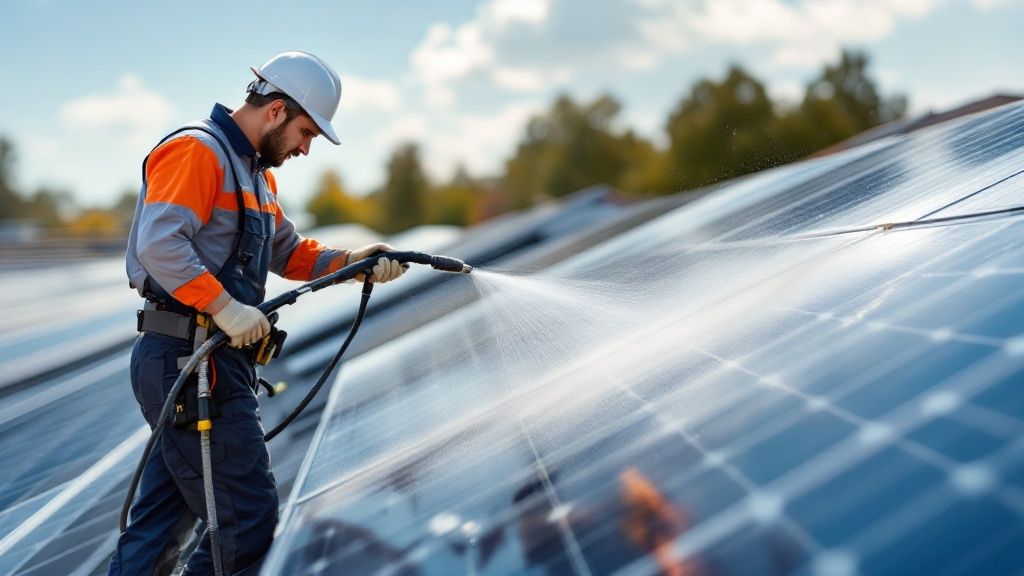
While a good old-fashioned squeegee and brush get the job done today, the world of solar maintenance is heading for a serious tech upgrade. The future of keeping panels clean is less about elbow grease and more about smart, automated systems that work with little to no human help. This shift is being built on robotics, artificial intelligence (AI), and some seriously clever data analysis.
Imagine a system that figures out your panels need a wash before you even notice a dip in power. That's the idea behind predictive maintenance. AI and machine learning are starting to reshape the industry by constantly crunching data—local weather patterns, air pollution levels, and real-time energy output.
This lets the system create an intelligent cleaning schedule, moving us from a reactive "clean it when it's dirty" approach to a proactive one. Cleaning happens at the perfect moment—not too soon, which wastes time and money, and definitely not too late, which costs you in lost energy. It’s simply a smarter way to protect your solar investment.
The Rise of Autonomous Cleaning Robots
For massive, utility-scale solar farms, this future is already unfolding. It’s becoming more common to see autonomous robots gliding across endless rows of panels, often working at night to avoid casting shadows when the sun is out. These machines bring a level of precision and consistency that a human crew just can't replicate over thousands of panels.
These robots are designed from the ground up for total efficiency:
- Water Conservation: Many use dry-cleaning methods with gentle, rotating brushes. Others use a tiny amount of highly purified water, dramatically cutting down on water usage—a huge deal in dry climates.
- Reduced Labor: Automating the work slashes labor costs. It also removes the safety risks of having people work in remote, often harsh environments.
- Pinpoint Consistency: A robot performs the exact same high-quality clean every single time. No missed spots, no streaks—just the entire solar array kept at its peak potential.
Right now, this tech is mostly for the big players, but it’s only a matter of time before these ideas find their way to our rooftops.
Drones and Advanced Diagnostics
Another exciting development is the use of drones. When you equip a drone with high-resolution thermal cameras, it can do more than just spot dirt. In a single flyover, it can identify tiny, invisible problems like microcracks or dead cells that could eventually cause a panel to fail.
This turns a simple inspection into a powerful preventative maintenance tool. For a deeper look into this area, check out the latest innovations in drone infrastructure inspections.
As the technology gets better, we might see drones that can clean, too. Think of them as a flying version of a https://sparkletechwindowwashing.com/water-fed-pole-window-cleaning-system/, able to offer a quick, targeted cleaning for panels that are tough to get to.
To get a clearer picture of how these new approaches stack up against traditional methods, let's compare them side-by-side.
Comparison of Cleaning Methods
This table highlights the fundamental shift from manual labor to intelligent, data-driven maintenance. While manual cleaning remains a practical choice for many homeowners, automated and AI-powered solutions show us where the industry is heading, especially for larger-scale operations.
| Feature | Manual Cleaning | Automated Robotic Cleaning | AI-Predicted Cleaning |
|---|---|---|---|
| Labor | High | Low | Very Low (schedules automation) |
| Consistency | Variable | Very High | N/A (triggers cleaning) |
| Water Usage | Moderate to High | Low to Zero | Optimizes water use with scheduling |
| Speed | Slow | Fast | Proactive; reduces downtime |
| Upfront Cost | Low | High | High (software & sensors) |
| Best For | Residential, small commercial | Large solar farms, commercial | Integrated smart energy systems |
Ultimately, these advancements show a move toward a more holistic view of solar energy.
The goal isn't just to clean panels; it's to create an intelligent, self-maintaining energy ecosystem. Technology is closing the loop, using performance data to trigger automated maintenance, ensuring every panel is always operating at its absolute best.
The journey from a simple brush to an AI-guided robot is all about squeezing every last drop of efficiency out of solar power, from the moment a sunbeam hits a panel to the final watt it sends to your home.
Your Top Solar Panel Cleaning Questions, Answered
Once you start thinking about maintaining your solar panels, a few key questions always pop up. It's completely normal to wonder about the specifics. Let's walk through the most common queries we hear from homeowners, so you can feel confident about keeping your system in peak condition.
How Often Should I Clean My Solar Panels?
Honestly, there’s no single, one-size-fits-all answer. The right cleaning schedule really comes down to where you live and what your local environment is like.
- Live in a dusty or high-pollen area? You’ll probably want to clean them every six months to keep energy production from dipping. Think of it as routine maintenance.
- In a cleaner spot with decent rainfall? You can likely get away with a solid cleaning just once a year.
Your best guide is your system's own performance data. If you see a noticeable drop in energy output that isn't just due to a string of cloudy days, it's a pretty clear sign that grime is getting in the way.
Your energy monitoring app is the most valuable tool you have for this. A sudden dip in kilowatt-hour production is the system telling you it needs a wash. That’s your cue to get it done before you lose out on any more savings.
Will Rain Just Clean My Panels for Me?
It’s a nice thought, but unfortunately, rain just doesn’t cut it. While a good storm can wash away some of the loose dust on the surface, it often creates more problems than it solves.
Rainwater isn't pure. It collects dust and pollutants from the air on its way down. When that water evaporates off your panels, it leaves behind a grimy film that continues to block sunlight. Plus, rain does absolutely nothing for tougher messes like baked-on bird droppings or sticky tree sap—that stuff needs a bit of elbow grease to come off.
Can I Just Use My Garden Hose and Tap Water?
Using regular tap water is one of the most common mistakes people make, especially if you live in an area with hard water. It might seem like the easiest option, but the minerals in tap water, like calcium and magnesium, will leave behind a chalky white film as the water dries.
This mineral buildup is essentially limescale, and it creates a new layer that obstructs sunlight, which is the very problem you were trying to solve! Professionals use purified, deionized water for a reason: it dries completely clean, leaving no streaks or spots behind. If you have to use tap water, you absolutely must squeegee every drop off the panel before it has a chance to evaporate.
How Much Does Professional Solar Panel Cleaning Cost?
For a standard home solar array, you can expect a professional cleaning to cost somewhere between $150 and $350.
Of course, the final price depends on a few things:
- The number of panels you have.
- Whether your home is a single-story or multi-story.
- How steep your roof is and how easy it is to access.
- The amount of dirt and grime that's built up.
Most people find that the increase in energy production they see right after a professional cleaning more than pays for the service itself. It’s a small investment that delivers an immediate return.
Ready to see your solar panels perform at their absolute best? The team at Sparkle Tech Window Washing provides expert, safe, and effective solar panel cleaning services across Arizona. We use purified water and professional equipment to ensure a spotless finish that maximizes your energy output. Contact us today for a free estimate and protect your solar investment!