



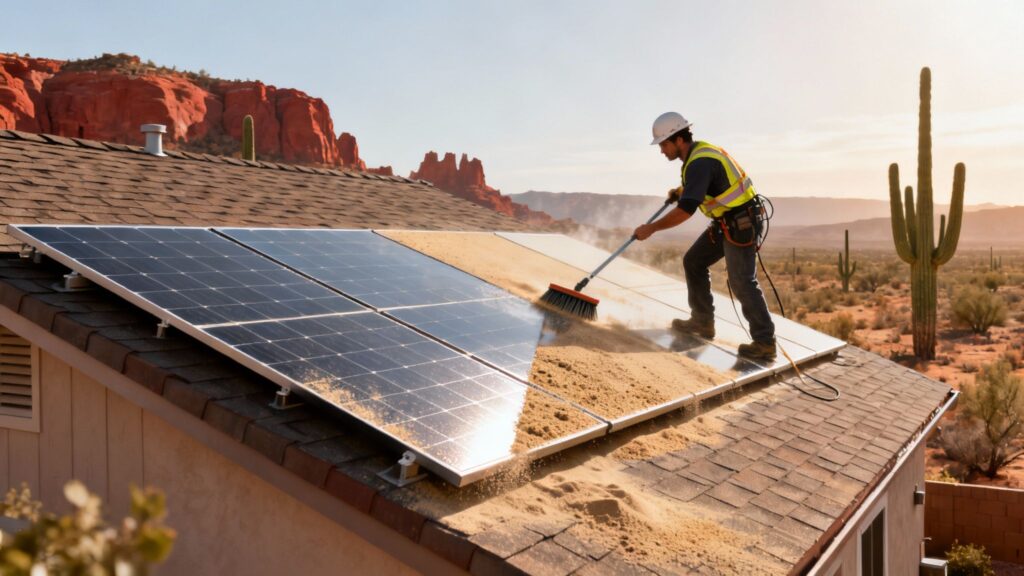
If you want to get the most out of your solar panels, you need to focus on a few key areas: keeping them clean, making sure nothing is casting a shadow on them, allowing for proper airflow, and keeping an eye on their output. Just tackling these simple things can boost your energy production by up to 30%. This is especially true here in dusty climates like Arizona, where grime builds up fast and is the number one enemy of performance.
Your Guide to Peak Solar Panel Performance
Getting maximum power from your solar array isn’t about installing the latest experimental tech; it's all about smart, consistent maintenance. I like to tell my clients to think of their solar panels like a car engine—they need regular tune-ups to run at their best.
Here in Arizona, we're in a constant battle with dust, pollen, and all the debris the monsoon winds kick up. This layer of grime doesn't just look bad; it actively blocks sunlight. Worse, it can trap heat, which makes your panels even less efficient.
Peak performance really comes down to several factors working together. It’s more than just a clean surface. It’s about understanding your home's specific environment. For example, that beautiful tree you planted a decade ago might now be casting a long shadow during prime sun hours, quietly costing you money every single day. Or, a gutter clogged with leaves could be blocking the airflow your panels need to stay cool and efficient.
The bottom line is simple: every single thing that gets between the sun and your photovoltaic cells is costing you money. The goal is to find and eliminate those obstacles to let your system perform the way it was designed to.
This guide goes beyond the usual generic advice. We're going to dive into actionable strategies that work in the real world. We'll look at how to get the most out of your investment with practical steps that deliver real, measurable results.
Here’s what we’ll cover:
- The true impact of soiling and why the right cleaning methods are so important.
- Effective cooling strategies to fight back against performance loss from our extreme desert heat.
- Shade mitigation techniques, from simple landscaping trims to hardware upgrades.
- Proactive system monitoring to spot small issues before they become big, expensive problems.
By taking a holistic approach, you can turn a good solar investment into a great one. For more ideas on boosting performance, you can also look into some general operational efficiency strategies. Having a solid plan is key, and our detailed solar panel maintenance checklist is the perfect place for any homeowner to start.
Why Professional Cleaning Unlocks More Power
It’s easy to glance up at your roof, see a light dusting on your solar panels, and shrug it off. But here in Arizona, that "light dusting" is the biggest enemy of your system's output. What settles on your panels isn't just loose dirt. It's a stubborn, baked-on cocktail of fine desert sand, sticky plant pollen, and corrosive bird droppings.
Think about what your car looks like after a single monsoon haboob. That same thick film of grime is what slowly builds up on your panels, month after month, quietly choking their performance. Each particle blocks a tiny speck of sunlight, and when millions of them get together, the impact is huge. This buildup essentially drapes a hazy filter over your investment, preventing sunlight from ever reaching the photovoltaic cells inside and throttling your energy production.
The True Cost of Neglecting Your Panels
The financial hit from a dirty solar array is much bigger than most homeowners think. It’s not a slow, tiny dip in performance. It’s a significant loss that adds up fast, especially during Arizona's peak sun months when your system should be cranking out the most power.
Regular, professional cleaning is one of the simplest and most effective ways to boost your solar panel efficiency, with potential gains of up to 30% in dusty regions like ours. It's not an exaggeration. Studies consistently show that in arid climates like the Phoenix Valley, uncleaned panels can lose 20-35% of their efficiency in just a few weeks. In fact, research from experts like Renogy highlights that soiling—the technical term for this buildup—can cause annual energy losses exceeding 25% in desert environments without proper maintenance.
This infographic breaks down the three pillars of keeping your solar system in peak condition.
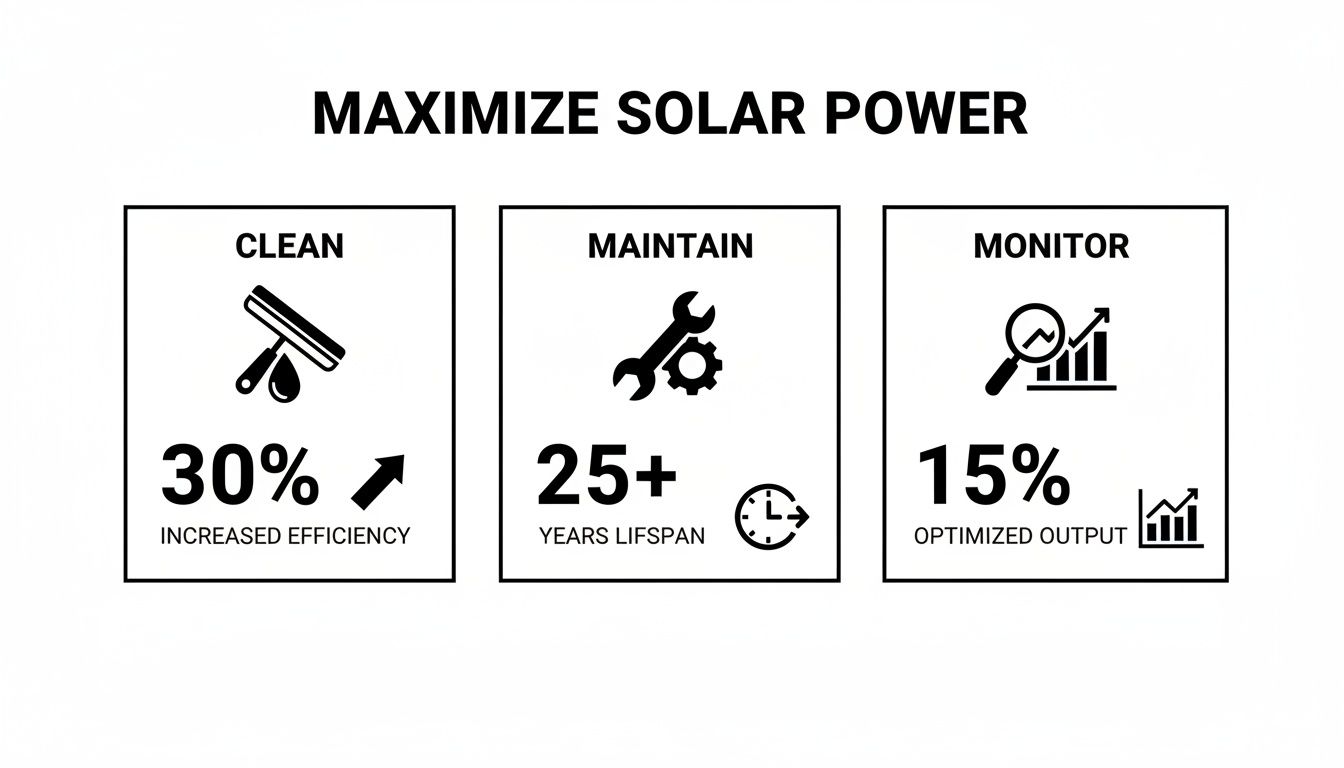
As you can see, cleaning isn't a standalone task. It works hand-in-hand with routine maintenance and active monitoring to ensure your system is firing on all cylinders, all year long.
The table below shows just how much common Arizona debris can drag down your system's performance.
How Arizona Debris Impacts Your Solar Output
| Type of Debris | Accumulation Period | Estimated Efficiency Loss | Potential Gain After Cleaning |
|---|---|---|---|
| Haboob Dust & Sand | 1-2 Months | 15-25% | Up to 25% gain |
| Pollen & Soot | 3-6 Months | 10-20% | Up to 20% gain |
| Bird Droppings | Immediate | 5-10% (localized) | Up to 10% gain |
| Hard Water Stains | 6-12 Months | 5-15% (cumulative) | Up to 15% gain |
These numbers aren't just statistics; they represent real money lost from your pocket every month. A professional cleaning isn't a cost—it's an investment that pays for itself in recovered energy production.
The Hidden Dangers of DIY Cleaning
I get it. Reaching for the garden hose seems like a quick, common-sense solution. But it often creates more problems than it solves, especially here in Arizona where our tap water is notoriously hard and packed with minerals like calcium and magnesium.
When you spray panels with tap water and let it bake dry in the sun, you’re left with a chalky, white film. These mineral spots don't just look awful; they create a new, even tougher layer of grime that attracts more dust and is a nightmare to remove later. Over time, these hard water deposits can permanently etch the surface of the glass.
Beyond the water, the tools you use are critical.
- Abrasive Brushes: Using a stiff-bristled brush or a standard car-washing tool will absolutely create microscopic scratches on the panel's anti-reflective coating. These tiny abrasions scatter sunlight instead of letting it pass through, permanently degrading the panel's efficiency.
- High-Pressure Washers: The intense force from a pressure washer can easily damage the delicate seals around the panel frames. Once compromised, moisture can seep inside, leading to corrosion and potential electrical failure—a very expensive repair that your warranty almost certainly won't cover.
- Harsh Chemicals: Never use household cleaners like soap, Windex, or degreasers. They leave behind a sticky residue that becomes a magnet for more dirt. Worse, some chemicals can react with the panel’s coating and cause irreversible damage.
A professional service isn't just about convenience. It's about using the right tools and techniques to protect your warranty and the long-term health of your solar investment. Think of it as preventative maintenance that saves you a fortune down the road.
The Professional Advantage: Purified Water and Specialized Tools
So, what’s the secret sauce for professional solar panel cleaning? It really comes down to the right equipment and the right technique. At Sparkle Tech, we use a multi-stage water purification system that runs on reverse osmosis and deionization. This process strips out 100% of the dissolved minerals.
This ultra-pure water is a game-changer. It acts like a magnet for dirt, lifting it away from the panel surface without needing any harsh chemicals or aggressive scrubbing. And when it dries? It leaves behind a perfectly clear, spot-free finish. A surface this clean actually stays clean longer because there’s no sticky residue for new dust to latch onto.
We pair this purified water with specialized, soft-bristled brushes designed specifically for solar panels. These tools gently agitate and sweep away grime without putting a single scratch on the delicate anti-reflective coating. This methodical approach ensures every square inch of your panel is restored to its maximum light-absorbing potential. If you want to see the process in more detail, check out our guide on how to clean solar panels the professional way.
Ultimately, investing in a professional cleaning is one of the most direct and impactful ways to improve your solar panel efficiency. It’s not about making them look pretty; it's a critical maintenance task that guarantees your system delivers the energy savings and financial returns you were promised.
Keeping Panels Cool in the Desert Heat
It’s one of the great ironies of solar power, especially here in Arizona. We have more sunshine than we know what to do with, but the intense heat that comes with it is actively working against your panels' performance. Sunlight is the fuel, but extreme temperature is the enemy of efficiency. This effect, known as thermal degradation, causes a noticeable drop in power output right when you need it most—on the hottest, sunniest days of the year.
Think of your solar panels like any other electronic device. Your laptop or smartphone slows down and can even shut off when it gets too hot; solar panels react in a similar way. They’re engineered to work best at around 77°F (25°C). For every degree they climb above that sweet spot, their efficiency starts to dip.
The Science Behind Heat-Related Power Loss
This isn't just a minor issue; in a real-world Arizona scenario, it's a big deal. On a scorching summer afternoon when the air temperature hits 110°F, the surface of your dark shingle roof can easily reach a blistering 160°F or more. That heat transfers directly to your panels, causing their internal temperature to skyrocket and their performance to plummet.
The impact is significant. Good temperature management, including cleaning and proper ventilation, can boost a panel's efficiency by 10-20%. This directly counters the 0.3-0.5% output loss panels experience for every degree Celsius they operate above 25°C. In places like the Phoenix Valley, where summer temperatures regularly top 40°C, panels can lose up to 25% of their potential output on peak days. You can find more insights on how temperature plays a critical role in the evolution of solar panel efficiency on greenworld-energy.com.
This constant heat stress doesn't just hurt your daily energy production. It also accelerates the aging of the panel's internal components, which can shorten their overall lifespan.
How Dirt and Debris Make Things Hotter
This brings us right back to why professional cleaning is so important. That thick, caked-on layer of dust and grime does more than just block sunlight—it acts like an insulating blanket wrapped around your panels. This layer of dirt traps heat and prevents it from dissipating naturally, causing the panels to run even hotter than they would otherwise.
A clean panel is a cooler panel. When you remove that insulating layer of soiling, you allow air to circulate properly and help the panel shed excess heat. This directly boosts its performance during the hottest parts of the day.
The effect is totally measurable. Studies have shown that soiling can actually double thermal losses. In our experience, professionally cleaned panels often run 5-10°C cooler than their dirty neighbors. That temperature difference translates directly into more kilowatt-hours on your statement and more money in your pocket.
Actionable Steps for Better Panel Ventilation
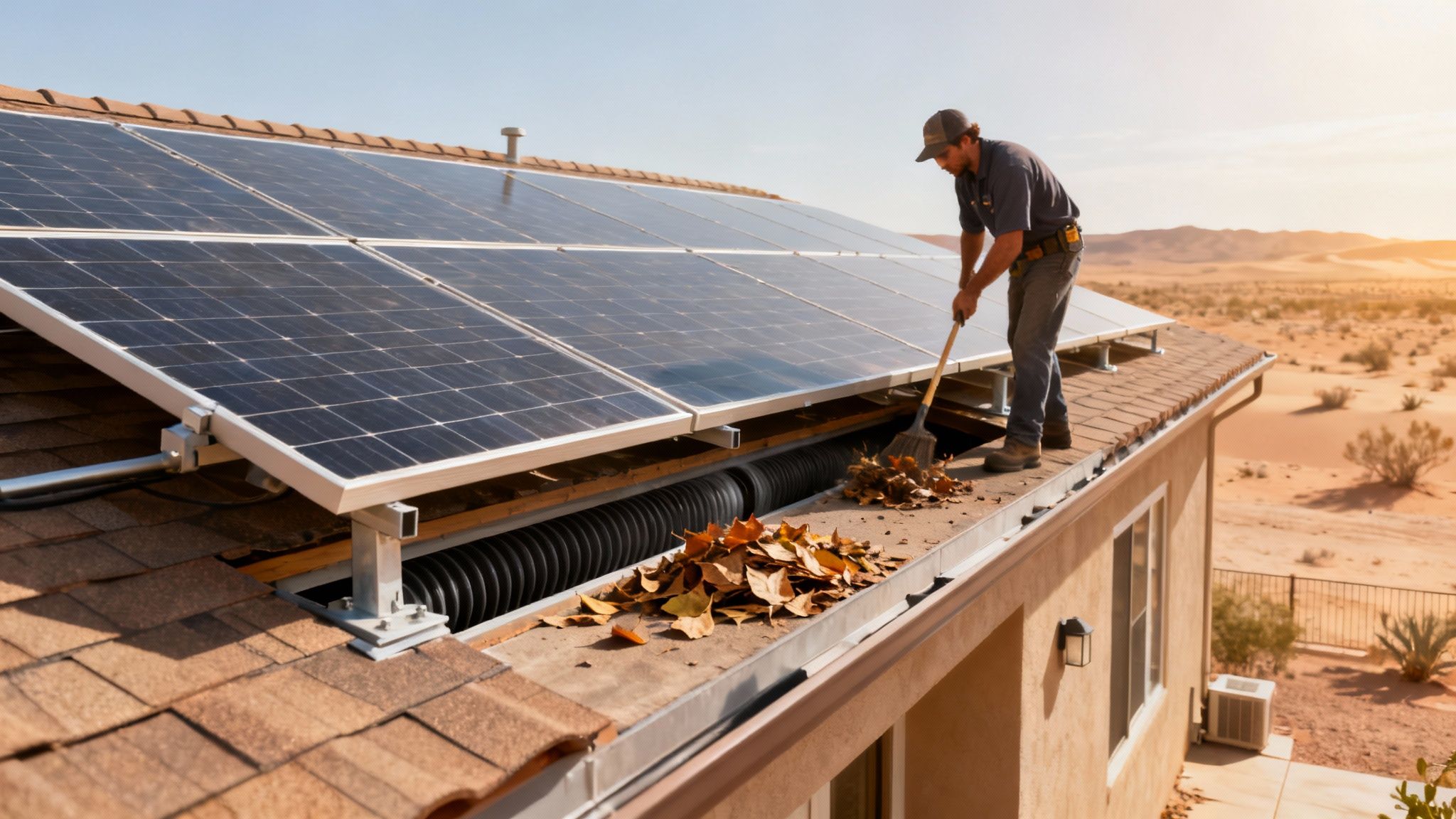
Beyond a good cleaning, making sure your panels have enough room to breathe is one of the best ways to fight heat-related efficiency loss. When panels are installed, they should be mounted with a few inches of clearance between the back of the panel and the roof surface. This gap is there for a reason: it creates a channel for air to flow and carry away all that excess heat.
Here are a few practical things you can do to make sure your system is breathing properly:
- Clear Debris and Blockages: Over time, leaves, twigs, and even the occasional bird's nest can get wedged in the gap beneath your panels. This junk acts like a dam, blocking airflow and trapping hot air. Make it a habit to peek under your array, especially after a big storm or during the fall.
- Maintain Your Gutters: This is an easy one to forget. Clogged gutters can cause water and gunk to back up under the panels, creating a damp, stagnant environment that traps heat and ruins ventilation. Keeping your gutters clean is a simple but critical part of solar maintenance.
- Inspect Your Mounting System: During a routine check, just make sure the mounting hardware itself isn't blocking those airflow channels. A professional installation is designed with ventilation in mind, but it never hurts to confirm that nothing has shifted or been blocked over the years.
By combining a regular professional cleaning schedule with these simple ventilation checks, you create a powerful one-two punch against thermal degradation. You'll maximize your energy output during Arizona's hottest months and help protect the long-term health of your entire solar investment.
How to Deal with Overlooked Shade Problems
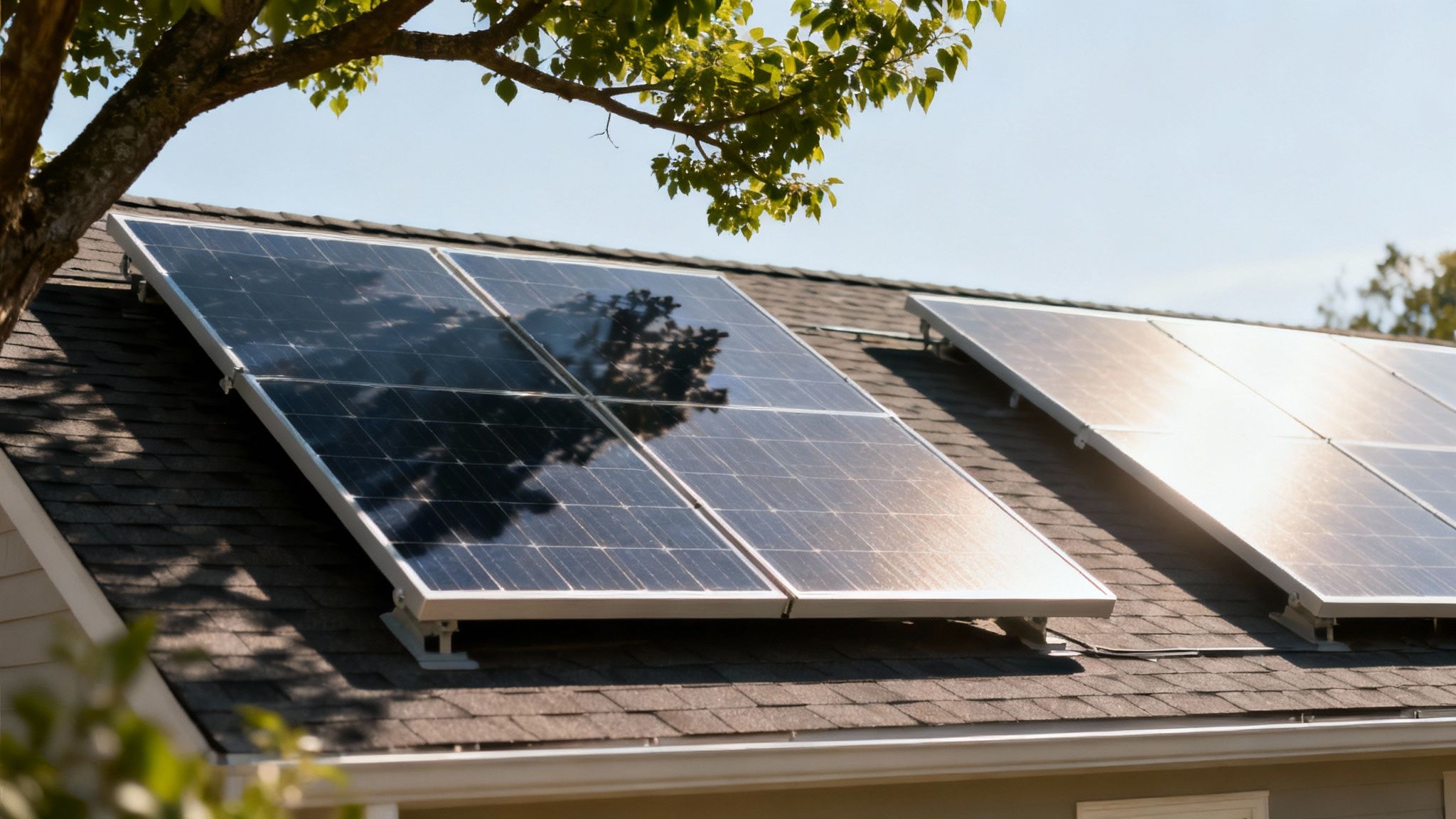
It's incredible how even a small, fleeting shadow can kneecap your solar system's energy production. Most people think about the big, obvious obstacles during installation—like that massive oak tree in the backyard—but shade is often a sneakier, more dynamic problem.
The real culprit is often "shade creep." Maybe it's a sapling you planted five years ago that's just now tall enough to cast a shadow during peak afternoon sun. Or perhaps a neighbor's new two-story addition is blocking that valuable morning light. These new shade patterns didn't exist when your panels were installed, but they're costing you money now.
The issue gets magnified by how most traditional solar systems are wired. In a standard string inverter setup, your panels are linked together in a series, just like old-fashioned Christmas lights. If one panel gets even partially shaded, the output of the entire string can plummet to match that one underperforming panel. A single palm frond's shadow can effectively sideline a whole section of your array.
Identifying and Mitigating Shade Sources
The first step is to become a shade detective. Get out there and watch your roof at different times of the day—morning, noon, and late afternoon. It's also wise to do this seasonally, since a spot that's sunny all day in June might be shaded in December when the sun sits lower in the sky.
Once you’ve identified what’s casting the shadows, you can start looking for practical fixes.
- Strategic Tree Trimming: This is often the easiest win. Carefully pruning branches can reclaim huge amounts of sunlight. You'll want to focus on clearing any limbs that cast shadows between 9 AM and 3 PM, as these are your system's prime money-making hours.
- Relocating Obstructions: Sometimes the problem is an object you can actually move. Can that satellite dish be shifted to another part of the roof? Is it possible to move a vent pipe that’s casting a long, thin shadow across a panel? Every little bit helps.
- Planning for Future Growth: If you’re adding new landscaping, think ahead. Consider the mature height and canopy spread of any trees you plant, and position them where their future growth won't become a problem for your solar array down the line.
These fixes are the low-hanging fruit of shade mitigation and can often bring back a surprising amount of lost power without touching your solar hardware.
Upgrading Your Tech to Combat Shading
For those tricky, unavoidable shade situations, modern technology offers a far more elegant solution. If you have an older system with a string inverter and shade is a constant battle, upgrading your hardware can be a total game-changer.
When a single shaded panel can drag down the performance of an entire group, you're not just losing a little power—you're losing the full potential of your sunniest panels. Modern electronics solve this problem by letting each panel operate independently.
The two key technologies here are microinverters and power optimizers.
-
Microinverters: Think of these as tiny, individual inverters installed on the back of each solar panel. They convert the DC power to usable AC power right at the source, meaning every panel is its own independent power plant. If one panel gets shaded, it has zero impact on the others. They just keep chugging along at full capacity.
-
Power Optimizers: Optimizers also attach to each panel, but they work a bit differently. They condition the DC electricity from each panel to maximize its output before sending it to a single, central inverter. If a panel's production drops due to shade, the optimizer ensures it doesn't drag the rest of the string down with it.
Both of these options completely eliminate that "Christmas light effect," making them perfect for roofs with complex shapes or intermittent shading. While they're a bigger investment than a tree trimmer, they offer a permanent fix that squeezes every last watt out of your system, every single day.
Using Your Monitoring System Like a Pro
Think of your solar monitoring app as more than just a fun gadget to check your daily power numbers. It's really the command center for your entire system—a health dashboard that lets you spot subtle issues long before they turn into major headaches. Honestly, learning to read between the lines of your production data is one of the most important skills you can develop as a solar owner.
Don't just glance at the total kilowatt-hours at the end of the day. Start using your monitoring system as a proper diagnostic tool. On a clear, sunny day, a healthy system draws a smooth, predictable curve—ramping up in the morning, hitting its peak around noon, and then gently tapering off. If you see any sudden, jagged dips or flatlines during prime sun hours, that’s your first red flag.
What to Look for in Your Data
The trick is to look past the big daily number and start noticing trends and oddities. Your system's data is telling you a story, and once you learn to read it, you'll know exactly when to act.
Here are the specific patterns I always tell my clients to watch for:
- Sudden Production Dips: Did your output suddenly nosedive after a big windy or rainy day, even though the sun is out now? This could be anything from a thick new layer of grime to something simple like a tripped breaker or a loose wire.
- A Slacker in the Ranks: If you have panel-level monitoring (which you get with microinverters or optimizers), keep an eye out for an underperformer. Is one panel always lagging behind its neighbors? That could mean a hardware issue, some stubborn bird droppings, or even a new shadow you haven't noticed.
- A Slow, Steady Decline: All panels degrade a tiny bit over time, usually around 0.5% a year. But if you see a noticeable downward slide in production over a few months, that's not normal. It’s almost always a sign that a film of dirt and pollen is slowly choking off your entire array.
By actively looking for these clues, you can stop reacting to problems and start preventing them. You'll know with certainty when it's time to book a professional cleaning or call your installer to have them run a technical check.
Don’t just be a spectator of your solar production—be a detective. The clues hidden in your daily, weekly, and monthly data are the most powerful tools you have for maintaining peak efficiency and protecting your investment.
Turning Data Into Action
Let me give you a real-world example. Say you start checking your app daily and notice that for the last two weeks, your system's output takes a sharp dip around 2 PM, only to recover an hour later. That’s not a random glitch; it's a pattern. The specific timing is a huge clue that points to a new source of afternoon shade.
Maybe a neighbor put up a new satellite dish, or a tree on the edge of your property has grown just enough to cast a shadow at that exact time. Armed with that data from your app, you can go outside, pinpoint the cause, and figure out a solution—like some strategic tree trimming—to get that lost power back. Without checking the data, a problem like that could go unnoticed for months.
Monitoring is also fantastic for seeing the direct results of your maintenance. Before you have your panels cleaned, make a note of your average daily production on a sunny day. Then, compare it to the output on a similar sunny day right after the cleaning. When you see that 15-25% jump in production, you get a clear, satisfying confirmation that your investment in maintenance was worth it.
When to Call in a Professional for Cleaning and Maintenance
It can be tempting to grab a ladder and hose to clean your solar panels yourself, but there are times when calling in a pro is not just a good idea—it's essential. This isn't just about convenience; it's about safety and protecting your investment.
Working on a sloped, often hot roof is dangerous enough. Add high-voltage electrical equipment to the mix, and you have a recipe for disaster. One slip can cause serious injury or lead to expensive damage to your panels or your roof.
It's also surprisingly easy to damage your panels with the wrong approach. A standard household brush might seem harmless, but its stiff bristles can scratch the delicate anti-reflective coating. Even using regular tap water can be a problem, as it leaves behind mineral deposits that bake onto the glass, permanently reducing your system’s output.
A crucial point many homeowners miss: using the wrong cleaning methods can actually void your manufacturer's warranty. Professionals use specialized, non-abrasive tools and deionized water to ensure your panels are cleaned safely and effectively, keeping your warranty intact.
Know When to Make the Call
So, how do you know it's time to bring in the experts? It’s less about a rigid schedule and more about paying attention to what your system is telling you.
Here are a few tell-tale signs that it's time for a professional cleaning and inspection:
- You Can See the Dirt: If you can spot a visible layer of dust, bird droppings, or a hazy film on your panels from the ground, you're already losing a significant amount of power.
- Your Production Numbers Tank: Keep an eye on your monitoring app. A sudden, unexpected drop in energy output on a sunny day is a red flag that heavy soiling is blocking the sun.
- After a Big Storm: Major weather events, like a dust storm or a period of heavy pollen, can blanket your panels overnight. Scheduling a cleaning right after is a smart move to get your production back on track.
Choosing a professional ensures the job is done right and, most importantly, safely. If you’re considering the investment, understanding the factors that influence solar panel cleaning service cost can help you see just how affordable it is to protect your system's performance.
Your Top Solar Panel Efficiency Questions Answered
Even when you've done everything right, questions are bound to pop up. Homeowners in Arizona are always looking for ways to squeeze every last watt out of their solar investment, especially in our unique desert environment. Let's tackle some of the most common questions we get from clients every day.
How Often Should I Really Clean My Solar Panels In Arizona?
For most folks in the Phoenix Valley, a professional cleaning every 3 to 6 months is the sweet spot. It keeps your panels working at their best without being overkill.
That said, your situation might be different. If you're living near a farm, a busy freeway, or a new construction zone, you're dealing with a lot more airborne dust and grit. In that case, you might need to clean them more often to avoid a serious dip in power. A good rule of thumb? Always schedule a cleaning after a big dust storm or haboob rolls through.
Can't I Just Spray Them Down With a Hose?
This is probably the biggest—and most costly—mistake homeowners make. Our tap water in Arizona is notoriously hard, packed with minerals like calcium and magnesium. When that water evaporates in the desert sun, it leaves behind a chalky, white film.
This residue doesn't just look bad; it actually attracts more dirt and can permanently etch the glass over time.
Professional cleaners use water that's been purified through reverse osmosis or deionization. This ultra-pure water is free of minerals, so it cleans effectively and dries without leaving a single spot behind. Your panels stay cleaner longer and work the way they were designed to.
Will Cleaning My Solar Panels Myself Void the Warranty?
It absolutely can. Most manufacturer warranties have very specific clauses about maintenance. If you go up there with a stiff brush, harsh chemicals like Windex, or a pressure washer, you can easily cause damage that won't be covered.
These DIY methods often lead to micro-scratches on the anti-reflective coating or can damage the seals around the panel frames. When you hire an insured, professional service, you know the job is done with the right equipment, keeping your warranty safe and sound.
My Panels Look Clean, but My Output Is Still Low. What Gives?
If a professional cleaning didn't bring your numbers back up, it’s time to do a little detective work.
First, look for any new sources of shade. Has that tree in your neighbor's yard suddenly shot up? Did someone install a new satellite dish or antenna nearby?
Next, pull up your monitoring app and check for any system alerts or error codes. If nothing obvious stands out, you could be looking at a technical problem—maybe a failing inverter or a loose connection. At that point, your best bet is to call your original solar installer for a diagnostic check.
Ready to see how much more power your panels can produce? The team at Sparkle Tech Window Washing uses specialized tools and purified water to safely restore your system's performance. Get a free estimate and unlock your panels' full potential by visiting us at https://sparkletechwindowwashing.com.