




Investing in solar power for your Arizona home is a brilliant move, tapping into our most abundant natural resource. However, to ensure your system consistently delivers maximum power and a strong return on investment, regular upkeep is non-negotiable. The harsh desert environment, from relentless dust to intense monsoon seasons, poses unique challenges that can significantly degrade panel efficiency if ignored. In fact, accumulated grime and debris can reduce your system's output by as much as 25%, directly impacting your energy savings and the system's overall return.
This comprehensive solar panel maintenance checklist is designed specifically to address the demands of the Arizona climate. It provides a straightforward, actionable framework to protect your investment and maintain peak performance. We will break down the 8 critical checkpoints, giving you the knowledge to handle routine tasks yourself and the clarity to know when professional intervention is necessary.
Following this guide will help you proactively identify common issues before they become costly problems. By implementing these simple yet effective maintenance steps, you can extend the lifespan of your system, keep your energy bills low, and ensure your solar panels generate maximum power for years to come. This checklist covers everything from essential cleaning and debris removal to detailed inspections of your inverter, wiring, and mounting hardware, ensuring no aspect of your system's health is overlooked.
1. Regular Panel Cleaning and Debris Removal
The most fundamental task on any solar panel maintenance checklist is cleaning. In Arizona’s dusty environment, layers of dirt, pollen, bird droppings, and other debris quickly accumulate on your panels. This buildup acts like a film, blocking sunlight from reaching the photovoltaic cells and directly reducing your system's energy production.
Studies have shown that soiled panels can suffer an efficiency loss of anywhere from 15% to 25%. For an Arizona homeowner, this translates to a significant reduction in energy savings over the year. Regular, proper cleaning is the single most effective way to ensure your panels are absorbing the maximum amount of sunlight and operating at peak performance.
Why Cleaning Frequency Matters
The optimal cleaning schedule depends heavily on your specific location. An uncleaned panel is an underperforming asset.
- Desert Environments (Phoenix, Tucson): Due to persistent dust and infrequent rain, panels in these areas often require cleaning every 3 to 4 months to maintain efficiency. During monsoon season, a post-storm cleaning can be beneficial to remove caked-on mud.
- Agricultural Areas (Yuma): Proximity to farms means panels are exposed to more dust, pollen, and agricultural spray. A quarterly cleaning schedule is often necessary.
- Suburban Homes: Even without specific environmental factors, a bi-annual cleaning (spring and fall) is a standard recommendation from major installers to clear away seasonal pollen and accumulated grime.
Actionable Cleaning Tips
Executing a safe and effective cleaning is crucial. Improper techniques can cause permanent damage to your panels.
- Timing is Key: Clean your panels in the early morning or late evening when they are cool. Spraying cold water on hot panels can cause thermal shock, potentially cracking the glass.
- Use the Right Tools: Always use deionized or soft water to prevent mineral deposits and a soft-bristled, non-abrasive brush designed specifically for solar panels. For a comprehensive overview of appropriate tools, you can explore our guide to the best solar panel cleaning equipment.
- Avoid Harsh Methods: Never use high-pressure washers, abrasive scrubbers, or harsh chemical detergents. These can scratch the anti-reflective coating on the glass, permanently reducing your system’s efficiency.
- Safety First: If your panels are on a steep or high roof, do not attempt to clean them yourself. The risk of falling is significant. In these cases, hiring a professional service like Sparkle Tech is the safest and most effective solution.
2. Monitoring System Performance and Energy Output
Beyond physical cleaning, a critical part of any solar panel maintenance checklist is actively monitoring your system’s digital heartbeat: its energy output. Modern solar systems come equipped with sophisticated monitoring software that tracks real-time data, giving you a direct window into its health and efficiency. This technology allows you to see exactly how much power your panels are generating and flags any sudden dips or irregularities that could signal an underlying problem.
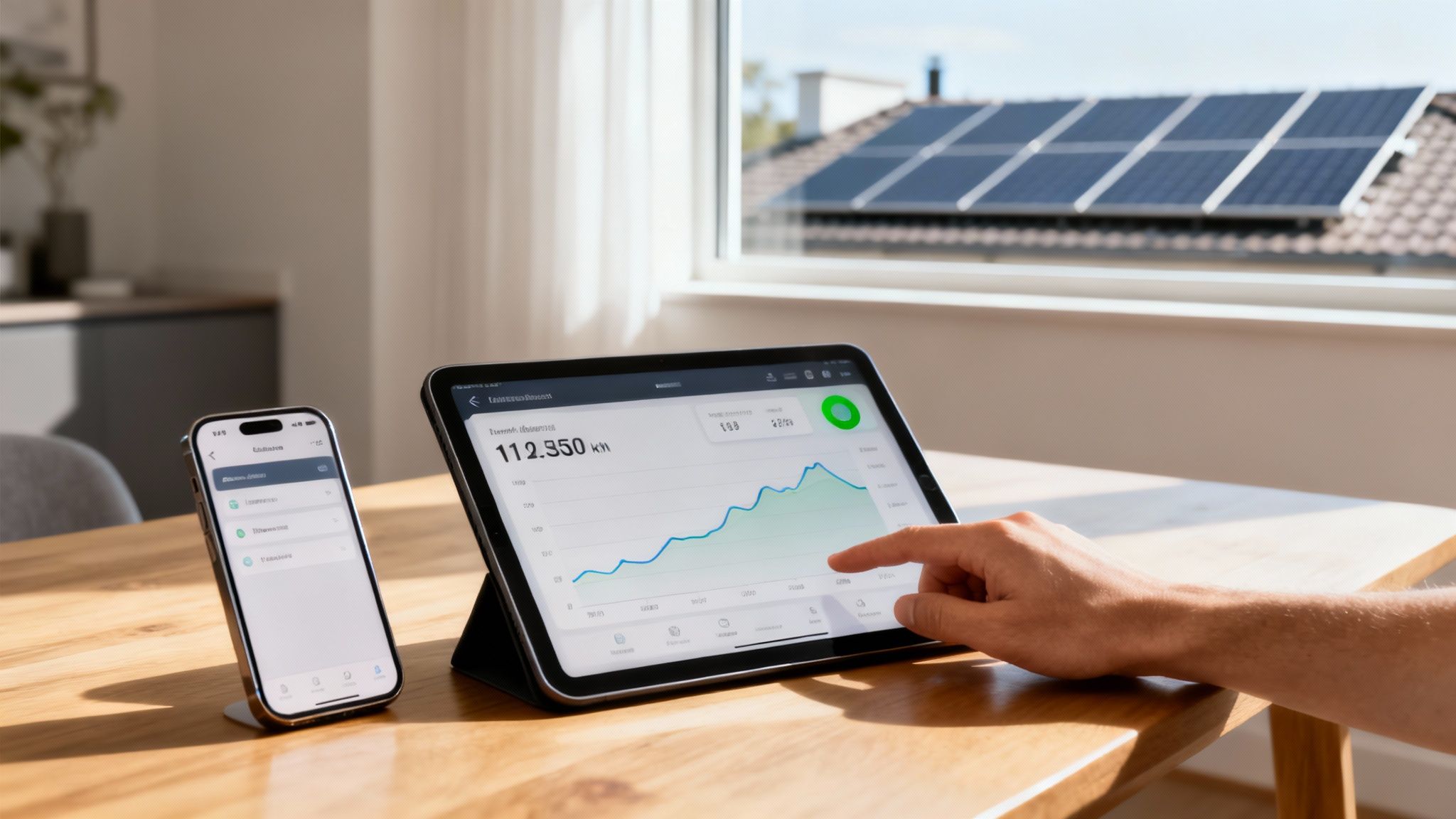
Catching a performance drop early, whether it's from heavy soiling, a faulty inverter, or a wiring issue, is key to maximizing your return on investment. A significant, unexplained dip in production is often the first and only sign that your panels are underperforming. Without regular monitoring, such issues could go unnoticed for months, costing you hundreds of dollars in lost energy savings. Platforms like Enphase Enlighten and SolarEdge provide module-level data, allowing you to pinpoint exactly which panel is having trouble.
Why Consistent Monitoring Matters
Your monitoring system is your first line of defense against lost production. It transforms solar ownership from a passive "set it and forget it" system to an actively managed asset.
- Proactive Problem Solving: A sudden 20% drop in energy output on a clear, sunny day is a clear red flag. Monitoring allows you to identify this immediately and investigate whether the cause is extreme dust buildup, an equipment malfunction, or new shading from a growing tree.
- Validating Cleaning Needs: Your production data provides tangible proof of when cleaning is necessary. You can track a gradual decline in output as dust accumulates and see an immediate spike in production after a professional cleaning, confirming its value. Explore how cleaning schedules impact production to better understand this correlation.
- Warranty and Insurance Claims: Having detailed historical performance data is invaluable if you need to file a warranty claim for a faulty panel or inverter. It provides the concrete evidence manufacturers require to prove a component is not meeting its specified output.
Actionable Monitoring Tips
Getting the most out of your monitoring software is simple but requires a consistent routine.
- Establish a Baseline: Immediately after installation, note your system’s average daily production during a clear week. This becomes your performance benchmark against which all future output is measured.
- Review Monthly Reports: Most monitoring apps generate monthly and annual production reports. Take five minutes each month to compare the current report to the previous year’s to spot any concerning downward trends.
- Set Up Performance Alerts: Many systems, such as those from SMA and Fronius, allow you to set up automated email or app alerts if production drops below a certain threshold. This is the easiest way to stay informed without daily check-ins.
- Compare to Neighbors: If you live in a community with many solar installations, some platforms allow you to anonymously compare your system's performance to others nearby. If your system is consistently underperforming, it’s a strong indicator that it needs attention.
3. Inverter Inspection and Testing
While the panels are the visible workhorses, the inverter is the brain of your solar energy system. This critical component converts the direct current (DC) electricity generated by your panels into the alternating current (AC) electricity that powers your home. A malfunctioning inverter can bring your entire system to a halt, making its regular inspection a non-negotiable part of any solar panel maintenance checklist.
An inverter failure means zero energy production, regardless of how clean your panels are. These devices operate under constant load and are susceptible to heat and electronic wear. Regular checks ensure it's functioning correctly, extend its typical 10-15 year lifespan, and prevent costly, unexpected system shutdowns that can erase your energy savings.
Why Inverter Health is Crucial
A healthy inverter ensures optimal energy conversion and system safety. Neglecting it is like having a perfect engine with a faulty transmission.
- System Uptime: The inverter is the most common point of failure in a solar array. Proactive inspections catch warning signs like error codes or overheating before they cause a complete system outage.
- Performance Optimization: Modern inverters, like those from SMA or Fronius, provide valuable performance data. Regularly checking this data helps you confirm the system is producing the expected amount of energy.
- Safety and Longevity: Overheating is a primary cause of inverter failure. Ensuring proper ventilation and clean cooling fans prevents premature burnout and potential safety hazards.
Actionable Inspection Tips
A quick visual and auditory check can reveal much about your inverter's health. You don't need to be an electrician to perform these basic, yet vital, tasks.
- Check the Display: Once a week, look at the inverter's display screen. Check for any error codes, warning lights, or unusually low production numbers. Document any codes and consult your manual or installer if they persist.
- Listen for Irregular Sounds: Inverters often make a low humming sound during operation. Listen for any loud buzzing, clicking, or grinding noises, as these can indicate a fan failure or an internal electronic issue.
- Ensure Proper Ventilation: The inverter needs to stay cool. Verify there is at least 12 inches of clear space around the unit on all sides. Clear away any leaves, cobwebs, or debris that could obstruct air vents or cooling fans.
- Professional Annual Check: While homeowner checks are great, a professional should test the inverter's output and internal components annually. A technician can identify subtle performance degradation that a visual inspection might miss, ensuring you get every watt you're paying for.
4. Electrical Connection and Wiring Inspection
Beyond the visible surfaces of your panels lies a complex network of electrical components that are critical to your system's safety and performance. An electrical connection and wiring inspection is a vital part of any comprehensive solar panel maintenance checklist, focusing on the integrity of all connections from the panels to your home's breaker box. Over time, Arizona’s extreme temperature swings and intense UV exposure can cause wiring insulation to degrade and connections to loosen.
These seemingly minor issues can have major consequences. A loose or corroded connection creates electrical resistance, which not only reduces the amount of power your system delivers but also generates excess heat. This heat buildup is a significant fire hazard. A professional inspection ensures all components are secure, free from corrosion, and functioning as intended, safeguarding both your investment and your home.
Why Electrical Integrity is Non-Negotiable
A flawless electrical pathway is essential for maximizing energy harvest and ensuring safety. Weak points in the system can lead to dangerous failures.
- Fire Prevention: The most critical reason for this inspection is safety. Arc faults, which are high-power electrical discharges caused by loose connections, are a leading cause of solar-related fires. Routine checks can detect these risks before they escalate.
- Performance Optimization: Every loose or corroded terminal acts as a bottleneck, reducing the flow of electricity. Tightening connections and cleaning terminals can immediately boost your system’s output and prevent long-term energy loss.
- Component Longevity: Faulty connections can cause voltage irregularities that place stress on expensive components like your inverter. Maintaining the wiring protects these critical, high-cost parts from premature failure.
Actionable Inspection Tips
While a thorough electrical inspection should be performed by a qualified professional, homeowners can conduct visual checks to spot potential problems.
- Visual Check for Damage: Safely look for signs of frayed or chewed wires, which can be caused by rodents or weather. Ensure all conduits are intact and properly secured.
- Keep Components Clean and Sealed: Check that the covers on your inverter, combiner box, and disconnects are securely closed and sealed. This prevents moisture and dust from entering and causing corrosion.
- Function Test Disconnects: Familiarize yourself with your system’s shut-off procedures. Periodically, you can test the functionality of the AC and DC disconnects to ensure they operate smoothly in an emergency.
- Schedule a Professional Inspection: The most crucial step is to hire a licensed electrician or a specialized solar technician for an annual inspection. They use tools like thermal imaging cameras to identify "hot spots" in connections that are invisible to the naked eye, indicating a potential failure point. Never attempt to tighten or adjust electrical components yourself without proper training and safety equipment.
5. Panel Frame and Mounting Hardware Assessment
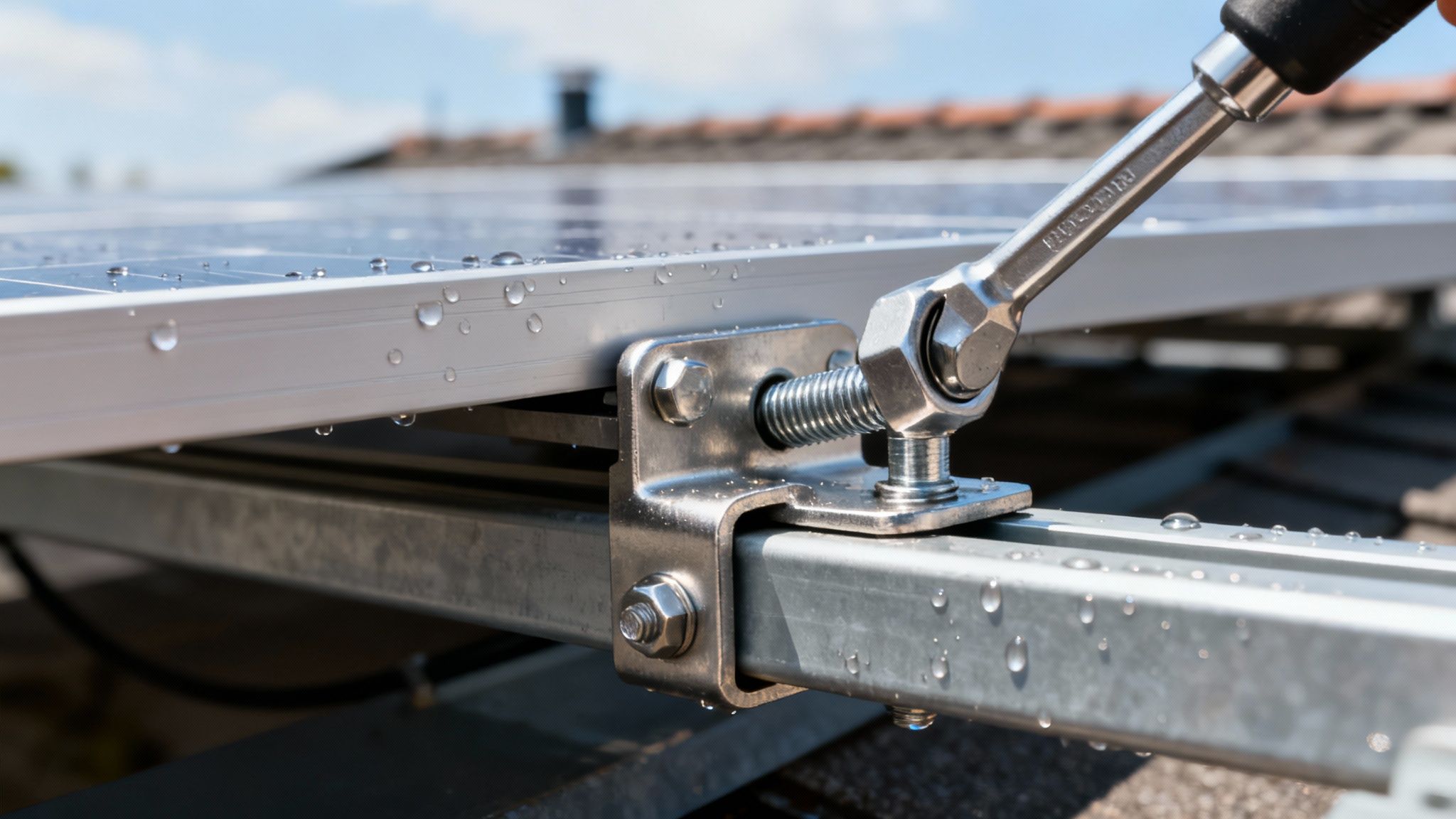
While the glass surfaces get the most attention, the structural integrity of your solar array depends entirely on its frame and mounting hardware. These components, typically aluminum frames and stainless steel fasteners, secure the panels to your roof. In Arizona, the intense sun, high winds during monsoon season, and dramatic temperature swings can cause hardware to loosen or seals to degrade over time, making this part of your solar panel maintenance checklist crucial for long-term safety and performance.
A compromised mount can lead to water leaks, roof damage, or even a panel detaching during a severe storm. Regular assessment ensures that your investment remains securely fastened, preventing catastrophic failures and protecting both your roof and the panels themselves.
Why Hardware Integrity is Non-Negotiable
The mounting system is the unsung hero of your solar installation. Its failure can have consequences far more severe than just a drop in energy production.
- Preventing Structural Failure: An annual check is vital, especially before monsoon season. High winds can exploit a single loose bolt, creating a leverage point that can rip a panel from its mounting. This is a key part of hurricane preparedness in states like Florida and is equally relevant for Arizona’s powerful storms.
- Avoiding Roof Leaks: The mounting points where hardware penetrates your roof are protected by flashing and sealants. Over time, UV exposure can cause these seals to crack and degrade. Inspecting these areas helps catch potential water intrusion points before they cause costly damage to your attic and home interior.
- Ensuring Panel Longevity: A loose panel can vibrate or shift in the wind, which can stress the panel frame and potentially create microcracks in the solar cells, permanently reducing its efficiency.
Actionable Hardware Inspection Tips
Performing these checks requires caution and a focus on safety. Always prioritize your well-being when accessing your roof.
- Check Fasteners: Annually, and with the system de-energized, gently check all visible bolts and mounting clamps to ensure they are snug. Do not overtighten, as this can damage the frame or mounting foot. A torque wrench set to the manufacturer's specifications is the ideal tool.
- Inspect Seals and Flashing: Look closely at the base of each roof mount. Check for cracked, peeling, or deteriorated sealant around the flashing. Also, look for any water stains in the attic or on the ceiling directly below the array.
- Look for Corrosion or Damage: While less common in Arizona's dry climate, check for any signs of rust on bolts or warping on the aluminum frames. This is especially important for systems in industrial areas or near agricultural operations.
- Safety is Paramount: Inspecting mounting hardware requires getting on the roof and working around an electrical system. If you are not completely comfortable with heights or lack the proper safety equipment, this task is best left to a professional service. A trained technician can safely assess your system's structural integrity.
6. Thermal Imaging and Hot Spot Detection
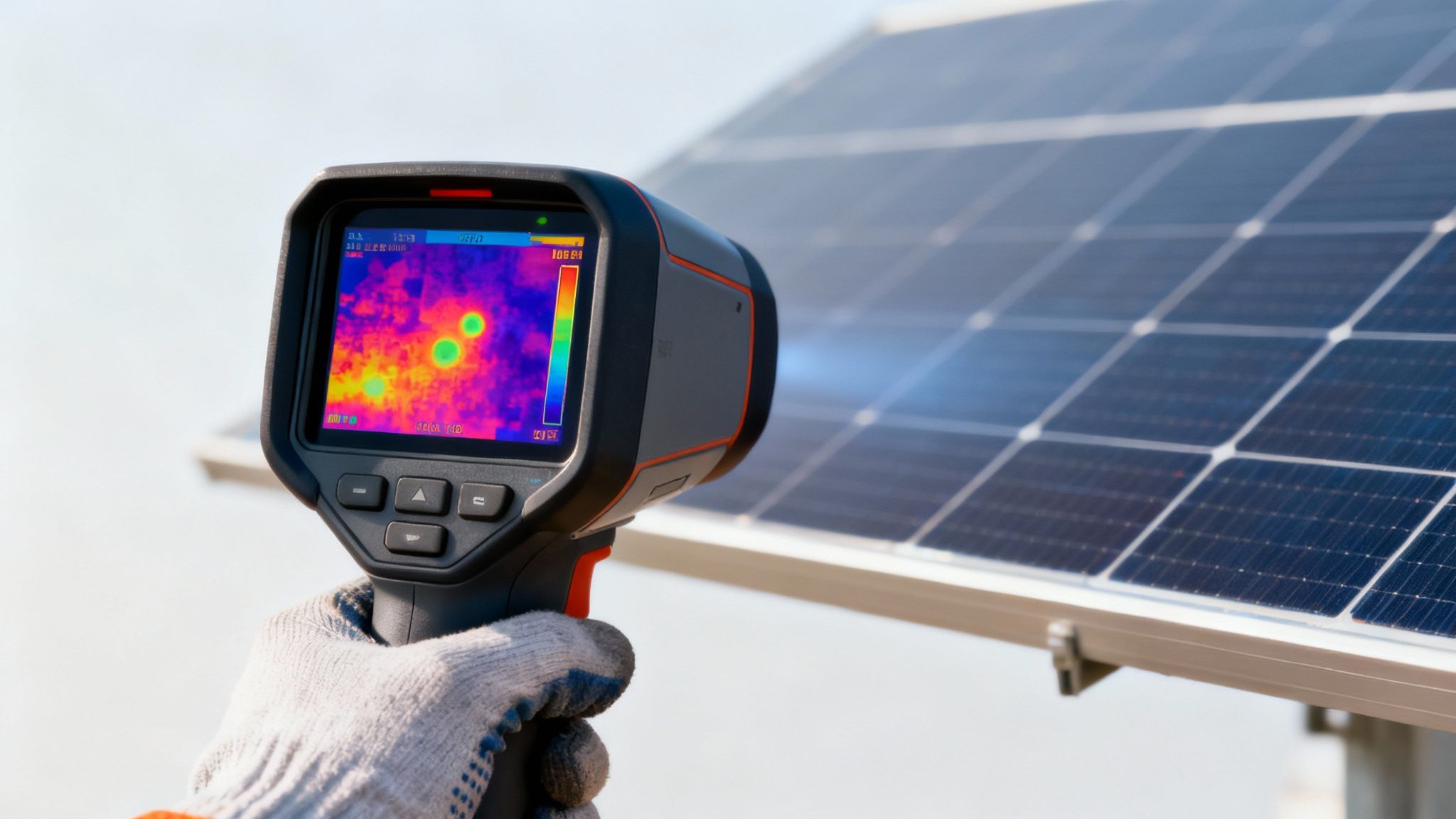
Beyond what the naked eye can see, solar panels can develop internal defects that silently kill your system's efficiency and pose significant safety risks. Thermal imaging is an advanced diagnostic technique that uses infrared cameras to visualize temperature differences across your panels, revealing hidden problems like defective cells, internal corrosion, or faulty connections.
These anomalies often manifest as "hot spots," which are localized areas of high temperature. A hot spot indicates that part of a panel is not converting sunlight into electricity but is instead dissipating that energy as heat. This not only signifies a dead or underperforming section of your array but can also lead to permanent panel degradation, backsheet burns, and, in severe cases, create a fire hazard. Incorporating thermal analysis into your solar panel maintenance checklist is a proactive step to catch catastrophic failures before they happen.
Why Early Detection with Thermal Imaging is Crucial
A visual inspection might show a clean panel, but a thermal scan can tell a much deeper story about its internal health. This technology has become a standard for ensuring system integrity and performance.
- Preventing Irreversible Damage: Hot spots can accelerate the aging of a panel, leading to delamination and permanent loss of output. Catching them early allows for targeted repairs or warranty claims before the damage spreads.
- Maximizing System ROI: By identifying and correcting underperforming cells, you ensure your entire system is generating the maximum possible power, protecting your return on investment.
- Enhancing Safety: Identifying potential fire hazards from overheating components is one of the most critical safety benefits of thermal imaging, providing peace of mind for homeowners.
- Baseline for Future Health: A thermal scan during system commissioning provides a valuable baseline image. Future scans can be compared against it to track degradation and identify emerging issues over the system's lifespan.
Actionable Thermal Imaging Tips
While professional-grade thermal cameras are expensive, understanding the process helps you when hiring an expert.
- Schedule with a Pro: For accurate results, thermal imaging should be performed by a trained technician. Companies like Sparkle Tech can integrate this service into a comprehensive maintenance plan.
- Optimal Conditions: Scans are most effective on clear, sunny days when the panels are under a good solar load, making temperature differences more pronounced.
- Review the Data: Ask the professional to walk you through the thermal images and explain any detected anomalies. This data is crucial for prioritizing repairs and filing warranty claims if needed.
- Understand the Technology: This technology is not limited to solar panels. To understand the broader applications and benefits of this technology in property assessments, delve into an article explaining how thermal imaging enhances inspections.
7. Battery System Inspection and Maintenance (if applicable)
For Arizona homeowners who have paired their solar panels with a battery storage system, this additional step is a critical component of any comprehensive solar panel maintenance checklist. Energy storage systems, like the Tesla Powerwall or Generac PWRcell, provide energy independence during grid outages and help manage peak-time electricity costs. However, these advanced batteries require their own specific maintenance to ensure they deliver reliable power and reach their full lifespan.
A battery's health directly impacts its ability to store and discharge energy efficiently. Neglecting battery maintenance can lead to reduced capacity, a shorter operational life, and even system failure when you need it most. Proper inspection and care ensure your investment continues to provide security and savings for the expected 10-15 years, preventing the high cost of premature replacement.
Why Battery Health Monitoring Matters
Consistent monitoring is the key to battery longevity. It allows you to track performance and catch potential issues before they escalate into costly problems.
- Performance Tracking: Modern battery systems like the Tesla Powerwall provide detailed analytics through a mobile app. This software tracks charge/discharge cycles, voltage levels, and the overall state of health, often sending predictive alerts if performance deviates from the norm.
- Environmental Impact: Batteries are sensitive to their environment. A system installed in a hot Mesa garage will behave differently than one in a climate-controlled space. Monitoring helps ensure the system’s thermal management is functioning correctly to prevent overheating.
- Warranty Compliance: Many manufacturer warranties require evidence of proper use and monitoring. Keeping a close eye on your battery's performance helps ensure you remain compliant with these terms.
Actionable Maintenance Tips
While much of the monitoring is software-based, some physical checks and best practices are essential for keeping your battery system in top condition.
- Control the Climate: Most lithium-ion batteries perform best between 55°F and 75°F. If your battery is in a non-insulated space like a garage, ensure its internal cooling systems are unobstructed and free of dust or debris.
- Avoid Deep Discharges: While designed for cycling, consistently draining a battery to its lowest levels can shorten its lifespan. Configure your system settings to maintain a minimum charge level whenever possible.
- Follow Manufacturer Protocols: Each battery system, whether from LG Chem, Generac, or Sonnen, has specific charging and operating guidelines. Adhere strictly to the manufacturer's recommendations to maximize performance and longevity.
- Quarterly Health Review: Make it a habit to review your battery’s health reports through its monitoring software at least once per quarter. Look for trends in capacity loss or charging efficiency that may indicate a developing issue.
8. Professional Annual Inspection and Certification
While diligent homeowner checks are crucial, a comprehensive annual inspection by a certified professional is a non-negotiable part of any serious solar panel maintenance checklist. This goes far beyond visual checks, involving detailed electrical safety testing, structural assessments, and performance verification to ensure your system is safe, compliant, and operating at its full potential.
A professional inspection provides an official record of your system's health, which is often required to keep manufacturer warranties valid. Furthermore, many insurance providers and financing agreements now mandate documented annual inspections for continued coverage. It serves as your definitive proof that the system is being properly maintained, identifying hidden issues like faulty wiring or micro-cracks that are invisible to the untrained eye.
Why a Professional Assessment is Essential
An annual certification by a licensed solar technician or electrician provides peace of mind and protects your investment. It addresses areas a homeowner simply cannot.
- Warranty and Insurance Compliance: Major installers like Sunrun often include or require annual inspections in their service contracts. Failing to produce a professional report can void warranties or lead to denied insurance claims after an event like a hail storm.
- Code and Safety Verification: A certified professional will verify that all electrical components, from wiring to inverters, meet current electrical codes. This is a critical safety measure to prevent fire hazards and ensure system integrity.
- Performance Benchmarking: Professionals use specialized tools to test the actual output of your system against its expected performance, pinpointing degradation or component failure that might not be obvious from your energy bill alone.
Actionable Inspection Tips
To get the most value from your annual professional service, be prepared and know what to ask for.
- Hire Certified Experts: Always choose a NABCEP (North American Board of Certified Energy Practitioners) certified professional. This certification is the gold standard for solar technicians, ensuring a thorough and knowledgeable inspection.
- Request Comprehensive Documentation: Ask for a detailed written report that includes all findings, test results, and photos of any identified problem areas. This documentation is your official record for warranty or insurance purposes. When scheduling, it's also wise to ensure the underlying roof structure is sound; you might want to review a comprehensive roof inspection checklist.
- Track Performance Over Time: Keep your annual inspection reports and compare them year-over-year. This helps you track performance trends and spot gradual system degradation before it becomes a major problem.
- Combine with Other Services: Many homeowners schedule their professional inspection to coincide with a deep cleaning service. Hiring a professional solar panel cleaning company ensures the panels are in optimal condition for performance testing.
Solar Panel Maintenance: 8-Point Comparison
| Task | Implementation Complexity 🔄 | Resource Requirements ⚡ | Expected Outcomes ⭐ | Ideal Use Cases 📊 | Key Advantages 💡 |
|---|---|---|---|---|---|
| Regular Panel Cleaning and Debris Removal | Low — manual or automated; routine scheduling and rooftop safety | Low cost; soft brushes, deionized water; occasional professional service | Restores ~15–25% potential output; immediate efficiency gain | Dusty, pollen-heavy, coastal, agricultural regions; routine residential upkeep | Quick ROI; prevents long-term degradation; easy DIY with precautions |
| Monitoring System Performance and Energy Output | Moderate — hardware/software setup and data interpretation | Monitoring hardware, internet connectivity, app/software subscriptions | Early fault detection; optimized consumption and ROI insights | Remote management needs, battery-integrated systems, larger residential/commercial arrays | Automatic alerts, historical trends, remote diagnostics |
| Inverter Inspection and Testing | Moderate–High — technical diagnostics and periodic testing | Qualified technician skills; possible replacement costs ($2k–$4k) | Prevents shutdowns; extends inverter life; identifies firmware/update needs | Systems with central/string inverters; aging systems; commercial installations | Early failure detection; reduces repair costs; maintains warranties |
| Electrical Connection and Wiring Inspection | High — requires licensed electrician and safety procedures | Professional tools, thermal imaging; typical cost $300–$500/yr | Prevents fires and energy loss; maintains safety and efficiency | Older systems, high-UV/temp environments, code/insurance-mandated inspections | Detects corrosion/hot spots; ensures compliance and reduces risk |
| Panel Frame and Mounting Hardware Assessment | Low–Moderate — visual and torque inspections; roof access required | Basic tools, stainless replacements/coatings; annual or post-storm checks | Prevents water infiltration and structural failure; maintains wind/snow ratings | Coastal, high-wind, hail-prone regions; after severe weather events | Low-cost preventive care; extends system and roof lifespan |
| Thermal Imaging and Hot Spot Detection | Moderate — specialized equipment and trained technicians | Infrared cameras and analysis; professional fee $500–$1,500/visit | Detects hidden cell defects and hot spots; prevents catastrophic failures | New commissioning, large/utility arrays, warranty or insurance documentation | Precise fault localization; fast system-wide assessment |
| Battery System Inspection and Maintenance (if applicable) | High — BMS knowledge and thermal management required | Battery monitoring systems, climate control; high capital cost ($5k–$15k+) | Maintains backup reliability; extends battery life (≈10–15 yrs) | Systems with storage for backup, peak-shaving, or time-of-use optimization | Enables energy independence; optimizes storage performance and lifespan |
| Professional Annual Inspection and Certification | Moderate — comprehensive multi-point audit by certified pro | Certified technician (NABCEP/licensed electrician), thermal imaging; $300–$800/yr | Compliance with codes/warranties; documented system condition; catches complex issues | Financed systems, insurance/warranty requirements, regulatory compliance | Comprehensive record-keeping; legal documentation; broad problem detection |
Protect Your Investment: When to Call the Professionals
Your solar panel system is more than just an appliance; it's a significant financial investment in your home's energy independence and a commitment to a sustainable future. By now, you understand that consistent upkeep is the key to unlocking its full potential. This comprehensive solar panel maintenance checklist has equipped you with the knowledge to actively monitor and protect that investment, transforming you from a passive energy consumer into a proactive system manager.
Recapping the essentials, we've walked through the crucial steps of regular cleaning, monitoring energy output, and conducting visual inspections of inverters, wiring, and mounting hardware. These routine checks are your first line of defense, allowing you to catch minor issues before they escalate. You now know how to identify the performance dips caused by Arizona’s pervasive dust and what to look for after a powerful monsoon storm sweeps through the valley.
The Value of a Proactive Approach
Mastering this checklist isn't just about cleaning glass; it’s about maximizing your return on investment. Every layer of grime, every loose connection, and every unnoticed system error chips away at your energy production and, consequently, your savings. A proactive approach ensures you are consistently harvesting the maximum amount of Arizona's abundant sunshine, which directly translates to lower utility bills and a faster payback period for your system.
By staying vigilant, you also extend the operational lifespan of your entire setup. Just like a well-maintained vehicle, a cared-for solar array will perform reliably for decades, often outlasting its initial warranty period. This diligence protects your property value and guarantees that your system remains a valuable asset, not a depreciating liability.
Knowing Your Limits: The Smart Homeowner's Guide
While DIY inspections are invaluable, it's equally important to recognize when a task moves beyond a simple visual check and into the realm of professional expertise. Safety and precision are paramount, and some maintenance jobs carry inherent risks or require specialized diagnostic tools that are not part of the average homeowner's toolkit.
Here are the key scenarios where calling a professional is the smartest and safest decision:
- Complex Electrical Work: Any issues involving wiring, conduits, or the internal components of your inverter should be handled exclusively by a certified electrician or a specialized solar technician. The risk of high-voltage shock is severe.
- Rooftop Safety Concerns: If your panels are installed on a steep, high, or slippery roof (like tile), attempting a DIY cleaning is not worth the risk of a fall. Professionals have the required safety harnesses, equipment, and training to navigate these environments safely.
- Thermal Imaging and Hot Spot Detection: Identifying hot spots requires a thermal imaging camera and the expertise to interpret the results accurately. This diagnostic service is a cornerstone of professional inspections and is critical for spotting hidden cell defects or internal wiring problems.
- Persistent Performance Issues: If you've cleaned your panels and checked for obvious obstructions, but your system's output is still lagging, it’s time for a professional diagnosis. Technicians can perform advanced tests to pinpoint the root cause, which could be anything from a faulty microinverter to a degraded panel.
Ultimately, this solar panel maintenance checklist empowers you to be an informed and effective guardian of your solar energy system. It provides a clear framework for what you can and should do, while also defining the boundaries where professional assistance becomes essential for ensuring safety, efficiency, and long-term performance. Your diligence, combined with expert support when needed, is the ultimate formula for a successful solar journey.
For Arizona residents, keeping panels free from the relentless dust and grime is the most frequent and impactful maintenance task. Instead of risking your safety on a hot roof, let the insured and bonded experts at Sparkle Tech Window Washing handle the job with specialized equipment and techniques. We ensure a damage-free, streak-free clean that restores your system’s peak performance, letting you enjoy the savings without the sweat. Contact us today for a free, no-obligation estimate and see the difference a professional clean can make: Sparkle Tech Window Washing.