




Cleaning your skylights might seem daunting, but it's really just a matter of having the right tools and a smart plan. All you need is a gentle cleaning solution, a soft scrubber, and a good squeegee—often on a telescoping pole to keep your feet safely on the ground.
The secret to a perfect, streak-free shine? Always use distilled water and try to clean them when they're not in direct, baking sunlight. We’ll walk through how to do this safely and effectively, turning a dull room into a brilliant one.
A Practical Guide to Crystal-Clear Skylights
Getting your skylights genuinely clean does more than just let in more light; it completely changes the feel of a room. But let's be honest, the thought of actually doing it can feel a little overwhelming. We're going to break it down into a safe, manageable process based on real-world experience, not just what a manual tells you.
This guide covers it all, from first checking if your roof is safe to work on to getting that final, satisfying streak-free wipe.
You'll quickly see why regular cleaning is about more than just a pretty view. It’s a crucial maintenance step to prevent costly damage from the grit and grime that inevitably builds up. In fact, preventable leaks are a huge driver behind the skylight repair and replacement market, which was valued at a staggering USD 2.23 billion in 2022. A little cleaning is a small price to pay to protect a major feature of your home.
Think Beyond the Glass
While your goal is a spotless skylight, it’s important to remember that it's a key part of your entire roofing system. Taking a holistic approach is the best way to keep everything in good shape for years to come.
A clean skylight is a healthy skylight. When you clear away leaves, dirt, and other gunk, you're not just improving the view. You're preventing that debris from clogging drainage channels, which is a common cause of water damage and seal failure down the road.
Before you even start mixing your cleaning solution, it's a great idea to give your roof a quick once-over. For homeowners who want to stay ahead of problems, an ultimate roof maintenance checklist can be an invaluable resource, helping you protect your home's most important shield.
In this guide, we'll give you the confidence to tackle this project yourself, covering key topics like:
- Choosing Your Tools: We'll help you pick the right equipment that's both safe and effective.
- Safety First: Clear protocols to make sure you get the job done without any accidents.
- Inside vs. Outside Cleaning: Mastering the different techniques needed for each side of the glass.
Assembling Your Skylight Cleaning Toolkit
Getting the right gear together can make the difference between a frustrating Saturday afternoon and a job well done. Before you start, pulling together a proper toolkit is the key to getting that streak-free finish safely and efficiently. The good news? You don't need a professional window washer's van—just a few smart essentials.
The real game-changer here is a solid telescoping extension pole. This one tool is your best friend, letting you work safely from a ladder or, in many cases, right from the ground. It’s the cornerstone of a smart cleaning strategy because it keeps you off the roof, which is always the safest bet.
Choosing Your Cleaning Heads and Solutions
With a good pole in hand, you'll need the right attachments. I'm a big fan of the combination scrubber-squeegee heads; they're incredibly efficient. You want one with a soft, non-abrasive scrubber on one side and a high-quality, flexible rubber squeegee on the other.
- Microfiber Scrubber: This is what you’ll use to gently work away all that built-up grime without worrying about scratching the glass or acrylic.
- Silicone Squeegee Blade: A quality blade makes all the difference. It glides smoothly, pulling off all the dirty water in one clean pass. Trust me, cheap rubber blades just skip and leave behind a streaky mess.
When it comes to the cleaning solution itself, simple is almost always better. You can mix up a fantastic cleaner using things you likely already have.
My go-to DIY cleaner: Just mix one part white vinegar with ten parts distilled water. Put it in a spray bottle or a bucket. The distilled water is the secret ingredient here—it has none of the minerals that tap water leaves behind as spots and streaks when it dries.
This simple mix is perfect for everyday dirt and grime. If you’re dealing with something tougher, like baked-on bird droppings or tree sap, you might need a commercial window cleaning solution. Just be absolutely sure it's ammonia-free, as ammonia can wreck protective coatings and damage acrylic skylights.
If you're curious about what the pros use, our guide to the best window cleaning tools breaks down some excellent options.
Now, let's pull all this together into a simple checklist.
Essential Skylight Cleaning Tools and Supplies
Here’s a quick-glance table of the must-have items for tackling your skylights, both inside and out.
| Tool/Supply | Primary Use | Pro Tip |
|---|---|---|
| Telescoping Extension Pole | Reaching high skylights safely from the ground or a ladder. | Invest in a sturdy, lightweight model. A flimsy pole is frustrating and unsafe. |
| Scrubber/Squeegee Head | Applying solution and removing water from glass skylights. | Look for a model with a replaceable silicone blade for a longer lifespan. |
| Microfiber Cloths | Cleaning acrylic skylights and detail work on glass. | Have at least 3-4 clean, dry cloths on hand for polishing and drying edges. |
| Bucket | Holding your cleaning solution. | A 5-gallon bucket is ideal—big enough to dip your scrubber, but not too heavy. |
| Spray Bottle | Applying solution to interior skylights or for spot cleaning. | Great for controlling moisture and preventing drips inside your home. |
| DIY Cleaning Solution | General-purpose cleaning for both glass and acrylic. | 1 part white vinegar to 10 parts distilled water. |
| Mild Dish Soap | An alternative gentle cleaner for acrylic surfaces. | Use just a few drops in a bucket of water to avoid leaving a soapy film. |
| Sturdy Ladder | Providing safe access for interior and exterior cleaning. | Always have a spotter and ensure the ladder is on stable, level ground. |
Having these items ready before you start will make the entire process run much more smoothly.
Glass vs. Acrylic: Why It Matters So Much
Okay, this is critical. Before you let anything touch your skylight, you absolutely have to know what it's made of. Using the wrong tool or chemical here is a fast track to permanent, costly damage.
Glass Skylights
These are the tough ones. Glass is highly durable and very resistant to scratches, which makes it pretty forgiving. You can confidently use a standard squeegee and most ammonia-free commercial window cleaners without any issues.
Acrylic or Polycarbonate Skylights
These plastic-based materials are a completely different story. They're much softer and will scratch incredibly easily. So, let me be clear: Never, ever use a squeegee on an acrylic skylight. The blade will inevitably drag tiny bits of grit across the surface, leaving a web of fine, permanent scratches.
For acrylic, your only tools should be soft microfiber cloths or a non-abrasive sponge. Stick with the mildest cleaning solutions—either the vinegar and distilled water mix or a simple solution of a few drops of mild dish soap in water. And always, always rinse it thoroughly with clean water to get rid of any residue. A little extra care here will keep it looking crystal clear for years.
Safely Cleaning Your Exterior Skylights
When it's time to clean the outside of your skylights, safety has to be your number one priority. This isn't just another household chore; you're often working at height. Before you even think about pulling out a ladder, your first and most important job is to take a good, hard look at your roof and the surrounding area. The goal is a crystal-clear view, not a trip to the emergency room.
Start by assessing your roof's pitch. A gentle slope might feel manageable, but a steep roof is a whole different ballgame and dramatically increases the risk. You also need to scout for any slick spots—moss, algae, or even just wet leaves can turn a simple task into a treacherous one, especially in those shady spots.
Gearing Up for a Safe Climb
Getting the ladder set up correctly is the foundation of working safely. Make sure it's on solid, level ground and, critically, that it extends at least three feet above the roofline. That extra height gives you a secure handhold when you're getting on and off the roof.
I absolutely have to stress this: always have a spotter. They aren't just there to hold the ladder steady; they're your second set of eyes and your first call for help if something goes sideways.
This visual breaks down the simple, but essential, flow of the job—from gathering the right tools to prioritizing safety above all else.
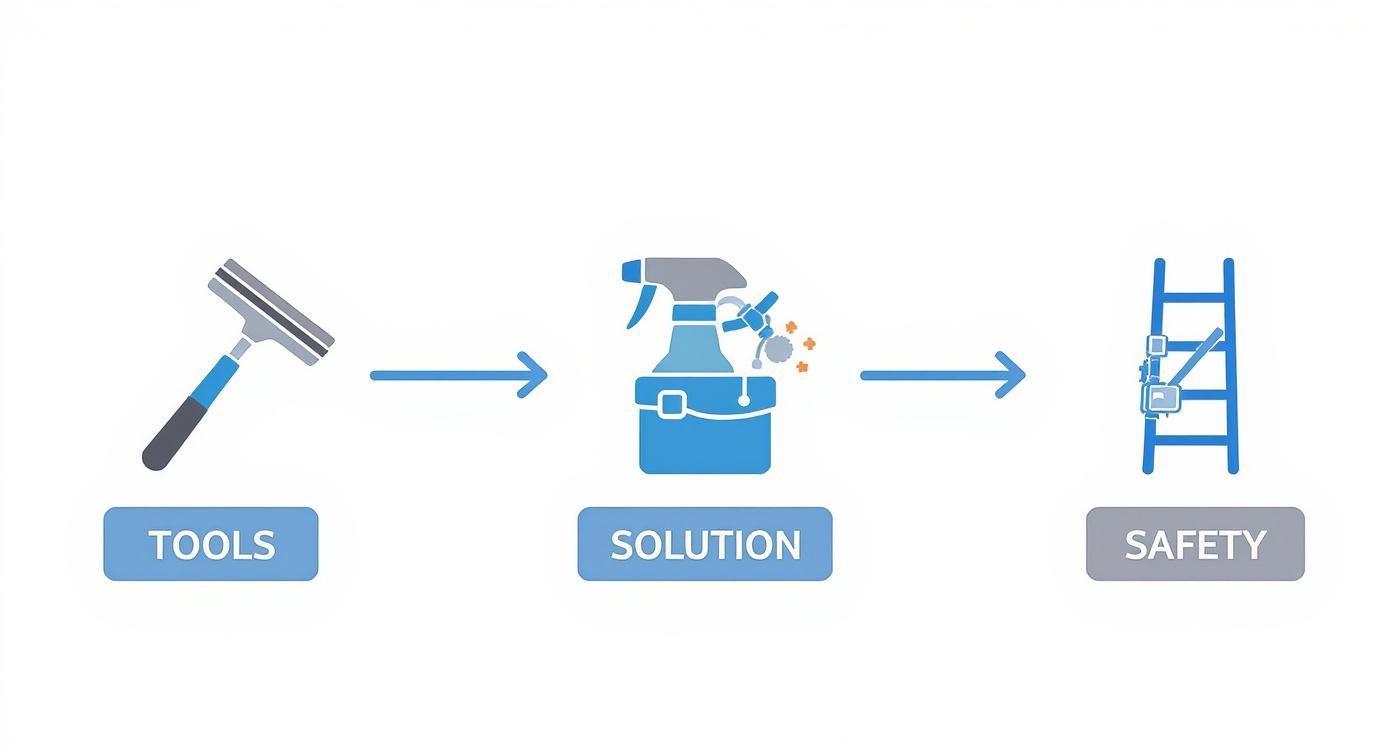
As you can see, a great result is a balance of having the right gear, using the correct cleaning mix, and never, ever cutting corners on safety.
The Exterior Cleaning Method
Once you're safely in position, the cleaning itself is pretty methodical. The trick is to work smart to avoid scratching the glass or leaving behind a frustrating, streaky mess.
First, give the skylight a gentle rinse with a garden hose. Just a regular spray nozzle will do the trick. Never use a pressure washer. The force is way too intense and can easily damage the seals around the skylight, leading to leaks and costly repairs. This initial rinse gets rid of the loose dirt and grit that could scratch the surface when you start scrubbing.
Next up, apply your cleaning solution. Grab your telescoping pole with a soft scrubber head and spread the solution across the entire surface. That simple vinegar-and-water mix is usually all you need for everyday grime. If you run into something a bit more stubborn, just let the solution sit for a few minutes to do its thing.
Pro Tip: When you're dealing with tough spots like baked-on bird droppings or tree sap, fight the urge to just scrub harder. Instead, re-saturate the spot with your cleaner and give it time to work. A little patience is far more effective—and safer for your skylight—than brute force.
It's no surprise that skylight cleaning is a big part of the global roof cleaning services market, which was valued at a whopping USD 6.28 billion in 2023. As more homeowners realize that good maintenance prevents bigger problems down the line, that number is only expected to grow.
Getting That Perfect Streak-Free Finish
Alright, here comes the most satisfying part: breaking out the squeegee. A good, sharp squeegee blade is what separates an amateur job from a professional-looking one.
Here’s the technique the pros use for a flawless shine:
- Create a Dry Edge: Before your first pull, take a clean microfiber cloth and wipe a one-inch dry strip along the top edge of the skylight. This "dry zone" is your starting point and stops any drips from running down into your clean work.
- Overlap Your Strokes: Place your squeegee in that dry zone, angle it down slightly, and pull it across the glass in one smooth, continuous motion. On your next pass, make sure you overlap the previous stroke by about an inch.
- Wipe the Blade: This is the secret sauce. After every single pull, wipe the squeegee blade clean with a dry cloth. It’s a small step, but it prevents you from dragging dirty water right back across your clean glass.
This method isn’t just for skylights; it works on any high, hard-to-reach glass. If you want to dive deeper into these techniques, our guide on how to clean high windows has even more tips. Master this, and your skylights will be so clear you'll forget they're even there.
Mastering the Interior Skylight Clean
Cleaning the inside of your skylights is less about high-risk climbing and more about finesse and gravity management. The real challenge isn't getting up there; it's getting the glass sparkling clean without soaking your floor, furniture, and yourself in dirty water. Honestly, the secret to a mess-free job is all in the prep work.
First things first, clear the area directly below the skylight. Move any couches, tables, or rugs out of the way. Then, lay down a large plastic drop cloth or an old sheet. This one simple step will catch the inevitable drips and save you from a huge cleanup headache later.

Setting Up for a Drip-Free Clean
With the area protected, it's time to get your indoor cleaning kit ready. Working inside is a different ballgame than cleaning the exterior—you have to be surgical with how much water you use.
Here’s what I recommend having on hand:
- A sturdy stepladder: Make sure it’s tall enough so you can work comfortably without dangerously overreaching.
- An extension pole: This is a must-have for high or vaulted ceilings. It gives you far better control and lets you stay balanced on the ladder.
- A spray bottle: Ditch the bucket for indoor work. A spray bottle lets you apply your cleaning solution precisely where you need it and prevents oversaturation.
- Microfiber cloths: You can never have too many. Keep a stack of clean, dry ones nearby for scrubbing, wiping down edges, and catching any rogue drips.
While some pros use a two-bucket method, I find a spray bottle is much more practical for homeowners doing an interior clean. Just fill it with your vinegar and distilled water solution. You'll use a scrubber on a pole, but instead of dunking it in a bucket, you’ll mist the glass directly. This gives you total control over the moisture.
The Indoor Cleaning Technique
Before you get anything wet, attach a dry microfiber head to your pole and give the skylight a quick dusting. This gets rid of cobwebs and loose grime, so you don't end up just pushing mud around once you add liquid.
Next, lightly mist a small section of the skylight with your cleaning solution. It's best to work in manageable chunks. Scrub the misted area gently with a clean, damp microfiber pad attached to your extension pole.
The biggest mistake I see people make is using way too much water inside. A slightly damp microfiber cloth is all it takes to lift away grime. If you see water running down the glass, you're using too much.
After scrubbing, switch to your squeegee. A squeegee with a built-in reservoir is a brilliant tool for this job—it channels drips into a trough instead of onto your floor. If you don't have one, a fresh, dry microfiber cloth will do the trick for wiping the section dry.
Work your way across the skylight methodically, overlapping your squeegee strokes by about an inch. This ensures you get that uniform, streak-free finish. Don't rush it. Taking your time here is the key to a pristine result without the messy aftermath.
Handling Different Skylight Materials and Tech
Before you even think about grabbing a bucket and sponge, you need to know exactly what you're dealing with. Skylights aren't all the same, and treating a soft acrylic dome like a tough-as-nails glass panel is a recipe for disaster. Using the wrong approach can leave you with permanent scratches or a ruined high-tech coating.
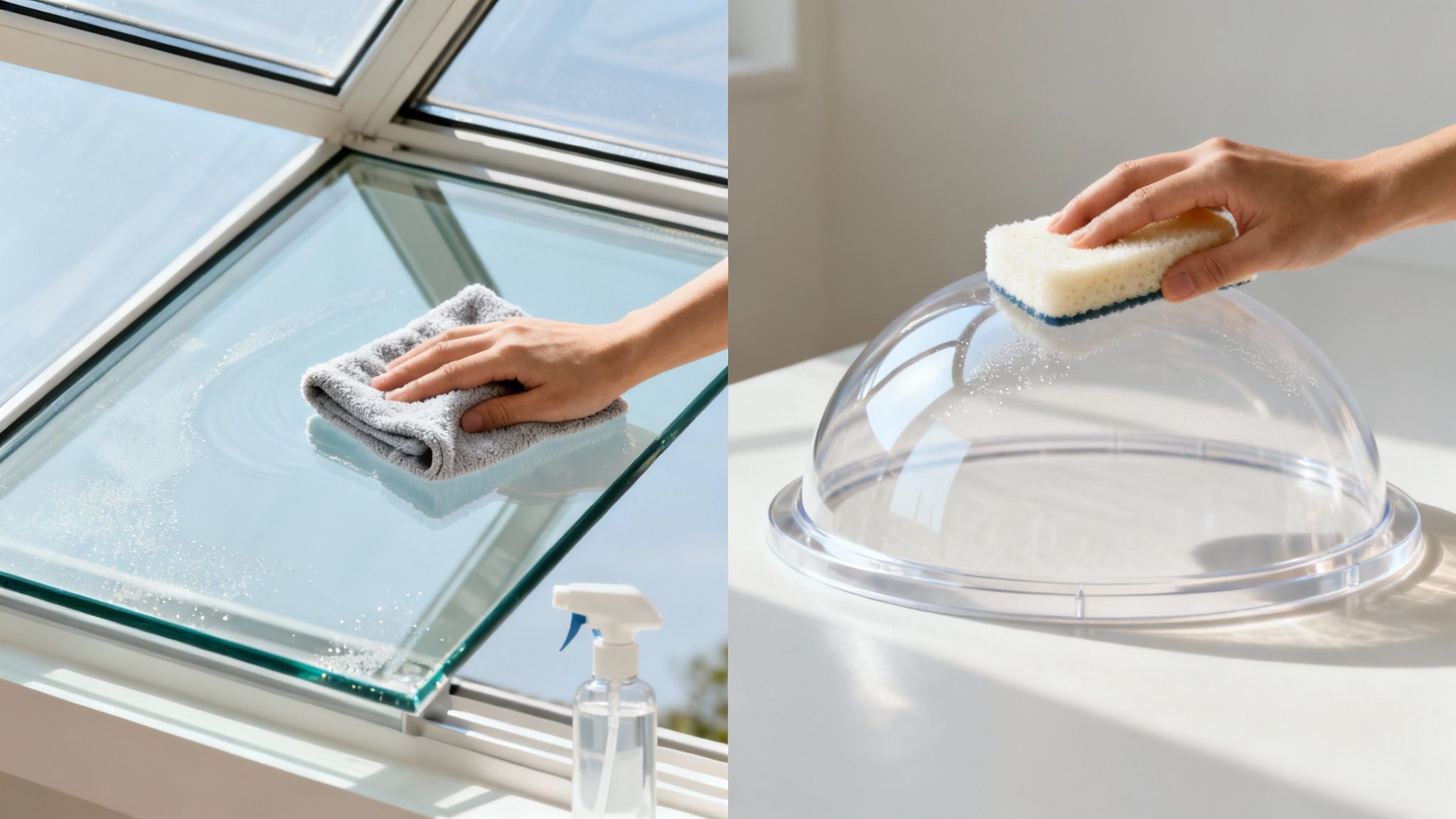
Glass skylights are pretty forgiving. They're built to be scratch-resistant, so you can generally use a good-quality squeegee and your favorite ammonia-free window cleaner without much worry. The goal is that perfect, streak-free finish, and glass makes it achievable.
Acrylic and polycarbonate skylights are a completely different story. These plastics are surprisingly soft and scratch incredibly easily. A squeegee is your enemy here. Its hard edge can drag dirt particles across the surface, leaving a web of fine scratches that you'll never get out.
To help you get it right every time, here’s a quick breakdown of the dos and don'ts for each material.
Cleaning Glass vs Acrylic Skylights A Comparison
Understanding the key differences in cleaning techniques and products is crucial to avoid damaging your skylights. This table highlights the main points to remember for each type.
| Feature | Glass Skylights | Acrylic/Polycarbonate Skylights |
|---|---|---|
| Durability | High scratch resistance; very durable. | Softer material; scratches easily. |
| Recommended Tools | Squeegee, microfiber cloth, soft brush. | Microfiber cloths only, soft sponge. |
| Tools to Avoid | Abrasive pads, razor blades (unless by a pro). | Squeegees, abrasive sponges, paper towels. |
| Cleaning Solutions | Most commercial window cleaners (ammonia-free), vinegar/water mix. | Mild soap and water, approved plastic cleaners. |
| Chemicals to Avoid | Ammonia-based cleaners, harsh solvents. | Ammonia, alcohol, solvents, abrasive cleaners. |
Ultimately, treating your skylight with the right tools and solutions based on its material is the only way to ensure it stays clear and undamaged for years to come.
Care for Acrylic and Polycarbonate
When you're working with a plastic skylight, think "gentle." Your entire cleaning kit should be soft and non-abrasive to protect that delicate surface.
Here's what you'll need:
- Soft microfiber cloths are perfect for both washing and drying.
- A non-abrasive sponge helps lift grime without scratching.
- A simple cleaning solution works best—just a few drops of dish soap in water or our recommended vinegar solution will do the trick.
Always give it a good rinse with plain water afterward. Soap residue left behind can become sticky and actually attract more dirt, undoing all your hard work. Remember, light pressure is all you need.
Understanding Self-Cleaning Skylight Technology
Many newer skylights come with some seriously impressive technology designed to keep them clean with minimal effort. These often feature a special coating of titanium dioxide that makes the surface hydrophilic. Instead of water beading up and leaving spots, it sheets off in a thin layer, taking dirt with it.
This tech is a game-changer. The sun's UV rays actually help by breaking down organic grime, and then the rain simply washes it all away. It's no wonder the global self-cleaning glass market is expected to reach USD 9.9 billion by 2035. For building owners, this can cut down on maintenance costs by as much as 50%.
CRITICAL: That special coating is amazing, but it's also delicate. You must avoid all abrasive cleaners, harsh chemicals (like ammonia), and scouring pads. Using any of these will strip the coating right off, turning your low-maintenance skylight into a regular one that needs constant cleaning.
To get the most out of your investment, you need to know how to care for it. To dig deeper into how this all works, check out our article on the difference between hydrophilic and hydrophobic glass. A little knowledge goes a long way in keeping your view crystal clear.
Your Top Skylight Cleaning Questions, Answered
Even with the best instructions, you're bound to run into a few questions once you get started. Here are answers to some of the most common things people ask, so you can handle any curveballs with confidence.
How Often Should I Be Cleaning My Skylights?
For the average home, a good deep clean twice a year usually does the trick. I recommend one session in the late spring to wash away all the winter gunk and pollen, and another in the fall to get rid of summer dust and fallen leaves. This routine keeps them crystal clear and ensures the weep holes don't get clogged.
But your local environment is the real deciding factor. You’ll probably need to clean them more often if you live:
- Near active construction: That dust gets everywhere, fast.
- Under a lot of trees: Sap, bird droppings, and pollen are your constant enemies.
- In a windy or dusty region: Grime just builds up much more quickly.
If any of these sound like your situation, you might find yourself needing to clean them every three or four months just to keep up.
When Should I Just Hire a Professional?
Being a DIY-er is great, but sometimes calling in a pro is the smartest (and safest) move. It’s definitely time to pick up the phone and get a quote from a professional window cleaning service if you're facing any of these situations.
If you have a very steep roof, fragile roofing materials like slate or tile, or skylights that are just too high to reach safely, don't risk it. A professional has the right safety gear and training. Your well-being is worth far more than the cost of a cleaning service.
Even more critical: if you spot any leaks, condensation trapped between the glass panes, or cracks around the seals, stop immediately. A pro can not only clean the skylight but also help you figure out what's causing a potentially serious issue.
Can I Just Use a Pressure Washer?
I get asked this a lot, and the answer is always the same: absolutely not. It’s tempting to think you can just blast the dirt off, but a pressure washer's focused stream is way too powerful for a skylight.
Here’s what can go wrong, and it’s not pretty:
- You can easily shatter the glass or crack the acrylic dome.
- The force of the water will shred the watertight seals.
- It can strip off any special low-E or self-cleaning coatings.
- Worst of all, it can drive water under your roof flashing, causing major leaks and water damage inside your house.
Just stick to a gentle approach. A regular garden hose with a spray nozzle has all the pressure you need for rinsing. Let your soft-bristled brush and cleaning solution do the actual work.
If the job feels too big or too risky, don't hesitate to call for professional help. The team at Sparkle Tech Window Washing has the right safety equipment and expertise to get your skylights spotless without any risk to you or your home. Find out more at https://sparkletechwindowwashing.com.