




Cleaning high windows effectively really comes down to having the right setup. For most jobs, this means a good telescoping pole paired with a quality squeegee and the proper cleaning solution. This combo is the key to safely reaching upper-story glass from the ground, taking the biggest risks right out of the equation.
Gathering Your Essential Window Cleaning Tools
Getting that professional, streak-free shine on high windows starts with having the right gear. Forget the paper towels and basic spray cleaner; we’re talking about the equipment that makes the job both safer and far more effective. Trust me, having everything you need within arm's reach before you start saves a ton of frustration later.
This infographic gives a great visual breakdown of the essential tools you'll need.
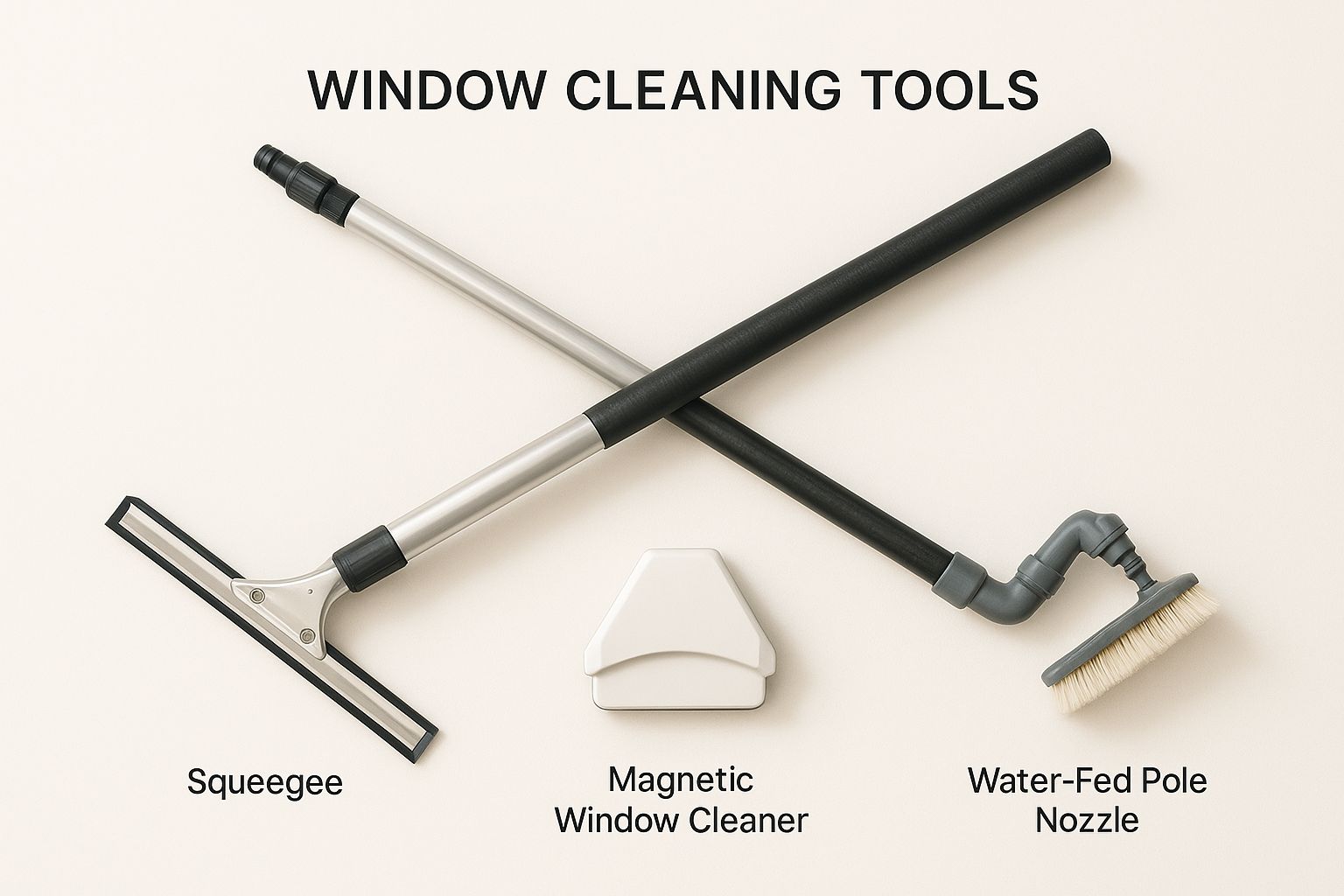
As you can see, the choice between pole materials like aluminum and carbon fiber often comes down to balancing cost with how rigid you need the pole to be at its full height.
Choosing Your Reach and Technique
Your extension pole is your most important tool here. A lightweight aluminum pole will do the trick for most second-story work. But if you're reaching higher, a rigid carbon fiber pole is worth the investment—it offers much better control and has way less flex when you’re trying to apply pressure way up high.
Another clever option for certain windows is a magnetic cleaner. It uses powerful magnets to clean both sides of the glass at the same time, which is a game-changer for folks in apartments or with fixed panes they can't access from the outside.
For the most efficient clean, the pros often turn to more advanced setups. Many professional services use squeegees paired with water-fed pole systems that can extend up to 60 feet, virtually eliminating the need for ladders or scaffolding on many residential jobs. You can get a deeper understanding of how a water-fed pole window cleaning system works and see why it delivers such a spotless finish.
A top-tier squeegee is non-negotiable. I can't stress this enough: always start a big job with a fresh, sharp rubber blade to prevent streaks. Wiping that blade clean after every single pass is the real secret to a flawless, professional-grade finish.
Beyond the pole, your basic kit should include:
- A High-Quality Squeegee: Pick a size that’s just a bit smaller than your narrowest window pane. This makes maneuvering much easier.
- A Microfiber Scrubber: This attaches to your pole for applying the cleaning solution and scrubbing away the initial layer of grime.
- Two Buckets: One for your soapy water and a second one with clean rinse water.
- Lint-Free Cloths: Absolutely essential for detailing the edges and wiping your squeegee blade between strokes.
Essential High-Window Cleaning Tool Comparison
Choosing the right tool depends heavily on your specific home and the height of your windows. This table breaks down the most common options to help you decide what's best for your situation.
| Tool | Best For | Pros | Cons |
|---|---|---|---|
| Telescoping Pole (Aluminum) | Windows up to the 2nd story | Affordable, lightweight, widely available | Can be flimsy and flex at full extension |
| Telescoping Pole (Carbon Fiber) | Windows on the 3rd story and higher | Very rigid, excellent control, professional-grade | Significantly more expensive, can be heavier |
| Magnetic Window Cleaner | Apartments, fixed glass panes, hard-to-reach exteriors | Cleans both sides at once, very safe for high-rises | Requires practice, risk of exterior half falling |
| Water-Fed Pole System | Large homes with many high windows, professional use | Extremely efficient, streak-free finish with pure water | High initial cost, requires specialized equipment |
Each tool has its place. For a typical two-story house, a good aluminum pole is often all you need. But for taller homes or a truly professional result, investing in carbon fiber or a water-fed system can make a world of difference.
Mastering Safety Before You Climb

Let's be clear: cleaning high windows isn't just about getting a streak-free shine; it's about doing the job safely. The risks are real, and they demand your full attention before you even think about picking up a squeegee. Your number one priority has to be creating a secure work area.
It all starts with your ladder. Is it on solid, level ground? A patch of soft grass or a wobbly paving stone is an accident waiting to happen. To get the angle right, a good rule of thumb is the 4-to-1 rule: for every four feet of ladder height, the base should be one foot away from the wall.
Your Personal Safety Checklist
The weather plays a massive role here. If it's windy or raining, reschedule. A strong gust of wind can turn your extension pole into a sail or, far worse, tip your ladder. It's just not worth the risk.
Your personal gear is just as crucial as your cleaning tools. You wouldn't step onto a construction site without a hard hat, and this is no different.
- Non-Slip Footwear: This is non-negotiable. You need sturdy, closed-toe shoes with fantastic grip.
- Safety Harness: If you're dealing with serious heights or tricky rooflines, a harness is an absolute must.
- Gloves: A good pair of gloves not only protects your hands but also gives you a much better grip on your equipment.
I've seen it a hundred times—the temptation to overreach for that one last spot. Don't do it. It's always safer to take the extra minute to climb down and move the ladder. Remember to keep three points of contact on the ladder at all times (two feet and one hand, or two hands and one foot).
When you start looking at truly tall buildings, you realize how critical professional-grade safety is. Learning about the specialized equipment for high-rise window cleaners really puts it into perspective. Working smart means putting your own well-being first so you can get the job done right, every single time.
The Pro Technique for Streak-Free Windows
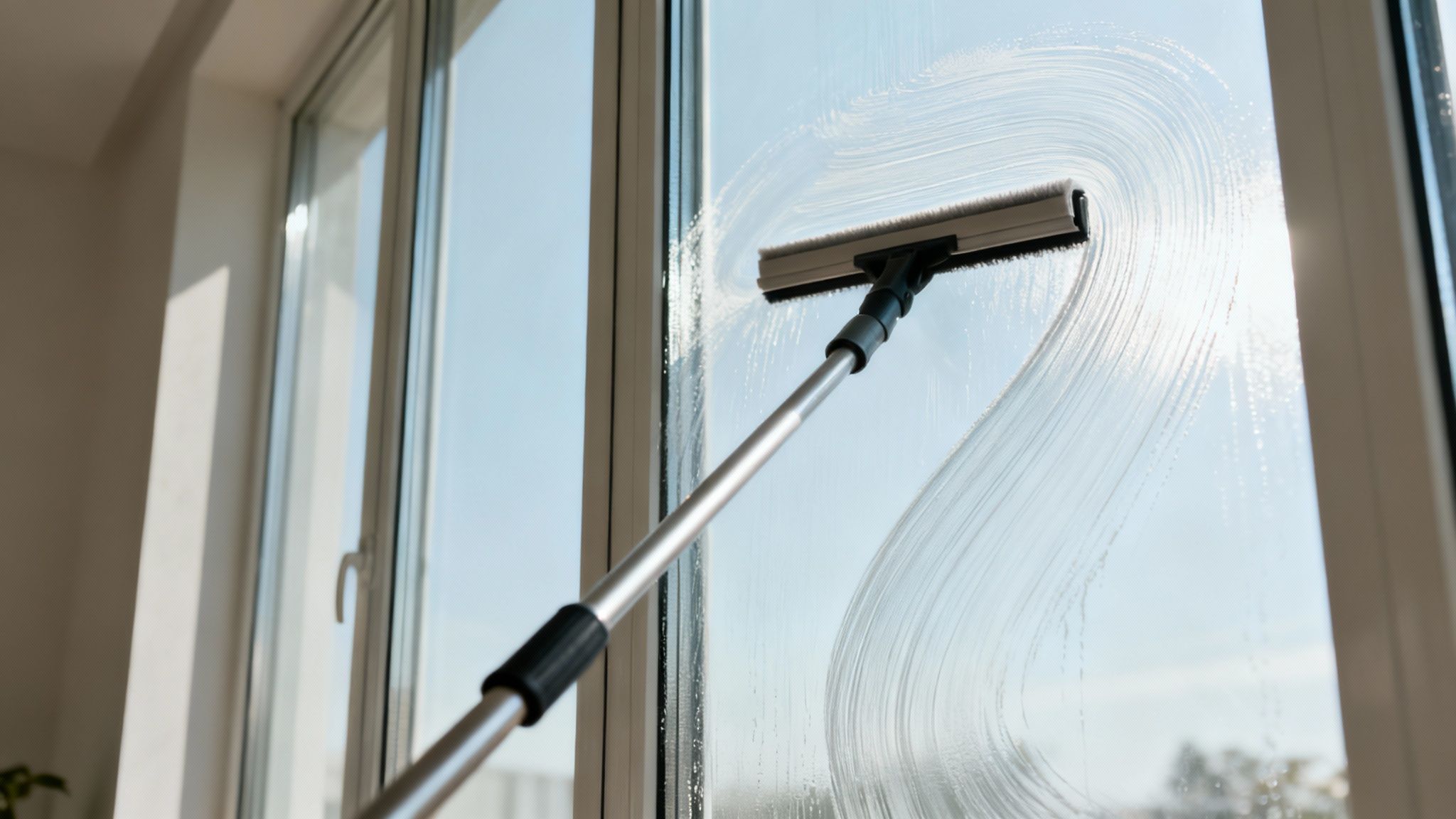
Alright, you’ve got your tools and you’ve done your safety checks. Now comes the part that really separates a so-so job from a professional, sparkling finish. Getting that streak-free shine isn’t about brute force; it's all about technique. The little details are what truly count here.
Before you even think about getting the glass wet, take a minute to prep the area directly below the window. Toss down some old towels or a drop cloth to protect your flowerbeds, deck, or patio furniture. This is a classic pro tip that saves you a ton of cleanup later.
Applying the Solution Evenly
Go ahead and dip your microfiber scrubber into your cleaning bucket. You want it fully saturated, but give it a light squeeze so it’s not a dripping mess. Attach it to your extension pole and start at the very top of the window, working your way down. Use big, overlapping strokes to make sure the entire pane is evenly coated. You don't want any spots drying before you get to them with the squeegee.
If you see any stubborn grime, like bird droppings or baked-on dirt, give those spots a bit more of a scrub. Getting the heavy stuff off first makes the squeegee's job much easier and far more effective.
Mastering the Squeegee Pull
This is where the real skill comes in. The gold standard for window cleaners is the “S-Method”—a smooth, continuous motion that clears the entire pane of glass without leaving those annoying start-and-stop lines. It definitely takes some practice to get the hang of, but it's way more efficient than just pulling straight down.
Here’s how to nail the S-Method:
- Create a Dry Edge: First, take a clean microfiber cloth and wipe a one-inch dry strip along the top and down one side of the window pane. This gives your squeegee a clean, dry place to start and stops it from dragging water back from the frame.
- Get the Right Angle: Place the squeegee in the top corner of your dry zone. Angle it slightly so that only the very edge of the blade touches the glass—about a quarter of an inch. Apply light, even pressure.
- Start the Motion: Pull the squeegee across the top dry strip, then pivot and begin working your way down the window in a fluid, "S" pattern. The key is to overlap each stroke by about an inch.
The single most important habit you can develop is wiping your squeegee blade with a clean, dry cloth after every single pass. This is non-negotiable. Re-using a dirty blade is the #1 cause of streaks.
Once the main glass is done, grab a fresh, dry microfiber cloth to detail the edges. Wipe away any little drips in the corners or on the windowsill for that perfectly polished, finished look.
If you're really looking to up your game, these 3 proven ways to dry windows without leaving streaks are a great resource for perfecting your technique.
Cleaning High Interior Windows Without the Mess
Bringing the job indoors introduces a whole new set of challenges. How do you get that same sparkling, streak-free shine without dripping water all over your floors, furniture, and walls? Learning how to clean high windows inside is really a game of control and smart preparation. The last thing anyone wants is to create a bigger mess than the one you started with.
First things first, protect the room. Before you even mix your cleaning solution, lay down a plastic tarp or a few old towels right under the window you're about to tackle. This simple step is your insurance policy against stray drips, making cleanup a non-issue, especially if you're working over carpet or nice hardwood floors.
The No-Drip Cleaning Method
The secret to a clean interior job is using just enough solution to cut through the grime, but not so much that it starts running down the glass. A fantastic strategy for indoor work is to lightly mist your microfiber scrubber with a spray bottle instead of soaking it in a bucket. This gives you total control over how much liquid you’re applying.
For an effective and indoor-safe cleaning mix, combine equal parts distilled water and white vinegar in your spray bottle. Then, add just one or two drops of dish soap. Seriously, that's it. Any more than that and you'll be fighting a war against suds, which are a nightmare to manage indoors.
Your squeegee is your best friend when working inside because it's the ultimate tool for preventing runs. Some models even have an attachment for a small drip-catching tray that sits right below the blade—a total game-changer for keeping things tidy.
As soon as you finish a pass with the squeegee, grab a dry microfiber cloth and follow right behind. Use it to detail the edges of the glass and wipe down the window frame and sill. This final touch catches any leftover moisture before it can even think about dripping, guaranteeing a perfect finish with zero collateral damage. This is especially important for those tricky spots, like windows above a stairwell or in a room with vaulted ceilings, where a single drip can travel a long way down.
There's a certain satisfaction that comes with a job well done, especially one you've done yourself. But when it comes to cleaning high windows, part of knowing how to do the job is knowing when not to. Sometimes, the smartest move is to put down the squeegee and pick up the phone. This isn't giving up; it's about being smart, staying safe, and getting a perfect, streak-free finish without risking your neck.
Take a good, honest look at the task ahead. Are we talking about second-story windows you can comfortably reach with an extension pole? Or are you staring up at a third-floor window that feels a mile away? Once you get into that third-story-and-higher territory, the whole game changes. The risks multiply, and frankly, it becomes a job for someone with specialized gear and serious training. The same goes for tricky architectural glass—if you have oddly shaped panes or specialty tinted windows, a wrong move with the wrong cleaner could cause permanent damage.
The Real Value of Calling a Pro
When you hire a professional window cleaner, you're not just paying for clean glass. You're buying peace of mind. These folks show up with industrial-grade equipment that most homeowners don't have lying around, not to mention full insurance coverage and years of experience that let them work safely and efficiently.
So, when is it definitely time to call in the cavalry? Here are a few clear signs:
- Serious Heights: Any window that puts you in a position that feels even slightly unstable. If you're stretching precariously or feeling your stomach drop while on a ladder, it's time to stop.
- Impossible Stains: You've tried everything, but those stubborn hard water spots or mineral deposits just won't budge. Pros have access to solutions that can break down what consumer products can't.
- You're Out of Time: Let's be realistic. A job that could eat up your entire weekend is often just a few hours of work for a seasoned crew.
The professional cleaning industry is a massive, evolving field. Just to give you an idea, the global cleaning services market was valued at around $415.93 billion in 2024, and a big part of that is a shift towards sustainability. More and more customers are asking for eco-friendly options, and as a result, many window cleaning companies are going green. This trend is so strong that the market for green cleaning products is expected to blow past $11 billion by 2025. You can dig into more of the numbers with these window cleaning industry statistics.
At the end of the day, handing off a challenging window cleaning job to a professional protects your property from damage, frees up your valuable time, and—most importantly—keeps you safely on the ground.
Answering Your High-Window Cleaning Questions
Even when you've got your tools ready, a few questions always seem to come up before you start tackling those hard-to-reach windows. Getting the right answers can save you a lot of grief and ensure the job gets done right the first time. Here’s some advice on the most common questions I hear.
What's the Best Time of Day to Clean Windows?
My best advice? Wait for a cool, cloudy day. This is a pro tip for a reason. Direct sun is the biggest culprit behind streaky windows because it heats the glass and causes your cleaning solution to evaporate in seconds. That rapid drying leaves behind a hazy film that's a real pain to get rid of.
If you can't avoid a sunny day, your best bet is to work in the early morning or late afternoon. The key is to follow the shade around your house, cleaning windows only when the sun isn’t beating down on them.
And whatever you do, avoid windy days. A strong gust can whip a long extension pole around, making it dangerous and difficult to control. Wind also speeds up evaporation, leading to the same streaking problem as direct sun.
Can I Just Use a Vinegar and Water Solution?
You sure can. In fact, a simple 50/50 mix of white vinegar and distilled water is a classic for a reason—it’s cheap, eco-friendly, and cuts through most everyday dirt like a charm.
If you’re dealing with tougher grime, like greasy buildup from kitchen vents or a film from road traffic, just add a drop or two of dish soap into your spray bottle.
A word of caution: go easy on the soap. It’s tempting to think more suds mean more cleaning power, but they're incredibly difficult to squeegee off completely. Any soap residue left behind will dry into a film that attracts more dirt and dulls the glass.
How Often Should I Clean My High Windows?
For most homes, giving the exterior windows a good cleaning twice a year is plenty. This keeps your view crystal clear and prevents grime, pollen, and pollutants from etching into the glass over time.
The windows on the inside are more protected, so they usually only need attention once a year. That said, if you live near a busy street, a construction zone, or just a dusty area, you might find yourself needing to clean them more often to keep them looking sharp.
If the thought of tackling those heights is still a bit much, or you'd just rather have a professional handle it, Sparkle Tech Window Washing is ready to step in. Our insured and bonded team has the right equipment and experience to make every window gleam, no matter how high. Get a free estimate today!