




So, how often should you really be cleaning your solar panels? For most folks, a good rule of thumb is once or twice a year. But think of that as a baseline, not a hard-and-fast rule.
Finding Your Perfect Cleaning Rhythm
The truth is, the ideal schedule is less about a calendar and more about your surroundings. A solar array getting blasted by desert dust is going to need a lot more attention than one in a rainy suburban neighborhood where mother nature does some of the heavy lifting.
Where you live makes a huge difference. In dry, dusty regions, a single major dust storm can cake your panels in enough grime to slash their efficiency by up to 40%. In that kind of environment, you might need to clean them every couple of months. On the flip side, if you're in a place like the Pacific Northwest, the frequent rain can wash away most of the light dirt and pollen, meaning a good manual cleaning once a year might be all you need. If you want to dive deeper into this, Tongwei's blog has a great breakdown of how different climates affect solar panel soiling.
To get you started, here's a quick reference guide. It lays out some practical cleaning frequencies based on common environments.
Recommended Solar Panel Cleaning Frequency by Environment
Use this table as a quick reference to determine a starting point for your solar panel cleaning schedule based on your local environment.
| Environment Type | Common Pollutants | Recommended Cleaning Frequency |
|---|---|---|
| Suburban/Urban | Dust, pollen, vehicle exhaust, bird droppings | Every 6-12 months |
| Rural/Agricultural | Crop dust, pollen, bird droppings, insects | Every 6 months |
| Coastal | Salt spray, sand, bird droppings | Every 3-6 months |
| Desert/Arid | Dust, sand, windblown debris | Every 2-4 months |
| Industrial Areas | Soot, industrial fallout, grime | Every 3-6 months |
This chart should give you a solid foundation. From here, you can start observing your own panels and adjust the schedule to keep your system running at its absolute best.
What Determines Your Cleaning Frequency
Think of the "once or twice a year" rule as a general guideline, not a hard-and-fast rule. The real answer to how often you should clean your solar panels depends entirely on your specific environment. The secret to maximizing your energy output is to become a bit of a detective and create a cleaning schedule that’s perfectly tailored to your home’s surroundings.
A handful of key factors work together to determine how quickly dirt and grime build up on your system. Once you understand these, you can move beyond a generic calendar reminder and start cleaning your panels based on what they actually need.
Geographic and Climatic Influences
Where you live plays the biggest role. A home in a dry, dusty area is fighting a completely different battle than one in a rainy climate.
- Desert and Arid Regions: Fine dust and sand are the main enemies here. The wind can easily coat your panels in a hazy film that chokes out sunlight, often meaning you’ll need to clean them every 2 to 4 months.
- Coastal Areas: If you live near the ocean, you're dealing with salty sea air. That salt spray crystallizes on your panels, creating a stubborn, corrosive layer that can be a real pain to remove. A good cleaning is usually needed every 3 to 6 months.
- Heavy Rainfall Zones: Lots of rain can act like a natural rinse cycle, washing away light dust and pollen. In these places, you might only need to do a manual cleaning once a year. But don't get too comfortable—rain won't do much for oily grime or baked-on bird droppings.
It's not just about looks. Dirty solar panels can cause energy losses of around 7% annually in the United States. In some extreme cases, that number can jump to an astonishing 50%. Regular cleaning is about reclaiming the power you’re paying for.
Local and Seasonal Factors
Even within the same climate zone, local and seasonal events can throw you a curveball. These factors often require you to adjust your cleaning schedule on the fly.
A simple flowchart is a great way to visualize how to make the right call. This infographic breaks down how different environmental factors should guide your cleaning frequency.
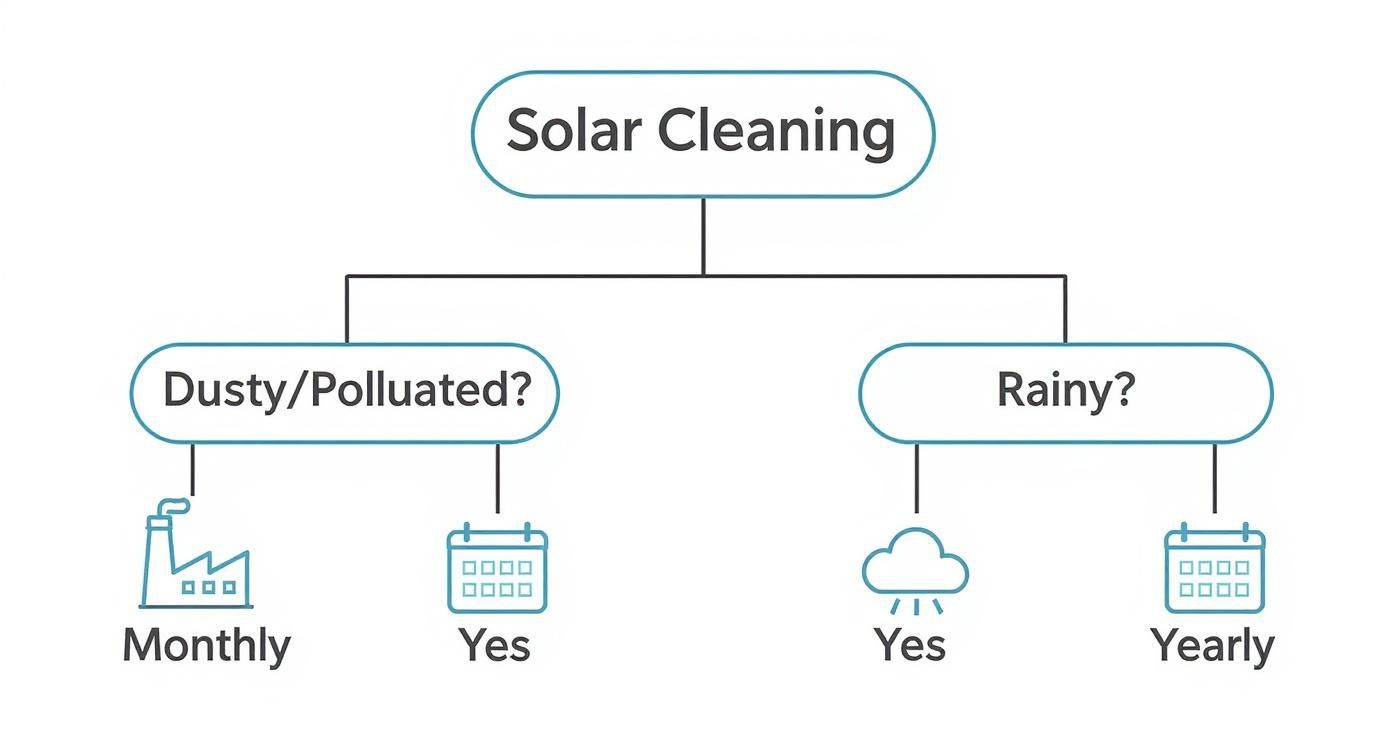
As you can see, things like high levels of dust and pollution are the main reasons for more frequent cleanings, while consistent rainfall lets you stretch the time between them.
Here are a few other common culprits to watch out for:
- Pollen Season: In the spring, that thick yellow film of pollen can blanket your panels, essentially acting like a filter that blocks sunlight.
- Wildfire Smoke and Ash: Ash is especially nasty. It's abrasive, and when it mixes with morning dew, it can form a thick sludge that rain simply can't wash away.
- Nearby Construction or Agriculture: Kicked-up dust from a construction site or nearby farm can soil your panels in a hurry, demanding more frequent attention.
- Industrial Pollution or Urban Smog: Soot and oily residues from heavy traffic or industrial plants create a sticky grime that really bonds to the panel surface.
By figuring out which of these factors impact your home, you can put together a cleaning strategy that actually works. Of course, having the right tools makes all the difference. Check out this guide to the best solar panel cleaning equipment to make sure you're ready for whatever your local environment throws at your panels.
The Real Cost of Neglecting Your Solar Panels
Figuring out how often to clean your solar panels goes way beyond just aesthetics. It’s a core part of protecting your investment and making sure your system actually delivers the savings you were counting on.
A dirty solar panel is an underperforming one, plain and simple. Think of that thin layer of dust, pollen, or city grime as a film that’s blocking the very sunlight your panels need to generate power. This isn't just a tiny dip in performance; a serious buildup can cut your energy production by 10-25%.
That loss in efficiency hits you directly in the wallet. Every kilowatt-hour your panels don't produce is another one you have to purchase from the grid. This means higher monthly bills and a much longer payback period for your solar investment.
Frame it this way: Cleaning isn't just a maintenance chore; it's a smart financial move. You're essentially paying to get back the energy your system was designed to produce in the first place.
Weighing the Cost Against the Benefit
This is where the math really makes sense. For most homeowners, professional cleaning is a worthwhile expense, especially when you stack it up against the energy savings you get back. A dirty panel can easily cost a typical household hundreds of dollars in lost savings over the course of a year. You can look into the specific costs associated with solar panel cleaning services to see how the numbers pencil out for your area.
For commercial operations, the financial stakes are even higher. A large solar farm that loses just 5% of its efficiency could be giving up tens of thousands of dollars in annual revenue. In that context, routine cleaning becomes an absolute economic necessity. Read more about how scheduling cleaning maintains optimal efficiency on bearworx.in.
Once you grasp the direct link between cleanliness and financial return, the question of how often to clean your panels changes. It stops being about maintenance and starts being about wisely managing a high-value asset.
How to Spot a Solar Panel That Needs Cleaning
Forget about a strict cleaning schedule. The best way to know when it's time to clean your solar panels is to let them tell you. Learning to spot the signs of a dirty system is far more effective than just picking a date on the calendar.
There are two great ways to do this: a simple visual check and a quick look at your system's performance data. Both are easy and give you a clear, real-time picture of your panels' health.
Visual Inspection Techniques
The quickest method is to just look at them. You can often spot the biggest problems right from the ground, no ladder required.
Keep an eye out for anything obvious that a good rain shower hasn't managed to wash away:
- Thick films of dust that make the panels look cloudy or dull.
- Streaks and smudges, which often appear after a light rain mixes with existing grime.
- Bird droppings, which are not only ugly but also acidic and can bake onto the glass.
- Visible debris like clumps of leaves, heavy pollen buildup, or a layer of ash.
Try looking at your panels from a few different angles. Sometimes a thin layer of dirt is only visible when the light hits it just right. For larger systems or to get a really detailed look without getting on the roof, tools like solar panel inspection drones can give you a perfect bird's-eye view.
Monitoring Your Energy Output
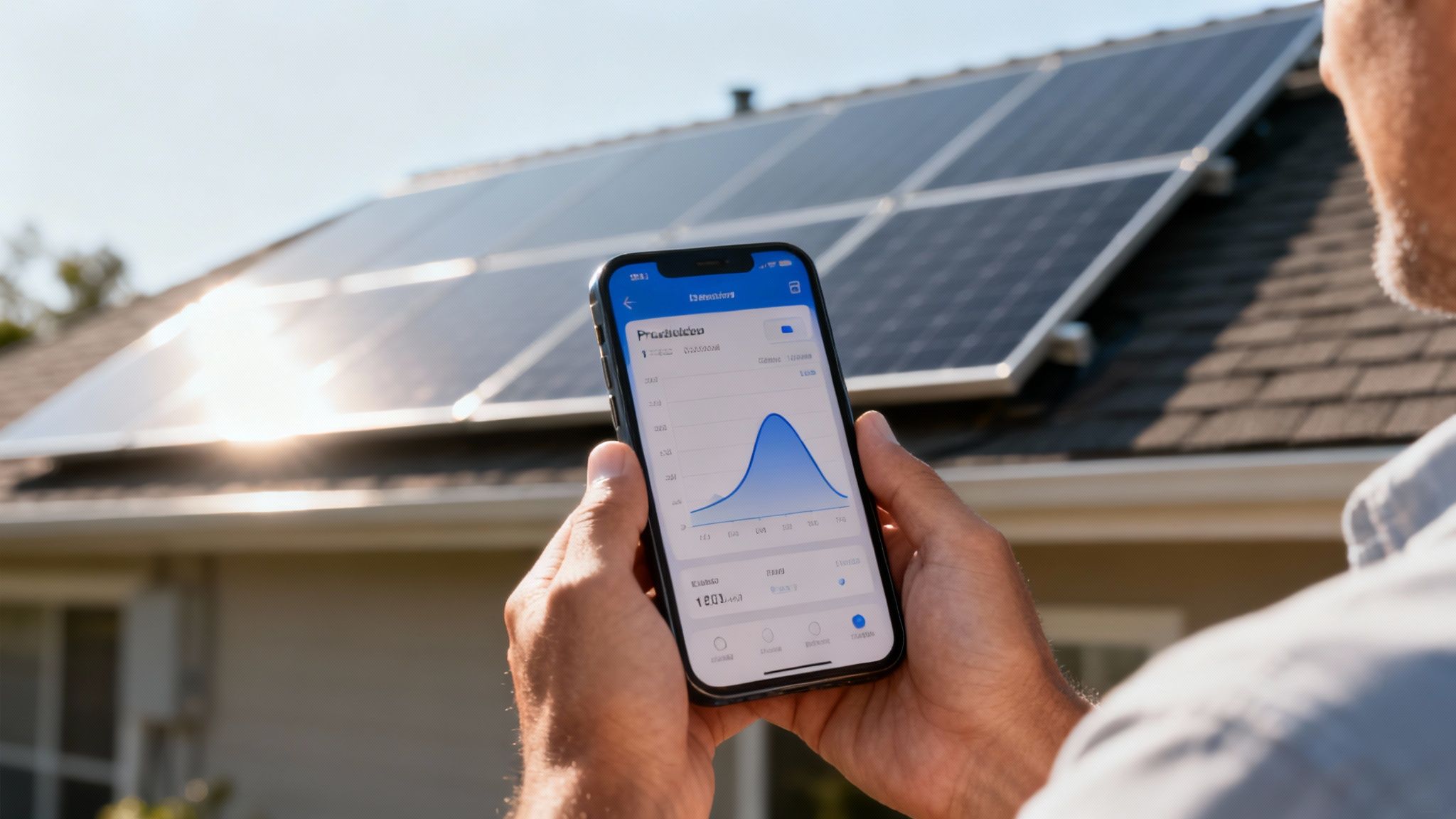
Your solar monitoring app is your secret weapon here. It shows you the hard numbers, taking all the guesswork out of the process.
A sudden or gradual drop in energy production that can't be explained by cloudy weather is a classic sign that your panels are dirty.
When you're checking your app, look for any unusual dips in power generation. A smart move is to compare your current output to what your system produced on a similar sunny day last month, or even this time last year.
If you see that your production is noticeably lower despite nearly identical weather, a layer of dirt is almost always the reason. This data-first approach means you clean when it's actually needed, keeping your panels working at their best.
Deciding Between DIY and Professional Cleaning
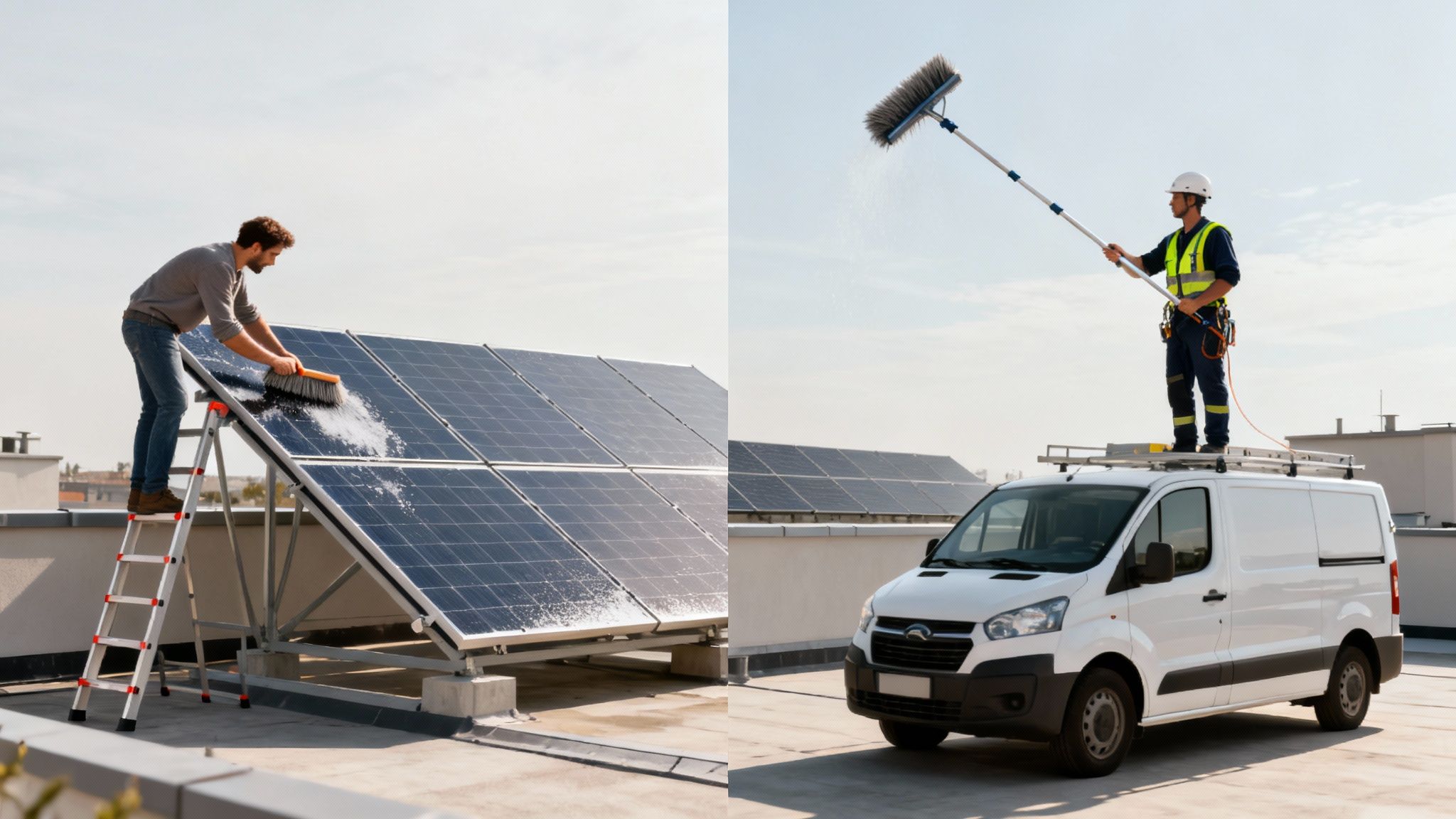
So, you've figured out your panels could use a good cleaning. Now comes the big question: should you do it yourself or call in the pros? There's no single right answer here. It really boils down to your comfort level with heights, the complexity of your setup, and your budget.
Going the DIY route can definitely save you some money upfront, but it's not a decision to take lightly. Safety is the number one concern. You're dealing with a high-voltage system, often on a slanted roof, which is a risky combination without the right experience and gear.
If you do decide to clean the panels yourself, you have to be careful not to damage your investment. Using the wrong tools or techniques can do more harm than good.
The DIY Cleaning Route
Cleaning your own panels means getting the right gear. Think gentle tools—a soft-bristle brush on an extension pole and a good squeegee are your best friends here. Whatever you do, stay away from high-pressure washers or harsh, abrasive soaps. They can easily scratch the glass or strip the anti-reflective coating, which could even void your warranty.
For a complete walkthrough of the process, we've put together a guide on how to clean solar panels safely.
Knowing what tools to use is half the battle. It's worth looking into what the professionals use; you can find great information on the best solar panel cleaning equipment to make sure you're properly set up for the job.
When to Hire a Professional
Bringing in a professional service takes all the guesswork and risk out of the equation. They show up with specialized tools, like water-fed poles and purified water systems that leave a streak-free finish without any mineral deposits. Plus, they have the experience to tackle tough buildup without damaging the panels.
Perhaps most importantly, a reputable cleaning service is fully insured. That means if anything goes wrong, you and your property are protected.
The professional solar maintenance industry is growing for a reason. Projections show the global solar panel cleaning market is set to hit $2.44 billion by 2033. This isn't just a niche service anymore; it's a critical part of making sure solar investments perform at their best for years to come.
For most people, especially those with steep roofs, two-story homes, or just a healthy fear of heights, hiring a pro is the smart move. The peace of mind and the quality of the results are almost always worth the investment.
Your Solar Panel Cleaning Questions, Answered
Let's wrap up by tackling some of the questions I hear most often from homeowners. Getting these details right can make all the difference in keeping your solar setup running smoothly.
Can I Just Let the Rain Clean My Solar Panels?
I wish it were that simple! While a good rainstorm can definitely wash away a top layer of loose dust, it’s no replacement for a real cleaning. Rain alone just can't handle the tough stuff.
Think about things like caked-on bird droppings, sticky tree pollen, or the oily film that builds up from nearby traffic. Rainwater won’t touch it. In fact, in areas with a lot of air pollution, the rain can sometimes leave behind a dirty residue after it dries, making things even worse. It's like trying to wash a muddy car by just letting it sit in a light drizzle—you'll still have a dirty car.
What’s the Best Time of Day to Clean Panels?
Timing is everything here. You’ll want to clean your panels either early in the morning, late in the evening, or on a cool, overcast day. The one thing you absolutely want to avoid is cleaning them in the heat of the day under direct, blazing sun.
There’s a very practical reason for this.
When panels are hot, any water you spray on them evaporates almost instantly. This leaves behind streaks and mineral deposits that can actually reduce your panels' efficiency, which is the exact opposite of what you’re trying to achieve!
Working on a cool surface gives your cleaning solution time to do its job and allows you to rinse it off properly for a crystal-clear, spot-free finish.
Will I Void My Warranty if I Clean My Own Panels?
This is a big one, and the short answer is no—as long as you do it correctly. Following your manufacturer's specific cleaning instructions will not void your warranty. The problems start when people use methods or tools that can damage the panels.
To keep your warranty safe, steer clear of these common mistakes:
- Never use a high-pressure washer. The force can damage the seals around the panel and force water inside.
- Avoid harsh chemicals and abrasive scrubbers or sponges. They can scratch the glass surface permanently.
- Don’t walk, kneel, or put any direct weight on the panels.
Your best bet is to dig out the manual that came with your panels and see what the manufacturer recommends. If you're unsure or just want to play it safe, hiring an insured, professional cleaner is the smartest way to protect your investment.
Keeping your solar panels clean isn't just about looks; it's about protecting your investment and getting every bit of energy you paid for. For a professional, streak-free clean that's completely safe for your system, trust the experts at Sparkle Tech Window Washing. Schedule your professional solar panel cleaning service today!