



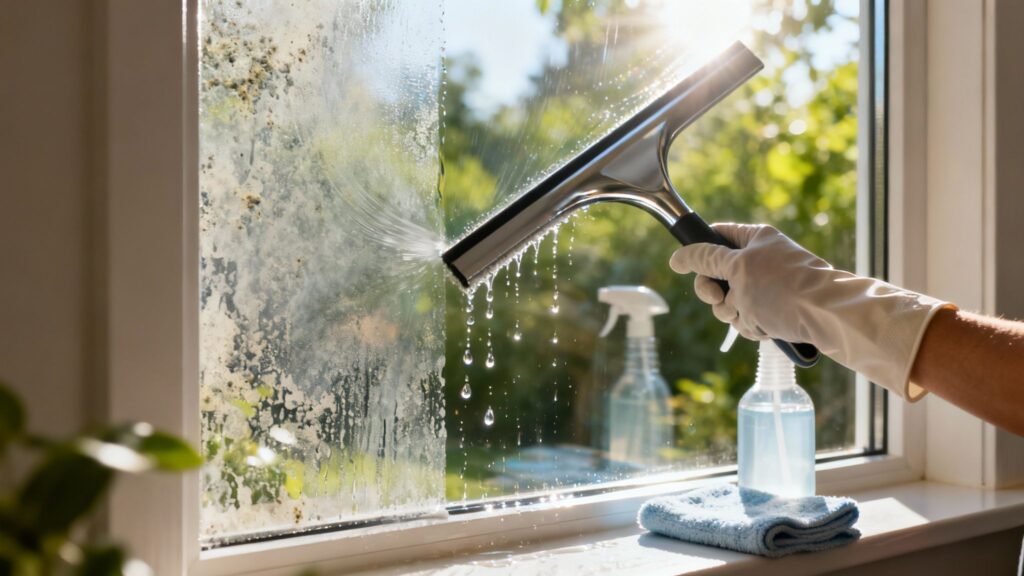
Those frustrating, chalky spots on your windows are a common headache, especially after the sprinklers have run or a recent rain shower. The good news? You can often get rid of them with a simple 50/50 mix of white vinegar and distilled water. This acidic solution is great at dissolving fresh mineral deposits.
Of course, for more stubborn, built-up stains, you'll need to bring in some tougher methods.
Why Do Water Spots Form on Windows Anyway?
Ever wonder what those spots actually are? They aren't just dried water. They're the minerals that the water left behind when it evaporated. This is the classic sign of "hard water," an issue that impacts a huge number of homeowners. In fact, over 85% of U.S. households deal with hard water.
When a droplet dries on your glass, minerals like calcium and magnesium stay put. At first, they just sit on the surface. But give them a little time, especially with some sun baking them on, and they can chemically bond with the glass. This creates a semi-permanent stain that your average Windex just won’t touch.
Figuring Out How Bad Your Water Spot Problem Is
Not all water spots are the same. Before you start scrubbing, it's smart to figure out what you're up against. They usually fall into one of three buckets:
- Light Mineral Stains: These look like faint, cloudy spots. They’re fresh, haven't bonded deeply yet, and are the easiest to clean.
- Heavy Mineral Buildup: Spots that have been there for weeks or months will form a visible, milky-white layer. If you run your finger over it, it might feel a little rough.
- Etched Glass Damage: This is the worst-case scenario. The alkaline minerals have actually corroded the glass surface, leaving a permanent "ghost" of the spot even after the deposit is gone.
To figure out the best approach, you can follow a simple decision-making process.
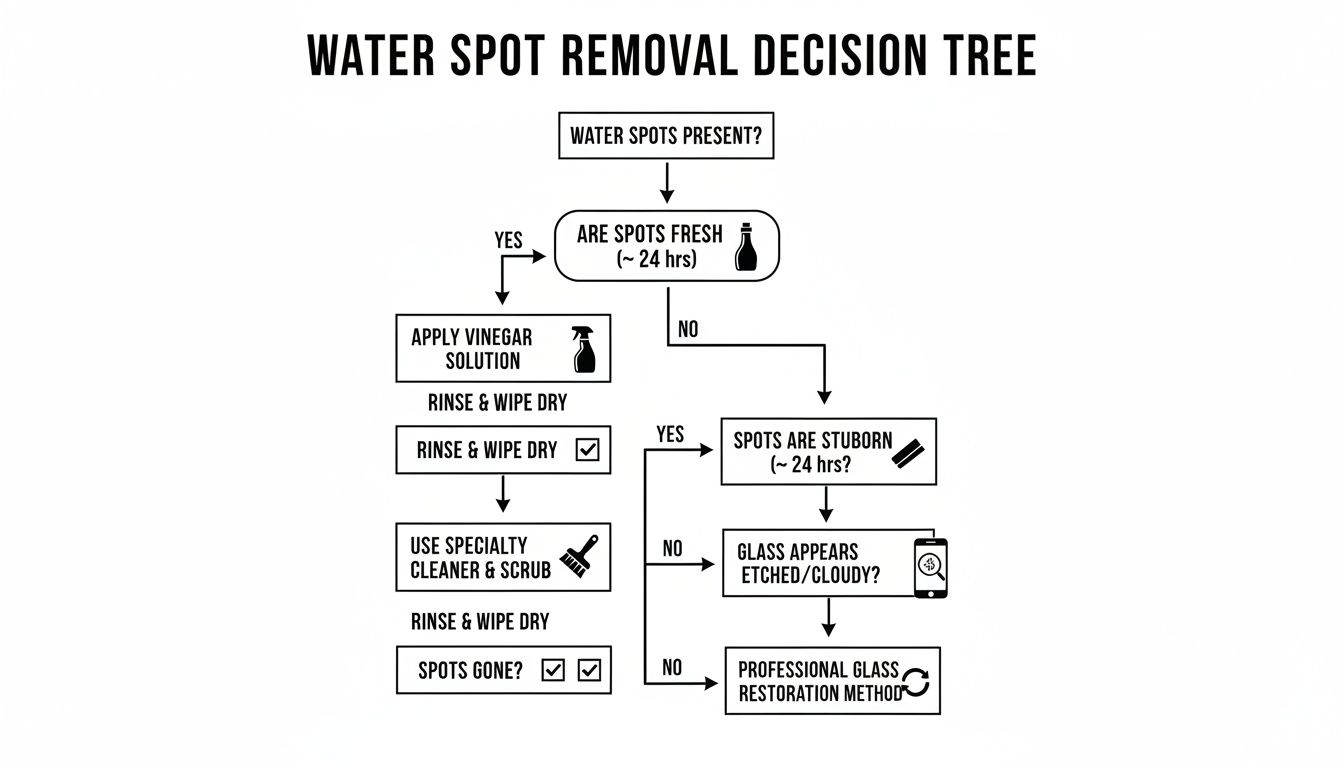
As you can see, while a DIY approach works great for fresh spots, serious damage often requires a professional touch.
The science behind how water behaves on glass is pretty interesting, and you can learn more about it by understanding the difference between hydrophilic and hydrophobic glass. While simple vinegar solutions can successfully remove about 80% of mild spots, professional-grade polishing pastes are effective in over 95% of cases involving tougher, more established stains.
Water Spot Removal Methods At a Glance
To help you choose the right tactic, here’s a quick comparison of the most common methods for tackling water spots.
| Method | Best For | Required Materials | Effort Level |
|---|---|---|---|
| Vinegar & Water | Light, fresh mineral stains (Stage 1) | White vinegar, distilled water, spray bottle, microfiber cloths | Low |
| Lemon Juice | Light to moderate stains, especially on coated glass | Fresh lemons or lemon juice, microfiber cloths | Low |
| #0000 Steel Wool | Moderate, stubborn mineral buildup (Stage 2) | Super-fine #0000 steel wool, lubricant (soapy water), cloths | Medium |
| Polishing Compound | Heavy buildup & early-stage etching (Stage 2/3) | Glass polishing compound, applicator pad, buffer (optional) | High |
This table should give you a clear idea of where to start. Always begin with the least aggressive method and only move to a stronger one if necessary to avoid accidentally damaging your glass.
Getting Your Toolkit Ready
Before you even think about tackling those water spots, the first and most critical step is gathering the right gear. Trust me, having the proper supplies on hand is the difference between a frustrating afternoon and a job well done. It’s what separates a smeary mess from a perfect, streak-free shine.
Your best friends in this fight are going to be your cloths. Forget old t-shirts or cotton rags. You absolutely need high-quality microfiber cloths. Their magic is in the weave—it grabs onto dirt and soaks up water without leaving linty fuzzballs all over your clean glass. Plan on having at least two: one for cleaning and a second, bone-dry one for buffing.
The Core Cleaning Arsenal
Now, let's talk about how you'll apply your cleaner and get it off the glass. Paper towels are a no-go; they fall apart and leave a hazy film behind.
- Spray Bottles: Grab a couple of decent spray bottles. If you're mixing up a homemade vinegar solution, label it clearly so you don't grab the wrong thing later.
- A Good Bucket: For bigger jobs or just for rinsing out your cloths, you can't go wrong with a simple five-gallon bucket. It's a must-have.
- A Pro-Quality Squeegee: This is the secret weapon. A good squeegee with a sharp, flexible rubber blade whisks away every bit of liquid in one clean pass. This is the key to stopping new water spots from forming as the glass dries.
I can't stress this enough: investing in a professional-grade squeegee is one of the smartest things you can do for your windows. It cuts your drying time to almost zero and is the single best tool for eliminating streaks.
Safety Gear and Other Essentials
Don't forget to protect yourself, especially if you're working with stronger commercial cleaners. A good pair of protective gloves will save your skin from drying out or getting irritated.
If you're curious about what the pros have in their vans, take a look at our detailed guide on the best window cleaning tools. It covers some of the more specialized equipment that can really up your game. Once you've got your toolkit assembled, you’ll be ready to get those windows looking brand new.
Tacking Light Water Spots With Household Remedies
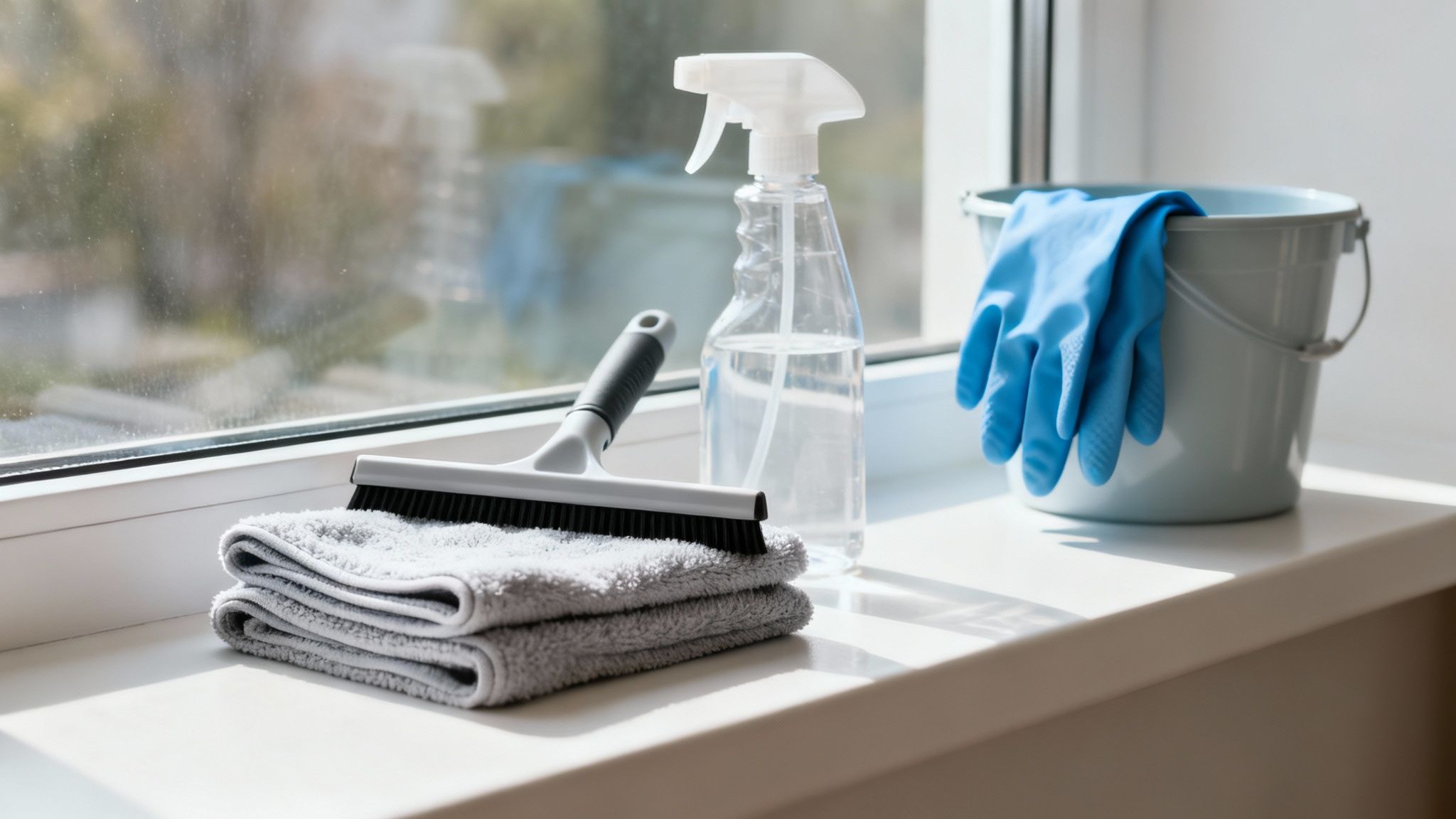
If you’ve noticed those faint, cloudy spots on your windows but they haven't been there for long, you’re in a good spot. The fix is probably already in your kitchen cabinet. You don’t need to reach for heavy-duty chemicals to get rid of fresh mineral deposits from hard water.
One of the most reliable and effective methods I've seen over the years is a simple mix of white vinegar and water. The magic is in the vinegar's acetic acid, which does a fantastic job of breaking down the alkaline minerals—like calcium and magnesium—that cause those pesky spots.
The key to making this work is getting the ratio right. For most light water spots, a 50/50 mixture of white vinegar and distilled water is perfect. Here’s a little pro tip: always use distilled water. It's completely free of minerals, so you're not accidentally trading old spots for new ones while you clean.
Putting Your Vinegar Solution to Work
Grab a clean spray bottle and mix your solution. Using a sprayer gives you great control and helps you coat the glass evenly without a dripping mess.
- Spray it on: Go ahead and liberally spray the vinegar solution directly onto the spotted areas of your window. You want the glass to be thoroughly wet so the acid can really do its thing.
- Let it sit: This part is crucial. Don’t wipe it off right away! Let the solution dwell on the glass for about 2 to 5 minutes. This is the "dwell time" that allows the vinegar to dissolve the mineral bonds.
- Wipe and dry: Take a clean microfiber cloth and wipe the glass with firm, circular motions. Follow up with a second, completely dry microfiber cloth to buff it all to a brilliant, streak-free shine.
This simple technique is incredibly effective. In fact, white vinegar solutions can dissolve up to 85% of fresh water spots in just a few minutes. It's a method grounded in basic science that delivers consistent results, easily outperforming plain water.
When You Need a Bit More Muscle
Every now and then, you’ll run into spots that are a little more stubborn but don't quite warrant breaking out the serious chemicals. This is where another kitchen staple, baking soda, comes in handy.
Baking soda works as a gentle abrasive, giving you just enough scrubbing power to lift those tougher deposits without scratching your glass. All you have to do is make a simple paste.
Mix a few tablespoons of baking soda with just enough water to create a thick, spreadable paste. Dab this paste directly onto the stubborn spots with a soft cloth, then gently rub the area in a circular motion. Just let the paste do the work with light pressure.
Afterward, you’ll want to rinse the glass thoroughly with clean water to get all the residue off. Finish by drying it with a squeegee or a fresh microfiber cloth for that perfect finish.
The real secret here is patience, not pressure. Let the paste gently lift the minerals. Pushing too hard won't help and could potentially harm the glass.
These household solutions are fantastic starting points and are often all you need for minor jobs. If you're curious about other DIY recipes, our guide to the https://sparkletechwindowwashing.com/best-homemade-window-cleaning-solutions/ has plenty of great options. The same principles of tackling tough grime apply to other surfaces, too; for instance, checking out some expert solar panel cleaning tips can give you a fresh perspective on outdoor cleaning challenges.
Advanced Techniques for Stubborn Mineral Buildup
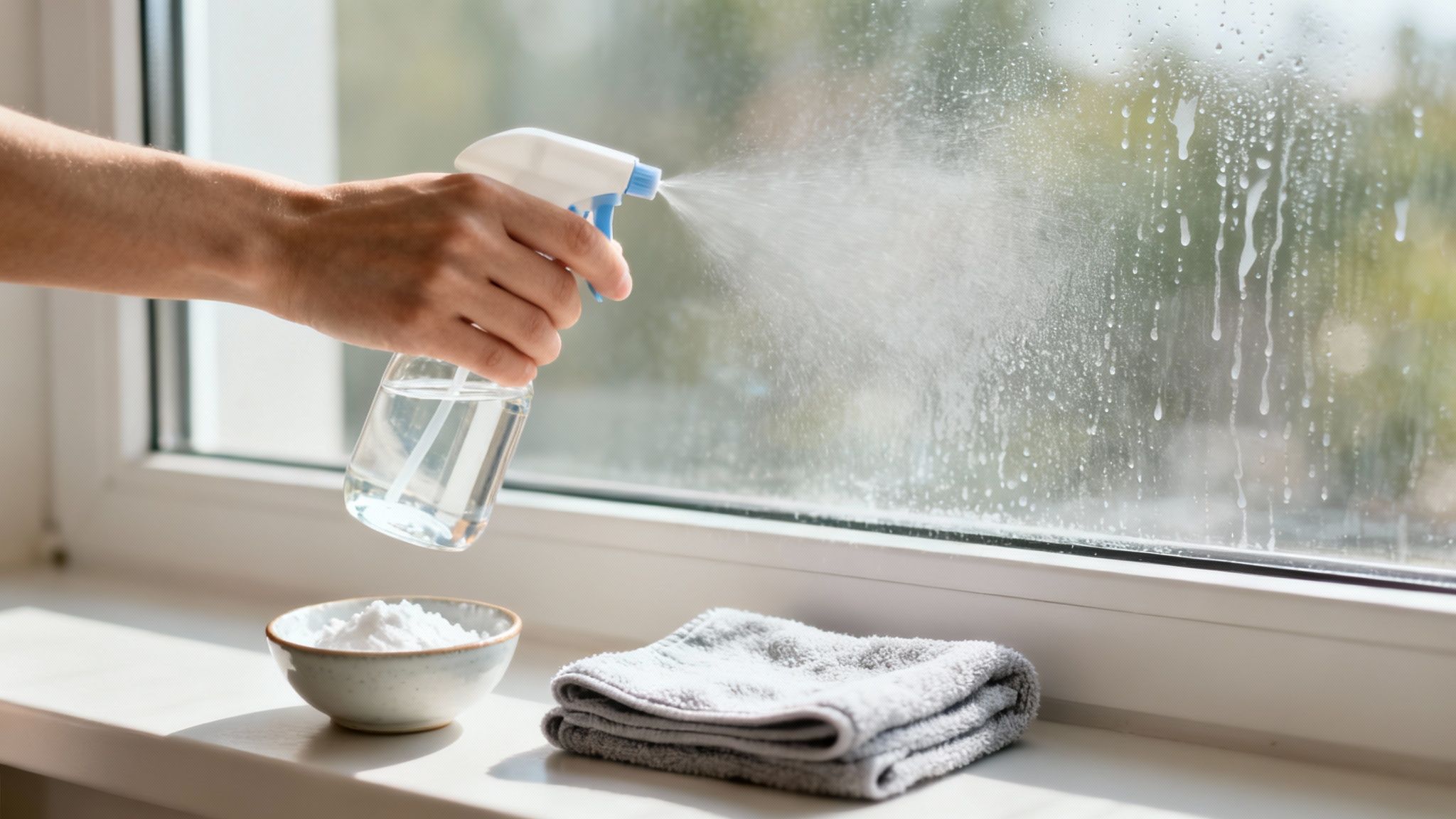
So, the vinegar and baking soda trick didn't make a dent. You're now staring at those stubborn, milky stains that look almost etched into the glass. This is what happens when mineral deposits have had weeks, months, or even years to chemically bond with the surface. It's time to bring out the heavy hitters.
When you're asking "how do I remove water spots from windows" that seem permanent, the answer is to graduate to specialized commercial cleaners or carefully applied professional techniques. These are designed to break down those long-term deposits without damaging the glass itself.
Using Commercial Water Spot Removers Safely
For deeply ingrained mineral stains, a high-quality commercial water spot remover can be a game-changer. These formulas typically contain mild acids or super-fine abrasives that are far more effective than anything you can mix up in the kitchen.
But before you go to town on your windows, here’s the single most important rule: always test the product on a small, inconspicuous area first. A lower corner hidden by a curtain or a bush is perfect. This quick check ensures the cleaner won’t cause a bad reaction with your specific type of glass or any factory coatings it might have.
Once you’ve confirmed it's safe, here’s how to get the best results:
- Apply a small amount of the remover to an applicator pad or a microfiber cloth—not directly onto the glass. This gives you much better control.
- Work the product into the stained areas using firm, overlapping circular motions. You don't need brute force; let the chemical compounds do the heavy lifting.
- Let it sit for the time recommended on the label, but whatever you do, never let it dry on the window.
- Wipe the residue away with a clean, damp cloth.
- Finish by cleaning the whole window with your regular glass cleaner to remove any lingering haze and bring out that crystal-clear shine.
The Professional Trick: Using Steel Wool
For the absolute toughest, most etched-in spots, sometimes even a powerful chemical cleaner needs a little help. This is where a bit of mechanical abrasion can physically lift the mineral deposits off the glass, and it's a technique straight from the pros' playbook.
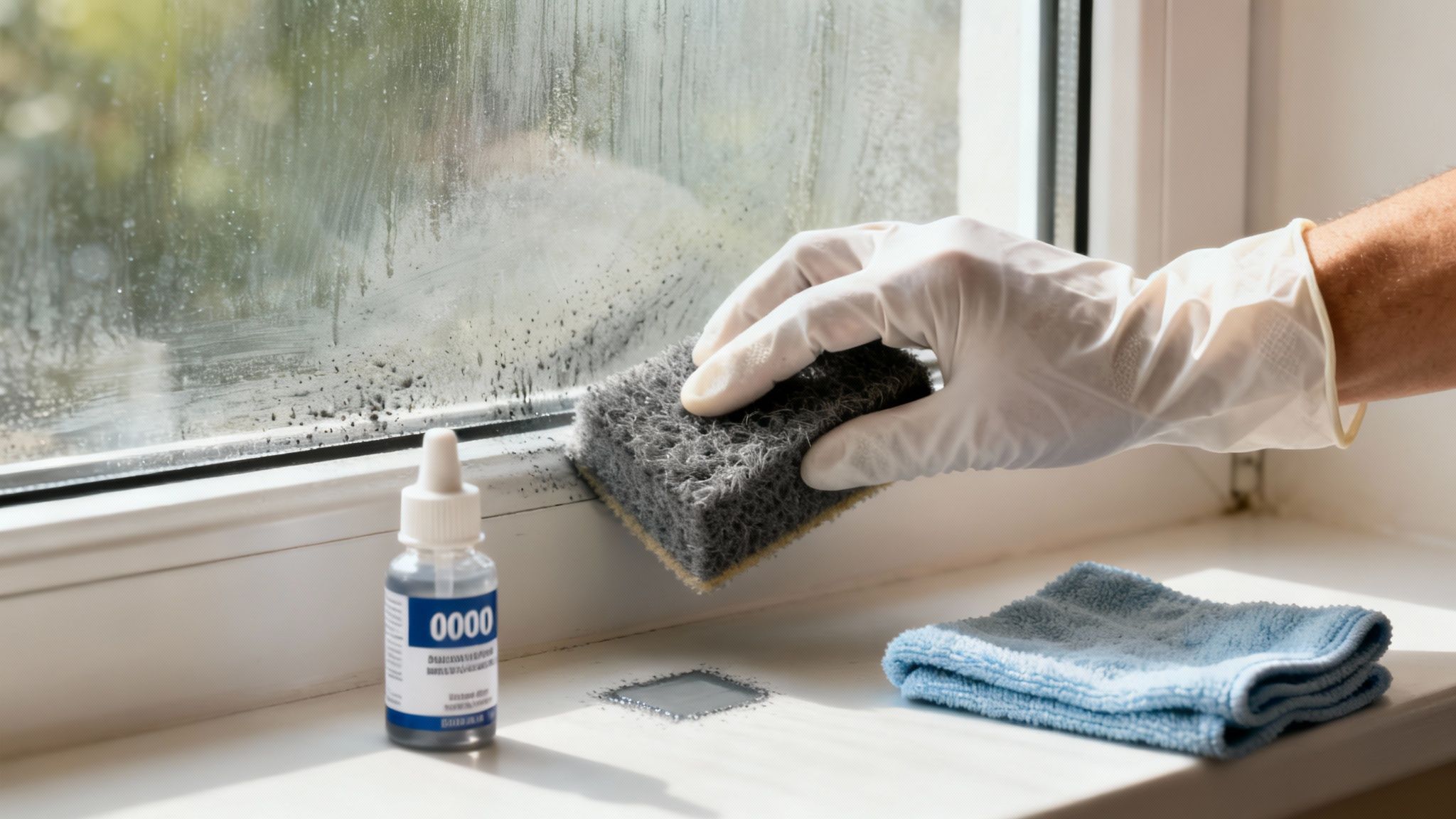
I know it sounds terrifying, but we're talking about #0000 grade steel wool. That's "quadruple-ought"—the absolute finest grade you can buy. Anything coarser will absolutely scratch your glass, so double and triple-check the packaging before you start.
The key to this entire method is lubrication. I can't stress this enough: never, ever use steel wool on dry glass. You need a slippery buffer to let the wool glide over the surface and lift the deposits without causing any scratches.
A generous spray of your favorite glass cleaner or even plain soapy water works perfectly as a lubricant. The goal is to keep the surface wet and slick the entire time you are working.
Gently rub the lubricated area with the #0000 steel wool using small, circular motions and light, even pressure. As you work, you’ll literally feel the surface getting smoother as the mineral buildup comes off. It's best to work in small sections, wiping frequently with a microfiber cloth to check your progress. This method, which has roots in auto detailing since the 1990s, is known to safely resolve up to 95% of etched glass spots.
Interestingly, consumer data shows that 62% of buyers also gave commercial chemical removers top ratings for tackling deep stains without causing surface damage. If you're curious about why this happens in the first place, you can learn more about the effects of water on window cleaning to better understand the enemy.
How to Keep Water Spots from Coming Back
After all that hard work getting your windows crystal clear, the last thing you want is to see those frustrating white spots creep back in. The good news? Keeping them away is way easier than scrubbing them off. It’s all about getting ahead of the problem.
The trick is to stop mineral-heavy water from ever drying on the glass to begin with. With a couple of smart strategies, you can create a barrier that keeps your view pristine for much longer.
Apply a Protective Hydrophobic Coating
Honestly, one of the best things you can do for long-term prevention is to treat your glass with a hydrophobic coating or a good glass sealant. It’s a lot like waxing your car—you're creating an invisible shield that makes water behave completely differently.
Instead of clinging to the glass, water beads up and rolls right off. As it rolls away, it takes all those pesky minerals with it. You'll often hear this called the "lotus effect."
By making the glass surface water-repellent, you're stopping the problem at its source. Water can't evaporate on the glass if it can't stick around, which means no mineral deposits get left behind.
Applying these treatments is usually pretty simple:
- Start with squeaky-clean glass. Make sure it’s completely dry and free of any old spots or cleaner residue.
- Apply the sealant with a microfiber applicator pad. Just follow the directions on the bottle for how much to use.
- Let it cure. Give it the time it needs to set, then buff off any leftover haze with a fresh, dry microfiber cloth.
A decent sealant can last for months, making this a fantastic low-effort way to keep your windows looking great.
Adjust Your Sprinklers and Habits
Beyond coatings, a few small changes around the house can make a world of difference. These tips target the most common culprits behind those stubborn water spots.
Nine times out of ten, the biggest offender is a sprinkler system gone wild. Take five minutes to walk your property while they're running. Are they watering your lawn or your living room windows? Adjust the sprinkler heads to aim their spray where it belongs—on the grass and garden, not your house. This one fix can solve a massive headache.
Another game-changing habit is to grab a squeegee whenever your windows get wet. After a wash or even a heavy rain, a quick pass with a quality squeegee pulls nearly all the water off the surface in seconds. No water, no evaporation, no spots. It’s as simple as that. By pairing these proactive steps, you can finally win the war against recurring water spots.
When You Should Call a Professional Window Cleaner
While the DIY methods we've covered are fantastic for most situations, there comes a point where tackling water spots yourself might not be the best or safest choice. Knowing when to hand the squeegee over to an expert is a key part of smart home maintenance, protecting both you and your glass.
The most obvious sign? Safety. If your problem windows are on the second story or in a spot that’s tough to get to, perching on a ladder with a bucket and tools is a recipe for disaster. Professionals have the training and specialized equipment—like harnesses and water-fed poles—to handle those heights safely and efficiently.
Recognizing Stubborn Stains and Etched Glass
Sometimes, the issue isn't access but the sheer stubbornness of the stains. If you’ve already tried the more advanced cleaning techniques and that mineral buildup just won’t budge, you're likely dealing with etched glass. This is when the minerals have literally corroded the surface, creating damage that a simple cleaner can't reverse.
A quick pro tip: run your fingernail over a stubborn spot. If you can feel a distinct roughness or a ridge, that's a classic sign of etching. At this point, you need more than a cleaner; you need restoration.
This is where the professionals really shine. They come equipped with tools that are well beyond a typical homeowner's garage arsenal. Many use water-fed pole systems that pump purified water, which contains zero minerals and dries to a flawless, spot-free finish.
For severe etching, they have specialized polishing compounds and buffers designed specifically for glass. These tools can carefully resurface the pane, smoothing out the damage that once seemed permanent.
Ultimately, if you’re short on time, don't have the right gear, or just aren't confident you can fix the problem without making it worse, calling in a pro is a smart move. It saves you a ton of frustration and prevents potential damage from trying the wrong technique. An expert from a service like Sparkle Tech Window Washing can assess the damage properly and bring your glass back to life.
Got Questions? We've Got Answers
When you're dealing with stubborn water spots, a few common questions always seem to pop up. Let's run through some of the ones I hear most often from homeowners.
Can I Just Use Lemon Juice Instead of Vinegar?
You sure can. The citric acid in lemon juice is a great natural alternative to the acetic acid in vinegar. It works on the same principle, dissolving those pesky mineral deposits.
Just mix it with water, same as you would with vinegar, and get to scrubbing. One thing to keep in mind, though: lemon juice can leave a sticky residue behind, so a really thorough rinse with clean water is non-negotiable afterward.
Will These Tricks Work on My Car's Windows, Too?
For the most part, yes. Glass is glass, and the science behind removing hard water stains is the same whether it's on your house or your car.
However, I always recommend being a bit more cautious with vehicles. Automotive glass, especially if it has a factory tint, can be sensitive to certain cleaners. It's usually safer to stick with products specifically made for cars. If you want to dive deeper into that, this is a great external guide on removing water spots from your car.
When those spots are just too high, too stubborn, or you'd rather spend your weekend doing literally anything else, that's where we come in. Give Sparkle Tech Window Washing a call, and we'll handle it for you. Learn more about our services and get that professional, streak-free shine you're looking for.