



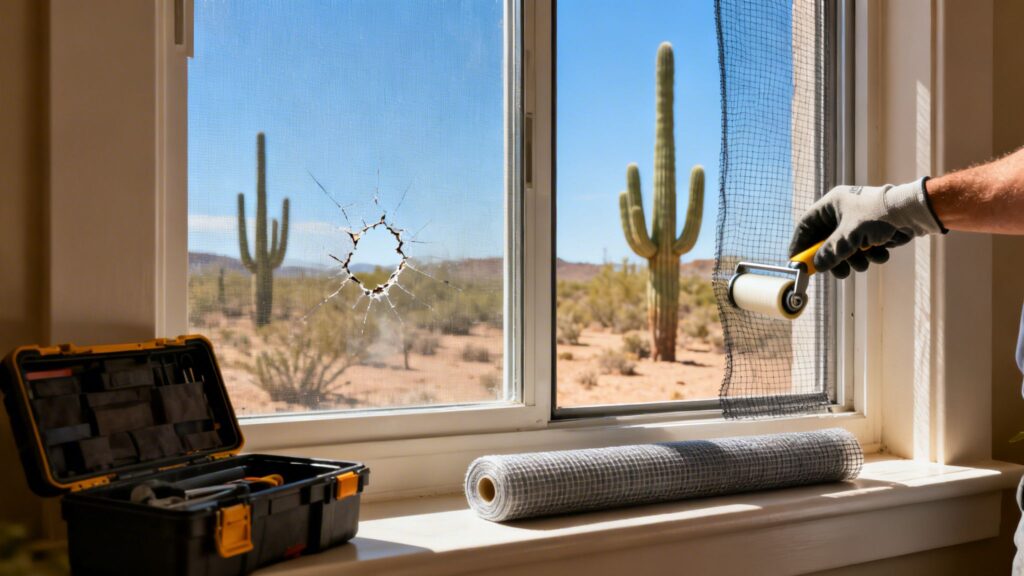
So, you've got a torn window screen. It's a classic Arizona problem, especially after a good monsoon storm or years under that relentless sun. The first question on everyone's mind is, "How much is this going to set me back?"
The good news is, you're usually looking at a pretty manageable number. On average, a professional can re-mesh an existing screen for anywhere from $15 to $80, assuming the frame itself is still in good shape. If the whole unit needs to be replaced, the cost can climb, typically landing between $147 and over $500 depending on the window and materials.
Your Guide to Window Screen Repair Costs in 2026

Before you start bracing for a major home repair bill, let's put things in perspective. In nearly every scenario I've come across, a quick and simple screen repair is dramatically cheaper than a full replacement.
Think of it this way: you wouldn't scrap your whole car just because it needs a new tire. The same logic applies here. A small rip or a little hole in the mesh doesn't mean the entire screen is useless. A targeted repair can get it looking and functioning like new for a fraction of what you'd spend on a brand-new screen and frame.
Understanding the Cost Spectrum
The final price tag really boils down to two paths: doing it yourself or calling in a pro. A tiny hole might only cost you a few bucks for a patch kit from the hardware store. On the other hand, hiring a professional to completely re-mesh a screen ensures a perfect, tight fit that will hold up for years—and you don't have to lift a finger.
The core takeaway is that proactive repairs save money. Addressing small issues promptly prevents them from escalating into frame damage or large-scale tears that demand a full, and more expensive, replacement.
Based on national data for 2026, the average professional window screen repair lands between $142 and $175 per screen. This makes it one of the most affordable home maintenance projects out there. Here in Arizona, where our climate is tough on screens, the market is competitive. You can fix a small hole yourself for as little as $10, while professional re-meshing provides peace of mind that your home is sealed against pests and the elements. For a deeper dive into home repair cost data, Homewyse.com is a great resource.
2026 Arizona Window Screen Repair Costs at a Glance
To give you a clearer idea for budgeting, we've put together a table showing typical price ranges for common screen repair jobs in Arizona. This should help you weigh the costs of a DIY fix against hiring a local professional.
| Repair Type | DIY Cost Estimate | Professional Service Cost Estimate |
|---|---|---|
| Small Tear Patch | $10 – $25 | $45 – $80 |
| Full Re-Meshing (Standard) | $25 – $50 (Materials) | $75 – $150 |
| Spline Replacement | $5 – $15 (Materials) | $50 – $90 |
As you can see, tackling a small patch yourself is incredibly cost-effective. However, when it comes to replacing the entire mesh, the extra cost for a professional often pays for itself in a quality, long-lasting result.
What Really Drives Your Window Screen Repair Bill

While it's helpful to know the average cost of a screen repair, what you actually end up paying depends on a few key things. Think of it like ordering a custom pizza—the base price is just the starting point. The final bill really comes down to the "toppings" you choose and the size of the job.
When we break it down, your final cost is almost always determined by two things: the screen material itself and just how bad the damage is.
Material Matters: The Fabric of Your Screen
The type of mesh you have, or want, is a huge part of the equation. Different materials come with different price tags, and here in Arizona, they also offer different levels of durability against our intense sun.
- Fiberglass: This is your standard, most common option. It’s affordable and flexible, which makes it easy to work with for most repairs. The trade-off is that it’s the most delicate, especially if you have pets or kids.
- Aluminum: A solid step up in strength. Aluminum mesh is more rigid, holds its shape well, and stands up better to the elements. It won't tear as easily, but it can get dented or creased with a hard impact.
- High-Performance Screens: This is where you find specialty materials like solar screens (a must for cutting down on UV rays and cooling costs) and tough, pet-resistant screens. They’re the priciest option, but the investment pays off with added benefits that go way beyond just keeping bugs out.
It's worth noting that picking the right material from the get-go can save you a headache and money down the road. If you're curious about all the options, you can dive deeper with our guide on the different types of window screen material available.
Choosing a material isn't just about the upfront cost; it's about long-term value. A cheap fiberglass repair might have you calling us again in a few years, but a durable pet screen could last a decade or more.
Damage and Labor: The Scope of the Work
Next, we have to look at what actually needs to be fixed. Is it a simple tear in the mesh, or did that last monsoon storm bend the entire frame out of shape?
A bent or broken frame is the real game-changer. Straightening or repairing a frame is a much bigger job than just stretching new mesh, and it can quickly push the cost up. In some cases, it makes more sense to replace the whole screen.
The window's location also plays a big part in the labor cost. A ground-floor window is a straightforward job. A second-story window that requires ladders and extra safety gear? That's going to take more time and effort, which will be reflected in the price.
Finally, the window style itself matters. A standard single-hung window might cost between $100 to $350 to repair. But for more complex windows, like casement or sliding types with special tension springs, you can expect that price to jump by 25-50% due to the extra work involved.
DIY Fix Versus Calling a Professional
When you spot a tear in your window screen, you’re faced with a classic homeowner question: roll up your sleeves and fix it yourself, or call in a professional? The right answer really boils down to the extent of the damage, your comfort level with home projects, and honestly, how much you value your time. The cost to repair a window screen can swing pretty wildly depending on which path you choose.
Going the DIY route is always tempting, especially when you're trying to keep costs down. For a couple of small holes or a single, straightforward re-meshing job, you can definitely save some money. A basic repair kit or a roll of mesh and a spline tool will often set you back less than $30.
But that's where the simplicity can end. The biggest headache for most DIYers is getting the screen tension just right. If it’s too loose, the screen will look sloppy and flap around in the wind. Pull it too tight, and you could easily bend or even snap the frame. What started as a simple project can quickly turn into a frustrating and more expensive ordeal.
The Value of Professional Expertise
Hiring a pro isn't just about paying for labor; it's about investing in quality and your own peace of mind. A seasoned technician shows up with specialized tools, but more importantly, they bring the experience needed to get that perfect, drum-tight fit every single time. They can also knock out the job in a fraction of the time it takes a novice.
Think about it this way: a professional can often re-mesh several screens in just an hour or two. A first-timer might spend that much time wrestling with just one. That efficiency is a huge part of the equation when deciding whether it's worth the hassle. For anyone on the fence, many find it helpful to look at guides that break down when to go DIY or Hire a Pro.
A professional repair is more than a quick fix. It's a guarantee that your screen will be installed correctly to withstand Arizona’s weather, keep pests out effectively, and last for years, often backed by a warranty.
When to Call the Pros
While patching a tiny hole is a clear DIY win, some situations just make more sense to leave to an expert.
- Multiple Damaged Screens: If you're looking at a whole house worth of damaged screens, a pro can save you an entire weekend of tedious work.
- Bent or Damaged Frames: Fixing a bent frame is a skill. It requires the right tools to restore its shape and integrity, and a botched job means the screen will never fit right.
- Second-Story or Hard-to-Reach Windows: This is a big one. Professionals have the proper ladders and safety gear to handle high-up jobs without any risk.
Ultimately, the choice comes down to a personal calculation of your time, skill, and the quality you're after. If you are leaning toward tackling the job yourself, getting prepared is key. Be sure to check out our detailed guide on how to repair window screens for step-by-step instructions.
When to Repair and When to Replace Your Screens
So you've got a damaged screen. The real question is, are you looking at a quick patch job or a full-blown replacement? It’s a common crossroads for homeowners, and honestly, the right answer depends on the damage, the condition of the frame, and what you're hoping to get out of the fix. Knowing when to call it a day and replace the whole thing can save you a lot of headaches down the road.
Let's talk about the easy calls first. For small, isolated problems, a repair is almost always your best bet. We're talking about a little tear from a pet's claw, a single puncture hole, or maybe the rubber spline that holds the mesh in has popped out of its channel. These are simple, inexpensive fixes that get your screen back in working order without a major project.
This decision tree gives you a straightforward way to think through the repair-or-replace question.

As you can see, a tiny tear is often a simple DIY job, but once the damage gets more serious, it’s usually time to call in a pro or just start fresh.
When Replacement Is the Smarter Investment
There are a few clear signs that tell you a replacement is the only way to go. The biggest one is a damaged frame. If the screen frame itself is bent out of shape, warped from the Arizona heat, or has busted corners, just swapping out the mesh is a waste of money. A compromised frame will never hold the new mesh taut or fit correctly in your window.
Likewise, widespread damage across the mesh is a red flag. If you’re looking at multiple large holes, fabric that has become brittle and crunchy from sun exposure, or significant sagging, it’s time for a new screen. While one small patch is cheap, trying to fix several big issues will get expensive fast, often nearing the full cost to repair window screen by replacing it. Nationally, homeowners spend about $225 on average for replacements, while most simple repairs come in under $120.
The Opportunity in Replacement
Here’s the upside: choosing to replace a screen is also a chance to upgrade. This is the perfect time to install a material that actually fits your lifestyle better. Think durable, pet-resistant mesh if your dog is the culprit, or high-performance solar screens to fight the heat.
For those of us here in Arizona, upgrading to solar screens can make a huge difference in cooling costs and indoor comfort. It turns a necessary chore into a smart investment for your home. If you're going the DIY route, picking the best mesh for DIY window screens is crucial for getting a great result.
Ultimately, weighing the window screen replacement cost against a simple repair means looking beyond the immediate price tag. Think about how long the solution will last and what other benefits you can get from it. For a deeper dive into pricing, check out our guide on window screen replacement costs.
How to Get a Fair Estimate for Your Arizona Home
When it's time to call a pro, you want to feel confident, not confused. Knowing what goes into a fair and transparent quote transforms you from a passive customer into an informed homeowner. It’s the best way to spot a trustworthy company and avoid any headaches down the road.
A professional estimate should never be just a single number scribbled on the back of a business card. Think of it as a detailed receipt you get before the work starts. Every part of the job should be accounted for, which prevents surprise charges and sets clear expectations for the final cost to repair your window screens.
What Every Good Estimate Includes
A thorough, trustworthy estimate will always break down the costs for you. It should be easy to read and understand, leaving no room for confusion.
Here’s what you should always look for:
- Itemized Material Costs: The quote needs to specify the exact mesh being used (fiberglass, aluminum, solar, etc.) and its cost per screen.
- Clear Labor Charges: How does the company bill for their time? It should be explicitly stated whether they charge a flat rate per screen or bill by the hour.
- Trip or Service Fees: Many companies charge a fee just for coming to your home. It’s good practice to ask if this fee gets waived or credited back if you hire them for the job.
- Warranty Information: A reputable company always stands by its work. Your estimate or contract should clearly detail the warranty, covering both the screen materials and the installation labor.
Essential Questions for Your Service Provider
Before you give anyone the green light, have a few key questions ready. The quality of their answers will tell you almost everything you need to know about their professionalism and how they run their business.
The goal isn't to interrogate the technician. It's about making sure they are a legitimate, insured business that is upfront about its pricing. This simple check protects you from liability and helps guarantee you get quality service.
Make sure you get clear answers to these questions:
- Are you licensed, bonded, and insured? This is non-negotiable. Proper insurance is what protects you, the homeowner, if a worker gets injured on your property.
- How do you calculate your labor costs? Find out if it’s a flat fee per screen, an hourly rate, or one single project fee.
- Do you have experience with monsoon damage? Here in Arizona, that’s a big deal. Finding a pro who knows how our intense storms can bend frames or pop splines is a huge advantage.
- Can you provide a written, itemized estimate before any work begins? A verbal quote over the phone is not a real quote. Always get it in writing.
By arming yourself with this knowledge, you can sift through quotes with confidence and choose a company that offers both fair pricing and high-quality work for your Arizona home.
Smart Ways to Save on Window Screen Repairs
Want to keep your window screen repair costs down? The secret isn't just about finding a cheap fix after the damage is done. Honestly, the best savings start long before a tear even appears. It’s a simple fact: a little preventative care goes a long way.
Think of it like taking care of your car—a little upkeep now saves you from a massive repair bill down the road. Here in Arizona, one of your screen's biggest enemies is dust. All that fine grit settles into the mesh and acts like sandpaper every time the wind blows, gradually wearing down the fibers. A quick, gentle cleaning with some mild soap and water a couple of times a year washes that abrasive dust away, keeping the material strong.
Strategic Repairs and Bundling
Of course, even with the best care, damage happens. When it does, the key is to act fast. That tiny hole you see today is an easy fix with a patch kit. If you leave it, it's practically guaranteed to become a huge rip that needs a complete, and much more expensive, re-meshing job.
Here’s another pro tip: think about bundling services. If you're already planning to have a professional come out for window washing, ask them if they handle screen repairs, too.
Many companies offer a discount or will waive their standard trip fee when you bundle multiple services, as it makes their visit more efficient. This simple move can often save you $25 to $50 right off the bat.
Finally, get in the habit of doing a quick walk-around after a major storm, especially our notorious Arizona monsoons. High winds and flying debris are the number one cause of screen damage. Spotting a spline that's popped out or a small puncture right away means you can get it fixed quickly and cheaply, before it turns into a bigger headache. A few consistent habits like these will do wonders for both your screens and your wallet.
A Few Final Questions About Screen Repair Costs
Even after you've got the basics down, a few practical questions always seem to pop up. Let's run through the common ones we hear from homeowners so you can move forward with your project, no strings attached.
How Long Does a Typical Screen Repair Take?
For a seasoned pro, swapping out the mesh on a standard window screen is a surprisingly quick task. We can usually knock one out in about 15 to 20 minutes. If you have a handful of screens that need fixing, a technician can often get four or five done in just over an hour.
Now, if you're going the DIY route, plan on a bit of a learning curve. Your first attempt might take closer to an hour as you figure out the technique and get a feel for the tools. But once you get the hang of it, you’ll be able to cut that time in half for the rest of your windows.
Is It Cheaper to Just Repair or Fully Replace a Screen?
Repairing the mesh is almost always the more budget-friendly choice, without a doubt. A professional re-screening, where we just replace the damaged mesh in your existing frame, will run you between $25 and $70. Compare that to a full replacement, frame and all, which averages around $316 per window.
The rule of thumb here is pretty straightforward: If the frame is still solid, just repair the mesh. But if the frame itself is bent, cracked, or warped, you have to replace the whole unit. A new screen just won't seat properly in a damaged frame.
How Long Do Replacement Window Screens Last?
The lifespan of your screen comes down entirely to what it’s made of. Standard fiberglass screens—the most common and affordable material—will generally give you 5 to 8 years of service before the intense Arizona sun makes them brittle.
This is where upgrading can really pay off in the long run. An aluminum screen can easily last 10-15 years. If you opt for premium materials like stainless steel or bronze, they can last even longer, which makes the higher upfront cost a smart investment for many homeowners.
Ready to get your screens fixed right, without the guesswork? Sparkle Tech Window Washing offers expert, reliable window screen repair services all across Arizona. We guarantee a perfect fit and a repair that's built to last. Get a free, no-obligation estimate today!