



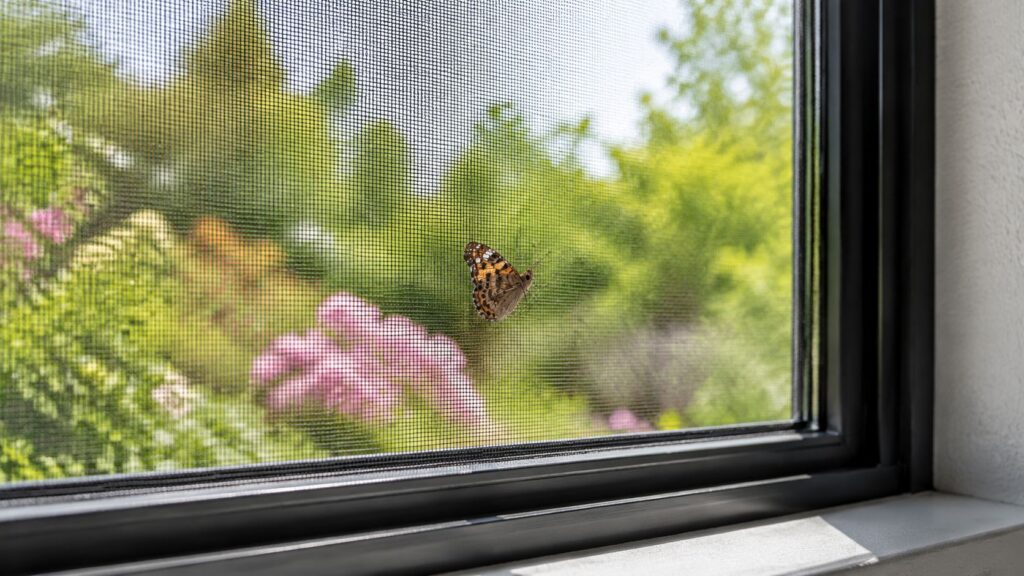
You open the window in the morning because the air feels better than the air conditioner. A few minutes later, the room starts warming up, dust blows in, and one torn corner in the screen suddenly matters a lot more than it did yesterday.
That's how most homeowners end up paying attention to window bug screens. Not when the screen is new, but when it stops doing its job. In Phoenix, that job is bigger than just keeping bugs out. A screen also affects airflow, daylight, visibility, and how much solar heat your glass brings into the house.
A lot of online advice treats every screen like the same product in a different frame. It isn't. The right choice for a shady bedroom in another state may be the wrong choice for a west-facing Arizona living room. Hot sun changes the conversation. So does dust, monsoon weather, and the fact that many homeowners want ventilation without inviting in insects or turning the room into a heat trap.
Your First Line of Defense Against Pests and Heat
A screen often comes to mind when a hole appears in it. In practice, the screen starts working long before that. It's the piece that lets you crack a window for fresh air without inviting flying insects inside, and in a sunny climate it also becomes part of how you manage comfort from room to room.
That matters more than people realize. Window bug screens became widely adopted in the United States after the Civil War, and before the 1870s people often relied on closed windows or even cheesecloth to keep insects out, according to this history of insect control and bug screens. That's a useful reminder that screens aren't just a trim detail. They're a practical ventilation tool that changed how homes could be lived in.
In Phoenix, the decision gets more complicated fast. You may want open-window airflow on a mild evening, but you also need to think about sun exposure, fine dust, and whether the room faces east or west. A basic replacement screen can solve one problem and create another if it cuts visibility too much, sags in the frame, or does nothing to reduce solar gain where the glass gets hammered by afternoon sun.
What homeowners miss most often: the “right” screen is usually tied to the window's location, not just the window's size.
That's why I usually tell homeowners to stop thinking in terms of “I need new screens” and start thinking in terms of “What do I need this opening to do?” A kitchen window over the sink, a shaded bathroom window, and a west-facing family room window don't all need the same mesh.
If you manage a rental, that distinction matters even more because comfort complaints and pest complaints often overlap. For landlords trying to think through broader prevention, this guide to essential pest management for rental properties is a useful companion to screen maintenance.
The Anatomy of a Window Screen
A window screen looks simple because it is simple. But when one fails, it usually fails at one of three points. If you understand those parts, you can diagnose most problems in a minute or two.

The mesh
The mesh is the woven material that performs the screening work. Standard references describe a window screen as a mesh barrier made from metal, fiberglass, plastic wire, or other plastics, built to keep insects and debris out while preserving airflow, as explained in this overview of window screens.
That balance is the whole point. The mesh has to be open enough to let air move, but tight enough to block what you don't want inside. If the mesh is wrong for the location, the screen may still “fit” while performing poorly.
The frame
The frame is the rigid outer structure, usually aluminum on residential screens. It keeps the mesh square, helps the screen sit properly in the track, and creates the seal around the opening. When the frame bends, the screen can look mostly normal from a distance but still leave gaps at the edges.
A bent frame causes more problems than homeowners expect:
- Poor seal: Insects don't need a large opening. A small gap at one corner is enough.
- Track friction: The screen drags, sticks, or pops out when you try to remove it.
- Uneven tension: The mesh gets stressed in the wrong places and starts pulling away sooner.
The spline
The spline is the narrow rubber or vinyl cord pressed into the frame channel. Its only job is to hold the mesh under proper tension. If it shrinks, hardens, or wasn't seated correctly to begin with, the mesh starts loosening at the edges.
A lot of “bad screen mesh” complaints are actually spline problems.
When I show a homeowner a loose screen, I usually point to the corners first. If the corners look wavy, if the mesh can be pushed inward too easily, or if one side looks like it's lifting out of the frame, the spline is often part of the issue.
A good screen isn't just material in a rectangle. It's mesh, frame, and spline working together. If one part is off, the whole unit gets weaker.
How to Choose the Right Screen Material
If you live in Arizona, choosing window bug screens is about priorities. You usually can't maximize insect control, airflow, visibility, and solar heat reduction all at once. One screen can lean hard toward one goal, or it can balance several goals, but it won't dominate every category.
The trade-off that matters in Phoenix
The biggest mistake I see is using one screen type everywhere. Homeowners replace everything with standard fiberglass because it's familiar, then wonder why the sunny side of the house still feels harsh. Or they choose darker sun-control mesh on every opening and then dislike the reduced brightness or airflow on windows that didn't need it.
The conflict is real. No-see-um mesh is typically 20×20 and is marketed to stop tiny insects, while solar screens are designed for sun control and can reduce room temperature by up to 15 degrees and cooling costs by 25 to 30 percent in warm climates, according to this no-see-um and solar screen reference. That's why the best choice depends on whether your main problem is tiny insects, harsh sun, or a mix of both.
Window Screen Material Comparison
| Material | Average Cost | Durability | Visibility | Best For |
|---|---|---|---|---|
| Fiberglass | Varies by supplier and frame size | Good for routine residential use | Good | Standard insect control on most windows |
| Aluminum | Varies by supplier and frame size | Durable, but can dent or crease | Good | Homeowners who want a traditional metal screen |
| Stainless steel | Varies by supplier and frame size | Highest durability and corrosion resistance | More utilitarian look depending on mesh | Tough environments and long-term wear |
| No-see-um mesh | Varies by supplier and frame size | Depends on frame fit and exposure | Lower than standard mesh | Areas with very small insects |
| Solar screen | Varies by openness and frame size | Good when matched to the right opening | Reduced brightness and outward clarity | Windows with heavy sun exposure |
| Pet-resistant mesh | Varies by supplier and frame size | Better against clawing and pushing | Lower than standard mesh | Homes with pets damaging lower screens |
What works well and what usually disappoints
Fiberglass is the default for a reason. It's flexible, widely used, and easier to install cleanly because it won't dent or crease the way metal can. On shaded or moderately exposed windows, it's often a sensible choice.
Aluminum works, but it's less forgiving during handling. Once it gets bent or creased, it shows. If someone removes screens roughly for cleaning or stores them badly in the garage, aluminum can start looking tired fast.
Stainless steel makes sense when durability is the priority. It's commonly described as the most durable insect mesh and is especially useful where corrosion resistance matters. For a standard family home, though, it's often more material than you need unless a specific problem calls for it.
No-see-um mesh helps when the insect pressure involves smaller pests that standard mesh may not stop. The trade-off is simple. Finer mesh narrows the openings, so airflow and view take a hit.
Solar screen is where Arizona gets different from cooler markets. On a west-facing room that turns unpleasant in the afternoon, solar screen can be the smarter move than a standard bug screen. But if you put it on a shaded side window where you mainly want a breeze and a clear view, you may feel like you darkened the room for no good reason.
Practical rule: match the screen to the exposure. Fight bugs on bug-heavy openings. Fight sun on sun-heavy openings.
How I'd choose by window, not by house
I'd generally sort windows into these buckets:
- Shaded bedroom or bathroom windows: Standard fiberglass is often enough if insect control and airflow are the main goals.
- Windows near patios, landscaping, or standing moisture: Consider tighter insect-control mesh if small flying pests are the recurring complaint.
- West-facing living areas: Solar screen deserves serious consideration because comfort may matter more than maximum visibility.
- Lower screens near pets: A tougher mesh may be worth the visual trade-off if claws keep winning.
If you want a broader breakdown of mesh categories before making a choice, this guide to types of window screen mesh gives a helpful overview. For Phoenix-specific service decisions, homeowners also compare options through window screen material types.
Common Screen Problems and How to Spot Them
A damaged screen usually tells you why it failed, if you know what to look for. Homeowners tend to notice only the obvious tear, but the tear is often the final symptom, not the starting problem.

Damage in the mesh
The most common failure patterns are corrosion, stretching, and tearing, and material choice affects which one shows up first in real life. Fiberglass won't dent like aluminum, but it can break down under intense UV exposure, which is a real issue in Arizona, as described in this window screen material reference.
When you inspect mesh, look for these signs:
- Tiny holes near the edges: Often caused by rubbing against the frame or track.
- A soft, loose center: Usually points to stretch or poor tension.
- Chalky or faded fiberglass: Often a sign the mesh is aging from sun exposure.
- Frayed cuts: Common where pets push, scratch, or claw repeatedly in one spot.
Damage in the frame and fit
Not every failed screen has failed mesh. A frame can twist slightly and still look square enough to fool you from a few feet away. Then the screen won't sit flat, insects slip around one corner, and the homeowner assumes the mesh is the issue.
Check the fit with the screen installed:
- Look for daylight at the corners or sides.
- Press lightly on the middle. It shouldn't rattle or rock in the track.
- Remove it and set it on a flat surface. If it wobbles, the frame is likely bent.
If the screen bows outward or inward, don't just rescreen it. Find out why the frame lost shape first.
Damage around the spline
A bad spline has a specific look. The mesh seems to be escaping the frame channel, especially near corners, and one side may look slightly rippled while the opposite side stays tighter.
That usually means one of two things. The spline has aged and lost its grip, or the screen was installed with poor tension from the start. In both cases, patching the visible weak spot won't solve the underlying fit problem.
DIY Screen Cleaning and Minor Repairs
Some screen work is worth doing yourself. Cleaning is one of those jobs. So is patching a very small hole on a screen that still fits well and has healthy material around the damaged area.

How to clean screens without ruining them
The goal is to remove dust and stuck debris without distorting the mesh or bending the frame. In Phoenix, screens collect a surprising amount of fine dirt, and once that buildup gets heavy, airflow drops and the glass often looks dirtier too.
Use a simple setup:
- Mild soap: Dish soap works well.
- Soft brush: A soft detailing brush or soft utility brush is safer than a stiff scrub brush.
- Low-pressure rinse: A gentle hose spray is enough.
- Towel or drying area: Let the screen dry fully before reinstalling.
Clean them in this order:
- Remove the screen carefully and keep pressure off the corners.
- Brush off loose dust first, dry.
- Wash both sides with mild soap and a soft brush.
- Rinse gently.
- Let the screen dry completely before putting it back.
If you want a service-based benchmark for what residential maintenance typically involves, this page on screen cleaning for residences is useful. Homeowners who want a local walkthrough can also review how to clean window screens.
How to patch a small hole
A patch is a short-term or medium-term fix. It's appropriate when the damage is limited and the rest of the screen is still in good shape. It is not the right answer when the mesh has become brittle, loose, or sun-damaged over a wide area.
For a small hole, you'll need a self-adhesive screen patch or a basic screen repair kit. Clean the area first so the patch has a chance to hold. Then apply the patch flat, press the edges firmly, and make sure it doesn't create a lifted lip that catches during removal or cleaning.
What homeowners should not try
DIY often goes sideways:
- Don't over-scrub fiberglass. Aggressive brushing can enlarge weak spots.
- Don't use high-pressure washing. It can stretch mesh and ruin frame tension.
- Don't patch along a failing edge. If the mesh is pulling out near the spline, the problem isn't just the hole.
- Don't reinstall a damp screen. Moisture trapped in the frame area creates avoidable wear and dirt buildup.
A clean screen helps. A loose screen still needs repair.
For more involved work, rescreening can be done at home with the right roller tool, replacement mesh, and spline. But once the frame is bent, the dimensions are uncertain, or several screens need to be matched, it usually becomes a job where skill matters more than effort.
When to Replace Your Screens and Call a Professional
Minor damage is one thing. A screen that has lost its shape, fit, or overall integrity is another. At that point, repair stops being a quick chore and becomes a fabrication problem.

Signs replacement makes more sense than repair
If you're dealing with one clean puncture in otherwise healthy mesh, a patch may be fine. If you're seeing several failure points at once, replacement is usually the smarter use of time.
Replace the screen when you notice problems like these:
- Bent frame: A new mesh in a distorted frame still won't seal correctly.
- Widespread UV damage: The material feels tired, brittle, faded, or weak in multiple areas.
- Repeated edge failure: The mesh keeps slipping or tearing near the spline channel.
- Multiple damaged screens: Batch replacement often produces a better fit and more consistent appearance than piecemeal fixes.
- Wrong screen for the exposure: If the screen technically works but the room stays too hot or too dark, the issue may be specification, not damage.
Custom openings change the job
Professional help often proves to be the practical answer, not the expensive one. Custom screening for angled, non-rectangular, and other unusual openings often requires specialized components and precise measurements beyond typical DIY work, as shown by professional fabricators handling custom screen products.
That matters in Arizona homes because not every opening is a standard, forgiving rectangle. Once you're dealing with odd geometry, inconsistent tracks, older aluminum frames, or a mix of bug screens and solar screens on the same property, accuracy becomes the whole job.
Why a pro usually gets a better result
A professional should measure carefully, account for fit in the tracks, and choose mesh based on its practical usage. That's different from directly copying the old screen, especially when the old one failed because it was the wrong material or had poor tension from the beginning.
For homeowners searching locally, window screen repair near me is the kind of service page worth reviewing when the issue goes beyond a simple patch. Sparkle Tech Window Washing also handles bug screen repair, rescreening, and new sun or bug screens as part of its window screen service in Arizona.
If I were giving simple advice, it would be this. Clean what's dirty. Patch what's small. Replace what no longer fits, no longer seals, or no longer suits the window's real job.
If your screens are torn, sun-beaten, loose in the frame, or entirely wrong for a west-facing Phoenix window, Sparkle Tech Window Washing can help with screen repair, rescreening, and new sun or bug screen service across Arizona. The company is family owned, insured, bonded, and registered in Arizona, which matters when you want the work measured correctly and handled without guesswork.