




Before you even type "window screen repair near me" into a search bar, take a minute to figure out what you're really dealing with. Is this a quick patch job or a full-blown replacement? Knowing the difference is the key to saving yourself time, money, and a whole lot of hassle.
A small tear is one thing—often a simple DIY fix. But if you're looking at a bent frame or sagging mesh, you're likely headed for a more involved solution.
To Repair or Replace? That Is the Question

Any good home project starts with a solid assessment, and your window screens are no different. Get up close and really look at the damage. Did your cat leave a single, clean claw mark, or has the sun turned the entire screen brittle and faded? The answer will tell you what to do next.
If you've just got a few tiny holes or one clean rip under three inches, you're probably in luck. A simple patch kit from the local hardware store will do the trick and keep the bugs out. But if you see multiple tears, or the mesh feels stiff and practically disintegrates when you touch it, that screen has reached the end of its life.
When a New Screen Is the Only Real Fix
Let's be honest, sometimes trying to patch an old, worn-out screen is just throwing good money after bad. A full replacement is the smarter, more permanent fix in a few common situations.
- Bent or Damaged Frames: A screen is only as good as its frame. If the aluminum or vinyl is bent, cracked, or warped, that screen will never sit right. You'll have gaps for insects to sneak through, and the whole thing will look sloppy.
- Widespread Sagging: Once the mesh loses its tension and starts to droop, there's no easy way to tighten it back up. This usually means the screen material itself is stretched out or the spline holding it in place has given up.
- Brittle Spline: See that little rubber cord tucked into the frame's channel? That's the spline. Over time, it dries out and cracks. If it's popping out, you'll need to re-screen the whole thing to get a tight, secure fit.
Here’s a little rule of thumb I always go by: If the cost of patching up all the holes and tears is getting close to 30-50% of what a brand new screen would cost, just replace it. You'll be happier in the long run.
Taking care of issues like this is becoming a bigger priority for homeowners. It’s no surprise the window repair services market is expected to hit USD 5.5 billion by 2033, as people look for lasting solutions. You can dig into some industry reports about window repair services to see just how much this sector is growing.
Handling Minor Screen Damage Yourself
Before you reach for your phone to find a local repair service, take a moment to assess the damage. You'd be surprised how many common screen problems are perfect for a weekend DIY project. Tackling it yourself can save you some cash and give you that satisfying feeling of a job well done.
For those tiny punctures and tears—maybe from a pet's claw or an overgrown shrub—a simple screen patch kit is your go-to solution. These are cheap and incredibly easy to use. The real trick to making the patch last is prepping the surface. Just wipe down the mesh around the hole with a bit of rubbing alcohol. This gets rid of any dust or grime, so the adhesive can form a solid bond that won't give up after the next big rain.
When the Screen Pops Out: It’s All About the Spline
If you’ve got a screen that’s sagging or pulling away from the frame, the problem is almost always the spline. That's the rubbery cord tucked into the frame's channel that holds the mesh tight. After years of sun exposure, it gets brittle, cracks, and loses its grip.
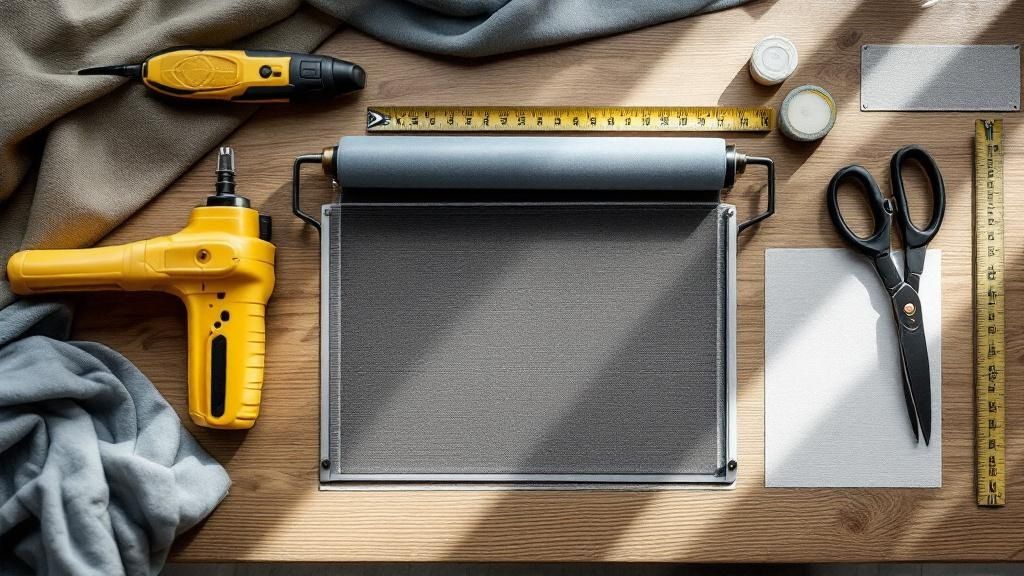
Replacing it is much easier than it sounds. You’ll need a special tool called a spline roller—it’s essential for getting the job done right. First, use a small flathead screwdriver to carefully pry out the old, stiff spline. Then, lay your new screen mesh over the frame and use the roller tool to push the fresh spline into the channel, locking the screen in place.
Pro Tip: New vinyl spline can be a little stiff, especially on a cool day. A quick blast with a hairdryer for a minute or so will make it much more flexible. This little bit of warmth makes it way easier to press into the groove, giving you a perfectly taut, professional-looking finish.
Your Go-To DIY Repair Kit
You don't need a professional-grade workshop to handle these repairs. Just a few key tools will make the process a whole lot smoother.
- Spline Roller: This is the one non-negotiable tool. One wheel pushes the spline into the channel, and the other seats it firmly.
- Utility Knife: A sharp, fresh blade is a must for trimming the extra mesh for a clean, straight edge.
- Flathead Screwdriver: The perfect thing for digging out that old, stubborn spline without gouging the frame.
- Measuring Tape: Obvious, but crucial. Measure twice to make sure you cut your new screen material to the right size, leaving a little extra to work with.
If you’re ready to dive in and want a more detailed walkthrough, our guide on how to repair window screens breaks down every step. Armed with these tools and a little know-how, you can confidently fix those minor screen issues yourself.
Knowing When to Call a Professional Repair Service
While a DIY approach can be great for minor tears and quick fixes, there are times when it's smarter to step back and call in an expert. Knowing the difference can save you from a lot of frustration, costly mistakes, and even potential injuries. If you find yourself facing a complex issue, putting down the tools and searching for "window screen repair near me" is often the best move.
For example, a badly bent or warped aluminum frame isn't something you can just muscle back into place with a pair of pliers. It takes specialized tools to straighten it correctly without cracking the metal or weakening the frame's integrity. More often than not, a DIY attempt on a bent frame just ends with you having to buy a whole new one anyway.
Situations Demanding an Expert
Some repair jobs just aren't suited for a weekend project. They either pose a safety risk or require a level of precision that only comes with professional experience and equipment. Don't think twice about calling for help with these.
- Second-Story Windows: Any time a ladder is involved, the risk factor skyrockets. Professionals have the right safety equipment and training to handle screens on upper floors without incident. It’s just not worth the risk.
- Specialty Screens: Do you have retractable, solar, or motorized screens? These aren't your standard setups. They have complex mechanisms, and one wrong move can damage the entire system, turning a simple repair into a major replacement.
- Custom or Oversized Frames: Getting the tension just right on a huge sliding patio door screen is an art. Without the right tools, you’ll likely end up with a sagging, wavy screen that doesn’t glide properly.
A professional repair guarantees a high-quality, long-lasting result that keeps your home looking great and functioning properly. Think of it as an investment in getting the job done right the first time.
When you hire an expert, you’re tapping into a massive industry. The global glass repair market, which includes screen components, is on track to hit $15 billion as more homeowners opt for specialized services.
Just like with window screens, it’s important to recognize when other home repairs are out of your league. Significant drywall damage, for instance, often requires more than just a patch kit. In those cases, looking for professional drywall repair services is the way to go.
Breaking Down the Costs: DIY vs. Professional Service
When it comes to home projects, the budget is always a big question. For window screen repair, you're faced with a classic choice: roll up your sleeves and do it yourself, or call in a professional. The great thing is, neither option has to break the bank. It really just depends on the extent of the damage and how you want to spend your time and money.
If you're looking at a small rip or tear, the DIY route is incredibly cost-effective. You can pick up an adhesive patch kit for as little as $5 to $15. Even if you need to replace the entire mesh on a standard-sized window, a complete re-screening kit (which typically comes with the screen fabric, spline, and the roller tool you'll need) will only set you back about $25 to $50. If you have an hour to spare and feel comfortable with a hands-on project, this is a fantastic way to save on labor.
The Professional Price Tag
Of course, hiring a pro means you're paying for more than just materials—you're paying for their time, expertise, and the convenience of having it done right. The final invoice for a professional window screen repair can fluctuate based on a few things:
- Size and Type: A sliding patio door screen is a different beast than a small bathroom window, and the price will reflect that.
- Your Choice of Material: Standard fiberglass is the default, but if you upgrade to a heavy-duty pet screen or a solar screen designed to block UV rays, the material cost goes up.
- Mobile Service Convenience: Many screen companies are mobile and will do the repair right in your driveway. This is incredibly handy but might include a service call or trip fee.
This breakdown shows you where the money typically goes when you hire a local service.
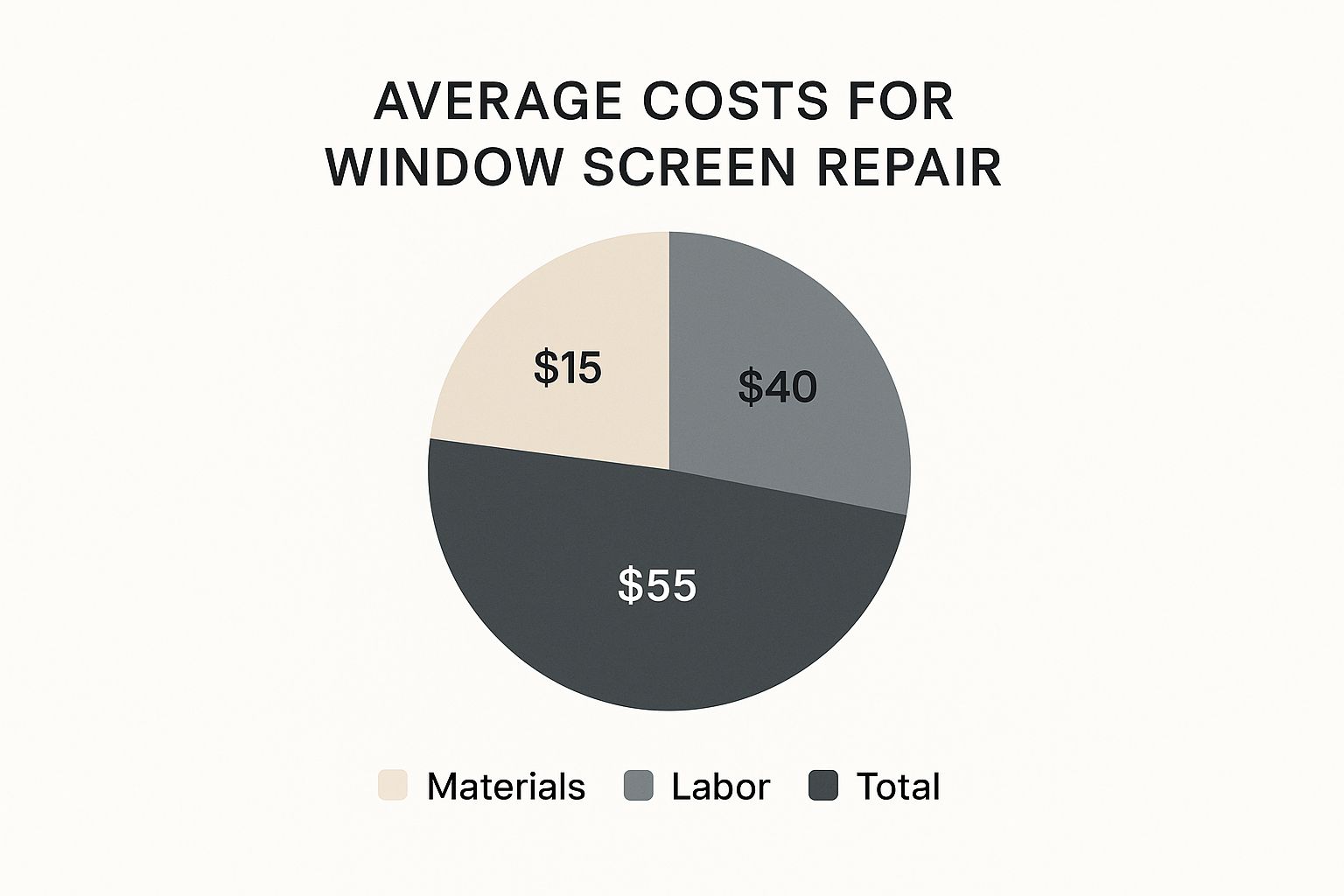
As you can see, labor is often the biggest piece of the pie. That's where the real savings from a DIY job come in, especially for those smaller, more straightforward repairs.
For a complete professional replacement, the national average hovers around $317 per screen, with most homeowners paying somewhere in the $147 to $514 range. That's a wide gap, but it accounts for all the variables like high-end materials, complex frame types, and what labor costs in your specific area. You can learn more about the factors that influence professional screen repair costs.
To make the decision a bit easier, here’s a side-by-side look at what you can expect to spend.
Cost Comparison: DIY vs. Professional Window Screen Repair
| Repair Scenario | Estimated DIY Cost | Estimated Professional Cost | Considerations |
|---|---|---|---|
| Small Tear (1-3 inches) | $5 – $15 (Patch Kit) | $50 – $100 (Minimum Service Call) | A patch is a quick fix, but a pro will often re-screen the whole window for a cleaner look. |
| Full Re-screen (Standard Window) | $25 – $50 (Full Kit) | $75 – $150 per screen | The DIY cost is low, but you'll need the right tools and patience to get the screen tight. |
| Sliding Patio Door Re-screen | $40 – $75 (Larger Roll of Mesh) | $100 – $250 | These large screens can be tricky to handle alone. A pro ensures a tight, wrinkle-free finish. |
| Bent or Damaged Frame | Varies widely | $150 – $400+ (New Frame & Screen) | Frame repair often requires specialized tools and expertise, making a professional the better choice. |
Ultimately, for minor damage, a DIY approach offers unbeatable savings. But when you're dealing with multiple screens, oversized doors, or damaged frames, the value of a professional's speed and skill quickly becomes apparent.
Finding a Great Local Pro: Who Can You Trust?

Okay, so you've decided to hand this job over to a professional. Smart move. Now comes the tricky part: finding someone you can actually trust. A quick search for "window screen repair near me" is going to throw a ton of options at you, but it’s crucial to look beyond the paid ads at the top of the page.
Your best bet is to start with local reviews. I'm talking about digging into what your neighbors are saying on Google, Yelp, and even community apps like Nextdoor. Don't just glance at the star rating. Take a few minutes to read the actual comments. You're looking for patterns. Do people consistently mention the tech was on time? Was the final price what they were quoted? That’s the kind of intel that separates the real pros from the rest.
If you’re new to hiring contractors, there are some great general tips on how to choose a reliable contractor that apply to almost any home service, not just window screens.
Questions to Ask Before You Hire
Before you let anyone start work, you need to ask a few direct questions. A legitimate company will have ready answers. If they hesitate or get vague, consider it a major red flag and move on.
Think of it as a quick interview. Here’s what you need to ask:
- Are you licensed and insured? This is the big one. It's non-negotiable. Proper insurance protects you, your home, and their workers if something goes wrong.
- Can I get an itemized quote in writing? You need to see a clear breakdown of costs—materials, labor, any service fees—before you agree to anything. No surprises.
- What kind of warranty do you offer? A pro who stands by their work will offer a guarantee on the repair. This shows they're confident in their craftsmanship.
Getting straight answers to these questions is the best way to feel confident in your choice. A quality repair isn’t just about fixing a hole; it's about restoring your home’s comfort and even boosting its energy efficiency.
Speaking of comfort, the type of screen material you choose makes a huge difference, especially in sunny climates. To learn more, check out our guide on https://sparkletechwindowwashing.com/beat-the-phoenix-heat-how-updating-your-screens-can-help/.
Answering Your Window Screen Repair Questions
When you start searching for window screen repair, you're bound to have a few questions. I've been in this business for a long time, and a few of the same queries pop up time and time again. Getting clear answers helps you feel confident you're making the right call for your home.
What's the Best Material for My New Screen?
This is probably the most common question I hear, and the honest answer is: it depends on what you need. There's no single "best" material, only the best one for your situation.
- Fiberglass: This is the go-to for most people. It's affordable, looks great, and provides fantastic visibility. It's a solid, all-around choice.
- Aluminum: If you're looking for something that will stand up to the elements and won't sag over the years, aluminum is a great upgrade. Just be aware that it can dent if it takes a hard hit.
- Pet-Resistant Screens: Have a cat who loves to climb or a dog that scratches at the door? You need a heavy-duty polyester screen. It's designed to withstand claws and paws far better than standard materials.
Can a Bent Screen Frame Actually Be Fixed?
Dealing with a bent aluminum frame is another frequent headache. A professional with the right tools can sometimes gently straighten out minor bends, but it's a tricky job.
If the frame is badly warped, cracked, or has a severe dent, replacement is almost always the better long-term solution. Trying to force a badly damaged frame back into shape can weaken it, and you'll likely end up needing a new one anyway. A good technician will give you an honest assessment of whether a repair is worth it.
How Long Does a Repair Usually Take?
The timeline really depends on the service model. If a mobile service comes to your home, they can often re-screen a standard window right on the spot in about 20-30 minutes. It's incredibly convenient.
If you drop your screen off at a local hardware store or repair shop, plan on a slightly longer wait. You can typically expect a turnaround time of one to three business days.
Keeping your screens in top shape is just one piece of the puzzle. The condition of the glass itself is just as important. For a deeper dive into overall window care, check out these answers to common questions about window cleaning.