

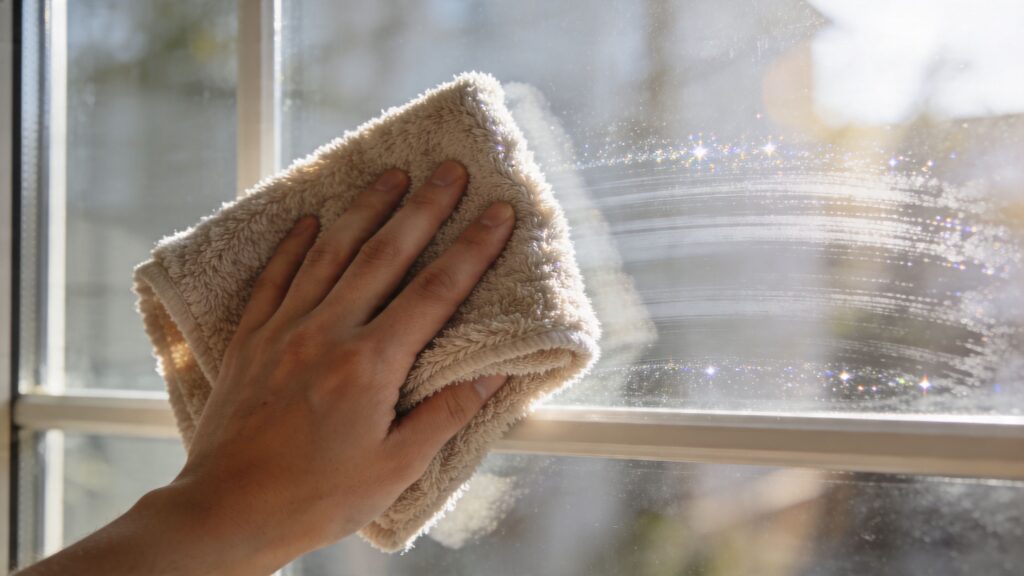
You clean the glass. The sun hits it. Suddenly every swipe shows up.
That’s the frustrating part of window cleaning in Arizona. Dust settles fast, hard water leaves a film, and a window that looked fine in the shade can look messy an hour later. A lot of homeowners try spray cleaner, paper towels, and a basic squeegee, then wonder why the glass still looks cloudy.
A magic cloth for window cleaning can help. It’s one of the few simple tools that often works better when you use less. Less product, less rubbing, less overthinking. But it’s not a cure-all, and that’s where most online advice goes off the rails. Used the right way, a magic cloth is excellent for routine glass maintenance. Used the wrong way, it can smear grime around, leave haze, or turn a manageable job into a long afternoon.
This guide breaks down what works, where the cloth shines, and where DIY stops making sense.
The Secret to a Perfect Streak-Free Window
Most streaks come from one of three problems. The glass is too dirty to wipe in one pass, there’s too much cleaning product left behind, or the towel itself is pushing lint and residue around.
A good magic cloth solves the second and third problem surprisingly well. The reason is in the fiber design. According to Microfiber Magic, the microfiber magic cloth for window cleaning features billions of tiny wedge-shaped fibers, each finer than 1/100th of a human hair, and can trap 99.8% of dirt particles using only water.
That matters on glass because glass shows everything. If a cloth only drags dirt across the surface, you’ll see it. If the fibers pull contamination in and hold it, the finish gets cleaner with fewer passes.

Why water often works better than spray
On lightly soiled windows, mirrors, and glass doors, extra spray can create its own problem. Many cleaners leave residue if you use too much or don’t buff perfectly. In hot weather, that residue dries fast and leaves tracks.
With a magic cloth, water acts more like a transport medium than a cleaner. It loosens light dust, fingerprints, and everyday film so the microfiber can grab it. That’s why these cloths often feel easier than the old spray-and-wipe routine.
Practical rule: If the glass has fingerprints, indoor dust, and light smudges, a magic cloth is often enough. If it has bug marks, mineral spots, or baked-on exterior grime, the cloth alone isn’t the whole answer.
What homeowners usually get wrong
The biggest mistake is treating the cloth like a miracle fix for neglected glass. It isn’t. If a window has months of dust packed into the edges, screen debris, or water spotting, the cloth will load up too fast.
The second mistake is using it dripping wet. More water doesn’t mean more cleaning power. It usually means more streaks.
The cloth is a sharp tool for the right job. Routine cleaning, touch-ups, mirrors, shower glass, interior panes, and small sections of exterior glass in decent condition. That’s where it earns the “magic” label.
Preparing Your Surfaces for a Flawless Finish
Prep work decides whether your result looks polished or patchy. Many want to skip straight to wiping. That’s exactly why they end up doing the same window twice.
Start with the dirt that doesn’t belong on the cloth
If the glass has a visible layer of dust, loose grit, cobwebs, or screen debris, remove that first. In the Phoenix area, dry dust is often the main problem. If you go straight in with a damp cloth, that dust turns into muddy streaks.
Use a soft brush, a dry microfiber, or a vacuum with a brush attachment around frames and tracks. For exterior glass, even a light knockdown of loose debris makes the final wipe much cleaner.
A quick prep check helps:
- Look at the edges: Corners and bottom seals often hold packed dust.
- Check the frame and track: Dirt from the frame transfers back onto the glass.
- Remove screen dust first: Clean glass behind a dirty screen won’t stay looking clean for long.
Match the cloth to the condition of the window
A magic cloth works best when it starts clean. If it already has lint, fabric softener residue, or old dirt in it, the glass will show that immediately.
Before you begin, make sure the cloth is:
- Free of lint: If it picked up laundry fuzz, it’ll leave it on the pane.
- Clean: Old grime trapped in the fibers will smear.
- Dedicated to glass: Don’t use the same cloth for kitchen counters, then expect perfect windows.
Dirty cloth, dirty result. Glass is unforgiving that way.
Know when a pre-clean is worth it
Sometimes a magic cloth needs backup. If you’re dealing with bird mess, greasy residue, bug splatter, or anything crusted on, loosen that contamination first with plain water and a separate cloth or gentle scrub pad approved for the surface.
Don’t attack heavy buildup by grinding it into the glass. That wastes time and can leave a hazy finish that looks worse once dry.
Set up for a cooler, easier pass
Arizona heat changes the job. On hot glass, water flashes off fast and exposes every mistake. If possible, work on shaded windows first. Keep a second clean cloth nearby so you can swap out the first one before it gets overloaded.
A simple setup works best:
- One clean magic cloth for the main wipe.
- One backup cloth for detail work or a second pass.
- A dry towel for frames and edges only, not the glass.
- A small trash bag or bin for screen debris and wiped-off grime.
That prep takes a few extra minutes, but it’s what separates a quick success from chasing streaks around the pane.
Mastering the Wet Wring and Wipe Method
The best results come from a simple routine. Wet the cloth, wring it hard, then wipe with control. That’s it.
According to Plantiful Clean’s Glass Magic Cloth product page, the cloth can clean streak-free without spray cleaner in basic applications and can reduce reliance on chemical cleaners by up to 100% because you only need to wet, wring, and wipe.
That sounds almost too simple, but the method does work if you get the moisture level right.
Step one wet the cloth fully
Run the cloth under clean water until it’s evenly saturated. Don’t just dampen one corner. A partly wet cloth cleans unevenly and tends to drag on the glass.
If your tap water leaves noticeable spotting on fixtures, be extra careful about over-wetting. You want enough water to activate the microfiber, not enough to flood the pane.

Step two wring harder than you think
Most DIY jobs encounter difficulty regarding the cloth's wetness. The cloth should be damp, not dripping. If water runs down your wrist or beads heavily on the glass, it’s too wet.
A properly wrung cloth should glide without leaving obvious wet trails. You may see a light film for a moment, but it should clear quickly instead of drying into marks.
The cloth should feel almost “too dry” to beginners. That’s usually the sweet spot.
Step three wipe in small overlapping sections
Don’t clean the whole pane at once. Work in sections and overlap each pass slightly so you don’t leave missed strips.
A reliable pattern is:
- Start at the top.
- Wipe across or slightly diagonally.
- Overlap the next pass.
- Move downward.
- Finish by checking the edges.
Keep turning the cloth to a cleaner face as you go. Once one side starts dragging dirt, flip it. Once the whole cloth looks loaded, rinse and wring again.
Best motions for different surfaces
Different glass surfaces respond better to slightly different movements.
Windows
For standard panes, top-to-bottom control works best. It keeps dirty water from moving back over areas you already cleaned.
If the window is tall, split it mentally into left and right halves. Finish one side, then the other.
Mirrors
Mirrors usually have lighter grime but show haze more quickly. Use lighter pressure than you would on an exterior pane. If you press too hard, you can spread residue instead of lifting it.
Glass railings
Glass railings often collect hand oils and outdoor dust together. That combination can smear. Start with a quick debris removal first, then wipe with steady overlapping strokes. Don’t chase every spot with random hand motions.
Shower doors
Shower glass is where people expect too much from the cloth. It works well for fresh moisture marks and light film. It won’t magically erase established mineral buildup in one pass.
A few technique upgrades that help
If you want a more polished result, use these habits:
- Fold the cloth into quarters: That gives you multiple clean faces to rotate through.
- Wipe edges last: Frames often hold grime that transfers onto the cloth.
- Use light pressure first: Let the microfiber do the work before pressing harder.
- Inspect from an angle: Head-on looks clean. Side light reveals streaks.
If you want to compare cloths, squeegees, scrubbers, and other setups before buying, this guide to the best window cleaning tools is a useful place to sort out what each tool does best.
What a correct pass looks like
A good pass feels smooth. The cloth glides, the dirt lifts, and the surface clears without needing frantic buffing. If you’re fighting the glass, adding more water, or doubling back over the same smears, stop and reset the cloth.
That’s usually not a glass problem. It’s a moisture or contamination problem.
How to Care for and Clean Your Magic Cloth
A magic cloth doesn’t stay effective by accident. Once the fibers get clogged with detergent residue, oils, or lint, the “magic” drops off fast.
For most homeowners, the cloth fails in the laundry room before it fails on the window.

Wash it in a way that protects the fibers
After use, rinse the cloth thoroughly until the water runs clear. If it picked up a lot of grime, don’t toss it in a laundry basket wet and dirty. That lets residue settle deeper into the fabric.
Machine washing is fine for most reusable cloths, but keep the load simple. Wash microfiber with microfiber when possible. Mixing it with linty towels, fleece, or cotton can ruin a perfectly good glass cloth.
Good habits include:
- Use a mild detergent: Heavy soaps can stay in the fibers.
- Skip fabric softener: It coats the strands and cuts absorbency.
- Avoid bleach unless the manufacturer says otherwise: Harsh chemicals can break down performance.
- Store it clean and dry: A clean cloth tossed into a dusty cabinet isn’t clean anymore.
If you want a deeper care routine, this guide on how to clean microfiber cloths effectively does a good job of explaining how buildup affects performance.
Watch for signs the cloth needs attention
When a magic cloth starts leaving haze, the problem isn’t always your technique. Sometimes the cloth is telling you it’s loaded up.
Common warning signs:
- It drags instead of gliding
- It smells musty after drying
- It leaves faint lint on mirrors
- It smears the same spot repeatedly
Any of those can mean leftover soap, trapped oils, or plain old contamination.
Drying matters more than people think
Air drying is usually the safest option. If you machine dry, keep heat modest. Excessive heat can harden residue and reduce the softness you want on glass.
Here’s a quick visual on basic care and handling:
Keep one cloth for glass only
This is one of the simplest professional habits to copy. Dedicate one cloth strictly to windows, mirrors, shower glass, and similar smooth surfaces. Don’t cross it over to counters, stainless, or car wheels.
For readers building out a better kit, this roundup of professional window washer supplies shows how pros separate tools by task for a reason. Clean tools protect clean results.
Benefits Limitations and Troubleshooting
Magic cloths deserve the praise they get. They also get oversold.
For light maintenance, they’re convenient, reusable, and simple to use. For neglected glass, mineral stains, or large exterior jobs, they can become a slow workaround instead of a smart solution.
Magic Cloth Pros vs. Cons
| Pros | Cons |
|---|---|
| Works well for routine fingerprints, light dust, and indoor smudges | Struggles with hard water stains and baked-on grime |
| Usually needs only water in basic use | Can leave haze if too wet or not fully clean |
| Reusable and machine-washable | Loses performance when washed with softener or linty fabrics |
| Good for mirrors, glass doors, and touch-ups | Slow on large homes with lots of panes |
| Reduces dependence on spray cleaners for simple jobs | Not the safest option for elevated or awkward exterior glass |
Where the cloth shines
A magic cloth is excellent for maintenance cleaning. If the windows are already in decent shape, it’s a fast way to keep them there.
It also helps in homes where people want fewer bottles under the sink. For mirrors, patio door glass, interior sidelights, and frequent touch-up zones, it’s a handy tool.
A magic cloth is best as a maintenance tool, not a rescue tool.
Where it falls short
It won’t dissolve mineral scale. It won’t make heavy oxidation, cement dust, paint specks, or long-term exterior buildup disappear just because the packaging says “streak-free.”
That’s especially true in dry climates where dust bonds with sprinkler overspray and sun exposure. On those surfaces, the cloth may remove the loose layer but still leave a dull film behind.
Tinted glass is another area where care matters. If you’re cleaning film-tinted windows, gentle pressure matters more than speed. This guide on how to clean tinted windows is worth reading before you scrub on automotive or residential tint.
Troubleshooting common problems
The window looks hazy after drying
The cloth is usually too wet, too dirty, or carrying detergent residue from washing. Rinse it thoroughly, wring it more aggressively, and try a smaller section.
Fine lint keeps showing up
The cloth may have been washed with cotton items or dried with lint-producing fabrics. A dedicated glass cloth fixes that problem most of the time.
It smears instead of cleaning
That often means the glass had more soil than the cloth could handle in one pass. Pre-clean the surface, especially exterior panes with dust buildup, then go back with the magic cloth.
Streaks show up only in sunlight
That’s normal with poor technique and hot glass. Side lighting exposes everything. Work on shaded glass when possible and stop over-wetting the surface.
The cloth works on mirrors but not outside windows
Exterior windows usually have a different mix of grime. Dust, pollen, bug residue, and water spotting demand more prep and sometimes different tools entirely.
A realistic expectation
If you use a magic cloth for window cleaning the way it’s meant to be used, it can save time and cut down on chemicals. If you expect it to replace every tool in the trade, you’ll be disappointed.
That’s not a knock on the cloth. It’s just the difference between maintaining glass and restoring glass.
When to Call the Pros at Sparkle Tech Window Washing
Some jobs stop being DIY jobs the minute safety, height, or delicate surfaces enter the picture.
A magic cloth is fine for interior glass you can reach comfortably from the floor. It’s not the best answer for second-story windows, wide walls of glass, awkward stairwell panes, or solar panels mounted in hard-to-access spots.

Large homes change the equation
On a small set of interior panes, a cloth is efficient. On a large home, the same method becomes repetitive fast. By the time you’re rinsing, wringing, climbing, moving furniture, and checking every pane twice, the “simple solution” can eat most of your day.
That’s especially true when the house has:
- High glass: Entry windows, clerestory panes, or stairwell glass
- Complex access: Landscaping, narrow side yards, or furniture-heavy interiors
- Mixed surfaces: Windows, glass railings, screens, and solar panels in one job
Solar panels deserve special handling
Homeowners often underestimate the associated risks. For hard-to-reach solar panels, improper cleaning with cloths can leave residue that reduces energy output by 2-5% over time, and microfiber can have 20% less grip on wet glass than professional squeegees, according to the referenced safety and performance note in this YouTube source.
That’s the practical issue. A cloth might seem gentle, but on a rooftop it adds two problems at once. Surface residue and footing risk.
If you need a ladder and one hand is occupied with a wet cloth, the job already deserves a second look.
When the smart move is to stop
Call a pro when:
- The glass is high up: Any second-story or hard-to-reach exterior pane
- The surface is specialized: Solar panels, glass railings, or delicate architectural glass
- The buildup is stubborn: Mineral spotting, heavy dust accumulation, or post-construction residue
- Time is the main issue: You could do it, but you probably shouldn’t spend the whole weekend on it
If you’re weighing that decision, this page on knowing when to call a professional window washing company lays out the tipping points clearly.
Professional service isn’t about making a simple task look complicated. It’s about knowing when the simple task isn’t simple anymore.
Frequently Asked Questions About Magic Cleaning Cloths
Are magic cloths safe for tinted windows
Usually, yes, if you use light pressure and a clean cloth. The bigger risk is rubbing grit across the tint or using a contaminated cloth.
Can a magic cloth remove hard water spots
Not reliably. It can improve light residue, but established mineral spotting usually needs a different approach.
Can I use one on TV screens or tablets
Only with caution. Follow the device maker’s care instructions first. For electronics, less moisture is better, and pressure should stay very light.
Why does the cloth work on one window and not another
The contamination is different. Indoor smudges are easier than exterior buildup, sprinkler residue, or baked-on grime.
Do I need a separate drying towel
Often, no. If the cloth is wrung properly, the glass should clear on its own. If you keep needing to buff, the cloth is probably too wet or too dirty.
If your windows, glass railings, screens, or solar panels have moved beyond quick DIY upkeep, Sparkle Tech Window Washing can help. We’re a family-owned Arizona company serving the Phoenix valley and beyond, with insured, bonded service for homeowners who want clean glass without the ladder risk, guesswork, or half-day project.