




Here's the simple answer: windows fog up because of condensation. This happens whenever warm, moist air hits a colder surface, like the glass in your windows. But the real question you need to ask is where the fog is showing up.
That single detail is the key to figuring out if you're dealing with a minor humidity issue or a much bigger problem with the window itself.
Your Quick Guide to Foggy Windows
That morning haze on your living room window isn't just a minor annoyance; it's a message. Figuring out what that message means is the first step toward fixing it for good.
The location of the fog—whether it's on the inside, outside, or trapped between the panes—is the most important clue. It's the difference between a temporary, harmless reaction to the weather and a permanent failure in your window's construction.
Fog you can wipe off the inside or outside of the glass is usually nothing to worry about. In fact, it often means your windows are doing their job well by creating a strong thermal barrier. It’s when you see moisture you can't wipe away that you have a problem. That means the seal on your insulated glass unit (IGU) has failed, trapping moisture and permanently ruining its energy efficiency.
Diagnosing Your Window Fog Problem
Beyond being a visual nuisance, persistent window condensation can cause real trouble. In fact, weather-related visibility issues are a known safety and economic concern across North America, contributing to everything from minor household damage to industrial downtime. As a homeowner, getting to the root of the problem is essential for keeping your windows clear and preventing costly moisture damage down the road. You can find more insights about the fog phenomenon on vpppa.org.
To help you figure out what’s going on, here’s a quick summary of the different types of window fog.
Quick Guide to Identifying Window Fog
| Location of Fog | What It Means | Common Cause | Is It Serious? |
|---|---|---|---|
| Inside the House | Your indoor humidity is too high. | Cooking, showers, poor ventilation. | Not usually, but can lead to mold if ignored. |
| Outside the House | Your windows are highly energy-efficient! | High outdoor humidity and a cool morning. | No, this is a sign of a healthy window. |
| Between the Panes | The window's airtight seal has failed. | Age, damage, or manufacturing defect. | Yes. The window's insulating value is gone. |
This table helps you quickly pinpoint the issue. Now, let's use a simple flowchart to walk through the diagnostic process.
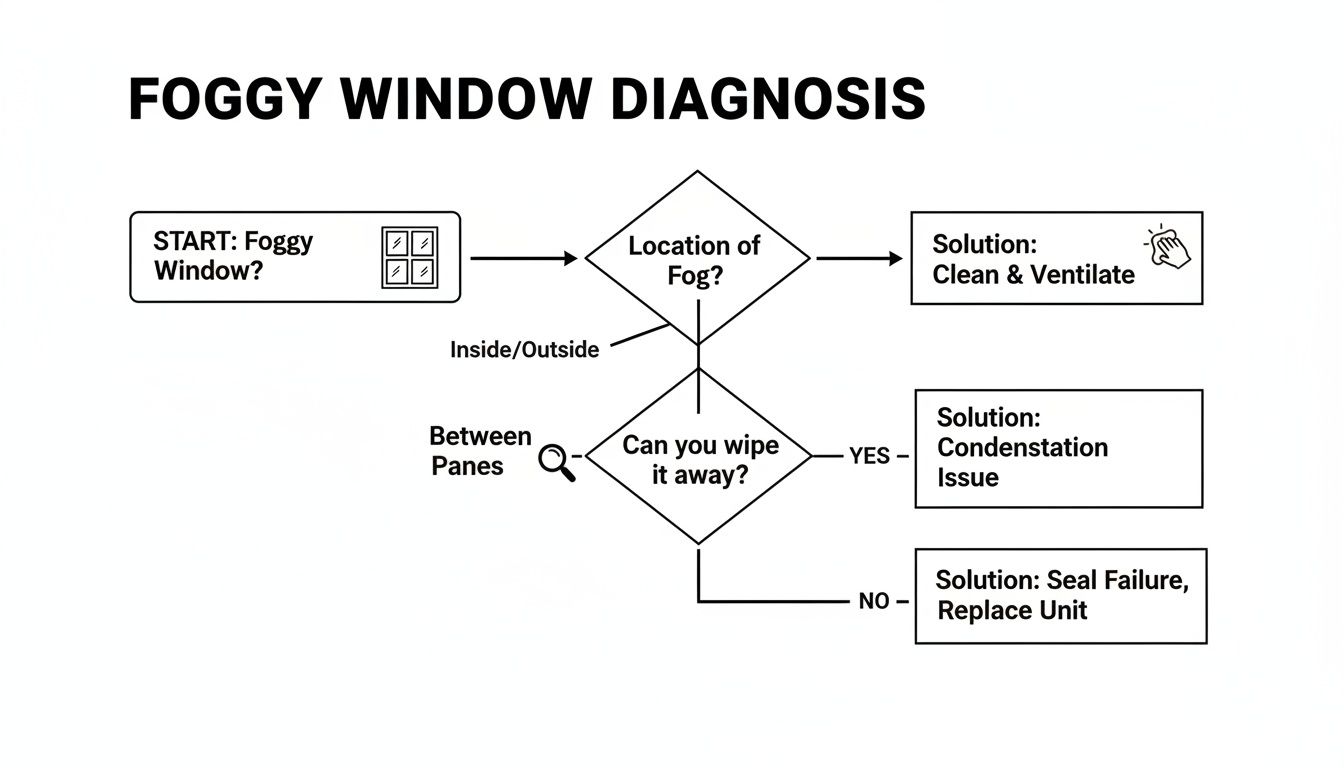
As the flowchart shows, it all boils down to one simple question: can you wipe the fog away? Answering that one thing immediately separates temporary condensation from permanent seal failure, pointing you directly to the right solution.
The Simple Science Behind Foggy Windows

Ever wondered why a cold glass of iced tea "sweats" on a warm summer day? That moisture isn't leaking through the glass—it's being pulled right out of the air. This everyday phenomenon is the exact same principle that causes your windows to fog up.
At its heart, window fog is just condensation. It’s the visual result of invisible water vapor in the air turning back into liquid water. The air in our homes is never completely dry; it's always carrying some amount of moisture. The key thing to remember is that warm air can hold a lot more of this moisture than cold air can.
Think of the air in your house like a big, invisible sponge. On a warm, humid day, that sponge is soaked. When this warm, moisture-heavy air comes into contact with a cooler surface—like your window pane on a chilly morning—it cools down instantly. This sudden temperature drop squeezes the "sponge," forcing it to release the extra moisture it can no longer hold. The result? Tiny water droplets form on your glass.
What’s a Dew Point?
This whole process hinges on a concept called the dew point. Simply put, the dew point is the precise temperature at which the air gets completely full—100% saturated—and can’t hold any more water vapor. If any surface drops to or below this temperature, you're guaranteed to see condensation.
Let's say the air inside your home is a comfortable 70°F with 50% humidity. The dew point in this scenario is about 50°F. If the surface temperature of your window glass dips to 49°F during a cold night, that's all it takes to trigger condensation. This is exactly why you're most likely to find foggy windows first thing in the morning, right after the glass has been at its coldest.
Your windows are like a built-in humidity gauge for your home. As the coldest surfaces, they're the first place to show you when there's too much moisture in the air.
Where Does All That Moisture Come From?
So, what's filling that "sponge" with moisture in the first place? The answer is everyday life. Normal, daily activities generate a surprising amount of water vapor that gets trapped inside our homes.
Pinpointing these sources is the first step to getting a handle on window fog. Here are some of the usual suspects behind high indoor humidity:
- Showering and Bathing: That long, hot shower feels great, but it also pumps a ton of steam into the bathroom, which can then spread through the house.
- Cooking: Boiling pasta, simmering a stew, or even just running the dishwasher releases a steady stream of moisture into your kitchen.
- Just Breathing: It might sound crazy, but a family of four can release a few pints of water into the air every single day just by exhaling.
- Indoor Plants: Your houseplants look great, but they also contribute to humidity through a process called transpiration, where they release water vapor from their leaves.
Each one of these activities adds to the total moisture load in your home's air. If that moisture doesn't have an easy way to get out, it will eventually find the coldest spot it can—which is almost always your windows.
Uncovering the Causes of Interior Window Fog

If you can wipe the fog away from the inside of your window, you’ve found your answer: the problem is coming from inside the house. You have too much moisture in your air. Think of your windows as the canary in the coal mine for your home's air quality. They're often the first place to show you that your humidity levels have crept too high.
This kind of fog is a direct result of just… living. Every time you boil water for pasta, take a long steamy shower, or even breathe, you're putting moisture into the air. That water vapor has to go somewhere. On a cool day, it’s drawn to the coldest surface it can find—your window panes.
Common Household Humidity Sources
So, what causes windows to fog up on the inside? It’s usually a combination of everyday activities. You’d be surprised how quickly all these little things add up to create a high-humidity environment.
Here are the usual suspects:
- Cooking and Dishwashing: That simmering pot of soup or the steam blasting from your dishwasher releases a ton of water vapor right into your kitchen.
- Showering and Bathing: A single hot shower can easily release over a pint of water into the air. Without a good exhaust fan, that humid air will quickly travel through your home.
- Breathing and Perspiration: It sounds minor, but it's true! An average family adds several pints of water to the indoor air every single day just by breathing.
- Houseplants: We love our indoor jungles, but plants naturally release moisture into the air through a process called transpiration. A room full of plants can significantly bump up the humidity.
The Environmental Protection Agency (EPA) has a clear guideline: keep your indoor relative humidity between 30% and 50%. Once you consistently go above that range, you’re creating the perfect storm for window condensation.
The Airtight Home Dilemma
Here’s the ironic part: our modern, energy-efficient homes can actually make the problem worse. We build our homes to be incredibly airtight to keep our heating and cooling bills down. This is great for saving energy, but it's terrible for getting rid of moisture.
In an older, draftier home, all that humid air had a way to escape through tiny gaps and cracks. A well-sealed modern home, on the other hand, traps that moisture inside. If you don't have a good ventilation system to swap out that stale, damp air for fresh, dry air from outside, humidity levels can skyrocket. This trapped moisture is why interior window fogging is so common, especially during winter when the temperature difference is most extreme.
What It Means When Fog Is Trapped Between the Panes
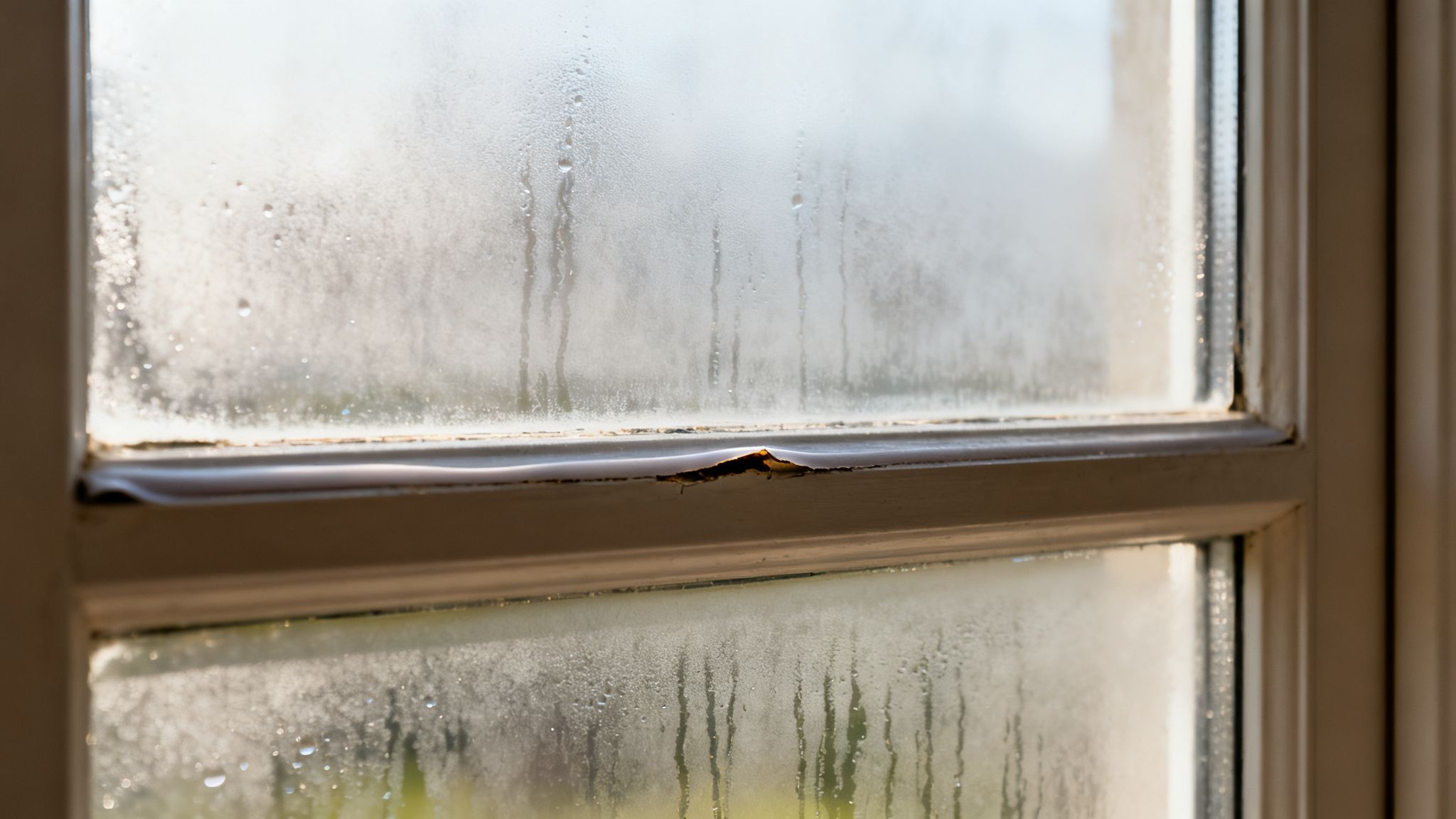
If you've ever tried to wipe away window fog only to find it's stuck on the inside of the glass, you know how frustrating it can be. This hazy, milky film isn't something you can clean off. It’s a sure sign of a much bigger issue: a failed window seal.
This isn't the temporary condensation you see after a hot shower. Fog trapped between the panes signals a permanent, structural failure in your window. The airtight seal that creates the insulating barrier in your double- or triple-pane window has broken.
Think of a modern insulated window like a high-tech thermos. It has a sealed space between the glass panes, typically filled with an inert gas like argon to slow down heat transfer. When that seal breaks, the thermos is essentially busted—and its insulating power is gone.
The Invisible Force Wrecking Your Windows
So, what causes these tough seals to give out? It’s usually a gradual process driven by something called solar pumping, also known as thermal pumping. This is the daily cycle of heating and cooling that puts relentless stress on your windows.
Here’s a breakdown of what’s happening every single day:
- Heating and Expansion: As the sun beats down, it warms the gas trapped between the panes. This causes the gas to expand, pushing outward on the window seals.
- Cooling and Contraction: When night falls and temperatures drop, the gas cools and contracts, pulling the seals inward.
This constant flexing—pushing and pulling, day in and day out—eventually weakens the seals. Over years, tiny cracks and breaches can form. The insulating argon gas leaks out, and humid, everyday air seeps in. This is especially true for windows that get a lot of direct sunlight.
The constant stress takes a toll on even well-made double-pane windows. Once humid air gets in, the desiccant material designed to absorb trace moisture becomes totally overwhelmed. This is a common headache for homeowners in sunny spots like Arizona, where windows on the sun-facing side of a house experience extreme temperature swings, leading to a higher rate of seal failure. You can learn more about the science behind this on paradigmwindows.com.
The Point of No Return
Once moist air gets inside that sealed unit, the damage is done. The moisture is trapped with nowhere to escape. As the temperature outside changes, this trapped water vapor condenses on the inner surfaces of the glass, creating that permanent, ugly fog.
A broken seal does more than just ruin your view. It means your window is no longer energy-efficient. That insulating barrier is gone, so you can expect your heating and cooling bills to start creeping up.
At this point, it's not a cleaning problem. The fog is physically inside a permanently sealed unit that you can't get to. Trying to figure out how to clean between window panes and realizing it's impossible is actually a good way to confirm the seal has failed. It tells you the problem isn't dirt—it's a structural issue that needs a professional fix.
How To Reduce and Prevent Window Fog
Alright, so you understand why your windows are fogging up. Now, let’s get to the good part: what you can actually do about it.
Preventing window condensation really boils down to managing two things inside your home: humidity levels and air circulation. A few simple tweaks to your daily routine can make a world of difference, keeping your windows clear and protecting your home from moisture damage down the line.
These tips are all about tackling interior condensation—the kind you actually have control over. The aim is to stop the fog before it even gets a chance to form.
Quick Fixes For Immediate Relief
Woke up to windows that look like they’ve been crying all night? When you need to clear up sweaty windows fast, these short-term fixes will get the job done. They’re perfect for handling those temporary moisture spikes from cooking, showering, or a house full of people.
- Wipe It Down: Grab a squeegee or a clean microfiber cloth and wipe the moisture away. This simple step is crucial for stopping water from pooling on your window sills and causing rot or mold.
- Get The Air Moving: Flip on a ceiling fan or point a small portable fan toward the window. Moving air helps the condensation evaporate right off the glass.
- Crack A Window: If it’s not too chilly outside, opening a window for just 10-15 minutes is a fantastic way to swap that humid indoor air for drier, fresher air from outside.
These are your go-to moves for a quick fix, but for a real, lasting solution, you'll need to dig a little deeper.
Long-Term Strategies To Control Humidity
To stop playing defense and start preventing condensation for good, you’ll want to build some new habits. The goal is simple: create less moisture in the first place and make it easier for the moisture you do create to get out.
Pro Tip: Aim to keep your indoor relative humidity between 30% and 50%. This is the sweet spot for comfort and condensation control. You can grab a small, cheap hygrometer online or at a hardware store to keep an eye on your levels.
One of the most powerful tools you have for this is your HVAC system. Understanding how air conditioners work to remove moisture is a game-changer; running your AC or a standalone dehumidifier literally pulls water vapor out of the air.
Here are a few more steps you can integrate into your routine:
- Use Your Exhaust Fans: This is a big one. Always run the bathroom fan when you shower and the range hood when you cook. Let them run for at least 20 minutes after you’re done to vent all that lingering steam outside.
- Relocate Houseplants: Your green friends release moisture into the air. If you have a mini-jungle clustered by a window, it creates a pocket of high humidity. Try spreading them out a bit.
- Check Your Vents: Make sure your clothes dryer vent is securely connected and leads directly outside. A loose dryer hose can pump an incredible amount of moisture into your home with every load.
Putting these strategies into practice will seriously cut down on the condensation you see. If you’ve tried everything and are still dealing with stubborn fog, our guide on how to clean foggy windows has some more advanced cleaning techniques.
Here’s a quick checklist to help you stay on top of things.
Condensation Prevention Checklist
Use this simple table as a quick reference to keep your home's humidity in check and your windows clear all year long.
| Action Item | Best For | Frequency |
|---|---|---|
| Use Exhaust Fans | Kitchen & Bathroom Moisture | Daily, during/after cooking & showers |
| Run a Dehumidifier | General High Humidity | As needed (daily in humid seasons) |
| Improve Air Circulation | Stagnant, Humid Air | Daily (use ceiling/portable fans) |
| Wipe Away Condensation | Immediate Moisture Removal | As soon as fog appears |
| Open Windows Briefly | Air Exchange | Daily, for 10-15 minutes |
| Check Appliance Vents | Preventing Moisture Leaks | Seasonally (e.g., spring/fall) |
| Monitor Humidity Levels | Tracking Indoor Environment | Weekly (with a hygrometer) |
By making these actions part of your regular home maintenance routine, you can effectively manage indoor humidity and say goodbye to foggy windows.
When It’s Time to Call a Window Pro
Let's be honest, we all love a good DIY fix. But with foggy windows, some problems just aren't a do-it-yourself job. Knowing when to put down the squeegee and pick up the phone can save you a ton of headaches, prevent serious damage, and keep your home in top shape.
The most obvious sign? Fog you can't wipe away. If you’re seeing moisture, a hazy film, or even mineral deposits trapped between the glass panes, that’s your cue. The seal on your insulated glass unit has officially failed. This isn't a cleaning problem anymore; it's a structural one that needs a pro to either replace the glass unit or the entire window.
Red Flags That Scream "Call an Expert"
A broken seal is a clear-cut case, but other symptoms can point to deeper issues that a professional should diagnose. Ignoring these can lead to costly damage to your window frames and the walls around them.
Keep an eye out for these warning signs:
- Visible Mold or Mildew: Spotting little black or green specks on the window frame, sill, or the drywall nearby? That’s a sign of a persistent moisture problem that needs to be addressed immediately.
- Warped or Rotting Frames: If your wooden frames feel soft to the touch, look swollen, or are clearly starting to decay, it means water has been seeping in for a while.
- Stubborn Condensation: You've tried everything—dehumidifiers, better ventilation, the works—but you're still greeted by excessive condensation every single morning. A pro can hunt down hidden air leaks or uncover bigger ventilation issues you might have missed.
When you bring in a professional, you're not just paying for a repair. You're investing in an accurate diagnosis. They have the right tools and years of experience to pinpoint the real root of the problem, whether it's a busted seal, a shoddy installation job, or a house-wide ventilation issue.
In the end, knowing when to call a professional window washing company is about protecting your home. For issues like a failed window seal, an expert from Sparkle Tech Window Washing can give you a clear diagnosis and steer you toward the best long-term solution.
Your Foggy Window Questions Answered
To wrap things up, let’s tackle some of the most common questions we hear from homeowners about foggy windows. Getting clear, straightforward answers can make you feel a lot more confident about solving the problem for good.
Can Condensation On Windows Cause Mold?
Yes, absolutely. A little bit of morning fog that disappears as the day warms up is usually no big deal. But when condensation becomes a chronic issue, it creates the perfect damp breeding ground for mold.
Once moisture starts constantly pooling on your window sills and frames, it’s only a matter of time before you might see black or green splotches. This isn't just an eyesore; it can damage your home and seriously affect your indoor air quality. That's why it's so critical to wipe away moisture and get to the root of what's causing it.
Are Some Windows More Prone To Fogging Than Others?
They sure are, but sometimes for reasons that might surprise you. Older, single-pane windows are notorious for fogging up. They offer almost no insulation, so the glass gets cold fast, and any humidity in the air will instantly condense on its surface.
Ironically, brand-new, super energy-efficient windows can also have an interior fogging problem. Why? Because they're so airtight, they do an incredible job of trapping moisture inside your home—moisture that older, draftier windows would have simply let escape. So if you see fog on your new windows, it's a sign they're working perfectly! It just means you now need to focus on improving your home's ventilation to handle the humidity they've exposed.
Remember, fog you can wipe away from the inside is a sign of a humid home, not a bad window. It's the fog you can’t wipe away that signals the real problem.
How Can I Be Sure My Window Seal Has Failed?
The easiest way to know for sure is what we call the "wipe test." Simply try cleaning the fog from the inside surface of the glass, then head outside and try to clean the exterior surface. If the haze or moisture is still there, trapped between the panes, you have a confirmed failed seal.
Other tell-tale signs include a distorted or rainbow-like look when the sun hits the glass. You might also notice mineral deposits or streaky lines inside the window that are impossible to clean. These are unmistakable clues that the insulated gas is gone, the window's efficiency is shot, and it's time for a professional fix.
If you're dealing with a broken window seal or just can't seem to get rid of stubborn condensation, a professional diagnosis is the best way forward. Sparkle Tech Window Washing offers expert assessments to help Arizona homeowners pinpoint the true cause of their foggy windows and find a lasting solution. Get a free estimate today!