

The secret to cleaning windows without a single streak is surprisingly low-tech. It’s all about using a quality squeegee with a fresh rubber blade, mixing up a simple solution of distilled water and white vinegar, and mastering a top-to-bottom wiping technique. This approach cuts right through the two biggest culprits of a streaky finish: the residue left by commercial sprays and the lint from paper towels.
Unlocking the Secrets to a Truly Streak-Free Shine
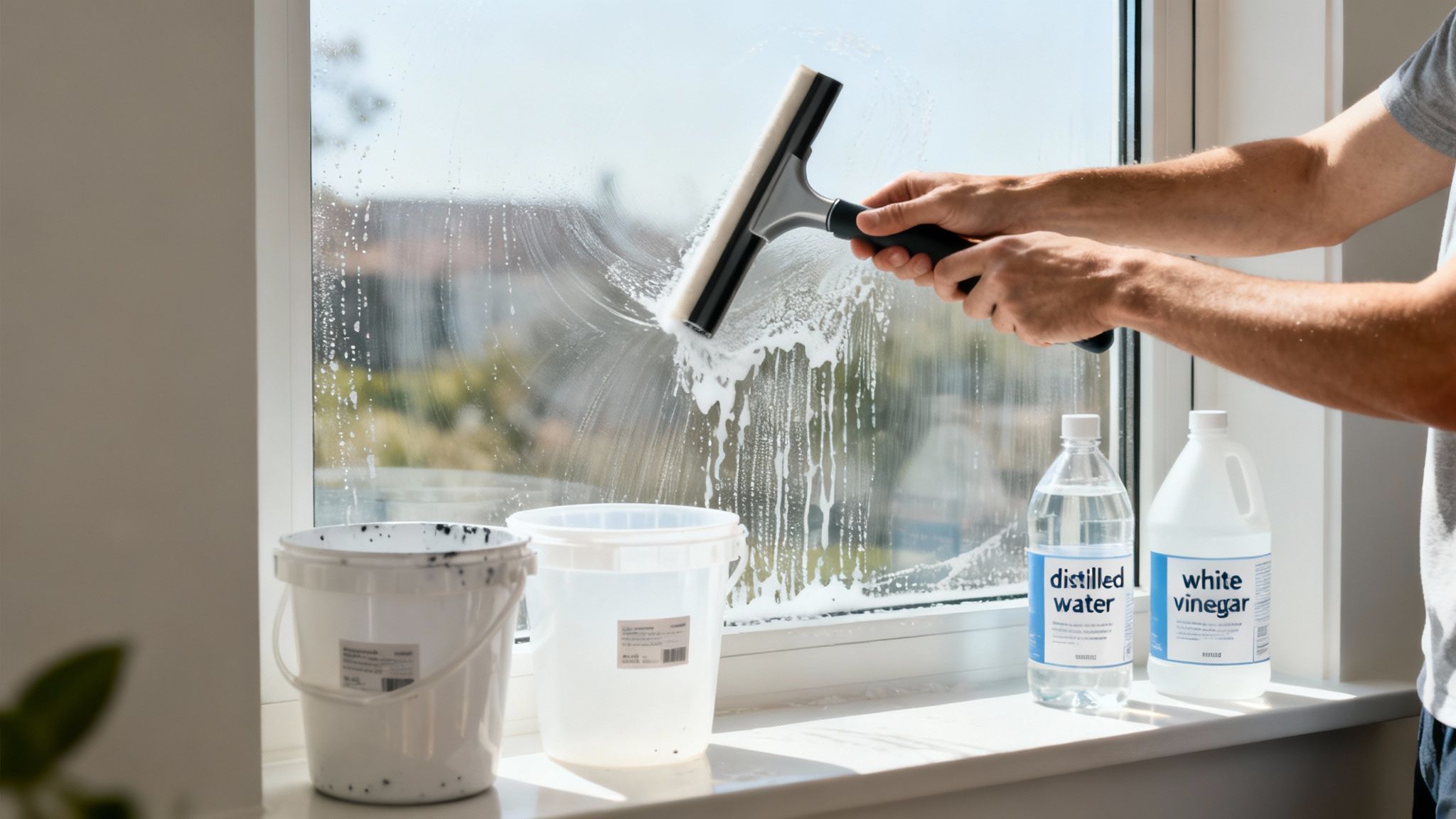
It’s a familiar frustration: you spend hours scrubbing, only to step back and see smudged, hazy glass. That invisible, perfectly clear look the pros get isn't from some magic formula. It comes from a disciplined method and the right tools. Honestly, it’s less about what you put on the glass and more about how you take it off.
The desire for that clarity is huge. The global window cleaning services market has ballooned to USD 93.2 billion, which tells you just how much people value a crystal-clear view. Professionals consistently avoid the streaks that plague 95% of DIY attempts because they skip the ammonia-based cleaners that leave residue. Instead, they stick with simple vinegar solutions and proper equipment.
Ditching Bad Habits for Professional Techniques
At the heart of a perfect clean is knowing what works and, more importantly, what doesn't. So many common household habits actually create more problems. For instance, using tap water might seem harmless, but its minerals are what leave behind those stubborn spots. And paper towels? They just deposit a fine layer of lint.
This is why pros have moved toward advanced methods like pure water systems to guarantee a spotless finish. It eliminates the mineral issue from the start.
The single biggest mistake I see people make is cleaning windows in direct sunlight. The heat makes your cleaning solution evaporate almost instantly, leaving behind a film of soap and mineral deposits before you even get a chance to wipe it away.
To get a better sense of the small changes that make a huge difference, let's compare typical DIY habits with the methods seasoned experts swear by.
DIY Habits vs Professional Techniques
Many of us learned to clean windows with a bottle of blue spray and a roll of paper towels, but those habits are often the source of the problem. Here’s a quick look at where things go wrong and how the pros get it right.
| Common Mistake | Professional Solution | Why It Works |
|---|---|---|
| Using paper towels to dry | Using a professional squeegee | A squeegee removes all water and dirt in a single, even pass, preventing streaks from forming as the glass dries. |
| Cleaning in direct sunlight | Working on an overcast day | Cooler temperatures keep the cleaning solution from evaporating too quickly, giving you enough time to squeegee it off properly. |
| Using tap water | Using distilled water | Distilled water is completely free of the minerals that cause hard water spots and residue, ensuring a much purer clean. |
Making these simple swaps in your routine can elevate your results from frustratingly streaky to professionally clear. It’s all about working smarter, not harder.
Assembling Your Professional Toolkit
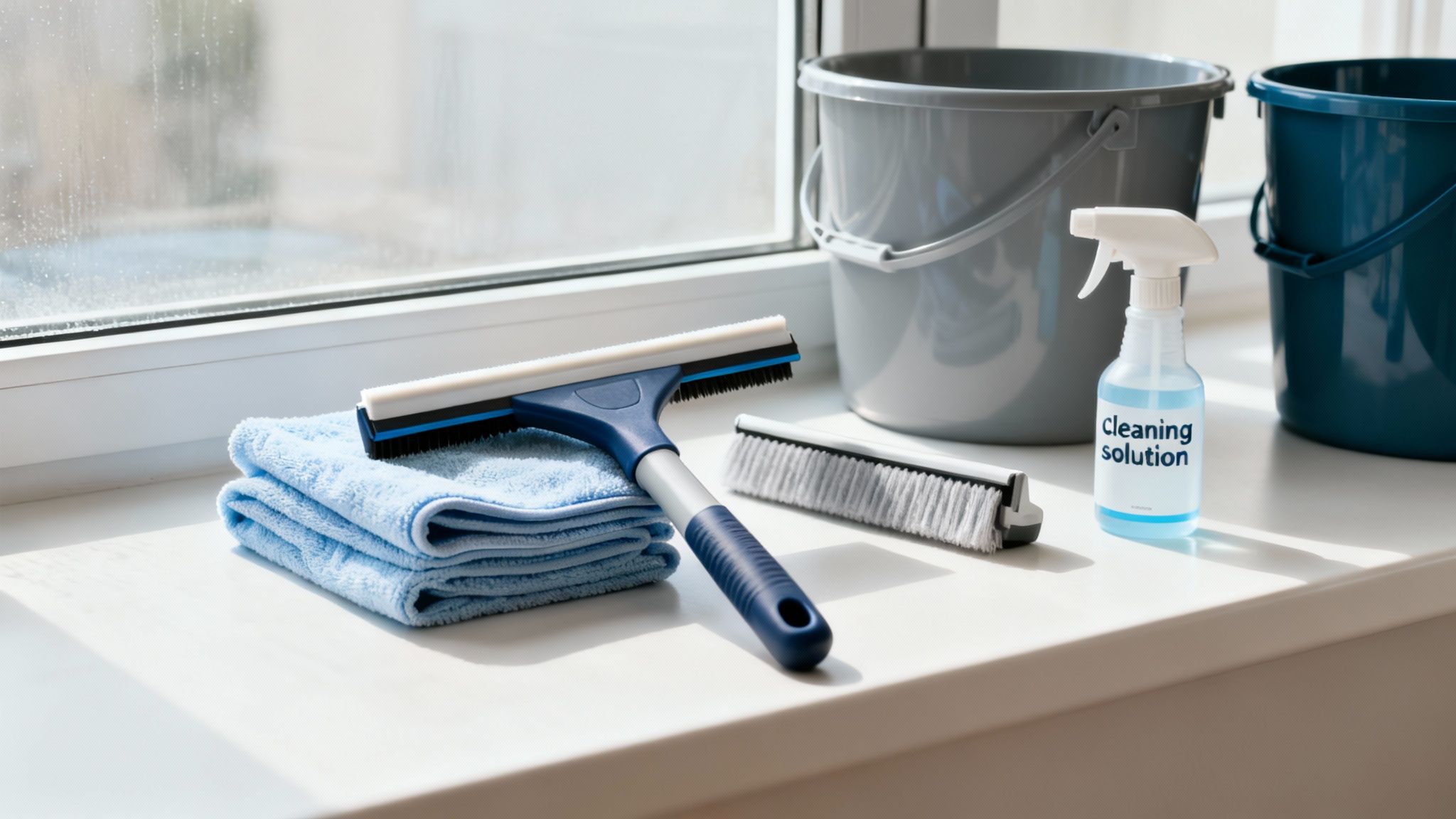
Getting that flawless, streak-free finish isn't about scrubbing harder; it's about having the right gear. The real difference between a frustrating afternoon of smears and a crystal-clear result comes down to a few key items. It's time to forget the paper towels and all-purpose blue sprays—a professional setup is surprisingly simple, affordable, and worlds more effective.
The heart of any pro's kit is a high-quality squeegee. Honestly, this is your single most important investment. Look for one with a replaceable rubber blade, because a sharp, nick-free edge is non-negotiable for pulling water away cleanly. A worn or damaged blade is one of the biggest culprits behind stubborn streaks.
The Essential Trio: Squeegee, Scrubber, and Cloths
Your whole process will revolve around three main components, and each one plays a distinct and crucial role. Getting these right is the first big step toward learning the best way to clean windows without streaks.
- A Professional Squeegee: This is your finishing tool. A solid brass or stainless-steel model gives you a bit of weight, which actually improves your control. For most windows around the house, a 12-inch or 14-inch blade is a fantastic, versatile starting point.
- A Strip Applicator (or Scrubber): Think of this as a T-shaped tool with a thick microfiber cover. It’s designed to apply your cleaning solution and holds a ton of liquid, letting you thoroughly wet the glass and scrub away grime far better than a simple sponge or rag ever could.
- Plenty of Microfiber Cloths: You’ll want a small stack of these. Keep some for scrubbing tough spots and at least one perfectly dry, clean one just for detailing edges. It is absolutely critical to have a separate cloth just for wiping your squeegee blade after every single pass. This prevents you from dragging dirty water right back across the clean glass.
A common mistake is trying to get by with a single cloth for everything. You need distinct cloths for scrubbing, blade-wiping, and final detailing. Cross-contamination is a guaranteed recipe for streaks.
The Support System: Buckets and Brushes
Beyond the main trio, a few other items will make the entire process smoother and more professional. These tools handle the prep work and help contain the mess, ensuring you aren't just pushing dirt from one spot to another.
The two-bucket system is a simple but brilliant hack used by the pros. One bucket holds your fresh cleaning solution, and the other holds clean rinse water. After scrubbing a window, you rinse the dirty applicator in the rinse bucket before dipping it back into the clean solution. This simple step keeps you from reapplying grime to the next window.
You'll also want a small, soft-bristled brush handy to sweep loose cobwebs and debris from the sills and tracks before you even start washing. For a deeper dive into the specific gear, you can learn more about the best window cleaning tools professionals use to get that perfect shine. This kind of strategic approach ensures you’re always working with clean water and clean tools, which is the foundation of a truly streak-free job.
Mixing Up the Perfect Cleaning Solution
It's tempting to grab a bottle of blue stuff from the store, but I've found those commercial cleaners are often the secret cause of streaks. They’re usually packed with soaps, scents, and other additives that leave behind a sticky, invisible film. That film is a magnet for dust and grime, meaning your windows get dirty again almost immediately.
The truth is, the best solution is usually one you can mix up in your own kitchen. It's cheap, simple, and it outperforms most of the fancy products on the market because it cleans without leaving anything behind. The magic lies in a basic mix of distilled water and white vinegar. The vinegar's acidity is fantastic for cutting through grime and mineral deposits, and the distilled water guarantees a clean rinse without any spots.
The Go-To Streak-Free Recipe
For most of the windows inside your home, a simple two-ingredient mix is all you'll ever need. It's incredibly effective and won't leave that weird haze you sometimes see when the sun hits the glass just right.
- 1 part distilled white vinegar: This is the workhorse. It powers through the everyday dirt and smudges.
- 1 part distilled water: Using distilled water is non-negotiable. Seriously. Tap water is full of minerals that will leave behind faint white spots, especially if you have hard water.
Just pour them into a spray bottle, give it a little swirl, and you're good to go. Don't worry about the vinegar smell—it fades completely as it dries, leaving nothing but clear glass. If you're curious about other easy recipes, our guide on the best homemade window cleaning solutions has a few more great ideas.
Forget complicated concoctions with alcohol or ammonia. For 90% of household window cleaning, a simple 50/50 mix of distilled water and white vinegar isn't just good enough—it's better.
When You Need a Little Extra Power
So what about those grimy exterior windows covered in a season's worth of pollen, road film, or bird messes? For those tough jobs, your solution needs a bit more muscle. That's when a tiny drop of dish soap becomes your best friend.
Dish soap is a surfactant, which is a fancy way of saying it helps break down heavy grease and lift it off the surface. But the trick is to use very little. Too much soap is the number one cause of streaks.
- Start with your bucket of the 50/50 vinegar and distilled water mix.
- Add just one or two drops of a simple liquid dish soap (the original blue kind is perfect).
- Steer clear of any soaps that have lotions, moisturizers, or "oxy" power. Those extras are designed to leave a film, which is exactly what we're trying to avoid.
This tiny bit of soap gives your solution the boost it needs to cut through the heavy stuff on outdoor glass without causing soapy streaks. It’s the perfect balance for getting rid of stubborn grime.
Mastering Your Squeegee Technique
You can have the best cleaning solution in the world, but if your squeegee work is sloppy, you'll just be chasing streaks around all day. This is where the magic really happens. A good technique is what separates a frustrating chore from a satisfying, professional-level finish.
The whole point of the squeegee is to lift the cleaning solution—and all the dirt suspended in it—off the glass in one clean sweep. This prevents drips and stops the solution from drying on the pane, which is the number one cause of streaks. It’s less of a chore and more of a craft once you get the hang of it.
It’s All in the Angle and Pressure
Your squeegee’s effectiveness boils down to two simple things: the angle you hold it and how hard you press. Nail these, and you're most of the way to a perfect result.
- Keep it at a 30-Degree Angle: Hold the squeegee so the rubber blade is at a shallow angle to the glass—think about 30 degrees. If it’s too steep, the blade will skip and chatter. Too flat, and you’ll just smear water around instead of clearing it.
- Use Light, Consistent Pressure: Don’t force it. Let the squeegee's own weight do most of the work. The trick is to maintain that same light pressure across the entire blade from the start of your pull to the very end.
Here's a pro tip that makes a huge difference: always "cut in" the edges first. After you've applied the cleaning solution, take a dry microfiber cloth and wipe a clean, one-inch strip down one side and across the top of the glass. This creates a dry zone to start and stop your squeegee, preventing those annoying wet lines at the edges.
Executing the Perfect Pull
With your angle and pressure sorted, it's time to get that glass clean. Always work from top to bottom, making sure to overlap each stroke slightly. This simple, systematic approach is what delivers those flawless results every time.
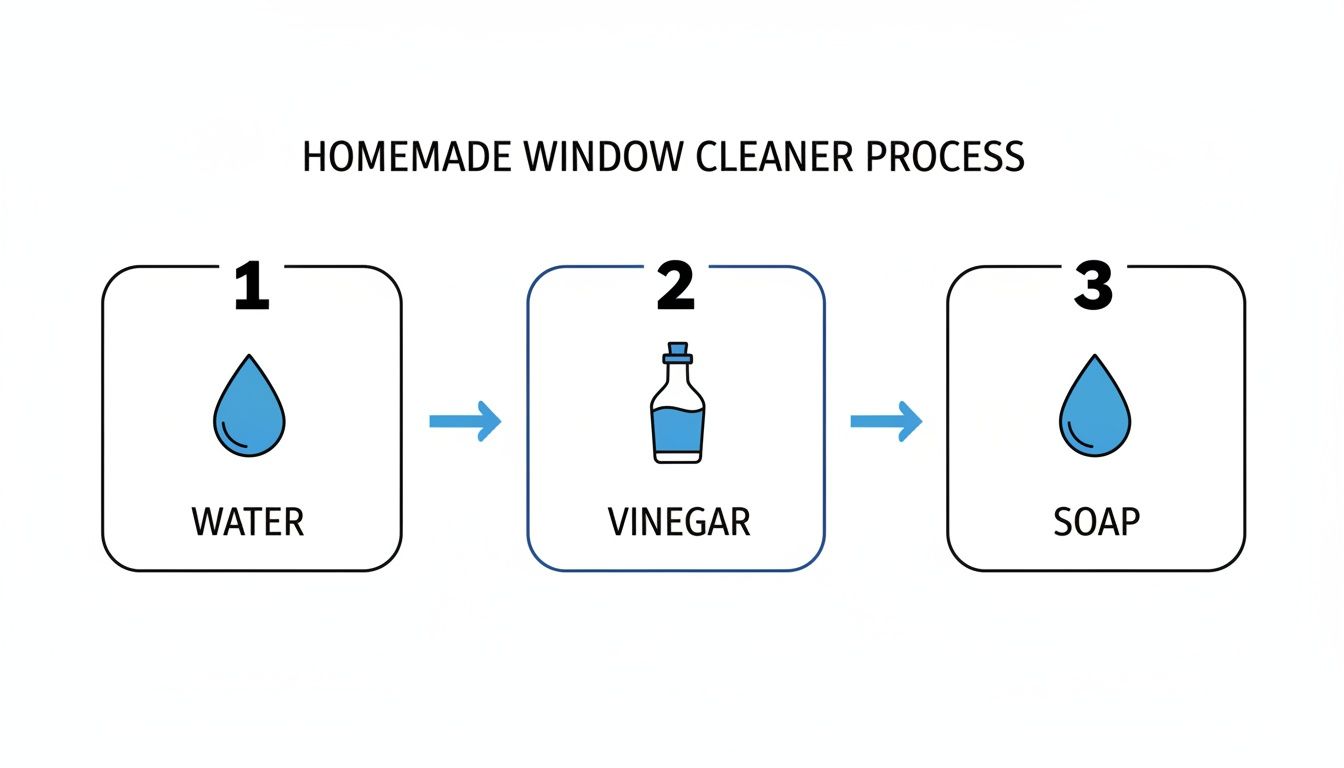
For a basic vertical pull, start by placing your squeegee in that dry zone you created at the top. Angle it just a bit to direct the runoff toward the uncleaned part of the window. Pull straight down in one smooth, confident motion.
This next part is critical: Wipe the blade with a clean microfiber cloth after every single pass. If you skip this, you’re just dragging dirty water right back onto the clean glass.
There's a reason the professional window cleaning industry, projected to hit $3.2 billion by 2029, is built on this technique. Pros using a squeegee with a 20-30 degree pull slash streaks by 90% compared to using paper towels, which cause smears 85% of the time. You can learn more about the market trends in window cleaning services to see why these methods are so ingrained.
Advanced Moves: The S-Method
Got a big picture window or a sliding glass door? The "S-Method" (sometimes called fanning or the snake) is the gold standard for pros. It lets you clean the entire pane in one continuous motion, without ever lifting the blade.
- Start in the top corner, inside your dry strip.
- Pull the squeegee horizontally for an inch or two, then pivot your wrist to turn it downwards.
- Work your way down the glass in a reverse "S" or serpentine pattern.
- Make sure you overlap each pass by about an inch to catch all the solution.
- Finish with one last horizontal pull along the bottom to clear the sill.
It takes a bit of practice to get the fluid motion down, but once you do, you'll be cleaning windows faster and better than you ever thought possible. All that’s left behind is a perfect, invisible shine.
Troubleshooting Common Window Cleaning Problems
Even with the best technique, some windows just don't want to cooperate. You’ll inevitably run into issues that can throw a wrench in your plans for a perfectly clear view. From stubborn spots that refuse to budge to grimy nooks and crannies, these common headaches can be frustrating.
Let’s walk through how to tackle these problems head-on, so nothing stands between you and a flawless finish.
Removing Stubborn Spots Without Damage
The most common culprits are the ones your regular cleaning solution can't seem to touch: hard water spots, bug splatter that’s been baked on by the sun, or the sticky residue from an old sticker. Just ignoring them isn't an option if you want a truly professional result.
Hard water spots are a real pain. Those chalky, hazy mineral deposits left behind when water evaporates are incredibly tough, and a standard vinegar mix often isn't enough to cut through them.
For serious mineral buildup, here’s a trick the pros use: #0000 super-fine steel wool. It sounds scary, but this grade is so fine that it actually polishes the deposits away without scratching the glass. Just get the window and the steel wool wet with your cleaning solution, then gently rub the spot in small circles.
Always test the steel wool on a tiny, out-of-the-way corner first. You need to be sure it won’t leave micro-scratches, especially on tinted or specialty coated windows.
Got other tough spots? For dried paint splatters, a plastic razor blade held at a low angle against the wet glass can lift them right off. If you’re dealing with sticky tape residue or stubborn bug guts, a bit of rubbing alcohol on a microfiber cloth will dissolve the mess before you start your main wash.
Tackling Tricky Frames and Grimy Tracks
You can have the cleanest glass in the world, but if it's surrounded by dirty frames and tracks, the whole job looks unfinished. These areas are magnets for dirt, dust, and dead bugs. Cleaning them first is a non-negotiable step and a huge part of learning the best way to clean windows without streaks.
Window Tracks: Grab your vacuum and use the brush attachment to get all the loose stuff out. For the caked-on grime, spray a little cleaning solution in the track, let it soak for a minute, and then get in there with an old toothbrush. Wipe it all out with a cloth—you’ll be amazed (and a little grossed out) by what you find.
Dusty Screens: Cleaning the screen is essential. If you don't, the next breeze will just blow a layer of dust and pollen right back onto your sparkling clean glass. Pop the screen out, give it a gentle scrub on both sides with a soft brush and some soapy water, and rinse it well. Let it air dry completely before you put it back.
Multi-Pane Windows: French doors and other windows with lots of small panes require a little finesse. A big squeegee is just going to make a mess. Switch to a smaller, 6-inch squeegee and tackle each pane one by one. Remember to wipe the blade clean after every single pass and detail the edges of each little pane with a dry cloth.
Knowing When to Call a Professional
There's a real sense of accomplishment that comes from getting your windows perfectly clean and streak-free. But let's be honest, some jobs are just bigger than a weekend DIY project. The decision to call a pro usually boils down to two things: safety and time.
If you can't reach a window comfortably with a small step stool, it’s a good moment to pause and think about hiring someone.
It's All About Safety and Access
High, tough-to-reach glass is the biggest and most obvious reason to bring in the experts. Think about those second-story windows, the massive picture window in a vaulted living room, or that skylight you love but have no idea how to clean. These aren't just awkward—they're genuinely dangerous to tackle without the right gear.
A professional crew shows up with commercial-grade ladders, safety harnesses, and years of experience working at heights. They know how to position their equipment safely so they don't damage your home or, more importantly, themselves.
The Gear That Gets a Flawless Finish
Beyond just staying safe, professionals come armed with tools that you just won't find at the local hardware store. For stubborn exterior glass, many now use water-fed pole systems. These are impressive telescoping poles that can reach windows three or even four stories high, all while the operator stays safely on the ground.
These systems do more than just reach high places. They pump 100% pure deionized water through the pole to a specialized brush. Because the water has all its minerals filtered out, it actively grabs onto dirt and grime. After a good scrub and rinse, the glass air-dries to a perfectly spotless finish. No squeegee needed. It’s a game-changer for baked-on grime and hard water stains.
The true advantage of a professional service isn't just clean glass. It’s their ability to handle tricky situations safely and deliver a perfect result in a fraction of the time it would take most homeowners.
Do the Math: Your Time vs. Their Expertise
Finally, you have to do a quick, honest cost-benefit analysis. How much is your weekend worth? Cleaning every single window in a medium-to-large house can easily eat up an entire Saturday and Sunday. A professional team can often knock out the same job in a few hours.
They also need to be found, which is where effective marketing comes in. Many service providers learn to optimize their online presence through guides on Local SEO for Home Services to connect with homeowners like you.
When you factor in the cost of buying or renting specialized equipment, the very real safety risks, and the value of your own time, hiring an insured, experienced professional is often the smartest move you can make.
Your Window Cleaning Questions, Answered
Even with the best guide, a few questions always come up. I get asked these all the time, so let's clear up some common points to make sure you get that perfect, invisible-glass look.
Is It Okay to Use Newspaper to Clean Windows?
Ah, the old newspaper trick. This is one of those cleaning "hacks" that’s been passed down for generations, but honestly, it’s best left in the past.
Back in the day, newspaper ink was made differently. Today's ink, especially the soy-based kind, can easily smudge and leave a hazy, grayish film on your glass. Plus, modern newsprint is much thinner and tends to fall apart when it gets wet, leaving a linty, pulpy mess behind.
Stick with a good quality microfiber cloth. It’s the pro’s choice for a reason—it’s super absorbent, won’t leave lint, and gives you a much better shot at that truly streak-free finish.
Why Do My Windows Look Worse After Cleaning Them in the Sun?
This is probably the #1 mistake I see people make. Cleaning windows in direct, hot sunlight is a recipe for streaks. The sun bakes the glass, causing your cleaning solution to evaporate in seconds, long before you can wipe or squeegee it off.
What you're left with is a dried-on film of soap residue and minerals from your water. It’s incredibly frustrating. The absolute best time to wash windows is on a cool, overcast day or when the glass is fully in the shade.
Squeegee vs. Microfiber Cloth: Which is Better for Drying?
This isn't an either/or situation—they work together as a team.
For the large, flat surface of the glass, nothing beats a squeegee. It pulls off every last drop of water and dirt in one clean swipe, which is the secret to preventing streaks. Water can't leave mineral spots if it's not there to begin with.
Your microfiber cloth is the essential partner. Use it to wipe the squeegee blade clean after every single pass. It's also perfect for catching any drips and drying the edges and corners where a squeegee can't quite get a clean finish. Using both is how you get that professional, truly invisible look.
Ready for a guaranteed streak-free shine without the hassle? The expert team at Sparkle Tech Window Washing has the tools and experience to make your windows disappear. Book your professional window cleaning service today!