


Ever wondered how professional window cleaners get that flawless, invisible-glass finish every time? It’s not just about elbow grease or having a good squeegee. The real secret is the window washing fluid.
Think of it like a chef's signature sauce. It elevates a simple task into an art form by using a precise blend of ingredients to get perfect results.
The Secret Ingredient for Streak-Free Windows
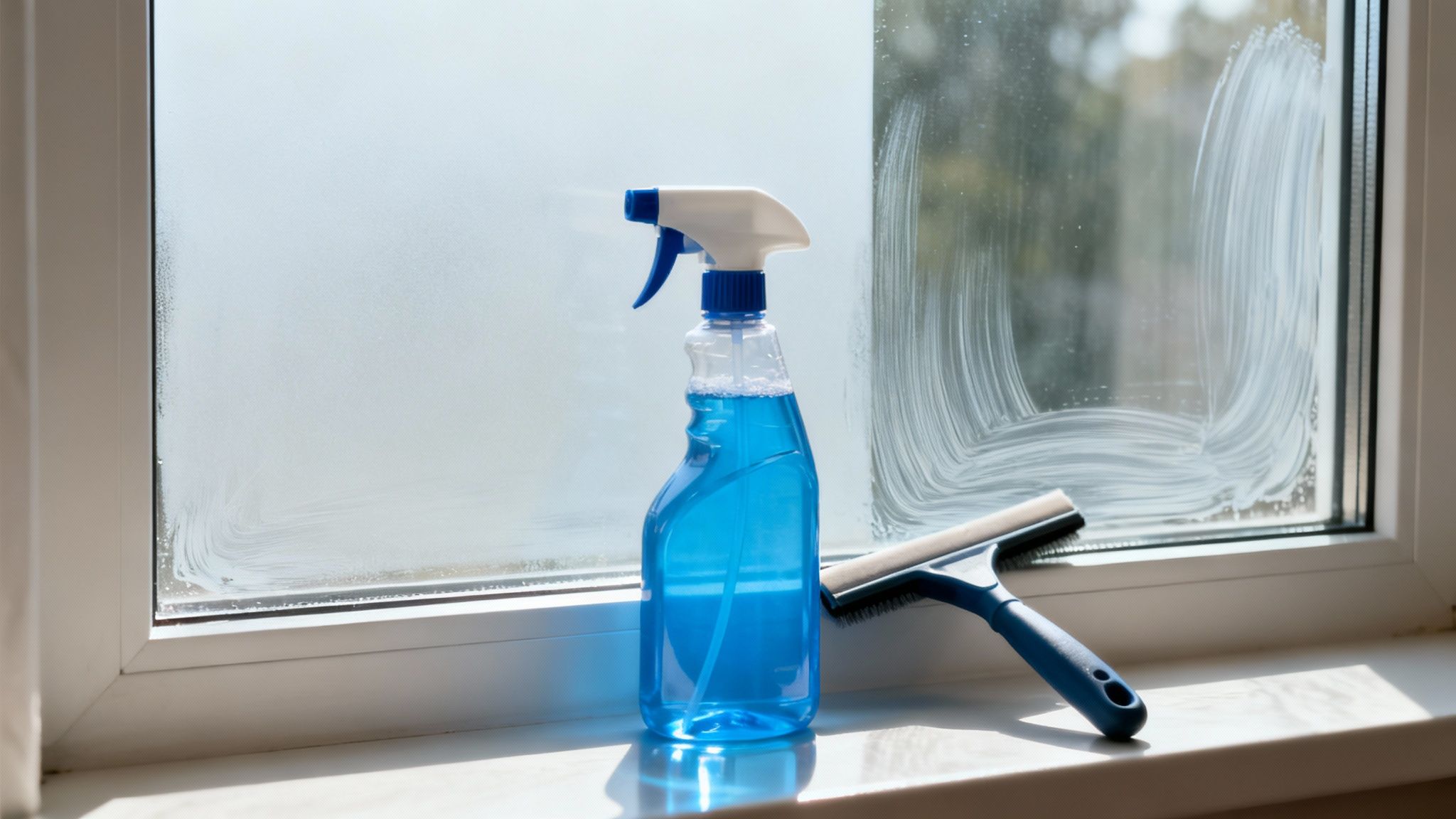
This stuff is much more than just soapy water. A high-quality fluid is engineered to tackle the specific challenges that plain water just can't handle. It's designed to dissolve everything from greasy fingerprints and stubborn bug splatters to the film of pollutants that builds up on exterior glass.
The Science Behind the Sparkle
At its core, any good window cleaning solution is a carefully balanced chemical team. Each ingredient has a specific job, and they all work together to lift away grime without leaving anything behind. Knowing what’s in the bottle helps you understand why these formulas blow simple soap and water out of the water.
Here’s a look at the key players:
- Surfactants: These are the real workhorses. Surfactants break the surface tension of water, which makes it "wetter" and allows it to spread out and get underneath the dirt. They essentially surround dirt and oil particles, lifting them right off the glass so your squeegee can whisk them away.
- Solvents: Think of ingredients like isopropyl alcohol or ammonia. Their job is to cut through the tough stuff—grease, oils, and other sticky gunk that water just smears around. This is absolutely critical for getting that truly clean, non-greasy feel.
- Builders: If you live in an area with hard water, you know about mineral spots. Builders are additives that soften the water, preventing those minerals from being left behind as spots and streaks when the window dries.
The true magic of a professional-grade window washing fluid is how quickly and evenly it evaporates. This rapid drying, helped along by the solvents, is what stops those frustrating streaks from forming in the first place.
This quest for clarity is big business. The global glass cleaner market is valued at around $3.8 billion, and it's expected to climb to $4.1 billion in the next year. That kind of growth shows just how much people want products that deliver a pro-level clean.
A well-made window washing fluid is a non-negotiable tool, especially in sunny climates where every last smudge and streak gets put on full display. By getting familiar with the essential chemicals for window cleaners, you can see why picking the right product is the first and most important step toward achieving that perfect, invisible shine.
Commercial vs. DIY Window Washing Fluid
When it comes to getting a streak-free shine, the debate between store-bought cleaners and a homemade mix is a classic one. Do you go with the scientifically-backed convenience of a commercial formula or the simple, budget-friendly appeal of a DIY recipe? Both have their place, and understanding where each one excels will help you pick the right tool for the job.
Think of commercial formulas as the high-performance specialists. They're the product of serious lab time, where chemists have engineered solutions to tackle everything from stubborn bug splatter and road grime to preventing fog on a humid day. This scientific precision gives you a reliable, powerful cleaner right off the shelf—no mixing, no measuring, no guesswork.
On the flip side, mixing your own window washing fluid puts you in the driver's seat. With a few household staples like distilled white vinegar, water, and maybe a tiny drop of dish soap, you can whip up an effective cleaner for just a few cents. It’s an incredibly cost-effective approach that also gives you total transparency; you know exactly what’s touching your windows and circulating in your home.
The Convenience of Commercial Formulas
Let’s be honest: the biggest win for commercial window washing fluid is pure convenience and power. These aren't just simple soaps. They’re complex blends of surfactants that break down dirt, solvents that dissolve grease, and other additives that a simple homemade recipe just can't touch. This means they often cut through tough, caked-on grime much faster.
Beyond raw power, many commercial cleaners come packed with special features. You can find all-season formulas that won’t freeze up in the winter or hydrophobic solutions that make rain bead up and roll right off. For big, tough jobs, that kind of professional-grade reliability is often worth every penny. You can see how pros put these advanced fluids to work in our guide to commercial window cleaning services.
The core benefit of a commercial cleaner is consistency. Every bottle is engineered for the same streak-free result, thanks to precise chemical balancing that’s nearly impossible to replicate with kitchen ingredients.
The Simplicity and Savings of DIY
The charm of a DIY window washing fluid is all about keeping things simple and cheap. The classic recipe—one part distilled water to one part white vinegar—has stuck around for a reason. It works surprisingly well for everyday indoor cleaning, as the acetic acid in vinegar is a champ at cutting through light films and mineral spots.
Making your own also lets you skip harsh chemicals like ammonia, a common ingredient in commercial cleaners that can be an irritant. This makes the DIY route a fantastic choice if you have kids, pets, or anyone in the house who's sensitive to strong smells. It might take a little more elbow grease on seriously dirty windows, but the payoff is an eco-friendly, ultra-affordable solution.
Commercial vs. DIY Window Washing Fluid at a Glance
So, which one is right for you? It really comes down to the job at hand. For quick touch-ups inside, DIY is often all you need. For tackling a winter's worth of grime on your exterior windows, a commercial product will save you time and effort.
This table breaks down the key differences to help you decide.
| Feature | Commercial Fluid | DIY Fluid |
|---|---|---|
| Performance | Highly effective on tough grime, grease, and outdoor pollutants. | Good for routine indoor cleaning, but may struggle with heavy buildup. |
| Convenience | Ready to use immediately with no mixing required. | Requires gathering ingredients and mixing before each use. |
| Cost | More expensive per ounce, but highly concentrated options exist. | Extremely inexpensive, using common and affordable household items. |
| Special Features | Often includes additives for anti-fog, water repellency, or bug removal. | Basic formula with no specialized additives. |
| Ingredient Control | Formulas are proprietary; may contain ammonia or other strong chemicals. | You have 100% control over the ingredients, ensuring it's safe for your home. |
Ultimately, many people find a hybrid approach works best. Keep a bottle of heavy-duty commercial cleaner on hand for the tough jobs, and use your simple, homemade mix for regular maintenance.
Simple and Effective DIY Window Fluid Recipes
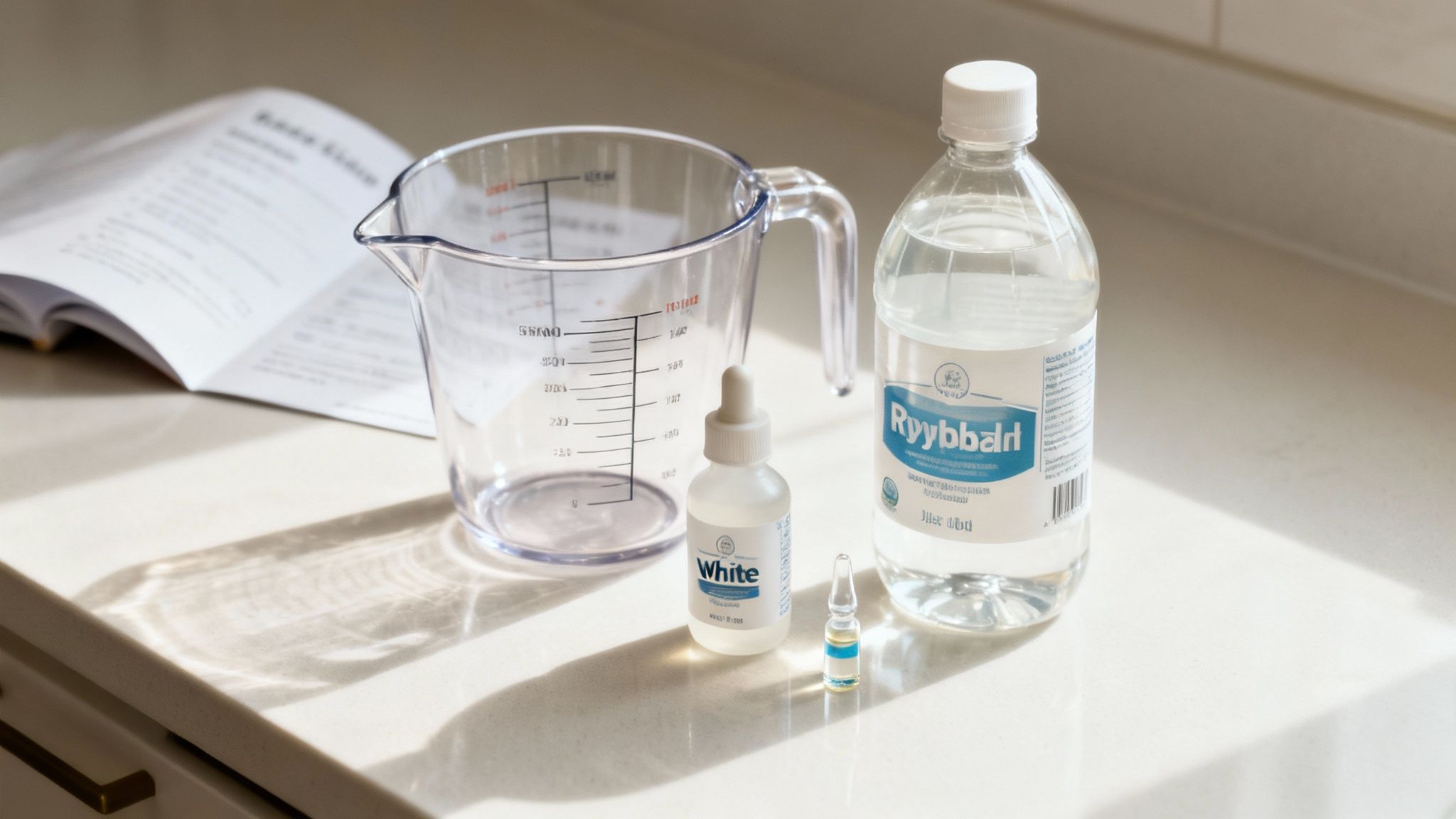
Whipping up your own window washing fluid is one of the easiest ways to get sparkling glass without spending a lot of money. The best part? You probably have everything you need in your pantry right now. When you mix your own solution, you have total say over what goes into it, which is a huge plus for anyone with kids, pets, or a sensitivity to strong chemical smells like ammonia.
These recipes are all about tackling different kinds of grime. They're proof that you don't need a shelf full of complex chemicals to get a professional-looking shine. A couple of basic ingredients are often all it takes to cut through just about anything your windows can throw at you.
The Classic Vinegar and Water Solution
This is the old faithful of window cleaning, and for good reason. It’s perfect for routine, indoor jobs. The magic is in the vinegar's acetic acid, a natural powerhouse that slices right through light films, smudgy fingerprints, and even pesky hard water spots.
Here's all you need to make it:
- 1 part distilled white vinegar: Stick with distilled vinegar to avoid any impurities that might cause streaking.
- 1 part distilled water: This is non-negotiable. Tap water is full of minerals that leave behind a chalky, white residue once the water evaporates.
Just mix them together in a clean spray bottle, give it a little shake, and you're good to go. It’s a simple, reliable mix that gets the job done.
Pro Tip: Keep this vinegar mix away from any window frames or sills made of natural stone like marble or granite. The acid is strong enough to etch and dull the finish over time.
Heavy-Duty Formula for Greasy Windows
Kitchen windows or glass near a stovetop often need something with a bit more muscle. A little dish soap is the secret weapon here. The soap contains surfactants that are engineered to break down and lift away stubborn grease and oily films.
For this tougher formula:
- Start by mixing one part distilled white vinegar with one part distilled water in your spray bottle.
- Now, add just one or two drops of a mild dish soap.
- Gently swirl the bottle to mix everything up. You want to combine it without creating a bottle full of foam.
The trick is to go easy on the soap. A common mistake is adding too much, which leaves behind a sticky film that’s a magnet for dust and a nightmare to get off. Just a drop or two is all the boost you need. For a deeper dive into getting that perfect finish, check out our complete guide to the best homemade window cleaning solutions.
How to Choose the Best Commercial Window Cleaner
Walking down the cleaning aisle can be a little overwhelming. You're faced with a wall of bottles, all promising a streak-free, perfect shine. But if you want to pick a commercial window washing fluid that actually gets the job done right, you need to know what you're looking at.
Think of it like picking the right tool for a project. You wouldn't use a hammer to drive a screw, right? In the same way, the best cleaner for greasy kitchen windows isn't necessarily what you need for dusty exterior glass that's been battered by the elements all year. It’s all about matching the formula to the job at hand.
Decoding the Labels
The lingo on a cleaner bottle can seem like another language, but it's really just telling you what the product is designed to do. Once you understand a few key terms, you can cut through the marketing fluff and find what you actually need.
Here are the most common terms you'll run into:
- Ammonia-Free: This is a big one, especially for indoor cleaning. Ammonia is a seriously powerful solvent, but the fumes can be harsh. An ammonia-free cleaner is a much safer bet for homes with kids, pets, or anyone with respiratory sensitivities.
- Concentrate: If you want the best bang for your buck, look for concentrates. You mix a small amount with water to make gallons of cleaner. It's a great way to save money and cut down on plastic waste.
- All-Season or De-Icer: Live somewhere with real winters? You'll want a cleaner with antifreeze properties. These formulas usually contain methanol, which keeps the fluid from freezing on the glass, making year-round cleaning a whole lot easier.
The most important decision often comes down to balancing power with safety. A strong, ammonia-based cleaner might be great for tough exterior grime, but a gentler, plant-based formula is usually the smarter pick for inside your home.
Matching the Formula to Your Needs
Once you can translate the labels, you can start zeroing in on a window washing fluid that fits your specific situation. Every cleaner is different, and the right one for you really depends on what you're cleaning and your personal preferences.
Before you grab a bottle, think about these factors:
- Indoor vs. Outdoor Use: Inside, you’ll want to stick with safe, low-odor formulas. For your exterior glass, you'll need something with more muscle to cut through pollen, pollution, and stubborn hard water spots.
- Environmental and Health Concerns: Eco-friendly cleaners use biodegradable, often plant-based ingredients. They’re a fantastic choice if you want to avoid harsh chemicals and keep your garden safe from runoff.
- Special Features: Do you need something that makes rain bead up and roll away? Look for hydrophobic additives. Tired of scrubbing off bug splatters? Some formulas are made specifically to dissolve insect residue without all the elbow grease.
Sometimes, the best way to choose is to see what works for others. To get a better sense of what's effective, it can be really helpful to watch a [glass cleaner review]. At the end of the day, picking the right cleaner isn’t about finding the one "best" product, but finding the one that’s best for your home.
Pro Techniques for Applying Window Washing Fluid
Even the best window washing fluid in the world won't give you that invisible, streak-free look without the right technique. It’s a lesson every pro learns early on. The secret isn't just in the bottle; it's in the process—a specific combination of the right tools, the right movements, and a bit of hands-on know-how.
Your first move toward a truly professional finish? Ditch the paper towels. While they're fine for a tiny smudge, they’re notorious for leaving lint behind. Worse, they create static electricity on the glass, which acts like a magnet for fresh dust. A quality squeegee and a few microfiber cloths are the real game-changers here.
Mastering the Art of Application
Think of washing windows like you’re painting a room. You wouldn't just start throwing paint on the wall in random spots, right? You’d prep the area first. The same logic applies to glass cleaning. A systematic approach is your best defense against the smears, drips, and frustrating streaks that only seem to appear when the sun hits just right.
For a flawless result every time, follow the method the pros use:
- Prep the Area: Start by laying an old towel along the windowsill to catch any drips. Use a soft brush or a vacuum with a brush attachment to clear away loose dirt, dust, and cobwebs from the corners and frames.
- Apply the Fluid Generously: This isn't the time to be shy with your window washing fluid. A light mist won’t cut it. You need enough solution on the glass to keep the surface wet from the moment you start scrubbing until the last squeegee swipe.
- Scrub the Glass: Grab a microfiber scrubber or a dedicated T-bar and get to work agitating the entire surface. Move from top to bottom, making sure you loosen all the built-up grime, especially in the corners where it loves to hide.
- Master the Squeegee: Here’s where the magic happens. Start at a top corner and angle your squeegee at about 30 degrees to the glass. Pull it straight down in one smooth, confident stroke.
- Wipe and Repeat: After every single pull, wipe the rubber blade clean with a microfiber cloth. This simple step is critical—it stops you from dragging dirty water right back across your clean window. Overlap each new stroke by about an inch to prevent leaving any lines. For bigger panes, you'll see pros use a continuous "S-curve" motion to get the job done quickly.
The single biggest mistake I see people make is washing windows in direct sunlight. The heat makes the cleaning fluid evaporate almost instantly, leaving behind soap and mineral residue before you even have a chance to squeegee it off.
And don't forget the details. A sparkling pane of glass surrounded by a dirty frame or screen still looks unfinished. Taking the time to clean those components, and even making sure you have the best window screens for your home, makes a world of difference.
It's this attention to detail that’s fueling a massive industry. The global window cleaning market is projected to hit an impressive $6.8 billion by 2033, showing just how much people value a truly professional finish.
Safe Storage for Your Solutions
Whether you mixed a DIY batch or bought a commercial concentrate, storing it properly is non-negotiable. It keeps your window washing fluid effective and, more importantly, keeps everyone in your home safe.
- Label Everything: Always put a clear label on spray bottles with homemade cleaners. Note the ingredients and the date you mixed it.
- Keep It Cool and Dark: Store all your cleaning fluids away from direct sunlight and extreme heat or cold, as this can break down the active ingredients.
- Secure from Children and Pets: This is the most important rule of all. Store every cleaner, whether commercial or DIY, in a locked cabinet or on a high shelf well out of reach.
Before you even start cleaning, this simple workflow can help guide your choice.
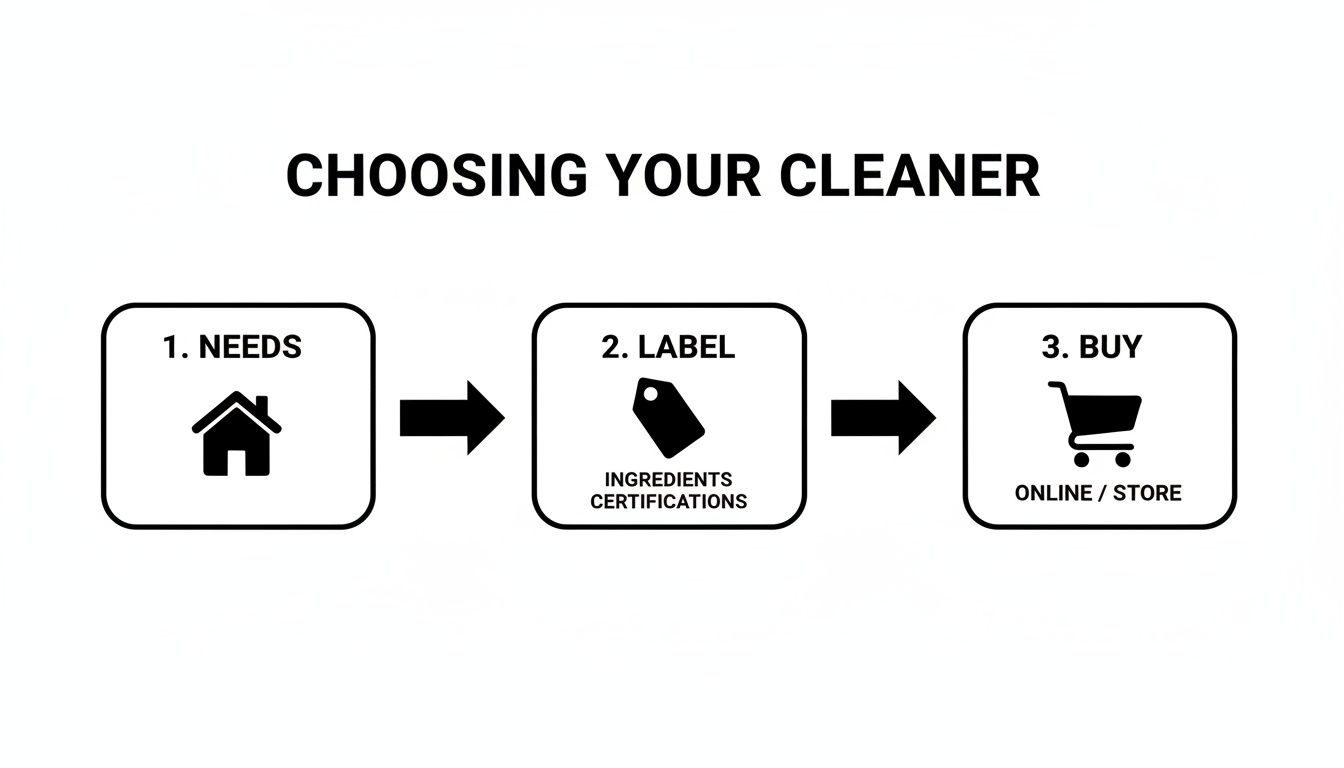
As the chart shows, picking the right fluid always starts with thinking about your specific needs, followed by reading the labels, and then making your purchase.
When to Call a Professional Window Washing Service
While mixing your own window washing fluid and getting the job done yourself feels great, there are times when it’s smarter to leave it to the experts. Knowing when to trade your squeegee for the phone isn't about giving up—it's about understanding the limits of DIY and prioritizing safety, efficiency, and a truly perfect finish.
Think of it like working on your car. Topping off the oil and changing a filter is one thing, but you’d call a mechanic for a transmission overhaul. The same idea applies here, especially when the job involves dizzying heights or windows that pose a real challenge.
Safety and Accessibility
This is the big one. If your home has second-story windows, skylights, or massive panes of glass that are impossible to reach without a seriously tall ladder, hiring a pro is the only sensible choice. They have the training and safety gear to work at heights, which all but eliminates the risk of a dangerous fall.
Professionals also come equipped with tools like water-fed poles that can clean windows up to three or four stories high, all while their feet are planted safely on the ground. This keeps everyone safe and ensures even the most awkwardly placed window gets a thorough cleaning.
Equipment and Expertise
A professional window washing service brings a lot more than just a ladder and a bucket. They show up with commercial-grade squeegees, specialized cleaning solutions, and often, purified water systems. That purified water is key—it has all the minerals removed, which is why it dries to a flawless, spot-free finish that’s tough to get with tap water.
Their expertise also goes beyond just cleaning glass. A seasoned pro often acts as a second set of eyes on your home, spotting issues you might have missed.
- Failing Seals: They can quickly identify condensation building up between panes, which usually means the window’s insulating seal is broken.
- Frame Damage: They’re trained to look for cracked caulking, wood rot around the frames, or other signs of wear that could lead to costly leaks.
- Glass Imperfections: They know how to safely remove stubborn hard water stains or even construction debris without scratching or damaging the glass.
Hiring a professional is really an investment in your home's upkeep. Their trained eyes can catch small window problems before they snowball into expensive repairs.
When Time and Quality Matter Most
Let's be honest: cleaning every window in your house can eat up an entire weekend. A professional crew can often knock out the same job in just a few hours, giving you your time back. The final result is almost always superior, too.
There’s a reason the residential window cleaning market is booming. Homeowners recognize the value of convenience and a high-quality result. Even with the top companies bringing in $50 million to $100 million a year, the industry is full of smaller, local businesses that thrive on providing incredible service. This competition is great for you, as it means there are plenty of excellent options. You can learn more about this by reading up on the latest insights on the residential window cleaning industry.
So, if you’re looking at a huge, difficult, or time-sensitive job, calling a professional isn't a cop-out. It’s simply the smart, safe, and effective choice for your home.
When your windows need a professional touch, trust Sparkle Tech Window Washing to deliver a brilliant, streak-free shine every time. We're fully licensed, bonded, and insured for your peace of mind. Visit us at https://sparkletechwindowwashing.com to get your free estimate today.