



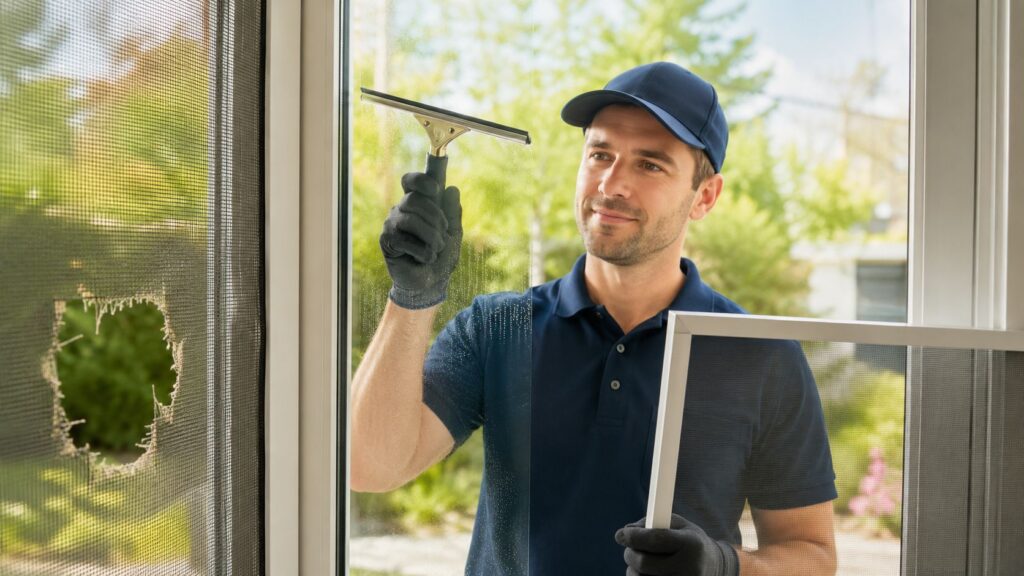
You've probably noticed the pattern. The sunlight hits the front of the house just right, and suddenly every streak on the glass stands out. Then you crack a window for fresh air and spot a torn screen corner, a bent frame, or mesh that's sagging enough to let dust and bugs through. The windows don't look finished, even if the glass is clean. The screens don't function well, even if they're still hanging in place.
That's why window cleaning and screen repair make more sense as one job, not two separate errands.
A clean pane framed by a dirty or damaged screen still looks neglected. A freshly repaired screen over glass with hard water marks still leaves the room feeling dull. When both are handled together, the result is more noticeable inside and outside the home. You improve the view, protect airflow, reduce grime around tracks and sills, and restore the sharp, cared-for look that people notice.
This isn't a niche service category either. The global window cleaning contract services market generated USD 93,156.6 million in 2024 and is projected to reach USD 128,728.0 million by 2030, which shows how central regular window maintenance has become in residential and commercial property care.
Beyond the Smudges A Clear Vision for Your Home
Most homeowners start with the obvious problem. Fingerprints on the patio door. Dust stuck in the tracks. Mineral spots on the bathroom glass. But the deeper issue is usually that the whole window system isn't working together.
Glass, screens, frames, tracks, and sills all affect each other. Dirty screens shed dust onto freshly cleaned glass. Clogged tracks hold debris and moisture near the frame. Torn mesh invites more outdoor particles into the house, especially when windows stay open in milder weather. If you only clean the glass, the job looks better for a while. It doesn't feel complete.
Why the paired approach matters
When window cleaning and screen repair are handled together, three things improve at once:
- Appearance: Clean glass looks brighter when the screen in front of it isn't faded, torn, or packed with debris.
- Function: A screen that fits correctly opens and closes with less fuss, and it's less likely to pop loose.
- Comfort: Windows are there to bring in light and air. Damaged screens interfere with both.
Homeowners often think of screens as accessories. In practice, they're part of the performance of the window. If the mesh is loose, damaged, or coated with grime, it changes airflow and leaves the whole opening looking unfinished.
Practical rule: If you can see the screen problem from the curb or from your favorite chair inside, it's already affecting more than appearance.
What a complete result actually looks like
A finished window service isn't just shiny glass. It's glass that looks crisp from multiple angles, tracks that aren't full of grit, and screens that sit square in the frame without obvious holes or warping. That combination changes how a room feels. Natural light looks cleaner. The edges of the window look sharper. Open windows feel usable again.
This is also where a professional eye helps. Some screens only need cleaning and reinstallation. Others need a new spline, fresh mesh, or a full replacement because the frame itself has twisted. On the glass side, some marks wipe off easily while others need more careful work because they're bonded residue, paint specks, or hard water staining.
Treating these as connected issues saves time and avoids the common mistake of fixing one half of the problem while leaving the other untouched.
Preparing Your Home for Professional Service
A good appointment starts before the first bucket is filled. A little prep on the homeowner's side makes the work faster, safer, and more precise. It also helps the crew spend more time on the windows themselves instead of moving obstacles or guessing which screens have known issues.

Clear access first
Start with the areas around the windows, both inside and outside. You don't need to empty a whole room, but it helps to create workable space.
- Move fragile décor: Lamps, framed photos, vases, and candles near windows should be relocated so they don't get bumped.
- Open up floor space: Pull chairs, benches, or side tables away from windows if they block direct access.
- Trim exterior obstacles: Patio furniture, potted plants, and hoses can slow exterior work or create trip hazards.
- Ensure gates are accessible and note alarms: If your property has side-yard gates or window sensors, mention them before the visit.
If you're scheduling seasonal maintenance, Sparkle Tech's guide to preparing your windows and screens for winter is a useful reference for spotting issues before they become bigger repairs.
Point out anything unusual
Technicians can spot a lot on inspection, but it helps when homeowners mention what they already know.
Tell the crew if you've noticed:
- Loose or rattling screens
- Paint specks or adhesive residue on the glass
- Windows that stick when opened
- Bent frames or corners that won't sit flush
- Pet damage on lower screens
- Windows you don't want opened because of a nursery, office setup, or security concern
Those small notes matter. A screen that looks fine at a glance may have one weak corner that fails when removed. A window that sticks may need a different handling approach to avoid stressing older hardware.
If you know one window always gives you trouble, mention it early. That usually saves more time than any other prep step.
Make the appointment easier on everyone
A smooth service day also depends on household logistics.
| Area | What to do | Why it helps |
|---|---|---|
| Pets | Secure dogs and indoor-outdoor cats | Open doors and removed screens create escape risks |
| Kids | Keep play areas away from active work zones | Buckets, tools, and wet floors need space |
| Blinds and curtains | Raise or tie back window coverings | Speeds interior access and protects fabrics |
| Vehicles | Move cars from tight driveway spots if needed | Improves ladder or equipment access outside |
Good prep doesn't make the service look better by itself. It lets the crew focus on the details that do.
Smart DIY Maintenance for In-Between Cleanings
Homeowners can do a lot between professional visits. In fact, a little upkeep often keeps windows looking presentable much longer. The key is knowing which jobs are basic maintenance and which ones turn into bigger problems when handled casually.

What works well for homeowners
For light upkeep, simple tools beat complicated products. A microfiber cloth, a soft brush, a small vacuum with a brush attachment, and distilled water handle many minor issues without leaving residue.
For glass, use a spray bottle with distilled water and a small amount of white vinegar for spot cleaning. Spray the cloth, not the entire pane, when you're working around wood trim or painted frames. Wipe in straight passes, then buff with a dry microfiber cloth.
For tracks and sills, vacuum loose dust first. Then use a damp cloth or soft detailing brush to lift the remaining dirt. Don't flood tracks with water. That only moves muddy debris into corners.
For screens, gentle cleaning is enough most of the time. Remove loose dust with a soft brush or vacuum on low suction. Wipe the frame with a damp cloth. If the mesh is sturdy and heavily soiled, rinse lightly and let it dry fully before reinstalling. Sparkle Tech's article on how to clean window screens gives a practical walkthrough for this kind of maintenance.
What usually goes wrong with DIY repairs
Where homeowners get into trouble is patching. People see a small tear and assume any quick fix is harmless. It often isn't.
The screen repair and indoor air quality article from Dan's Window Cleaning notes that improper patching can trap moisture and allergens, worsening air filtration. It also states that 68% of homeowners attempt DIY fixes without verifying mesh integrity, which leads to higher pollen intrusion during peak seasons.
That tracks with what professionals see in the field. Nail polish, tape, glue blobs, and mismatched patch kits may hold a tear together for a short time, but they often stiffen the mesh, distort tension, or leave gaps around the repair.
A patch that looks neat from three feet away can still fail at the edges, bow the mesh, and catch more dust than the original tear did.
A simple way to decide
Use this rule of thumb before doing your own repair:
- Clean it yourself when the issue is dust, cobwebs, track debris, or a few fingerprints.
- Call for help when the mesh is torn, the frame is bent, the screen won't stay seated, or the repair material changes the texture of the mesh.
- Stop DIY immediately if the fix requires glue-heavy products, hard-setting coatings, or force to reinstall the screen.
A homeowner can maintain. A professional should restore.
The Professional Window Cleaning Process Explained
Professional window cleaning looks simple from a distance. Up close, it's a sequence. Inspection, setup, debris removal, glass washing, detailing, and final checks all matter. Skip one stage and the finish usually suffers.

A typical residential visit starts with a walkaround. The cleaner checks access, identifies problem glass, notes hard water staining, and looks at the screens before removing anything. That last part matters because damaged tabs, brittle corners, and bent frames need a careful hand from the start.
What professionals actually do on site
On the glass side, the basic toolkit is familiar but more specialized than most homeowners expect. It often includes a mop sleeve, strip washer, professional squeegee, scrapers used only when appropriate, microfiber detailing cloths, extension poles, and purified water systems for certain exterior work.
The method changes by window type. Large panes respond well to controlled squeegee work. Higher exterior windows may be cleaned with water-fed poles using purified water that dries spot-free without hand detailing. French panes and divided lights need a slower pace and edge control to avoid drips collecting in corners.
Details make the difference:
- Tracks are cleared before they turn muddy
- Sills are wiped after wash water moves debris
- Edges are detailed so dry residue doesn't wick back onto the pane
- Screens are labeled or staged carefully when multiple similar windows are involved
For teams managing a busy route, scheduling and job notes matter too. Resources like OnRoute's field operations app guide are useful for understanding how service businesses organize technician workflows, timing, and location-based job details without losing the small notes that affect quality.
Why the finish looks different
The primary gap between DIY and professional work isn't only effort. It's consistency.
A homeowner may get one patio door looking great and still struggle with edge lines, drag marks, or dried spotting on the second and third windows. A trained cleaner adjusts pressure, rubber angle, moisture level, and cloth use from pane to pane. That's why the finish looks uniform instead of uneven.
Here's a good example of the pace and control involved in real-world technique:
Clean glass should disappear. If you notice lines, haze, or runoff first, the process wasn't finished properly.
When window cleaning is paired with screen work, the sequence gets even more important. Screens come out, glass gets cleaned fully, tracks and sills are addressed, and only then do cleaned, repaired, or replaced screens go back in. That order prevents the common mistake of reinstalling dusty or damaged screens over freshly cleaned windows.
Expert Screen Repair and Replacement Options
Screen damage isn't all the same, and the right fix depends on more than the size of the hole. The location, the frame condition, the age of the mesh, and how the screen is used all matter. A bathroom window with one small snag is a different job from a pet-damaged patio screen or a sun-brittled screen that crumbles when touched.

Repair, re-screen, or replace
A quick comparison helps homeowners understand what they're looking at.
| Condition | What it usually means | Common solution |
|---|---|---|
| Small isolated tear | Mesh failed in one spot, frame is still sound | Limited patch or localized repair |
| Multiple tears or sagging mesh | Material has weakened across the screen | Full re-screen in existing frame |
| Bent frame or broken corners | Structure won't hold tension properly | Frame repair or full replacement |
| Poor fit in the window opening | Tabs, springs, corners, or dimensions are off | Rebuild or replace for proper seating |
Patch repairs can make sense when damage is minor and the rest of the screen is in good shape. But many screens that look patchable at first glance are already stretched, brittle, or loose in the spline groove. In those cases, a re-screen is cleaner and lasts longer.
Mesh choices that change performance
The mesh itself also deserves attention. Different materials suit different homes.
- Fiberglass mesh: Flexible, common, and suitable for many standard windows.
- Aluminum mesh: More rigid and often chosen where homeowners want a sturdier feel.
- High-visibility mesh: Designed to preserve more of the outward view.
- Pet-resistant mesh: Better for homes where claws or pushing against the screen are recurring issues.
- Sun screen material: Useful when shade and heat reduction matter alongside insect control.
Each option has trade-offs. A tougher mesh can be more durable but may slightly change the look through the window. A more open, high-visibility material improves the view but may not be the first choice in rough-use areas.
How professionals decide
A technician usually checks four things before recommending a solution:
Frame shape
If the frame is twisted, new mesh alone won't sit correctly.Corner and spline condition
Old spline loses grip. Weak corners let the frame rack out of square.Pattern of damage
One puncture suggests an isolated incident. Fraying all around the edges points to age and wear.Use case
A frequently opened kitchen window needs a different material choice than a decorative upper window that stays closed most of the year.
One factual option in this category is Sparkle Tech Window Washing & window screens, which provides window cleaning along with screen repair, replacement, installation, and rescreening services in Arizona. That kind of combined service is practical when the glass and the screen both need attention during the same visit.
Budgeting and Scheduling Your Service with Sparkle Tech
Most homeowners don't need a complicated formula to budget for window work. They need to know what affects the quote, what can change the timeline, and how to compare one proposal to another without guessing.
The broader industry gives useful context. The IBISWorld industry overview referenced here states that the United States window cleaning market was valued at over $808 million in 2025 and is expected to grow to nearly $1.2 billion by 2033, with a projected CAGR of 4.9% from 2026 to 2033. That supports what many homeowners already sense. This is a stable professional trade, not an occasional side service.
What affects the quote
The price for window cleaning and screen repair usually comes down to scope and complexity.
- Window count and type: Standard panes, divided lights, large sliders, and hard-to-reach windows take different amounts of labor.
- Access conditions: Interior obstacles, high exterior glass, tight side yards, and delicate landscaping can all affect setup time.
- Level of buildup: Light dust is one thing. Caked-on debris, paint overspray, or stubborn mineral spotting is another.
- Screen condition: Cleaning a removable screen is simpler than replacing mesh, fixing bent frames, or fabricating a replacement.
- Scheduling needs: A homeowner with flexible timing may have more options than someone who needs a narrow appointment window.
If you want a general reference for how cleaning companies think about estimating labor and service pricing, Estimatty's cleaning service pricing guide is a helpful background read. It won't replace a home-specific quote, but it does explain why service pricing varies by labor, complexity, and add-on work.
How to plan the visit
A straightforward estimate usually starts with clear information from the homeowner. Share the window count if you know it, note any especially high or oversized windows, and mention whether you need basic screen cleaning, rescreening, repair, or replacement. Photos can help when a screen frame is bent or missing.
For Arizona homeowners comparing options, Sparkle Tech's average cost of window washing guide gives additional context on what influences residential pricing.
The most useful quote request isn't the shortest one. It's the one that mentions access issues, damaged screens, and any windows that need special attention.
Sparkle Tech Window Washing LLC is a family-owned company based in the Phoenix valley and services anywhere in Arizona. The company is insured, bonded, and registered in Arizona for window cleaning and window screen service work. For homeowners, that matters because it reduces guesswork. You're not just buying clean glass. You're hiring a business set up to do the work responsibly.
Frequently Asked Questions
How often should windows be professionally cleaned
That depends on location, dust, landscaping, nearby construction, and how quickly you notice buildup. Many homeowners schedule service when the view starts looking dull or when tracks and screens show visible debris. Homes in dusty areas or with large sun-facing glass usually need more frequent attention than shaded properties with limited exposure.
Can damaged pet screens be repaired
Sometimes, yes. If the frame is still square and the damage is limited to the mesh, a re-screen with a tougher material may solve the problem. If the frame is bent, corners are broken, or the screen no longer fits securely, replacement is often the cleaner option.
Are the cleaning products safe around kids, pets, and plants
Professional crews usually choose methods based on the surface and the setting. For many jobs, simple solutions and controlled water use are enough. If you have sensitive plants, indoor pets, or a specific concern about a room or exterior area, mention it before work starts so the cleaning approach can be adjusted.
Should screens be removed before cleaning the windows
Yes, if the goal is a complete result. Removing the screens allows full access to the glass, tracks, and sill edges. It also gives the technician a chance to inspect the screen frame, tabs, corners, and mesh before putting it back in place.
If your windows look tired and your screens are torn, loose, or dusty, it usually makes sense to handle both at once. Sparkle Tech Window Washing & window screens serves the Phoenix valley and all of Arizona with residential window cleaning, screen repair, rescreening, and replacement. Reach out for a free, no-obligation estimate and get a clear plan for what needs cleaning, what needs repair, and what can wait.