



When it comes to home maintenance, gutter cleaning is one of those tasks that's easy to put off. But here’s the thing: as a baseline, you should plan on cleaning your gutters at least twice a year, once in the spring and fall. This simple rhythm is your first line of defense, keeping rainwater flowing where it belongs—away from your home's foundation.
Your Essential Gutter Cleaning Schedule

Think of your gutters as your roof's personal drainage system, silently protecting your biggest investment from water damage. When that system gets clogged, the problems start small but can quickly cascade into expensive, heartbreaking repairs. That’s why knowing when to clean them isn't just a chore—it's a crucial part of smart homeownership.
While cleaning twice a year is a great starting point, the real answer depends heavily on your local environment. This is especially true for us here in Arizona, where our unique climate and foliage patterns demand a more tailored approach. Being proactive is everything.
A big piece of the puzzle, especially during seasons with heavy leaf fall, is maintaining a leaf-free yard. Keeping debris off the ground means less of it ends up on your roof and in your gutters in the first place.
The Standard Two-Season Approach
For most parts of the country, a twice-a-year cleaning hits the sweet spot. This schedule is designed to tackle the mess left behind by the two seasons that dump the most debris onto your roof.
- Late Spring Cleaning: This round clears out all the pollen, seeds, and flower petals that drop after the spring bloom. It’s all about getting your gutters ready for those heavy summer rains.
- Late Fall Cleaning: This is the big one. Once the trees are bare, you need to get all those fallen leaves out. If you don't, they’ll turn into a dense, soggy mess that can cause major blockages all winter.
This baseline schedule is a proven defense against costly water damage. It's a national standard for a reason. Yet, industry data shows that only about 25% of homeowners actually stick to this advice. The result? Those with unmaintained systems face a shocking 300% higher failure rate.
Your gutters are the unsung heroes of your home's exterior. Keeping them clear isn't just a chore—it's a high-return investment in preventing thousands of dollars in potential water damage to your roof, siding, and foundation.
Before we get into the specifics of what other factors might change your schedule, here’s a quick overview of what a typical Arizona gutter cleaning plan looks like.
Arizona Gutter Cleaning at a Glance
This table breaks down the recommended cleaning schedule for Arizona homes, highlighting the type of debris you'll find and the risks of putting it off.
| Season | When to Clean | Primary Debris | Risk of Neglect |
|---|---|---|---|
| Late Spring | May – June | Pollen, seeds, flower petals, bird nests | Overflow during summer monsoon storms, water intrusion |
| Late Fall | Oct – Nov | Fallen leaves, twigs, dust, monsoon debris | Clogs that cause water to pool on the roof and damage the fascia |
As you can see, our schedule is driven by the post-spring bloom and the end of our active storm and fall seasons. Following this simple plan is the best way to keep your home protected year-round.
Recognizing Your Gutters' Distress Signals

While a regular cleaning schedule is a fantastic starting point, your gutters don't always stick to a calendar. Sometimes, they need help right now, and your house has ways of telling you. Learning to spot these warning signs is crucial for preventing a small gutter issue from turning into a major home repair disaster.
Think of it as your home's "check engine light" for its water-handling system. When you see these signals, it’s time to act. Ignoring them is a surefire way to end up with significant and expensive damage down the road.
Waterfalls and Sagging Gutters
The most blatant red flag is seeing water pour over the sides of your gutters like a miniature waterfall during a storm. This isn't just heavy rain; it's a clear indication that the gutter is so packed with debris it has formed a dam, leaving the water with nowhere to go but over the edge.
You should also keep an eye out for gutters that are visibly sagging or pulling away from the roofline. That muck of wet leaves and dirt is incredibly heavy. All that weight puts immense strain on the gutter and its mounting brackets, often causing them to bend, warp, or pull right off the fascia board.
Unwanted Plants and Pests
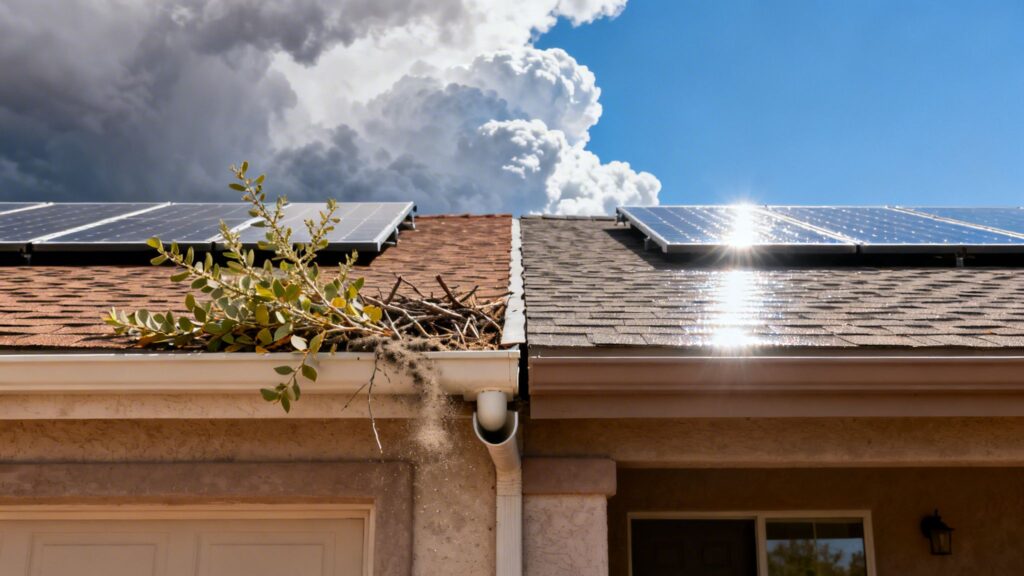
Ever look up and see little green sprouts growing out of your gutters? While it might seem like a quirky rooftop garden, it’s actually a five-alarm fire for your home. It means enough soil and decomposing organic gunk has built up to actually sustain plant life—a dead giveaway of a deep, long-neglected clog.
That damp, sheltered sludge is also a five-star resort for pests. Clogged gutters are an ideal breeding ground for mosquitos, a convenient buffet for birds, and a cozy home for rodents or wasps. If you notice a sudden uptick in pest activity around your roof, clogged gutters are one of the first places you should inspect.
A clogged gutter is more than just a drainage problem; it's an open invitation for pests and water damage. The debris provides the perfect habitat for insects and rodents, while the trapped moisture can rot your roof's fascia boards and create leaks that compromise your home's structure.
Stains, Streaks, and Peeling Paint
Take a walk around your house and look closely at the siding and the wooden boards (fascia) right behind the gutters. Do you see dark streaks, discolored patches, or areas where the paint is bubbling and peeling?
These are telltale signs that water has been consistently overflowing for a while. That constant moisture doesn't just look bad; it can lead to wood rot, mold, and mildew, which can spread into your walls and attic. Catching these visual cues early is your best defense against the costly consequences of a failing gutter system.
Why Arizona Gutter Cleaning is Different

Most of the country runs on a simple gutter cleaning clock: once in the spring, once in the fall. Here in Arizona, following that advice is a recipe for disaster. Our climate plays by a completely different set of rules.
We don't get gentle spring rains and a predictable autumn leaf fall. We get months of baking heat followed by violent monsoon downpours and debris from desert plants that most homeowners elsewhere never have to think about.
Think of it like this: you wouldn't take a family sedan off-roading on a rugged desert trail. In the same way, a generic, twice-a-year gutter cleaning schedule just isn't built to handle the extremes of an Arizona year. Knowing when to clean out your gutters here is less about the calendar and more about survival—your home's survival, that is.
The Pre-Monsoon Clean is Non-Negotiable
If you do nothing else for your gutters all year, make sure you clean them in late spring or early summer, right before monsoon season kicks off in June. This isn't just a suggestion; it’s the single most important thing you can do to protect your home from the sheer force of our summer storms.
Our long, dry spring season creates a unique and stubborn mess inside your gutters. It’s a very specific Arizona cocktail:
- Palo Verde & Mesquite Debris: These iconic desert trees drop a constant stream of tiny leaves, blossoms, and seed pods that sneak right past most gutter guards.
- Thick Layers of Dust: The desert dust settles on your roof for months, creating a fine, gritty layer waiting to be washed away.
- Bird Nests & Droppings: Gutters offer a perfect, sheltered spot for birds to build their nests in the spring, leaving all sorts of leftovers behind.
This dry, powdery mix gets baked by the intense sun into a hard, compacted crust. Then, the first monsoon storm arrives. The sudden wall of water hits that baked-on debris and instantly turns it into a thick, cement-like sludge, forming a dam in your gutter.
In Arizona, a pre-monsoon gutter cleaning is not just preventative maintenance; it's an emergency preparedness step. The combination of baked desert debris and sudden, heavy rainfall creates a perfect storm for immediate and severe gutter failure, leading to overflow that can damage your roof, siding, and foundation.
Other Local Factors That Change Your Schedule
Beyond our dramatic monsoon, a few other factors common to Arizona homes can demand more frequent cleanings. Standard advice often misses these hyper-local details.
Tile Roofs and Debris Channels
Many Arizona homes feature beautiful tile roofs. The deep channels in these tiles are designed to move water, but they also funnel debris with surprising force. This can send a concentrated blast of grit and leaves into one small section of your gutter, creating a solid clog even if the rest of the system is clear.
Pine Trees and Needles
If your home is in a higher-elevation area like Prescott or Flagstaff—or you simply have decorative pine trees—you're dealing with a different kind of headache. Pine needles are notorious for weaving together into a dense mat that water just can't penetrate. Because they don't break down easily, homes with pines often need more than two cleanings a year.
Solar Panels and Water Flow
Solar panels fundamentally change how water and debris run off your roof. They create concentrated waterfalls that can dump a huge volume of debris into the gutter section directly below. Cleaning around these valuable and delicate panels also requires a special touch and the right expertise. To see how this fits into your larger maintenance plan, check out our guide on how often you should clean solar panels.
The Real Cost of Ignoring Your Gutters
It’s easy to look at gutter cleaning on your to-do list and think, "I'll get to it later." It feels like you're saving a bit of time and money. But the truth is, you're not saving anything—you're making a risky bet against your own home. That simple, clogged gutter can kick off a domino effect of damage, turning a small maintenance task into a series of incredibly expensive repairs.
Think of your gutters as your home's circulatory system for water. When they're working right, they safely guide thousands of gallons of rainwater away from your house. The moment they get clogged, however, that system fails. Water backs up, overflows, and puts your roof, walls, and foundation under attack. That’s when the real trouble begins.
The Financial Downward Spiral
It all starts with a single blockage from leaves and debris. Water spills over the edge, soaking the wooden fascia board that holds the gutter in place. Day after day of moisture exposure leads to wood rot, a nasty problem that can easily run over $2,000 to fix. As that wood rots and weakens, the gutter—heavy with water and muck—starts to pull away from the roofline, causing even more damage.
And the water doesn't stop there. It streams down your siding, leaving ugly stains and seeping behind the walls, creating a perfect environment for mold. Worst of all, it pools right at the base of your home.
A $200 gutter cleaning today prevents a $14,000 repair tomorrow. This isn't an exaggeration; it's the financial reality of preventative maintenance versus catastrophic failure. A clogged gutter system is the number one cause of water-related foundation problems.
Once water soaks the soil around your foundation, it creates immense pressure. This "hydrostatic pressure" is a powerful force that can lead to some serious headaches:
- Basement Flooding: Water forces its way through tiny cracks you never knew existed, resulting in a flooded basement and the nightmare of water damage restoration.
- Landscape Erosion: That uncontrolled torrent of water will carve up your flower beds and lawn, washing away expensive soil and mulch.
- Foundation Cracks: In the most severe cases, that constant, immense pressure can actually crack and shift your home's foundation, putting the entire structure at risk.
Dealing with water pooling near your home often requires looking into comprehensive yard drainage solutions to truly protect your property. Because when it comes to foundation repairs, you're looking at one of the costliest projects a homeowner can face, with bills often starting at $10,000 and climbing much higher.
From Chore to High-Return Investment
Suddenly, the price of a professional gutter cleaning doesn't seem so bad, does it? It’s a small price to pay for an insurance policy against truly devastating structural damage. Ignoring your gutters is just like ignoring that tiny drip under the sink—sooner or later, you're going to come home to a disaster and a massive bill.
Knowing when to clean your gutters isn't just about keeping things tidy. It's about protecting the single biggest investment you own. When you stop seeing it as a chore and start seeing it as essential protection, you’ve mastered a key part of smart homeownership. That small cleaning fee buys you something priceless: peace of mind.
When it comes to your gutters, you really have two choices: you can grab a ladder and tackle the job yourself, or you can call in a professional. It's a classic DIY vs. pro debate.
Let's be honest, the main reason most people consider the DIY route is to save a few bucks. On paper, it looks cheaper to skip the service fee, which can run anywhere from $150 to $300. But that doesn't account for the gear you'll need—a solid ladder, good gloves, and something to scoop all that gunk out with.
The real cost, however, isn't measured in dollars. It's about safety. Gutter cleaning is one of the riskiest chores a homeowner can do. Ladder accidents are frighteningly common, and one misstep can turn a Saturday morning task into a life-altering injury. That's the biggest trade-off right there.
When you look at the potential costs of what can go wrong if gutters stay clogged, the choice becomes even clearer. A small preventative expense now can save you from a massive financial headache later.

This is where calling in an expert changes the entire equation.
When a Professional Makes Sense
Hiring a service like Sparkle Tech isn't just about avoiding a chore; it's about paying for safety, expertise, and a job done right the first time. Our crews show up with commercial-grade equipment and the safety training to handle anything your home throws at them. Steep roofs, two-story homes, and tricky layouts are all in a day's work for us. Plus, being fully insured and bonded means you're completely protected.
A professional cleaning is so much more than just scooping out leaves. We're performing a full system check—looking for loose brackets, checking for proper slope, flushing downspouts to ensure they're clear, and spotting the early signs of rust or damage you might not notice from the ground.
A half-done DIY job can be just as bad as not doing it at all. If you miss a single, stubborn clog packed deep inside a downspout, you’re still going to get overflow and potential water damage. We have the tools and know-how to guarantee the entire system is flowing freely. This is true even for homes with gutter guards, which many people don't realize still require maintenance. We explain more about that in our guide to cleaning gutters with gutter guards.
To make the decision easier, let's break down the key differences between handling it yourself and hiring a professional.
DIY vs Professional Gutter Cleaning Comparison
| Factor | DIY Approach | Professional Service (Sparkle Tech) |
|---|---|---|
| Cost | No service fee, but requires equipment purchase. Potential for high costs from accidents or missed damage. | Upfront service fee ($150 – $300). Includes all labor, equipment, and insurance. Prevents costly future repairs. |
| Safety | High risk. Involves working on ladders, often at significant heights. Ladder falls are a leading cause of injury. | No risk to you. Our technicians are fully trained, insured, and use professional-grade safety equipment. |
| Time & Effort | Can take several hours or an entire weekend, depending on the home's size and the amount of debris. | A simple phone call. We handle everything, typically completing the job in 1-2 hours. |
| Thoroughness | Often incomplete. Easy to miss deep downspout clogs or subtle signs of damage without proper tools or experience. | Guaranteed complete cleaning. We flush all downspouts and inspect the entire system for issues like rust or loose fittings. |
| Equipment | Requires you to own or buy a sturdy ladder, gloves, scooping tools, and buckets. | We arrive with all necessary commercial-grade equipment, including high-reach ladders and specialized tools. |
| Liability | You are personally liable for any accidents or property damage that may occur. | We are fully insured and bonded, protecting you and your property from any liability. |
Ultimately, the choice comes down to your comfort level, your home, and what you value most. If you have a simple one-story house with no trees nearby and feel confident on a ladder, DIY might work for you.
But for most homeowners—especially those with two-story homes, steep roofs, or living in climates like ours in Arizona where baked-on debris can be a real problem—hiring a pro is simply the smarter, safer, and more effective choice. It's an investment in your home's protection and your own peace of mind.
Your Year-Round Gutter Maintenance Checklist
Knowing when to clean your gutters is a great start, but it's only half the battle. To really keep your home safe from water damage, you need to think of gutter care as an ongoing conversation, not just a big chore you tackle twice a year.
Think of it this way: proactive maintenance is like a regular health checkup for your home’s drainage system. It's how you catch the small stuff before it snowballs into a costly emergency. A fantastic habit to get into is tying these quick checks to other routine jobs. For instance, when you're washing windows or having your solar panels cleaned, take a couple of extra minutes to glance over your gutters. This simple move transforms separate tasks into a smart, unified defense for your home's exterior.
Ongoing Inspection Steps
You don't always need to break out the ladder to spot trouble. After a big storm or just on a clear weekend, you can perform these quick checks right from the safety of the ground.
- Check for loose hardware. Scan the length of your gutters. Do you see any brackets or fasteners that look like they're pulling away from the fascia board?
- Inspect for rust or peeling paint. These are the first signs that a gutter's protective coating is failing, which can eventually lead to rust-throughs and leaks.
- Ensure downspouts are clear at the base. Look at where your downspouts empty. Make sure water has a clear path away from your foundation and remove any debris, leaves, or stray toys that might be blocking the exit.
Think of this checklist as a quick chat with your home. A simple visual scan after a storm or while you're already outside helps you hear the early whispers of a problem—like a loose bracket or a bit of peeling paint—long before they start shouting in the form of a major leak.
This approach keeps you one step ahead of expensive repairs and slots easily into your existing routine. For more ideas on how to bundle these tasks efficiently, take a look at our complete seasonal home maintenance checklist.
Your Gutter Cleaning Questions, Answered
Even with a good maintenance plan, you’re bound to have questions. This is especially true here in Arizona, where our unique weather throws a few curveballs. As seasoned pros, we’ve heard just about every question you can imagine. Here are our straightforward answers to the most common ones we get from homeowners just like you.
"I Have Gutter Guards, So I'm All Set, Right?"
That’s one of the biggest myths in home maintenance! We wish it were true, but gutter guards aren't a "set it and forget it" solution. While they do a fantastic job of keeping out big leaves and sticks, they can’t stop everything.
Smaller bits of debris—think pine needles, shingle grit, and seeds—will inevitably find their way through the mesh or slots. Over time, this gritty mix settles at the bottom of your gutters, combines with dust, and turns into a dense, heavy sludge. This muck can be even tougher to remove than dry leaves and will eventually clog your system just as effectively. That’s why we always recommend a professional check-up on guarded gutters every 1-2 years to clear out that sneaky buildup before it becomes a problem.
"How Do My Solar Panels Affect My Gutters?"
This is a great question because solar panels completely change the water management game on your roof. Instead of water flowing evenly across the surface, the panels create channels that funnel a massive amount of water—and all the debris it carries—into one specific spot in your gutter. It’s like turning a garden hose into a fire hose.
This concentrated flow means that one section of your gutter system can get overwhelmed and clog up incredibly fast, even if the rest of the gutters are relatively clear. Plus, working around those expensive panels takes a delicate touch. You can't just lean a ladder against them. Our technicians use specialized equipment and techniques to safely clean these tricky areas without risking any damage to your solar investment.
A new construction home is not a get-out-of-jail-free card for gutter maintenance. Roofing grit, sawdust, and other construction leftovers are often left behind, creating the perfect ingredients for a solid clog during the first monsoon season.
Getting your gutters professionally cleaned within the first year is one of the smartest moves a new homeowner can make. It flushes out all that initial construction gunk and starts your home’s water-shedding system off on the right foot.
Don't leave your home's safety to chance. For a thorough, professional inspection and cleaning of your gutters, windows, and solar panels, trust the experts at Sparkle Tech Window Washing. Get your free estimate today and protect your biggest investment!