



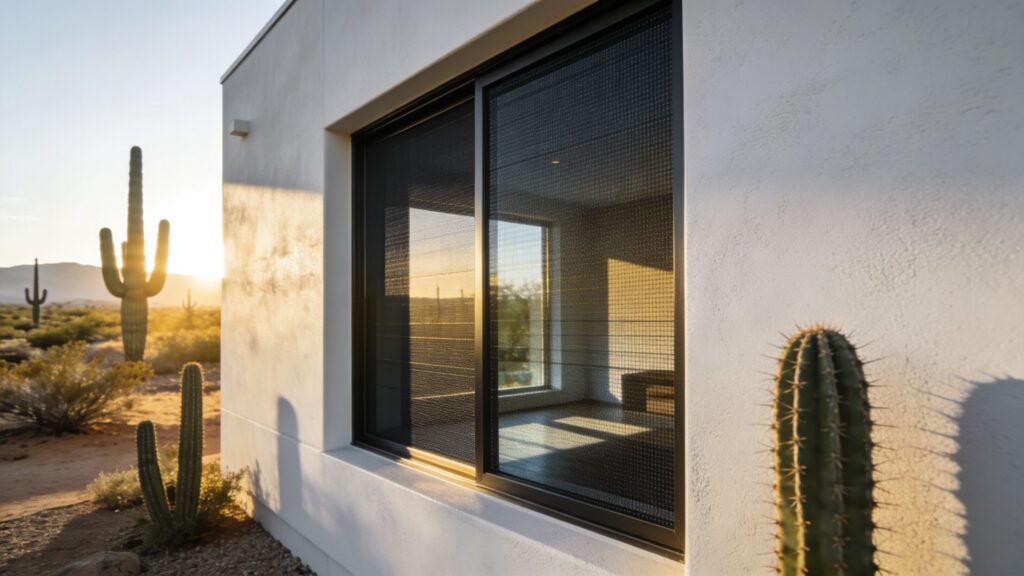
By late spring in Phoenix, a lot of homeowners are dealing with the same routine. The west-facing rooms start heating up before dinner, the AC seems to run nonstop, and the furniture near the windows takes the brunt of the sun every afternoon. You close blinds to keep rooms livable, then miss the natural light and the view.
That's usually the moment sun window screens start making sense. They aren't just bug screens with a darker mesh. They're an exterior barrier designed to stop solar load before it hits the glass, which is exactly why they matter so much in the Valley.
From a window cleaning and screen service standpoint, the biggest difference I see is simple. Homes with well-chosen, well-maintained sun screens are easier to keep comfortable, and the glass behind those screens usually lives a less punishing life than glass that takes direct desert sun all day.
Your Battle Against the Blazing Arizona Sun
If you're reading this in Phoenix, Mesa, Chandler, Gilbert, Peoria, or Scottsdale, you probably already know which windows are the problem. They're the ones that turn a room bright and hot by midafternoon. They're the ones that make you reach for blackout curtains even when you'd rather keep the house open and bright.
That's where sun window screens earn their keep. Instead of trying to manage heat after it has already come through the glass, they block and soften sunlight outside the window. That's the part generic advice often misses. Interior blinds help with glare. They don't stop the glass itself from heating up the same way an exterior screen can.
For Arizona homeowners, that can translate into real operating savings. The U.S. Department of Energy reports that properly installed sun screens can reduce cooling costs by as much as 25-30% in sunbelt regions like Arizona through the long cooling season, as noted in this overview of screen performance and sunbelt cooling savings.
A lot of people first look into screens after they've already tried the usual fixes.
- Closing blinds all day: It darkens the room, but the heat still builds.
- Tinting one trouble window: It can help, but it doesn't give you the same removable exterior barrier.
- Ignoring older screens: Torn or loose mesh doesn't do much against intense afternoon exposure.
Local reality: In Phoenix, the wrong screen setup doesn't fail all at once. It slowly shows up as hotter rooms, hazier views, brittle mesh, and more dust stuck in everything.
If you want a practical starting point, this guide on updating your screens to beat the Phoenix heat is worth reviewing before you decide whether to repair, replace, or upgrade.
How Sun Screens Create a Cooler Home
The easiest way to think about sun screens is this. They're sunglasses for your house.
A standard insect screen is mostly there to keep bugs out while allowing airflow. A solar screen is built differently. The mesh is denser and designed to handle sun control, not just pest control. That difference matters most on windows that get hard direct exposure.

What the mesh is actually doing
A 90% solar screen mesh, made of PVC-coated polyester, is engineered to block 80-90% of solar heat, according to Metro Screenworks' product explanation of 90% solar screen mesh. It does that by reflecting part of the sunlight and absorbing the rest into the mesh, where the heat dissipates into the outside air before it transfers through the window.
That exterior placement is the whole point. If the screen sits outside the glass, the sun's energy gets interrupted earlier. That's more effective than waiting until light and heat have already crossed the glass line.
Why the air gap matters
One of the most common installation mistakes is treating a sun screen like any other screen and pressing it too close to the glass. These products need a small air space so the absorbed heat can shed outward instead of lingering against the window.
In practice, that means the screen system and fit matter just as much as the fabric.
- Too tight against the glass: Performance suffers because heat can't dissipate as well.
- Too loose in the frame: Wind movement increases wear and makes the screen look sloppy fast.
- Wrong mesh for the exposure: A mild east-facing opening and a brutal west-facing patio door don't need the same approach.
A sun screen that's installed poorly can still look acceptable from the curb. You usually notice the problem indoors first.
Sun screen performance versus regular insect screens
Here's the practical distinction homeowners should know:
| Screen type | Main job | Best use |
|---|---|---|
| Traditional insect screen | Keep bugs out | General ventilation and pest control |
| Sun window screen | Reduce solar heat, glare, and UV exposure while allowing airflow | South- and west-facing Arizona windows |
If a homeowner tells me, “I already have screens on those windows,” my next question is always what kind. In Phoenix, that answer changes everything.
Five Essential Benefits for Arizona Homes
The strongest case for sun window screens isn't theoretical. It's what changes in the house once they're up and working the way they should.

Better comfort in the rooms you actually use
The first thing homeowners notice isn't the electric bill. It's that the problem room feels less punishing in the afternoon. Home offices, living rooms, breakfast nooks, and upstairs bedrooms usually show the biggest difference because they get used daily and tend to catch long stretches of direct sun.
That comfort piece matters. If a room is always too bright or too warm, people stop using it the way they planned to.
Less glare without closing the house off
Glare is a major quality-of-life issue in Arizona homes with large windows. TV screens wash out. Laptop work gets annoying. You end up closing blinds just to make the room usable.
Dark-colored solar screen fabrics are particularly effective here. They can reduce uncomfortable glare by up to 80% while still preserving the view to the outside, according to Insolroll's explanation of how solar screen shades work.
That's one reason dark mesh is popular in the Phoenix area. It often gives you a better outward view than people expect.
Better protection for interiors
Arizona sun is hard on floors, fabrics, wood finishes, and anything that sits near a bright opening day after day. Sun screens help by reducing the amount of harsh light and solar load coming through vulnerable windows.
If you're already thinking about UV protection more broadly, a practical companion read is this UPF 50 beach shade safety guide. It's about outdoor shade, not windows, but it does a good job explaining why consistent sun exposure adds up faster than many people think.
Daytime privacy on exposed windows
This is one of the quiet benefits homeowners appreciate after installation. During the day, sun screens can make street-facing windows feel less exposed without forcing you into heavy curtains.
That doesn't mean full privacy all the time. At night, with interior lights on, you still need another layer if privacy matters. But for daytime living, the effect is useful.
A cleaner balance between light and control
The best setups don't make your house feel dark. They make it feel controlled. You still get daylight, but the harshness comes down.
Here's what that usually looks like in real life:
- West-facing family room: More usable in late afternoon.
- Front windows facing the street: Less exposed during the day.
- Rooms with views: Better chance of keeping the view while reducing squinting.
- Spaces with hard flooring or upholstery near glass: Less punishment from constant direct sun.
Sun screens work best when the goal isn't blackout. The goal is to keep the sun from dominating the room.
Choosing Your Sun Screen Material Style and Cost
Buying sun screens gets easier once you stop thinking about them as a single product. In Phoenix, you're really choosing a combination of mesh density, material, color, frame style, and removability.

Start with the density trade-off
Most homeowners focus on one question first. How dark do I want the screen?
That's fair, but the better question is what you want that window to do. A denser sun screen usually gives you stronger heat and glare control, but it can also reduce brightness indoors and change the character of the view. A more open screen tends to preserve a lighter feel, but it won't handle intense exposure the same way.
For a deeper breakdown of common options, this guide to window screen material types is useful if you're comparing solar mesh with standard insect materials.
Material and color choices that hold up better
In the field, the materials matter less in a showroom than they do after a few Phoenix summers. UV exposure, dust, and repeated handling tell the truth fast.
A few practical rules help:
- PVC-coated polyester solar mesh: A common choice for true sun control applications because it's built for that job.
- Standard fiberglass insect mesh: Fine for bugs, not the same thing as a dedicated solar screen.
- Dark colors: Usually better for view-through and glare control.
- Lighter colors: Often preferred when the priority is reflecting more sunlight and keeping the exterior look softer.
Fixed versus removable
This decision often gets overlooked. It shouldn't.
Fixed screens make sense when the window is a known heat problem and there's no reason to keep taking the screen on and off. Removable screens are easier to service, inspect, and replace when mesh or frame problems show up. In dusty desert conditions, removability is a real maintenance advantage.
Buying rule: Match the screen to the exposure, not just the appearance. The prettiest sample in your hand may be the wrong choice on a brutal west wall.
What homeowners often get wrong
The biggest mistakes usually come from oversimplifying the purchase.
- Choosing by color alone: A dark mesh may look right but still be the wrong fit for a particular opening.
- Ignoring the frame: A strong mesh in a weak or poorly fitted frame won't stay sharp for long.
- Using one spec for the entire house: Different sides of the home often need different solutions.
- Shopping only by initial price: In Phoenix, durability and cleanability matter more than bargain-bin first cost.
I avoid giving blanket pricing because the article brief doesn't provide verified cost figures, and real-world pricing varies a lot by window size, frame type, hardware, and fabrication method. What I can say is that homeowners should budget for the full system, not just the mesh. The frame quality, fit, and serviceability often determine whether the screen still looks and performs well a few summers later.
Sun Screens vs Window Film and Traditional Screens
Some homes do better with sun screens. Some do better with film. Some need both. And plenty of homes still have traditional insect screens on windows that really need a solar solution instead.

The simplest way to compare them is by where they work.
The practical difference in where they stop the problem
Sun screens work outside the glass. That gives them a major practical advantage for Arizona heat because they intercept solar energy before the window assembly absorbs so much of it.
Window film works on the glass. It can help with heat and UV control, and it keeps the look more subtle from the curb. But in real use, film doesn't give you the same removable exterior shield, and damaged film is its own replacement project.
Traditional insect screens solve a different problem. They keep insects out and allow ventilation. They are not a heat-control strategy.
Window Treatment Comparison Sun Screens vs Film vs Standard Screens
| Feature | Sun Screens (90%) | Window Film (High-Performance) | Traditional Insect Screen |
|---|---|---|---|
| Heat control | Strong exterior heat blocking for problem windows | Helpful, but applied at the glass | Minimal |
| Glare control | Strong, especially with darker mesh | Moderate to strong depending on film type | Minimal to none |
| Daytime privacy | Good on many installations | Good to reflective depending on product | None |
| Removability | Usually removable or serviceable | Not typically a quick-remove option | Removable |
| Bug control | Yes, depending on mesh and build | No | Yes |
| Cleaning concerns | Mesh and frame need careful handling | Glass care plus film-safe methods | Basic screen cleaning |
| Visual look | Visible mesh | More subtle glass appearance | Basic screen look |
Which option usually works best
I'd break it down this way.
- Choose sun screens when your biggest issue is harsh direct sun, overheated rooms, glare, and the need for an exterior solution that can also function as a screen.
- Choose window film when you want a cleaner visual profile and are comfortable treating the glass itself as the main upgrade.
- Keep traditional screens for low-exposure windows where insect control is the only real goal.
A lot of Phoenix homes end up mixed. West and south exposures get sun screens. Lower-impact windows keep regular screens. Some homeowners add interior treatments for nighttime privacy because exterior solar mesh doesn't solve every problem.
Film changes the glass. Sun screens change what reaches the glass. That distinction usually matters most in our climate.
A Professional Guide to Sun Screen Maintenance and Repair
This is the part most generic guides skip. In Phoenix, dust is not a minor cosmetic issue. Fine desert dust, pollen, and storm residue settle into the mesh and stay there if nobody cleans it correctly.
That buildup affects more than appearance. Proper maintenance is often overlooked, and improper cleaning techniques or neglecting dust buildup from desert environments can reduce a screen's heat-blocking efficacy by 20-30% and shorten its lifespan by years, according to A to Z Screens' discussion of solar screen maintenance gaps.
How to clean sun screens without wrecking them
What works is gentler than most homeowners expect.
- Remove loose dust first. Use a soft brush, a handheld vacuum with a brush attachment, or a gentle rinse. Don't grind grit deeper into the mesh with a stiff tool.
- Wash with mild soap and water. A bucket of mild soapy water and a soft sponge or soft brush is usually enough.
- Rinse thoroughly. Any residue left behind can attract more dirt.
- Let the screen air dry fully. Reinstalling while the frame or corners are still wet can trap grime.
- Reinstall carefully. Don't twist the frame, bend corners, or force clips.
What not to do
I see these mistakes all the time, and they shorten the life of the screen fast.
- Don't use a pressure washer. It can damage the mesh and coating.
- Don't use harsh chemicals. Strong cleaners can attack finishes and screen material.
- Don't scrub aggressively. Desert grit turns a hard scrub into abrasion.
- Don't drag screens across concrete. Frames bend more easily than people expect.
If you can see dust packed into the weave, the answer is patience and gentle cleaning. It's not more pressure.
Signs it's time for repair instead of cleaning
Not every dirty screen needs replacement. But some screens are past the point where cleaning helps much.
Watch for these problems:
- Frayed mesh edges: The fabric is starting to fail.
- Tears or punctures: Small holes become larger quickly in wind.
- Bent frames: A warped frame won't sit correctly and can rattle or gap.
- Loose spline or mesh sagging: The screen has lost tension.
- Brittle corners or faded, weakened material: Long UV exposure has taken a toll.
If you want to understand what a proper fix involves, this guide on how to repair window screens covers the basics of rescreening and repair decisions.
For homeowners who don't want to handle removal and reinstallation, service companies can clean, rescreen, and refit problem screens. Sparkle Tech Window Washing is one local option that handles sun and bug screen service in addition to window cleaning.
Phoenix Homeowner FAQs About Sun Screens
Do sun screens make the house feel too dark
Sometimes, yes, if the mesh is too aggressive for the room and exposure. The best result usually comes from matching the screen to the window, not installing the same product everywhere. On harsh west-facing glass, many homeowners welcome the darker feel. On softer exposures, that same choice can feel heavier than necessary.
Will sun screens survive monsoon weather
They can hold up well, but monsoon season is hard on anything mounted outside. Wind is usually the main threat, not sunlight. Loose hardware, bent frames, and older brittle mesh tend to show up after strong storms. A post-storm inspection is smart, especially on exposed elevations.
Do they hurt houseplants near windows
They can change the light conditions enough that some plants may need to be moved. That isn't automatically a bad thing. Many Phoenix windows deliver intense direct light that stresses plants anyway. The practical move is to monitor how each plant responds after installation and relocate sensitive ones if needed.
Do sun screens work at night for privacy
Not by themselves. Daytime privacy is where they help most. At night, once interior lights are on, you'll still want blinds, shades, drapes, or another interior layer if privacy matters.
Can I leave them up year-round
Most homeowners do. In Phoenix, they're solving a long-season problem, not a short summer inconvenience. The bigger question is whether they're clean, secure, and still fitting the frame correctly.
Will my HOA care
Possibly. Some HOAs care about frame color, visibility from the street, and whether the installation changes the exterior appearance. Check the rules before ordering custom screens. It's much easier to confirm approved colors and styles first than to argue after installation.
Partner With Sparkle Tech for Your Window Screen Needs
Sun window screens work best when they're measured correctly, fitted cleanly, and maintained with some care. In Phoenix, that means paying attention to dust load, frame wear, UV damage, and how the screen comes on and off the house over time.
Sparkle Tech Window Washing LLC is a family-owned Phoenix Valley company that services homes across Arizona. The company is bonded, carries Workers Compensation and General Liability Insurance, and is registered in Arizona as an LLC and window cleaning service. For homeowners, that matters because screen work often overlaps with glass cleaning, ladder access, and careful handling of custom-fit components.
If you're evaluating local providers, it also helps to know how reputable home service companies build trust online before you book them. This article on home services local SEO strategies gives useful context on what strong local visibility and service presentation should look like.
The right next step depends on your current setup. Some homes need a cleaning. Some need rescreening. Some need a full upgrade from standard insect mesh to a true solar product.
If your home has windows that heat up fast, glare that ruins the room, or older screens that are sagging, torn, or packed with desert dust, Sparkle Tech Window Washing is a practical place to start for window screen cleaning, repair, rescreening, and sun screen service in the Phoenix area.