



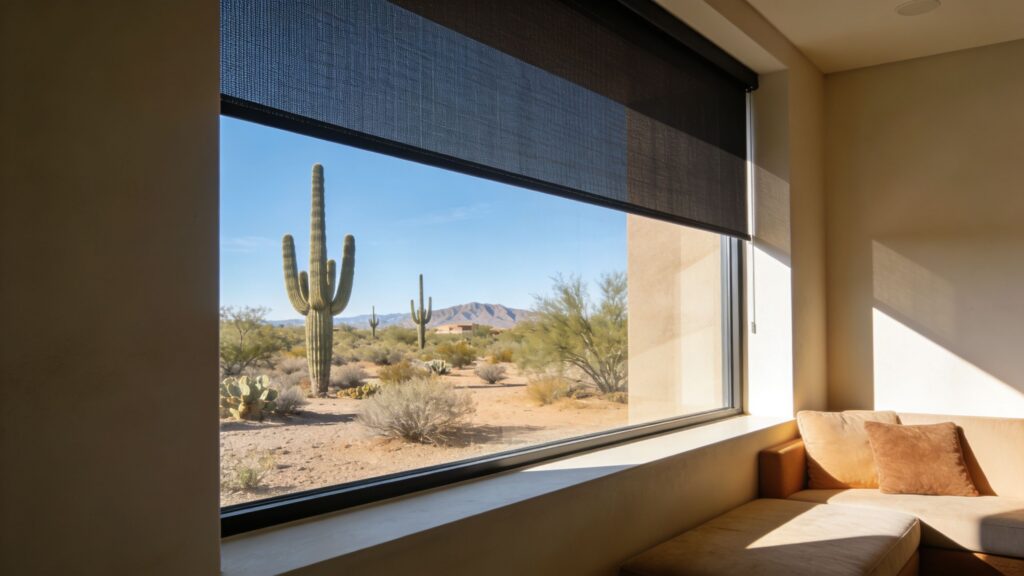
By July in Phoenix, a west-facing room can turn into the part of the house everyone avoids. The blinds are shut, the floor near the glass feels warm, and the AC seems to run without ever quite catching up. Then you walk into a room with exterior sun screens installed, and it feels different right away. Less glare. Less heat pressing through the window. Less strain on the whole house.
That's why sun screens for windows matter here. In mild climates, they're a nice upgrade. In the Valley, they're practical equipment. If your home takes direct afternoon sun, especially on west and south exposures, the wrong glass setup costs you every summer in comfort, fading, and cooling demand.
Phoenix also adds a layer most generic guides ignore. Dust storms, monsoon grime, brutal UV, and long cooling seasons change what works over time. A screen that looks good on install day but loosens, warps, or stays caked with dirt won't deliver the same value year after year. Long-term ownership matters just as much as the initial product choice.
Beat the Heat Your Introduction to Sun Screens
Most homeowners first start looking into sun screens after the same kind of week. The electric bill shows up. One or two rooms stay hotter than the rest. The sofa by the front window is getting faded. By late afternoon, the glare on the TV makes the room annoying to use.
In Phoenix, that usually points back to window exposure. A lot of heat problems aren't whole-house problems. They're window problems, concentrated on the sides of the house that get hammered by sun every day. Interior blinds help with light, but by the time sunlight hits them, the heat has already reached the glass.
Sun screens for windows solve that problem from the outside. They're mesh screens installed on the exterior, where they intercept sunlight before it turns your glass into a heat source. That's the key difference, and it's why they work so well in desert conditions.
What they change in real life
A properly chosen screen can make a room more usable during the hardest part of the day. You notice it in a few ways:
- Less afternoon glare so west-facing rooms don't feel harsh.
- More stable comfort instead of one room running hotter than the rest.
- Better protection for interiors like flooring, furniture, and trim.
- More privacy in daylight without shutting the house up like blackout curtains.
In Phoenix, the best window improvement often isn't the one that looks dramatic. It's the one that quietly keeps the hottest rooms livable in August.
The trade-offs are real too. You give up some brightness. The view gets filtered. At night, they won't give you full privacy if the interior is lit. And if the wrong openness factor goes on the wrong window, the house can feel darker than it needs to.
That's why the right answer isn't “put the darkest screen on every opening.” The right answer is matching the material, openness, frame, and placement to how your house takes sun.
How Sun Screens Stop Heat Before It Enters Your Home
Think of solar mesh as sunglasses for your house. The reason that analogy works is simple. Good sunglasses don't wait until light is already inside your eye to help. They filter it before it gets through. Exterior sun screens do the same thing at the window.

When the screen sits outside the glass, it reflects, absorbs, and dissipates solar radiation before that energy can transfer through the window. That outside placement is what makes the system effective. A curtain or interior shade can reduce glare, but it doesn't stop the glass itself from heating up first.
What the mesh is actually doing
The fabric isn't decorative screen cloth. It's engineered mesh built for solar control. High-quality solar screens can block up to 90 to 99% of the sun's radiant heat and UV rays, and they can reduce indoor temperatures by as much as 15 degrees Fahrenheit in direct sunlight conditions, according to Texas Rolling Shutters and Screens on solar screen density levels. The same source notes they block 80 to 95% of heat-producing rays in Phoenix conditions.
That matters because heat gain through windows is aggressive here. If you've ever stood next to an unprotected west window at 4 p.m., you've felt the difference without needing a meter.
Why exterior placement beats interior shading
Here's the practical version.
Sun hits the mesh first.
The screen takes the load before the glass does.Less heat reaches the pane.
The window itself stays from becoming such a strong radiator into the room.The room stays easier to cool.
Your AC still works hard in Phoenix, but it isn't fighting the same solar load through those windows.
Practical rule: If the room gets blasted with direct sun, the best place to stop that heat is outside the glass, not after it's already inside the room.
Heat control is only half the value
UV protection matters too. Phoenix sun doesn't just heat a room. It works on flooring, furniture, artwork, cabinets, and trim year-round. Sun screens help protect those surfaces while still keeping a usable outward view, especially when the right mesh color is chosen.
That's one reason homeowners often keep sun screens even after replacing windows. The screen and the glass do different jobs. Good glass helps. Exterior screening adds another layer by reducing solar load before it reaches the window at all.
Exploring Solar Screen Materials and Styles
When people shop for sun screens for windows, they usually focus on shade percentage first. That's important, but material and construction matter just as much in Phoenix. A screen that fights sun well but ages poorly under UV, wind, and dust won't feel like a smart purchase later.
The two material families you'll run into most often are vinyl-coated polyester and PVC-coated fiberglass. Both are used in solar screen products, and both can work well. The difference is in feel, durability, handling, and how the screen fits the job.

The main material options
According to Affordable Window Screens on solar screen materials, products like Suntex use vinyl-coated polyester, while other solar screens use PVC-coated fiberglass. That same source notes that Suntex 90 has a 10% openness and can block up to 90% of solar heat and UV rays before they reach the glass.
Here's the practical comparison:
| Material | What it's like | Where it fits best | Trade-off |
|---|---|---|---|
| Vinyl-coated polyester | Tough, stable mesh commonly used in solar applications | High-exposure windows where durability matters | Can feel more purpose-built than decorative |
| PVC-coated fiberglass | Familiar screen feel with solar-control capability | Homes that want a balance of shading and screen function | Depends heavily on frame quality and fit |
If you want a broader breakdown of common mesh choices beyond solar fabrics alone, this guide to window screen material types helps compare how different screen materials behave in residential use.
Openness factor matters more than brand names
A lot of sales conversations get hung up on product labels. The bigger issue is openness factor, which is how much open area the weave has. That number affects heat rejection, glare, privacy, and how clearly you can see out.
Solar Screen Openness Factor Comparison
| Openness Factor | Heat/UV Blockage | Visibility | Best For |
|---|---|---|---|
| 10% | 90% | Strong outward view | Windows where you want more light and view |
| 5% | 95% | Balanced | Main living areas with strong sun exposure |
| 3% | 97% | More filtered | Harsh sun locations needing stronger control |
| 1% | 99% | Limited | Openings where cooling matters more than view |
Color and frame choices
Darker mesh colors usually give a cleaner outward view. That surprises homeowners, but it's the same reason darker sunglass lenses can feel easier to see through in bright light. Black and bronze are common for that reason.
Frames deserve more attention than they get. In Phoenix, flimsy frames and poor corner build quality show up fast. Strong aluminum framing holds shape better and gives the fabric a better chance of staying tight, especially on larger windows and wind-exposed sides of the house.
A good solar fabric in a weak frame is still a weak screen.
Fixed screens are common and straightforward. Sliding applications can work too, but moving parts always introduce more wear points. On homes with lots of daily window use, that affects long-term maintenance.
Choosing the Right Sun Screen for Each Window
The biggest mistake homeowners make is treating every window the same. That usually leads to one of two bad outcomes. Either the hottest side of the house still runs too warm, or the whole home feels darker than necessary because every opening got over-screened.
Phoenix homes need a room-by-room approach. The sun doesn't hit north, east, south, and west windows the same way, so your screen choice shouldn't be one-size-fits-all either.

Start with openness factor, not guesswork
The most useful number when choosing sun screens is the openness factor. According to Solar Screen Outlet's explanation of common solar screen questions, openness ranges from 1% to 15% and directly controls the balance between heat rejection and visibility. The same source says a 5% openness screen blocks 95% of heat and is ideal for east, south, and west windows in high-sun areas like Phoenix. It also notes that darker mesh colors like black or bronze improve outward visibility.
That recommendation tracks with what works in the field. A 5% openness screen is often the sweet spot for the hardest-working elevations because it gives strong protection without making the house feel closed in.
A practical window-by-window approach
West-facing windows
These are usually the problem children. Afternoon sun is brutal, especially in summer when rooms have already been warming all day.
Use stronger solar protection here. If a homeowner tells me one bedroom or living room becomes unusable in late afternoon, west exposure is the first thing I check.
South-facing windows
South windows take long-duration sun. They might not feel as dramatic as west in one moment, but they can build steady heat over the course of the day.
A denser screen often makes sense here too, especially on large panes or rooms with lots of glass.
East-facing windows
East exposure can heat kitchens, breakfast areas, and front rooms early. If morning glare is the complaint, these windows benefit from serious shading, though some homeowners prefer to preserve a little more daylight depending on how they use the room.
North-facing windows
These usually don't need the same level of solar control. In these situations, people often go too dark and regret it later.
If a window doesn't take punishing direct sun, don't treat it like a west window.
Match the screen to the room, not just the wall
The room's purpose matters as much as the direction.
- TV room or office: glare control matters almost as much as heat.
- Kitchen: morning or afternoon brightness may still be useful, so over-darkening can be annoying.
- Stairwell or clerestory windows: view may matter less than reducing heat load.
- Bedrooms: privacy and comfort often outrank maximum daylight.
A good layout uses stronger screening where solar gain is expensive and lighter screening where the home benefits from natural light. That balance is what makes sun screens feel intentional instead of like a blanket fix.
Calculating Costs and Real Energy Savings
Most homeowners don't ask whether sun screens work. They ask whether they pay off. That's the right question.
The tricky part is that broad online advice often talks about “energy savings” without helping you compare that savings against other options in extreme heat. In Phoenix, that matters because the cooling season is long, window exposure is intense, and a weak solution gets exposed quickly.
What makes the return different in Phoenix
Exterior screening has one big financial advantage. It stops solar heat before it enters the house. That's why the payback period is often shorter than options that address heat after it's already reached the glass. BlindsGalore's solar screen overview highlights that exact point for 110°F+ Phoenix temperatures, noting that exterior screens often have a shorter payback period than window films or similar alternatives because they stop heat before it enters the home.
That doesn't mean every house gets the same return. A shaded home with limited west exposure won't see the same value as a house with large unprotected south and west windows. But the principle holds. The more direct sun your windows take, the more useful exterior solar control becomes.
Where the savings show up
The obvious place is summer cooling demand. The less heat the windows dump into the home, the less your AC has to overcome during the hottest hours.
The less obvious place is wear. When a home bakes through its glass every afternoon, the cooling system has to answer for it. Sun screens won't replace proper insulation, ductwork, or HVAC sizing, but they can help reduce unnecessary load from the windows themselves.
A good way to think about the purchase is as targeted heat management, not just a screen upgrade.
- Comfort return: rooms become easier to use.
- Operating return: cooling demand can drop where sun exposure is the main problem.
- Protection return: interior finishes face less sun punishment over time.
Compare them against alternatives honestly
Window film, interior shades, drapes, and replacement windows all have their place. But they don't all attack the same part of the problem. If your issue is heavy direct sun on existing windows, exterior screening is often one of the most practical first moves because it works at the outside surface.
If you're comparing broader whole-home efficiency upgrades, this roundup of expert energy advice for Florida residents is useful because it shows how window-related improvements fit into the bigger picture of cooling performance, even though the climate is different.
Don't judge sun screens only by the invoice. Judge them by what they do to the rooms you currently avoid.
DIY vs Professional Sun Screen Installation
Installing sun screens looks simple from the ground. On a workbench, some jobs are simple. On a real house with varying frame conditions, sun exposure, second-story windows, and custom openings, the difference between “installed” and “installed correctly” gets bigger fast.

When DIY makes sense
If you're replacing a straightforward ground-floor screen, already know how to measure, and understand how the frame needs to sit, DIY can be reasonable. Plenty of homeowners are comfortable with basic screen work.
The catch is fit. Solar screens need clean dimensions and stable placement. If the screen racks, bows, or leaves avoidable gaps, you give away performance and appearance at the same time.
Where DIY usually goes wrong
These are the failure points I see most often:
- Bad measurements: even small errors show up once the frame is in the opening.
- Weak frame choices: the fabric may be fine, but the assembly won't hold up.
- Uneven tension: loose mesh looks rough and can wear poorly.
- Second-story risk: ladders and awkward window access change the whole job.
- Mismatched screen density: a homeowner installs one openness factor everywhere and ends up unhappy with either the darkness or the heat control.
For homeowners also looking at broader glass upgrades, C & C's energy window selection is a useful reference because it helps separate what new windows solve from what exterior solar screens solve. Those are related decisions, but they aren't the same purchase.
Why professional installation earns its keep
A pro doesn't just put a screen on a window. They account for frame condition, exposure, panel size, hardware, and how the finished screen will sit and wear over time. That matters more on custom homes, large panes, and upper-story work.
If you're weighing whether to hand the job off, this guide on installing window screens gives a practical look at what proper fit and handling involve.
Here's a quick visual if you want to see the basic process in action:
Professional installation makes the most sense when the windows are hard to access, the openings are custom, or you want the shading to look clean from the street and perform consistently.
DIY saves labor. Professional work usually saves rework, fit issues, and frustration. The right choice depends on your skill level and the house in front of you, not on whether the screen itself seems simple.
Keeping Your Screens Clean and Effective
This is the part most homeowners don't hear about until their screens look dull, dusty, and tired. In Phoenix, maintenance isn't optional. Dust storms, monsoon residue, pollen, and road grime build up on mesh faster than people expect.
That buildup doesn't just make the screens look dirty. It can affect performance. Affordable Window Screens on custom solar screens notes that existing content often ignores maintenance, even though a dirty screen could lose 10 to 20% of its efficacy. That's a real issue in the Valley, where dust can settle into the weave and stay there.
What regular cleaning actually protects
A clean solar screen does three jobs better. It keeps airflow through the mesh more open, preserves a cleaner outward view, and helps the screen continue doing its solar-control work instead of carrying a layer of baked-on debris.
If you've ever seen screens after a monsoon season, you know the pattern. Fine dust gets locked in by light moisture, then the sun bakes it on. Leave that long enough and simple rinsing stops being enough.
A safe cleaning routine for homeowners
You don't need anything fancy to handle light cleaning well.
- Remove loose dust first with a soft brush or gentle vacuum attachment.
- Wash with mild soap and water using a soft sponge or soft-bristle brush.
- Rinse thoroughly so residue doesn't dry into the mesh.
- Let the screen dry fully before reinstalling if you remove it from the frame.
Avoid aggressive scrubbing and harsh chemicals. They don't make the screen “extra clean.” They just increase the chance of damaging the mesh or finish.
If you want a practical walkthrough, this guide on how to clean window screens covers the basics in homeowner-friendly terms.
When to call for professional help
Sometimes the issue isn't ordinary dust. It's caked monsoon grime, frame wear, torn corners, spline problems, or screens that need to come out and go back in safely on larger windows. That's when professional service makes more sense than forcing a DIY cleaning and risking damage.
Homes with heavy sun exposure often benefit from treating screens like other exterior components. They need inspection, cleaning, and occasional repair if you want them to keep doing their job.
For homeowners thinking more broadly about low-maintenance interior options too, this article on durable window treatments for Katy homeowners is a useful complement. It's interior-focused, but the maintenance mindset is the same. Choose products you can keep clean and functional.
Clean screens don't just look better. They protect the reason you bought them in the first place.
A neglected sun screen can still hang in the opening and fail to deliver what you expected. A maintained one keeps working through the long Phoenix season when you need it most.
If your home has rooms that overheat, glare that won't quit, or solar screens that need cleaning, repair, or replacement, Sparkle Tech Window Washing handles window screen service in Arizona, including sun and bug screens, rescreening, and screen cleaning.