



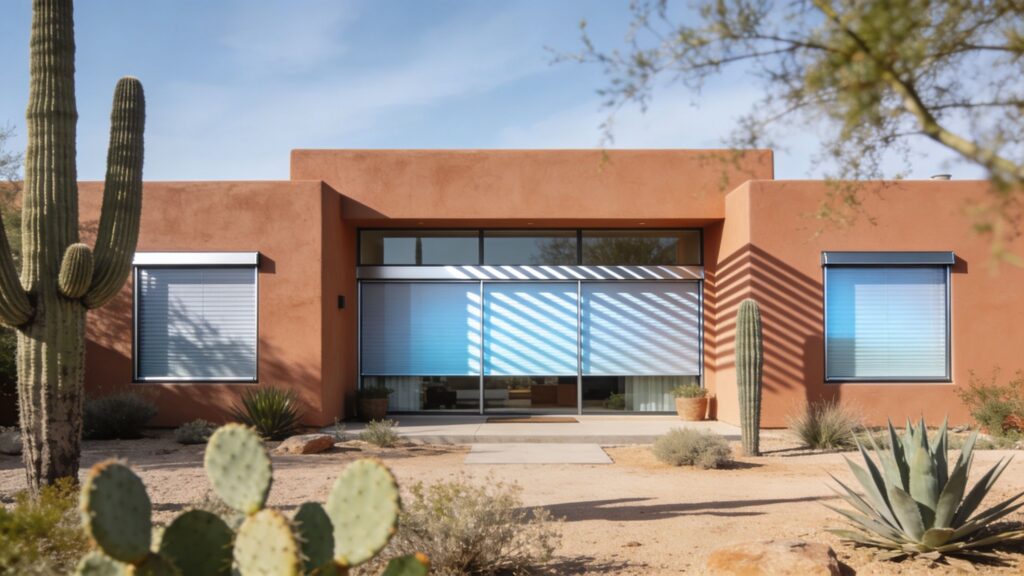
By late afternoon in Phoenix, some rooms stop feeling like part of the house and start feeling like the inside of a parked car. You close the blinds, but the glass is already hot. The couch near the west window gets blasted. The AC keeps running, and the room still feels bright, harsh, and uncomfortable.
That's where solar screens make sense. Not as a trendy add-on, and not as a one-size-fits-all product, but as a practical way to stop a lot of the sun before it turns your windows into heat collectors. In Arizona, that outside-first approach matters.
Most guides stop at the sales pitch. The key question is what these screens are like to live with for years in dust, monsoon residue, hard water, and constant UV. That's the part homeowners need to understand before they buy, and it's also the part that determines whether the screens keep doing their job.
Beating the Arizona Heat with Solar Screens
By 3 p.m. in Phoenix, the problem usually is not the whole house. It is a few windows. West-facing glass can turn one room into the place nobody wants to sit, even with the AC running hard.
Solar screens help because they stop a large share of that sun before it loads the window with heat. The U.S. Department of Energy notes that exterior shading devices are more effective than interior coverings for reducing solar heat gain, because they block sunlight before it passes through the glass. DOE also points to exterior screens and shades as a practical way to cut cooling demand in hot climates through its guidance on window attachments and energy efficiency.
That difference matters in Arizona, where long afternoons, dust, and UV exposure put window coverings under real stress. A solar screen that looks fine on day one still has to perform after summers of baked-on grime, monsoon dust, and regular handling. If the mesh gets loaded up with dirt or starts to sag, you lose some of the airflow, visibility, and sun control you paid for. That long-term upkeep gets missed in a lot of sales pages.
For most Phoenix homes, the benefits are practical:
- Less heat pressure at the hottest windows: west and south exposures become easier to live with.
- Reduced glare: TVs, desks, and seating areas stay more usable in the afternoon.
- Better daytime privacy: you can usually see out without putting the whole room on display.
- Less direct wear on interiors: floors, fabrics, and furniture take less punishment from the sun.
A partial install often makes more sense than screening every window at once. Start with the rooms that get hammered in late afternoon. In many homes, that means west-facing living room windows first, then south-facing bedrooms or offices. If you want a local overview of what that kind of upgrade looks like, this guide on updating your screens to beat the Phoenix heat covers the basics well.
One trade-off is worth being honest about. Higher sun blockage usually means a dimmer view and less outward clarity. Lower blockage keeps the room brighter, but it also lets in more heat and glare. The right choice depends on the window, the room, and whether you care more about comfort, view, or both.
Done right, solar screens make problem rooms easier to use and less expensive to cool. Done poorly, or left dirty for years, they slowly stop delivering the same benefit.
How Solar Screens Actually Work
A simple way to think about solar screens is to compare them to shade from a tree. A shaded window just behaves better than one taking direct sun all afternoon. The screen creates that first layer of protection before sunlight bakes the glass.

What the screen is doing outside
Solar screens are mesh coverings installed on the exterior or interior, though exterior placement is where they do their best heat-control work. The mesh is designed to manage three things at once: solar heat gain, glare, and UV exposure, while still allowing light and some view through the fabric.
Here's the plain-English version of what happens when sun hits the screen:
- Some solar energy is reflected away
- Some is absorbed by the screen material
- Some passes through the openings in the mesh
Because the screen is outside, a lot of that absorbed heat stays outside instead of building up after it passes through the glass. That's why exterior shading works differently from blinds or curtains. Interior coverings can help with glare and privacy, but by then the sun has already heated the window.
Why exterior placement matters
This is a common oversight. The window itself becomes part of the problem if it takes full sun for hours. Once the glass is hot, the room feels it.
A solar screen works best when it stops the sun before the glass becomes a radiator.
That also explains why homeowners often notice the biggest comfort change on rooms with direct afternoon exposure. A bedroom on the east side may need a different setup than a family room with broad west-facing glass.
A quick visual helps if you want to see the product in place and how it changes light at the window:
The role of openness factor
The key performance term is openness factor, often shortened to OF. That's the percentage of open weave space compared to the total fabric area. Lower OF means a tighter weave. Higher OF means a more open weave.
Typical ranges run from less than 1% up to 15%. In practical use:
- Lower OF gives stronger heat and glare control, more daytime privacy, and less view out
- Higher OF preserves more daylight and visibility, but blocks less heat
That trade-off is what makes solar screens useful. You can tune the screen to the room instead of pretending every window in the house has the same needs.
Choosing the Right Material and Mesh
Most bad solar screen decisions come from chasing one benefit and ignoring the trade-off. People want maximum heat blocking, clear views, bright rooms, privacy, and easy maintenance all at once. Real screens don't work that way. You have to choose what matters most for each window.

Start with the material
Premium solar screens are commonly made from PVC-coated polyester or fiberglass. Both are used because they hold up better outdoors than flimsy mesh options. If you want a more detailed overview of trade-offs across screen construction, this guide to window screen material types is a helpful reference.
Material affects a few practical ownership issues:
- Durability in sun: Coated materials handle UV exposure better than untreated fabric.
- Cleaning tolerance: PVC-coated fabrics generally handle cleaning more predictably.
- Long-term shape retention: Better materials are less likely to become a headache after years outside.
The common “80/90” label confuses a lot of homeowners. The industry standard 80/90 classification refers to heat and UV blockage, not openness factor. A cited example from this solar screen openness and color guide is SunTex 90, which blocks about 90% of the sun's heat while having a 10% openness factor for visibility.
How to choose openness factor
The core of the decision lies in understanding openness. Lower openness means tighter weave and stronger blocking. Higher openness means more light and a better outward view.
Here's the practical version for Arizona homes:
| Openness factor | What it feels like in real use | Best fit |
|---|---|---|
| 1% | Maximum blocking, strongest privacy, limited outward view | Harsh west sun, media rooms, problem windows |
| 3% | Strong heat control with a more usable view | West and south exposures where comfort comes first |
| 5% | Balanced option with good privacy and clear views | Common choice for everyday living spaces |
| 10% | Brighter room, clearer view, lighter heat control | View-focused areas where glare is mild |
For tough Phoenix exposures, 1% to 3% usually makes the most sense on west-facing windows. For patios, breakfast nooks, or places where preserving the outside view matters more, 5% or 10% can be the better call.
Don't ignore color
Color doesn't work by itself, but it does affect how the screen looks from inside and outside. Darker fabrics tend to preserve view clarity better. Lighter ones can soften glare but often make the outward view look less crisp.
If you care about seeing out cleanly during the day, darker fabric with a middle or lower openness factor usually performs better than homeowners expect.
That's why many Arizona installations use darker mesh on the sunniest sides of the house. You get practical heat control without making the home feel shut in.
Solar Screens vs Window Film and Blinds
Homeowners usually compare solar screens with two other options: window film and interior blinds or shades. All three can help. They just solve different parts of the problem.
The biggest distinction is where the product works. Solar screens operate outside the glass. Film and blinds work on or inside the window. In Arizona, that difference shows up fast on sun-beaten exposures.

Where each option wins
Solar screens are the strongest choice when the main problem is heat hitting the glass from outside. They also help with daytime privacy and glare while keeping the window usable.
Window film can be a good fit when you want to keep the exterior look unchanged or when HOA restrictions make exterior additions harder. Film can also be useful on large fixed panes where exterior screens aren't the preferred look.
Blinds and shades are often better viewed as comfort layers, not primary heat blockers. They help with privacy, light control, and room darkening, but they don't stop the first hit of sun on the outside.
Window treatment comparison for Arizona homes
| Feature | Exterior Solar Screens | Interior Window Film | Interior Blinds/Shades |
|---|---|---|---|
| Main strength | Stops solar load before the glass heats up | Reduces glare and solar impact at the glass | Controls light and privacy inside |
| Best use case | West and south windows with direct sun | Homes wanting a low-profile look | Bedrooms, privacy needs, layered light control |
| View outward | Usually strong during daytime, depending on mesh | Generally preserved, with some tint effect | Often interrupted when closed |
| Daytime privacy | Typically strong | Often good, depending on film type | Good when shut |
| Maintenance reality | Needs exterior cleaning in dusty climates | Needs careful glass cleaning | Needs regular dusting and occasional repair |
The practical trade-offs
Film looks simpler on day one. Solar screens often perform better where the sun is punishing the same glass every afternoon. Blinds are familiar and easy to replace, but they're mostly managing light after heat has already entered the window assembly.
For larger openings, style also matters. If you're looking at broad living room glass or oversized windows and want ideas on combining function with appearance, these window treatment ideas for large windows give useful design context.
The best setup in Arizona is often layered. Exterior solar screens handle the heavy sun. Interior shades handle nighttime privacy and light control.
That layered approach is especially practical in bedrooms, offices, and family rooms where the room has to perform at different times of day.
The Real Cost of Solar Screens in Arizona
Walk a Phoenix neighborhood in July around 4 p.m. and you can usually spot the windows doing the most damage. The west side of the house is glowing, one room is harder to cool than the rest, and the AC has already been running for hours. That is usually where the solar screen budget should start.
There is no honest statewide flat price for solar screens because the job changes from house to house. Window size matters. So does frame condition, screen fabric, mounting style, access, and whether you are replacing old frames or starting from scratch. A quote without measurements is still just a rough guess.
Cost also has to be judged over time, not only at install. In Arizona, dust buildup is part of ownership. If the mesh loads up with dirt, airflow and visibility change, and the screen stops performing the way it did on day one. That maintenance piece gets skipped in a lot of sales conversations, but it affects how much value you get from the screens a few summers later.
What homeowners are paying for
Most solar screen bids include a few separate cost drivers:
- Custom measuring
- Frame and mesh material
- Openness selection for each window
- Installation labor
- Repairs to worn hardware, clips, or existing mounts
The biggest pricing mistake I see is treating every window the same. A harsh west-facing patio window and a lightly exposed north window usually do not need the same screen setup. If you put premium heavy-block mesh everywhere, you can spend more than necessary and make some rooms feel dimmer than you wanted. If you go too light on the problem windows, you save money up front and keep paying for it in comfort.
DIY can work on simple first-story windows if you are careful with measurements and comfortable fitting frames. Professional installation usually makes more sense for second-story windows, large openings, or homes where appearance matters from the street.
Budgeting for return, not just purchase price
Solar screens earn their keep in Phoenix by cutting glare and reducing how much heat reaches the glass in the first place. As noted earlier, tighter mesh often makes the most sense on the hardest-hit exposures, especially west-facing windows. That does not mean every opening needs the darkest option. It means the worst windows should get the strongest solution, and the rest should be matched to how the room is used in practice.
A practical budget starts with three questions:
- Which rooms stay uncomfortable every summer?
- Which windows take direct afternoon sun for hours?
- Which screens will you consistently maintain so they keep performing?
That third question matters more than many homeowners expect. A neglected solar screen can still look acceptable from the curb while doing less of the work you paid for. In Phoenix, periodic cleaning is part of preserving the benefit, not a cosmetic extra. That is one reason I tell homeowners to factor cleaning and occasional repair into the ownership cost from the beginning.
Homeowners often weigh this the same way they think about other exterior upgrades tied to comfort, upkeep, and resale. Articles about maintaining property value with Richmond Tree Experts make a similar point. Improvements hold value better when they solve a daily problem and are maintained properly, not when they are installed and forgotten.
What to Expect from Professional Installation
A good solar screen installation looks boring in the best way. The frames fit cleanly, the mesh is properly tensioned, the mounting is secure, and nothing rattles or bows when wind picks up. You shouldn't have to stare at crooked corners every time you walk into the room.
The first thing a professional should do is measure carefully. Not “close enough” carefully. Exterior screens show bad measurements immediately, especially on front-facing windows where alignment is obvious from the street.
What a quality installer should discuss
A reputable installer should be able to answer these questions clearly:
- What screen material are you using? You want a direct answer, not a vague brand-only pitch.
- What openness factors do you recommend for each exposure? West-facing and north-facing windows often shouldn't get the same mesh.
- How will the screens mount? Homeowners should know whether the frame sits flush, recessed, or uses specific clips or fasteners.
- What does the warranty cover? Ask whether it applies to mesh, frame, hardware, or installation workmanship.
- Are you insured for the work? Exterior window work should never be casual.
What the install day should look like
A professional job usually follows a simple pattern. Measure, fabricate, test fit, secure, inspect, clean up. The crew should protect the surrounding area and check that windows still operate as intended.
Don't judge an installer by the sales pitch. Judge them by how specifically they talk about fit, fabric choice, and mounting details.
If you like to understand exterior window systems before hiring someone, even outside the solar screen category, practical how-to material can help you know what proper prep and fit should look like. This article on how to set up storm windows is a good example of the kind of detail-oriented thinking homeowners should expect from any exterior window-related contractor.
One more thing matters in Arizona. Ask how the installer accounts for sun exposure, dust, and long-term maintenance. Installation is only the first day of ownership. The screen still has to work after months of desert grime.
A Guide to Solar Screen Maintenance and Repair
This is the part most sales pages skip. In Arizona, a solar screen isn't a set-it-and-forget-it product. Dust, pollen, hard water spotting, and monsoon residue gradually load the mesh. When that happens, the screen may still look “mostly fine” from the driveway while performing worse at the window.
According to a product data source focused on solar screen performance, in Arizona's high-intensity sun, mineral deposits, dust, and pollen can reduce a solar screen's reflectance and light transmission efficiency by 15% to 25% if left unserviced, and regular cleaning helps preserve the engineered g-value and keep the screens blocking 80% to 90% of thermal load as designed in this solar screen material data sheet.

What dirty solar screens actually do
A dirty screen doesn't usually fail all at once. Performance slips gradually.
You may notice:
- Rooms feel brighter and harsher again
- The screen looks chalky or dusty up close
- Airflow feels reduced through operable screened openings
- The mesh no longer looks evenly colored
- Water spots or pollen residue stay after a light rinse
That buildup matters because solar screens are engineered products, not just shade cloth. Once the surface gets coated in grime, you're no longer getting the same behavior from the fabric.
Safe DIY cleaning
For routine care, gentle cleaning is the right approach. Homeowners who want to handle basic upkeep themselves should keep it simple.
Use:
- A soft brush or microfiber tool
- Gentle water application
- A patient rinse instead of aggressive blasting
- Shade or cooler parts of the day when possible
Avoid:
- High-pressure washing
- Harsh chemicals
- Stiff scrub tools that can damage the mesh or coating
- Bending the frame while removing or reinstalling
If you want a practical step-by-step overview, this guide on how to clean window screens covers the basics that apply well to solar screen care too.
Clean the screen like a coated exterior component, not like a concrete patio. Too much force does damage fast.
When professional service makes more sense
Professional cleaning is worth considering when screens are heavily loaded with dust, when they're on upper-story windows, or when the frame and corners are already aging. This is also where one service company can help across multiple needs. Sparkle Tech Window Washing handles window screen service and restoration, which is useful for homeowners who need more than a quick rinse.
Professional service also helps when there are signs of actual repair needs, such as:
| Problem | What it usually means |
|---|---|
| Loose mesh | The fabric has lost tension or the spline needs attention |
| Cracked corner pieces | The frame hardware has become brittle from age and sun |
| Bent frame | The screen was removed roughly or took impact |
| Persistent staining | Deposits may need more careful cleaning methods |
| Sagging fit in the opening | The frame or mounting hardware may need repair or replacement |
When to repair and when to replace
Repair makes sense when the frame is still sound and the issue is isolated. A torn panel, worn spline, or broken corner can often be addressed without replacing every screen on the house.
Replacement is usually the better route when the mesh is tired across multiple openings, the frames are warped, or the original openness choice turned out to be wrong for how the room is used. A lot of Phoenix homeowners discover this after living with the screens for a full summer. The room is either still too hot, or the mesh is tighter than they can comfortably live with.
The key point is simple. Solar screens save and perform best when they stay clean and intact. In Arizona, maintenance isn't optional. It's part of owning the product.
Frequently Asked Questions About Solar Screens
Can solar screens be used with Low-E windows
Yes, they can. The pairing is common and can work well, especially in strong-sun climates. The caution is maintenance. A cited source notes that dirty solar screens combined with Low-E glass can alter optical properties and increase reflected heat, which can potentially contribute to melted vinyl siding in intense sun, so regular cleaning matters. That guidance appears in this article about pairing Low-E glass with sun screens.
Do solar screens give privacy at night
They help with daytime privacy far more than nighttime privacy. During the day, the brighter exterior light makes it harder to see inside. At night, once the room lights are on, that advantage drops. If nighttime privacy matters, pair solar screens with an interior treatment.
Are darker screens always hotter
Not in the way most homeowners assume. Color matters, but performance comes primarily from material and openness factor, not color alone. Darker fabrics are often preferred because they preserve outward view clarity better.
Do solar screens make a house too dark
Sometimes, if the openness factor is too low for the room. That's usually a selection issue, not a product failure. A west-facing media room can handle a tighter screen than a kitchen or breakfast area.
Do solar screens need regular cleaning in Phoenix
Yes. Dust, pollen, and mineral residue are part of normal ownership here. A screen can stay physically in place while its performance slips. If you want the heat-control benefit to last, cleaning has to be part of the plan.
If your solar screens are dusty, sagging, hard to see through, or just not performing like they used to, Sparkle Tech Window Washing can help with window screen cleaning, restoration, and related exterior window care across Arizona.