


Let’s be honest, most of us think of cleaning windows as a chore we do for looks. But there’s so much more to it. Getting your windows properly cleaned is a critical piece of home maintenance that actually protects your investment, boosts your home’s curb appeal, and just makes your living space feel better. A thorough clean gets rid of all the gunk that can permanently damage your glass and even mess with the window seals.
Why Flawless Windows Are a Home Maintenance Essential
It’s easy to see window washing as just a cosmetic task, but the benefits go way beyond what you see. Your windows are constantly getting hit with stuff from the environment—hard water spots from sprinklers, pollutants from acid rain, and plain old airborne grit. This isn't just a dirty film; it can cause real, lasting damage.
When that buildup sits on the glass for too long, it can actually etch and scratch the surface. This not only weakens the glass but permanently ruins its clarity. That same grime can also eat away at window seals and wooden frames, which can lead to bad insulation, chilly drafts, and even water getting into your walls.
Protect Your Home's Value and Appeal
Sparkling clean windows are a huge part of great curb appeal. They send a clear message to visitors, neighbors, and potential buyers that your home is cared for. And the perks you get inside are just as important.
- Let the Sunshine In: You’d be surprised how much sunlight a layer of grime can block. A truly deep clean floods your home with natural light, making every room feel brighter and more welcoming. It's a proven mood-booster and can even cut down on your electricity bill.
- Boost Your Energy Efficiency: In the colder months, clean windows let in more sunlight, helping to warm your home naturally. This little bit of passive solar heat can actually help lower your heating costs.
- Make Your Windows Last Longer: Just like any part of your home, regular maintenance is everything. As we detail in our guide at https://sparkletechwindowwashing.com/window-washing-the-importance-of-regular-maintenance/, cleaning your windows consistently stops the damaging buildup that leads to expensive repairs or even a full replacement down the road.
Think of window cleaning less like a cosmetic touch-up and more like a preventative measure. You’re actively taking care of one of your home’s most important (and expensive) features. It's a small investment that protects your property's long-term health and value.
A Growing Recognition of Importance
More and more homeowners are realizing how important a clean, well-maintained home really is, and that's fueling a huge demand for pro services. The residential window cleaning industry is booming, with an expected growth of 13% between 2020 and 2028. It’s a clear sign that people are prioritizing their property's upkeep.
While this guide is all about giving you the tools to do it yourself, we know life gets busy. For those looking for more comprehensive home care, you might want to look into professional home cleaning services. In the end, keeping your windows spotless is one of those essential tasks that pays you back in both beauty and functionality.
Building Your Window Cleaning Arsenal
If you want that professional, streak-free shine on your windows, it's not about how hard you scrub—it's about having the right tools for the job. You might be tempted to grab a roll of paper towels, but that's a one-way ticket to a lint-covered, streaky mess. Let's build a proper toolkit that will give you crystal-clear results every time.
The absolute heart of your kit is a high-quality squeegee. Look for one with a sharp, replaceable rubber blade. For most home windows, a 10- or 12-inch model is the sweet spot; it gives you great coverage without being clumsy to handle. Your squeegee's partner in crime is a dedicated window scrubber (also called a washer). This is the T-shaped tool with a microfiber cover that holds the soapy water and does the heavy lifting of scrubbing away grime without scratching your glass.
Getting this right isn't just about a nice view. Clean windows completely transform a home by boosting natural light, seriously upping your curb appeal, and even helping your windows last longer.
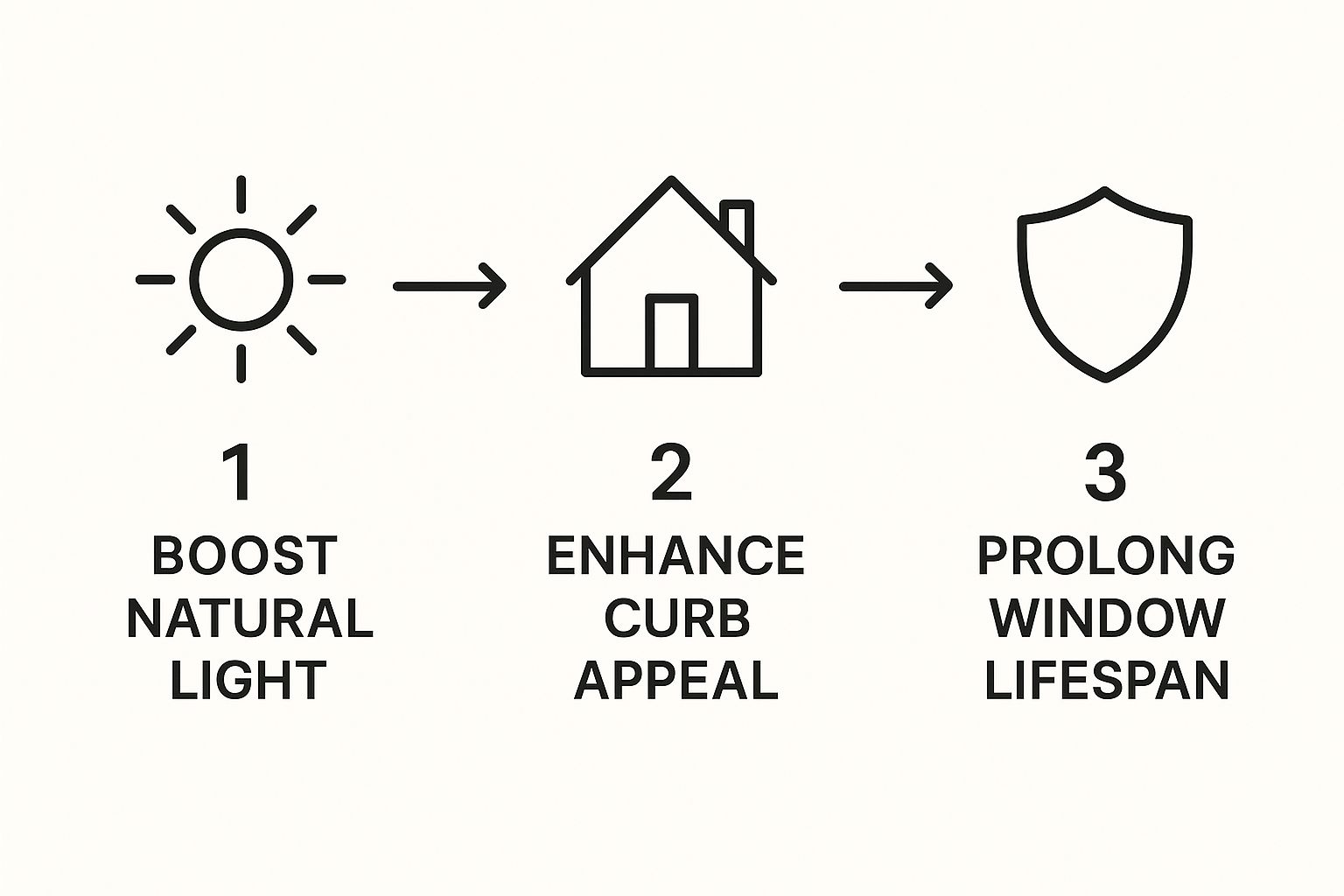
As you can see, the benefits go far beyond aesthetics, playing a real role in your home's overall maintenance and value.
What Goes in the Bucket?
Once you've got your hardware, it's time to think about the cleaning solution. You can go one of two ways here: a simple DIY mix or a professional-grade soap. Honestly, there's a time and a place for both.
A homemade solution is often fine for basic upkeep, but professional products are designed to handle tougher jobs and give you a better glide with your squeegee. Let's break down the options.
DIY vs Professional Window Cleaning Solutions
| Solution Type | Ingredients | Best For | Potential Downsides |
|---|---|---|---|
| DIY Vinegar Mix | Water, white vinegar, maybe a drop of dish soap | Light-duty interior cleaning, fingerprints, and dust. | Not great on heavy exterior grime. Can leave streaks if the soap ratio is wrong. |
| DIY Dish Soap | Water and a few drops of dish soap (like Dawn) | Basic cleaning when you need a bit more power than just vinegar. | Very easy to use too much, leading to heavy residue and major streaking. |
| Professional Concentrate | Specially formulated soaps (e.g., Glass Gleam, Glisten) | Heavy exterior dirt, pollen, hard water spots, and achieving a perfect glide. | Higher initial cost. Can be overkill for simple indoor touch-ups. |
| Hard Water Remover | Mild acids or abrasive compounds | Stubborn mineral deposits and water spots that regular soap won't touch. | Can damage window frames or tint if not used carefully. Requires a thorough rinse. |
While DIY mixes can work in a pinch, you'll notice a huge difference once you try a professional concentrate. They are specifically formulated to break down tough grime and provide more "slip," which is what allows your squeegee to glide smoothly without chattering or leaving streaks.
For a much deeper dive into the chemistry behind a perfect clean, check out our guide on the essential chemicals for window cleaners. It covers everything you need to know for tackling any kind of mess.
Here's a tip I've learned from years of experience: a common mistake is using way too much soap. You just need a tiny amount—barely enough to create a light foam. Piling on the suds makes it harder to squeegee off cleanly and is the number one cause of leftover film and streaks.
Finishing Touches for Your Toolkit
A few last items will make the whole process go much more smoothly. A simple five-gallon bucket from any hardware store is perfect for your cleaning solution.
Most importantly, get yourself a good stack of clean, lint-free microfiber cloths. You'll want one dedicated to wiping your squeegee blade dry after every single pass, and a few others for detailing the corners and wiping down the sills where water inevitably pools.
This focus on the right tools and techniques isn't just a pro secret; it reflects a bigger trend. The global window cleaning services market was valued at an incredible $141 billion in 2024 and is expected to climb to $257.27 billion by 2032. This growth is fueled by new housing and better cleaning tech that brings professional-level results within reach for everyone.
Setting the Stage for a Perfect Clean
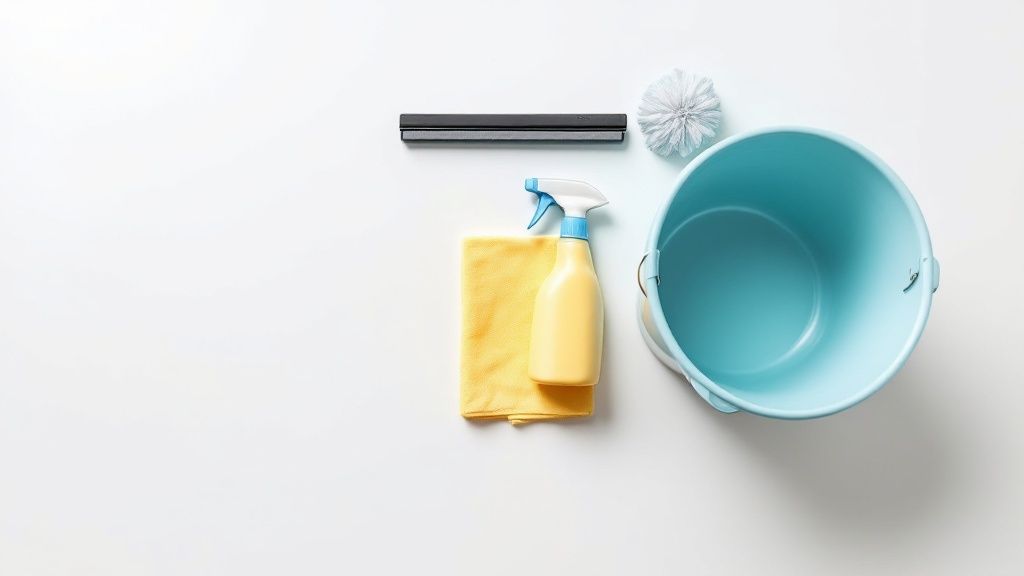
It’s tempting to just grab a bucket of soapy water and get started, but that’s one of the biggest rookie mistakes in residential window cleaning. A little prep work is the real secret to getting that professional, flawless finish, and it saves you from a massive cleanup job later. Think of it like a painter prepping a canvas—the initial steps make all the difference.
Your first move is to protect everything around the windows. If you’re inside, lay down some old towels or a drop cloth at the base of the windows. This will catch any drips and save your floors, carpets, and window sills. When working outside, just take a minute to move patio furniture, potted plants, or anything else away from your work zone.
Clearing the Way for Clarity
Before a drop of water hits the glass, you have to get rid of all the dry debris. This is a non-negotiable step if you want to avoid turning dust into a muddy mess. Grab a soft-bristled brush or a handheld vacuum and go to town on the window frames, tracks, and sills.
You're looking to clear out all the usual suspects that have built up over time:
- Cobwebs and spiderwebs clinging to the corners.
- Loose dust and dirt that always settles in the tracks.
- Dead insects and leaves trapped against the screen and sill.
Giving these spots a quick, dry clean first ensures your cleaning solution is actually working on the glass, not just making grime soup. It's a simple habit that makes a world of difference in your final results.
And don't forget the screens! They're a magnet for outdoor gunk. Pop them out carefully and set them aside. A gentle scrub with mild soap and a soft brush, followed by a good rinse, is all they need. Let them air dry completely while you tackle the glass.
Tackling Stubborn Spots First
With the loose stuff out of the way, take a close look at the glass itself for any stubborn spots. Trying to power through these with your main washer is a waste of effort and can even scratch the glass. It’s far better to deal with them individually before you start the main wash.
The tool of choice for a pro is a new, single-edge razor blade. Hold it at a 45-degree angle on a wet pane to carefully scrape off things like paint splatters or sticker residue. The water provides lubrication, which is key to preventing scratches.
For things like tree sap or hard water stains, a little rubbing alcohol on a microfiber cloth often works wonders. By getting these problem areas out of the way first, you’re giving your squeegee a perfectly smooth surface to glide across. That's how you get that incredible, streak-free shine.
Getting the Hang of Pro Squeegee Techniques

This is where the real magic of residential window cleaning happens. A squeegee is what separates a frustrating, streaky mess from that perfectly clear, invisible glass you’re after. But just like any good tool, it all comes down to how you use it.
If you can master a couple of key moves, you'll completely transform your results. The whole idea is to pull every last drop of dirty water off the glass in one smooth, controlled motion. This is what prevents the cleaning solution from drying on the pane—the number one cause of streaks.
Let’s walk through the professional methods that deliver that flawless finish, starting right from how you get the solution on the glass in the first place.
Applying the Solution Like a Pro
Before your squeegee even gets close to the glass, you need to apply your cleaning solution the right way using a window scrubber. Get your scrubber nice and soapy, then give it a light squeeze so it’s not dripping all over the place.
The name of the game is complete, even coverage. You want to work the scrubber back and forth over the entire window, paying special attention to the corners and right up against the frame. This step is all about making sure every bit of grime is loosened up and suspended in the soapy water, ready to be whisked away.
Here’s a critical pro tip: create what we call a "dry edge." Once you're done scrubbing, take a microfiber cloth and wipe a clean, one-inch strip down one side of the window. This gives your squeegee a dry place to start its first pass, which is the secret to stopping water from sneaking out from behind the blade and leaving vertical streaks.
With the window fully prepped and ready to go, it's time to grab your squeegee.
The Straight Pull for Smaller Windows
For smaller panes of glass, like what you’d find on a French door or a little bathroom window, the straight-pull method is your best friend. It’s straightforward, incredibly effective, and the easiest technique to master.
Start by placing your squeegee at the very top of the window. You’ll want to overlap that dry edge you just created by about an inch. Angle the blade at roughly 45 degrees to the glass—I’ve found this is the sweet spot for removing water effectively without the blade skipping or chattering.
Apply some light, consistent pressure and pull the squeegee straight down in one continuous, smooth motion. When you move to the next section, just be sure to overlap your previous stroke by about an inch. That overlap is crucial for avoiding those annoying thin lines of water between pulls.
And here’s the most important part: Wipe your squeegee blade clean with a microfiber cloth after every single pull. Seriously, don't skip this. It stops you from dragging dirty water from one part of the window to the next, which is a classic rookie mistake.
Executing the Classic S-Stroke
When you get to larger windows, the "S-stroke" (sometimes called the fan method) is the technique all the pros use to clean an entire pane quickly and perfectly. It might look a little fancy at first, but it’s really just a continuous, fluid motion that keeps the leading edge of the squeegee blade on a dry part of the glass.
Here’s how you can approach it:
- Start at the Top: Begin in a top corner, holding the squeegee at an angle so only the very tip of the blade is touching the glass.
- Make the First Cut: Pull the squeegee straight across the top of the window for about two inches.
- Begin the "S": Now, pivot your wrist to turn the squeegee, pulling it downward and across the glass in a smooth, snake-like pattern. The goal is to always lead with the corner of the squeegee, pushing the water away from the area you've just cleaned.
- Maintain Contact and Pressure: The key is to keep the blade on the glass and apply even pressure through the entire motion until you get to the bottom.
This technique definitely takes a bit of practice to get the feel for it. But once it clicks, you’ll be cleaning huge picture windows in a matter of seconds. My best advice is to keep a relaxed grip and focus on a fluid wrist movement—just let the tool do the work for you.
Tackling Common Window Cleaning Headaches
Even when you've got your technique down, cleaning windows in the real world throws a few curveballs. It's rarely just a big, simple pane of glass. You'll run into tricky multi-pane windows, figure out how to safely reach the second story, and fight stubborn spots that just don't want to come off with soap and water.
Getting through these hurdles is what makes the difference between a frustrating afternoon and a job you can be proud of. Let's walk through how to handle the most common issues you'll likely face.
How to Handle Tricky Window Designs
We all love the look of French doors and multi-pane windows, but man, can they be a pain to clean. A standard squeegee is just too big, making it impossible to get that smooth S-stroke you've perfected. You're left with corners full of soap and water.
The secret here is to switch up your tools and your approach.
- Go with a Smaller Squeegee: Grab a 4-inch or 6-inch squeegee. It’s the perfect size for those tight spaces and lets you do a simple, top-to-bottom straight pull on each little pane.
- Focus on the Details: This is huge. After you squeegee a pane, immediately grab a dry microfiber cloth and wipe down the frame and dab the corners. This stops any drips from messing up the glass you just cleaned.
It’s a more methodical process, sure, but taking that extra time is what gets you that crisp, streak-free look on even the most complicated windows.
Timing and efficiency matter, especially on a big job. Pros are always dealing with weather and seasonal lulls, and the same principles apply to you. You'll get much better results on an overcast day, and using the right techniques helps you work faster, just like the pros do. You can see more about these trends on MarketReportAnalytics.com.
Working Safely on Second-Story Windows
When you're cleaning windows on the second story, safety has to be your top priority. You really have two options: an extension pole or a ladder. For most homeowners, an extension pole is hands-down the safer bet. It lets you attach your scrubber and squeegee and keep both feet planted firmly on the ground.
Sometimes, though, a ladder is the only way to get the job done, especially for windows that need some extra elbow grease or detailed work. If you have to use a ladder, please be careful. Make sure it's on solid, level ground. And always, always maintain three points of contact—that means two feet and one hand, or two hands and one foot on the ladder at all times.
Getting Rid of Stubborn Blemishes
Every now and then, you’ll find spots that your soapy water just won't touch. Hard water stains are a classic example. Those milky-white mineral deposits get left behind when water evaporates and essentially bake onto the glass. For a deep dive into that specific problem, we put together a complete guide on how to remove hard water stains from windows.
If your windows have any kind of tint or film, you need to be extra careful. Never use cleaners with ammonia. It can cause the film to bubble up and peel right off. Just stick with your simple soap-and-water mix. And definitely don't use any razor blades or abrasive scrubbers on these surfaces—a soft microfiber cloth and a gentle touch are all you need.
Answering Your Window Cleaning Questions
Even after you've got the basics down, a few questions always seem to pop up when you're in the middle of a residential window cleaning job. I get asked these all the time, so I've put together some quick, straightforward answers to the most common ones.
Think of this as a little extra guidance to help you nail the details and get that crystal-clear finish you're after.
How Often Should I Really Be Cleaning My Windows?
For most homes, a good, deep clean twice a year is the sweet spot. That’s usually enough to keep that nasty buildup of dirt, grime, and hard water spots from doing permanent damage to the glass.
But where you live makes a big difference. You might want to bump it up to a quarterly cleaning if your home is near:
- Busy roads that constantly kick up exhaust and dust.
- Areas with high pollen counts, especially during spring and fall.
- The coast, where salt spray can be surprisingly corrosive.
Regular cleaning isn't just for looks—it’s about protecting the window seals and getting the most life out of your windows.
Is Cleaning Windows in Direct Sunlight Really That Bad?
Absolutely. It’s probably the number one mistake I see homeowners make. When the hot sun is beating down on the glass, your cleaning solution evaporates in seconds. This leaves behind all the soap and minerals before you even get a chance to squeegee, resulting in a streaky mess.
Pro Tip: The perfect time to wash windows is on a calm, overcast day. The cooler glass gives you the time you need to soap up and squeegee everything off properly for a flawless, streak-free shine.
What's the Best Way to Clean Window Screens?
Don't even think about skipping the screens! Putting a dirty screen back on a freshly cleaned window is a surefire way to undo all your hard work. Luckily, cleaning them is pretty simple.
Just pop the screens out of their frames. Gently scrub both sides with a soft-bristled brush and some warm, soapy water. After you've scrubbed them down, give them a good rinse with a garden hose (use a low-pressure spray). The most important part? Let them air dry completely before you put them back in.
When Should I Just Hire a Professional?
Doing it yourself can be satisfying, but sometimes, calling in a pro is the smarter—and safer—move. It’s probably time to make that call if you’re dealing with tricky second-story windows, don't have a solid ladder or the right safety gear, or you’re just pressed for time.
Professionals have all the right tools and, more importantly, the experience and insurance to tackle those tough jobs. They can often get a deeper, longer-lasting clean in a fraction of the time.
Ready to skip the ladders and let the experts handle it? Sparkle Tech Window Washing offers professional, reliable service across the Phoenix valley. Visit us at https://sparkleechwindowwashing.com to get a free quote and see the difference a pro can make.