

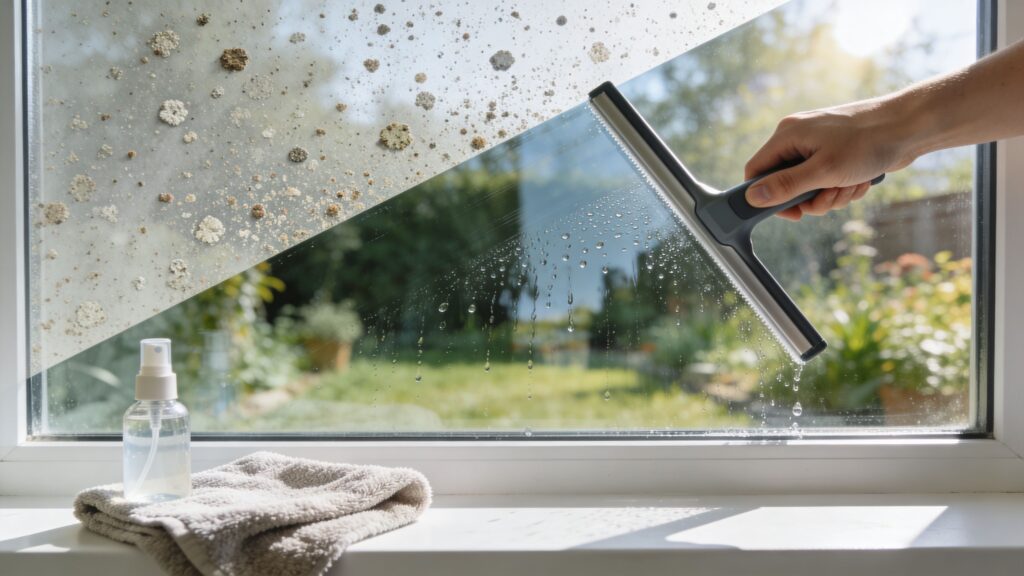
The Arizona sun is unforgiving on glass. A window can look clean at noon, then the light shifts and every mineral spot shows up like a fingerprint on a black countertop. Homeowners all over the Phoenix valley run into the same cycle. Wash the windows, admire them for a day, then notice the haze, the dots, and the chalky outlines creeping back.
That’s usually not a cleaning effort problem. It’s a water problem.
In Arizona, clear glass takes more than soap and a hose. It takes understanding what’s landing on the glass, how fast it dries in desert heat, and which habits prevent a fresh rinse from turning into a new layer of spotting. The good news is that water spots are preventable, and most of the difference comes from a few professional habits that regular homeowners can use right away.
The Frustrating Truth About Arizona's Crystal Clear Windows
A lot of people notice the problem right after they finish cleaning. The glass looks sharp when it’s wet. Then it dries, the sun hits it, and those pale dots and streaks show up again. On a slider facing the backyard, it’s often worst near the lower half where irrigation overspray hits. On front windows, it can be the side that catches sprinkler mist and fast afternoon heat.
That pattern is common in Arizona because the environment works against you. The sun speeds evaporation. Landscaping systems put mineral-heavy water in the air. Dust gives minerals something to cling to. By the time you spot the marks, they often look older and tougher than they really are.
At Sparkle Tech, we see the same homeowner frustration over and over. Someone has already tried paper towels, store-bought glass spray, maybe even scrubbing harder the second time. The problem isn’t usually effort. It’s that the glass is getting re-contaminated during cleaning or immediately after.
Practical rule: If your windows look worse when the light is strongest, you’re usually dealing with mineral residue, not just ordinary dirt.
There’s also an often-overlooked trade-off. Cleaning more often helps, but if you’re using the wrong water or leaving moisture behind, more cleaning can repeat the cycle. The answer isn’t endless wiping. It’s a process that removes deposits cleanly and prevents new ones from drying on the glass.
This is the primary way to figure out how to prevent water spots on windows in Arizona. You need control over the water source, control over drying, and control over what’s spraying near the glass.
Understanding Why Water Spots Form on Your Windows
Water spots form when mineral-heavy water dries on glass and leaves the solids behind. Around Phoenix and much of Arizona, that happens fast because municipal and irrigation water carry a lot of dissolved minerals, and our heat speeds evaporation. The U.S. Geological Survey water hardness scale classifies water above 180 mg/L as very hard. That matters here because very hard water leaves residue quickly and repeatedly.

What happens on the glass
The water evaporates first. Calcium, magnesium, and other dissolved solids stay behind.
At first, that residue may look minor. You see a light haze, faint rings, or small dots that only show up in direct sun. Leave it there through a few more spray-and-dry cycles, and the deposit gets denser and harder to remove. In the trade, this is the point where simple glass cleaner stops being enough and you need the right method or a proper water spot remover for windows to break down the buildup safely.
Arizona makes this worse for two reasons. Dry air shortens the time you have before water flashes off. Strong sun heats the pane, so minerals bake onto the surface faster, especially on west-facing glass in the afternoon.
Where the spotting water usually comes from
Homeowners often blame soap or dust first. Those can make the residue look worse, but the usual source is plain hard water touching the glass over and over.
The common culprits are:
- Sprinkler overspray: The biggest offender on many homes. One misaligned head can hit the same lower pane every morning.
- Hose water: A quick rinse leaves minerals behind if it is not removed completely.
- Frame and screen runoff: Water hides in tracks, screens, and seals, then drips onto clean glass a few minutes later.
- Pool splash or mist near patio doors: Common on backyard sliders.
- Repeated DIY cleaning with tap water: Clean glass gets re-spotted during the process.
I see this on Arizona homes all the time. The pane itself is not the whole problem. The water source around that pane usually needs attention first.
Water spots start with mineral residue drying in place. Glass just shows you where the problem landed.
Why some windows get hammered and others stay cleaner
Exposure matters. Lower panes near grass, planter beds, or decorative rock pick up more irrigation bounce. South- and west-facing windows dry faster, so minerals have less time to be pulled off the surface before they set. Patio glass near misters, pools, or frequent rinsing usually builds spotting sooner than shaded second-story windows.
There is also a trade-off homeowners do not always expect. Frequent wiping can help with fresh residue, but frequent wiping with hard tap water can build the problem back up. That is why generic cleaning advice from milder climates often falls short here.
If you have dealt with spotting on shower glass too, the same mineral behavior is at work there. Many of the same habits that help keep glass shower doors clean apply to windows, but exterior glass in Arizona has the extra challenge of heat, dust, and irrigation exposure.
Immediate Actions to Stop Spots During Cleaning
You finish a pane, step back, and it looks perfect. Ten minutes later, Arizona does what Arizona does. A thin line creeps down from the bottom seal, the sun bakes it fast, and the spots are back. That is why clean technique matters more here than in softer-water states.

Start with the right sequence
On Arizona glass, speed and order matter. Hard water leaves very little margin for sloppy rinsing or delayed drying, especially on sun-hit patio doors and west-facing windows.
A practical cleaning order looks like this:
- Dust first: Knock loose grit off frames, tracks, and screens so it does not turn into muddy runoff.
- Use a light, controlled wash: Wet the pane enough to clean it, but do not flood the edges or seals.
- Scrub evenly: A soft applicator sleeve or scrubber loosens grime without grinding dust into the glass.
- Squeegee right away: Remove water before heat starts drying uneven patches.
- Detail every edge: Wipe corners, bottom seals, and frame lines before drips can fall back onto the pane.
Fresh mineral residue usually comes off with less effort than buildup that has baked on for days. For light spotting, a vinegar and water mix can help. Once the deposits turn chalky or start bonding to the glass, cleaning gets slower and the risk of scratching goes up if the wrong pad or powder is used.
I tell Arizona homeowners the same thing we follow at Sparkle Tech. Control the water, then control the leftovers.
Drying is where the job is won
The last minute matters most.
Minerals only become visible spots after the water evaporates, so every bead left behind is a problem waiting to show up. The common failure points are the bottom edge, the lower corners, and the gasket line where water hides and then releases after you have already moved on.
Use a dry microfiber cloth for the cleanup a squeegee cannot finish cleanly:
- Bottom edges: Runoff gathers here first.
- Corners: Small crescents of water often remain there.
- Frames and seals: Dry them so they do not feed new drips onto the glass.
- Final touch-ups: A clean microfiber cloth removes faint residue without linting.
Microfiber works better than paper towels or old bath towels because it pulls moisture off the surface instead of pushing it around. That same habit helps indoors too. If bathroom glass is also spotting up, many of the same maintenance habits that help keep glass shower doors clean apply here.
Use better water for the finish
Arizona tap water is the trap. You can clean a window well, then put minerals right back on it during the final rinse.
For homeowners doing their own maintenance, one smart upgrade is to wash normally, then use distilled or deionized water for the last pass and final detail. That change alone can reduce the re-spotting that shows up an hour later. If the glass already has stubborn residue, our guide to water spot remover for windows explains when a simple cleaner is enough and when the deposits need more careful correction.
A quick demonstration helps if you’ve never watched a clean squeegee pass done properly:
What usually causes re-spotting during the job
Some methods create extra work fast, especially in desert heat.
| Method | Why it falls short |
|---|---|
| Spraying heavily and letting the pane air-dry | Evaporation leaves the minerals behind |
| Cleaning in direct sun without working in small sections | Water flashes off before you can remove it evenly |
| Using tap water for the final rinse | The finish stage puts fresh minerals back on the glass |
| Grabbing paper towels for detailing | They lint, smear, and miss moisture in corners |
The goal is simple. Leave as little water on the glass as possible, and make that remaining water as mineral-free as possible.
Long-Term Prevention with Protective Coatings and Barriers
In Arizona, hard water is persistent enough that clean glass can spot again even when the cleaning was done right. Long-term prevention works best when you reduce contact, add surface protection, and fix the water source that keeps feeding the problem.
Why protective coatings earn their place
A good hydrophobic coating changes how water behaves on the pane. Instead of spreading into a thin sheet that dries into a mineral outline, the water beads tighter and releases more easily during rinsing, rain, or hose splash. That buys you time. It also makes routine cleaning less aggressive, which matters on glass that already sees heavy mineral exposure.
The trade-off is prep.
If the glass still has residue, oxidation, or early-stage mineral buildup, applying a coating over it just seals in the problem and can leave the pane looking uneven. On Arizona homes, we usually get better results when the glass is corrected first, then protected. Cheap spray-on products from the auto aisle can help for a while, but they wear off quickly on west-facing windows that bake in direct sun.

Which protection method fits the problem
Different windows need different defenses. A front entry window near decorative spray has one problem. A shaded pane that only gets occasional hose water has another.
- Professional-grade hydrophobic coatings: Best for glass that gets regular sprinkler mist, pool splash, or monsoon residue. They cost more up front but usually last longer and clean up easier.
- Consumer rain-repellent treatments: Fine for testing the idea on a trouble pane, but expect shorter life in Arizona heat.
- Water treatment at the source: Softening or purified rinse water helps when the spotting starts during washing. Sparkle Tech homeowners comparing rinse options can see the practical difference in this guide to pure water window washing.
- Physical barriers: Overhangs, sunscreens, patio covers, and awnings reduce direct contact with rain and irrigation drift. They do not fix splash coming upward from hardscape or lawn spray.
The right answer is often a combination. Coating the pane without fixing daily overspray is expensive maintenance. Fixing irrigation without protecting a high-exposure window still leaves the glass working too hard.
Barriers and surrounding surfaces matter more than people expect
The windows that stay cleanest are often the ones protected by smarter landscaping and better water control. If a sprinkler hits the same lower panel every morning, start there. Adjust the head, lower the arc, swap the nozzle, or convert that bed to drip irrigation. That change usually does more than another bottle of spot remover.
Nearby surfaces also contribute. Stone coping, concrete, and dusty screens can throw mineral-heavy splash back onto the glass after watering or summer storms. Cleaning those surrounding surfaces helps reduce how much contamination lands on the pane in the first place. Even indoor fabrics can play a small part by trapping dust that transfers back to the glass during detailing, which is one reason homeowners tackling full-room maintenance often look up how to properly wash curtains at the same time.
At Sparkle Tech, we see the same pattern across the Valley. Windows stay clearer longer when the glass is protected and the source of mineral contact is reduced. That is the combination that holds up in very hard Arizona water.
Creating a Sustainable Window Maintenance Routine
In Arizona, windows usually do not go from clean to ruined all at once. They get a little overspray on Tuesday, a dusty rinse mark on Saturday, then a faint mineral outline that bakes on in the sun. By the time many homeowners notice it, the glass needs more correction than maintenance.
That is why a routine matters here. Very hard water leaves less room for delay, especially on west-facing glass, lower panes near rock beds, and sliders by the patio.

A routine that fits real Arizona homes
The goal is simple. Keep fresh mineral residue from turning into bonded staining.
Start with weekly walk-bys of the windows that take the most abuse. Check the bottom panels near sprinklers, hose bibs, pool decks, and dog runs. You are not doing a full cleaning. You are looking for new dots, splash patterns, or runoff trails before they sit in the heat for another week.
Use monthly touch-ups on the glass you see every day. Entry glass, kitchen windows, bathroom panes, and rear sliders usually need attention first. Wipe off light marks, clean the frame edge, and dry any water that collects along the bottom gasket. In Arizona, that last step matters more than many homeowners expect.
Then schedule a full reset a few times a year. For some homes, that means spring and fall. For others with heavy irrigation exposure or more dust, it may need to happen more often. During that service, clean the full pane, inspect seals and screens, and check whether problem windows are starting to haze over. Homeowners who want a set schedule often use residential window cleaning services in Arizona to keep those bigger resets from slipping.
What usually breaks the routine
Two mistakes cause a lot of repeat spotting in the Valley.
The first is waiting too long on fresh residue. Hard water spots are easier to remove in the first few days than after weeks of heat. The second is treating every pane the same. A protected north-facing window may stay presentable for a long stretch, while a south or west-facing pane near irrigation can start spotting again almost immediately.
I see homeowners waste time polishing low-risk glass while key troublemakers keep getting hit every morning.
A better routine is zone-based. Mark your high-exposure windows, medium-exposure windows, and low-exposure windows. Check them on different schedules. That saves effort and keeps the worst panes from getting away from you.
Safe upkeep for light residue
For light mineral film, use the least aggressive method that will remove it. Mild acidic cleaners made for glass can help with fresh deposits. Scrapers, abrasive pads, and random DIY mixes can leave you with scratched glass, damaged coatings, or etched areas that no cleaning will fix.
If the glass still looks cloudy after proper washing and drying, the issue may no longer be surface dirt. It may be mineral staining that has started to bond to the glass. At that point, repeated scrubbing usually adds risk without solving much.
Indoor maintenance also helps more than people think, especially on windows that show dust quickly. If you are cleaning up the room at the same time, this guide on how to properly wash curtains is useful because dirty fabric around the window can send lint and dust back onto freshly cleaned glass.
A practical maintenance calendar
| Frequency | Focus |
|---|---|
| Weekly | Check high-exposure panes for fresh spots, overspray, and runoff marks |
| Monthly | Clean everyday-view windows and dry frames, tracks, and lower edges |
| Seasonally | Do a full exterior reset and review which windows are spotting fastest |
| As needed | Treat fresh mineral residue before Arizona sun bakes it on |
Consistency beats recovery work. In very hard Arizona water, the cheapest window problem to fix is the one you catch early.
When to Call the Professionals at Sparkle Tech
Some windows stop being a DIY project for practical reasons. Height is one. Access is another. Mineral buildup that has sat too long is another. If you’re on a ladder trying to scrub second-story glass while water runs down stucco and onto lower panes, the project has probably crossed into professional territory.
Signs the glass needs more than a weekend effort
Call in help when the job involves any of these conditions:
- High or awkward access: Large entry windows, clerestory glass, and hard-to-reach exterior panes raise the risk fast.
- Deposits that don’t respond to basic cleaning: If spotting remains after proper washing and drying, the minerals may need specialized removal methods.
- Recurring spotting from irrigation or hose habits: A pro can often identify the exact source pattern much faster.
- You want spot-free rinsing without buying a full setup: Purified-water equipment changes the finish quality.
This is also where specialized service matters more than generic cleaning. For example, Sparkle Tech Window Washing uses pure water rinsing methods and hard water stain removal techniques for mineral deposits from sprinklers and hoses, which is different from a standard wipe-down service.
Why professional help is often the cheaper mistake to avoid
Homeowners usually think of professional cleaning as paying for labor. In reality, they’re often paying to avoid damage. Wrong pads, overaggressive scraping, or repeated hard-water rinsing can make the glass look worse, not better. If a stain has moved into etching, cleaning gets more technical very quickly.
Insurance and accountability matter too. Sparkle Tech is a family-owned Arizona company with Workers Compensation, General Liability Insurance, and bonding, which matters when someone is working around ladders, high glass, and finished exterior surfaces. If you’re comparing vendors for a home or mixed-use property, even a document built for larger facilities like this commercial cleaning contract template can help you understand what a clear service scope should include.
For homeowners deciding whether to hand off the work, this page on residential window cleaning services gives a straightforward picture of what professional residential service typically covers.
The best time to make the call
The smartest time to bring in a pro isn’t always when the glass looks terrible. It’s when you notice the same windows failing repeatedly despite better cleaning habits. That usually means the problem is deeper than a one-time wash. It may be irrigation exposure, long-standing mineral buildup, difficult access, or all three.
Enjoying Your Spotless View Year-Round
Arizona doesn’t make window care easy, but clear glass is absolutely achievable. The formula is simple. Understand what causes spotting, clean with control, protect the surface, and keep a steady routine so fresh deposits never get a long head start.
If you apply those habits, your windows stay clearer longer and cleanup gets easier each time. And if you’d rather spend your weekend enjoying the view instead of fighting mineral buildup, professional help is there when you need it.
If your windows keep spotting no matter how often you clean them, Sparkle Tech Window Washing can help with residential window cleaning, pure water rinsing, and hard water stain removal throughout Arizona. Sometimes the easiest way to protect your view is to let a trained crew handle the water, the tools, and the finish process correctly.