


Ever looked at your windows and seen those cloudy, stubborn spots that just won't budge? To get those water stains off your glass for good, you'll usually need an acidic solution to break down the mineral deposits. A simple mix of vinegar and water is a great starting point. For really tough, etched-in stains, you might need to step it up to a mild abrasive like baking soda or even a specialized commercial cleaner.
Why Do These Stubborn Water Stains Even Form on Windows?
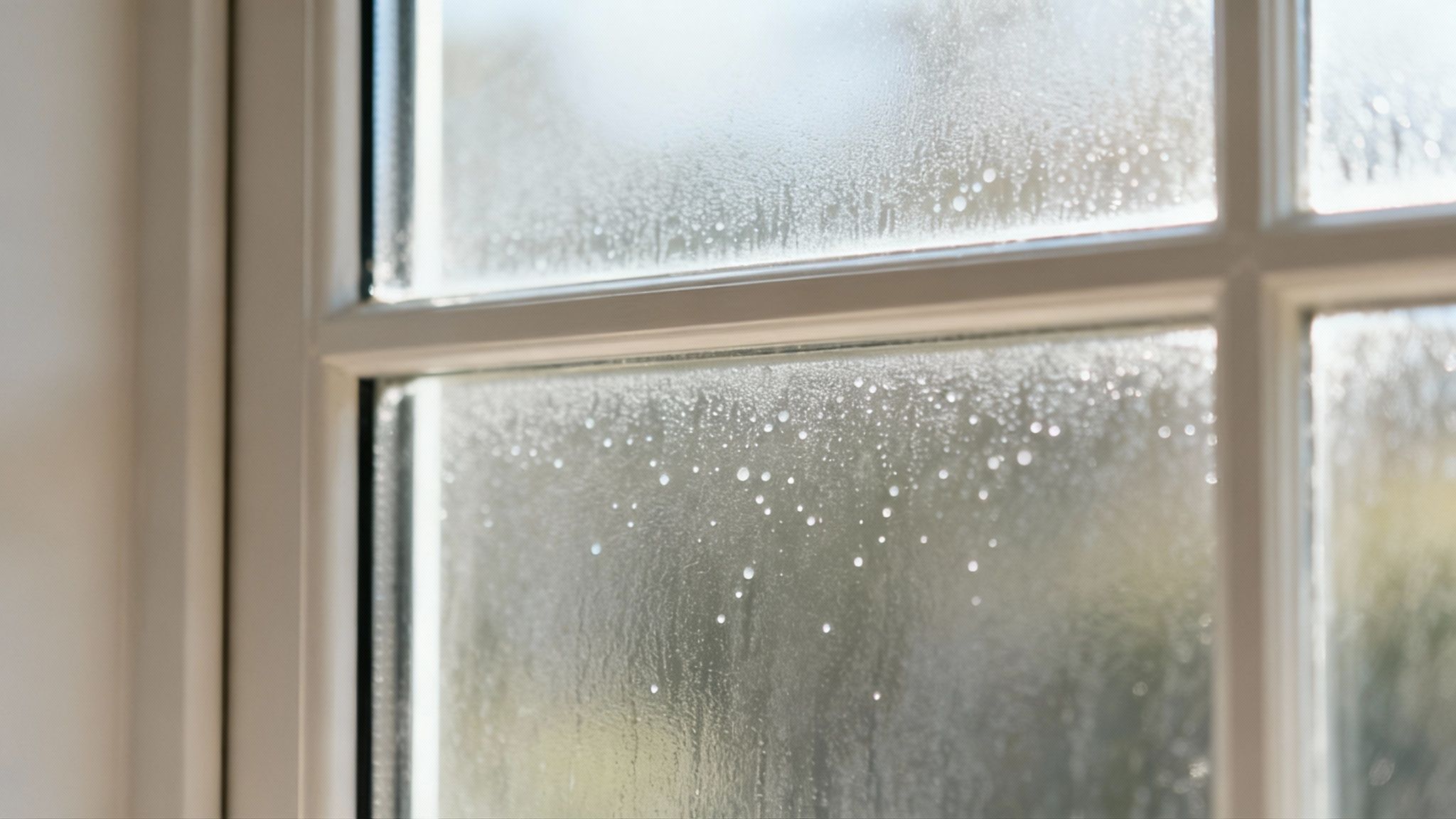
Before you grab a cloth and start scrubbing, it helps to know what you’re actually fighting. Those frustrating white spots aren't just dried water. They're what's left behind when water evaporates: mineral deposits, mostly calcium and magnesium. This is the classic sign of "hard water."
Think about it like this: a sprinkler hits your window on a hot, sunny day. Each tiny droplet dries up, leaving an invisible little ring of minerals. This happens over and over, and soon enough, those layers build up into the cloudy, hazy stains that are a real pain to remove.
The Science Behind Etched Glass
If you let those mineral deposits sit for too long, they become more than just an eyesore. Glass might seem perfectly smooth, but it's actually porous on a microscopic level. The alkaline minerals in the water spots can slowly begin to corrode the surface of the glass itself. This is a process called etching.
At this stage, the stain isn't just on the glass—it has become part of it. This is why a standard window cleaner often fails to make a dent in old, chalky stains. The minerals have literally bonded with the silica in the glass.
Removing these stains is a common headache for homeowners, especially in areas with hard water. The problem is so widespread that it takes more than your average household spray to fix it. You can get more insights on hard water stains on WindowGenie.com to see just how prevalent this issue is.
Key Causes of Window Stains
Figuring out where the stains are coming from is the first step toward preventing them in the future. They don't just appear randomly; they’re caused by specific situations you can often get under control.
- Sprinkler Overspray: Lawn irrigation systems are public enemy number one. They repeatedly spray mineral-rich tap water directly onto your windows, leaving spots behind as they dry.
- Rainwater Runoff: Rain itself is usually soft, but as it runs down your house, it can pick up minerals from surfaces like concrete, stucco, or even metal window screens, depositing them right onto the glass.
- Washing with Tap Water: If you wash your windows with a hose and just let them air-dry, you’re essentially creating new hard water spots.
The type of glass you have can also make a difference. Some glass is treated to repel water, which can help prevent spotting. You can learn more about the difference between hydrophilic and hydrophobic glass to see how your windows might be helping or hurting the situation. Knowing your glass can help you pick the right cleaning method and keep it looking great.
Gathering Your Window Cleaning Toolkit
Before you even think about tackling those stubborn water stains, let’s talk tools. Showing up to the job without the right gear is a recipe for frustration and, frankly, a waste of your time. You don’t need a professional-grade arsenal, but a few key items will make all the difference between a streaky mess and a crystal-clear view.
Forget paper towels or old t-shirts. Your most important tool will be a couple of high-quality microfiber cloths. Their unique weave is fantastic at grabbing and holding onto those tiny mineral deposits without scratching the glass or leaving lint behind. I always keep at least two handy—one for cleaning and one for drying and buffing.
This handy guide breaks down how to match the right tool and cleaning agent to the type of stain you're dealing with.
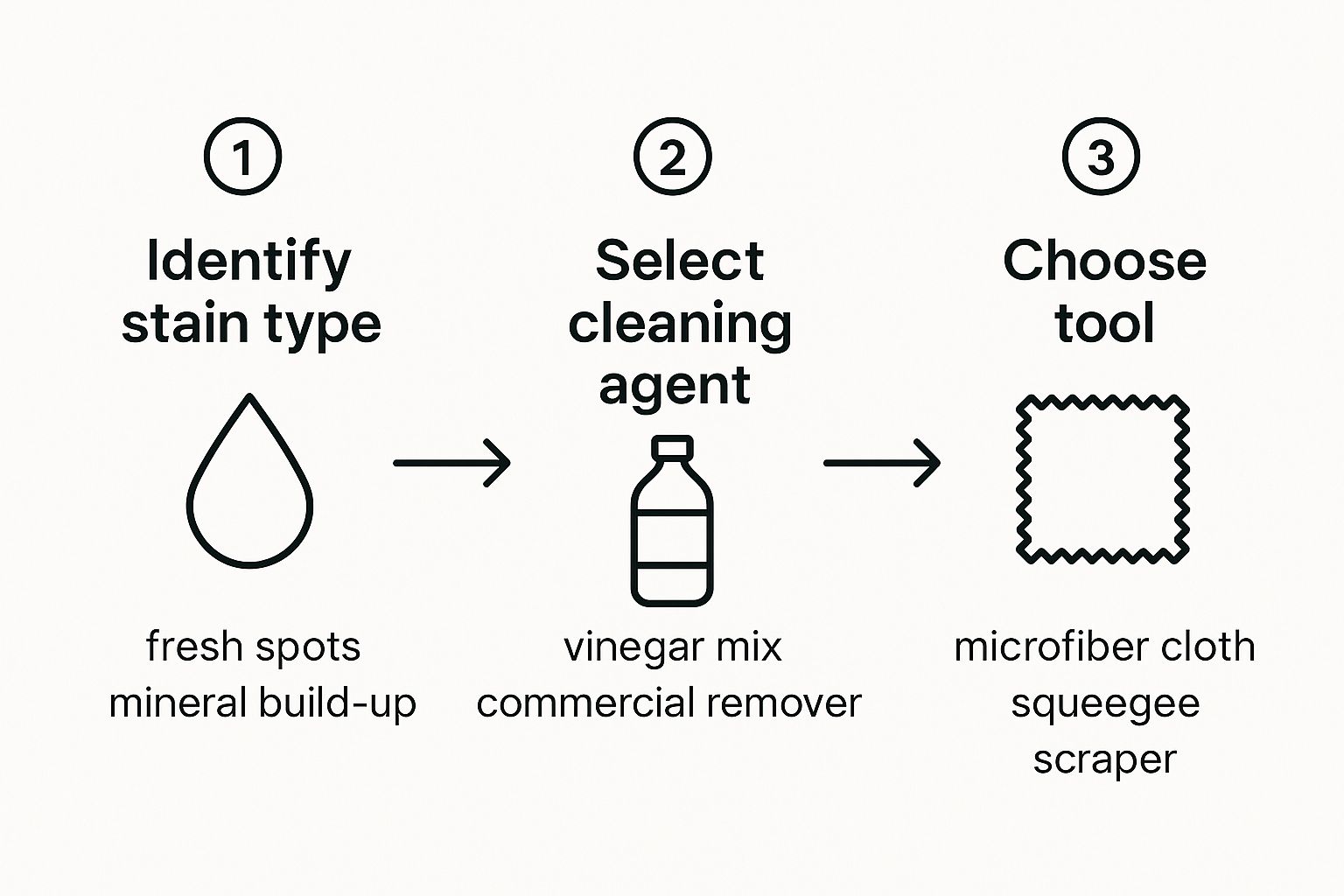
As you can see, lighter spots often just need a simple approach, while those tougher, baked-on mineral deposits call for a bit more muscle.
Essential Cleaning Agents and Tools
For your cleaning solution, I always recommend starting with the basics. A simple 50/50 mix of distilled white vinegar and water in a spray bottle is surprisingly effective for most light to moderate stains. The natural acidity of the vinegar does a great job dissolving the alkaline mineral spots that cause all the trouble.
But what if vinegar doesn't cut it? For those really stubborn stains, you might need to step up your game. Here’s a quick list of what you should have ready:
- Spray Bottle: Essential for applying your vinegar solution evenly without wasting it.
- Non-scratch Scrubber: A soft sponge or a dedicated non-abrasive pad gives you a little extra scrubbing power without harming the glass.
- Squeegee: This is the secret to a professional, streak-free finish. Don't skip it.
- Commercial Cleaner: For severe stains that look like they're etched into the glass, a specialized hard water spot remover might be your only option.
A Quick Word of Caution: When you reach for a commercial cleaner, you're entering a different league. Some of these products are incredibly powerful, but they can also damage window frames, seals, or surrounding paint if you aren't careful. Always read the label.
Choosing Your Water Stain Removal Solution
Not all cleaning solutions are created equal. The right choice depends entirely on how bad the stains are and what kind of surface you're working on. This table should help you pick the perfect agent for the job.
| Cleaning Solution | Best For | Application Tip | Caution |
|---|---|---|---|
| Vinegar & Water (50/50) | Light to moderate mineral spots; routine cleaning. | Let the solution sit on the glass for a minute to dissolve minerals. | Avoid contact with marble or limestone sills, as the acid can cause etching. |
| Lemon Juice & Water | Similar to vinegar, but with a fresher scent. | Works best on newer, less established hard water stains. | It's still acidic, so use the same care you would with vinegar around sensitive materials. |
| Baking Soda Paste | Stubborn spots needing gentle abrasion. | Mix with a little water to form a paste and gently rub with a cloth. | Can leave a white residue if not rinsed thoroughly. Use with a light touch. |
| Commercial Cleaner | Severe, etched-in hard water stains. | Follow the manufacturer's directions precisely; wear gloves. | Test on a small, inconspicuous area first to check for damage to tint or coatings. |
Ultimately, knowing what’s in your bottle is just as important as your technique. To get a better handle on what’s safe and what’s not, take a look at this guide on the dos and don'ts of window cleaning chemicals. A little knowledge here goes a long way in preventing accidental damage to your home.
Your Action Plan for Removing Water Stains
https://www.youtube.com/embed/JwldBv2Y1vs
Alright, you've got your supplies, so let's get those spots off your glass for good. The real secret to success here isn't just elbow grease; it's being methodical. Before you even think about treating the stains, you have to give the entire window a basic cleaning.
Just use a standard glass cleaner or some soapy water to get rid of all the surface-level dirt and dust.
Why? Because scrubbing over a dirty window is a guaranteed way to create micro-scratches. It's like trying to wax a car that's covered in dust—you'll just grind the grit right into the finish. A quick pre-wash ensures you’re dealing only with the mineral deposits, not making new problems for yourself.
Starting with a Vinegar Solution
For those everyday, light-to-moderate hard water spots, your homemade vinegar solution is the perfect first weapon. The acetic acid in vinegar is a natural enemy of the alkaline mineral deposits that cause those chalky stains.
- Spray it on generously. Get your 50/50 vinegar and water mix and apply it directly to the stained glass. Don't be stingy here; you want the surface to be thoroughly wet.
- Let it sit. This is the most crucial part of the process. You need to give the solution at least 5-10 minutes to work its magic. This dwell time allows the acid to really start dissolving the mineral bonds.
- Agitate gently. Grab a non-scratch sponge or microfiber cloth and start scrubbing in a circular motion. You should feel the gritty texture of the minerals begin to break down under the cloth.
For really stubborn spots, soak a paper towel in the vinegar mix and press it right up against the glass. This keeps the area saturated and gives the acid more time to do its job.
Once you've scrubbed, rinse the window completely with clean water. The best way to finish is with a squeegee, working from top to bottom in slightly overlapping strokes. Remember to wipe the blade clean after each pass for a perfect, streak-free shine.
Pro Tip: Never, ever clean your windows in direct, hot sunlight. The heat will make your cleaning solution evaporate almost instantly, leaving behind ugly streaks and sometimes even creating new mineral spots before the vinegar has a chance to work.
When Vinegar Isn’t Enough
Let's be real—sometimes you'll run into stains that have been there for months, or even years. These deeply etched-in spots have practically bonded with the glass and a simple vinegar spray won't touch them. This is when it's time to bring in a mild abrasive.
A simple paste made from baking soda and a few drops of water can give you the extra scrubbing power you need. Apply the paste directly to the stubborn spot and gently rub it in with your cloth. The fine grit helps physically break up the mineral buildup without damaging the glass itself.
The principles for tackling tough mineral deposits are surprisingly similar across different surfaces. For more in-depth strategies, you might find these expert tips on how to remove water stains from a boat really helpful.
Tackling Tough, Etched-In Mineral Deposits
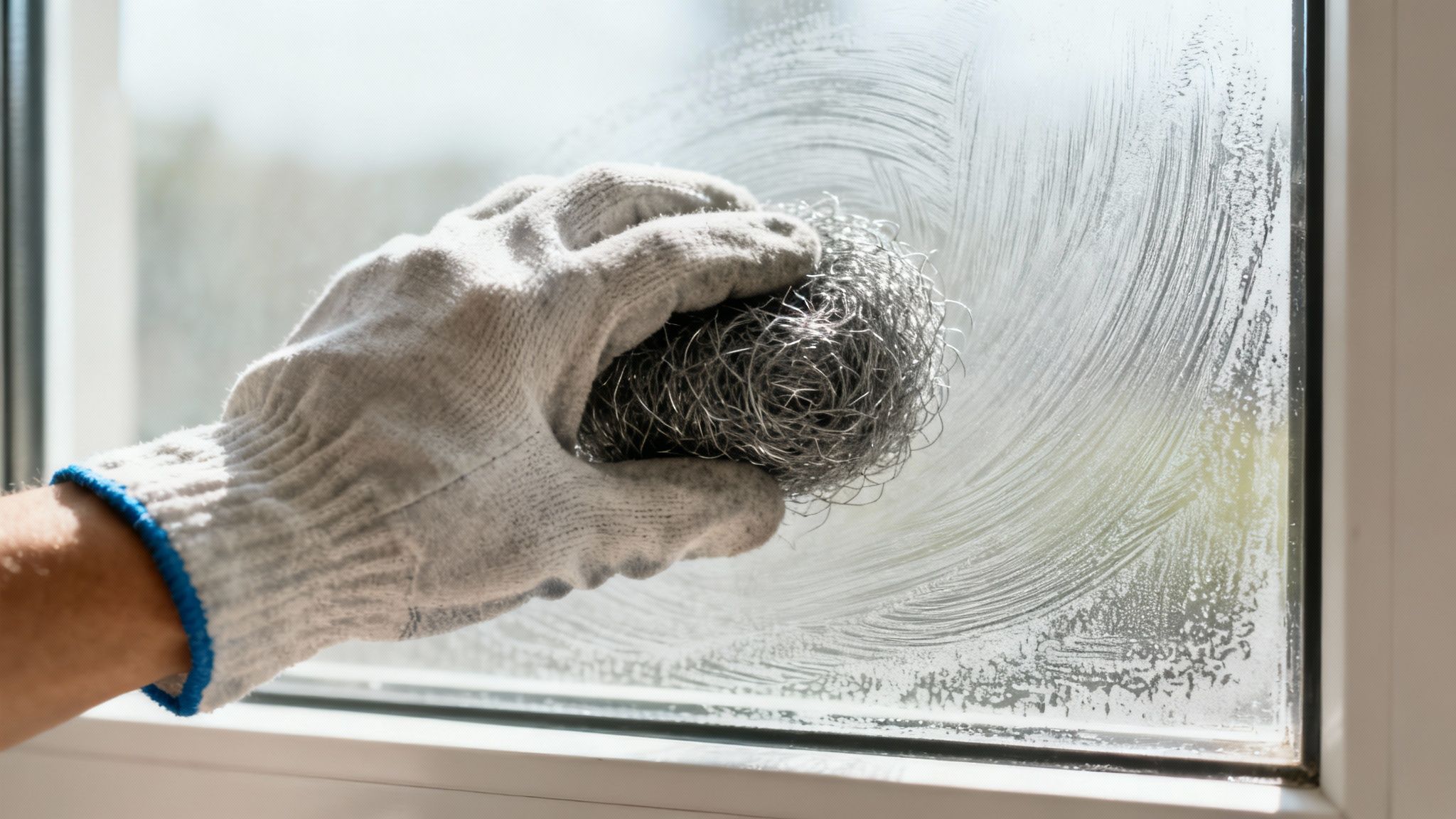
Sometimes, no amount of elbow grease with vinegar or baking soda will make a dent. You're left with those frustrating, hazy outlines that look like they're a permanent part of the glass. This happens when mineral deposits sit for too long and chemically etch the surface, bonding to it in a way that standard cleaners just can't handle.
When you're up against these stubborn stains, it's time to bring out the secret weapon: super-fine #0000 grade steel wool. I know what you're thinking—steel wool on glass? But trust me, this specific grade is key. Its fibers are incredibly fine, allowing them to gently slice off the mineral buildup without scratching the glass underneath. The trick is to always use it wet.
The Professional's Approach to Stubborn Stains
Before you go to town on the whole window, you absolutely must do a spot test. Pick a small, out-of-the-way corner and gently rub the wet #0000 steel wool in a tight circular motion. Wipe it clean and inspect the area from several different angles in good light. If you see any fine scratches, stop.
If the test spot looks perfect, you’re good to go. Work on the rest of the window with light, even pressure.
- Keep it Lubricated: This is non-negotiable. Never, ever use steel wool on dry glass. Keep a spray bottle of soapy water or glass cleaner handy and use it liberally.
- Work in Small Zones: Don't try to tackle the entire pane at once. Focus your efforts on one stained section at a time for better results.
- Rinse and Repeat: After scrubbing an area, rinse it completely to wash away all the loosened mineral gunk and any soap residue.
Here's a tip straight from the pros: use deionized or distilled water for your final rinse. It’s completely free of minerals, so it dries without leaving a single new spot behind. It’s the perfect way to make sure you don't undo all your hard work.
This pure-water method is becoming a standard for professionals everywhere. In places like Europe, where hard water is a huge issue, many window cleaners have switched to pure water systems entirely. You can read more about these international window cleaning challenges to see how the experts adapt.
For the absolute worst-case scenarios, a commercial mineral deposit remover might be your last resort. If you go this route, follow the manufacturer's safety instructions to the letter—that stuff is powerful.
How to Keep Your Windows Spotless for Good

You’ve put in all that work to get your windows sparkling, so the last thing you want is to see those frustrating water stains creep back in. The secret to long-term clarity isn't just cleaning; it's about shifting to a proactive mindset. The real goal is to stop mineral deposits from ever getting a foothold in the first place.
A fantastic first line of defense is applying a hydrophobic glass sealant or wax. These products work by creating an invisible shield on the glass. Water can't cling to the surface—it just beads up and rolls away, taking all those pesky minerals with it.
Create a Sustainable Cleaning Routine
Keeping windows pristine doesn't require a ton of extra effort. It’s the small, consistent habits that truly make all the difference.
- Adjust Your Sprinklers: This is a big one. Check that your irrigation system isn't drenching your windows every time it runs. Misdirected sprinklers are one of the most common culprits behind mineral buildup.
- Wipe Down After Washing: If you ever hose down your exterior windows, don't let them air dry! Grab a squeegee or microfiber cloth and wipe them down immediately.
A simple, regular cleaning schedule is your best defense against tough stains. Professionals I've talked to over the years always stress this, recommending a deep clean at least every six months to prevent the glass from becoming permanently etched or damaged.
This kind of consistent care saves you from having to do major scrubbing down the road.
And remember, a truly clean window area involves more than just the glass. It's a good idea to learn how to wash your curtains as part of a complete routine. For maintaining that perfect finish, our guide on https://sparkletechwindowwashing.com/how-to-clean-windows-streak-free/ has some great tips.
Answering Your Top Window Cleaning Questions
Tackling stubborn water stains often brings up a few common questions. When you're dealing with different cleaning solutions and tools, you want to be sure you're not doing more harm than good. Let's clear up some of the most frequent concerns I hear from people trying to get their windows crystal clear.
Can I Just Use Regular Steel Wool on the Glass?
Definitely not. Grabbing a standard steel wool pad from under your kitchen sink is a recipe for disaster—it's far too coarse and will permanently scratch your windows.
If you're facing extreme, etched-in mineral buildup that nothing else will touch, the only option is super-fine #0000 grade steel wool. The key is to use it soaking wet with your cleaning solution and start with almost no pressure. Always test it on a small, out-of-the-way corner first to make sure you're not scratching the glass.
Is Vinegar Going to Damage My Window Frames?
That's a great question, and the answer is yes, it absolutely can. While vinegar is a fantastic mineral-dissolver for glass, its acidic nature can wreak havoc on other materials.
- Porous Materials: Be extra careful around wood frames, stone sills (especially marble or limestone), and some metal finishes. Vinegar can cause discoloration or even eat away at the surface.
- Pro Tip: Apply your vinegar solution precisely to the glass. I like to use a spray bottle set to a stream rather than a mist, or apply it directly with a cloth. If any solution drips onto the frame, wipe it up immediately with a clean, damp cloth.
Think of it as a targeted treatment. Your goal is to keep the acidic cleaner contained only on the glass. A little bit of careful application saves you from having to repair a damaged window frame later on.
I Cleaned the Windows, but the Stains Came Right Back. What Happened?
Ah, the classic reappearing stain. This is incredibly common, and the problem almost always comes down to the water you're using to rinse. If your home has hard water, rinsing with it just puts a fresh layer of minerals right back onto the clean glass.
The trick is to remove the rinse water before it has any time to evaporate. A good, sharp squeegee is your best friend here. For a truly perfect, spot-free finish, experienced cleaners always use distilled or deionized water for that final rinse, since it's completely free of minerals.
For a professional, streak-free shine without the hassle, trust the experts at Sparkle Tech Window Washing. Schedule your service with us today