


If you've ever tried to get hard water spots off your windows, you know it's a frustrating job. The best approach starts with an acidic cleaner, like a simple 50/50 mix of white vinegar and distilled water, which helps dissolve the mineral deposits. For really tough spots, you might need a commercial cleaner or even a paste made from baking soda, but it's always smart to test it on a small, out-of-the-way spot first.
Why Your Windows Have Stubborn Water Spots
Those chalky, milky spots you see aren't just dirt—they're the mineral ghosts left behind after water has evaporated. Hard water spots are made of calcium and magnesium deposits that chemically bond to the glass. This is exactly why a quick spray and wipe rarely does the trick.
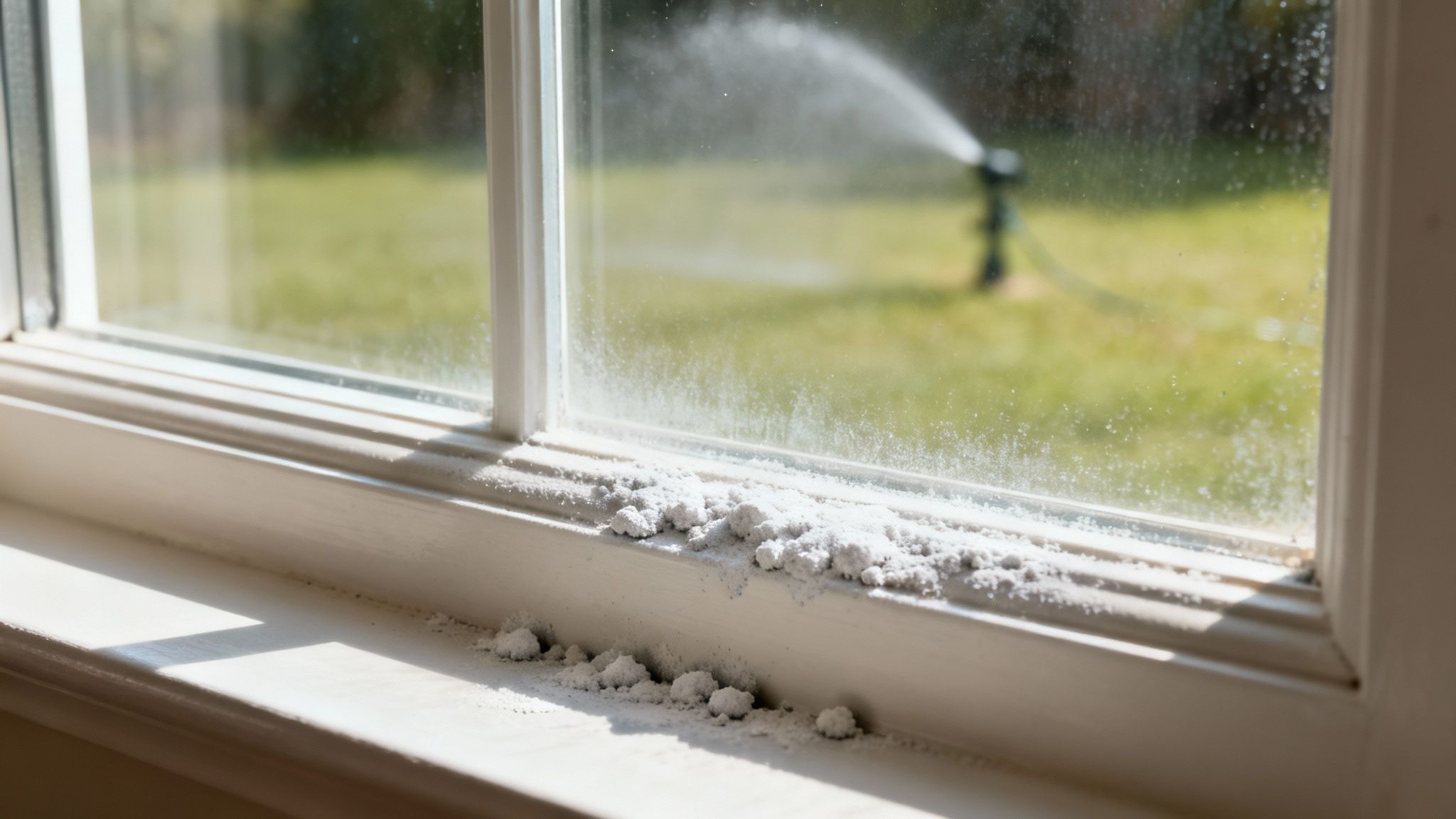
So, where is this water coming from? Usually, it's one of a few common culprits:
- Sprinkler Systems: This is a big one. Overspray from a lawn sprinkler constantly hitting the glass is a guaranteed way to get mineral buildup.
- Runoff from Building Materials: Even naturally soft rainwater can become a problem. As it flows over concrete, brick, or stucco, it picks up minerals and then dries on your windows, leaving spots behind.
- Well Water: If your home uses well water, you're likely dealing with a higher concentration of minerals, making just about any exterior cleaning a potential cause for hard water stains.
The Science of Stains and Etching
At first, these spots are just sitting on the surface. But if you let them sit, the minerals start a process called etching. This is where they begin to physically damage the glass itself. At that point, it’s no longer just a stain; it's a permanent change to the window's surface that looks cloudy or hazy, and no amount of cleaning will fix it. The way glass interacts with water is a fascinating topic, and you can dig deeper here: https://sparkletechwindowwashing.com/the-difference-between-hydrophilic-and-hydrophobic-glass/
The biggest mistake homeowners make is letting those mineral deposits sit. The longer they're on the glass, the deeper they etch, making removal exponentially harder and sometimes impossible without professional help.
Getting rid of long-term stains can be a real battle. As professional window cleaners, we see it all the time—the difficulty and cost of removal skyrocket the longer the spots have been there. If you find spots keep coming back, it's worth checking for the root cause, which could even be a hidden leak. For more on that, you can find helpful resources on understanding and repairing water leakage.
Simple DIY Methods for Light Water Stains
When you're dealing with newer, less stubborn spots, you don't need to break out the heavy-duty chemicals. In fact, your kitchen pantry probably has everything you need to tackle those annoying mineral deposits safely and effectively. These at-home solutions are perfect for regular maintenance or for stopping buildup in its tracks.
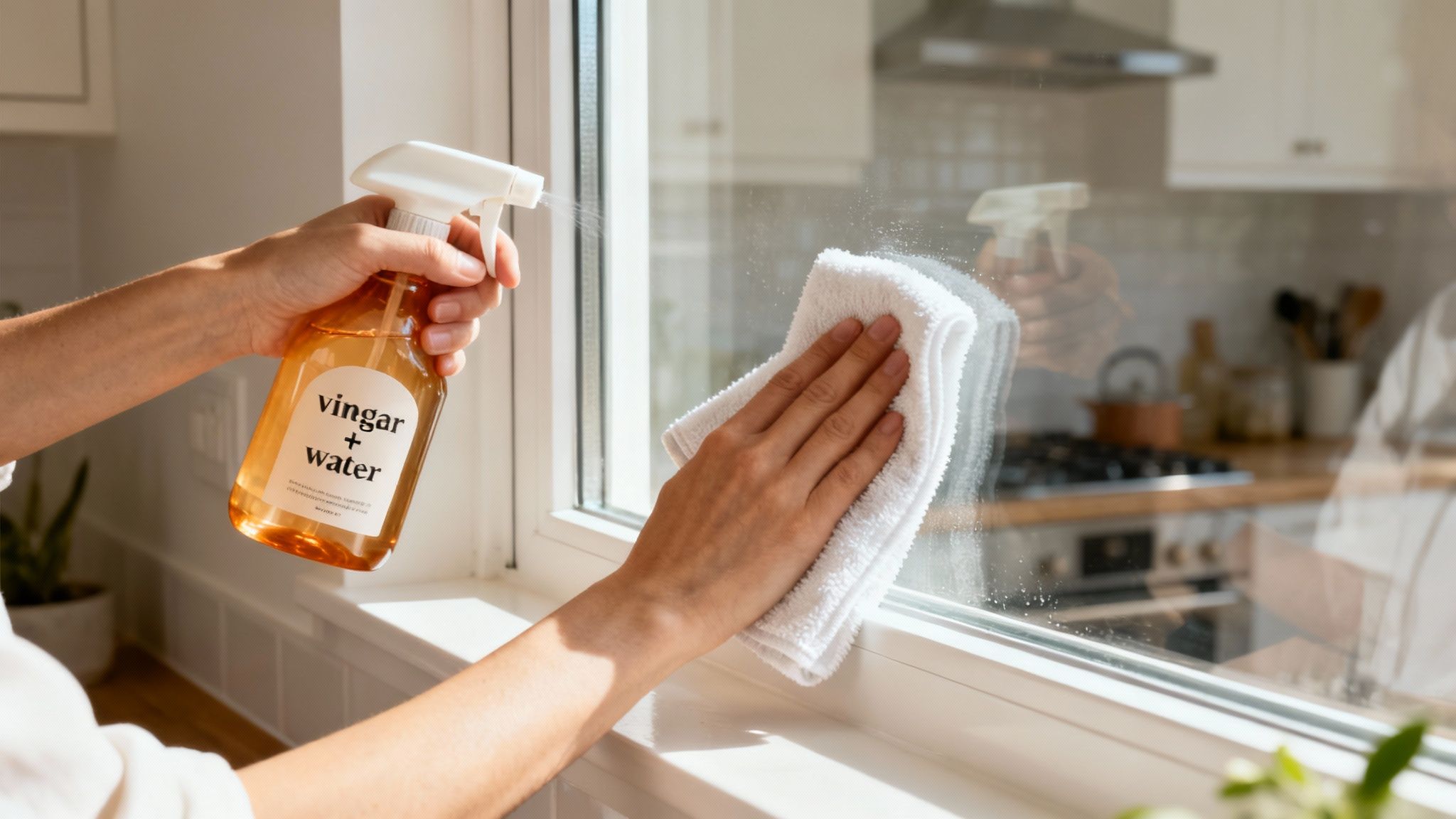
The tried-and-true method is a simple mix of equal parts white vinegar and distilled water. Just pour them into a spray bottle and you're good to go. Using distilled water is a crucial little detail—tap water can just re-deposit more minerals back onto the glass, undoing all your hard work.
Want to give it a little more oomph? Gently warm the vinegar solution in a microwave-safe bowl before you start. The heat helps dissolve the mineral bonds faster, which means less scrubbing for you.
Natural Acids Cut Through Grime
Don't have vinegar on hand? Lemon juice is another fantastic, all-natural option. The citric acid in lemons is a powerhouse when it comes to breaking down the calcium and magnesium that create hard water stains. You can either rub a sliced lemon directly on the spots or mix the juice with distilled water for easier spraying over a larger area.
These household remedies aren't just old wives' tales; they work because of some basic chemistry. The acids in vinegar and lemon juice effectively dissolve the alkaline mineral deposits (calcium carbonate) that make up those chalky spots.
Pro Tip: Always reach for a clean, non-abrasive microfiber cloth. Paper towels tend to leave lint behind, and harsher scrubbers can cause micro-scratches that will only attract more dirt and grime down the road.
If you're looking to mix things up, we've got a whole collection of recipes and tips in our guide to the https://sparkletechwindowwashing.com/best-homemade-window-cleaning-solutions/ to keep your glass looking crystal clear.
No matter which concoction you choose, the process is pretty much the same. Spray the solution on, let it sit for a minute or two to work its magic, and then gently scrub in a circular motion. Always finish by rinsing the window with clean distilled water and drying it thoroughly with a squeegee. This final step is key to preventing new spots from forming right away.
DIY Hard Water Spot Remover Recipes
Here's a quick look at two of the most popular and effective homemade cleaning solutions for tackling light to moderate hard water stains on your windows.
| Ingredient Mix | Best For | Application Tip |
|---|---|---|
| 50/50 White Vinegar & Distilled Water | General-purpose cleaning and light mineral buildup. | Warm the solution slightly to boost its cleaning power on more noticeable spots. |
| Lemon Juice & Distilled Water | Cutting through tougher, more visible deposits. | For stubborn individual spots, apply pure lemon juice directly with a cloth. |
Both of these recipes are excellent starting points for maintaining your windows and preventing the kind of heavy buildup that requires more aggressive cleaning methods.
Tackling Tough Stains with Commercial Cleaners
So, you’ve tried the vinegar and lemon juice, but those milky-white spots are still clinging to your glass. Don't worry, this is a common problem. When those DIY solutions don't cut it, it's time to bring out the heavy hitters: commercial hard water spot removers.
These products are specifically engineered to dissolve the mineral deposits that have chemically bonded to the glass surface. They’re your go-to solution for stubborn, set-in stains and are the next logical step before you need to call in a professional.
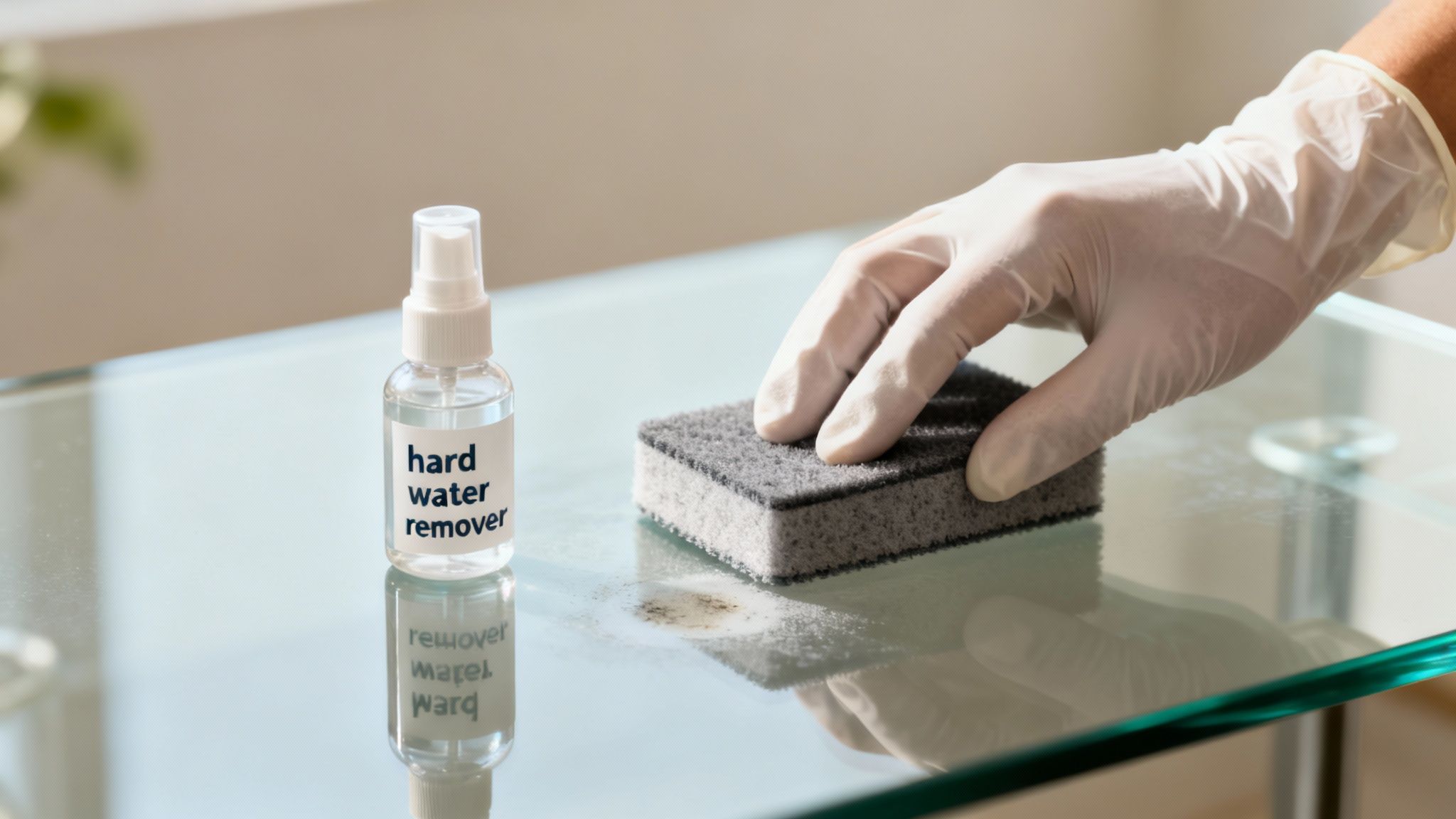
You’ll find a few different types on the shelf. Some are chemical sprays designed to break down calcium and lime, which are perfect for covering large areas with moderate buildup. Others are mildly abrasive creams or pastes that give you more concentrated power for those really tough spots that feel rough to the touch. Just make sure the label says it's safe for glass.
How to Apply Them Safely and Effectively
Working with stronger chemicals means taking a few extra precautions. Your safety comes first. Always work in a well-ventilated space and throw on some rubber gloves and safety glasses before you even open the bottle.
Most commercial cleaners follow a similar application process:
- Apply the product directly to the hard water spots, following the instructions on the packaging.
- Let it sit. This is the most important part. Give the cleaner a few minutes to work its magic and break down those mineral bonds. Don't rush it.
- Scrub gently. Grab a non-abrasive scrubbing pad or a microfiber cloth and work the cleaner into the stains using a circular motion.
- Rinse and dry. Once the spots are gone, rinse the glass thoroughly with distilled water and dry it immediately with a squeegee. This last step is crucial to prevent new spots from forming right away.
If you’re dealing with years of crusted-on deposits, you might need a bit more muscle. That’s where some specialized tools can make all the difference.
A common misconception is that scrubbing pads always scratch glass. The key is to use a non-abrasive pad with a liquid lubricant (like the cleaner itself). This allows the pad to lift the minerals without damaging the window.
Using Abrasives Without Harming the Glass
For stains that have been there so long they've started to etch the glass, a gentle abrasive can be a lifesaver. Your best friend here is #0000 grade steel wool. I know it sounds scary, but this is the finest grade you can get and it's designed to be safe on glass when used correctly.
The golden rule is to never use it dry. Always spray your cleaning solution onto the glass first to act as a lubricant. Then, gently rub the steel wool over the stubborn spot. It’s always a good idea to test it on a small, hidden corner first just to be absolutely sure. This technique is often the final attempt before calling a pro and can work wonders on years of buildup.
You’ve done the hard part and finally have sparkling, spot-free windows. Now, how do you keep them that way? The secret is to stop fighting the spots after they appear and start preventing them from forming in the first place. This really just means tackling the source of the water before it dries on your glass.
You'd be surprised how often the simplest changes have the biggest impact. Take a walk around your house and check your sprinkler system. If the heads are misting your windows, a quick adjustment to aim them back toward the lawn can solve the problem instantly. Same goes for after you wash your car or rinse down your siding—don't let that water air-dry on the glass. A quick pass with a squeegee is all it takes to pull that mineral-rich water off before it leaves its mark.
Create a Protective Barrier
For a more heavy-duty solution, I highly recommend using a hydrophobic glass sealant. It’s a lot like waxing your car. These products create a slick, invisible shield that forces water to bead up and roll away instead of sitting flat on the surface. When the water rolls off, it takes all those pesky minerals with it. You can grab a bottle at any home improvement or auto parts store, and one application will protect your windows for months.
The best approach is a two-pronged attack: make those simple physical adjustments and add a layer of chemical protection. Fixing your sprinklers stops the daily assault, and a quality sealant takes care of everything else, like rain, so your hard work doesn't go to waste.
While a good hard water remover is great for a quick fix, it's just a band-aid if you don't solve the root cause. In the professional world, preventative maintenance isn't just a suggestion; it's standard practice. In fact, approximately 60% of commercial cleaning contracts build it into their service to keep costs down and clients happy.
You can learn more about these preventative window care strategies on ungerglobal.com. Ultimately, by getting ahead of the problem, you'll save yourself a ton of scrubbing down the road.
When You Should Call a Professional
Sometimes, no amount of elbow grease is going to cut it. It’s important to know when to wave the white flag to avoid accidentally damaging your windows for good.
If you’ve tried every trick in the book and your glass still has that stubborn, cloudy look, you're probably dealing with etching. This isn't just a stain anymore; the minerals have physically eaten into the glass surface. At that point, household cleaners just won't work.
There are also times when calling in a pro is just the smart, safe move. Think about those hard-to-reach second-story windows or a home where every single window is covered in spots. A professional crew has the proper safety gear and specialized equipment to handle those jobs. They also have access to techniques like glass polishing with professional-grade compounds that can actually restore etched glass—something that’s far beyond a typical DIY fix.
Signs It's Time to Call In The Experts
Deciding between another DIY attempt and calling for backup can be tough. It often helps to step back and think about understanding the benefits of professional cleaning versus DIY approaches in a broader sense.
You should definitely consider picking up the phone if you see these signs:
- A persistent haze that just won't go away, no matter how many times you clean the window.
- Stains that feel rough or gritty to the touch. This means the mineral buildup is severe.
- Windows that are too high or in an awkward spot, making them unsafe for you to clean yourself.
This infographic can help you map out whether you're looking at a quick fix or need a more serious, long-term strategy.
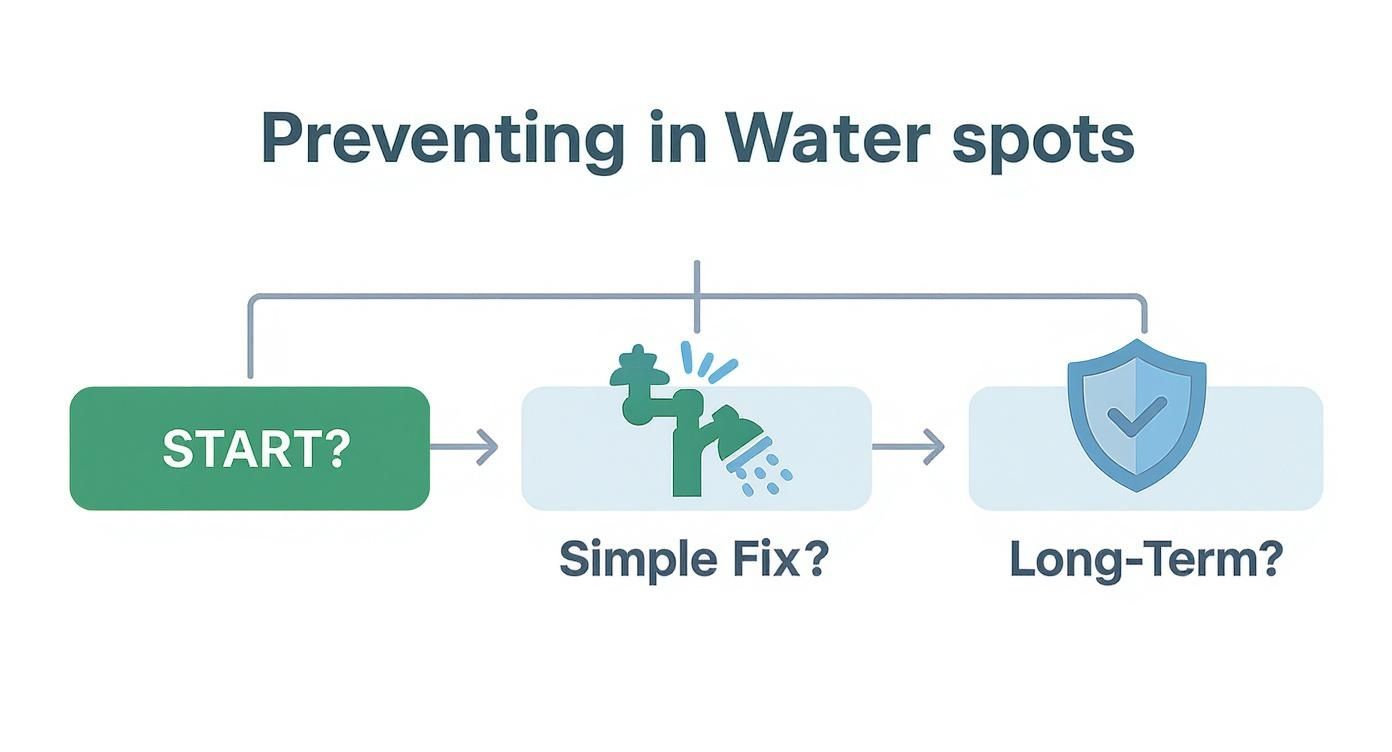
The takeaway here is that while a simple fix like redirecting a sprinkler might solve the immediate problem, the best way to protect your windows is to invest in prevention. For a deeper dive, our guide on knowing when to call a professional window washing company has even more detailed advice.
Got Questions About Window Water Spots?
Even when you're armed with the right gear and a solid plan, those stubborn mineral stains can leave you scratching your head. Let's tackle a few of the most common questions that pop up when you're fighting hard water spots.
Are Hard Water Spots Really Damaging My Windows?
In a word, yes. It's not just a cosmetic issue. When mineral deposits sit on glass for too long, they start a process called etching. The minerals literally bond with the glass and start eating away at the surface.
Once the glass is etched, you're no longer dealing with a simple surface stain. The damage is permanent, leaving behind a cloudy, hazy look that no amount of scrubbing will fix. At that point, your only options are professional glass polishing or replacing the window entirely.
Is It Okay to Use Steel Wool on Glass?
This is a fantastic question, and the answer is a very careful "yes." You can use it, but only if it's grade #0000 steel wool—the absolute finest you can get. Anything rougher will definitely leave scratches.
The trick is to always use it wet, lubricated with your cleaning solution. Never, ever use it dry. And before you go to town on a big window, test it on a small, hidden corner first just to be safe.
Think of it this way: the super-fine steel wool acts as a gentle abrasive that lifts the minerals off, while the liquid lubricant protects the glass itself. This is a pro-level trick for tough spots, not your go-to for a quick weekend wash.
I Cleaned My Windows, but They Still Look Hazy. Why?
Ugh, that post-cleaning haze is the worst. It usually boils down to one of two things. The most common culprit is simply leftover residue from your cleaning product. An extra rinse with distilled water followed by a good squeegee job usually clears it right up.
But if that cloudiness just won't budge? You're probably looking at etching. The minerals have already damaged the glass surface itself. You might need to step up to a more serious polishing compound or call in a professional to get that clarity back.
I Have a Water Softener. Shouldn't That Stop the Spots?
A whole-home water softener is a lifesaver for preventing spots from indoor water, like when you're cleaning the inside of your windows. But it has no effect on the water hitting your windows from the outside.
Your sprinkler system, rain, and the water from your garden hose are still loaded with minerals. For your exterior glass, the best defense is to aim your sprinklers away from the windows and apply a good hydrophobic glass sealant to make the water bead up and roll right off.
Are you dealing with serious etching or have windows that are just too high to reach safely? Sometimes, calling in an expert is the smartest move. Sparkle Tech Window Washing has the professional-grade tools and know-how to bring your windows back to life. Visit us for a free window cleaning quote.