




Those chalky, white spots that just won't scrub off your windows? That’s the classic sign of hard water. When water with a high mineral content—mostly calcium and magnesium—dries on the glass, it leaves behind a stubborn residue that bonds right to the surface. Getting rid of them for good starts with understanding why they show up in the first place.
Why Hard Water Spots Form on Your Windows
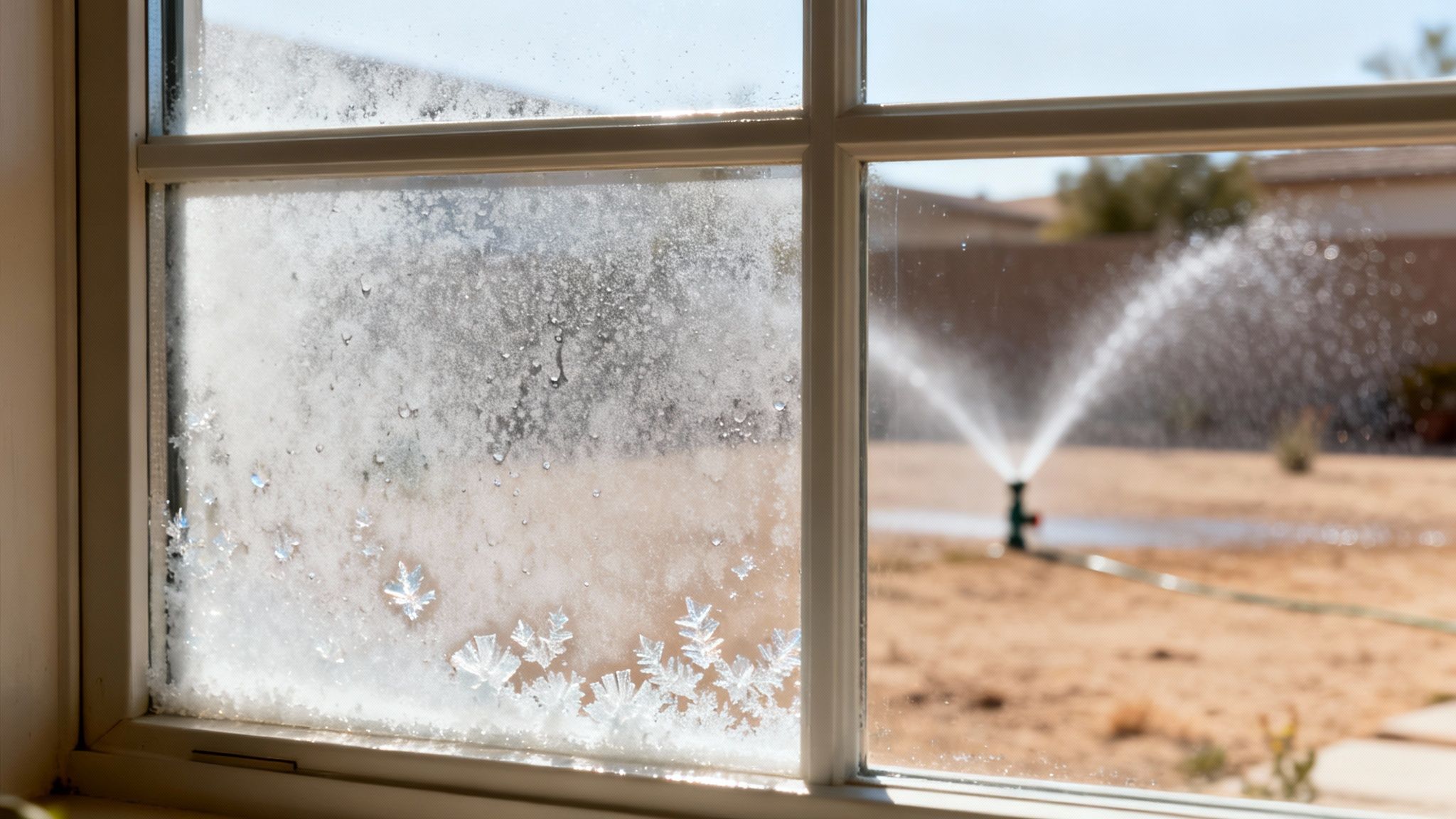
If you've ever battled those milky-white circles on your glass, you've experienced hard water firsthand. The term simply means the water is loaded with dissolved minerals. When a drop of it hits your window and the sun does its job, the water evaporates, but the minerals get left behind.
They don't just sit there, though. They crystallize on the glass, forming a tough, semi-transparent film that a simple paper towel and spray bottle can’t touch.
The Science Behind the Stains
What's really happening here is a chemical reaction. On a microscopic level, glass isn't perfectly smooth; it's full of tiny pores. As water evaporates, the calcium and magnesium deposits sink into these pores. Then, the sun bakes them on, creating a surprisingly strong chemical bond.
This is why regular cleaning methods fail. You're not just wiping away surface grime; you're trying to dissolve a mineral deposit that has chemically attached itself to the silicon dioxide in your glass. Fully understanding what causes water stained windows is the key to breaking that bond.
Common Culprits in Arizona
Here in Arizona, our water is notoriously hard, which means common, everyday activities can quickly lead to spotted windows. I see it all the time.
- Lawn Sprinklers: This is the #1 offender, without a doubt. A poorly aimed sprinkler head will soak your windows day after day, and the intense Arizona sun bakes on a new layer of mineral deposits each time.
- Hose Runoff: Simply washing your car or hosing down the patio can send mineral-heavy water splashing onto your windows, leaving spots behind as it dries.
- Rainwater: Even rain isn't completely pure. It can collect dust and minerals from dirty screens or the atmosphere itself, leaving a faint film on your glass.
The type of glass can also make a difference, as some surfaces are more prone to mineral bonding than others. It's fascinating to see the difference between hydrophilic and hydrophobic glass and how each one interacts with water droplets.
The real problem is mineral concentration. Water hardness is measured in grains per gallon (gpg). To put it in perspective, some major U.S. cities in the northeast consider water hard at 8–10 gpg. Here in Arizona, it's often much higher, showing just how widespread and severe this issue can be.
Assessing the Severity of Your Window Stains
Before you even think about grabbing a squeegee, you have to play detective. What kind of spots are you really dealing with? Not all hard water stains are the same, and going in with the wrong cleaning strategy is a waste of time—or worse, it could actually damage your windows.
You're looking at one of two culprits: fresh mineral deposits sitting on the surface, or long-term corrosion that's actually etched into the glass. Each demands a totally different battle plan.
Stage 1 Versus Stage 2 Stains
So, how do you tell them apart? It’s easier than you think. All you need is your fingernail.
Gently run your nail over one of the spots. If you feel a gritty, raised texture that catches your nail, congratulations! You’re dealing with Stage 1 surface spots. These are relatively new and haven't had a chance to do permanent damage. They are much, much easier to remove.
But what if your fingernail glides right over it? If the glass feels smooth, or you feel a tiny dip where the spot is, you've got a bigger problem: Stage 2 glass corrosion. This is where the minerals have actually bonded with the glass and eaten into it, creating a permanent etch. These are a whole different beast.
Here in Arizona, that relentless sun acts like an accelerator. It bakes those minerals onto the glass, turning a simple Stage 1 cleaning job into a difficult Stage 2 restoration project faster than you'd think.
To help you diagnose what you're seeing, let's break it down further.
Identifying Hard Water Spot Severity
Use this table to figure out what stage your hard water spots are in. A proper diagnosis is the first step to getting your windows sparkling again.
| Characteristic | Stage 1 Surface Spots | Stage 2 Glass Corrosion |
|---|---|---|
| Appearance | Milky, chalky, or white spots that clearly look like they're sitting on top of the surface. | Faint, cloudy, or semi-transparent patches that seem to be inside the glass itself. |
| Texture | Feels slightly rough or bumpy. Your fingernail will catch on the gritty mineral deposit. | The glass feels smooth, or you might even feel a slight indentation where the glass is etched. |
| Removability | Usually comes off with acidic solutions (like vinegar or specialty cleaners) and a bit of elbow grease. | Resists standard cleaners and DIY attempts. Requires more intensive, abrasive methods to polish out. |
Getting this diagnosis right is everything. You don't want to use an aggressive, abrasive compound on a simple Stage 1 spot—it's total overkill. On the flip side, a gentle vinegar spray won't even touch a deeply etched Stage 2 stain.
If you’ve done the fingernail test and realized you have severe Stage 2 corrosion on multiple windows, this is often the point where a DIY job becomes a frustrating exercise. This is a good time to consider knowing when to call a professional window washing company. A seasoned pro can accurately assess the damage and tell you if restoration is even possible, or if you're looking at a full glass replacement.
Your Go-To DIY Solutions for Water Spot Removal
So, you've taken a close look at your windows and confirmed you're dealing with hard water spots. The good news is you don't always need to rush out and buy expensive, specialized chemicals to get your glass sparkling again.
For those initial, surface-level stains (what we call Stage 1 spots), the most effective tools are probably sitting in your kitchen pantry right now.
My best advice? Start with the gentlest method first. There's no sense in bringing out the heavy hitters if you don't have to, as it helps avoid any unnecessary wear on your glass. Always, and I mean always, test your cleaning solution on a small, out-of-the-way corner before going all-in on the entire window.
The Classic Vinegar and Water Solution
For most light and even moderate mineral buildup, the simple acidity of white vinegar is a fantastic weapon. It's a tried-and-true method for a reason. The vinegar works by breaking down the alkaline mineral deposits—mostly calcium and magnesium—that have stubbornly bonded to your glass. This is the very first thing I suggest to anyone tackling this issue for the first time.
Here's how to mix up this simple but powerful cleaner:
- Grab a spray bottle and mix equal parts distilled white vinegar and distilled water. Using distilled water is a non-negotiable part of this. Tap water is full of minerals, which is how you got into this mess in the first place!
- Spray the solution generously over the affected areas. You really want to saturate the glass so the acid has enough time to do its job.
- Now, let it sit. Give it a good 10-15 minutes to work its magic. This dwell time is critical for dissolving those stubborn mineral deposits.
Once the time is up, give the area a gentle scrub with a non-abrasive sponge or a clean microfiber cloth. You should actually feel the gritty texture of the spots start to break down.
To finish, rinse the window with fresh distilled water and dry it completely with a new microfiber towel. This last step is key to preventing a fresh round of spots from forming. If you're looking for more tips on this, you can find several proven DIY methods for hard water stain removal.
This diagram really helps visualize the difference between a manageable surface spot and the more serious corrosion that can happen over time.
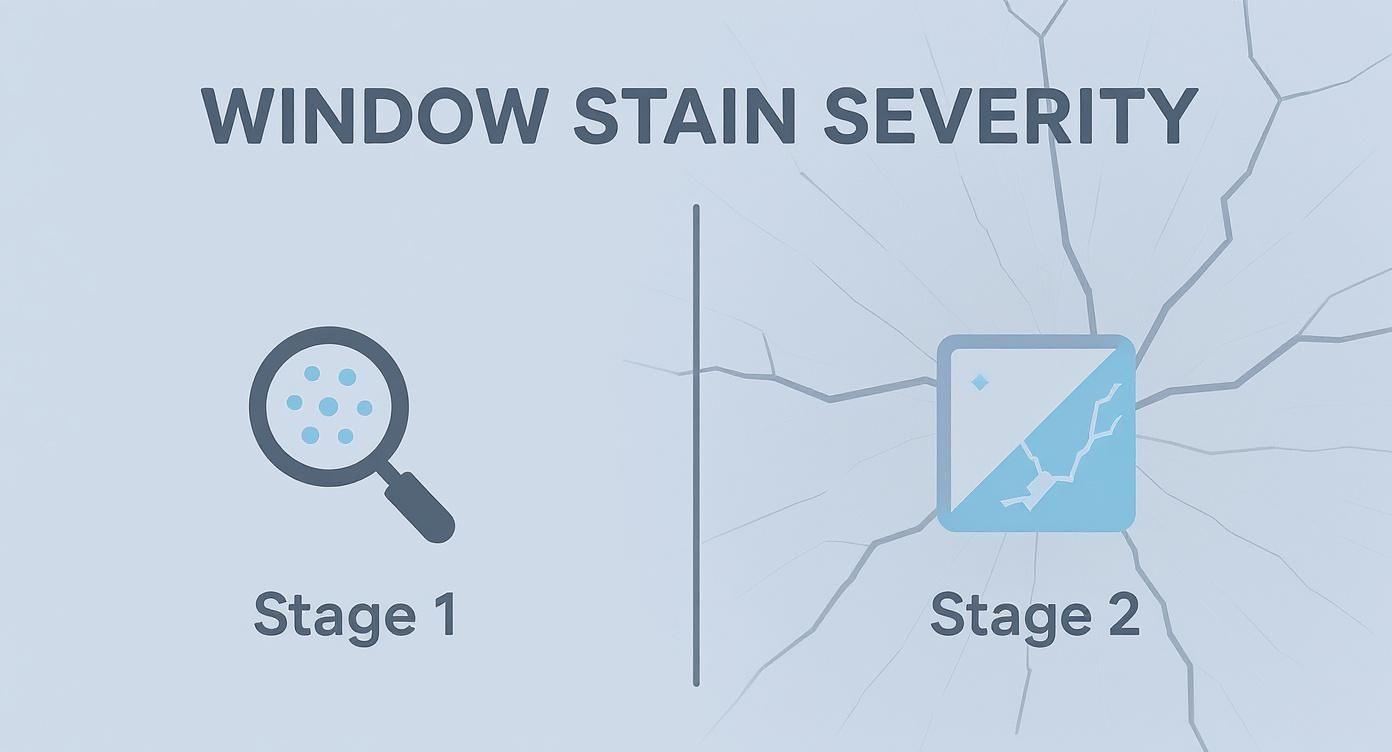
As you can see, Stage 1 spots are definitely something you can handle yourself. But once that damage becomes etched into the glass, you're looking at a much bigger problem that often needs professional intervention.
Stepping It Up for Stubborn Spots
What if the vinegar solution just isn't cutting it? Don't get discouraged. It just means you need to bring a little more power to the fight. We're still sticking with common household items that are perfectly safe for your glass when used the right way.
Lemon Juice Power
The citric acid in fresh lemon juice is another fantastic mineral-buster. You can squeeze it directly onto the spots, let it sit for about 10 minutes, and then wipe it down and rinse. Its natural acidity is surprisingly effective at dissolving that chalky residue.
Baking Soda Paste
For those really caked-on spots that need a bit of a scrub, a baking soda paste is your best friend. It acts as a super mild abrasive, which is just enough to physically scrub away deposits without scratching the glass.
- Mix baking soda with just a little bit of water until you have a thick paste, almost like toothpaste.
- Apply this paste right over the hard water stains.
- Let it sit for a few minutes, then gently scrub with a damp cloth or sponge.
- Rinse every last bit of it off with distilled water until the glass is completely clear.
A Pro Tip from the Field: Try to clean your windows when they aren't in direct sunlight. If the glass is hot, your cleaning solution will evaporate almost instantly, leaving behind ugly streaks and sometimes making the problem even worse. An overcast day or working in the shade gives the solution the time it needs to penetrate and dissolve the minerals properly.
Advanced Techniques for Tough Mineral Buildup
So, you’ve tried the vinegar solution and the baking soda paste, but those stubborn spots aren't budging. This is a classic sign you're up against Stage 2 hard water stains. These aren't just surface-level annoyances; they've been baking onto your glass for months, maybe even years, and have bonded with it.
It's time to bring out the heavy hitters. We're moving past kitchen pantry fixes and into the realm of professional-grade solutions. These methods need a bit more care, but they're your best shot at saving glass that looks like it's beyond repair.
Choosing a Commercial Hard Water Remover
Walk down any cleaning aisle and you'll see a dozen products promising to erase hard water spots. But let’s be real—not all are created equal. A truly effective commercial remover uses a smart combination of specific acids and mild abrasives to attack the calcium and magnesium deposits in a way household solutions simply can't.
When you're comparing products, here's what to look for on the label:
- Mild Acids: Ingredients like sulfamic or phosphoric acid are the workhorses here. They chemically dissolve the mineral buildup without being aggressive enough to damage the glass itself.
- Fine Abrasives: Some of the best formulas contain microscopic abrasives that act like a gentle polish, physically buffing the stains away. These are a world away from gritty household powders.
Before you go all-in, always test the product on a small, out-of-the-way corner of the window. You want to be sure it won't leave behind any haze or fine scratches. And please, follow the manufacturer's instructions to the letter—these are powerful chemicals.
These stains do more than just ruin your view. When the buildup gets really bad, it can actually impact the comfort of your home. Some studies suggest that severe mineral staining can block up to 40% of UV light. You can read more about some hard water spot remover options for windows over on the Unger Global blog.
Using Steel Wool the Professional Way
For the absolute worst cases—where the glass is etched and feels rough to the touch—we often turn to a tool that makes most homeowners shudder: steel wool. But hold on. We are not talking about the coarse stuff you use on pots and pans.
The only acceptable choice is #0000 grade steel wool, often called "quad-zero." It's the finest grade you can get, and it's designed to polish, not scratch. Used correctly with a good lubricant, it can physically shear off mineral deposits that have laughed at every chemical you've thrown at them.
If you're going to try this, there are a few rules that are absolutely non-negotiable:
- Only Use #0000 Grade: I can't stress this enough. Anything coarser (like #000 or #00) will permanently scratch your glass. Check the package twice.
- Keep It Wet: Never, ever use steel wool on a dry window. A quality glass cleaner or even soapy water acts as a lubricant, letting the pad glide smoothly without digging in.
- Use Light, Even Pressure: Let the ultra-fine steel wool do the work for you. There's no need to scrub hard. Gentle, circular motions are all you need.
This method is incredibly effective, but it’s definitely the final DIY step before calling in a professional for restoration. Of course, the best way to deal with these spots is to prevent them entirely. Learning about the process of purified water window cleaning shows how the pros avoid this headache from the very beginning.
How to Keep Hard Water Spots From Coming Back
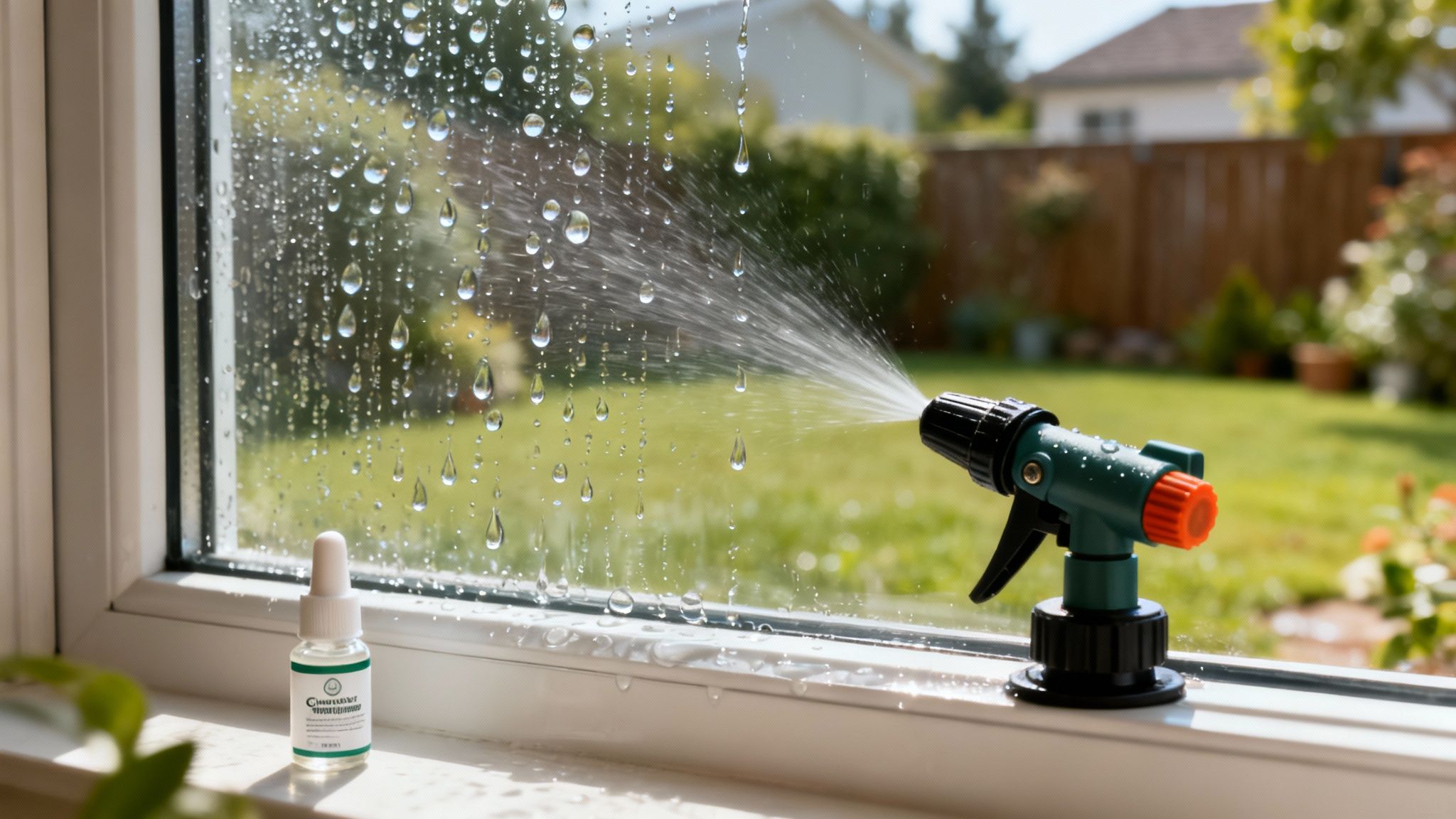
It’s a fantastic feeling to get your windows perfectly clear, but that satisfaction disappears quickly if those spots return in a few weeks. Winning the long-term war against mineral buildup is all about prevention. It’s a shift from reactive cleaning to proactive maintenance.
The goal is simple: stop mineral-heavy water from sitting and drying on your glass. A few tweaks around your home can make all the difference, especially here in Arizona where our water is notoriously hard.
Quick Fixes You Can Do Today
You don't need a huge budget or a ton of time to start preventing hard water spots. These straightforward adjustments tackle the most common reasons spots appear in the first place.
-
Check Your Sprinklers: Honestly, this is the number one culprit I see on the job. Walk your property while the sprinklers are running. Are they watering your windows and siding along with your lawn? A simple twist of the sprinkler head to redirect the spray can completely solve the problem.
-
Dry Off Any Overspray: When you're washing the car or hosing down the patio, water inevitably splashes onto nearby windows. Don't just let it bake in the sun. Grab a squeegee or a clean microfiber towel and give the glass a quick wipe-down. It only takes a minute.
The core principle is this: every single drop of hard water that dries on your glass leaves behind a mineral footprint. By cutting off the water source or drying it before it evaporates, you stop the spots before they even have a chance to form. It’s the easiest and most effective preventative move you can make.
Long-Term Solutions for Lasting Clarity
For a more permanent defense, you can look at solutions that treat either the water itself or the glass surface. Think of these as setting up a shield against future stains.
Use a Hydrophobic Glass Sealant
Applying a good quality glass sealant is one of the best long-term moves. These products create an invisible, hydrophobic coating on your windows. In plain English, that means it repels water.
Instead of spreading out and sticking to the glass, water beads up and rolls right off, carrying the minerals away with it. This dramatically cuts down on spotting and makes any future cleaning a breeze.
Install a Water Softening System
If you want the ultimate solution, a whole-house water softening system is the answer. This approach tackles the problem at its source by removing minerals like calcium and magnesium from your water supply before it ever gets to your hose or sprinklers.
Remember, the damage from hard water goes beyond aesthetics. Over time, that constant mineral buildup can degrade window seals and even impact your home's energy efficiency. While a water softener is a bigger investment, it protects your windows, plumbing, and every water-using appliance in your home. You can learn more about how hard water can damage windows on The Third Estimate.
Got Questions About Hard Water Stains? We've Got Answers
Even with the best game plan, a few questions always come up when you’re staring down hard water spots for the first time. We get these all the time from homeowners, so let's walk through some of the most common ones before you roll up your sleeves.
Can Hard Water Stains Actually Become Permanent?
Yes, they absolutely can. This is something a lot of people don't realize until it's too late. When mineral deposits sit on glass for an extended period, the intense Arizona sun bakes them right in. This can lead to what's called Stage 2 corrosion.
Essentially, the alkaline minerals in the water begin to etch into the glass itself. Once that happens, no amount of scrubbing or cleaning will reverse the damage. This is precisely why tackling hard water spots early is so critical—what's a simple cleaning task today could become permanent damage if left alone.
Why Won't My Regular Window Cleaner Work on These Spots?
It's a frustrating experience, but standard window cleaners just aren't built for this kind of job. They're great for everyday smudges like fingerprints, dust, and pollen. But they lack the specific acidic punch needed to dissolve the tough chemical bonds of calcium and magnesium.
You could spray an entire bottle and scrub all day with little to no effect. To get the job done right, you need something that will chemically break down the minerals. This usually means a mild acid, like the acetic acid in vinegar, or a professional-grade cleaner designed specifically for mineral deposit removal.
Remember, you're not just wiping away surface dirt; you're dissolving a rock-hard mineral deposit. It's a chemistry problem, not just a cleaning one. Using the wrong product is the number one reason people struggle with this and eventually give up.
Is It a Good Idea to Scrape the Spots Off with a Razor Blade?
Please don't do this. It’s a common DIY tip that sounds logical, but it’s one of the riskiest things you can do to your windows. While a sharp blade can physically shear off a mineral spot, the potential for permanently scratching your glass is huge.
All it takes is one tiny, unseen piece of sand or grit trapped under that blade to carve a long, deep scratch across the pane. That scratch will be far more noticeable and permanent than the spot you were trying to remove. Stick to safer, non-abrasive methods like chemical cleaners and super-fine #0000 steel wool.
How Often Should I Be Cleaning to Keep Stains from Coming Back?
When it comes to hard water, prevention really is about consistency. If your windows are in the line of fire from sprinklers, the best thing you can do is give them a quick wipe with a squeegee or microfiber towel right after the sprinklers turn off.
For general upkeep, cleaning your windows every couple of months with a simple vinegar solution can prevent new spots from ever getting a foothold. The idea is to never give those mineral-rich water droplets a chance to dry and bond to the glass. A little bit of regular maintenance is so much easier than a massive restoration project later on.
If you've tried everything and are still dealing with stubborn hard water spots, or you just want to get that perfect, professional shine without the hassle, the team at Sparkle Tech Window Washing is ready to help. Contact us today for a free estimate!