



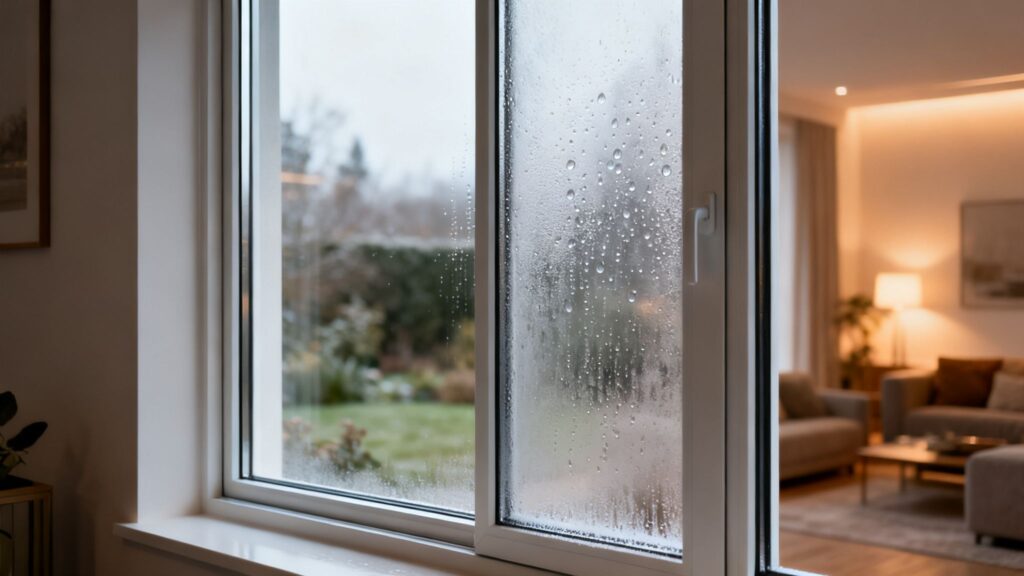
That haze you see trapped between the panes of your window, the one you can’t wipe away no matter how hard you try, is a tell-tale sign of a bigger problem. It’s a clear signal that the window's airtight seal has failed.
When that happens, moist air gets sucked into the space between the glass, creating that permanent condensation that clouds your view. It's like a good thermos that’s sprung a leak—it just can't do its job of insulating anymore.
What Causes Fogging in Double Pane Windows
Staring at a foggy window is frustrating, mostly because it’s a problem a bottle of Windex can't fix. This isn't like the temporary condensation you see on the outside of the glass on a humid morning. When double pane windows fog up on the inside, it points to a much deeper issue.
At the heart of every double-pane window is an Insulated Glass Unit (IGU). Think of it as a sealed sandwich: two panes of glass, a spacer holding them apart, and a pocket of inert gas (usually argon) trapped in the middle. That gas is the magic ingredient that slows down heat transfer. But when the seal breaks, the magic is gone.
The Breakdown of the Window Seal
That seal is the window's weakest link. It’s constantly fighting a battle against the elements, and over time, the stress adds up. Eventually, the seal gives way, letting the protective argon gas out and humid, everyday air in.
So, what are the main culprits behind a failed seal?
- Age and Wear: Nothing lasts forever, and that includes window seals. You can typically expect a good 15 to 25 years out of them before they simply start to wear out from old age.
- Sun Exposure: The sun can be brutal. Windows that get blasted with direct sunlight, especially on the south or west side of a house, go through a daily cycle of expanding in the heat and contracting as it cools. This constant movement, called thermal pumping, puts a ton of stress on the seals.
- Moisture Damage: Water is the enemy of a healthy window frame. If rain or sprinklers constantly leave water pooling around the edges, that moisture will slowly eat away at the sealant and cause it to fail long before its time.
A foggy window isn't just a cosmetic problem; it's a performance failure. It means your window has lost its insulating power, which often translates to higher energy bills as your HVAC system works overtime.
Once that seal is compromised, the desiccant material packed inside the spacer (which is there to absorb any tiny bit of moisture) gets completely overwhelmed. At that point, the trapped humidity has nowhere to go but onto the inside surfaces of the glass, creating that permanent, frustrating fog.
You can learn more about what causes windows to fog up in our detailed guide, which dives even deeper into these factors. Knowing what causes the problem is the first step to figuring out the best fix, whether it's a simple repair or a full replacement.
How Double Pane Windows Work and Why They Fail
Before we get into why double pane windows fog up, it helps to understand what’s going on inside them. They’re more than just two pieces of glass stuck together; they’re an engineered system called an Insulated Glass Unit (IGU), and their whole job is to act as a thermal barrier between your home and the outside world.
Think of it like a high-tech winter coat for your house. The two panes of glass are the outer and inner fabric layers, but the real magic happens in the space between them. That’s where the insulation does its heavy lifting.
The Anatomy of an Insulated Glass Unit
Every part of an IGU has a specific job. When one piece of the puzzle fails, the whole system starts to break down, and that’s when you see that frustrating, impossible-to-clean fog.
- Glass Panes: These are the two sheets of glass, separated by a very specific distance to create an air gap.
- Spacer: This is the frame that runs along the very edge, sandwiched between the panes. It holds them apart and creates a sealed chamber.
- Desiccant: Tucked away inside that spacer is a moisture-absorbing material, just like those little silica gel packets you find in a new pair of shoes. It's there to zap any tiny bit of moisture trapped inside when the window was made.
- Inert Gas: The gap isn't just filled with regular air. It's filled with a dense, non-toxic gas like argon or krypton. These gases are much worse at conducting heat than air, which is the secret to the window's insulating power.
- Sealant: A flexible, airtight seal is wrapped around the entire edge of the unit. Its job is simple but critical: keep the argon gas in and the outside air out.
The inert gas, usually argon, is the invisible hero here. Because it's so dense, it dramatically slows down the transfer of heat. That’s what helps keep your home cooler in the summer and warmer in the winter. Once that gas escapes, the window loses a huge chunk of its insulating ability.
Why the Airtight Seal Fails
So, what goes wrong? The number one reason your double pane windows get foggy is a broken seal. This isn't a sudden event; it's a slow death by a thousand cuts, caused by the constant stress from the environment. The main villain here is something called thermal pumping.
Every single day, the sun beats down on your window, causing the glass and the gas inside to expand. Then, as the sun sets and temperatures cool, everything contracts. This daily cycle of expanding and contracting puts constant stress on that flexible sealant around the edge. After years of this flexing, tiny, microscopic cracks begin to form.
Once the seal is breached, it kicks off a chain reaction:
- The heavy, insulating argon gas slowly leaks out.
- Moist air from the outside gets sucked in to fill the void.
- The desiccant material, designed to handle only a tiny amount of moisture, gets completely overwhelmed.
- Once the desiccant is saturated, there’s nothing left to absorb the incoming moisture. It condenses on the inside surfaces of the glass, creating that fog you can't wipe away.
Double pane windows first became popular back in the 1970s as a way to save energy, but this seal failure has always been their Achilles' heel. In a hot climate like Arizona, for instance, the windows on the sunny side of a house can see failure rates 20-25% higher than those in the shade. The extreme daily temperature swings—sometimes over 100°F—put an incredible amount of stress on the seals. You can learn more about the evolution of the double glazing glass market and its ongoing challenges.
This simple concept map breaks it all down visually.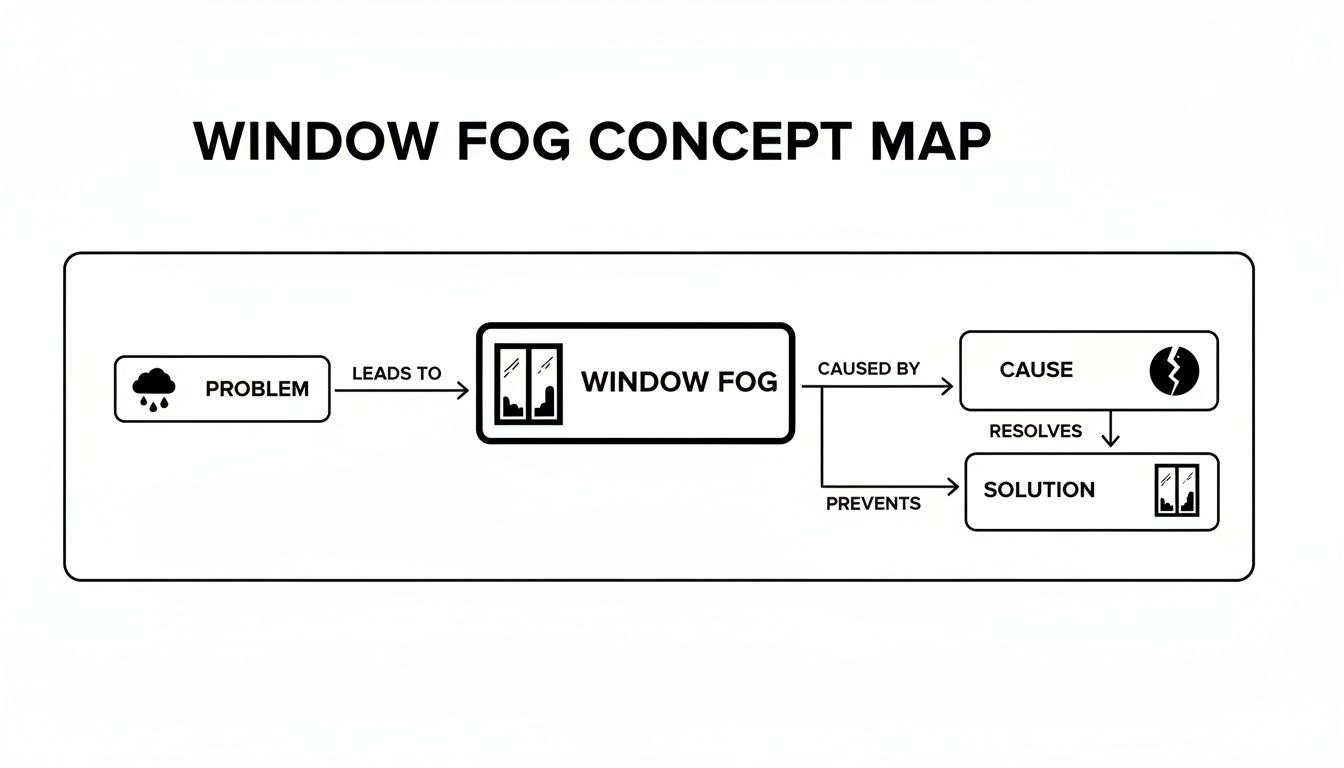
As you can see, the problem (fogging) stems directly from the cause (a broken seal), which points to the ultimate solution: addressing the failed glass unit. This cycle is the fundamental reason homeowners eventually see that frustrating haze appear.
Is It a Failed Seal or Just Normal Condensation?
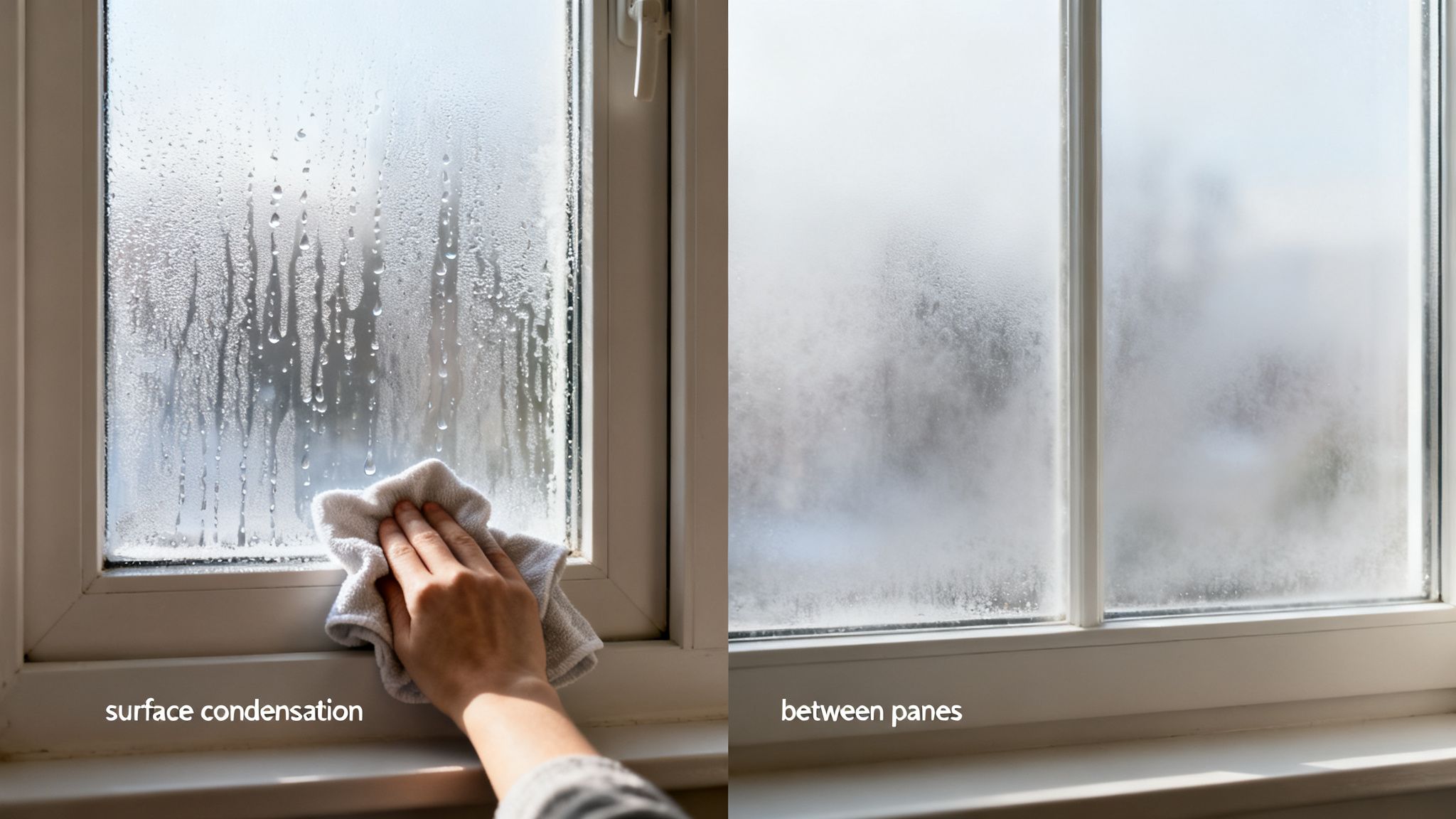
Before you pick up the phone to call a window professional, it’s crucial to figure out what’s really going on. Are you looking at a serious seal failure or just some harmless, temporary condensation?
One means your window is broken and bleeding energy, while the other is just a normal reaction to the environment. Getting this right from the start can save you a lot of time, money, and worry.
Lucky for you, there's a simple, foolproof test you can do right now.
The Wipe Test: Your First Diagnostic Tool
The telltale difference between double-pane windows fogging up from a busted seal and simple condensation all comes down to one thing: the location of the moisture.
Is it on the surface, or is it trapped where you can't reach it?
To get your answer, just try wiping the moisture away with your finger or a paper towel. This single action reveals everything you need to know about the health of your window.
- If you CAN wipe it away: Great news! The moisture is just on the surface of the glass, either inside your house or on the exterior. This is normal condensation, not a broken window.
- If you CANNOT wipe it away: The fog, haze, or water droplets are sealed between the two panes of glass. This is the undeniable sign of a failed seal.
Understanding Temporary Condensation
If you were able to wipe the moisture clean, you can breathe a sigh of relief. What you're seeing is just condensation, a completely natural process. It happens anytime warm, moist air makes contact with a cooler surface—like your window glass.
You'll most often see this in two scenarios:
- Interior Condensation: This is common during the colder months when you're running the heat. The warm, relatively humid air inside your home hits the chilly windowpane, causing water vapor to turn back into liquid. It’s actually a sign your windows are insulating well, but it might also mean the humidity in your home is a bit high.
- Exterior Condensation: You'll see this on cool mornings after a humid night, especially in the spring or fall. The outside of your window glass is cooler than the dew point, causing fog to form on the outside. It almost always vanishes as the sun comes up and warms the glass.
Knowing the best humidity level for home can go a long way in preventing this kind of moisture buildup and helping you rule out a bigger problem.
Key Takeaway: Surface condensation is an atmospheric issue, not a window defect. Seal failure, on the other hand, means the window unit itself is compromised and has lost its insulating power.
Fog vs. Condensation: A Quick Diagnostic Guide
Still not sure what you're seeing? This simple table breaks down the key differences to help you make a confident diagnosis at a glance.
| Symptom | Internal Fogging (Seal Failure) | Temporary Condensation |
|---|---|---|
| Location | Moisture is trapped between the two panes of glass. | Moisture is on the surface of the glass, either inside or outside. |
| Wipe Test | Cannot be wiped away. It is inaccessible. | Can be easily wiped away with a finger or cloth. |
| Appearance | Often appears as a hazy film, streaks, or mineral deposits. | Looks like a light fog or tiny water droplets covering the glass. |
| Persistence | Permanent. It may change in intensity but will not disappear. | Temporary. It appears and disappears with changes in temperature and humidity. |
| Solution | Requires professional repair or replacement of the glass unit. | Managed by controlling indoor humidity or waiting for temperatures to change. |
Ultimately, if the fog is on the inside of the glass unit where you can't touch it, you're dealing with a failed seal. If you can wipe it away, it's just condensation.
Exploring Your Options to Fix Foggy Windows
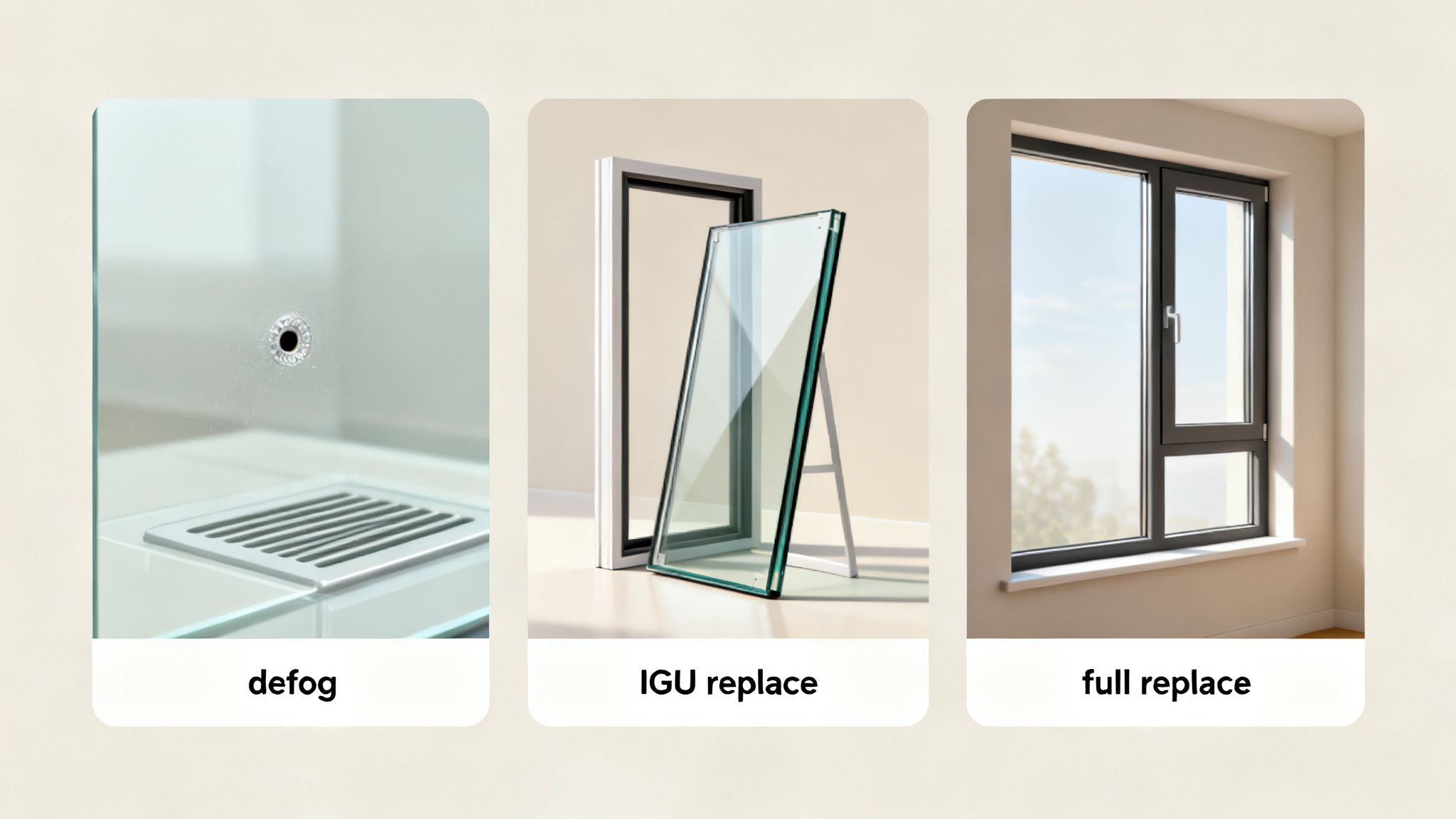
So, you've confirmed the fog is trapped between the panes—a classic sign of a failed window seal. You’re at a crossroads, but the good news is you have a few ways forward. Each path offers a different balance of cost, effectiveness, and long-term value.
Making the right call really comes down to the condition of your window frames, what you're willing to spend, and your goals for energy efficiency. Let's walk through the three main solutions for dealing with double pane windows fogging.
Option 1: Window Defogging Services
Think of window defogging as a quick, cosmetic fix for your glass. This method doesn't involve replacing any parts; instead, it's all about getting rid of the moisture that's already trapped inside.
A technician drills one or two tiny, nearly invisible holes in the glass. They then pump in a cleaning solution to wash away the hazy film and mineral deposits left behind by the moisture. After that, they flush the chamber with dry air and install a small vent in the hole to let any future moisture escape.
This is almost always the cheapest and fastest option, but it comes with a serious catch.
While defogging can clear up your view, it's critical to understand what it doesn't do. It does not replace the insulating argon gas that escaped when the seal broke. This means the window's original energy efficiency—its R-value—is gone for good.
You're essentially left with a clear but inefficient window. It’s a fix for the view, not for the window's performance.
Option 2: Insulated Glass Unit (IGU) Replacement
This second option is a powerful middle ground and, honestly, the best value for most homeowners. Rather than just treating the moisture, this solution involves replacing the entire sealed glass unit (the IGU) while leaving your existing window frame perfectly intact.
Picture your window frame as a picture frame and the IGU as the glass and backing. If the frame itself is still in great shape, why tear it out? An IGU replacement is exactly what it sounds like: a pro carefully removes the old, foggy glass unit and installs a brand-new, factory-sealed one in its place.
This approach brings some huge benefits to the table:
- Restored Efficiency: You get a brand-new unit filled with insulating argon gas, bringing your window's energy performance right back to factory specs.
- Cost-Effective: It’s significantly cheaper than replacing the whole window because you aren't paying for a new frame or the complex labor needed to install it.
- Less Intrusive: The job is much quicker and cleaner than a full tear-out of the entire window assembly.
If you've ever wondered about that stubborn film inside failed windows, our guide on how to clean between window panes explains why a professional replacement is usually the only real answer.
Option 3: Full Window Replacement
The most comprehensive—and most expensive—choice is to replace the entire window: frame, sash, and glass. It might seem like overkill for a bit of fog, but there are definitely times when a full replacement is the smartest long-term investment.
You should seriously consider going this route if:
- The Frame is Damaged: If your window frame is rotting, warped, cracked, or just plain failing, putting new glass into a bad frame is like putting new tires on a broken axle.
- You Want a Major Upgrade: This is a perfect opportunity to upgrade to modern, high-performance windows with features like Low-E coatings, better frame materials, and improved security.
- Multiple Windows are Failing: If several windows around your home are on their last legs, a full replacement project can dramatically improve your home’s overall efficiency, comfort, and curb appeal.
This fogging issue is a huge deal in the double-glazing market, which is projected to hit USD 27.4 billion by 2025. It's a common problem, affecting up to 25% of units after 10-15 years. That internal fog means the desiccant silica gel inside is saturated and just can't absorb any more moisture. But the fix pays off; homeowners can save hundreds annually by replacing failed units with new argon-filled windows that can slash heat gain by up to 40%.
Ultimately, choosing the right solution means weighing the immediate cost against the long-term benefits of a clear view and restored energy efficiency.
The Hidden Costs of Ignoring Foggy Windows
That hazy film on your window is more than just an ugly distraction; it's a bright red flag for your home's energy efficiency. When you see moisture trapped between the panes, it means the window’s airtight seal has failed. Your high-tech insulated window is now just two pieces of glass in a frame, and ignoring it means you're not just losing the view—you're losing money.
Think of the insulating gas between the panes like the down filling in a high-quality winter jacket. Once you get a tear and the filling leaks out, the jacket loses its ability to keep you warm. It's the same with your window. When the seal breaks and the gas escapes, its power to resist heat transfer (its R-value) drops like a rock.
This turns the window into a weak spot in your home’s thermal defense. Whether it's a blistering summer day or a frigid winter night, your HVAC system has to work overtime to make up for the heat leaking in or out. That extra runtime shows up right where you feel it most: your monthly energy bill.
The Financial Drain of Inefficiency
This isn't a small problem. In fact, double pane windows fogging is a common headache, affecting roughly 20-30% of homes built back in the 1990s. Healthy double-pane windows can trim your energy costs by about 12% a year, which works out to $250-$400 for a typical home. A single foggy window starts to erase those savings. You can dig deeper into these window efficiency findings on nachi.org.
And it's not just about the money you're losing on energy. You're also missing out on the other perks of a properly sealed window. A good insulated glass unit (IGU) can block up to 50% of outside noise, but a failed one doesn't do much to quiet things down. Plus, a modern IGU with Low-E coatings can have a U-value as low as 0.26, which cuts down unwanted solar heat gain by over 57%. When your window is foggy, all those benefits are gone.
Think of a foggy window as a leak in your wallet. Every month, some of the cash you're spending on heating and cooling is flying right out that compromised glass.
More Than Just High Energy Bills
The fallout from a failed window seal goes way beyond your utility bills. That persistent moisture trapped between the panes can kick off a chain reaction of other problems that hurt your home's value and your daily comfort.
The constant dampness is a perfect breeding ground for trouble right inside the window frame. This can lead to:
- Diminished Curb Appeal: Let's face it, foggy and streaky windows just look bad. From the outside, they can make an otherwise beautiful home seem neglected.
- Blocked Natural Light: That milky haze and the mineral stains left behind can seriously cut down on the sunlight coming into a room, leaving your space feeling gloomy and dark.
- Potential Frame Damage: If that trapped moisture manages to seep out, it can soak into wooden window frames. That's when you get rot, mold, or even structural decay, turning a simple glass fix into a major and costly repair.
At the end of the day, fixing double pane windows fogging isn't just another household expense. It's an investment in getting your home's efficiency, comfort, and value back on track.
When You Should Call a Window Professional
While figuring out why your double pane windows are fogging up is something you can definitely tackle yourself, the actual fix is another story entirely. This is one of those home projects where trying to DIY can easily backfire, leading to a damaged window frame, broken glass, or a new seal that fails just a few months later.
This isn't your average weekend warrior project. Replacing an Insulated Glass Unit (IGU) requires millimeter-perfect measurements, specialized tools for handling heavy glass, and the experience to install the new unit so it’s completely airtight. A tiny mistake can undermine the entire window, costing you much more in the long run. For a solution that actually lasts, calling in an expert is the only way to go.
Signs It’s Time for a Professional
Knowing when to pick up the phone is half the battle. If you’re spotting any of these tell-tale signs, it's time to have a reputable window company like Sparkle Tech Window Washing come take a look.
- Fog You Can't Wipe Away: This is the dead giveaway. When moisture is trapped between the panes, the seal is broken. Only a professional can correctly replace the IGU to fix it for good.
- Visible Cracks in the Glass: A small crack might not seem like a big deal, but it compromises both the window’s seal and its structural integrity. For safety's sake, this needs an expert's attention.
- Warped or Damaged Frames: There’s no point putting a brand-new IGU into a frame that’s rotting, cracked, or pulling away from the wall. A pro can tell you whether the whole window unit needs to be replaced.
- Difficulty Opening or Closing: If your window sticks or refuses to latch, the frame may have shifted. This often goes hand-in-hand with seal failure and points to a bigger issue that needs a professional diagnosis.
Choosing an insured and bonded professional protects your investment. An expert ensures the job is done correctly, restoring not just your view but also your window's energy efficiency and your home's security.
What to Ask During a Consultation
Once you have a professional at your home, make the most of it. A good consultation should give you total clarity on your options and leave you feeling confident about the path forward. Asking a few smart questions helps you evaluate the company and understand exactly what you're paying for.
Before you agree to any work, be sure to ask:
- Based on what you see, do you recommend replacing just the IGU or the entire window? Why?
- Can you give me a detailed, itemized quote that breaks down the costs for materials and labor?
- What kind of warranty do you offer on the new glass unit and on the installation itself?
- From start to finish, how long should the installation take?
Beyond just fixing the immediate problem, persistent fogging can be one of the clear signs you need new windows, signaling that a bigger upgrade might be necessary. For more tips on hiring the right people, check out our article on knowing when to call a professional window washing company, which offers more insight into finding qualified experts for your home.
Your Foggy Window Questions Answered
When you notice that tell-tale haze between your window panes, a lot of questions probably pop into your head. It’s a common problem, so let's walk through the most frequent ones to clear things up.
Can You Fix a Foggy Window, or Does It Need to Be Replaced?
You can, but it’s more of a cosmetic patch than a true fix. Some companies offer a "defogging" service where they drill tiny holes in the glass, clean the inside, and add a one-way vent to let moisture out. It clears the view, for a while.
The big catch? That process doesn't restore the window's insulating properties. The argon gas that was originally between the panes is long gone, and defogging won't bring it back. So while your view might improve, your window's energy efficiency is permanently compromised. For a real, lasting solution that brings back both the clear view and the insulation, replacing the sealed glass unit (the IGU) is the only way to go.
How Long Should a Double-Pane Window Last Before It Fogs Up?
Generally, you can expect a quality double-pane window to last anywhere from 15 to 25 years before the seal gives out. Of course, this isn't set in stone. The environment your windows face every day has a huge impact.
Think about the windows on the sunny side of your house. They get baked by the sun day after day, causing the glass and frame to expand and contract constantly. This "thermal pumping" puts a ton of stress on the seals, making them fail much faster than the seals on windows in shaded, more protected areas.
A good rule of thumb is the manufacturer's warranty. Most companies cover seal failure for 10 to 20 years, which gives you a pretty realistic idea of the window's expected trouble-free lifespan.
Is Fog Between the Panes Covered by a Window Warranty?
Often, yes! The good news is that most window manufacturers' warranties do cover seal failure, which is exactly what causes that internal fogging. This coverage typically lasts for 10 to 20 years.
But here's where you need to read the fine print. The warranty usually just covers the cost of the new insulated glass unit itself. What it doesn't cover is the labor to have a professional come out, remove the old failed unit, and install the new one. Dig out your original paperwork to see exactly what your warranty entails and how to make a claim. If it’s expired, you’ll be on the hook for the full replacement cost.
If you've looked at that foggy haze long enough and are ready for a crystal-clear view again, it's time to bring in a professional. The team at Sparkle Tech Window Washing can accurately diagnose the problem and perform an expert IGU replacement, restoring your home's comfort and energy efficiency. Contact us today for a clear solution.