

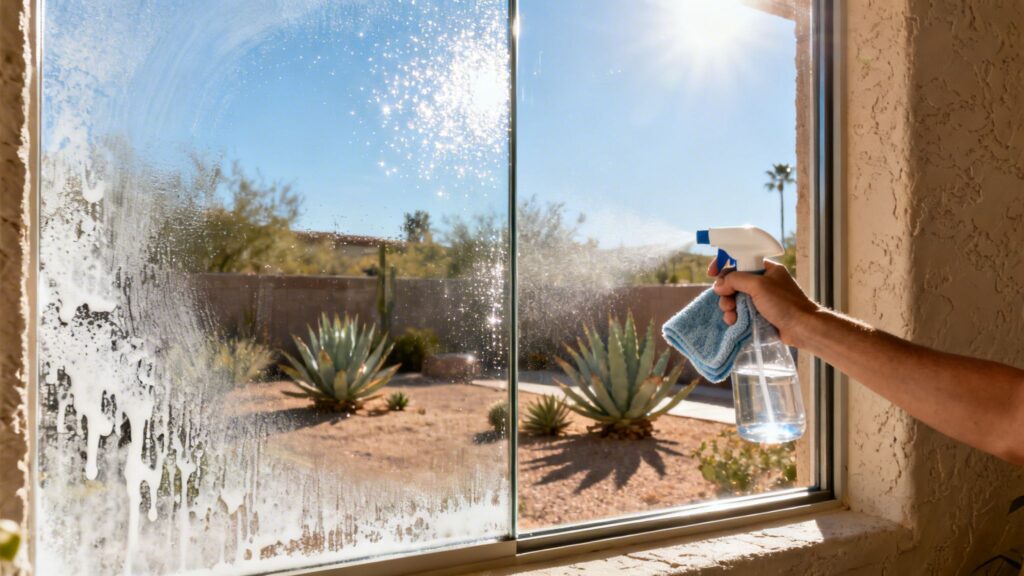
Those stubborn, milky spots on your windows? They're almost always hard water stains. When water evaporates, it leaves behind minerals like calcium and magnesium, and what you're left with is a spotty mess. The good news is that cleaning water stained windows is absolutely doable, but the right method depends on how long those spots have been sitting there.
Why Your Windows Have Stubborn Water Stains
Living in a sunny place like Phoenix means enjoying incredible views, but it also comes with a constant battle against hard water stains. These aren't just dirt; they're mineral deposits that get left behind when water from sprinklers, hoses, or even monsoon rains vanishes under the hot sun.
In arid climates, this is a particularly nagging problem. The intense Arizona sun essentially bakes these minerals right onto the glass, and the longer they sit, the tougher they are to get off. It's more than just an eyesore, too. Over time, this buildup can cause permanent damage. In fact, industry surveys show that untreated water stains can slash a window's clarity by up to 40%, drastically cutting down on the natural light in your home.
Here's the real kicker: The longer hard water stains sit on your glass, the more likely they are to chemically bond with the surface. We call this etching, or Stage 2 damage, and it takes a lot more muscle to fix than fresh mineral spots.
Understanding the Root Cause
Before you grab a bottle of cleaner, it helps to know where the stains are coming from. It's usually one of a few usual suspects.
- Sprinkler Systems: Your irrigation system is often the number one culprit, blasting your windows with mineral-heavy tap water day after day.
- Washing the House or Patio: That runoff from hosing down your siding or rinsing the concrete? It can splash right onto your windows and leave spots as it dries.
- Rainfall: You'd think rain would be clean, but it actually picks up dust and pollutants from the air. When the sun comes out, it evaporates and leaves all that gunk behind on your glass.
Pinpointing the source is your first step toward preventing the problem from coming back. This guide will walk you through everything—from figuring out how bad your stains are to choosing the right tool for the job. We'll cover gentle DIY vinegar soaks, powerful commercial cleaners, and everything in between.
Getting to the Bottom of Your Water Stains
Before you reach for a bottle of cleaner, let's play detective for a minute. Figuring out exactly what kind of water stain you're dealing with is the most critical first step. It saves you from using a cannon to kill a fly—or worse, trying to fight a stubborn stain with a method that won’t even make a dent.
The big question is this: are you looking at fresh mineral deposits or something more permanent? In the window cleaning world, we break this down into Stage 1 and Stage 2 damage.
Stage 1 stains are simply mineral deposits sitting on top of the glass. They're annoying, but they haven't caused any real harm yet. Stage 2 stains, on the other hand, have been there long enough to chemically bond with the glass, etching into the surface itself. That's permanent damage.
The Fingernail Test: A Quick Diagnosis
Here’s a simple trick I use all the time: the "fingernail test." Run your fingernail gently across a dry water spot.
If you feel a gritty, raised texture, congratulations—you've likely got a Stage 1 stain that you can remove. But if the glass feels perfectly smooth under the stain, it means the minerals have already etched the surface. That’s Stage 2 damage.
It's also worth noting that persistent window stains can sometimes point to bigger problems. Keep an eye out for other critical signs of water damage around your home, as your windows might just be showing the first symptom.
This flowchart can help you trace the source of the problem and confirm you're dealing with mineral buildup.
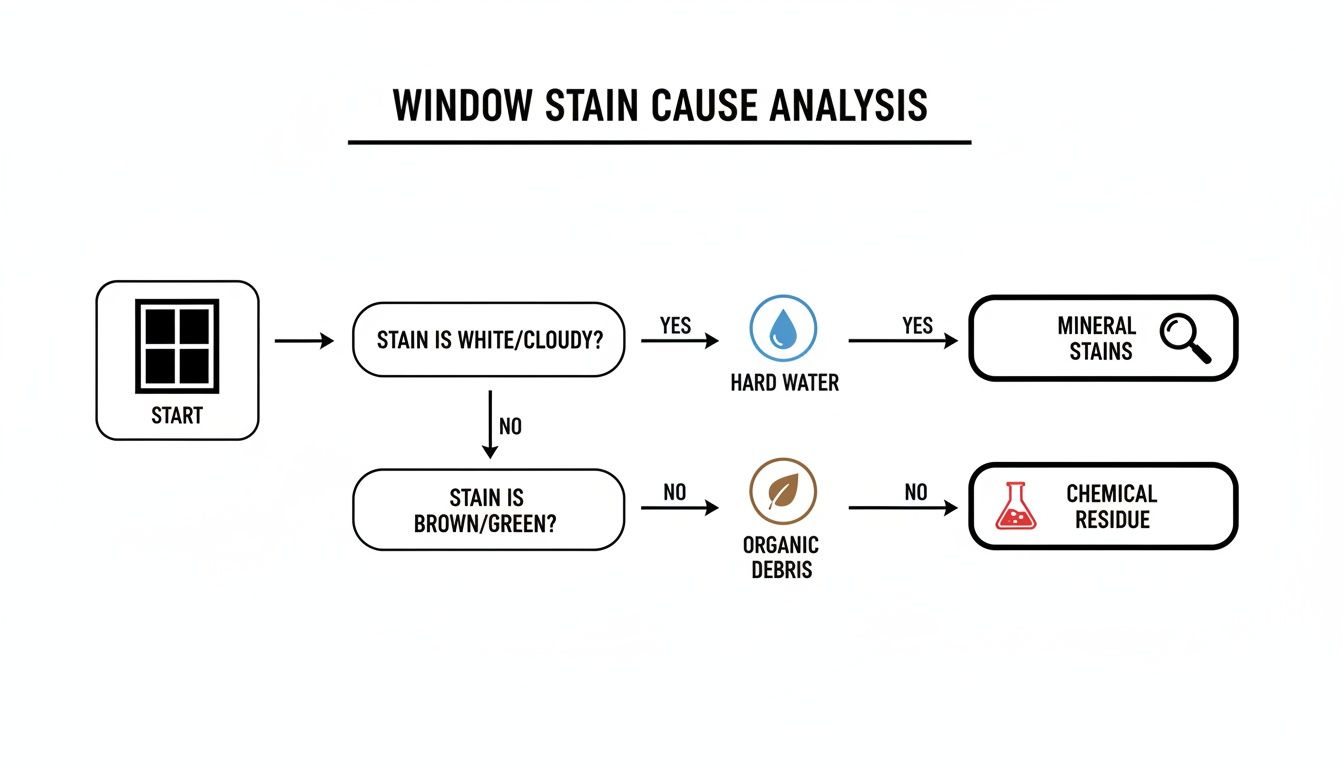
As you can see, the culprit is almost always hard water, which is packed with minerals like calcium and magnesium that get left behind when the water evaporates.
Matching Your Stain to the Right Cleaning Method
Use this quick guide to identify your stain's severity and find the most effective and safest cleaning approach for your windows.
| Stain Severity Level | Visual Characteristics | Recommended DIY Method | When to Call a Professional |
|---|---|---|---|
| Light (Stage 1) | Faint, cloudy spots, often from recent sprinkler overspray. Can be felt with a fingernail. | Vinegar and water solution; specialized non-abrasive cleaners. | If stains cover a large, hard-to-reach area or don't come off with gentle methods. |
| Moderate (Stage 1) | Obvious white or chalky buildup. Gritty texture is very noticeable. | Commercial hard water stain remover; clay bar for stubborn spots. | When DIY methods fail or you're dealing with sensitive glass (like tempered or coated). |
| Severe (Stage 2) | Stain is visible, but the glass surface feels smooth. Appears milky or etched. | Polishing compounds are the last resort for DIY, but carry high risk. | Immediately. Stage 2 damage requires professional glass polishing or restoration. |
This table should help you avoid a lot of frustration. Starting with the right game plan makes all the difference between sparkling windows and a scratched-up mess.
Know Your Glass: Not All Windows Are the Same
Just as crucial as understanding the stain is knowing what type of glass you're working with. Using the wrong tool or chemical on specialty glass can cause irreversible damage in seconds.
- Standard (Annealed) Glass: This is the old-school, basic glass you'll find in most older homes. It's pretty tough but can still be scratched if you're not careful.
- Tempered Glass: You'll find this on patio doors and low windows where safety is a concern. Look for a tiny, sandblasted "tempered" label in a corner. This glass scratches incredibly easily, so stay away from anything abrasive. Seriously.
- Coated (Low-E) Glass: Many modern, energy-efficient windows have an invisible metallic Low-E coating to reflect heat. Harsh chemicals or scrubbing can strip this coating right off, ruining the window's performance.
My Two Cents: If you can’t find a label or aren’t sure what kind of glass you have, always treat it like it's the most delicate type. Start with the gentlest cleaning method and only move to something stronger if you have to. A little patience upfront can save you from a very expensive mistake.
Your Toolkit for Tackling Water Stains
Alright, you've figured out what kind of hard water stains you’re up against. Now it's time to gather the right tools for the job. Trying to scrub away mineral deposits without the proper gear is a recipe for frustration and can even damage your glass.
We'll walk through four proven methods, starting with the gentlest and moving up to the heavy hitters for those really stubborn, baked-on spots.
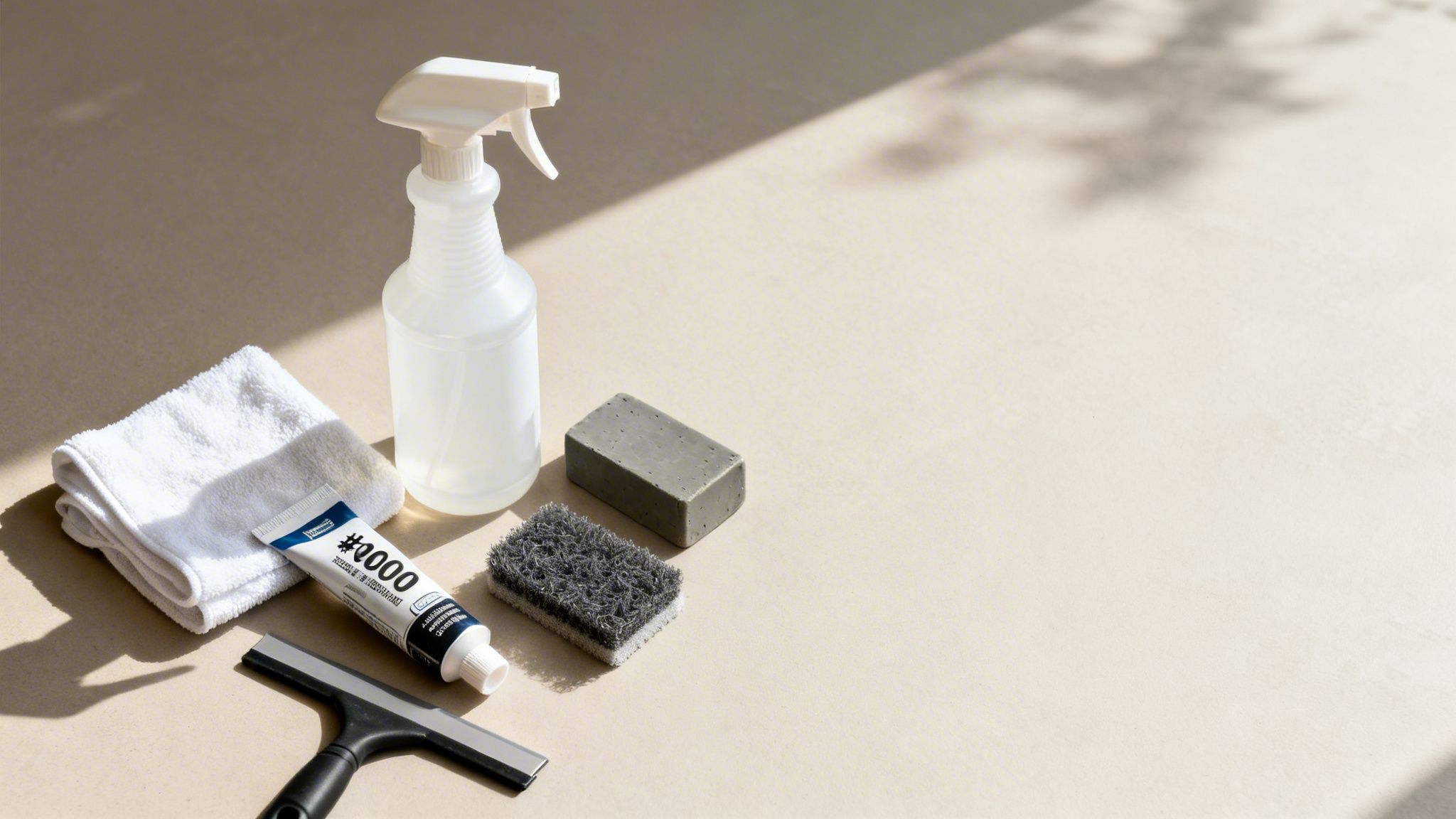
Think of it as a ladder—you always want to start on the lowest rung and only climb higher if you absolutely need to. This approach protects your windows and saves you time.
For Light Stains: The Classic Vinegar Solution
If you’re dealing with fresh spots or light mineral haze (Stage 1), your pantry probably holds the answer. Simple distilled white vinegar is a fantastic, gentle acid that’s perfect for dissolving the alkaline minerals like calcium and magnesium that cause hard water stains.
Here’s the game plan:
- Create your mix: Grab a spray bottle and fill it with equal parts distilled white vinegar and distilled water. It's really important to use distilled water here—using tap water just adds more minerals back onto the glass you're trying to clean.
- Spray and soak: Really saturate the stained area. Don’t be shy with it. Let the solution sit and work its magic for at least 10-15 minutes. This gives the vinegar time to break down those mineral bonds.
- Scrub and dry: After the soak, give the area a gentle scrub with a microfiber cloth or a non-abrasive sponge. Rinse it all off with clean water, then dry it completely with a squeegee or a fresh, dry towel.
My Go-To Trick: For a really persistent spot, I'll soak a few paper towels in the vinegar solution and stick them right onto the glass. Leave them there for up to an hour. The constant contact really helps dissolve the toughest deposits before you scrub.
For Moderate Buildup: Bring in the Commercial Cleaners
When your vinegar mix just isn't cutting it, it’s time to call in some backup. Commercial-grade limescale removers, like CLR or Lime-A-Way, are formulated with stronger acids designed specifically for this kind of job. They can power through heavier buildup much more effectively than a DIY solution.
A word of caution, though: this stuff is powerful. Always read the label and wear protective gloves and eyewear. I also make it a rule to test any new chemical on a small, hidden corner of the glass and frame first. You want to be sure it won’t cause any discoloration or damage before you spray it all over your window.
For Gritty Deposits: The Clay Bar Method
Ever run your hand over a stain and feel a rough, gritty texture? Before you reach for something that might scratch, let me introduce you to a secret weapon from the auto detailing world: the clay bar.
Detailing clay is made to safely pull embedded gunk off a car’s paint without scratching, and it works wonders on glass, too.
You’ll need the clay bar and a lubricant—a spray bottle with water and just a few drops of car soap is perfect. Spray the glass down with the lubricant and then glide the clay bar across the stain with light pressure. At first, you’ll feel it snagging on the mineral deposits. As you work, it will start to move smoothly. That’s how you know it’s working. Just wipe away the residue for a perfectly smooth finish.
Having the right equipment on hand makes all the difference. You can see what the pros use by checking out some of the best window cleaning tools available.
For the Toughest Stains: #0000 Steel Wool
For those ancient, caked-on stains that have resisted everything else, there is one last DIY option. This involves a combination of #0000 steel wool and a mild polishing compound.
Now, this is critical: you must use #0000 grade (quadruple-ought) steel wool. Anything coarser will leave you with a window full of scratches. This method is also a hard no for tempered or coated glass, as it will ruin the finish.
Dab a little polishing compound onto the steel wool, and then gently—and I mean gently—scrub the stain in small circles. The compound acts as both a lubricant and a fine abrasive, while the steel wool lifts the deposits. This is truly a last resort before calling a professional.
Of course, once the stains are gone, you'll want to keep them away. Mastering the fundamentals is key to achieving a streak-free shine on your windows every time.
How to Prevent Future Water Stains
After spending all that time and effort getting your windows crystal clear, the last thing you want is for those stubborn, chalky spots to come right back. Keeping them gone for good is all about prevention, especially here in sunny Arizona where hard water is a constant battle. A few simple tweaks to your routine and home setup can make all the difference.
The number one offender? Your sprinklers. Seriously, take a minute to watch your irrigation system run. If your window panes are getting a daily shower, that’s your problem right there. Adjust the heads or install deflectors to aim the water where it belongs—on your lawn, not your glass. This one small fix can solve the biggest source of your hard water headaches.
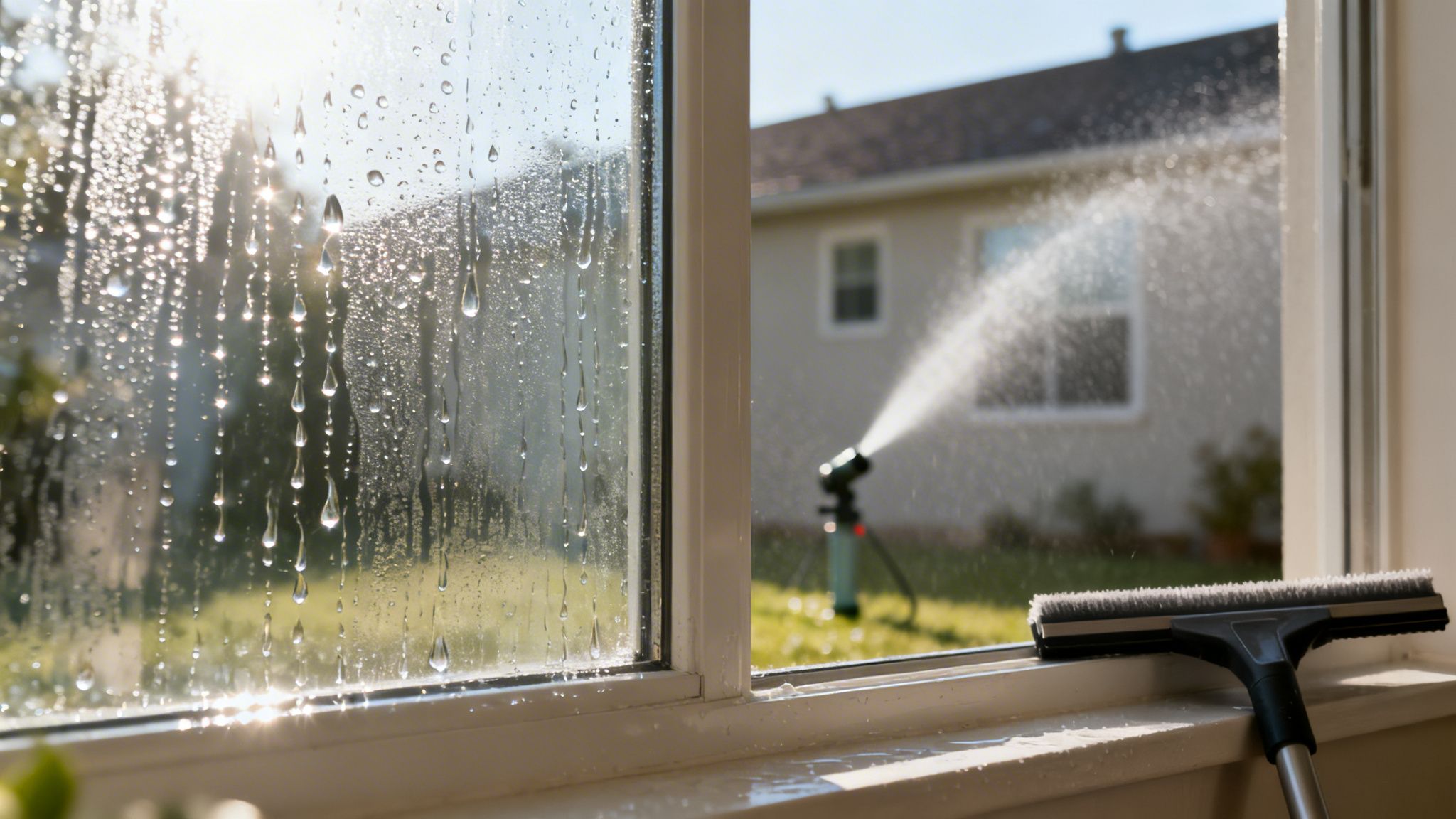
It's also smart to be mindful of overspray whenever you’re using a hose, like after washing your car or rinsing down the patio. Just grab a squeegee and give any affected windows a quick wipe. This removes the mineral-loaded water before the intense Arizona sun has a chance to bake it on.
Adopt Proactive Maintenance Habits
Building prevention into your regular cleaning schedule is your best bet. A little effort now is way easier than hours of heavy-duty scrubbing down the road.
- Rinse Regularly: Get a garden sprayer and fill it with distilled water for a monthly rinse. Since distilled water contains zero minerals, it washes away dust and grime without leaving a single new spot behind.
- Apply a Hydrophobic Sealant: A good glass sealant, like Rain-X, works wonders. It creates an invisible coating that causes water to bead up and roll right off the surface, taking all those pesky minerals with it. You'll see a huge reduction in spotting.
These kinds of proactive steps are becoming a big part of modern home care. In Arizona, where 85% of the water is hard, those untreated stains can permanently etch into glass at a rate of 2-3 microns per year. Over time, this can shorten a window's lifespan by as much as 20%. It’s why so many professionals are shifting to eco-friendly, biodegradable solutions that break down mineral buildup without harsh chemicals. If you’re curious, you can discover more insights about cleaning industry statistics to see how big this trend is becoming.
Consider a Long-Term Solution
If you’re looking for a more permanent fix that really gets to the core of the issue, think about installing a whole-house water softener. It’s a game-changer. By filtering out minerals like calcium and magnesium right at the source, you’re not just protecting your windows—you’re also saving your pipes, faucets, and appliances from buildup.
Expert Takeaway: A water softener tackles the root of the problem. It means the water hitting your windows from sprinklers or hoses already has a dramatically lower mineral content, making stain formation much less likely.
When to Call a Professional Window Cleaner
You’ve tried the vinegar, you’ve scrubbed with steel wool, and maybe you even broke out the clay bar. But those stubborn water stains are still staring back at you. What now?
Sometimes, the best tool you have is your phone. Knowing when to throw in the towel and call a professional is a critical skill, especially when you risk doing permanent damage to your glass.
If you’ve run through all the DIY methods we've covered and the stains haven’t budged, that’s a clear sign you’re likely dealing with Stage 2 damage. This isn't just mineral buildup sitting on the surface anymore. The minerals have started to corrode and etch into the glass itself. At this stage, more elbow grease is just going to lead to scratches.
Situations That Demand an Expert
Stubborn stains are one thing, but there are a few other scenarios where calling a pro is the smartest—and safest—move you can make. It’s all about weighing the risks against the cost of a service.
It’s probably time to bring in an expert when you’re facing:
- Hard-to-Reach Windows: Are the problem windows on the second story? Or in an awkward spot over a sloped roof? Professional cleaners have the ladders, safety harnesses, and training to handle these heights without risking a trip to the emergency room.
- Specialty Glass: If you have tempered, tinted, or low-E coated glass, stepping back is the right call. The wrong chemical or abrasive can instantly strip a coating or cover the glass in thousands of tiny scratches, ruining it for good.
- Widespread, Severe Staining: When every window on your house is covered in a thick layer of mineral deposits, a professional team can do in a few hours what might take you several weekends. And honestly, their results will be much better.
Professional window cleaners have access to tools and techniques you just can't get at the hardware store. We're talking about pure water filtration systems that leave a truly spot-free shine and industrial-grade polishing compounds that can gently buff out etching without scratching the glass.
The Professional Advantage in Phoenix
Here in Phoenix, the relentless sun acts like a kiln, baking hard water minerals directly onto your windows. A simple spot can become a serious problem much faster than in milder climates.
The risk of accidentally damaging your glass here is just plain higher. Professionals don't just have better equipment; we understand how the Arizona climate affects different types of glass. Understanding the value of professional help is a key step; you can learn more about knowing when to call a professional window washing company to make an informed decision.
Ultimately, if you’re unsure, or the job just feels too big or too risky, don’t hesitate. Investing in a professional service is about more than just getting clean windows—it’s about protecting your home’s value and ensuring the job is done right the first time.
Answering Your Top Questions About Water Stain Removal
Even with a detailed guide, a few questions always pop up when you're dealing with stubborn water stains. It's a common headache, especially around here, and I've heard just about every question in the book. Let's tackle some of the most frequent ones so you can get the job done right.
Think of this as the part of the conversation where we dig into the nitty-gritty, real-world problems that come up after you've tried the basics.
"Can I Just Scrape Off Tough Spots With a Razor Blade?"
I'm going to give you a hard "no" on this one. It's tempting, I get it—you see a crusted-on white spot and think a blade will pop it right off. But the risk of putting a permanent, deep scratch in your window is incredibly high. This is a nightmare scenario, especially on tempered glass (which scratches surprisingly easily) or any window with a special low-E coating.
A much smarter, safer bet for those really gritty deposits is a piece of #0000 steel wool (that's "quadruple-aught," the finest grade you can get) paired with a good polishing compound. A detailing clay bar can also work wonders. These tools are designed to grab and lift contaminants off the surface without digging into the glass itself.
Pro Tip: Honestly, if a stain is so bad you're reaching for a razor, that's a huge red flag. It tells me the problem has likely gone beyond a simple DIY fix. That level of buildup almost always needs professional-grade polishing to be removed without causing damage.
"Why Didn't the Vinegar Solution Do Anything?"
If your vinegar and water mix didn't touch the stains, don't feel bad. It doesn't mean you failed. A simple vinegar solution is a mild acid, which is great for dissolving fresh, light mineral spots that are just sitting on the surface of the glass—what we call Stage 1 damage.
But when those stains have been baked onto the window for weeks or months by that intense Arizona sun, something else happens. The minerals begin to chemically bond with the silica in the glass, essentially etching themselves into the surface. This is Stage 2 damage. At that point, a mild acidic solution just doesn't have the chemical muscle to break that bond. You’ll need to step up your game to a stronger commercial cleaner or bring in a pro.
"How Often Should I Have My Windows Professionally Cleaned?"
This is a fantastic question, and the right answer really depends on your specific situation. Here in a place like Phoenix, with our hard water and relentless sun, I recommend getting the exterior professionally cleaned at least twice a year.
- A spring cleaning gets rid of all the dust and grime from the winter.
- A fall cleaning is crucial for tackling the buildup left behind by our summer heat and monsoon storms.
Now, if your windows are getting hammered by sprinklers on a daily basis, you should seriously consider a quarterly service. Paying for regular maintenance is far cheaper than paying for a full-blown restoration project to remove etched-in stains later.
"Are Those Commercial Stain Removers Safe for My Window Frames?"
You're right to be cautious. Many of the heavy-duty commercial stain removers contain some pretty potent chemicals. These can easily discolor or even damage vinyl, wood, or painted frames. And you also have to think about your landscaping—the runoff can be harmful to nearby plants.
Before you start spraying, always read the product label and test it on a small, hidden spot on the frame. When you're rinsing the glass, pay close attention to where that water is flowing. This is one of those areas where pros have a real advantage; we're trained to apply and neutralize these products carefully, making sure we protect all the surrounding surfaces from any collateral damage.
When your best DIY efforts just aren't cutting it, the experienced crew at Sparkle Tech Window Washing is here to help. We have the professional-grade tools and the right expertise to safely eliminate even the most difficult hard water stains. Contact us today for a free estimate!