



You wash the windows, sweep the entry, and step back to look at the house. Then your eyes go straight to the gutters. The white metal is streaked, the front run has dark vertical lines, and the whole roofline makes the place look tired even when everything else is clean.
That’s why cleaning outside of gutters matters more than most homeowners realize. It’s not just about appearance. Those stains often show up on systems that also need closer inspection for clogs, poor drainage, or overflow marks. The outside surface can tell you a lot about what’s happening inside the channel and at the downspouts.
Why Your Gutter Exteriors Matter More Than You Think
Dirty gutter faces pull attention away from the rest of the house. On a light-colored home, they’re one of the first maintenance issues people notice from the street. Black streaks, algae film, roof runoff marks, and hard water residue make a home look older than it is.

Exterior stains are often a warning sign
A filthy gutter exterior doesn’t always mean the inside is clogged, but it often means water has been moving where it shouldn’t. Overflow leaves telltale trails. Splashback can stain fascia and siding. Mineral deposits can form where water repeatedly drips from seams or downspout joints.
That’s where the practical side matters. Over 50% of residential water damage claims originate from improper exterior water management, with clogged gutters being a primary culprit, and the average water damage claim from gutter neglect can range from $11,605 to $14,000 according to these gutter statistics. Cleaning the outside of gutters won’t solve every drainage issue by itself, but it often reveals where a bigger problem is starting.
Practical rule: If a gutter face is heavily striped below one section, check that section for overflow, poor pitch, or a partially blocked outlet before you focus on cosmetics.
Clean exteriors support the whole drainage system
Homeowners sometimes treat exterior gutter cleaning like detailing a car. It’s nice to have, but optional. In practice, it’s closer to a visual inspection step. A clean surface makes leaks, fastener issues, seam failure, and repeat runoff patterns easier to spot.
If you’re reviewing how water leaves the roof altogether, this homeowner's guide to scuppers and downspouts is a useful reference. It helps connect the gutter face you can see from the ground with the drainage components that move water away from the structure.
A clean gutter line improves curb appeal. Beyond aesthetics, it gives you a clearer read on the condition of the system that protects the house.
Assembling Your Professional-Grade Cleaning Toolkit
You don’t need a truck full of gear to clean gutter exteriors well. You do need the right gear. The wrong brush, the wrong ladder setup, or the wrong footwear turns a simple maintenance job into a scratched finish or a bad fall.

The tools that actually help
For exterior faces, the core setup is simple:
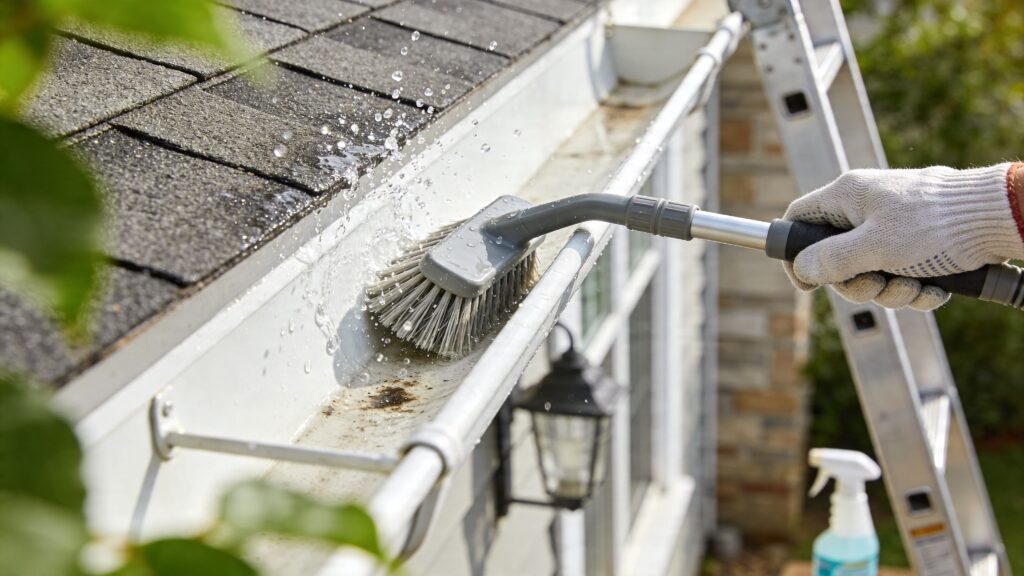
- Extension pole with a soft-bristled brush: This is your main tool. Use a brush soft enough for painted aluminum and coated metal. Exterior cleaning is about loosening grime without grinding the finish.
- Pump sprayer or soft wash applicator: You want controlled application, not a blast. A pump sprayer lets you wet the stain evenly and hold cleaner where it needs to dwell.
- Garden hose with adjustable nozzle: A steady rinse matters more than brute force. You need enough flow to flush residue away, not enough pressure to scar the gutter.
- Microfiber cloths or non-abrasive pads: These are useful for touch-up work around miters, seams, and areas near entryways where you want a better cosmetic finish.
- Gloves and safety goggles: Cleaners drift. Splashback happens. Eye protection isn’t optional.
The gear that protects you
A basic ladder isn’t the same as a safe ladder setup. If you have to work from height, use stabilizers so the ladder isn’t pressing hard against the gutter itself. That protects both the worker and the gutter lip.
Your shoes matter too. Non-slip footwear is part of the job, especially around wet concrete, decorative rock, or damp soil near planting beds. In Arizona, many homes also have surfaces that get slick fast when overspray hits dust-coated hardscape.
Don’t lean a ladder directly into a weak gutter face and assume it will hold. Gutters are drainage components, not structural supports.
What not to borrow from interior clean-out work
Homeowners often mix up interior gutter cleaning tools with exterior cleaning tools. A scoop, trowel, or debris grabber is useful inside the channel. It’s not what you want rubbing across the visible face of the gutter.
For exterior work, avoid:
- Metal brushes: They can remove finish and leave visible scratch patterns.
- Aggressive scouring pads: They often create dull spots that stand out worse than the original stain.
- Pressure washer tips used at close range: They can stripe the surface in a different way.
If your system also has covers or guards, this guide on how to clean gutters with gutter guards helps with the access side of the job. Exterior cleaning is easier when you understand how the full assembly is built.
A pro’s toolkit isn’t about owning more tools. It’s about using tools that match the surface.
Matching the Cleaner to the Gutter Stain
The biggest mistake in cleaning outside of gutters is treating every stain like the same problem. Dust, mildew, tiger stripes, and mineral residue don’t respond the same way. If you use one cleaner for all of them, you’ll either waste time or damage the finish trying to force a result.

General dust and road grime
This is the easy category. If the gutter face just looks dull, dusty, or lightly soiled, start with the least aggressive option. Warm water, mild dish soap, and a soft brush or microfiber mitt usually handle surface film well.
Use this approach when the gutter still has an even color underneath the dirt. If the stain lightens quickly with a test spot, stay with the mild cleaner. There’s no reason to escalate.
Mildew and organic staining
Shaded sides of the house can grow green or dark biological film, especially where roof runoff keeps the area damp longer. Organic staining needs chemistry that breaks down growth, not just friction.
For heavier buildup, professionals often use a bleach-based solution of 34 oz of 7.5% bleach per gallon of water, applied until dripping and agitated with a soft brush before rinsing as shown in this professional cleaning demonstration. The key is control. Apply it to the gutter, let it dwell for several minutes, don’t let it fully dry, then brush and rinse.
This works because the solution loosens biological residue while the soft brush lifts it without digging into the finish.
If mildew is the problem, scrubbing harder usually isn’t the answer. Let the cleaner work first, then use light agitation.
Tiger stripes and oxidation marks
These are the dark vertical lines homeowners hate. They usually don’t come off with soap alone because they’re not just loose dirt sitting on the surface. They’re bonded runoff stains and oxidation-related residue on the outer face.
People often run into trouble when they use abrasive pads and harsh scrapers. You can remove the streak and leave a permanent dull patch around it. That’s a bad trade.
A non-abrasive cleaner made for oxidation and gutter brightening is the right fit here. Test a small hidden area first. Work one short section at a time. Keep the brush soft, and rinse thoroughly so cleaner doesn’t sit on the finish or nearby trim.
Mineral deposits and Arizona hard water residue
Arizona homes have their own version of gutter staining. Mineral-heavy water leaves chalky or crusted residue that doesn’t behave like mildew or normal grime. It often shows up near seams, elbows, drip points, and anywhere monsoon runoff or irrigation overspray repeatedly hits the same area.
For residential properties in Arizona’s arid climate with seasonal dust, mineral-heavy water can create stubborn alkaline residue buildup on gutter exteriors, requiring specific acidic cleaners and thorough rinsing to prevent streaking, as noted in this guidance on cleaning methods and residue issues.
That means the cleaner has to match the deposit. Mild acidic products can break mineral residue better than soap or bleach. But they need careful rinsing. If you leave acidic cleaner on a hot gutter face, you can trade one stain for another.
Gutter stain cleaning solutions
| Stain Type | Recommended Solution | Application Notes |
|---|---|---|
| General dirt and dust | Mild dish soap and water | Apply with soft brush or microfiber mitt, then rinse well |
| Mildew or algae | Controlled bleach-based mix | Apply to dry surface, allow short dwell time, agitate gently, do not let it dry fully |
| Tiger stripes | Non-abrasive oxidation or gutter brightening cleaner | Spot test first, work in short sections, avoid abrasive pads |
| Mineral deposits | Mild acidic cleaner suited to alkaline residue | Rinse thoroughly and avoid leaving product on hot metal |
The cleaner should fit the stain, the finish, and the weather conditions that day. That’s the difference between a gutter that looks restored and one that looks damaged.
The Safe and Effective Gutter Washing Method
Technique matters as much as product choice. A good method prevents streaking, protects the finish, and keeps runoff from creating a bigger mess on siding, trim, stone, or landscaping.

Prep the area before you spray anything
Start by moving patio furniture, potted plants, and decorative items out of the splash zone. Pre-wet nearby siding and the ground below if you’re using any stronger cleaner. That helps limit spotting and reduces the chance of chemical residue clinging where you don’t want it.
Inspect the gutter face with dry eyes first. Look for chalky areas, deep black stripes, leaking seams, and oxidation. If one section is much worse than the rest, expect to treat it differently rather than washing the whole run with one mix.
Work in short sections
Don’t try to clean the full elevation in one pass. Divide the run into manageable sections. That gives you better dwell control and stops cleaner from drying before you can brush and rinse.
A practical sequence looks like this:
- Dry-brush loose dust first: This keeps you from turning light dirt into muddy runoff.
- Apply the cleaner evenly: Wet the stained area enough for full coverage, but don’t flood it.
- Let it dwell briefly: Several minutes is usually enough for stronger cleaners. Don’t let the surface bake dry.
- Agitate with a soft pole brush: Use overlapping strokes and light pressure.
- Rinse thoroughly: Flush from the upper portion downward so residue moves off the face cleanly.
Know when water alone is making things worse
On Arizona homes, plain rinse water can leave its own marks if you use too much and don’t finish with a proper flush. For residential properties in Arizona’s arid climate with seasonal dust, mineral-heavy water can create stubborn alkaline residue buildup on gutter exteriors, requiring specific acidic cleaners and thorough rinsing to prevent streaking. That’s why final rinse quality matters just as much as the scrub step.
If the gutter is hot from direct sun, slow down or wait for shade. Heat shortens dwell time and increases the chance of flash drying.
A visual walk-through helps if you want to see the physical rhythm of brush, rinse, and repositioning in action.
Pressure isn’t the same as cleaning power
A lot of homeowners assume a pressure washer will make gutter exteriors easier. Sometimes it removes loose dirt fast. It also pushes water behind trim, strips oxidation unevenly, and can leave visible lap marks if you’re too close to the surface.
Soft application plus agitation works better on visible gutter faces because the chemistry does the breakdown and the brush does the lifting. The rinse is there to carry residue away, not to blast the stain off through force alone.
Cleaners remove the bond. Brushes lift the residue. Rinse water finishes the job. If you skip one of those steps, the result usually looks patchy.
The best exterior gutter cleaning jobs don’t look aggressive while they’re happening. They look controlled.
Ladder Safety and Knowing When to Call a Pro
Exterior gutter cleaning seems simple until the ladder starts shifting, the ground slopes away from the wall, or you find yourself reaching sideways to hit one more section. That’s where routine maintenance turns into injury risk.
Non-negotiable ladder rules
If you’re climbing, keep your body centered between the rails. Don’t lean your hips outside the side rail to reach one extra foot. Reposition the ladder instead.
Keep three points of contact when moving up or down. Set the ladder on stable ground, and use stabilizers when the roofline, fascia shape, or gutter profile makes direct contact unsafe.
A few ground rules matter every time:
- Set up on firm footing: Decorative rock, wet soil, and uneven pavers create movement you may not notice until you’re already high.
- Stay off the top steps: You need a comfortable working position, not a balancing act.
- Watch the roof edge and electrical service lines: If access feels awkward, the job has already changed.
The injury risk is real
Ladder-related falls account for over 81,000 injuries annually in the US, with tasks like gutter cleaning being a significant contributor. In areas like the Phoenix Valley, two-story homes increase these risks, making professional services a safer alternative, according to this ladder safety discussion for gutter work.
That tracks with what happens on real houses. Two-story elevations, sloped side yards, tile roofs, and narrow side access all make exterior gutter work less forgiving than it looks from the driveway.
Some jobs aren’t DIY jobs because the cleaning is difficult. They aren’t DIY jobs because the access is bad.
When to stop and hire it out
A homeowner can often handle light exterior touch-up from the ground with an extension tool. But there are clear signs to call an insured crew instead:
- The home is two stories or the access side slopes away sharply
- The gutters run near solar equipment, power lines, or fragile roof materials
- The stains need stronger chemistry than basic soap and water
- The gutter line shows leak points, movement, or possible pitch problems
If you’re weighing that decision, it helps to compare what a dedicated window and gutter cleaning team is set up to handle versus what’s practical with homeowner equipment. Safety is part of the result.
Long-Term Maintenance and Special Considerations
The easiest gutter exteriors to clean are the ones that never get severely stained. Regular light maintenance beats occasional heavy restoration every time. That’s especially true in Arizona, where dust loads build gradually and monsoon season can leave fast runoff marks in a single storm cycle.
Set a realistic cleaning rhythm
Most homes benefit from routine attention once or twice a year, with more frequent checks if the property sits near trees or collects roof runoff debris heavily. If you want a broader scheduling reference, this article on how often gutters should be cleaned gives homeowners a useful planning baseline.
For local conditions, inspect before and after monsoon season. The inspection matters as much as the wash. Catching early striping, splash marks, and seam residue keeps you out of restoration territory.
For a seasonal planning resource focused on timing, this guide on when to clean out gutters can help align exterior cleaning with full system maintenance.
Homes with solar need extra caution
Solar changes the job. Runoff from gutter cleaning can reach the lower edge of rooftop panels, racking components, and wiring pathways if the work isn’t controlled. With Arizona’s solar boom, homeowners need to know that harsh gutter cleaning solutions like bleach can streak panels and void 25-year warranties, so using pH-neutral cleaners and sequenced rinsing is critical according to this rain gutter cleaning guidance.
That means a few practical adjustments:
- Use pH-neutral products near panel edges: Stronger chemistry may be fine elsewhere on the house but not beside solar.
- Rinse downward in a controlled path: Don’t let dirty runoff sheet across panel glass.
- Avoid overspray drift: Apply with a sprayer that gives control, not mist everywhere.
- Treat panel-adjacent gutter sections as precision work: Slow is better than aggressive.
Small habits that keep gutters looking clean longer
Exterior finish life improves when you avoid harsh abrasion and keep deposits from building layer over layer. A light wash on a manageable schedule protects appearance better than one hard scrub after years of neglect.
After cleaning, some homeowners like to wipe accessible lower sections with a non-abrasive finishing cloth for a sharper cosmetic result. That won’t replace proper washing, but it does improve the final look on front-facing elevations.
Frequently Asked Questions
Can I use a pressure washer for cleaning outside of gutters?
Usually, it’s not the first choice for visible gutter faces. Pressure can force dirty water behind trim, scar painted or coated finishes, and leave uneven clean marks. A soft brush, controlled cleaner application, and a standard hose rinse are safer on most residential gutters.
What’s the best cleaner for black streaks?
Black vertical streaks usually need something stronger than soap. Use a non-abrasive cleaner suited for oxidation or bonded runoff staining, and always test a small area first. Avoid metal brushes and harsh scrubbing because they can leave a permanent dull patch.
How often should I clean the outside of my gutters?
That depends on tree cover, roof runoff, dust, and weather exposure. In Arizona, a practical approach is to inspect before and after monsoon season and clean whenever early staining is easier to remove than deep buildup.
Is bleach safe on gutter exteriors?
It can be effective on organic staining when used in a controlled way, but it isn’t the right answer for every stain. It also requires careful handling, thorough rinsing, and extra caution around landscaping and nearby surfaces. If the home has solar panels, be much more careful with product choice.
What about second-story gutters?
Ground-based extension tools can handle light maintenance from below, but second-story work quickly becomes an access and safety problem. If the setup requires awkward ladder placement, stronger cleaners, or work near roof obstacles, hiring a professional is the smarter move.
Why do my gutters still look stained after I washed them?
Because not every mark is loose dirt. Tiger stripes, oxidation, and mineral buildup often need stain-specific chemistry and proper dwell time. Water and soap alone won’t always cut it.
If your gutters are stained, streaked, or hard to reach, Sparkle Tech Window Washing can help with safe, detail-focused exterior cleaning throughout Arizona. They’re a family-owned company based in the Phoenix Valley, fully insured and bonded, and equipped for residential exterior cleaning that protects both appearance and property.