



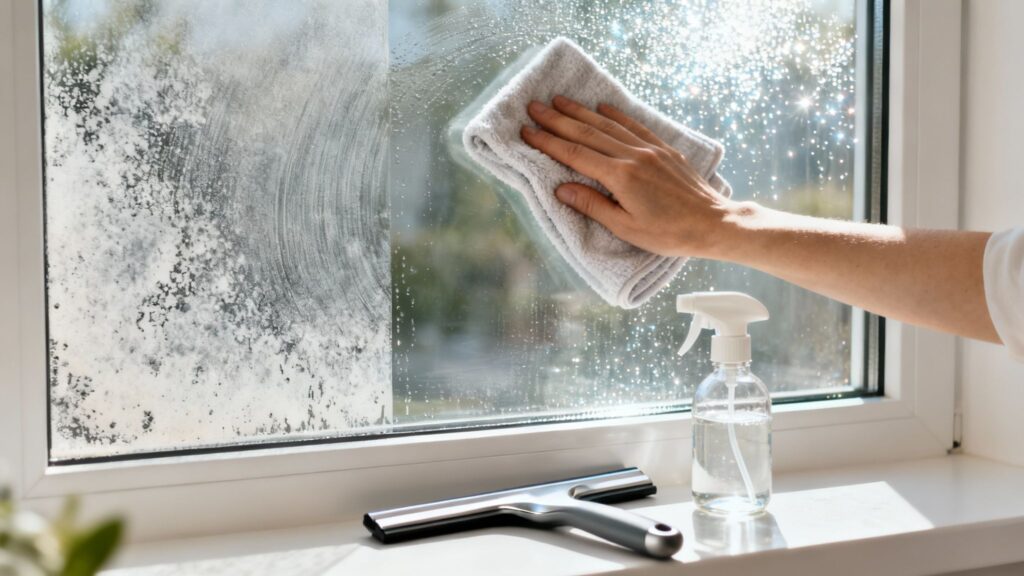
To get rid of those cloudy hard water spots on glass, you need to think less about scrubbing and more about chemistry. At its core, the process is about using a mild acid, like plain old vinegar or lemon juice, to dissolve the alkaline mineral deposits that water leaves behind as it evaporates.
For the really stubborn stuff, a gentle abrasive paste—something as simple as baking soda and water—can help lift the buildup without scratching up your glass. This simple chemical reaction is the secret to getting your windows and shower doors crystal clear again.
What Really Causes Those Stubborn Hard Water Stains
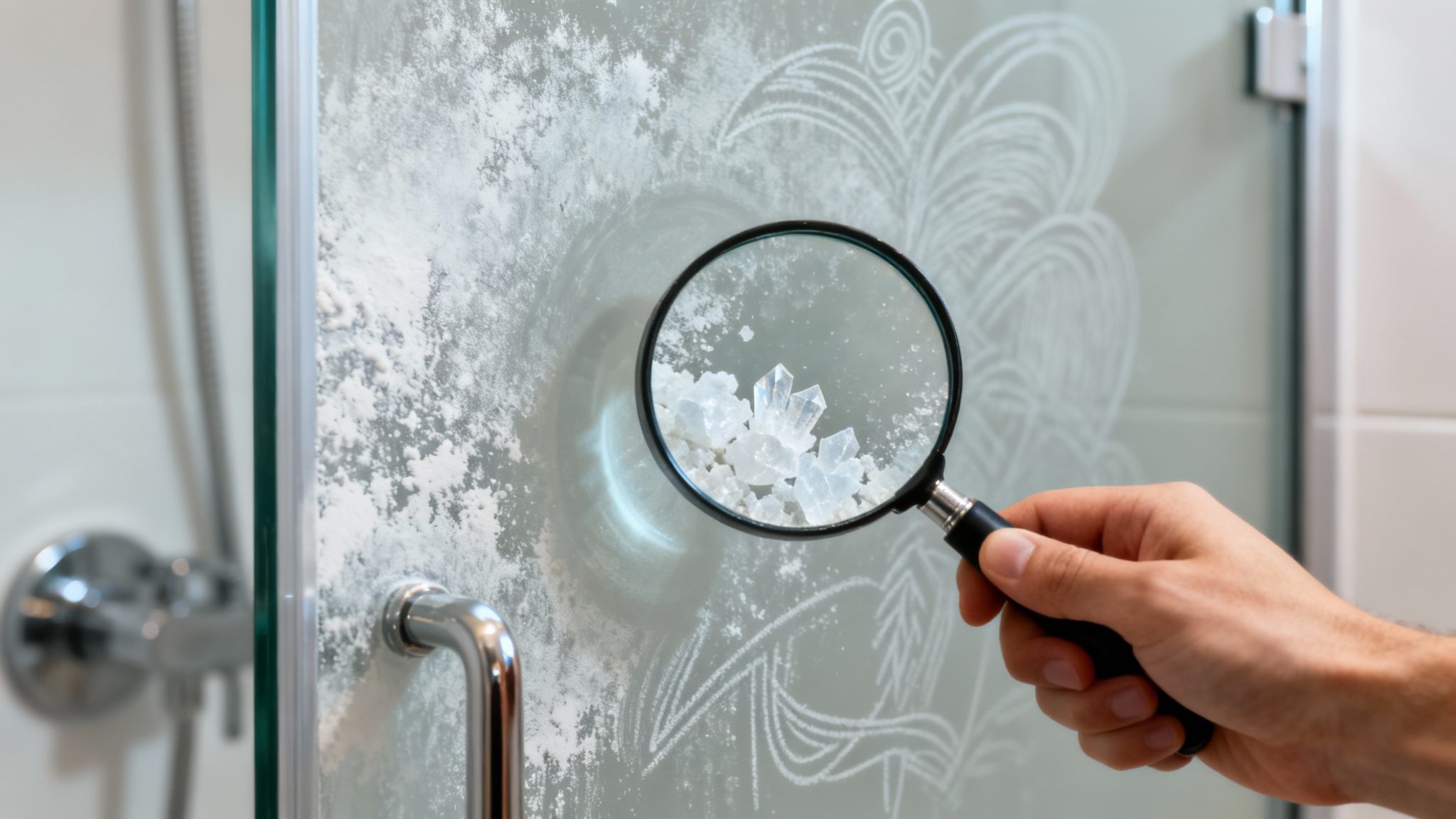
Before you reach for any old cleaner, it helps to know exactly what you’re fighting. Those frustrating, chalky spots aren't dirt. They’re mineral deposits—mostly calcium and magnesium carbonate—left on the glass after water has evaporated. This is precisely why your standard glass cleaner barely makes a dent.
It’s the same principle as the scaly buildup you find inside a tea kettle. The water boils off, but the minerals have nowhere to go. Every time a sprinkler hits a window or you finish a shower, that same process unfolds on a smaller scale, leaving a fresh layer of deposits.
The Science Behind the Stain
The chemistry here is actually pretty simple. Hard water is alkaline because of all those minerals dissolved in it. To break down those alkaline deposits, you just need to introduce an acid. This is why some of the most effective solutions are probably already in your kitchen pantry:
- Vinegar: The acetic acid in vinegar is fantastic at reacting with and breaking down calcium carbonate.
- Lemon Juice: Citric acid works in much the same way, but with a much more pleasant smell.
When you apply an acidic cleaner, you’re starting a chemical reaction that neutralizes the mineral bonds, making them easy to wipe away. Without that acid, you’re just physically trying to scrub off a solid mineral layer, which is exhausting and can even scratch your glass if you aren't careful.
Key Insight: Cleaning hard water spots isn't about muscle; it's about chemistry. Let an acidic solution do the hard work of dissolving the mineral buildup for you.
Why Some Stains Are Tougher Than Others
I've seen it all—some spots wipe away easily, while others feel like they're part of the glass. The difference usually comes down to two things: the mineral concentration in your local water and how long the stains have been sitting there.
Here in Phoenix, where my company Sparkle Tech Window Washing operates, we deal with this constantly. Our water hardness can exceed 15 grains per gallon (gpg), which is considered very hard. As cleaning industry experts note, this kind of water can demand up to 30% more labor time to get glass perfectly clean compared to jobs in soft water areas. You can read more about how water hardness affects professional cleaning over at jan-ex.com.
If you let those deposits sit for too long, they move beyond being a simple stain. The minerals can start to chemically bond with the glass itself, creating microscopic pits in a process called etching. Once glass is etched, the damage is permanent; it will look foggy or cloudy no matter how much you clean it. That’s why tackling hard water spots quickly is so important. It’s not just about aesthetics—it’s about preventing irreversible damage.
Not sure where to start? This table helps you quickly identify the severity of your hard water stains and points you toward the right cleaning strategy discussed in this guide.
Hard Water Spot Severity and Recommended Action
| Stain Severity Level | Visual Appearance | Recommended First Step |
|---|---|---|
| Mild (Stage 1) | Faint, cloudy spots visible only from certain angles or in direct sunlight. | DIY Vinegar or Lemon Juice Spray (Home Remedies section) |
| Moderate (Stage 2) | Clearly visible white, chalky spots that can be felt with a fingertip. | Baking Soda Paste or a specialized hard water cleaner. |
| Severe (Stage 3) | Thick, opaque, and crusty buildup; glass may look foggy or etched underneath. | Use caution with abrasives; consider calling a professional. |
Once you’ve identified where your stains fall, you can jump to the section with the best method for your situation. Trying the mildest effective option first is always the safest bet for your glass.
Getting Your Hard Water Cleaning Toolkit Ready
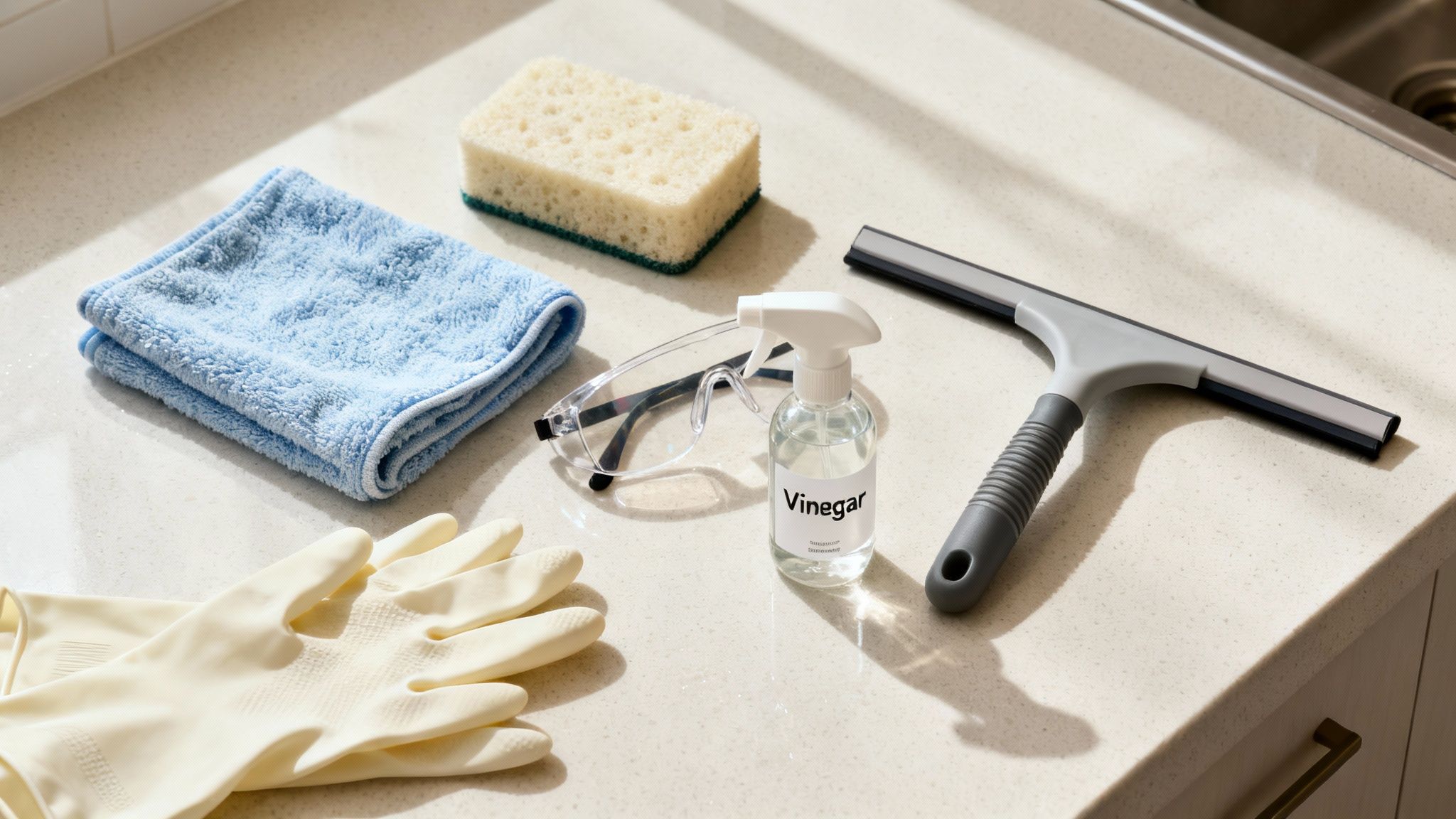
Before you even think about scrubbing, let’s talk about gear. Rushing into this job unprepared is a recipe for frustration and, worse, potentially scratched glass. A few minutes spent gathering the right tools will make the entire process smoother and a whole lot more effective. Think of it as your mission prep for a crystal-clear victory.
Having everything within arm's reach means you can work efficiently without stopping to hunt down a better cloth or the rinsing bottle. It lets you maintain a good workflow from dissolving the minerals to wiping them away cleanly.
Your Core Cleaning Arsenal
You don't need a truck full of specialized equipment to get started. In fact, most of the essentials are probably hiding under your sink right now. These are the must-haves for tackling those everyday hard water spots.
- Spray Bottles: Grab at least two. One will be for your cleaning solution (like a vinegar mix), and the other should be filled with plain water for rinsing. A quick label with a marker will save you from mixing them up.
- Microfiber Cloths: These are non-negotiable. Their unique texture is perfect for lifting away mineral residue and polishing the glass without leaving behind lint or streaks. Make sure you have a few clean, dry ones handy.
- Non-Abrasive Scrub Pad or Sponge: For those more stubborn spots that won’t budge, a gentle scrub sponge—the kind you’d trust on your non-stick pans—is perfect. Whatever you do, stay away from steel wool or gritty scouring pads. They will absolutely leave permanent scratches on your glass.
This basic setup is more than enough for most common hard water issues, especially if you catch the stains early. The trick is always to use tools that are tough on the mineral deposits but gentle on the glass itself.
The Tools That Really Make a Difference
Want to take your results from "pretty good" to "professionally clean"? A couple of extra tools can make all the difference. This is where you can really elevate your game and get that flawless finish.
A high-quality squeegee, for instance, is the single best investment for preventing new water spots while you clean. We dive deep into our favorites in our guide to the best window cleaning tools, where we share some pro-level insights.
My Two Cents: Don't cheap out on a squeegee. Look for one with a soft, pliable rubber blade. A good blade creates a perfect seal on the glass, whisking away every drop of water and dissolved minerals. That’s the real secret to a streak-free shine.
Don't Forget Your Safety Gear
Last but not least, look after yourself. Even when you're using simple household products like vinegar, a little protection goes a long way. It's an acid, after all, and can irritate your skin and eyes if you're not careful.
Your go-to safety kit is simple:
- Waterproof Gloves: Keep your hands from getting dry and irritated from the cleaning solutions.
- Safety Glasses: This is a no-brainer. It takes one stray splash to ruin your day, so pop on some protective eyewear.
Alright, with your toolkit ready, you’re fully prepared to face those hard water spots head-on. Let's get that glass looking brand new.
Your Go-To DIY Remedies for Hard Water Spots
Believe it or not, the best weapon against most light to moderate hard water stains is probably already in your kitchen. Before you even think about buying a specialized cleaner, a couple of household staples can work wonders by using a bit of gentle chemistry to dissolve that chalky mineral buildup.
These DIY methods are fantastic because they're not only cheap but also much safer to have around your family and pets. With a little bit of patience and the right approach, you can get your windows and shower doors crystal clear again using simple, everyday ingredients.
The Unbeatable Vinegar and Water Trick
There's a reason the classic fifty-fifty mix of white vinegar and water is the undisputed champion of DIY hard water removal—it just plain works. The acetic acid in vinegar is perfectly formulated to break down the alkaline mineral deposits, specifically the calcium and magnesium, that are clinging to your glass.
Getting started is simple. Just mix equal parts white vinegar and lukewarm water in a spray bottle. Using warmer water actually helps speed up the chemical reaction, giving your solution a little extra cleaning punch right from the get-go.
Now, spray the solution generously all over the glass, making sure you completely soak the stained areas. Here’s the most important part of the whole process: dwell time. Don't just spray and immediately wipe. You have to give the vinegar time to do its job.
Let that solution sit on the glass for at least 5 to 10 minutes. If you're tackling really stubborn spots on a vertical surface like a shower door, here's a great trick: soak a towel in your vinegar solution and press it right up against the glass. This keeps the area wet and lets the vinegar work continuously.
After you've let it sit, grab a non-abrasive sponge or a microfiber cloth and gently scrub the area in small circles. You should actually feel the mineral gunk starting to break loose. Finally, rinse the glass really well with clean water and dry it completely with a fresh microfiber cloth. For a truly perfect, streak-free finish, nothing beats a high-quality squeegee.
A Critical Pro Tip for Outdoor Glass
One of the biggest mistakes I see homeowners make is trying to clean their exterior windows in the middle of a hot, sunny day. When you do that, your cleaning solution evaporates almost instantly—long before the vinegar has a chance to dissolve anything.
Expert Advice: Always work on a cool, overcast day or at least in the shade. This one simple change prevents your vinegar solution from drying out, giving it the time it needs to break down even the toughest hard water spots. You'll get much better results with way less elbow grease.
This is especially true in sunny climates. Here in Arizona, for instance, where over 70% of households deal with hard water, this is the exact method the pros rely on. In fact, field tests have shown that a simple 1:1 vinegar solution, when allowed to sit for 5-10 minutes, can cut re-cleaning needs by as much as 50%. You can learn more about how water type impacts window cleaning and see why this technique is so effective.
When Vinegar Needs a Little Help
So what do you do when you run into a spot that just refuses to budge? Sometimes, the chemical reaction needs a bit of a physical boost. This is where baking soda becomes your best friend.
- Create a Gentle Abrasive Paste: Mix a small amount of baking soda with just enough water to form a thick paste. You're aiming for a consistency similar to toothpaste.
- Apply and Scrub: Using a damp cloth, apply the paste directly onto those stubborn spots and scrub gently. The mild abrasive quality of the baking soda helps lift the loosened minerals without scratching the glass.
- Rinse and Dry: Once the spot is gone, rinse the glass thoroughly to get all the paste residue off and then dry it completely.
This one-two punch combines the chemical dissolving power of the vinegar (if you use that first) with the physical scrubbing power of the baking soda. It's an incredibly effective combo for moderate hard water buildup.
Exploring Other Natural Acids
While vinegar is the most common go-to, it’s not the only trick up your sleeve. Another acid you probably have in your fridge can do the job just as well, and it often leaves behind a much more pleasant smell.
Using Lemon Juice for Hard Water Spots
- Fresh is Best: Freshly squeezed lemon juice is full of citric acid, which works exactly like vinegar's acetic acid to dissolve mineral deposits.
- Direct Application: You can put the juice in a spray bottle or just rub a cut lemon half directly over the affected areas.
- Let it Sit: Just like with vinegar, give the lemon juice a good 5-10 minutes to sit and break down the stains.
- Scrub and Rinse: Gently scrub with a soft sponge, then rinse and dry the glass completely.
The biggest advantage here is that lovely, clean scent it leaves behind, which makes it an excellent choice for indoor glass like shower doors. Whether you reach for the vinegar or a lemon, the principle is the same: let a mild, natural acid do all the heavy lifting for you.
When to Bring in the Heavy Hitters: Commercial Hard Water Removers
I'm a big fan of using vinegar and lemon juice for everyday cleaning, but let's be realistic. There are times when those simple home remedies just won't cut it. If you're dealing with hard water stains that have been building up for years—the kind that look almost etched into the glass—you’re going to need something stronger.
When you've tried the DIY route and that chalky, stubborn film is still clinging on for dear life, it's time to reach for a commercial hard water remover. These products are formulated specifically to break down heavy mineral deposits that simple acids can't dissolve.
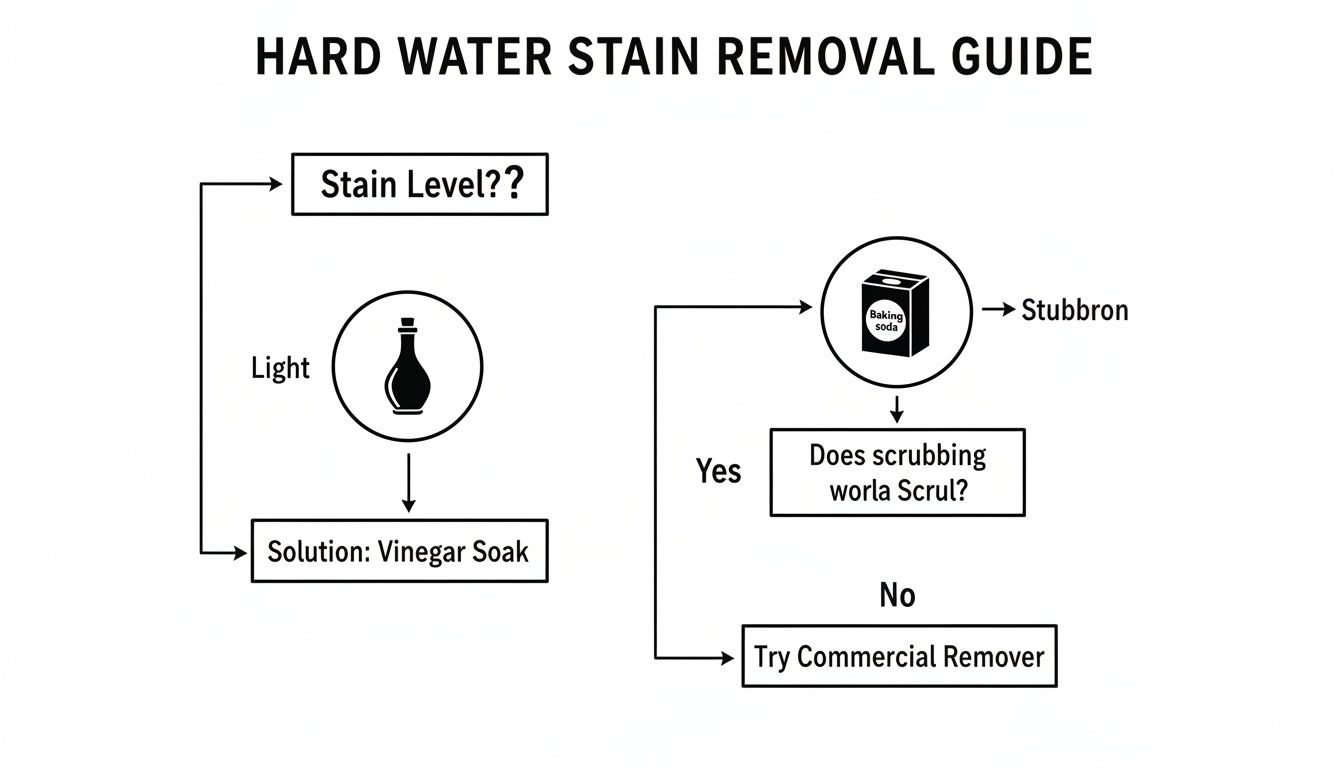
As you can see, the game plan is simple: start with the gentle stuff first. Only escalate to the more powerful commercial products if those initial attempts don't get the job done.
What to Look For on the Label
Navigating the cleaning aisle can feel overwhelming. To find the right product for cleaning hard water spots from glass, you need to know what you're looking for. Not all removers are created equal.
- Mild Acidic Cleaners: These are the next logical step up from vinegar. Look for ingredients like glycolic acid or sulfamic acid. They pack more of a punch than your kitchen staples but are still relatively safe for most glass surfaces when used as directed.
- Abrasive Compounds: For those really tough, crusted-on mineral layers, a mild abrasive cleaner can work wonders. These are usually pastes or creams that contain super-fine polishing agents to physically buff the stains away without scratching the glass.
- Specialty Chemical Removers: These are the last resort. Products with phosphoric or hydrochloric acid are incredibly effective but also come with serious risks. Handle these with extreme care and only after everything else has failed.
The market for these products is massive for a reason. The global glass cleaner industry, which is directly tied to fighting hard water, was valued at USD 3.29 billion and is expected to climb to USD 6.14 billion by 2033. North America alone makes up over 35% of that market, which tells you just how common this problem is.
Comparing DIY Remedies vs Commercial Cleaners
Deciding between a home remedy and a store-bought cleaner can be tricky. This quick comparison should help you weigh the pros and cons for your specific situation.
| Factor | DIY Home Remedies (Vinegar/Lemon) | Commercial Hard Water Removers |
|---|---|---|
| Effectiveness | Best for light to moderate stains; routine upkeep. | Highly effective on severe, long-term mineral buildup. |
| Cost | Very inexpensive; uses common household items. | More expensive, with prices varying by brand and strength. |
| Safety | Generally safe; non-toxic and food-safe. | Requires caution; use of gloves, glasses, and ventilation is a must. |
| Application Time | May need longer dwell times and multiple applications. | Often works faster with less scrubbing required. |
| Risk to Surfaces | Low risk to glass but can damage sensitive materials like stone or grout. | Can cause damage if used incorrectly or on the wrong surface. |
Ultimately, the best choice depends on the severity of your stains. For regular maintenance, stick with DIY. For a serious restoration project, a commercial product is likely your best bet.
Safety Isn't Optional with Strong Cleaners
The moment you switch from vinegar to a chemical cleaner, your approach to safety needs to change, too. These products work because they're powerful, and that power demands respect.
First things first: ventilation. Open every window you can and get a fan going. You do not want those fumes concentrating in a small space like a bathroom. Next, gear up. Waterproof gloves and safety glasses are non-negotiable. A small splash in the eye or on your skin can cause serious irritation.
Crucial Pro Tip: Never, ever mix cleaning chemicals. This is the cardinal sin of cleaning. Combining different products—especially anything with ammonia and bleach—can create toxic chlorine gas. If one product doesn't work, rinse the surface completely before you even think about trying another one.
Always Do a Spot Test First
Here's the single most important piece of advice I can give you when using a new commercial cleaner: do a spot test. I don't care what the label says or how many five-star reviews it has. You have to see how it reacts with your specific glass and surrounding materials.
Pick a small, hidden area—the bottom corner of a shower door is perfect. Apply a tiny amount of the product exactly as the instructions say. Let it sit, rinse it off, and dry it completely. Now, look closely. Check for any hazing, etching, or discoloration on the glass, window frames, or fixtures.
This simple five-minute check can prevent a disaster. It's a non-negotiable step for any professional, and it should be for you, too. To get a better feel for the types of products the pros trust, take a look at our guide on the essential chemicals for window cleaners. It provides a deeper dive into what makes a cleaner both effective and safe for professional use.
Cleaning Techniques for Different Glass Surfaces
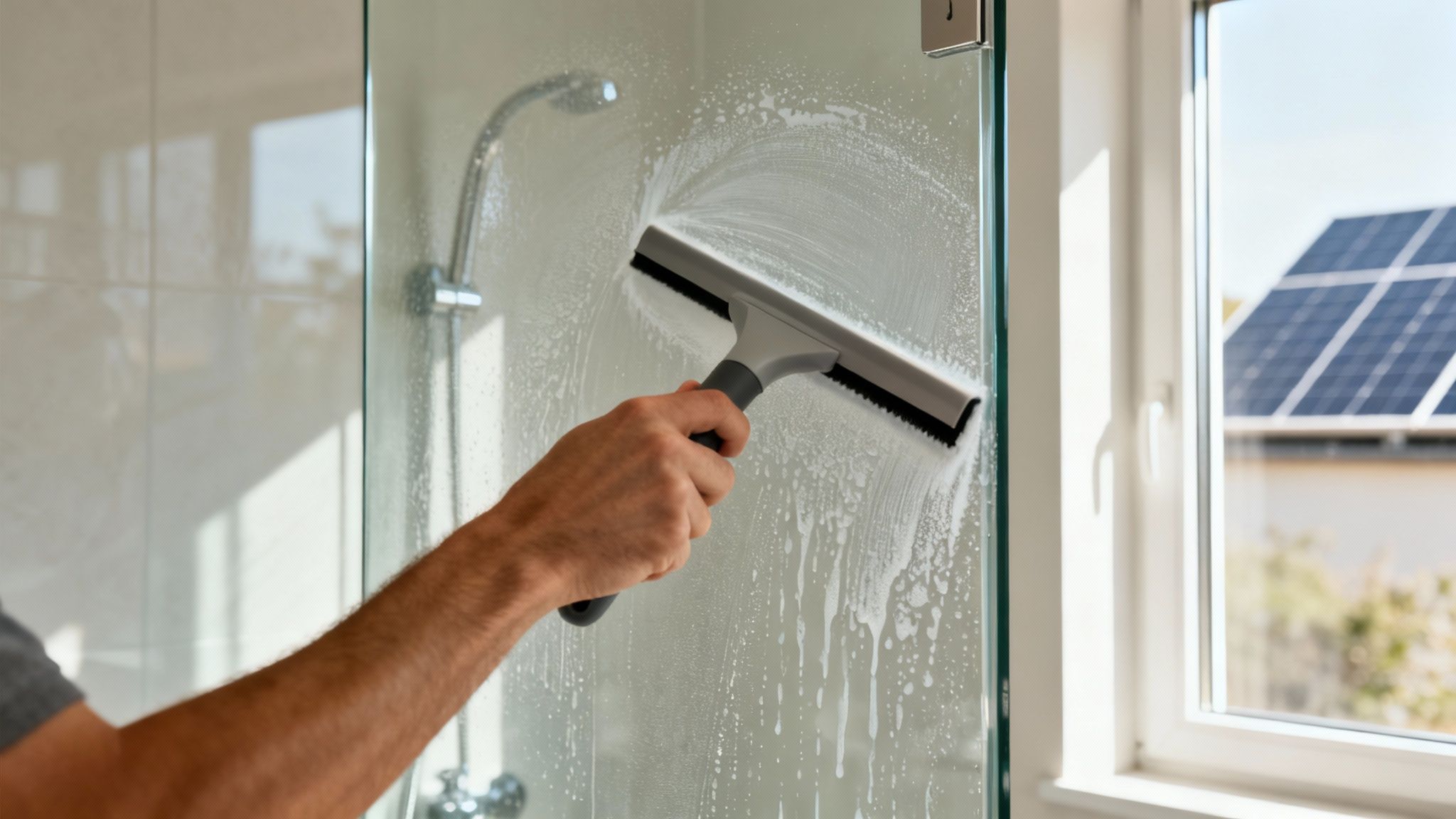
When you're trying to get rid of hard water spots, you quickly learn that it's not a one-size-fits-all problem. The trick that makes your shower door crystal clear might be a disaster for your expensive solar panels. Every piece of glass is different, from its coating and location to how it's exposed to the elements.
You've got to adapt your strategy to get the best results without accidentally causing damage. A shower door, for instance, means working in a tight, enclosed space where you need to protect tile and fixtures. Take that job outside to your windows, and suddenly you're battling direct sunlight and heat.
Mastering the Shower Door
Shower doors are ground zero for hard water stains. They get a daily dose of mineral-heavy water, and steamy, poorly ventilated bathrooms create the perfect breeding ground for that stubborn, cloudy buildup.
Before you even start, especially if you're using a stronger commercial cleaner, get some air moving. Crack a window or flip on the exhaust fan. A simple but crucial tip is to lay an old towel along the base of the shower door to catch any acidic runoff. This little bit of prep can save your grout or stone tile from getting discolored or etched.
Pro Tip: For those really baked-on spots, try making a thick paste of baking soda and water. After spraying the glass with vinegar, smear the paste on top. It’s thick enough to cling to the vertical surface, giving that gentle abrasive more time to break down the mineral deposits.
Tackling Exterior Windows and Railings
Taking the battle outside to your windows, glass railings, or pool fences introduces a new enemy: the sun. Cleaning glass in direct sunlight is a recipe for frustration. Your cleaning solution will evaporate almost instantly, leaving behind a streaky mess before it even has a chance to work.
Do yourself a favor and wait for a cool, overcast day, or at least work in the shade. If you have no choice but to work in the sun, you have to be methodical.
- Work in small, manageable sections.
- Spray, scrub, and immediately rinse one area.
- Squeegee it dry before you even think about moving on.
This stop-and-go method is the only way to prevent the cleaner from drying on the warm glass. I've found that glass pool fences are especially tough, as they get hit with both hard tap water from sprinklers and chemically treated splash-back from the pool.
The Delicate Nature of Solar Panels
Solar panels are in a league of their own and demand a gentle touch. The glass on these panels has special anti-reflective coatings that are vital for maximizing their efficiency. The wrong cleaner or a tool that's too aggressive can permanently scratch these coatings, slash your energy production, and could even void your warranty.
Never, ever use harsh abrasives, chemical solvents, or high-pressure washers on solar panels. For most routine cleaning, deionized water and a soft-bristle brush on an extension pole are all you need. If you're seeing serious hard water buildup that's hurting your panel's performance, this is one of those times to call in a pro who has the right equipment to clean them safely.
A Note on Automotive Glass
While the problem looks the same, your car's glass has its own set of rules. You're dealing with different types of coatings, laminated glass, and sensitive rubber trim. The basic principles of using mild acids still apply, but the application is a bit different. For a deep dive, this guide on how to remove water spots from windshield is a great resource.
How to Prevent Hard Water Spots from Coming Back
Alright, so you’ve put in the work to get your glass sparkling clean. Now, how do you keep it that way? The easiest stain to deal with is the one that never happens in the first place. A little proactive prevention will save you a ton of scrubbing down the road.
It’s all about shifting your mindset from a massive deep-cleaning project to a few simple, regular habits. This isn't about more hard work; it's about being smarter with your effort.
Adopt Simple Daily Habits
If I could recommend just one thing for preventing hard water spots on shower doors, it's this: get a high-quality squeegee and use it. Every single time.
Wiping the glass down after each shower takes less than 30 seconds. This simple act removes the water droplets before they have a chance to evaporate and leave those pesky mineral deposits behind.
Alternatively, you can keep a dedicated microfiber towel hanging nearby to do a quick dry-off. The goal is to stop the evaporation process, which is the direct cause of hard water stains.
By making a quick wipe-down a non-negotiable part of your routine, you can prevent 90% of future buildup from ever starting. It’s the highest return on investment for your time.
Consider a Long-Term Solution
For a more "set it and forget it" approach, you have to tackle the problem at its source—the water itself. If you're serious about stopping spots for good, it's worth looking into solutions that treat your home's water supply. A good place to start is with guides on choosing a whole house water softener system.
Water softeners remove minerals like calcium and magnesium right out of the water, so the water hitting your glass is already "soft" and won't leave deposits.
Another route is applying a hydrophobic coating to the glass. These treatments make the surface so slick that water beads up and rolls right off. You can get a better sense of how this works by reading about the difference between hydrophilic and hydrophobic glass.
Know When to Call a Professional
Sometimes, the problem is more than just a surface stain. If you've tried everything and the glass still looks cloudy or hazy, you might be dealing with etching. This is physical, permanent damage to the glass where the minerals have actually corroded the surface. It’s like a scratch, but on a microscopic level.
Unfortunately, once glass is etched, no amount of cleaning will fix it. That's when it's time to call in the pros. A team like Sparkle Tech Window Washing has specialized polishing compounds and equipment that can often restore the clarity of etched glass, saving you from a costly replacement.
Got Questions? We've Got Answers
When you're knee-deep in a hard water stain battle, a few questions always seem to come up. Getting the right information can save you a lot of time and potential heartache. Let's tackle some of the most common ones we hear from folks.
"Will Vinegar Actually Damage My Glass?"
This is probably the number one question we get, and it's a good one. The simple answer is no—the acetic acid in standard white vinegar isn't strong enough to harm the glass itself. It's a fantastic, safe cleaner for the glass surface.
The real concern is what's around the glass. Vinegar can be a problem for materials like marble, travertine, or certain types of grout. So, before you start spraying, just make sure to cover up those sensitive surrounding areas to avoid any accidental damage.
"What About My Tinted Windows? Are These Methods Safe?"
Hold on before you start scrubbing your tinted windows. This is where you need to be extra careful. Most window tint is a delicate film applied to the inside of the glass, and it's surprisingly easy to ruin.
- Always, always test first. Pick a tiny, hidden spot to try your cleaning solution before going all in.
- No abrasives. Ever. Ditch the scouring pads or anything that could scratch. A soft microfiber cloth is your best friend here.
- Go gentle. Start with a highly diluted vinegar solution. Harsh chemicals are a no-go.
Honestly, if you have expensive tinted windows, your safest bet is to check the manufacturer's care instructions first. One wrong move with a tint film can be a costly mistake to correct.
"I've Heard You Can Use Steel Wool on Glass. Is That True?"
This is a stubborn myth that needs busting. While it's true that some seasoned pros might use #0000 grade steel wool for very specific, delicate tasks, it's a huge risk for a DIY project.
It is incredibly easy to grab the wrong grade or just press a little too hard, leaving your beautiful glass covered in a web of fine, permanent scratches. For home use, it's just not worth the gamble. Stick with a quality non-scratch scrub pad; you'll get great results without the risk of ruining your window.
Sometimes, you've tried everything and those stubborn stains or deep etching just won't budge. That's when it's time to call for backup. Sparkle Tech Window Washing has the professional-grade tools and expertise to safely restore your glass to its former glory.