




Before you touch a single speck of paint on your windows, let's talk about gear. The difference between a quick, satisfying cleanup and a day of frustration (or worse, a scratched pane of glass) comes down to having the right tools on hand from the start.
For dried paint, your absolute best friend is a new single-edge razor blade. The trick is to hold it at a 45-degree angle on a well-lubricated surface. It's a simple technique, but when you pair it with the right prep, you get a perfect, scratch-free finish every time.
Gathering Your Tools For A Perfect Finish
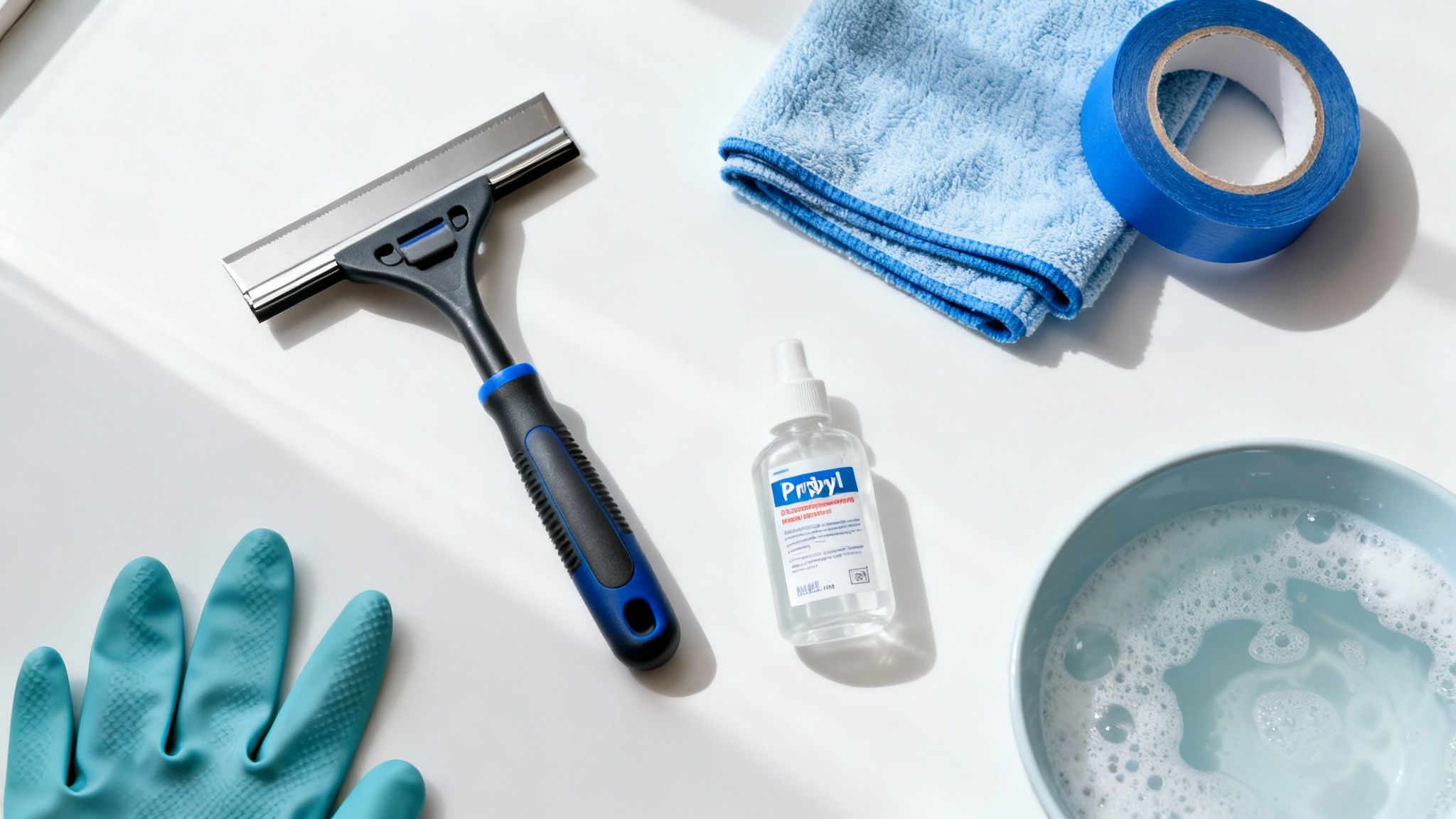
Think of this as your pre-flight checklist. Getting everything you need in one place before you start means no frantic searching for a cloth or tape while you’ve got a wet, messy window to deal with. A well-prepped workspace is a safe and efficient one.
The undisputed hero for this job is a sharp, new razor blade. Seriously, don't skimp here. Using an old, dull, or rusty blade is the fastest way to permanently scratch your glass. A fresh blade glides right over the surface, lifting the paint without digging in. For safety and better control, always use it with a quality scraper handle.
Essential Protection and Cleaning Supplies
Beyond the scraper, a few other items are non-negotiable. Grab a roll of painter’s tape to protect your delicate wood or vinyl window frames from accidental nicks or any solvents you might use. A drop cloth is also a must-have to shield sills and flooring from paint flecks and drips.
Your cleaning and lubrication arsenal should include:
- A spray bottle with soapy water: Just a few drops of dish soap in water is all you need. This creates the perfect, low-friction surface for scraping.
- Microfiber cloths: You'll want a few of these. They're amazing for wiping away paint residue and cleaning the glass without leaving lint behind.
- A bucket of clean water: This is perfect for rinsing your cloths as you go, keeping your whole operation clean and tidy.
For an even deeper dive into what the pros use, check out our guide on the best window cleaning tools.
Pro-Tip: Never, ever scrape on dry glass. That thin film of soapy water is the secret. It allows the razor blade to shear the paint off while floating just above the glass, which practically eliminates the risk of scratches.
Solvents for Stubborn Spots
Most of the time, a good scraper and some elbow grease will do the trick. But for those extra-stubborn spots, a solvent can be a lifesaver.
If you're dealing with cured latex paint, a cloth lightly dampened with isopropyl alcohol can work wonders to loosen its grip. For tough, old oil-based paint, mineral spirits are your go-to, but you have to be careful with them.
Always test any solvent on a small, hidden area of the frame first. You want to make sure it won’t cause any discoloration or damage to the finish or seals.
Paint Removal Tool and Supply Checklist
To make it even easier, here's a quick-reference table of everything you might need. Having these items ready will ensure the job goes smoothly from start to finish.
| Category | Essential Item | Pro-Tip for Best Results |
|---|---|---|
| Scraping | Single-Edge Razor Blades | Always start with a brand new blade to prevent scratches. |
| Scraping | Scraper Handle | Provides better leverage, control, and safety than holding a bare blade. |
| Protection | Painter's Tape | Apply to the window frame and sash to protect surfaces from the blade or solvents. |
| Protection | Drop Cloth | Catches paint flakes and drips, keeping your floors and sills clean. |
| Cleaning | Spray Bottle with Soapy Water | Use as a lubricant for scraping; a few drops of dish soap is perfect. |
| Cleaning | Microfiber Cloths | Ideal for wiping residue and buffing the glass for a streak-free shine. |
| Solvents | Isopropyl Alcohol | Effective for softening stubborn spots of latex paint. |
| Solvents | Mineral Spirits | Use sparingly for tough oil-based paint splatters. |
With the right tools laid out and a methodical approach, you can get those windows looking crystal-clear and paint-free in no time.
Handling Fresh Paint Splatters Immediately
That heart-sinking moment when a fresh drop of paint lands squarely on your clean window pane—we've all been there. But don't panic. If you catch it while it's still wet, a paint splatter is just a minor nuisance, not a permanent headache. The trick is to get to it right away, before it has a chance to cure and really grip the glass.
How you tackle it depends entirely on the type of paint you’re working with. Water-based latex and acrylics are one thing; oil-based paints require a bit more finesse.
Tackling Water-Based Latex Paint
For a fresh latex paint oops, your best friends are warm water, a little bit of mild dish soap, and a soft, clean cloth. A microfiber cloth is perfect for this. Just get the cloth damp with soapy water and you're ready to go.
Gently wipe the paint away. The most important thing to remember here is to dab and lift, not scrub. If you scrub aggressively, you risk smearing the paint across a bigger section of the glass, turning a small dot into a blurry mess. Use light, circular motions and keep rinsing your cloth in clean water so you aren't just moving paint around. A few careful wipes should be all it takes.
Managing Oil-Based Paint Smudges
Oil-based paint just laughs at soap and water, so you’ll need to switch up your game. For this job, you'll want some mineral spirits or turpentine and a separate clean, soft rag. Precision is key here, as you don't want the solvent to damage your window frame or any surrounding seals.
Here's how to do it without making things worse:
- Put a small amount of the solvent onto a corner of your cloth. Never pour it directly onto the window.
- Press the damp part of the cloth onto the paint smudge and just hold it there for a few seconds. This gives the solvent time to do its thing.
- Gently wipe the dissolved paint away, preferably in one smooth motion.
- Switch to a clean, dry part of the cloth to buff away any oily film left on the glass.
The pros know that the best way to clean paint off windows is by combining a chemical and a mechanical approach. Industry technicians report that softening the paint first with a safe solvent, followed by careful scraping, achieves removal rates above 90% for typical splatters. You can find more cleaning industry insights on the Bizplanr.ai blog.
Once the oil-based paint is gone, I always recommend cleaning the entire pane with your go-to glass cleaner. This gets rid of any lingering solvent residue and leaves you with that perfectly clear, streak-free finish you were aiming for. It’s that final touch that makes all the difference.
Tackling Dried and Cured Paint on Glass
When paint has had time to dry and cure on your window, it creates a bond that simple soap and water just can't handle. This is where we move past a quick wipe-down and into a more methodical, professional technique. The good news? With the right approach, you can get that paint off without leaving a single trace.
The secret isn’t brute force; it’s a smart combination of lubrication and proper tool handling. A fresh razor blade is your best friend here, but how you use it is what separates a flawless finish from a scratched-up, costly mistake.
The Most Important Step: Lubrication
Let me say this again because it’s that important: never put a dry blade on dry glass. This is the number one rule for preventing scratches. Without lubrication, any tiny bit of grit or debris caught under the blade gets dragged across the pane, creating permanent gouges. It’s a rookie mistake with serious consequences.
Thankfully, the solution is simple. A spray bottle filled with warm water and a few drops of dish soap is all you need. Give the painted area of the window a generous misting. This slick film lets the razor glide smoothly over the surface, shearing the paint off without making harsh, abrasive contact with the glass itself.
Mastering Your Scraping Technique
With the glass properly slicked up, it’s time to grab your scraper. For safety and the best results, always use a brand-new, single-edge razor blade that's secured in a proper handle. A loose blade is just asking for an accident and gives you terrible control.
The angle is everything. Hold the scraper at a 45-degree angle to the glass. This is the sweet spot that allows the blade's edge to get right under the paint without digging into the glass.
Pro Tip: Use steady, firm, one-directional strokes. Pushing the blade forward in a single, smooth motion is far more effective and safer than a choppy, back-and-forth sawing action. After each pass, lift the blade completely and start the next stroke with a slight overlap.
Of course, the best way to deal with dried paint is to prevent it from drying in the first place. This flowchart shows just how simple it is to clean up fresh paint.
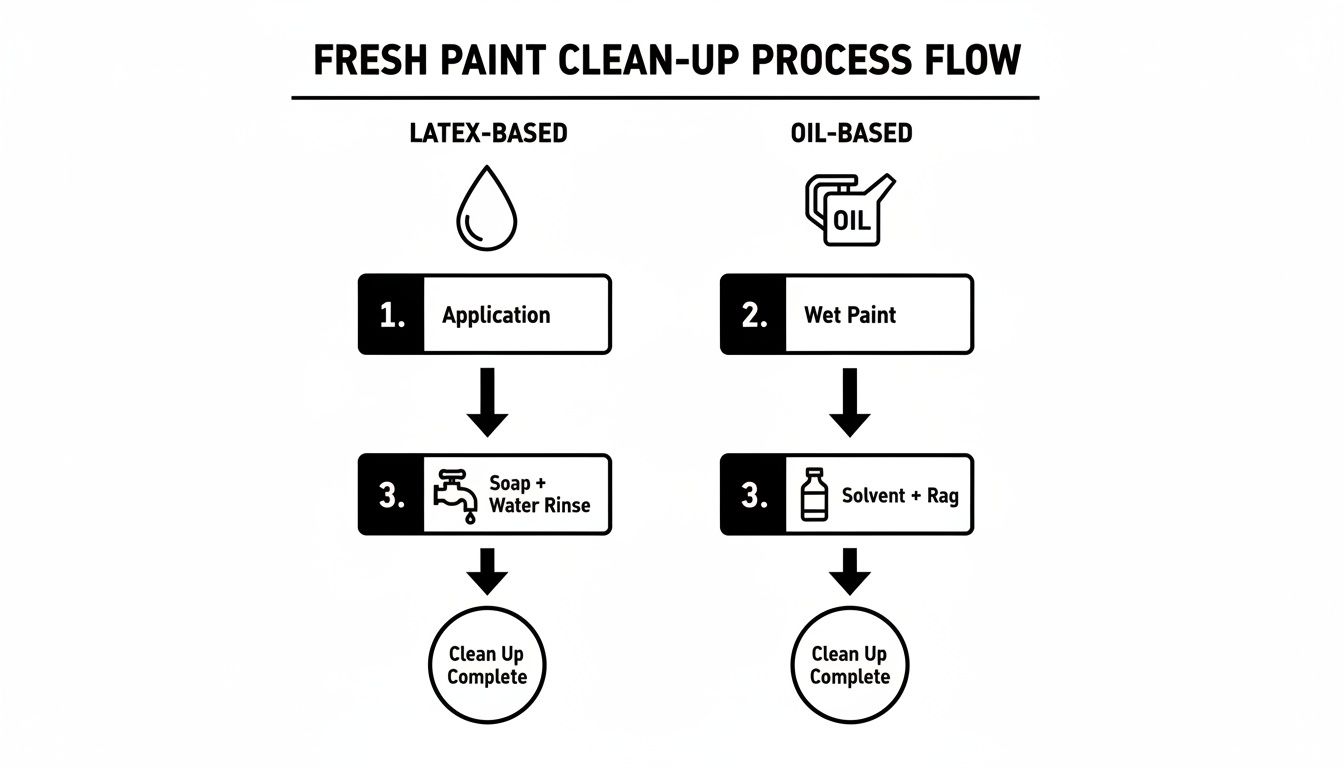
As you can see, catching it while it's still wet—using soap and water for latex or a solvent for oil-based paint—saves you a whole lot of scraping later on.
What to Do with Stubborn Paint Spots
Sometimes, even with perfect technique, a few spots will fight back. This happens a lot with older, thick drips of latex or enamel paint that have been baking in the sun for years.
If you’re up against a stubborn latex paint spot, a little solvent can be a game-changer.
- Dampen a small corner of a microfiber cloth with isopropyl alcohol.
- Press it onto the paint spot for 30-60 seconds. This gives it time to soften the paint.
- Re-lubricate the area and try scraping again. The paint should now lift off with much less resistance.
For rock-hard, ancient oil-based paint, you might need to bring out the bigger guns. When dealing with dried paint that won't budge, it helps to understand different solvents; for more on that, this guide to the best paint remover for wood is a great resource. While it's focused on wood, it gives fantastic insight into how different chemicals break down paint.
A word of caution: using stronger chemicals should always be your last resort. Always test any solvent on a tiny, hidden corner first and make sure the area is well-ventilated. And if the problem is widespread overspray, we have a whole article dedicated to how to remove spray paint on glass, as that often requires a slightly different game plan.
Once all the paint is gone, finish the job by giving the entire window a final cleaning with a good glass cleaner and a fresh microfiber cloth. This will wipe away any lubricant residue and tiny paint flecks, leaving you with nothing but a crystal-clear view.
Protecting Your Window Frames and Sills
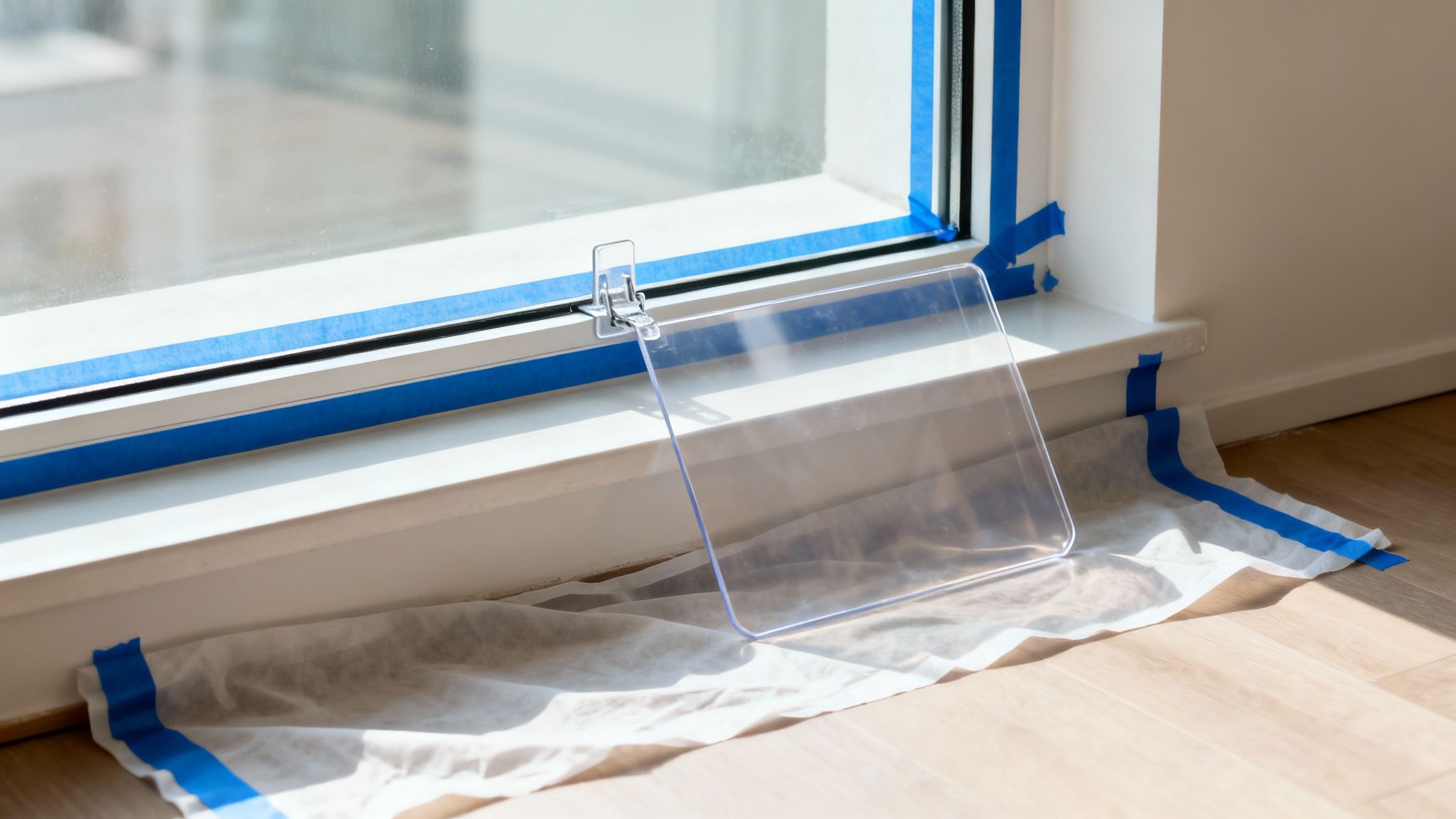
Getting paint splatters off the glass is great, but the job isn't done until you can step back and see a flawless finish. That means your window frames, seals, and sills need to look just as pristine as they did before you started. A little prep work here goes a long way in shielding these surfaces from accidental scrapes, scratches, and harsh chemicals.
Your best friend for this task is high-quality painter's tape. It creates a clean, physical barrier right where you need it. This is non-negotiable for painted wood or vinyl frames, as common solvents like mineral spirits can easily cause discoloration or even damage the material. Take an extra minute to press the tape edge down firmly—it’s the secret to stopping any chemical from seeping underneath.
Shielding Your Workspace and Sills
With the frame taped off, think about the surrounding area. Drape a thick drop cloth over the windowsill and let it spill onto the floor. It seems simple, but this catches all those little paint flecks and any stray drips of solvent, which makes your final cleanup a breeze.
Thinking ahead during the initial paint job is the best way to avoid this mess altogether. For instance, knowing the correct order of operations by learning whether to caulk or paint first can dramatically cut down on mistakes and splatters.
A Critical Warning for Specialty Glass
Hold on. Before you grab that razor blade, you absolutely have to know what kind of glass you're working with. Using a metal scraper on the wrong type of window is a fast track to an expensive, irreversible mistake. While standard annealed glass can usually handle a blade, specialty glass is a whole different story.
Look for clues to see if you have one of these:
- Tempered Glass: You'll often find this safety glass in doors or windows close to the floor. Check the corners for a small, sandblasted logo. A blade can cause "fines"—a network of tiny scratches across the surface.
- Low-E Coated Glass: This energy-efficient glass has an invisible metallic coating. A razor will carve right through that layer, ruining its insulating ability for good.
- Tinted or Filmed Glass: Many windows have aftermarket films for privacy or UV protection. A scraper will slice through this film instantly, ruining it completely.
If you have even the slightest suspicion that you're dealing with specialty glass, do not use a razor blade. Stick with a plastic scraper and a gentle, glass-safe solvent. The risk of permanent damage is far too high, and this is one of those times when calling a pro is the wisest decision you can make.
When Is It Time to Call a Professional?
Look, a few small paint splatters on your ground-floor kitchen window are usually no big deal. With a little patience and the right tools, it's a manageable weekend task. But there's a definite line between a quick DIY cleanup and a job that’s best left to the pros.
Knowing when to put down the scraper and pick up the phone can save you from a world of frustration, potential injury, and some seriously expensive damage. It’s all about honestly assessing the scope and risk of the job.
High-Risk Scenarios That Scream "Call an Expert"
Some situations just aren't worth the DIY gamble. If you're facing any of these, it's a smart move to bring in a professional service like Sparkle Tech.
- Serious Paint Overspray: A fine mist of paint from a sprayer across multiple large panes of glass is a nightmare to remove by hand. You're not just scraping a few dots; you're clearing the entire surface, which dramatically increases the chance of scratching the glass.
- Hard-to-Reach Windows: Are we talking about second-story windows? Skylights? Anything that requires you to be on a ladder for an extended period is a major safety risk. Trying to apply precise pressure with a razor blade while balancing on a wobbly ladder is a recipe for disaster.
- Specialty or Historic Glass: If you live in an older home, that glass might be original, wavy, and irreplaceable. Modern windows with special Low-E coatings, tints, or tempered glass can also be permanently ruined by an inexperienced hand and a metal blade.
- You're in a Hurry: Need to get your home ready for a sale, a party, or the end of a tenancy? A professional crew can achieve flawless, streak-free results in a fraction of the time it would take you to do it yourself.
A key thing to remember: Hiring a pro isn't just about convenience—it's about risk management. When you bring in an insured and bonded company like Sparkle Tech, you're protected. If any accidental damage happens to your property, their insurance covers it. That’s a level of peace of mind a DIY project simply can't match.
Making the Right Call: DIY vs. Pro
Deciding whether to tackle the job yourself or hire a professional can be tricky. This table breaks down common scenarios to help you weigh your options.
| Scenario | DIY Approach | When to Call Sparkle Tech |
|---|---|---|
| A few paint splatters on a single, reachable window. | Totally manageable. Grab your scraper and solvent, and you should be done in under an hour. | You’re short on time or don’t want to buy the tools for a one-off job. |
| Widespread overspray across multiple windows. | Possible, but extremely tedious and time-consuming. The risk of scratching the glass is high. | This is a classic pro job. We have the right equipment and techniques to clear it quickly and safely. |
| Paint on second-story or hard-to-reach windows. | Not recommended. Working on a ladder with sharp tools is a significant safety hazard. | Always. Our technicians are trained and insured for high-work, using proper safety gear to get the job done right. |
| You have antique, tinted, or coated glass. | High risk. It's very easy to permanently damage these delicate surfaces with the wrong method. | This is a non-negotiable. We can identify the glass type and use specialized, non-abrasive methods to protect your investment. |
Ultimately, hiring a pro is an investment in quality, safety, and your own time.
The Real Value of Professional Service
The professional window cleaning market is a massive industry for a reason; it's on track to hit nearly $129 billion by 2030. That growth is fueled by homeowners and businesses who need specialized skills for jobs just like this. You can see more details on these market trends for contract cleaning services on Grandviewresearch.com.
So, if the job feels overwhelming, involves valuable surfaces, or puts your safety at risk, making the call to a pro is the smartest move you can make.
For a deeper dive into this topic, check out our guide on knowing when to call a professional window washing company.
Common Questions About Cleaning Paint Off Windows
Even with the best guide in hand, you’re bound to have a few questions when you’re staring down paint splatters on your windows. Getting the right answers can mean the difference between a quick, satisfying fix and a day of frustration. We've heard them all, so let's clear up the most common ones to get you started on the right foot.
By far, the biggest question we get is about using a razor blade. It's an amazing tool for this job, but it's not a universal solution. Using it on the wrong type of glass is the quickest way to permanently damage your window.
Can I Really Use a Razor Blade on Any Window?
Absolutely not. This is a critical point. While a fresh, sharp razor is perfectly safe on standard window glass (as long as it's wet), you can cause irreversible damage to specialty glass.
Be sure to steer clear of using a blade on:
- Tempered Glass: You'll often find this safety glass in doors or windows close to the floor. Look for a tiny, sandblasted logo in one corner. A razor can drag microscopic "fabrication debris" across the surface, leaving a web of fine scratches.
- Tinted or Filmed Glass: If your windows have an aftermarket film for UV protection or privacy, a metal blade will slice right through it in an instant. The damage is immediate and can't be undone.
- Coated (Low-E) Glass: Many modern, energy-efficient windows have an invisible metallic coating. A razor will scrape this layer right off, destroying the window's insulating properties.
When in doubt, don't use a razor. It’s far better to patiently work with a plastic scraper and solvent than to risk a costly mistake. If you're unsure, calling a pro is the safest bet.
Will Vinegar or Nail Polish Remover Actually Work?
It’s tempting to reach for household items, but they rarely live up to the hype. White vinegar might soften a tiny, fresh droplet of latex paint, but it won't do much against anything that has already cured.
Nail polish remover (acetone) is a different story—it's a powerful solvent. And while it will dissolve paint, it’s also incredibly risky to use around windows. Acetone can melt vinyl frames, damage rubber seals, and strip the finish clean off painted sills. If you’re in a pinch, apply it with a Q-tip only to the paint, keeping it far away from any other surface. Frankly, a dedicated paint remover or even isopropyl alcohol is a much safer choice.
How Do I Avoid Streaks After I Remove the Paint?
Nothing's more frustrating than finishing the job only to see a streaky mess. Those streaks are almost always caused by leftover residue—tiny bits of solvent, soap, or paint dust left on the glass. The final step isn't just a quick wipe-down; it's a proper window cleaning.
Once the paint is gone, grab a fresh bucket of water and add just one small drop of dish soap. Using a quality squeegee, start at the top and pull down in a single, smooth motion. The trick is to wipe the blade with a clean, lint-free cloth after every pass. Overlap each stroke by about an inch. This professional technique lifts every last bit of residue, leaving you with a perfectly clear, streak-free view.
What Is the Best Way to Prevent This Problem Next Time?
Honestly, the best way to clean paint off windows is to never get it on them in the first place. An ounce of prevention really is worth a pound of scraping. Before you start your next painting project, invest just 15 minutes in solid prep work.
Use a high-quality painter's tape to create a sharp line against the glass, making sure to press the edge down firmly for a good seal. If you're using a sprayer or painting a ceiling, take the extra step of covering the entire pane with plastic or newspaper. It feels like a hassle at the moment, but that small effort will save you hours of careful, tedious cleanup work later on.
If you're dealing with a big mess or have specialty glass, don't take any chances. The insured and bonded professionals at Sparkle Tech Window Washing have the right tools and expertise to restore your windows safely and perfectly. Get your free estimate today!