



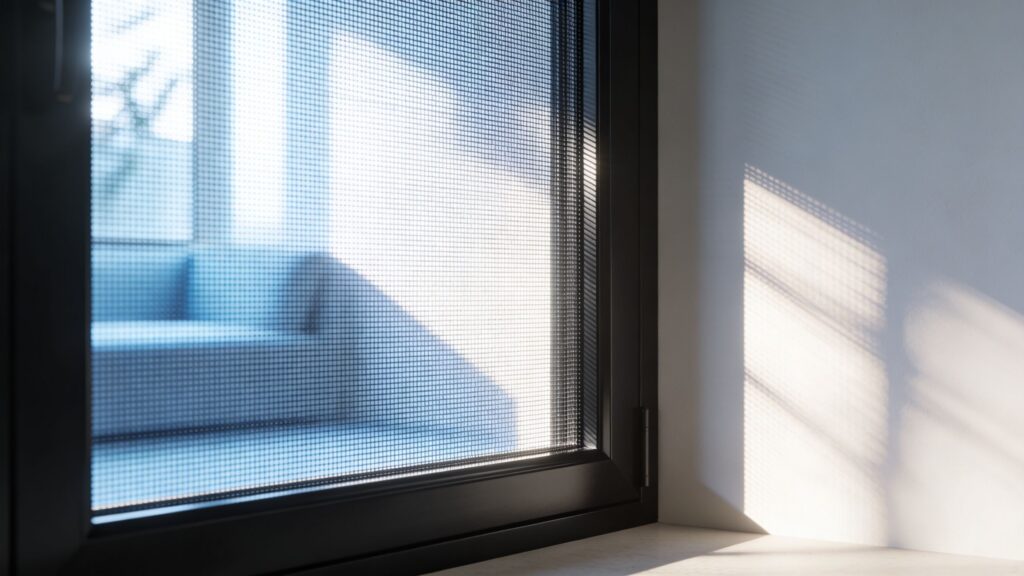
By late afternoon in Phoenix, you can feel which rooms lose the fight with the sun. The west-facing bedroom gets stuffy. The living room TV throws back a hard glare. The floor near the glass feels warmer than the rest of the house. You drop the blinds, and now the room is dim, but still hot.
That's the spot a lot of homeowners are in when they start looking at solar screens on windows. They're trying to make a room more livable without turning the house into a cave. They want less heat, less glare, and some daytime privacy, but they also want to keep their view and avoid another home upgrade that sounds great on a sales page and becomes a headache later.
In Arizona, that last part matters. Heat is only half the story. Dust, pollen, monsoon residue, and strong sun all affect how these screens perform over time. If you're considering solar screens, it helps to know what they do, how to choose the right fabric, and what maintenance they need once they're installed.
Your Guide to Beating the Arizona Sun
If you've ever stood near a sun-blasted window in July and felt heat pouring into the room, you already understand why these screens exist. In many Valley homes, the problem isn't the whole house. It's a few windows that get hammered every afternoon and make one side of the home uncomfortable.
Solar screens are exterior screen panels made to reduce the amount of sun, heat, glare, and UV exposure reaching the glass. That placement matters. They work outside the window, not just inside the room, which changes how much solar load reaches your interior in the first place.
A lot of guides stop there and jump straight into a sales pitch. That doesn't help much when you're deciding whether to screen every window, only the west side, or whether the darker room is worth the cooler room.
What Arizona homeowners usually want to know
Most neighbors I talk to ask the same practical questions:
- Will they help in extreme heat
- How dark will the room get
- Can I still see outside
- Do they get clogged with dust
- Are they low-maintenance, or just advertised that way
Those are the right questions. In Phoenix, a product can work well on day one and still be the wrong choice if it collects grime fast, looks worn, or gets neglected because second-story access is a pain.
Solar screens make the most sense when you treat them like part of the home's heat-control system, not just a cosmetic add-on.
If you want a quick overview of how upgraded screens can help with summer comfort, Sparkle Tech has a useful local read on updating your screens to beat the Phoenix heat. The bigger picture is what matters, though. The right screen choice depends on the window's sun exposure, your view, and how much upkeep you're willing to do.
What Are Solar Screens and How Do They Work
The easiest way to think about solar screens is this. They're like sunglasses for your house. They don't eliminate sunlight. They filter it before it becomes a bigger problem indoors.

A standard insect screen is mostly there to keep bugs out. A solar screen is built with a tighter, more performance-focused mesh that reduces solar energy and glare while still letting you look through it. From the street, it can also make the window look darker and more private during the day.
The openness factor explained
The key term homeowners get stuck on is openness factor. That number tells you how much open space exists in the fabric weave. Industry guidance says solar screens typically range from 1% to 14% openness, and the lower the openness, the tighter the weave and the more light, heat, and UV radiation the fabric blocks, as explained in this overview of solar screen density levels and openness factors.
A couple of examples make it easier:
- 1% openness means a very tight weave. It's described as the highest level of protection and blocks about 99% of radiant heat and UV rays.
- 5% openness is a common middle-ground choice and blocks about 95% of radiant heat and UV rays.
- Lower openness usually gives you more daytime privacy and stronger sun control.
- Higher openness gives you a brighter room and a clearer outward view.
That tradeoff is where most decisions happen. Homeowners often assume darker fabric always means better performance. Color matters, but the openness rating is one of the main specs that tells you what the screen will do.
Why people get confused
Two screens can look similar in a sample book and behave differently once they're installed. One may cut glare harder but dim the room more. Another may keep the view better but let in more brightness than you expected.
Practical rule: If a window gets punished by west or south sun, tighter openness usually makes more sense than choosing by appearance alone.
Some homeowners also compare screens with tint. That can be a useful separate category, especially if you're trying to solve privacy concerns or reduce visibility into specific rooms. If you want to understand that side of the decision, this guide to window privacy film solutions is a helpful companion resource.
The Real Benefits of Installing Solar Screens
The biggest reason people install solar screens on windows is simple. They want the house to feel less overloaded by the sun.
That benefit is real when the screen is matched to the window and mounted correctly. High-quality solar screens can block up to 90% of the sun's heat-producing rays, and some installations reduce indoor temperature by as much as 15 degrees, according to this explanation of how much solar screens reduce heat. The same source notes that the U.S. Department of Energy estimates about 76% of sunlight falling on standard double-pane windows enters as heat during cooling season.
What that means in daily life
If one room always feels hotter than the thermostat suggests, solar screens can help even things out. You may still need your AC, of course, but the room can become more usable during the hottest part of the day.
Homeowners usually notice benefits in ordinary moments:
- Watching TV without fighting glare
- Using a home office without bright reflection on the monitor
- Sitting near the window without feeling radiant heat
- Keeping certain rooms more comfortable through the afternoon
Those are comfort gains first. Energy management follows from the same basic principle. When less solar heat reaches the window system, your cooling equipment doesn't have to work against as much heat load from that area.
Comfort isn't the only payoff
Solar screens also help with preservation inside the house. Direct sun is rough on flooring, furniture, rugs, and other finishes. Many manufacturers position solar screens as part of a UV protection strategy because reducing direct sun exposure can help limit fading on interior surfaces.
Daytime privacy is another reason people like them. From outside, the tighter mesh can make it harder to see in while still allowing outward visibility from inside. That's useful on front-facing rooms, street-facing offices, and homes where the neighbor's second story looks directly toward your windows.
A good solar screen solves several problems at once. Heat, glare, UV exposure, and daytime privacy all improve together when the screen matches the window's exposure.
Where expectations should stay realistic
Solar screens aren't magic. They won't turn a poorly insulated room into a sealed cool box, and they won't replace every other window treatment. At night, when interior lights are on, privacy changes. If a room needs total darkness, blackout curtains still do something solar screens don't.
They also won't stay at peak performance if they're left coated in dust and pollen. That maintenance piece gets ignored too often, especially in the desert, where buildup can come fast.
How to Choose the Right Solar Screen for Your Home
Choosing the right screen starts with one question. Which problem are you solving first? In Phoenix homes, the answer is usually heat on west-facing windows, glare in living spaces, or preserving the view while still cutting sunlight.

Match the fabric to the window
Industry material guidance shows a clear difference between common fabric options. Suntex 90 is described as blocking up to 90% of the sun's heat with about 10% openness, while 80% screens block up to 80% with about 25% openness. These fabrics are commonly made from PVC-coated polyester or vinyl-coated fiberglass for weather resistance, as outlined in this solar screen material breakdown.
That gives you a practical way to think about selection:
- West-facing bedrooms or living rooms: A tighter, higher-performance fabric usually makes sense because that side gets brutal afternoon sun.
- Front windows with a view: A more open fabric may preserve visibility better, even if it gives up some blocking power.
- Rooms with TV glare: Lean toward stronger sun control.
- Spaces where brightness matters: Don't automatically choose the tightest weave.
Material matters in the desert
The fabric itself isn't just a technical detail. Arizona sun is hard on cheap materials. Heat, UV exposure, and blowing dust can wear out weak components faster, so weather-resistant fabric matters.
If you're comparing options before replacing old mesh, this replacement screening material comparison gives a solid overview of how different screen materials differ in strength, visibility, and use case.
A related local resource from Sparkle Tech on window screen material types is also useful if you're trying to sort out the difference between standard insect screening, sun screens, and heavier-duty options.
Questions to ask before ordering
Bring these questions to any estimate or DIY plan:
- Which windows get the strongest afternoon sun
- Do I care more about view or heat control on each side of the house
- Will darker rooms bother me more than warmer rooms
- Is the screen frame and fabric built for long outdoor exposure
- Will the installer leave a small air gap from the glass
That last point matters. Installation guidance notes the screen should maintain a small air gap from the glass so the exterior shading layer can do its job properly instead of sitting directly against the window.
Here's a quick walkthrough that helps many homeowners visualize the tradeoffs before they commit:
A simple decision shortcut
If you want one plain-language rule, use this. Put stronger-performing screens where the sun is most aggressive, and use more view-friendly options where comfort is already acceptable. Not every window needs the same answer.
Solar Screens vs Other Window Treatments
A lot of homeowners compare solar screens to film, blinds, or blackout curtains as if they all do the same job. They don't. The big difference is where the heat gets stopped.

Technical guidance shows exterior solar screens are materially more effective than interior shades because they intercept solar radiation before it passes through the glass. Exterior solar screens have shading coefficients in the 0.14–0.33 range, compared with 0.50–0.70 for interior installations, according to this explanation of interior and exterior solar screen performance.
Why exterior placement changes performance
Once sunlight passes through the glazing, a lot of that energy has already become indoor heat. An interior blind can reduce brightness and help with privacy, but it's dealing with the problem later.
That doesn't make interior products useless. It just means they solve a different part of the problem.
Exterior solar screens are strongest when the goal is heat control while keeping a usable daytime view.
Window Treatment Comparison
| Feature | Exterior Solar Screens | Interior Window Film | Blackout Curtains |
|---|---|---|---|
| Heat rejection | Strong because the screen sits outside and blocks solar load before it reaches the glass | Can help with glare and sun control, but performance depends on product and application | Helps by shading the room, but the curtain is inside after sunlight has already reached the window area |
| Glare reduction | Very good for bright sun exposure | Often good for glare control | Very strong when fully closed |
| Daytime privacy | Good during the day | Depends on film type and lighting conditions | Good when closed |
| View retention | Usually good if the screen openness is chosen well | Often preserves view better than curtains | Poor when closed |
Where each option fits best
- Solar screens: Best when your main complaint is heat and glare from strong sun exposure.
- Interior film: Worth considering for rooms where you want a clean glass look or added privacy. If you're comparing decorative and privacy-focused options, this guide to frosted and mirrored privacy films can help you understand how those products differ.
- Blackout curtains: Best for bedrooms, nurseries, media rooms, or anyone who wants darkness more than a view.
Blending treatments can also make sense. A west-facing bedroom might use an exterior solar screen for daytime heat reduction and a room-darkening interior layer for sleep. That's a more realistic approach than expecting one product to handle every comfort issue perfectly.
Maintaining Your Screens for Peak Performance
This is the part most articles skip. A solar screen that lives through Arizona dust, pollen, and storms won't stay in top shape if nobody cleans it.

That matters because there's minimal guidance on ongoing maintenance requirements, especially in high-dust environments. Homeowners often don't get clear information about how debris buildup affects the claimed 65% to 90% filtration rates, which is why long-term cleaning guidance is so important, as noted in this overview of solar screen products and maintenance gaps.
What dirt changes in the real world
A dusty screen doesn't just look bad from the curb. It can cut down airflow, change how much light gets through, and leave the screen looking patchy from inside. In extreme cases, buildup can make homeowners think the product itself is disappointing when the problem is neglect.
Common Arizona troublemakers include:
- Fine dust: The everyday Valley layer that settles into the mesh
- Pollen: Seasonal buildup that can cling more than simple dust
- Monsoon residue: Mud specks and streaking after rain and wind
- Bug debris and webs: Often overlooked around corners and frame edges
Safe DIY cleaning for light buildup
For light maintenance, a gentle approach is usually enough.
- Start dry: Use a soft brush or careful vacuum attachment to remove loose debris.
- Wash gently: Mild soap and water work better than aggressive chemicals.
- Rinse thoroughly: Leftover soap can attract more grime.
- Let them dry fully: Reinstalling damp screens can create its own issues.
Avoid harsh scrubbing, pressure washing, or bending the frame while removing the screen. Many damaged screens don't fail from sun first. They fail because somebody twists the frame on removal or leans them against a wall incorrectly.
Dirty solar screens don't just reduce curb appeal. They can chip away at the comfort benefits you paid for.
When to call a pro
Second-story screens, delicate older frames, and heavily soiled panels are where professional help makes sense. A service provider can remove, clean, inspect, and reinstall without stretching mesh or warping the frame.
If you want a homeowner-friendly overview first, Sparkle Tech has a practical guide on how to clean window screens. For people who don't want to wrestle with ladders or frame clips, Sparkle Tech Window Washing is one local option that handles window screen service, including cleaning, repair, restoration, and rescreening for sun and solar screens.
That's not just a convenience issue. It's asset protection. If your screens are part of your home's heat-control setup, maintaining them helps protect their long-term value.
Frequently Asked Questions About Solar Screens
Will solar screens make my rooms too dark
They can make a room dimmer, yes. How much depends on the openness of the fabric and which side of the house the window faces. A tighter weave blocks more sun and usually gives you better heat control, but it also cuts more light and reduces visibility more than a more open fabric.
How much do solar screens typically cost to install
Cost varies by window size, screen type, frame style, access, and whether you're screening a few problem windows or a larger group. Because the verified data here doesn't include pricing, the honest answer is to get estimates based on your actual windows rather than trust a generic online number.
Can I install them myself or do I need a pro
Some homeowners can handle a simple installation, especially on easily reached windows. The challenge is getting accurate sizing, choosing the right fabric, and installing the screen without fit issues or frame stress. On taller homes or sun-critical windows, professional installation usually reduces mistakes.
Do solar screens provide privacy at night
They help most with daytime privacy. At night, when your interior lights are on, visibility changes. If nighttime privacy is a major concern, you may need an additional interior treatment.
Are they worth it in Arizona
For many homes, yes. They're most useful where you have strong sun exposure, regular glare, and rooms that become uncomfortable in the afternoon. They're less about hype and more about solving a very specific desert-climate problem.
Do they need maintenance
Yes. That's the part many people underestimate. In a dusty climate, solar screens need periodic cleaning and occasional inspection so dirt buildup and frame wear don't undercut performance.
If your screens are dusty, damaged, loose, or just not doing the job you expected, Sparkle Tech Window Washing can help you evaluate what needs cleaning, repair, rescreening, or replacement so your windows stay easier to live with in the Arizona heat.