

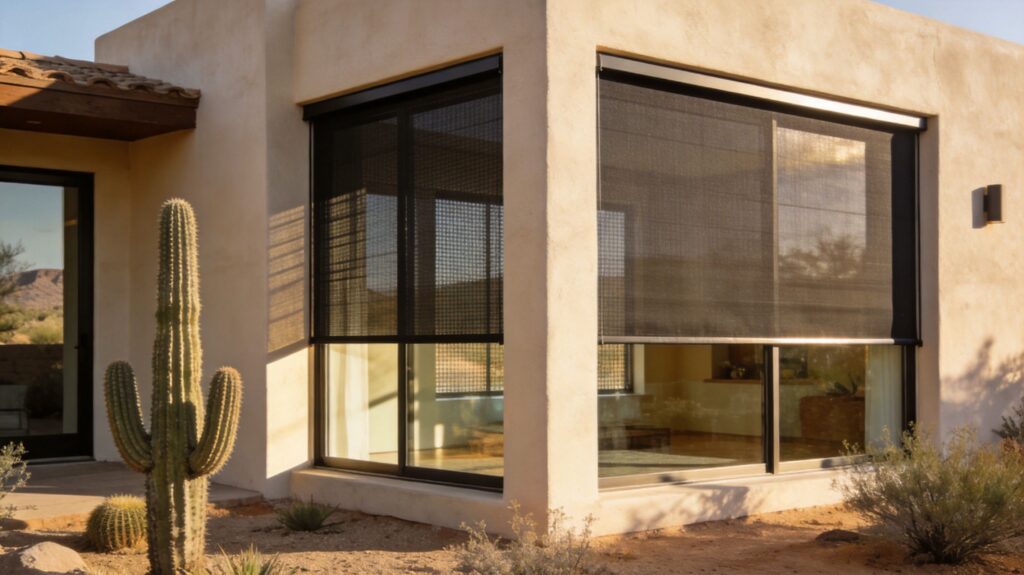
By midafternoon in the Phoenix Valley, you can feel which side of the house is losing the fight. The west-facing room gets brighter, the floor warms up, and the AC starts running harder just to keep up. If you sit near that window, the glare bounces off a laptop screen and turns a comfortable room into one you avoid until sunset.
That's where sun screens stop being a nice extra and start being part of how you live with desert heat. Arizona homeowners already understand personal sun protection. The same mindset is showing up globally in the broader UV-protection market, where sun protection users reached 294.7 million in 2025 according to Market.us sunscreen industry statistics. At home, the principle is the same. You're trying to block solar impact before it does damage.
If your house still feels hot near the glass even when the AC is working, it's worth looking at both the windows and the cooling system together. Homeowners comparing screen upgrades with residential HVAC in Phoenix often get a clearer picture of whether the problem is solar gain, airflow, or both. For a closer look at how screen upgrades can help specifically in local conditions, this article on updating your screens to beat the Phoenix heat is a useful starting point.
Your Home in the Arizona Sun
Sun screens are exterior mesh screens mounted over windows to cut heat, glare, and UV exposure before sunlight hits the glass. That detail matters. Once the glass heats up, your room has already started absorbing that load.
In Phoenix, generic advice from cooler climates usually falls short. What works on a mild south-facing elevation somewhere else may not be enough for a two-story west wall in July here. The right screen depends on sun exposure, orientation, view priorities, and how much maintenance you're willing to keep up with.
Arizona homes don't just deal with bright sun. They deal with long exposure, reflected heat, dust, and low-angle glare in certain seasons.
A good sun screen setup can help with several problems at once:
- Hot rooms near windows that feel different from the rest of the house
- Afternoon glare that makes TVs, phones, and laptops hard to use
- Interior fading on flooring, furniture, and artwork
- Daytime visibility concerns when you want light without feeling exposed
The trade-offs are real too. Darker, tighter meshes usually block more sun, but they also change the view and outdoor appearance. Lighter meshes can preserve a softer look from the curb, but they don't always perform the same way in harsh exposure. And any screen that isn't cleaned and kept in shape won't perform like it should.
How Sun Screens Work to Cool Your Home
Think of sun screens as sunglasses for your house. They don't cool the air by themselves. What they do is reduce how much solar energy reaches the window in the first place.
That's the key difference between interior blinds and exterior sun screens. Blinds help with glare after sunlight has already passed through the glass. Sun screens work outside, where they can intercept a lot of that heat and brightness earlier in the process.

The three jobs a sun screen does
A properly selected screen helps in three ways at once:
- Blocks direct rays before they strike the glass surface
- Reduces glare so indoor light feels softer and more usable
- Cuts solar heat buildup by limiting how much radiant energy enters the window system
That's why homeowners often notice the difference most in rooms with large west-facing glass, breakfast nooks facing east, and offices with strong side light.
What openness means in real life
You'll hear terms like 80%, 90%, and 95% openness. In practice, homeowners usually use those numbers to compare how tightly woven the mesh is and how much sun it blocks versus how much view it preserves.
Here's the simple explanation:
- 80% openness usually gives you a more open feel and a clearer outward view.
- 90% openness is a common middle ground for Arizona homes.
- 95% openness typically means a tighter screen aimed more at solar control and privacy.
A tighter mesh usually gives stronger shading, but it can also darken the room more and make the view feel flatter from inside. That's why one material choice for every window rarely works well in Phoenix.
Practical rule: Match the screen to the exposure, not just to the house. The window that faces brutal afternoon sun usually needs a different setup than the shaded side of the home.
Why terms like SHGC matter
You may also run into Solar Heat Gain Coefficient, often shortened to SHGC. Homeowners don't need to memorize test language. The useful takeaway is that it's a measure tied to how much solar heat gets through a product or assembly.
For screen shopping, SHGC is one of those specs that matters more when someone can translate it into plain language. Lower heat gain is usually what you want on punishing exposures. Better visibility may matter more where the sun load is lighter.
If you also spend time improving patios and outdoor living areas, this guide to outdoor shade options like shade sails and pergolas covers similar design trade-offs from a different angle. And because desert homes often mix screens with landscaping and containers near windows, even simple plant choices can affect reflected light and heat. If you're into that side of things, hairy cactus care tips is a surprisingly relevant read for low-water yard planning near sunny walls.
The Four Major Benefits of Installing Sun Screens
Homeowners usually start looking at sun screens because one room is too hot. That's valid, but it undersells what these screens provide. In Arizona, the value is usually a package of comfort, protection, and better day-to-day usability.

Heat reduction and lower cooling strain
The first benefit is the easiest to feel. Rooms with direct exposure stay more manageable when less solar load hits the glass. In real homes, that often means fewer hot spots near windows and less of that uneven temperature shift from one side of the house to the other.
This doesn't replace insulation, window quality, or HVAC sizing. But it can reduce how hard your system has to fight a predictable source of heat every day.
UV protection for interiors
Sunlight doesn't just brighten a room. It wears things out. Flooring fades, fabrics lose depth, and wood finishes can change tone over time.
There's a useful comparison here from skin protection. The Skin Cancer Foundation notes that consistent use of SPF 15 sunscreen can reduce squamous cell carcinoma risk by 40% and melanoma by 50%, as summarized in Stanford Medicine's review of sunscreen science. The takeaway for homeowners is simple. Blocking UV matters. Sun screens apply that same protective idea to your furniture, interior finishes, and belongings.
If a window gets hard sun every day, the damage isn't theoretical. You can usually see it first in rugs, leather, wood trim, and fabric near the glass.
Glare control that changes how a room feels
A bright room isn't always a usable room. One of the most immediate improvements from a good sun screen is glare reduction. That matters in home offices, TV rooms, kitchens, and anywhere you use screens during the day.
The difference is practical, not technical. You stop closing heavy drapes in the middle of the afternoon just to read a monitor. You can keep natural light without all the sharp reflection.
Daytime privacy without closing the house off
Many homeowners like sun screens because they make a room feel less exposed during the day. You still get light, but the visibility from outside is reduced compared with bare glass.
That said, daytime privacy isn't the same as nighttime privacy. Once interior lights come on after dark, the advantage changes. A lot of people miss that point when they buy based on daytime appearance alone.
A good install works best when you want all four benefits together:
- Temperature control on sun-heavy elevations
- Protection for interiors that are costly to replace
- Usable daylight without punishing glare
- Privacy during the hours you're most likely to want blinds open
Comparing Sun Screen Types and Materials
Two sun screens can look almost identical from the driveway and perform very differently by late afternoon in Phoenix. That is why material, openness, and color need to be chosen together, not as separate decisions.
A lot of homeowners start with one priority, usually view, price, or maximum sun blockage. In practice, the best result comes from matching the screen to the window's job. A family room with mountain views has different needs than a west bedroom that heats up every summer evening.
Polyester and fiberglass
For most residential projects, the material choice usually comes down to polyester core screens or fiberglass screens.
Polyester core products have a firmer, more durable feel. They tend to hold up better where screens face stronger sun, more dust, more handling, and more strain on the frame. Fiberglass is lighter and more flexible, which can work well on less demanding openings or where a standard insect-screen feel is acceptable.
In the Phoenix Valley, that difference shows up over time. Heat, UV exposure, monsoon dust, and routine washing are hard on screens. On tougher exposures, especially windows that take regular afternoon sun, a sturdier screen material usually gives homeowners a better long-term result.
Here is a practical side-by-side comparison.
| Feature | Polyester Core Screens | Fiberglass Screens | 80% Openness | 90%+ Openness |
|---|---|---|---|---|
| Best use | Heavy sun exposure and higher-demand openings | Lighter-duty or more conventional screen applications | Better outward visibility | Stronger solar control and more daytime privacy |
| Feel | More rigid and durable | More flexible | Airier appearance from inside | Tighter visual effect |
| View | Depends on color and weave | Depends on color and weave | More open view | More filtered view |
| Light control | Often paired with stronger shading goals | Often selected for standard visibility needs | Lets in more light | Cuts more glare |
| Arizona trade-off | Good where durability and heat control matter | May be fine in less punishing spots | Preserves view better | Often better for harsh west and east sun |
For homeowners sorting through replacement options in more detail, this breakdown of window screen material types explains where each material tends to work best.
Openness and visibility
Openness is where many buying decisions go right or wrong.
A more open weave usually preserves the view and keeps rooms from feeling closed in. A tighter weave usually blocks more sun and glare. Neither choice is automatically better. It depends on the exposure, the room, and how you use that window during the day.
A few patterns show up often on Phoenix homes:
- Living rooms with major backyard or golf course views usually benefit from a more open feel.
- West-facing bedrooms and bonus rooms often need tighter solar control because the late-day sun is harder to live with.
- Street-facing windows may justify a denser screen for added daytime privacy.
- North-facing windows often give you more freedom to prioritize visibility over shading.
Uniform screens across the whole house can look clean from the curb, but they are not always the best functional choice. On many Arizona homes, a mixed approach works better.
Dark mesh versus light mesh
Mesh color affects both appearance and usability. Darker mesh often gives a clearer view out because it visually recedes from inside the room. Lighter mesh is more noticeable and can change how the opening looks from both inside and outside.
That creates a real trade-off. Dark mesh is often the better pick for visibility, but some homeowners need to consider HOA standards, trim color, and the overall look of the front elevation. On a desert home, the right answer is usually the one that balances curb appeal with the amount of heat and glare that window takes.
If you are comparing window screens with patio covers, shade sails, or other exterior shade features, Urban Mancaves' guide for outdoor shade shows a similar design trade-off. More shade usually creates a stronger visual presence.
Choosing the Right Sun Screens for the Phoenix Valley
A Phoenix install should be planned by exposure, not by habit. Homes here deal with intense summer heat, reflected desert light, and a winter sun angle that behaves differently from what generic guides assume.

According to Architectural Louvers on how sunshades work, Arizona-style desert climates face low winter sun angles of 15 to 25 degrees along with extreme summer heat, and newer nano-coated solar fabrics can offer up to 15% greater energy savings compared to standard screens in high-UV index areas. That matters because side-angle sun can sneak past setups that seem fine in summer.
Match the screen to the side of the house
In the Phoenix Valley, orientation drives almost everything.
- West-facing windows usually need the most aggressive approach. Afternoon sun is long, hot, and uncomfortable.
- East-facing windows can create strong morning glare, especially in kitchens and breakfast areas.
- South-facing glass often benefits from a balanced setup because the exposure changes by season.
- North-facing windows usually give you the most freedom to preserve view and daylight.
This is why one-spec-for-every-window packages often disappoint. A home can have one room that needs stronger screening and another that would feel too closed in with the exact same mesh.
Think about winter glare too
A lot of homeowners shop in summer and only think about peak heat. In Arizona, winter glare matters too, especially where low sun comes in at a shallower angle. That light can be harsh even when the room temperature is fine.
A screen that helps in July but leaves you squinting in January isn't fully solving the problem.
That's also why patios, overhangs, shutters, landscaping, and screen choice should be looked at together. Exterior shading works best as a system.
A short visual overview helps if you want to see how these products are used on actual homes.
When newer fabrics make sense
Nano-coated fabrics are worth a look on high-exposure homes where long-term performance matters. In practice, these products make the most sense when you have punishing sun, expensive interiors to protect, or a room that's consistently uncomfortable despite decent windows and AC.
They aren't automatically the right answer for every opening. If your main goal is preserving an open backyard view on a mild side of the house, a simpler fabric may be the better fit. But for harsh exposures, newer materials can justify the higher upfront investment.
Understanding Installation Options and Costs
Installation is where good material choices can still go wrong. A strong fabric won't perform well in a frame that fits poorly, rattles, bows, or leaves gaps around the opening.
Homeowners usually choose between DIY kits and professional fabrication. DIY can work on straightforward ground-floor windows if you're comfortable measuring precisely, squaring frames, and dealing with hardware. It gets more complicated fast once you have oversized windows, inconsistent openings, second-story access, or homes where appearance matters from the street.
DIY versus professional work
A simple way to look at it:
- DIY makes sense when the windows are easy to access, you already handle home projects well, and you're willing to rework a frame if the fit is off.
- Professional installation makes sense when you want custom fit, cleaner hardware alignment, better frame consistency, and help choosing the right screen by exposure.
The product side is also evolving. As noted in Doctor Rogers' sunscreen guide discussing newer UV-protection technology, materials science keeps advancing, and better photostability matters for products exposed to heavy sun over time. The home version of that lesson is straightforward. Newer screen fabrics only help if they're installed correctly and tensioned properly.
What costs are tied to
This is one area where homeowners want exact numbers, but pricing varies a lot by frame size, fabric type, mounting style, access, and whether the job is new install, rescreening, or full frame replacement. The best way to budget is to break the estimate into components:
- Screen material
- Frame fabrication or replacement
- Mounting hardware
- Access difficulty
- Repair work on existing frames
For a practical budgeting reference, this guide to window screen replacement cost outlines the factors that usually move a quote up or down.
How to think about value
The cleanest way to judge cost is to ask three questions:
- Does this room become noticeably more usable?
- Does the screen reduce stress on the cooling system in a meaningful way?
- Does it protect finishes or furnishings you'd rather not replace?
If the answer is yes on multiple points, the screen is doing more than one job. That's usually where the value makes sense.
Sun Screen Care and Professional Maintenance
Late summer in Phoenix is when neglected sun screens show it. The west-facing windows pick up a film of dust, monsoon splash leaves residue in the mesh, and hard water starts building up on the frame. The screen may still be in place, but it is no longer working as cleanly or looking as good as it should.
Sun screens are not high-maintenance, but they are not maintenance-free in the Valley either. Fine dust, pollen, roof runoff, sprinkler overspray, and mineral deposits all affect how the fabric and frame hold up over time. In Arizona, that buildup happens faster than homeowners expect, especially on south and west exposures that take the hardest sun and wind.

What homeowners can do safely
Routine care is straightforward if the screen is in good shape and you can reach it safely.
- Brush off loose dust first with a soft brush or dry microfiber cloth
- Wash with mild soap and water instead of strong cleaners that can damage the coating or fabric
- Rinse gently so soap and mineral residue do not stay in the weave
- Let the screen dry fully before putting it back in the frame opening
Go easy on it. Aggressive scrubbing, pressure washing, and stiff brushes can fray solar mesh, loosen spline, and bend lighter aluminum frames. I also tell Phoenix homeowners to check for sprinkler overspray. Repeated hard water exposure leaves deposits that are much harder to remove later.
When professional help makes more sense
Some screen problems are cleaning issues. Others are repair issues disguised as cleaning issues.
Professional service is usually the better choice for:
- Second-story or hard-to-reach windows
- Heavy hard water spotting or caked-on mineral residue
- Bent frames that no longer sit square
- Torn mesh, loose corners, or failed spline
- Older screens that need rescreening rather than another wash
That distinction matters in the desert. A screen that is faded, brittle, or pulling away at the corners will not be fixed by soap and water. On many Phoenix homes, the smarter move is to clean what is still sound and rescreen or rebuild the units that have been cooked by years of UV exposure.
Sparkle Tech Window Washing handles window screen cleaning, restoration, rescreening, and installation for Arizona homes. That is useful when a homeowner needs more than a basic rinse and wants the frames, mesh, and fit checked at the same time.
Clean screens do the job better and last longer.
If your current screens look chalky, collect dust quickly, or no longer fit tightly after a monsoon season, start with the windows that face west and south. Those are usually the first ones that show wear in the Phoenix Valley. If the goal is long-term performance, regular cleaning plus occasional professional inspection is the practical approach.